Will Toyota Wheels Fit Chevy?

Contents
- 1 Key Takeaways
- 2 📑 Table of Contents
- 3 Will Toyota Wheels Fit Chevy? A Complete Compatibility Guide
- 4 Understanding Wheel Compatibility Basics
- 5 Bolt Pattern Differences: Toyota vs. Chevy
- 6 Offset, Backspacing, and Clearance Issues
- 7 Center Bore and Hub-Centric Fitment
- 8 Using Wheel Adapters and Spacers
- 9 Real-World Examples and Case Studies
- 10 Tips for a Safe and Successful Wheel Swap
- 11 Conclusion: Should You Put Toyota Wheels on Your Chevy?
- 12 Frequently Asked Questions

Portable Work Light

Digital Tire Pressure Gauge

Car USB Charger
Side Window Sunshade
Will Toyota wheels fit Chevy? It depends on several key factors like bolt pattern, offset, and center bore. While some models may be compatible with minor modifications, it’s not a guaranteed fit—always verify specs before swapping wheels.
Key Takeaways
- Bolt pattern mismatch is the #1 issue: Most Toyotas use a 5×114.3 bolt pattern, while many Chevys use 5×120 or 6×139.7—these rarely align without adapters.
- Wheel offset and backspacing matter: Even if bolt patterns match, incorrect offset can cause rubbing, poor handling, or suspension damage.
- Center bore compatibility is critical: A mismatched center bore can lead to vibration and unsafe wheel mounting unless hub-centric rings are used.
- Year, make, and model matter: Older Toyotas and Chevys may have closer specs, but modern vehicles often differ significantly.
- Adapters and spacers can help—but use caution: They can enable fitment but may affect safety, warranty, and handling if not installed properly.
- Always test-fit before driving: A visual inspection isn’t enough—mount one wheel and check clearance, steering, and suspension movement.
- Consult a professional: When in doubt, visit a tire shop or mechanic to confirm compatibility and safety.
📑 Table of Contents
- Will Toyota Wheels Fit Chevy? A Complete Compatibility Guide
- Understanding Wheel Compatibility Basics
- Bolt Pattern Differences: Toyota vs. Chevy
- Offset, Backspacing, and Clearance Issues
- Center Bore and Hub-Centric Fitment
- Using Wheel Adapters and Spacers
- Real-World Examples and Case Studies
- Tips for a Safe and Successful Wheel Swap
- Conclusion: Should You Put Toyota Wheels on Your Chevy?
Will Toyota Wheels Fit Chevy? A Complete Compatibility Guide
So, you’ve got a set of Toyota wheels lying around—maybe from an old Tacoma, 4Runner, or Camry—and you’re wondering if they’ll work on your Chevy Silverado, Tahoe, or Colorado. It’s a common question among DIYers, off-roaders, and budget-conscious car owners looking to upgrade or replace wheels without breaking the bank. The short answer? Maybe. But it’s not as simple as just bolting them on and hitting the road.
Wheel compatibility isn’t just about looks or size—it’s about safety, performance, and precision engineering. Even small differences in bolt pattern, offset, or center bore can lead to serious problems like vibration, uneven tire wear, or even wheel detachment. That’s why it’s crucial to understand the technical details before making any swaps. In this guide, we’ll break down everything you need to know about whether Toyota wheels will fit your Chevy, including real-world examples, common pitfalls, and expert tips to help you make the right decision.
Whether you’re restoring a classic truck, upgrading your daily driver, or just trying to save money on a wheel swap, this article will give you the knowledge to do it safely and correctly. Let’s dive in.
Understanding Wheel Compatibility Basics
Visual guide about Will Toyota Wheels Fit Chevy?
Image source: chevyideas.com
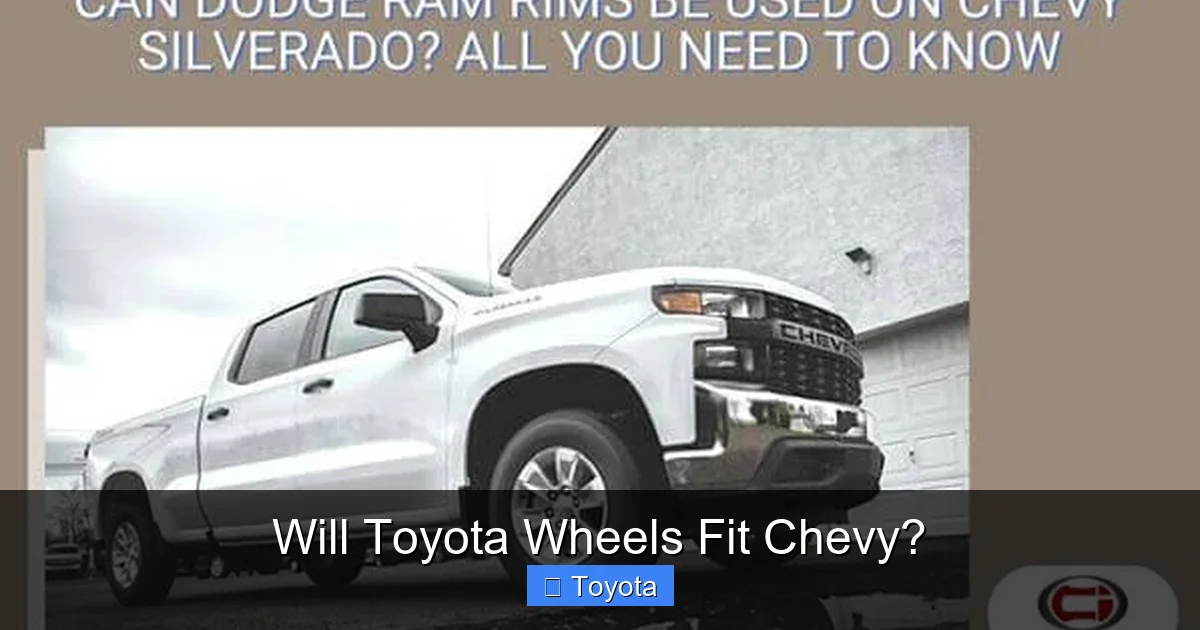
Before we get into specific Toyota and Chevy models, let’s cover the fundamentals of wheel compatibility. Think of your wheels like puzzle pieces—they need to fit perfectly with your vehicle’s hub, suspension, and braking system. There are four main factors that determine whether a wheel will fit: bolt pattern, wheel offset, center bore, and overall diameter/width.
The bolt pattern is the most obvious starting point. It refers to the number of lug nuts and the diameter of the circle they form. For example, a 5×114.3 pattern means five lug nuts spaced evenly around a 114.3mm circle. If your Chevy has a 5×120 bolt pattern and your Toyota wheels are 5×114.3, they won’t fit without an adapter—and even then, it’s not always safe or recommended.
Next is wheel offset, which measures how far the wheel’s mounting surface is from the centerline. A positive offset means the mounting surface is toward the front (outside) of the wheel, while a negative offset pushes it inward. Too much positive offset can cause the wheel to rub against the suspension, while too much negative offset can stress the wheel bearings and affect handling.
Then there’s the center bore—the hole in the back of the wheel that fits over the hub. If this is too small, the wheel won’t seat properly. If it’s too large, you’ll need hub-centric rings to fill the gap and prevent vibration. Finally, the overall size (diameter and width) must be compatible with your tires and fender clearance.
Understanding these basics is the first step to answering the question: Will Toyota wheels fit Chevy? Now let’s look at how these specs compare between the two brands.
Bolt Pattern Differences: Toyota vs. Chevy
Visual guide about Will Toyota Wheels Fit Chevy?
Image source: discounttire.scene7.com
Common Toyota Bolt Patterns
Toyota uses a few standard bolt patterns across its lineup, but the most common is the 5×114.3. This pattern is found on popular models like the Camry, Corolla, RAV4, Highlander, and older Tacomas (pre-2005). Some larger trucks and SUVs, like the newer Tacoma (2005 and later) and 4Runner, use a 6×139.7 bolt pattern, which is also shared with some Nissan and Ford models.
For example, a 2003 Toyota Tacoma uses a 6×139.7 bolt pattern, while a 2015 RAV4 uses 5×114.3. It’s important to note that even within the same brand, bolt patterns can vary by year and trim level, so always double-check your specific model.
Common Chevy Bolt Patterns
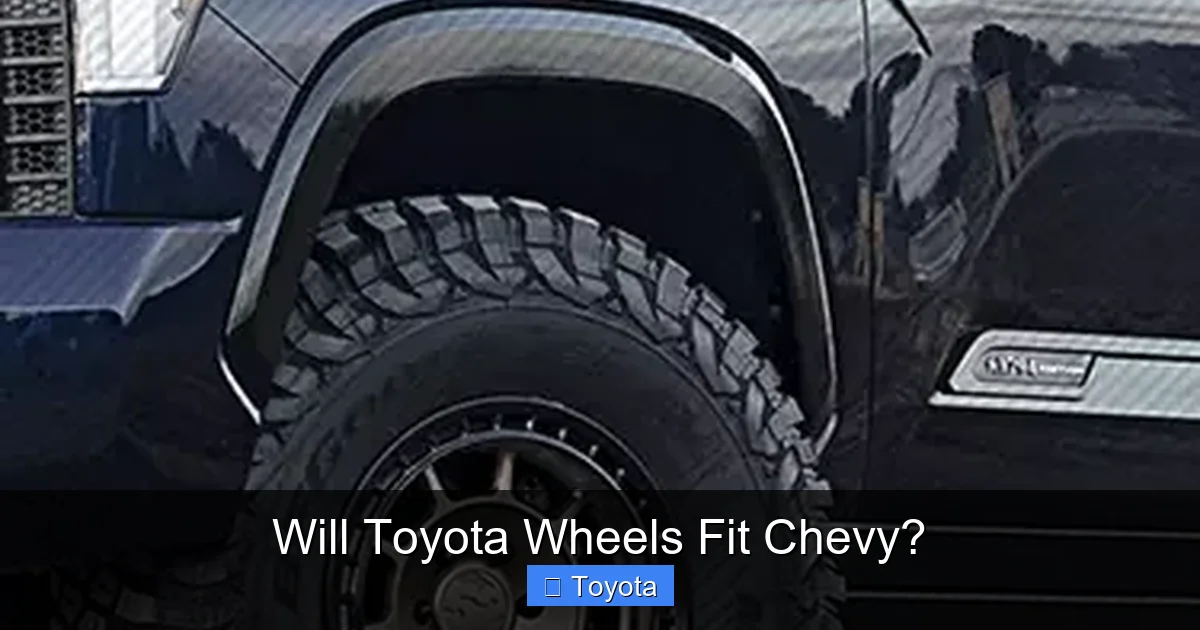
Chevrolet, on the other hand, tends to use different patterns depending on the vehicle type. Most full-size trucks and SUVs—like the Silverado, Suburban, Tahoe, and Avalanche—use a 6×139.7 bolt pattern, which is the same as Toyota’s larger trucks. This means that a 2010 Toyota Tacoma wheel could potentially fit a 2012 Chevy Silverado 1500, since both use 6×139.7.
However, many Chevy cars and crossovers—like the Malibu, Equinox, and Traverse—use a 5×120 bolt pattern. This is where the mismatch happens. A 5×114.3 Toyota wheel won’t fit a 5×120 Chevy without an adapter, and even then, it’s not always ideal.
When Bolt Patterns Align (and When They Don’t)
There are a few scenarios where Toyota and Chevy wheels might share the same bolt pattern. For instance:
– A 2008 Toyota 4Runner (6×139.7) and a 2015 Chevy Colorado (6×139.7) could be compatible.
– A 2004 Toyota Tacoma (6×139.7) and a 2011 Chevy Silverado 1500 (6×139.7) might work.
But even when the bolt pattern matches, other factors like offset and center bore still need to be considered. And if the patterns don’t match—like a 5×114.3 Toyota wheel on a 5×120 Chevy—you’ll need adapters, which we’ll discuss later.
Offset, Backspacing, and Clearance Issues

Visual guide about Will Toyota Wheels Fit Chevy?
Image source: hubcaphaven.com
What Is Wheel Offset?
Wheel offset is measured in millimeters and tells you how the wheel sits in relation to the hub. It’s the distance from the wheel’s mounting surface to its centerline. A positive offset means the mounting surface is toward the outside of the wheel, while a negative offset means it’s toward the inside.
For example, a +30mm offset means the mounting surface is 30mm toward the front (outside) of the wheel. A -10mm offset means it’s 10mm toward the back (inside). This affects how the wheel sits in the wheel well and how it interacts with suspension components.
How Offset Affects Fitment
Even if the bolt pattern matches, an incorrect offset can cause serious problems. If the offset is too positive, the wheel may rub against the suspension or inner fender. If it’s too negative, the wheel may stick out too far, causing handling issues or stress on the wheel bearings.
Let’s say you’re trying to fit a set of Toyota 4Runner wheels (typically around +30mm to +40mm offset) on a Chevy Silverado. The Silverado might have a stock offset of +44mm to +56mm. If the Toyota wheels have a lower (more positive) offset, they’ll sit further inward, which could cause rubbing on the upper control arm or strut.
Conversely, if you’re using a Toyota wheel with a negative offset (common on lifted trucks), it might stick out too far on a stock Chevy, leading to poor handling and potential tire damage from curbs or fender flares.
Backspacing: The Forgotten Factor
Backspacing is another important measurement—it’s the distance from the wheel’s mounting surface to the inner edge (back) of the wheel. It’s closely related to offset but gives a more complete picture of how the wheel will fit in the wheel well.
For example, a wheel with a 6-inch width and +40mm offset might have about 4.5 inches of backspacing. If your Chevy’s suspension requires at least 5 inches of backspacing to avoid rubbing, that Toyota wheel won’t work—even if the bolt pattern matches.
Real-World Example: Tacoma Wheels on a Silverado
Let’s say you have a set of 2007 Toyota Tacoma wheels (6×139.7 bolt pattern, +30mm offset, 7-inch width) and want to put them on a 2014 Chevy Silverado 1500. The Silverado also uses 6×139.7, so the bolt pattern matches. But the Tacoma wheels have a lower offset than the Silverado’s stock wheels (+44mm), meaning they’ll sit about 14mm further inward.
This could cause the tires to rub against the upper control arm during full suspension compression—especially if you’re off-roading or towing. To fix this, you might need longer wheel studs, spacers, or different tires with a narrower width.
Center Bore and Hub-Centric Fitment
Why Center Bore Matters
The center bore is the large hole in the back of the wheel that fits over the vehicle’s hub. It’s designed to center the wheel precisely on the hub, ensuring even weight distribution and smooth rotation. If the center bore is too small, the wheel won’t fit. If it’s too large, the wheel may wobble or vibrate at high speeds.
Toyota wheels typically have a center bore of 60.1mm to 73.1mm, depending on the model. For example, a 2010 Toyota 4Runner has a 73.1mm center bore, while a 2015 RAV4 uses 60.1mm.
Chevy vehicles, on the other hand, often have larger center bores. A 2015 Chevy Silverado 1500 has a 78.1mm center bore, and a 2018 Chevy Tahoe uses 78.1mm as well. This means that even if the bolt pattern and offset match, a Toyota wheel with a 73.1mm center bore won’t seat properly on a Chevy hub with a 78.1mm bore.
Using Hub-Centric Rings
The solution? Hub-centric rings. These are plastic or metal rings that fit between the wheel and the hub, filling the gap and centering the wheel properly. They’re essential when using wheels with a smaller center bore than the vehicle’s hub.
For example, if you’re mounting a 73.1mm Toyota wheel on a 78.1mm Chevy hub, you’ll need a 78.1mm-to-73.1mm hub-centric ring. These rings are inexpensive (usually $10–$20 per wheel) and widely available online or at tire shops.
Without them, the wheel may rely solely on the lug nuts to center itself, which can lead to vibration, uneven wear, and even wheel failure at high speeds. Always use hub-centric rings when there’s a center bore mismatch.
DIY Tip: How to Measure Center Bore
If you’re unsure about your wheel’s center bore, you can measure it yourself. Use a caliper or ruler to measure the diameter of the center hole. Compare it to your vehicle’s hub diameter, which is usually listed in the owner’s manual or online specs.
Alternatively, check the wheel’s backside—many aftermarket wheels have the center bore size stamped near the valve stem hole.
Using Wheel Adapters and Spacers
When Adapters Are Necessary
If the bolt pattern doesn’t match—say, a 5×114.3 Toyota wheel on a 5×120 Chevy—you’ll need wheel adapters. These are metal plates that bolt onto your Chevy’s hub and provide a new mounting surface with the correct bolt pattern for the Toyota wheel.
Adapters can be a lifesaver for custom builds or budget swaps, but they come with risks. They add thickness between the wheel and hub, which can affect suspension geometry, increase stress on wheel bearings, and reduce safety margins.
Types of Adapters
There are two main types: bolt-on and slip-on. Bolt-on adapters are more secure and recommended for most applications. They bolt directly to the hub and have threaded studs for the new wheel. Slip-on adapters slide over the existing studs and are less stable—avoid these for anything but light-duty use.
Always choose high-quality adapters made from forged aluminum or steel, and ensure they’re hub-centric if possible. Cheap adapters can warp, crack, or fail under load.
Spacers vs. Adapters: What’s the Difference?
Wheel spacers are similar to adapters but don’t change the bolt pattern. They simply push the wheel outward to improve clearance or stance. For example, if your Toyota wheels fit the bolt pattern but rub on the suspension, a 10mm spacer might solve the issue.
However, spacers also add stress to the hub and should be used cautiously. Never use spacers with lug-centric wheels (wheels that rely on lug nuts for centering)—always use hub-centric spacers or rings.
Safety Considerations
Using adapters or spacers voids some warranties and may not be legal in all states. They can also affect ABS, traction control, and stability systems if the wheel diameter changes significantly.
Always torque lug nuts to the manufacturer’s specs, use a torque wrench, and re-torque after 50–100 miles. Have a professional inspect the setup before driving at high speeds or off-road.
Real-World Examples and Case Studies
Case Study 1: 2005 Toyota Tacoma Wheels on a 2010 Chevy Colorado
A popular swap among off-roaders is using older Toyota Tacoma wheels on Chevy Colorados. Both vehicles use a 6×139.7 bolt pattern, so the wheels bolt on directly. However, the Tacoma wheels often have a lower offset (+30mm vs. +44mm on the Colorado), which can cause rubbing.
One owner solved this by installing a 1-inch body lift and using slightly narrower tires. Another used 10mm spacers to push the wheels outward, improving stance and clearance. Both setups worked, but required careful alignment and suspension checks.
Case Study 2: 2012 Toyota RAV4 Wheels on a 2016 Chevy Equinox
This swap is trickier. The RAV4 uses a 5×114.3 bolt pattern, while the Equinox uses 5×120. To make it work, the owner used 5×114.3-to-5×120 adapters. The center bore was also an issue—RAV4 wheels are 60.1mm, Equinox hubs are 70.1mm—so hub-centric rings were added.
The result? A unique look and cost savings, but the owner reported slight vibration at highway speeds. A wheel balance fixed most of it, but the adapters may have contributed to the issue.
Case Study 3: Custom Build with Mixed Wheels
A DIY enthusiast built a lifted Chevy Silverado using wheels from a 2008 Toyota 4Runner. The bolt pattern matched (6×139.7), but the offset was -12mm (more aggressive than stock). To avoid rubbing, he installed extended control arms and a 3-inch lift. The setup looked great and performed well off-road, but required significant modifications.
Tips for a Safe and Successful Wheel Swap
1. Always Check the Specs
Before buying or installing any wheels, verify the bolt pattern, offset, center bore, and overall diameter. Use online databases like Wheel-Size.com or Tire Rack’s fitment guide.
2. Test Fit Before Committing
Mount one wheel and tire, then test drive at low speed. Check for rubbing, vibration, and steering issues. Turn the wheel lock-to-lock and compress the suspension to ensure clearance.
3. Use Quality Hardware
Invest in hub-centric rings, high-strength lug nuts, and properly rated adapters or spacers. Avoid cheap or used parts.
4. Consult a Professional
If you’re unsure, take your vehicle and wheels to a tire shop or mechanic. They can measure, test-fit, and advise on safety.
5. Consider the Tires
Even if the wheels fit, the tires must be compatible. Check load rating, speed rating, and overall diameter to avoid speedometer errors or drivetrain stress.
6. Document Everything
Keep records of the wheel specs, modifications, and any issues. This helps with future swaps or resale.
Conclusion: Should You Put Toyota Wheels on Your Chevy?
So, will Toyota wheels fit Chevy? The answer is: it depends. In some cases—especially with full-size trucks sharing a 6×139.7 bolt pattern—the fitment can work with minor adjustments. But in most cases, differences in bolt pattern, offset, or center bore make direct swaps unsafe or impractical.
While adapters and spacers can bridge the gap, they come with risks and should be used only when necessary and installed correctly. Always prioritize safety over style or cost savings.
If you’re determined to make the swap, do your homework, test-fit carefully, and consult a professional. And remember: just because it fits doesn’t mean it’s safe. Your wheels are the only thing between your vehicle and the road—don’t take chances.
With the right knowledge and preparation, you can make informed decisions about wheel compatibility and keep your Chevy rolling smoothly—whether it’s wearing Toyota wheels or not.
Frequently Asked Questions
Can I put Toyota wheels on a Chevy truck?
It depends on the models. Some Toyota trucks (like the Tacoma and 4Runner) share a 6×139.7 bolt pattern with Chevy trucks like the Silverado and Colorado, making them potentially compatible. However, you must also check offset, center bore, and clearance.
Will 5×114.3 Toyota wheels fit a 5×120 Chevy?
No, not without adapters. The bolt patterns are different, so you’ll need 5×114.3-to-5×120 wheel adapters. Even then, check offset and center bore to ensure a safe fit.
Do I need hub-centric rings when swapping wheels?
Yes, if the center bore of the Toyota wheel is smaller than your Chevy’s hub. Hub-centric rings fill the gap and prevent vibration. Never rely solely on lug nuts to center the wheel.
Can I use wheel spacers to fix rubbing issues?
Yes, but only if the bolt pattern already matches. Spacers push the wheel outward to improve clearance, but they add stress to the hub and should be used cautiously with proper torque specs.
Are wheel adapters safe for daily driving?
High-quality, properly installed adapters can be safe for daily use, but they may affect handling and void warranties. Always use hub-centric adapters and have them inspected by a professional.
How do I know if my Toyota wheels will fit my Chevy?
Compare the bolt pattern, offset, center bore, and overall diameter. Use online fitment tools or consult a tire shop. Test-fit one wheel before committing to the full swap.