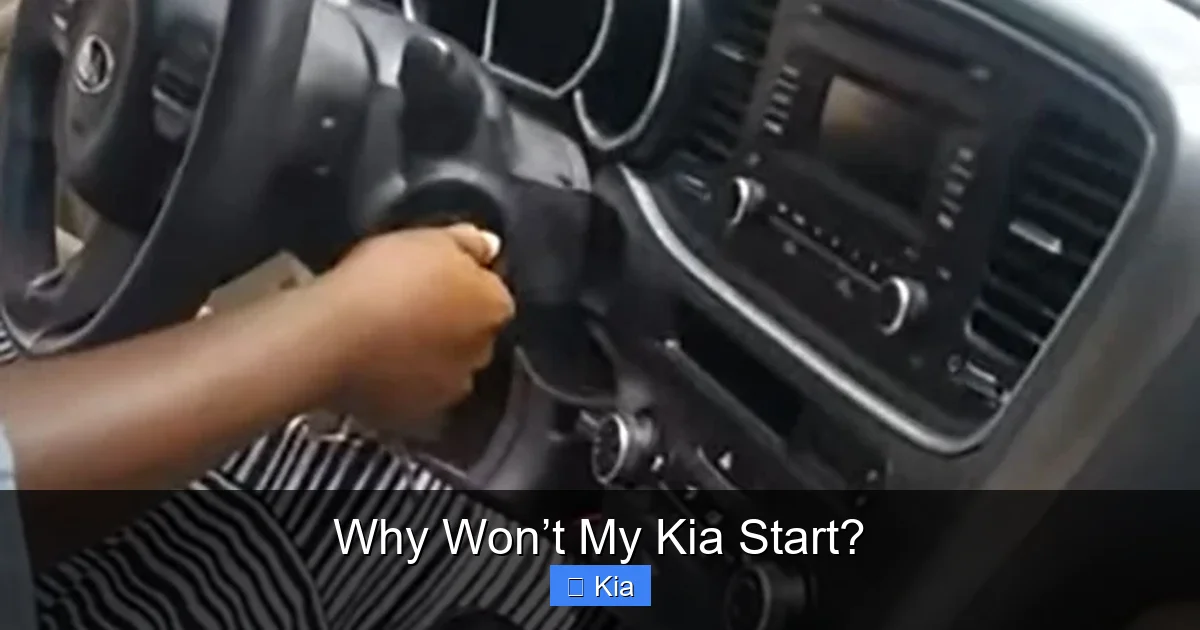
Why Won’t My Kia Start?

Contents
- 1 Key Takeaways
- 2 📑 Table of Contents
- 3 Why Won’t My Kia Start? A Complete Troubleshooting Guide
- 4 Common Causes of a Kia Not Starting
- 5 Step-by-Step Troubleshooting: What to Do When Your Kia Won’t Start
- 6 Model-Specific Considerations for Kia Starting Issues
- 7 Preventative Maintenance to Avoid Future No-Start Issues
- 8 When to Call a Professional
- 9 Conclusion: Don’t Let a No-Start Ruin Your Day
- 10 Frequently Asked Questions
Foam Cannon

Car LED Headlight Bulb

LED Emergency Road Flares

Car Sunshade for Windshield
If your Kia won’t start, it’s often due to a dead battery, faulty starter, or fuel system problem. This guide walks you through the most common causes, troubleshooting steps, and when to call a professional—so you can get your car running again fast.
Key Takeaways
- Dead or weak battery: The most common reason a Kia won’t start—check for dim lights or clicking sounds.
- Faulty starter motor: A bad starter may cause a single loud click but no engine turnover.
- Fuel delivery issues: Low fuel pressure or a clogged filter can prevent the engine from starting.
- Ignition switch problems: Worn switches may not send power to the starter or fuel system.
- Security system interference: Immobilizer glitches can block startup even with a good key.
- Alternator failure: A failing alternator won’t recharge the battery, leading to repeated no-start issues.
- Extreme weather effects: Cold or heat can impact battery performance and fuel vaporization.
📑 Table of Contents
- Why Won’t My Kia Start? A Complete Troubleshooting Guide
- Common Causes of a Kia Not Starting
- Step-by-Step Troubleshooting: What to Do When Your Kia Won’t Start
- Model-Specific Considerations for Kia Starting Issues
- Preventative Maintenance to Avoid Future No-Start Issues
- When to Call a Professional
- Conclusion: Don’t Let a No-Start Ruin Your Day
Why Won’t My Kia Start? A Complete Troubleshooting Guide
You’re running late for work, you hop into your Kia, turn the key—and nothing happens. Or maybe it cranks but won’t fire up. Frustrating? Absolutely. But don’t panic. Most “why won’t my Kia start?” situations have logical, fixable causes. Whether you drive a Sportage, Sorento, Forte, or Niro, the underlying issues are often similar across models.
Understanding what’s going on under the hood (or behind the dashboard) can save you time, money, and stress. This guide will walk you through the most common reasons your Kia refuses to start—from simple fixes like a dead battery to more complex problems like a failed fuel pump. We’ll also share practical tips to help you diagnose the issue yourself and know when it’s time to visit a certified Kia technician.
Common Causes of a Kia Not Starting
Visual guide about Why Won’t My Kia Start?
Image source: crsautomotive.com
When your Kia won’t start, the root cause usually falls into one of a few categories: electrical, mechanical, fuel-related, or security system issues. Let’s break them down so you can narrow down the problem quickly.
1. Dead or Weak Battery
The battery is the heart of your car’s electrical system. Without enough power, nothing happens—no lights, no cranking, no start. A dead battery is the #1 reason people call roadside assistance.
Signs of a dead battery include:
– No sound when turning the key
– Dashboard lights flickering or not turning on
– A single loud click but no engine turnover
– Dim headlights or interior lights
Batteries typically last 3–5 years. If your Kia is older or you’ve noticed slow cranking in cold weather, the battery may be nearing the end of its life. Corroded battery terminals can also prevent proper connection—look for white, powdery buildup on the cables.
2. Faulty Starter Motor
If you hear a clicking sound when you turn the key but the engine doesn’t crank, the starter motor might be the culprit. The starter is responsible for physically turning the engine over so combustion can begin.
A failing starter may:
– Click once and stop
– Make a grinding noise
– Work intermittently
Sometimes, tapping the starter lightly with a tool (like a wrench) can get it going temporarily—but this is a short-term fix. A professional should inspect and replace it if needed.
3. Fuel System Problems
Your engine needs fuel to run. If fuel isn’t reaching the engine, it won’t start—even if everything else is working.
Common fuel-related issues include:
– Empty gas tank (yes, it happens!)
– Clogged fuel filter
– Failed fuel pump
– Fuel injector problems
If your Kia cranks but doesn’t start, listen for a faint humming sound from the fuel tank when you turn the key to “on” (before cranking). No sound? The fuel pump may be dead.
4. Ignition Switch Failure
The ignition switch sends power to the starter, fuel system, and ignition components when you turn the key. If it’s worn or damaged, your Kia may not start—even with a good battery.
Symptoms include:
– Dashboard lights not coming on
– Intermittent starting issues
– Key turning but no response
This is more common in older Kias or vehicles with high mileage. A technician can test the switch with a multimeter.
5. Security System or Immobilizer Issues
Modern Kias come with advanced anti-theft systems. The immobilizer prevents the engine from starting unless it recognizes the correct key fob.
If the system doesn’t recognize your key, you might see:
– A flashing security light on the dashboard
– The engine cranks but won’t start
– No response when pressing the start button (in push-button models)
Try using a spare key. If that works, the original key’s chip may be damaged. A locksmith or Kia dealer can reprogram or replace it.
6. Alternator Problems
The alternator charges the battery while the engine runs. If it fails, your battery will drain over time—even if it was fully charged.
Signs of alternator failure:
– Battery dies repeatedly
– Dim or flickering lights while driving
– Warning light on the dashboard (looks like a battery)
A failing alternator won’t cause an immediate no-start, but it can lead to one if the battery runs down completely.
Step-by-Step Troubleshooting: What to Do When Your Kia Won’t Start

Visual guide about Why Won’t My Kia Start?
Image source: newsilike.in
Now that you know the common causes, let’s walk through a practical troubleshooting process. Follow these steps in order to identify and possibly fix the issue.
Step 1: Check the Basics
Before diving into complex diagnostics, rule out simple mistakes:
– Is the car in Park or Neutral? (Automatic transmissions won’t start in Drive)
– Is the parking brake engaged? (Some models require it)
– Is the gas tank empty? (Check the fuel gauge)
– Is the key fob battery dead? (Try holding it close to the start button)
These quick checks can save you a lot of hassle.
Step 2: Listen and Observe
Turn the key to the “on” position (but don’t crank yet). Watch the dashboard:
– Do the warning lights come on?
– Is the security light flashing?
– Are the headlights bright?
Now try to start the engine. Listen carefully:
– No sound at all? Likely a battery or ignition issue.
– Clicking but no crank? Could be the battery, starter, or solenoid.
– Cranking but no start? Think fuel, spark, or immobilizer.
Step 3: Test the Battery
Use a multimeter to check the battery voltage:
– 12.6V or higher = fully charged
– 12.0–12.4V = partially charged
– Below 12.0V = likely dead
If the voltage is low, try jump-starting the car. If it starts and runs, the battery may just need a recharge. If it dies again quickly, the alternator might not be charging it.
Step 4: Inspect Battery Connections
Pop the hood and check the battery terminals:
– Are they tight and secure?
– Is there corrosion (white or green buildup)?
– Are the cables frayed or damaged?
Clean corrosion with a baking soda and water mix, then tighten the connections. A loose or corroded terminal can mimic a dead battery.
Step 5: Try a Jump Start
If the battery is weak, a jump start might get you going. Use jumper cables and another vehicle (or a portable jump starter). Connect red to positive (+), black to negative (–), and follow safety precautions.
If the Kia starts after a jump but dies again when you turn it off, the alternator isn’t recharging the battery.
Step 6: Check the Fuel System
If the engine cranks but won’t start, suspect fuel delivery:
– Listen for the fuel pump humming when you turn the key to “on”
– Check the fuel level
– Smell for gasoline near the engine (indicates possible leak)
If you suspect a fuel pump issue, have it tested by a mechanic. Replacing a fuel pump usually requires dropping the fuel tank.
Step 7: Test the Starter
If you hear a single loud click but no crank, the starter may be faulty. You can try tapping it gently with a hammer or wrench while someone turns the key. If it starts, the starter is likely failing.
However, don’t rely on this trick—get it replaced soon to avoid being stranded.
Model-Specific Considerations for Kia Starting Issues

Visual guide about Why Won’t My Kia Start?
Image source: i.ytimg.com
While most Kia models share similar systems, some have unique quirks that can affect starting.
Kia Soul and Forte: Push-Button Start Problems
Many newer Kias use a push-button ignition. If the key fob battery is dead, the car may not recognize it—even if you’re inside.
Solution: Hold the fob directly against the start button and press it. Most Kias have a backup method to detect the fob.
Kia Niro and Other Hybrids: High-Voltage Battery Issues
Hybrid models like the Niro have both a 12V battery and a high-voltage traction battery. A dead 12V battery can prevent the car from starting, even if the hybrid system is fine.
Check the 12V battery first. It’s usually located in the trunk or under the hood.
Kia Sorento and Sportage: Cold Weather Starting
In cold climates, these SUVs may struggle to start due to thickened engine oil or weak batteries. Use a battery tender or block heater in winter.
Also, ensure the fuel isn’t gelled (in diesel models) or contaminated with water.
Kia Stinger: Performance Engine Sensitivities
The Stinger’s turbocharged engine is powerful but sensitive. Low oil levels, faulty sensors, or carbon buildup can cause no-start conditions.
Regular maintenance is key—don’t skip oil changes or spark plug replacements.
Preventative Maintenance to Avoid Future No-Start Issues
An ounce of prevention is worth a pound of cure. Regular maintenance can help you avoid the frustration of a Kia that won’t start.
Battery Care
– Test the battery annually, especially before winter
– Clean terminals every 6 months
– Replace the battery every 4–5 years
– Use a battery maintainer if the car sits unused for long periods
Fuel System Maintenance
– Replace the fuel filter as recommended (usually every 30,000–60,000 miles)
– Use quality fuel and consider a fuel system cleaner periodically
– Don’t let the tank drop below ¼ full—this helps keep the fuel pump cool
Starter and Alternator Checks
– Have the charging system tested during routine service
– Listen for unusual noises when starting
– Address warning lights immediately
Key Fob and Security System
– Replace the key fob battery every 1–2 years
– Keep spare keys in a safe place
– Avoid exposing fobs to water or extreme heat
Regular Inspections
Follow your Kia’s maintenance schedule. A technician can spot early signs of trouble—like a weak starter or failing alternator—before they leave you stranded.
When to Call a Professional
Some issues are beyond DIY fixes. Call a certified Kia technician if:
– The car won’t start after a jump and battery replacement
– You smell fuel or see leaks
– The engine makes grinding or knocking sounds
– Warning lights stay on after starting
– You suspect an immobilizer or ECU problem
Modern Kias rely heavily on computer systems. Diagnosing issues often requires specialized tools and software only available at dealerships or advanced repair shops.
Don’t ignore repeated no-start problems. What starts as a minor glitch can become a major repair if left unchecked.
Conclusion: Don’t Let a No-Start Ruin Your Day
Finding out why your Kia won’t start doesn’t have to be a mystery. Most causes—like a dead battery, faulty starter, or fuel issue—are common and often fixable with basic troubleshooting. By listening carefully, checking the basics, and knowing your model’s quirks, you can often get back on the road quickly.
But remember: safety first. If you’re unsure, or if the problem persists, don’t hesitate to call for help. Regular maintenance is your best defense against future no-start surprises. Keep your battery charged, your fuel system clean, and your keys in good condition—and your Kia will keep starting reliably for years to come.
Frequently Asked Questions
Why won’t my Kia start even with a new battery?
A new battery doesn’t rule out other issues like a bad starter, faulty alternator, or immobilizer problem. If the car still won’t start, have the charging system and ignition components tested by a professional.
Can a dead key fob battery prevent my Kia from starting?
Yes, especially in push-button start models. If the fob battery is dead, the car may not detect the key. Try holding the fob against the start button or use the physical key to unlock the door and start the car.
Why does my Kia crank but not start?
This usually points to a fuel, spark, or air issue. Common causes include a failed fuel pump, clogged fuel filter, bad ignition coils, or a malfunctioning immobilizer. Check for fuel pump noise and scan for error codes.
How do I reset the immobilizer on my Kia?
Most Kia immobilizers can’t be manually reset. Try turning the key to “on” for 10–15 seconds, then off. If that doesn’t work, use a spare key or visit a Kia dealer for reprogramming.
Can cold weather cause my Kia not to start?
Yes. Cold temperatures reduce battery efficiency and thicken engine oil, making it harder to crank. Use a battery tender, park in a garage, or consider a block heater in extreme climates.
Is it safe to jump-start a Kia with a hybrid engine?
Yes, but only use the 12V battery (usually in the trunk or under the hood). Never connect jumper cables to the high-voltage hybrid battery. Follow the owner’s manual instructions carefully to avoid damage.