Why Is the Maintenance Light on in My Toyota Corolla

Contents
- 1 Key Takeaways
- 2 📑 Table of Contents
- 3 What the Maintenance Light Actually Means
- 4 Common Reasons the Maintenance Light Comes On
- 5 How to Diagnose What’s Actually Due
- 6 What Happens If You Keep Driving With It On?
- 7 How to Reset the Maintenance Light (After Service)
- 8 When to Be Concerned: Beyond the Basic Reminder
- 9 Frequently Asked Questions

Steering Wheel Cover

Jumper Cables

Car Windshield Wiper Blades
Power Steering Fluid
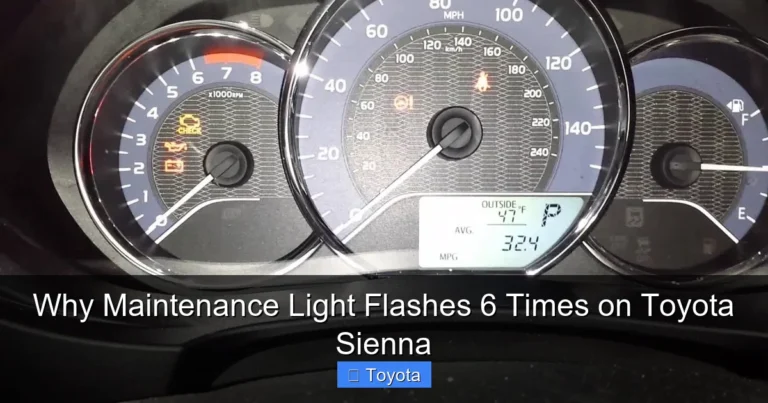
The maintenance light in your Toyota Corolla is a helpful reminder that scheduled service is due, not a warning of immediate danger. It typically illuminates based on mileage or time intervals to ensure your vehicle receives regular oil changes, tire rotations, and inspections. Understanding this light helps you avoid costly repairs and keep your Corolla running smoothly.
That little wrench icon or “Maint Req’d” text glowing on your Toyota Corolla’s dashboard can be a source of mild anxiety. Is it serious? Should you pull over? What does it even mean? First, take a breath. In your trusty Corolla, that maintenance light is one of the most straightforward and helpful indicators on your dash. It is not the same as the ominous check engine light. Think of it as your car’s polite, persistent nudge—a friendly reminder from your vehicle’s computer that it’s time for its regular check-up. This system is designed to save you money and prevent major breakdowns by alerting you to scheduled service needs based on actual driving conditions, not just a generic calendar. Let’s demystify this light together so you can drive with confidence and keep your Corolla performing at its best for years to come.
The system behind this light is called the Maintenance Required Indicator (MRI). It’s a sophisticated, yet simple, algorithm built into your Corolla’s onboard computer. It doesn’t just count miles; it monitors variables like engine runtime, coolant temperature, vehicle speed, and even your driving style—whether you do lots of short trips or long highway drives. This allows it to calculate when engine oil has degraded, when other fluids might need attention, and when wear items like tires and filters are due for service. When the predetermined threshold is reached, the wrench icon illuminates. It’s a proactive tool for ownership, and understanding it is a key part of being a responsible car owner.
Key Takeaways
- It’s a Service Reminder: The maintenance light (often called “Maint Req’d”) signals that routine, scheduled maintenance is overdue based on your driving habits and mileage, not that something is catastrophically wrong.
- Common Triggers Include: Oil changes, tire rotations, air filter replacements, and other periodic inspections specified in your owner’s manual schedule.
- You Should Address the Cause: Simply resetting the light without performing the required service defeats its purpose and can lead to accelerated engine wear or other issues.
- It Can Be Reset After Service: Once the necessary maintenance is completed by a technician or yourself, the light can be manually reset using a procedure in your owner’s manual.
- Ignoring It Has Consequences: Prolonged neglect can lead to poor fuel economy, increased emissions, potential engine damage from old oil, and uneven tire wear.
- A Flashing Light is Different: A steadily illuminated maintenance light is a reminder. If it is flashing, it may indicate a more urgent issue with the maintenance reminder system itself and warrants a diagnostic check.
- Consult Your Manual: Your specific Corolla model year’s owner’s manual is the ultimate authority on what service is due when the light illuminates and the exact reset procedure.
📑 Table of Contents
What the Maintenance Light Actually Means
To be perfectly clear: when the maintenance light comes on in your Toyota Corolla, it is telling you that scheduled maintenance is overdue. This is a critical distinction from the check engine light, which illuminates for emissions-related faults or engine problems. The maintenance light is a preventive alert, not a reactive one. It’s based on a service schedule that Toyota engineers have determined is optimal for the longevity and efficiency of your specific model’s engine and components.
The Science Behind the Schedule
The old adage of “change your oil every 3,000 miles” is largely obsolete for modern Corollas using synthetic oil. Your car’s computer knows this. It calculates “engine oil life” as a percentage. For example, it might start at 100% after an oil change and decrement based on factors like:
- Engine operating temperature: Cold starts and short trips that don’t fully warm the engine degrade oil faster.
- Engine speed and load: High-revving or heavy-load driving stresses the oil more.
- Time: Oil degrades over time even if the car isn’t driven much (a factor for seasonal vehicles).
When the oil life percentage drops to a preset threshold (often around 15-20%), the maintenance light will illuminate. But oil life is just one component. The system also tracks other intervals. For many Corollas, the light coming on might mean it’s time for a combination service: an oil change and a tire rotation, or an oil change and an air filter check. Your owner’s manual will have a detailed chart mapping mileage/time to specific services for your model year.
What It Is NOT
It is not an oil pressure warning. That is a separate, usually red, light that indicates immediate, dangerous low oil pressure. It is not a tire pressure monitoring system (TPMS) warning (that’s a cross-section tire icon). And it is not the check engine light (which is an outline of an engine). Confusing these can lead to unnecessary panic or, worse, ignoring a truly urgent problem. If you see a red oil can symbol or a flashing check engine light, those require immediate attention. The steady yellow wrench is your planning reminder.
Common Reasons the Maintenance Light Comes On
Now that we know what it means, let’s talk about the specific “what” that triggers it. For the vast majority of Corolla owners, the light comes on for one of these routine, planned reasons:

Visual guide about Why Is the Maintenance Light on in My Toyota Corolla
Image source: i.ytimg.com
1. Oil Change is Due
This is the number one culprit. Modern synthetic oils last much longer than conventional oils, but they still have a finite lifespan. Your Corolla’s MRI system is primarily an oil life monitor. When it calculates that the oil has degraded to a point where its lubricating and cleaning properties are significantly diminished, it illuminates the light to prompt an oil and filter change. This is the most common and straightforward reason.
2. Tire Rotation is Due
Tire rotations are typically recommended every 5,000 to 7,500 miles, which often coincides with oil change intervals on Corollas. The maintenance system is programmed to track this interval as well. If you’ve had an oil change recently but the light is still on, it might be reminding you that the tires need to be rotated to ensure even wear and maximize their lifespan. Neglecting rotations can lead to premature and uneven tire wear, costing you more in the long run.
3. Other Scheduled Inspections or Replacements
Depending on your Corolla’s model year and the mileage, the light could be flagging a variety of other services from the maintenance schedule. These can include:
- Engine Air Filter Replacement: A clogged air filter reduces fuel efficiency and performance.
- Cabin Air Filter Replacement: Affects your HVAC system’s ability to filter pollen and dust.
- Brake Inspection: A check on pad thickness, rotor condition, and brake fluid.
- Fluid Checks: Coolant, transmission fluid, power steering fluid, and windshield washer fluid levels and condition.
- Battery Check: Testing battery health and terminal connections.
- Multi-Point Inspection: A general once-over of belts, hoses, suspension components, and lights.
The light doesn’t specify *which* service is due—it’s a single reminder that *something* on the schedule is overdue. This is why your owner’s manual is so important; it tells you exactly what service corresponds to the current mileage interval.
4. After a Recent Service That Wasn’t Reset
Here’s a classic scenario: you or your mechanic performed the required oil change and tire rotation but forgot to manually reset the maintenance light. The system has no way of knowing the work was done unless someone tells it via the reset procedure. So, the light stays on, not because the service is still due, but because the “reminder” flag was never cleared. This is a very common and easily fixable reason.
How to Diagnose What’s Actually Due
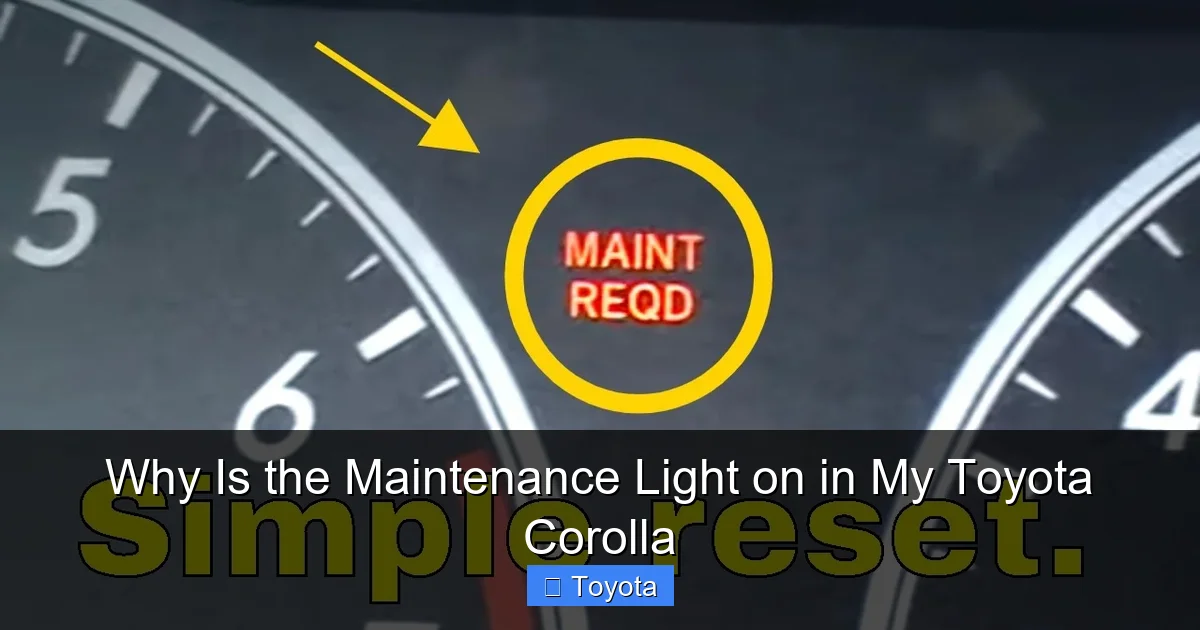
So you see the light. Now what? You need to figure out why it’s on before you can properly address it. There are two primary methods:
Visual guide about Why Is the Maintenance Light on in My Toyota Corolla
Image source: i.ytimg.com
The Odometer Trick (For Many Models)
This is a quick, built-in diagnostic feature on many Toyota models, including many Corollas. Here’s how it works:
- Turn the ignition to the “ON” position (do not start the engine). All dash lights should illuminate.
- Press the “ODO/TRIP” button on your instrument cluster to switch the display to the odometer reading (showing total miles, not trip A or B).
- Turn the ignition “OFF.”
- Now, press and hold the “ODO/TRIP” button while you turn the ignition back to the “ON” position (again, do not start). Keep holding the button.
- After about 5-10 seconds, the odometer display should change. It will often show a message like “MAINT REQ’D” or a series of dashes, and then it will display a number. This number is the number of miles (or sometimes kilometers) remaining until the next maintenance service is due.
Important: If the display simply shows the total odometer reading or does not change, this specific diagnostic trick may not be supported on your particular model year or trim. Don’t force it. Proceed to the next method.
Consult Your Owner’s Manual
This is your definitive source. Your manual contains the precise maintenance schedule for your vehicle, broken down by mileage intervals (e.g., 5,000 miles, 10,000 miles, 15,000 miles, etc.). Find the section titled “Maintenance and Care” or “Scheduled Maintenance.” Compare your current odometer reading to the chart. The first service interval that you have exceeded is the one that triggered the light. For example, if your manual says service B is due at 20,000 miles and your car has 21,500 miles, the light is on for service B. The manual will list every task included in that service (e.g., “Change oil & filter, rotate tires, inspect brakes, replace cabin air filter”).
Professional Diagnostic Scan
If the above methods are confusing or you want absolute certainty, any reputable Toyota dealership or independent mechanic can plug a diagnostic scanner into your Corolla’s OBD-II port. This tool reads the specific maintenance code stored in the car’s computer. It will tell the technician exactly which service interval was reached (e.g., code “B1” might mean oil change and tire rotation, “C2” might mean a more comprehensive service). This is the most accurate method and takes seconds.
What Happens If You Keep Driving With It On?
This is the “so what?” question. The light is on, but the car seems to run fine. Can you just… keep driving? The answer is a qualified “yes, but…” You can drive for a while, but the risks increase the longer you delay.

Visual guide about Why Is the Maintenance Light on in My Toyota Corolla
Image source: autovehicleparts.com
The Short-Term (1,000-2,000 Miles)
If the light just came on, you have some buffer. The most immediate risk is related to the oil. While the oil hasn’t turned to sludge, its protective additives are depleted. It’s less effective at lubricating, cleaning, and cooling your engine. You might start to see a slight drop in fuel economy. Your engine is running, but with less optimal protection. For a short, defined period (like finishing a road trip), this is generally acceptable, but it should be addressed as soon as conveniently possible.
The Long-Term (3,000+ Miles Overdue)
This is where problems compound. Old, dirty oil can lead to:
- Increased Engine Wear: Metal-on-metal contact increases, causing microscopic damage that accumulates.
- Sludge Formation: Degraded oil can congeal into sludge, which can clog oil passages, preventing oil from reaching critical components like camshafts and bearings.
- Potential for Catastrophic Failure: In extreme cases of neglect, sludge can lead to a seized engine, which is a total loss requiring a rebuild or replacement—a cost far exceeding any routine service.
Beyond the oil, overdue tire rotations lead to uneven, premature tire wear, meaning you’ll have to replace tires sooner. Overdue air filters hurt performance and fuel economy. Overdue brake inspections mean you might not discover worn pads until they damage the rotors, turning a $200 pad job into a $500 rotor replacement. The maintenance schedule is designed to catch these things before they become expensive emergencies.
Impact on Warranty
For newer Corollas still under the factory warranty, following the recommended maintenance schedule is often a requirement for warranty coverage. If you can prove that a failure occurred because you ignored required maintenance (like an oil change), Toyota may deny your warranty claim. Keeping service records—whether from a dealership, shop, or your own logs—is crucial proof of compliance.
How to Reset the Maintenance Light (After Service)
Once you have completed the required service—whether you did it yourself or had a professional do it—the light must be manually reset. The computer does not automatically know the work is finished. Here is the standard procedure for most Toyota Corollas from the late 1990s through current models. Always double-check your owner’s manual for the exact procedure for your specific year.
The Standard Manual Reset Procedure
- Turn the ignition ON. Do not start the engine. All warning lights on the dash should be illuminated.
- Locate the “ODO/TRIP” button. This is the button you use to toggle between the odometer and trip meter on your instrument cluster. It’s usually on the dashboard near the speedometer or on the steering wheel stalk.
- Press and hold the “ODO/TRIP” button. Keep it held down.
- While holding the button, turn the ignition OFF. Release the button after the dash lights go out.
- Immediately press and hold the “ODO/TRIP” button again. Now, turn the ignition back to the “ON” position (still do not start the engine). Keep holding the button.
- Watch the odometer display. After about 5-10 seconds, the maintenance light should blink a few times and then go out. The display may show “DONE” or simply return to showing the odometer reading. You can now release the button.
- Start the engine. Verify that the light does not come back on.
If this doesn’t work, your Corolla might use a slightly different sequence. Some newer models with multi-information displays may require using the steering wheel buttons to enter a “Settings” or “Vehicle Settings” menu to find the “Maintenance Reset” option. Your manual is your guide here.
Using a Diagnostic Tool
Mechanics and dealerships use professional scan tools to reset maintenance lights. These tools communicate directly with the car’s computer and can reset the light, as well as other systems, with a few clicks. If you’re having trouble with the manual method, a local shop can usually reset it for you in a minute, often for free or a small fee, especially if they just performed the service.
When to Be Concerned: Beyond the Basic Reminder
While the steady maintenance light is almost always benign, there are nuances that warrant a closer look:
The Light is Flashing
A steadily illuminated maintenance light is normal. A flashing maintenance light is not typical and usually indicates a problem with the maintenance reminder system itself—perhaps a fault in the computer module or its connection to the instrument cluster. This isn’t telling you service is due; it’s saying the reminder system has an error. You should have it diagnosed with a scan tool to see what fault code is stored.
The Light Comes On Immediately After Service
If you just had an oil change and the light is back on within a few hundred miles, something is wrong. It could mean:
- The mechanic forgot to reset it (most common).
- The wrong oil filter was installed, causing a leak or pressure issue that the system detects.
- There is an underlying electrical issue affecting the sensor or computer.
- For DIYers: you may not have reset it correctly, or you may have accidentally triggered the light by disconnecting the battery during the service.
First, try resetting it again carefully. If it returns immediately or very soon after, take it back to your service provider for a check.
Accompanied by Other Symptoms
The maintenance light is isolated. It should not affect how your engine runs. If the maintenance light is on and you are experiencing problems like rough idling, poor acceleration, strange noises, or a significant drop in fuel economy, those are separate issues. The maintenance light is likely just a coincidence. You need to diagnose the running problem, possibly with a scan for check engine codes. For instance, if you’re experiencing performance issues alongside the light, it could be related to a separate problem that also requires attention, similar to how a persistent airbag light indicates a safety system fault. Don’t assume the maintenance light is the cause of driveability problems.
Frequently Asked Questions
What does the maintenance light mean on my Toyota Corolla?
It means that scheduled maintenance, such as an oil change, tire rotation, or inspection, is overdue based on your driving time and mileage. It’s a reminder from your car’s computer to service your vehicle according to the factory schedule.
How many miles can I drive after the maintenance light comes on?
You typically have a buffer of 500-1,000 miles after the light first illuminates. However, it’s best to schedule service as soon as possible. Driving long distances with severely degraded oil (e.g., 3,000+ miles overdue) risks engine wear and potential damage.
Why is my maintenance light flashing instead of staying steady?
A steadily lit maintenance light is normal. A flashing light indicates a fault in the maintenance reminder system itself, not that service is due. You should have the system scanned for codes by a professional to diagnose the electrical or computer issue.
Can I reset the maintenance light without getting an oil change?
Technically yes, you can follow the reset procedure to turn it off. However, this is strongly discouraged. The light is a valuable tool that ensures your engine is protected. Resetting it without performing the required service leads to driving with degraded oil and neglected maintenance, which can cause costly damage.
Will the check engine light come on if I ignore the maintenance light?
Not directly. They are separate systems. However, ignoring maintenance like oil changes can eventually lead to conditions that trigger a check engine light, such as sludge buildup causing sensor issues or poor combustion. By then, significant damage may have occurred.
My maintenance light came on right after an oil change. What’s wrong?
The most likely reason is that the technician forgot to reset the light after completing the service. This is very common. Try resetting it yourself using the procedure in your owner’s manual. If it comes back on immediately or soon after, return to the shop to ensure the service was performed correctly and to have them reset it.