
Why Is My Toyota Corolla Tire Light Blinking Then Solid?

When your Toyota Corolla’s tire pressure warning light blinks and then stays solid, it’s your Tire Pressure Monitoring System (TPMS) signaling a confirmed problem. The blinking phase means the system is actively checking or has detected a sudden change, while the solid light confirms a persistent issue, most commonly low tire pressure. Ignoring it can lead to poor handling, uneven tire wear, and unsafe driving conditions. The solution usually involves checking and inflating your tires to the correct PSI, but it can also point to a faulty sensor or damaged valve stem that needs professional attention.
Key Takeaways
- Blinking vs. Solid: A blinking tire light means the TPMS is initializing or has detected a rapid pressure change. A solid light confirms a persistent fault, typically low pressure in one or more tires.
- Primary Cause is Low Pressure: The #1 reason for this sequence is underinflated tires, often due to temperature changes, slow leaks, or punctures.
- It Could Be the Sensor: A solid light after a blink can also indicate a failed TPMS sensor, a dead sensor battery, or damage to the sensor/valve stem assembly.
- Check All Tires Immediately: Physically check the pressure in all four tires (and the spare) with a gauge when the light comes on. Inflate to the PSI listed on your driver’s door jamb sticker.
- Reset After Fixing: Once pressure is corrected or a faulty sensor is replaced, the TPMS will often reset itself after 10-20 miles of driving. If it doesn’t, a manual reset or professional scan tool is needed.
- Don’t Ignore It: Driving with underinflated tires is dangerous, reduces fuel efficiency, causes premature tire wear, and can lead to a blowout.
- Seasonal Changes Trigger It: Cold weather is a very common culprit, as it naturally lowers tire pressure by 1 PSI for every 10°F drop in temperature.
📑 Table of Contents
- Understanding Your Toyota Corolla’s Tire Pressure Warning Light
- The “Blinking Then Solid” Sequence Decoded
- Most Common Causes in a Toyota Corolla
- Immediate Action Steps: What to Do When the Light Comes On
- When to Call a Professional: Beyond Simple Inflation
- Preventive Maintenance: Keeping the Light Off for Good
- The Connection to Overall Toyota Reliability
- Conclusion: Your Safety is the Bottom Line
Understanding Your Toyota Corolla’s Tire Pressure Warning Light
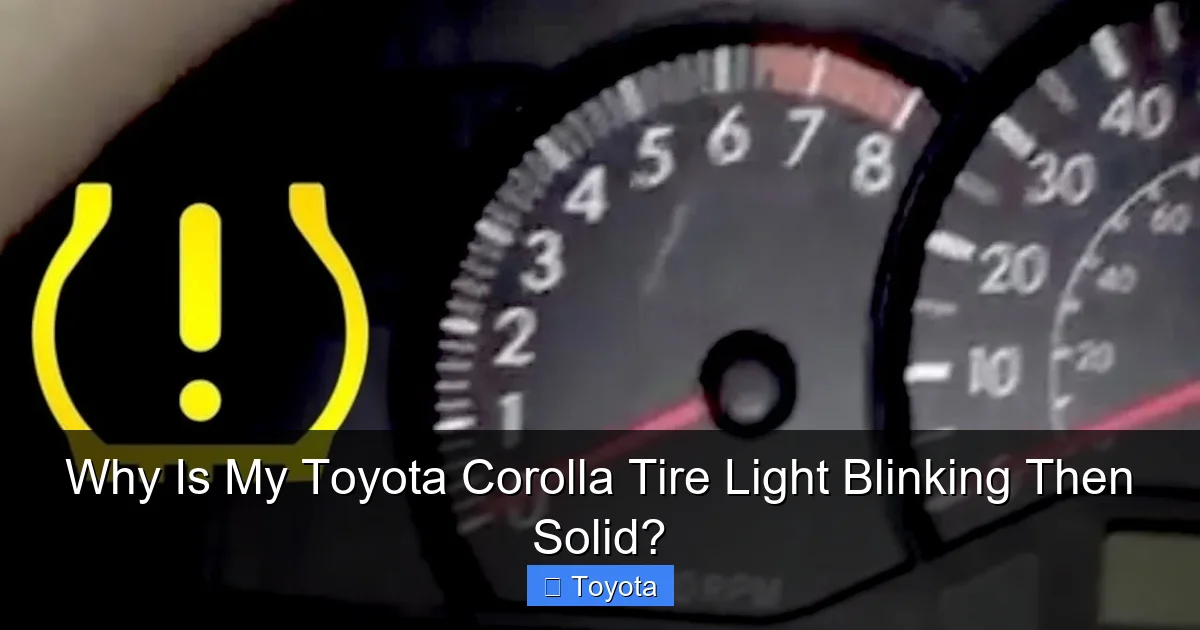
That little yellow exclamation point inside a tire cross-section on your dashboard isn’t just a nuisance light. It’s your Toyota Corolla’s Tire Pressure Monitoring System (TPMS) talking to you. When it blinks and then turns solid, it’s delivering a specific, urgent message. Think of it like a cautious friend: the blink says, “Hey, I’m noticing something weird with your tire pressure!” and the solid light says, “Okay, it’s definitely a problem now, and you need to check it out.” Understanding this two-stage warning is the first step to diagnosing and fixing the issue correctly, ensuring your safety and your car’s health.
What Exactly is the TPMS?
Since 2007, all vehicles sold in the U.S., including every Toyota Corolla, have been legally required to have a TPMS. It’s a safety system designed to warn you when your tire pressure is significantly low. Your Corolla has sensors mounted inside each wheel (usually on the valve stem). These sensors constantly monitor the air pressure and temperature, transmitting that data wirelessly to the car’s computer. When the pressure in any tire drops 25% or more below the vehicle manufacturer’s recommended cold inflation pressure, the system triggers the warning light on your dash.
The sequence—blinking then solid—is part of its diagnostic routine. When you start the car, the light typically blinks for a few seconds and then goes out. That’s the system’s “self-test” to confirm all sensors are communicating. If a sensor is missing or not responding, the light may blink for a longer period and then stay on. More commonly for drivers, the light comes on while you’re driving, blinks for a moment, and then stays steadily illuminated. This sequence usually means the system detected a rapid pressure loss (like from a puncture) or a sensor fault during operation, and has now confirmed a persistent low-pressure condition.
The “Blinking Then Solid” Sequence Decoded
This specific behavior is your TPMS’s way of differentiating between a transient event and a confirmed fault. Let’s break down what each phase means.
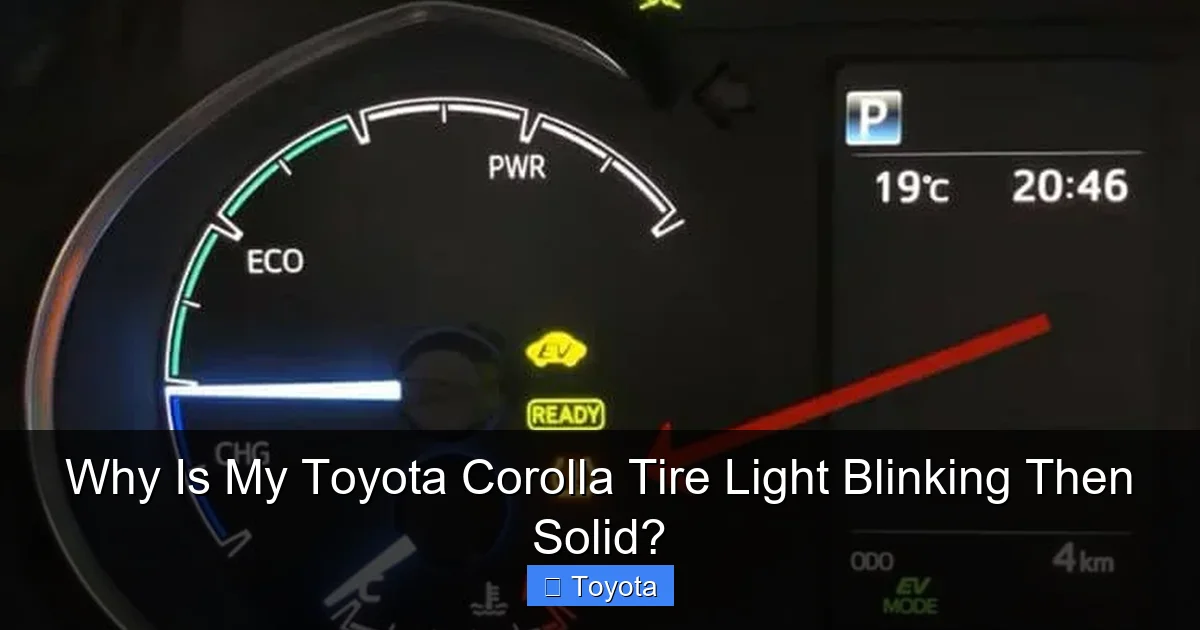
Visual guide about Why Is My Toyota Corolla Tire Light Blinking Then Solid?
Image source: engineauditor.com
Phase 1: The Blinking Light
When the light first starts blinking while you’re driving, it’s often because the TPMS sensor for a particular tire suddenly reported a pressure that dropped very quickly—say, from a nail puncture or a severe impact like hitting a pothole. The system’s computer gets this sudden data spike and immediately alerts you with a blinking light. This blink phase can last anywhere from a few seconds to about a minute. It’s essentially saying, “Alert! Alert! I just saw something critical!” During this time, the system is also performing a check to see if the pressure stabilizes or if the sensor itself is malfunctioning.
Phase 2: The Solid Light
If, after the initial blinking, the pressure in that tire remains low (or the sensor continues to send an error code), the warning light will switch to a solid, steady glow. This is the system’s final confirmation: “The condition is persistent. You must address this.” A solid light means the TPMS has logged a fault and will continue to illuminate until the problem is resolved and the system is reset. At this point, the specific tire with the issue is usually identified. In many modern Corollas, a tire pressure icon will appear on the multi-information display, sometimes with the exact pressure reading for each tire, pointing you directly to the culprit.
In rare cases, a blinking light that never goes solid (or vice versa) can indicate a communication problem with a specific sensor rather than low pressure. But the classic “blink-then-solid” pattern is overwhelmingly associated with a confirmed, significant drop in pressure in at least one tire.
Most Common Causes in a Toyota Corolla
Now that you know what the light means, let’s explore the “why.” For Toyota Corolla owners, the causes are usually straightforward, but some are model-specific quirks.
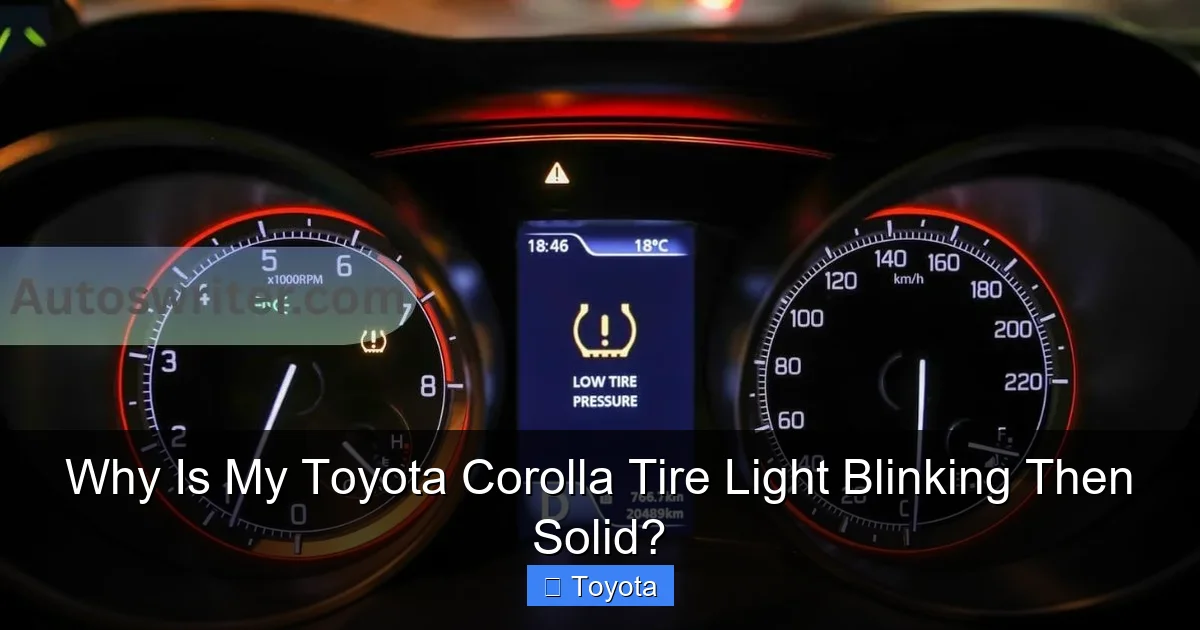
Visual guide about Why Is My Toyota Corolla Tire Light Blinking Then Solid?
Image source: autoswriter.com
1. Temperature Fluctuations (The #1 Suspect)
This is the most frequent and innocent cause. Air is a gas, and it expands when heated and contracts when cooled. A drop in outside temperature, especially overnight in fall and winter, will lower your tire’s pressure. For every 10°F drop in temperature, your tires can lose about 1-2 PSI. If your tires were perfectly inflated on a warm afternoon, a cold morning could easily trigger the TPMS. The light might blink as you start driving (tires warm up slightly) but then go solid if the pressure is still 25% below spec. This is why it’s crucial to check and adjust tire pressure when seasons change. You can learn more about how temperature affects your tires in our detailed guide on why tire pressure goes up and down.
2. A Puncture or Slow Leak
This is the more urgent cause. A nail, screw, piece of sharp debris, or even a curb impact can create a leak. The initial puncture might cause a rapid pressure drop, triggering the blinking alert. As the air continues to seep out, the light goes solid. A slow leak from a damaged valve stem or a bead seal issue (where the tire meets the rim) will follow a similar pattern, just over a longer timeframe—hours or days instead of minutes. Always inspect the tire thoroughly for visible objects or damage.
3. Faulty or Damaged TPMS Sensor
The sensor itself can fail. These are electronic devices with a small internal battery that typically lasts 7-10 years. If the battery dies, the sensor stops transmitting, and the TPMS will set a fault code, often causing a blinking-then-solid sequence. Sensors are also vulnerable to damage during tire service (like mounting/dismounting) or from corrosion, especially on the valve stem if it’s exposed to road salt. A Corolla with aftermarket wheels or tires might have incompatible sensors. A failed sensor will need to be replaced, and the new one must be programmed to the vehicle’s computer.
4. Recent Tire Service
Did you just get new tires, a rotation, or a repair? This is a classic trigger. If the tire technician didn’t reset the TPMS after the work, or if a sensor was damaged during the process, the light will come on. Sometimes, the sensor gets bumped and needs to be re-seated. Always ensure your shop resets the TPMS after any wheel/tire work. If you did it yourself and swapped wheels, the sensors in the new wheels may not be recognized until programmed.
5. Overloaded Vehicle or Worn Tires
Carrying a heavy load can slightly compress tires and lower pressure. While less common, it can push a marginally low tire over the 25% threshold. Severely worn tires (treads worn to the wear bars) can also be more prone to pressure loss and may not hold air as well, triggering the sensor.
Immediate Action Steps: What to Do When the Light Comes On
Safety is the priority. When you see that blinking-then-solid light, here is your step-by-step action plan.
Visual guide about Why Is My Toyota Corolla Tire Light Blinking Then Solid?
Image source: i.ytimg.com
Step 1: Find a Safe Place and Stop
If the light comes on while driving, signal and pull over to a safe, level area as soon as possible. Do not panic, but do not ignore it. Driving on significantly underinflated tires is dangerous. It causes the tire’s sidewalls to flex excessively, generating heat that can lead to a blowout. It also severely degrades handling and braking.
Step 2: Visually Inspect All Tires
Once stopped, turn on your hazard lights. Get out and look at all four tires. Do any appear visibly flat, severely sagging, or have a noticeable bulge on the sidewall? Is there an obvious object like a nail protruding? A severely damaged tire should not be driven on. If you see major damage, call for roadside assistance.
Step 3: Check Pressures with a Gauge
This is the most critical step. Do not rely on eyeballing. Use a reliable, handheld tire pressure gauge (digital or analog). Remove the valve cap, press the gauge on firmly, and note the reading. Do this for all four tires and the spare, if equipped. Important: The pressure must be checked when the tires are “cold,” meaning the car has been parked for at least 3 hours or driven less than a mile. Driving heats the tires and gives falsely high readings.
Compare your readings to the manufacturer’s recommended pressure. This is not the number on the tire sidewall (which is the max pressure). Find the sticker on the driver’s side door jamb or the owner’s manual. It will list the recommended PSI for front and rear tires, usually something like 32 PSI for all four. For a Toyota Corolla, common recommendations are between 32-35 PSI, but always use the sticker on your specific car.
Step 4: Inflate to the Correct Pressure
If any tire is below the recommended PSI (especially if it’s 25% low or more), you need to add air. Use an air compressor at a gas station or your own portable one. Add air in short bursts, re-checking with your gauge frequently to avoid over-inflation. Inflate each tire to exactly the PSI listed on your door jamb sticker. Don’t guess. Once all tires are at the correct pressure, the solid light should turn off after you drive for 10-20 miles. The TPMS needs time to re-read the new, correct pressures.
If after inflating, the light remains solid, there is likely another issue. The leak might be too fast (you’d notice the tire going flat quickly), or a sensor is damaged. If the light goes off but then comes back on within a day or two, you have a slow leak that needs finding and repairing.
When to Call a Professional: Beyond Simple Inflation
You’ve checked and inflated the tires perfectly, but the light is still stubbornly solid. Now it’s time to seek expert help. Here are the scenarios that require a technician.
Persistent Light After Correct Inflation
If you’ve confirmed all tires are at the exact, correct cold pressure and the light still doesn’t go off after a reasonable drive (20-30 miles), the TPMS system has logged a fault that isn’t related to current pressure. This points to a hardware issue.
Identifying and Repairing a Leak
If you suspect a slow leak but can’t find the source, a tire shop can perform a ” dunk test.” They remove the wheel, submerge it in water, and look for bubbles. This will pinpoint exactly where air is escaping—a nail hole in the tread, a damaged valve stem, or a bad seal on the rim. The repair could be a simple plug/patch for a nail hole, or it might require a new valve stem (which includes the TPMS sensor on most modern cars).
TPMS Sensor Replacement and Programming
A failed sensor must be replaced. This isn’t like changing a wiper blade. The new sensor must be specifically compatible with your Toyota Corolla’s model year and must be “programmed” or “learned” by the vehicle’s computer. This requires a special scan tool that only tire shops and dealerships have. They will install the new sensor, use their tool to register its ID to your car’s system, and then reset the TPMS warning. This service typically costs $50-$100 per sensor, plus labor. If you have a Corolla with direct TPMS (which all do), this is the standard procedure. For more on general tire pressure issues, our article on why the tire pressure light is on covers broader scenarios.
System Reset After Tire Rotation or Replacement
Even if sensors are fine, the TPMS needs to be reset after a tire rotation or if you install a spare. Some Corollas have a dedicated TPMS reset button (often under the dash near the steering column). The procedure usually involves turning the ignition on, pressing and holding the reset button until the TPMS light blinks three times, then driving the car. If your model doesn’t have a button or the process doesn’t work, a technician can do it quickly with their scan tool. It’s a good practice to have this done professionally after any tire work to ensure the system is calibrated correctly.
Preventive Maintenance: Keeping the Light Off for Good
The best way to deal with a TPMS light is to prevent it from coming on in the first place. A little regular maintenance goes a long way.
Check Tire Pressure Monthly and with Seasons
Make it a habit. Use your own gauge to check all tires, including the spare, at least once a month. Do it when the tires are cold. Adjust pressure as needed. Be extra vigilant during major temperature swings in spring and fall. Proper inflation is the single most important thing you can do for tire life, fuel economy, and safety.
Rotate Your Tires Regularly
Tire rotation promotes even wear. Unevenly worn tires can develop pressure issues more readily. Toyota typically recommends rotating tires every 5,000 to 7,500 miles. This is often done with oil changes. Regular rotation also gives a technician a chance to inspect the tires and sensors for damage.
Inspect Tires and Valves Visually
When you check pressure, look at the tread and sidewalls. Look for nails, screws, cuts, bulges, or excessive wear. Check the valve stems for cracks, corrosion, or damage. A damaged valve stem is a common source of slow leaks and will eventually fail.
Be Mindful of Road Hazards
Potholes, curbs, and debris are the enemies of your tires and TPMS sensors. A hard impact can bend a wheel, damage a sensor, or create a slow leak. Drive cautiously on rough roads. If you hit something hard, it’s wise to have the tires and wheels inspected soon after.
Use Quality Tires and Professional Installation
When replacing tires, choose reputable brands. Ensure the shop uses proper mounting techniques to avoid damaging the sensor. Ask them to replace the valve stem (which includes the sensor core) with new tires for best results. Cheap, improper tire mounting is a leading cause of premature sensor damage.
The Connection to Overall Toyota Reliability
You bought a Toyota Corolla, in part, for its legendary reliability. You expect things to work. A persistent warning light can feel like a betrayal of that trust. But here’s the thing: the TPMS is a sophisticated electronic safety feature. It’s not a mechanical part like an engine that can run for decades. It’s a sensor exposed to the elements, road salt, and constant vibration. Its job is to alert you to a maintenance issue—underinflation—that directly impacts the reliability and efficiency you value. A well-maintained Corolla with properly inflated tires will deliver the fuel economy, smooth ride, and longevity Toyota designed. The TPMS light is your maintenance reminder, not a sign of a flawed car. In fact, it’s a sign the system is working perfectly. For more on why Toyotas are built to last, you can read our deep dive into why Toyota is so reliable, which explains the engineering philosophy that extends to systems like TPMS.
Think of it this way: the TPMS light is an early warning system. Catching a slow leak early prevents a dangerous blowout. Catching a sensor failure early prevents you from driving with unknown, dangerously low pressure. It’s a tool that helps you maintain the very reliability you purchased. Addressing the light promptly is an act of preserving your car’s health, not an indictment of it.
Conclusion: Your Safety is the Bottom Line
That blinking-then-solid tire pressure light in your Toyota Corolla is a clear, direct communication from your car. The blinking is the alert, the solid is the confirmation. In the vast majority of cases, it points to a simple, fixable problem: low tire pressure, most often due to temperature changes or a puncture. Your immediate response should be to safely stop, check all tire pressures with a gauge, and inflate them to the exact PSI specified on your driver’s door jamb.
If inflating doesn’t solve it, the issue escalates to a potential sensor failure, a persistent leak, or a system that needs resetting. At that point, a professional tire technician with the proper diagnostic tools is your best ally. They can find slow leaks, test sensors, and reprogram the system.
Remember, your tires are the only part of your car touching the road. Their pressure affects everything: braking distance, cornering grip, fuel efficiency, tire wear, and ride comfort. That little light is your first and best defense against the dangers and costs of underinflation. By understanding its message and acting swiftly, you protect yourself, your passengers, and your investment in your reliable Toyota Corolla. Don’t let a blinking light become a bigger problem. Check your tires today.
Frequently Asked Questions
What should I do if the tire light blinks then goes solid while I’m driving?
First, remain calm and drive carefully to a safe, level area as soon as possible. Turn on your hazard lights. Once stopped, visually inspect all tires for obvious damage or flatness. Then, check the pressure in all four tires with a gauge when they are cold. Inflate any low tire to the correct PSI found on your driver’s door jamb sticker. The light should turn off after 10-20 miles of driving.
Can I keep driving with a solid tire pressure light?
It is not safe to drive long distances with a solid tire pressure light. Driving on underinflated tires causes excessive heat buildup, which can lead to a blowout, poor handling, and increased stopping distances. It also causes rapid, uneven tire wear. You should check and correct the pressure immediately. If the tire is visibly damaged or rapidly losing air, do not drive on it; call for assistance.
How do I reset the tire pressure light on my Toyota Corolla?
First, ensure all tires are inflated to the correct cold pressure. Drive normally for 10-20 miles; the system often resets itself. If it doesn’t, your Corolla may have a TPMS reset button, usually located under the dash near the steering column. Turn the ignition to “ON” (not start), press and hold the button until the TPMS light blinks three times, then start the car and drive. If there’s no button or this fails, a scan tool at a tire shop or dealership is required to reset the system.
How much does it cost to replace a TPMS sensor on a Toyota Corolla?
The total cost per sensor, including parts and labor, typically ranges from $50 to $120 at an independent shop and can be higher at a dealership. The sensor itself costs $30-$70, and labor is required to remove the tire, replace the sensor, and reprogram it to the vehicle’s computer using a special tool. If the valve stem is separate, that’s an additional small cost.
How long do TPMS sensors last in a Toyota Corolla?
TPMS sensors have an internal, non-replaceable battery that generally lasts between 7 and 10 years. Since they are sealed units, when the battery dies, the entire sensor must be replaced. Their lifespan can be shortened by physical damage, corrosion (especially from road salt), or improper tire mounting.
Will the tire light come on if I over-inflate my tires?
No. The TPMS is designed to trigger only when pressure is significantly *low* (25% or more below the recommended level). Over-inflation will not cause the TPMS light to illuminate. However, over-inflating is also dangerous, as it reduces the tire’s contact patch, leads to a harsh ride, and increases the risk of a puncture or blowout. Always inflate to the exact pressure specified on your door jamb sticker, never above it.