Why Is My Subaru Overheating?

Contents
- 1 Key Takeaways
- 2 📑 Table of Contents
- 3 Why Is My Subaru Overheating? A Complete Guide to Diagnosing and Fixing the Problem
- 4 Understanding Your Subaru’s Cooling System
- 5 Top Causes of Subaru Overheating
- 6 Preventing Overheating in Your Subaru
- 7 When to See a Mechanic
- 8 Conclusion
- 9 Frequently Asked Questions

Digital Tire Pressure Gauge

Jack Stands

Car LED Headlight Bulb

Car Phone Holder
If your Subaru is overheating, it’s usually due to cooling system issues like low coolant, a faulty thermostat, or a failing water pump. Ignoring the problem can lead to serious engine damage, so early diagnosis and action are crucial.
Key Takeaways
- Low coolant levels are the #1 cause: A leak or evaporation can reduce coolant, leading to overheating—always check the reservoir and radiator.
- A faulty thermostat can trap heat: If it doesn’t open properly, coolant won’t flow, causing the engine to overheat even with full coolant.
- Water pump failure stops circulation: The pump moves coolant through the engine; if it fails, heat builds up rapidly.
- Radiator blockages reduce cooling efficiency: Dirt, debris, or internal corrosion can restrict airflow and coolant flow.
- Head gasket failure is serious and costly: A blown head gasket can let coolant leak into combustion chambers, causing overheating and white exhaust smoke.
- Electric cooling fans must work properly: If fans don’t turn on at the right temperature, the engine overheats—especially in traffic.
- Regular maintenance prevents most issues: Flushing coolant, inspecting hoses, and checking belts can stop overheating before it starts.
📑 Table of Contents
Why Is My Subaru Overheating? A Complete Guide to Diagnosing and Fixing the Problem
You’re cruising down the highway, enjoying the smooth ride of your Subaru, when suddenly the temperature gauge starts creeping into the red zone. Your heart skips a beat. Is your car overheating? You pull over, pop the hood, and see steam rising from the engine bay. Now what?
Overheating is one of the most alarming issues a Subaru owner can face. It’s not just inconvenient—it can lead to severe engine damage if ignored. The good news? Most overheating problems are preventable and often fixable with the right knowledge. In this guide, we’ll walk you through the most common reasons your Subaru might be overheating, how to diagnose them, and what you can do to fix them—before it’s too late.
Whether you drive a Forester, Outback, Impreza, or WRX, the cooling system works the same way: it keeps your engine at the right temperature by circulating coolant through the engine block and radiator. When something goes wrong in that system, heat builds up fast. Understanding how your Subaru’s cooling system works—and what can break down—is the first step to keeping your car running cool and reliable for years to come.
Understanding Your Subaru’s Cooling System
Visual guide about Why Is My Subaru Overheating?
Image source: dealerinspire-image-library-prod.s3.us-east-1.amazonaws.com
Before diving into the causes of overheating, it helps to understand how your Subaru’s cooling system is designed to work. Think of it like your body’s circulatory system: just as blood carries heat away from your core, coolant carries heat away from your engine.
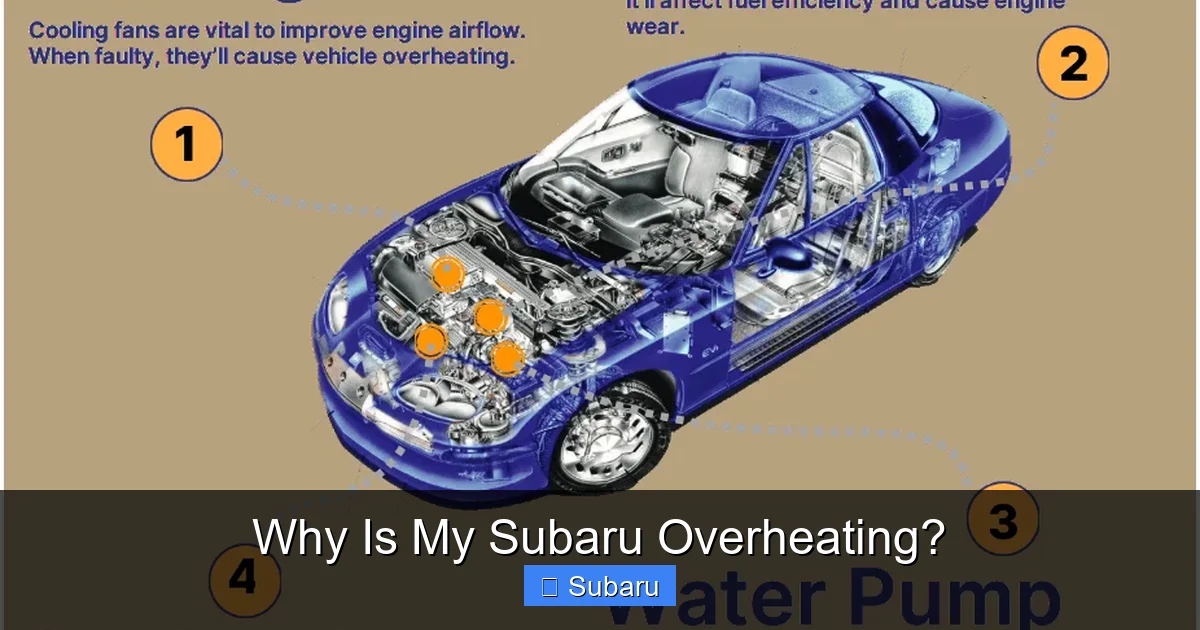
The main components include the radiator, water pump, thermostat, coolant reservoir, hoses, and cooling fans. Coolant—a mix of antifreeze and water—flows through passages in the engine, absorbing heat. The hot coolant then travels to the radiator, where air (from driving or fans) cools it down before it’s pumped back into the engine.
Subarus, especially turbocharged models like the WRX or STI, generate more heat due to higher performance. That means their cooling systems work harder and are more prone to issues if not maintained properly. Even naturally aspirated models like the Crosstrek or Legacy can overheat if the system isn’t in top shape.
One key feature in many Subarus is the use of a coolant overflow tank (or reservoir). This allows coolant to expand when hot and contract when cool, maintaining proper pressure. If this system is compromised—say, by a cracked reservoir or loose cap—coolant can escape, leading to low levels and overheating.
Another thing to note: Subarus often use a timing belt (in older models) or timing chain (in newer ones), both of which are driven by the engine and connected to the water pump in some designs. If the water pump fails, it can sometimes affect the timing system, leading to catastrophic engine failure. That’s why catching cooling issues early is so important.
How the Cooling System Keeps Your Engine Safe
Your engine operates best around 195–220°F (90–104°C). Too cold, and fuel efficiency drops; too hot, and metal parts can warp, seize, or crack. The cooling system’s job is to maintain that sweet spot.
When the engine starts, the thermostat stays closed, allowing the engine to warm up quickly. Once it reaches operating temperature, the thermostat opens, letting coolant flow from the engine to the radiator. The water pump—driven by a belt or chain—keeps the coolant moving. Meanwhile, electric fans kick on when the engine gets too hot or when the car is idling, pulling air through the radiator to help cool the coolant.
If any part of this system fails, the balance is disrupted. For example, if the thermostat gets stuck closed, coolant can’t reach the radiator, and the engine overheats even if everything else is working. Similarly, if the water pump stops spinning, coolant doesn’t move at all—no matter how good the radiator is.
Signs Your Subaru Is Overheating
You might not always see steam or hear loud noises. Overheating can sneak up on you. Here are the most common warning signs:
– The temperature gauge is in the red or near it.
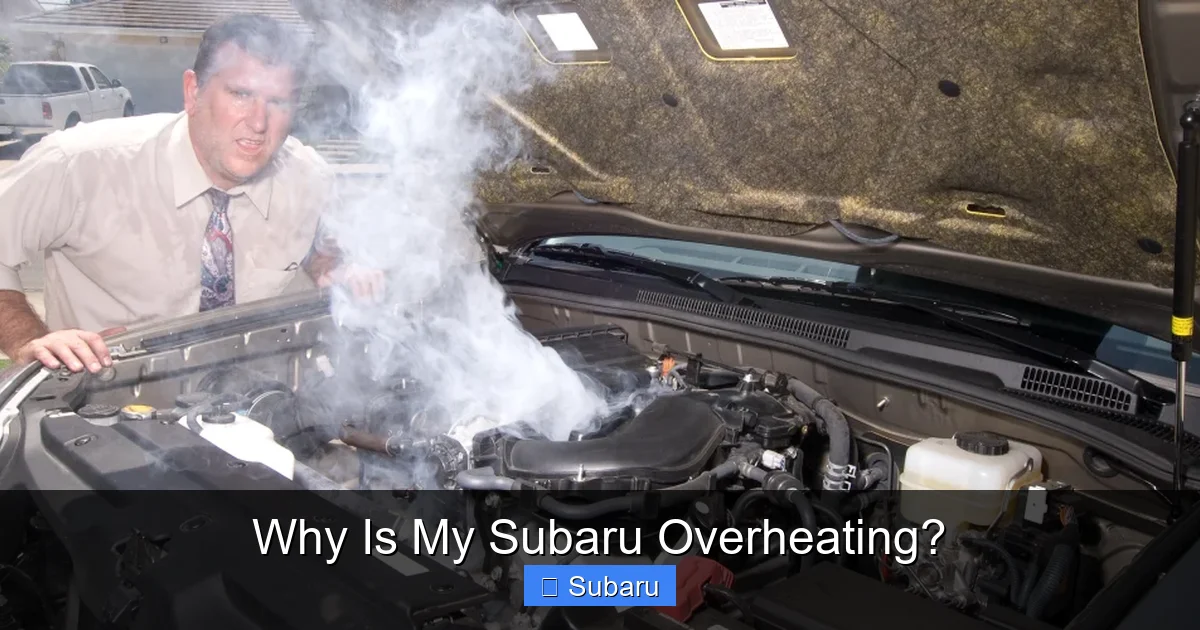
– Steam or smoke coming from under the hood.
– A sweet smell (from leaking coolant).
– Reduced engine power or a “limp mode” warning.
– Coolant leaking under the car (often green, orange, or pink).
– The heater stops working or blows cold air.
If you notice any of these, pull over safely and turn off the engine. Continuing to drive can warp the cylinder head, crack the engine block, or destroy the head gasket—repairs that can cost thousands.
Top Causes of Subaru Overheating

Visual guide about Why Is My Subaru Overheating?
Image source: i.ytimg.com
Now that you know how the system works and what to look for, let’s dive into the most common reasons your Subaru might be overheating. We’ll cover each cause in detail, including how to spot it and what you can do about it.
1. Low Coolant Level
This is the most common cause of overheating—and the easiest to fix. Coolant doesn’t just disappear on its own, so if your level is low, there’s likely a leak somewhere.
Check the coolant reservoir when the engine is cold. The level should be between the “MIN” and “MAX” marks. If it’s below “MIN,” top it off with the correct Subaru-approved coolant (usually a 50/50 mix of antifreeze and distilled water). Never open the radiator cap when the engine is hot—it’s under pressure and can cause severe burns.
But topping off isn’t enough. You need to find the leak. Common leak spots include:
– Radiator (cracks or corrosion)
– Hoses (cracked, loose, or bulging)
– Water pump (weeping from the weep hole)
– Heater core (coolant smell inside the cabin)
– Head gasket (milky oil or white exhaust smoke)
If you can’t find the leak, consider a pressure test. A mechanic can pressurize the cooling system to locate the source. Small leaks might be fixable with a sealant, but major leaks usually require part replacement.
2. Faulty Thermostat
The thermostat is a small but critical component. It acts like a gatekeeper, opening and closing to regulate coolant flow. If it gets stuck closed, coolant can’t reach the radiator, and the engine overheats quickly.
Symptoms of a bad thermostat include:
– Engine overheating shortly after starting
– Temperature gauge spikes then drops suddenly
– Heater doesn’t get hot
You can test the thermostat by removing it and placing it in a pot of water on the stove. Heat it slowly and watch to see if it opens at the specified temperature (usually around 180–195°F). If it doesn’t open, it’s faulty.
Replacing a thermostat is relatively inexpensive and can be done with basic tools. Just make sure to use a Subaru-specific thermostat and bleed the cooling system properly afterward to avoid air pockets.
3. Water Pump Failure
The water pump is the heart of the cooling system. If it fails, coolant stops circulating, and overheating is almost guaranteed.
Signs of a failing water pump include:
– Coolant leaking from the weep hole (a small hole near the pump pulley)
– Whining or grinding noise from the front of the engine
– Overheating, especially at idle or low speeds
In many Subarus, the water pump is driven by the timing belt. That means replacing the water pump often requires removing the timing belt—a job best left to professionals unless you’re experienced. Neglecting a failing water pump can lead to timing belt failure, which can destroy your engine.
If you suspect a water pump issue, get it checked ASAP. Replacing it early can save you from a much bigger repair bill.
4. Radiator Problems
The radiator dissipates heat from the coolant. If it’s clogged, damaged, or not getting enough airflow, your Subaru will overheat.
Common radiator issues:
– External blockage: Dirt, bugs, or debris clogging the fins. Clean with compressed air or a soft brush.
– Internal corrosion: Over time, coolant breaks down and leaves deposits. A radiator flush can help, but severe corrosion may require replacement.
– Leaks: Cracks or punctures from road debris. Small leaks can sometimes be repaired with epoxy, but a new radiator is often the best long-term fix.
Also, check the radiator cap. A weak cap won’t hold pressure, lowering the coolant’s boiling point and causing overheating. Replace it if it’s old or damaged.
5. Cooling Fan Failure
Electric cooling fans are essential for keeping the radiator cool when the car is idling or moving slowly. If they don’t turn on, the engine can overheat even with a full coolant system.
Why fans fail:
– Blown fuse or relay
– Faulty temperature sensor
– Bad fan motor
– Wiring issues
To test, turn on the AC—the fans should come on. If they don’t, check the fuses first. If the fuses are good, use a multimeter to test the fan motor and sensor. Replacing a fan motor is usually straightforward, but diagnosing the root cause may require a scan tool.
6. Head Gasket Failure
This is the big one—the most serious cause of overheating. The head gasket seals the cylinder head to the engine block. If it fails, combustion gases can enter the cooling system, or coolant can leak into the cylinders.
Symptoms include:
– Overheating with no obvious coolant leak
– White, sweet-smelling exhaust smoke
– Milky or frothy engine oil (coolant mixing with oil)
– Bubbles in the coolant reservoir
– Loss of coolant with no visible leak
A head gasket failure often results from prolonged overheating, so it’s both a cause and a consequence. Repairing it is expensive—often $2,000 or more—because it requires disassembling the engine.
If you suspect a blown head gasket, stop driving immediately. A mechanic can perform a compression test or use a chemical block tester to confirm.
Preventing Overheating in Your Subaru
Visual guide about Why Is My Subaru Overheating?
Image source: i.ytimg.com
The best way to deal with overheating is to prevent it. Regular maintenance goes a long way in keeping your cooling system in top shape.
Follow the Maintenance Schedule
Subaru recommends coolant flushes every 30,000 to 60,000 miles, depending on the model and year. Old coolant loses its corrosion inhibitors and can lead to rust and blockages. Use only Subaru-approved coolant—mixing types can cause chemical reactions that damage the system.
Also, inspect hoses and belts regularly. Cracked, brittle, or loose hoses can burst under pressure. Serpentine belts should be checked for wear and tension.
Check Coolant Levels Monthly
Make it a habit to check your coolant reservoir every month. Look for leaks, discoloration, or debris. If the level keeps dropping, investigate immediately.
Watch for Warning Signs
Don’t ignore the temperature gauge. If it starts creeping up, pull over and investigate. Also, pay attention to unusual smells, noises, or performance changes.
Use the Right Coolant
Subarus are sensitive to coolant type. Using the wrong kind can cause corrosion or clog the radiator. Always use a 50/50 mix of Subaru Super Coolant or equivalent and distilled water.
Keep the Radiator Clean
If you drive on dirt roads or in bug-heavy areas, clean the radiator fins regularly. A garden hose or compressed air works well—just don’t use high pressure, which can bend the fins.
When to See a Mechanic
Some overheating issues are DIY-friendly, like topping off coolant or replacing a thermostat. But others require professional help.
See a mechanic if:
– You can’t find the source of a coolant leak
– The water pump is leaking or noisy
– You suspect a head gasket failure
– The cooling fans aren’t working and you’ve checked fuses
– The radiator is clogged or damaged
A certified Subaru technician has the tools and knowledge to diagnose complex issues quickly. They can also perform a cooling system pressure test, combustion leak test, or infrared temperature scan to pinpoint problems.
Conclusion
Overheating in your Subaru is never something to ignore. While it can stem from simple issues like low coolant or a stuck thermostat, it can also signal serious problems like a blown head gasket or water pump failure. The key is early detection and action.
By understanding how your cooling system works, recognizing the warning signs, and performing regular maintenance, you can keep your Subaru running cool and reliable. Whether you’re driving through mountain passes or city traffic, a well-maintained cooling system ensures your engine stays protected.
Remember: when in doubt, pull over. It’s better to be safe than sorry. And if you’re not comfortable diagnosing or fixing the issue yourself, don’t hesitate to visit a trusted Subaru specialist. Your engine—and your wallet—will thank you.
Frequently Asked Questions
Can I drive my Subaru if it’s overheating?
No, you should not drive your Subaru if it’s overheating. Continuing to drive can cause severe engine damage, including warped cylinder heads or a cracked engine block. Pull over safely and turn off the engine immediately.
How often should I check my Subaru’s coolant level?
Check your coolant level at least once a month, especially before long trips. Always check when the engine is cold to avoid burns and get an accurate reading.
What kind of coolant should I use in my Subaru?
Use Subaru Super Coolant or an equivalent ethylene glycol-based coolant mixed 50/50 with distilled water. Avoid mixing different types of coolant, as this can cause corrosion or clogging.
Why is my Subaru overheating only in traffic?
This usually points to a cooling fan issue. When you’re moving, airflow cools the radiator, but at idle, the electric fans must do the work. If they’re not turning on, the engine overheats in stop-and-go traffic.
Can a bad thermostat cause overheating?
Yes, a faulty thermostat that’s stuck closed prevents coolant from flowing to the radiator, causing the engine to overheat quickly. Replacing it is usually a simple and inexpensive fix.
Is overheating covered under Subaru warranty?
It depends on the cause and your warranty type. If the overheating is due to a manufacturing defect (like a faulty water pump), it may be covered. However, damage from neglect or improper maintenance is typically not covered.