Why Is My Subaru Audio Not Working

Contents
- 1 Key Takeaways
- 2 📑 Table of Contents
- 3 Why Is My Subaru Audio Not Working? A Complete Troubleshooting Guide
- 4 Common Causes of Subaru Audio Failure
- 5 Step-by-Step Troubleshooting: How to Fix Subaru Audio Issues
- 6 Advanced Fixes: When Basic Troubleshooting Isn’t Enough
- 7 Preventing Future Audio Problems
- 8 When to See a Professional
- 9 Conclusion
- 10 Frequently Asked Questions

Car LED Headlight Bulb

Engine Oil Additive

LED Emergency Road Flares

Windshield Cleaning Tool
If your Subaru audio isn’t working, it’s often due to simple issues like muted settings, faulty connections, or software glitches. This guide walks you through troubleshooting steps, from checking the fuse box to resetting the infotainment system, so you can get your tunes back on the road.
Key Takeaways
- Check the volume and mute settings first: It sounds obvious, but many audio problems start with accidentally muted audio or low volume levels.
- Inspect the fuse box for blown fuses: A single blown fuse can disable your entire audio system—locate and replace it if needed.
- Test Bluetooth and auxiliary connections: If wireless or wired audio isn’t working, reconnect your device or try a different cable.
- Reset the infotainment system: A soft or hard reset can resolve software glitches causing audio failure.
- Examine speaker wiring and components: Damaged wires or blown speakers may require professional diagnosis and repair.
- Update your system software: Subaru occasionally releases updates that fix audio bugs—check for updates at a dealership.
- Consult a technician for persistent issues: If basic troubleshooting fails, there may be an internal hardware problem needing expert attention.
📑 Table of Contents
Why Is My Subaru Audio Not Working? A Complete Troubleshooting Guide
You’re cruising down the highway, ready to enjoy your favorite playlist, when suddenly—nothing. The screen lights up, the buttons respond, but there’s no sound. No music, no navigation voice, not even a beep. If you’re asking, “Why is my Subaru audio not working?” you’re not alone. Audio issues in Subaru vehicles are surprisingly common, and while they can be frustrating, most are fixable with a bit of patience and the right approach.
Subaru has made great strides in infotainment technology over the years, especially with models like the Outback, Forester, and Crosstrek featuring advanced Starlink systems. But with more tech comes more potential for glitches. Whether you’re dealing with a complete audio blackout, intermittent sound, or distorted playback, the root cause often lies in one of a handful of familiar culprits. The good news? You don’t need to be a mechanic to figure it out. Many Subaru audio problems can be resolved at home with basic tools and a little know-how.
In this guide, we’ll walk you through the most common reasons your Subaru audio might not be working—and how to fix them. From simple settings checks to more involved hardware inspections, we’ve got you covered. We’ll also share practical tips, real-world examples, and when it’s time to visit a professional. By the end, you’ll have a clear action plan to restore your sound and get back to enjoying your drives.
Common Causes of Subaru Audio Failure
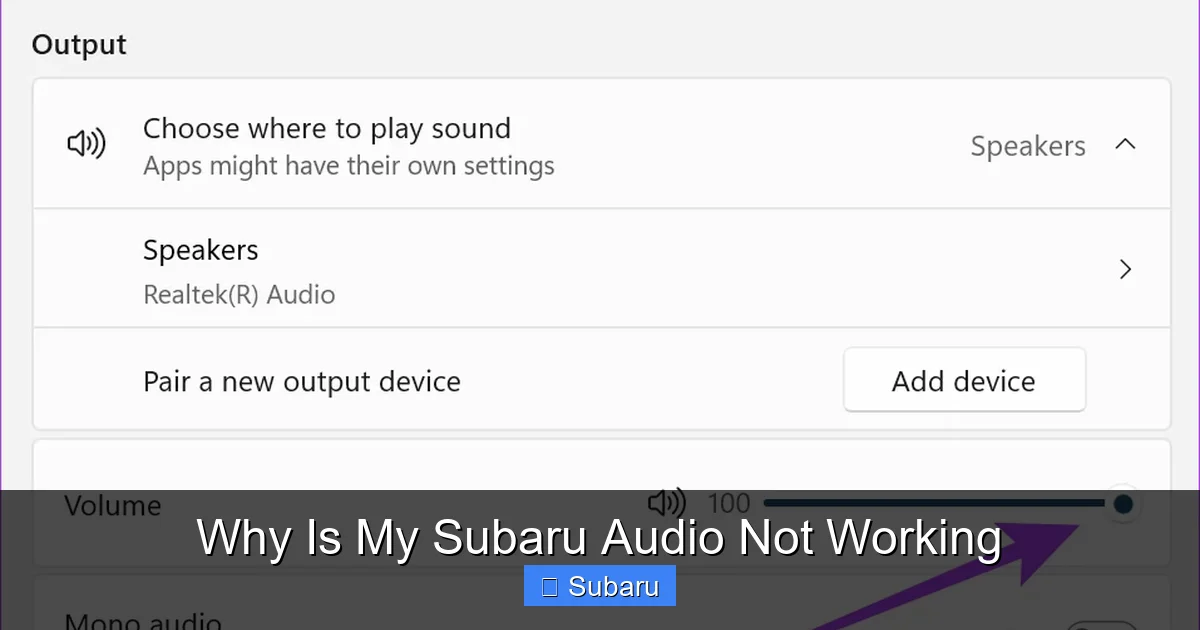
Visual guide about Why Is My Subaru Audio Not Working
Image source: guidingtech.com
Before diving into fixes, it’s helpful to understand why your Subaru’s audio system might fail in the first place. Audio issues can stem from software, hardware, or user error—and sometimes a combination of all three. Let’s break down the most frequent causes.
Software Glitches and System Freezes
Modern Subaru infotainment systems run on complex software that can occasionally freeze or crash. This is especially true after software updates, sudden power loss, or prolonged use. When the system freezes, the screen may appear normal, but audio output stops working. Think of it like your smartphone—sometimes it just needs a reboot.
For example, a 2020 Subaru Outback owner reported that after a long road trip, the audio suddenly cut out. The radio would turn on, but no sound came from the speakers. After a soft reset (holding the power button), the system rebooted and audio returned. This is a classic case of a software hiccup.
Blown Fuses or Electrical Issues
Every electrical component in your car, including the audio system, is protected by fuses. If a fuse blows—due to a power surge, short circuit, or aging component—the audio system may lose power entirely. This is one of the most common hardware-related causes of audio failure.
Subaru vehicles typically have multiple fuse boxes: one under the dashboard on the driver’s side and another in the engine compartment. The audio system is usually powered by a fuse labeled “AUDIO,” “RADIO,” or “INFOTAINMENT.” A visual inspection can often reveal a blown fuse (look for a broken filament inside the glass). Replacing it with one of the same amperage usually restores function.
Faulty Connections or Loose Wiring
Over time, vibrations from driving can loosen connections behind the stereo head unit or at the speakers. This is especially true in older Subaru models or vehicles that have undergone aftermarket installations. A loose wire can cause intermittent sound or complete audio loss.
For instance, a 2017 Subaru Forester owner noticed that the audio would cut out when going over bumps. After checking, they found a loose ground wire behind the head unit. Securing it fixed the issue immediately.
Bluetooth or Auxiliary Input Problems
If you rely on Bluetooth or a 3.5mm aux cable to play music, connectivity issues can make it seem like the audio system isn’t working. Your phone might be connected, but if the audio source isn’t selected properly, you won’t hear anything.
A common mistake is forgetting to switch the audio source from “Radio” to “Bluetooth” or “AUX.” Also, damaged aux cables or low phone battery can disrupt the signal. Always test with a different cable or device to rule out external issues.
Speaker Damage or Failure
Speakers can wear out over time, especially in vehicles exposed to extreme temperatures or moisture. A blown speaker may produce no sound or distorted audio. In some cases, only one speaker fails, leading to unbalanced sound.
For example, a 2015 Subaru Impreza owner noticed that the front left speaker was silent. After testing with a multimeter, they confirmed the speaker was dead and replaced it for under $50.
Outdated or Corrupted Software
Subaru periodically releases software updates for the Starlink system to fix bugs and improve performance. If your system hasn’t been updated in a while, it may have compatibility issues or known audio bugs.
Some users have reported that after a software update, their audio stopped working until they performed a hard reset. Keeping your system updated can prevent these issues.
Step-by-Step Troubleshooting: How to Fix Subaru Audio Issues
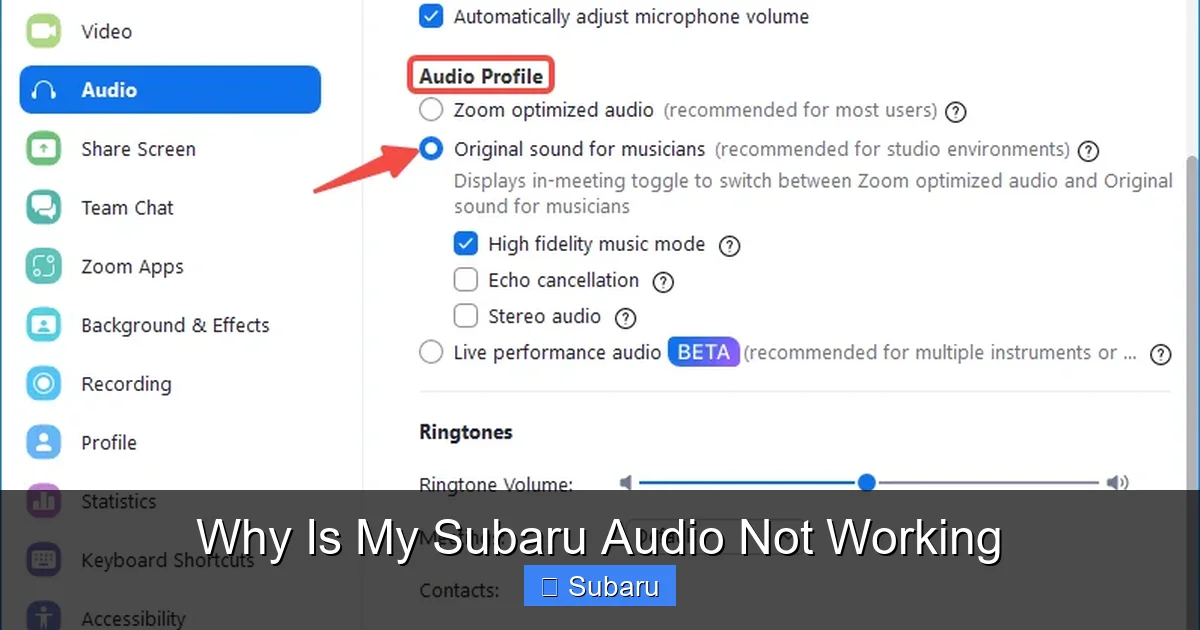
Visual guide about Why Is My Subaru Audio Not Working
Image source: fineshare.com
Now that you know the common causes, let’s walk through a practical troubleshooting process. Follow these steps in order—many issues can be resolved without tools or professional help.
Step 1: Check Basic Settings
Start with the simplest fixes. Turn the volume up and make sure the audio isn’t muted. Look for a mute button on the steering wheel or head unit. Also, confirm that the audio source is set correctly—switch between Radio, Bluetooth, AUX, and USB to see if one works.
Pro tip: If you’re using Bluetooth, disconnect and reconnect your phone. Sometimes re-pairing resolves connection glitches.
Step 2: Restart the Infotainment System
A soft reset can clear temporary software glitches. To do this:
– Turn off the car.
– Press and hold the power button on the head unit for 10–15 seconds.
– Wait for the system to shut down completely.
– Turn the car back on and test the audio.
If that doesn’t work, try a hard reset:
– Turn off the car and remove the key (or press the start button without pressing the brake).
– Disconnect the negative terminal of the battery for 5–10 minutes.
– Reconnect the battery and start the car.
This resets the entire electrical system and often resolves stubborn audio issues.
Step 3: Inspect the Fuse Box
Locate the fuse box under the dashboard (driver’s side) and check the fuse labeled for the audio system. Use the fuse diagram on the cover to identify the correct one. Pull it out and inspect it. If the filament is broken or the fuse appears blackened, replace it with a new one of the same amperage.
You can buy replacement fuses at any auto parts store for under $5. If the new fuse blows immediately, there may be a deeper electrical issue—consult a technician.
Step 4: Test Different Audio Sources
Try playing audio from multiple sources:
– AM/FM radio
– Bluetooth
– USB drive
– Aux cable
If only one source doesn’t work (e.g., Bluetooth but not radio), the issue is likely with that specific input. For example, if Bluetooth fails but radio works, the problem may be with your phone’s connection or the car’s Bluetooth module.
Test with a different phone or cable to isolate the issue.
Step 5: Check Speaker Output
If some speakers work and others don’t, the issue may be localized. Use the balance and fade controls in the audio settings to test each speaker. If one side is silent, it could be a wiring issue or a blown speaker.
You can also gently tap on a speaker while the audio is playing. If you hear a crackling sound, the speaker may be damaged.
Step 6: Update the System Software
Visit your local Subaru dealership or check the Subaru Starlink website for software updates. Some updates can be installed via USB, while others require a technician. Updated software often includes fixes for known audio bugs.
For example, a 2021 Subaru Crosstrek received an update that resolved a bug causing audio to cut out during phone calls.
Advanced Fixes: When Basic Troubleshooting Isn’t Enough
If you’ve tried all the basic steps and your Subaru audio still isn’t working, it’s time to dig deeper. These advanced fixes require more effort but can resolve persistent issues.
Inspecting Wiring and Connections
You’ll need to remove the head unit to access the wiring harness. Use a trim removal tool to carefully pop off the dashboard panels. Once the head unit is out, check all connectors for looseness, corrosion, or damage.
Pay special attention to the ground wire—poor grounding is a common cause of audio failure. Clean any corrosion and ensure all connections are tight.
Testing the Amplifier (If Equipped)
Some Subaru models, especially those with premium audio systems (like the Harman Kardon setup), have an external amplifier. If the amp fails, you may lose sound even if the head unit appears functional.
Locate the amplifier (usually under a seat or in the trunk) and check its power and ground connections. If the amp has a fuse, inspect it. A multimeter can help test for proper voltage.
Replacing a Blown Speaker
If you’ve confirmed a speaker is dead, replacing it is relatively straightforward. Purchase a compatible replacement (check your owner’s manual or Subaru parts catalog). Remove the door panel or speaker grille, disconnect the old speaker, and install the new one.
Make sure to match the impedance (usually 4 ohms) and power rating to avoid damaging the system.
Dealing with a Faulty Head Unit
In rare cases, the entire head unit may be defective. Symptoms include no power, frozen screens, or persistent audio failure despite all troubleshooting. Replacing the head unit is costly but sometimes necessary.
Consider visiting a Subaru specialist or dealership for diagnosis. They can run diagnostic tests to confirm if the unit needs replacement.
Preventing Future Audio Problems
Once you’ve fixed your Subaru audio issue, take steps to prevent it from happening again.
Keep Software Updated
Regularly check for software updates. Subaru often releases patches that improve system stability and fix bugs. Set a reminder to check every 6–12 months.
Protect Against Power Surges
Avoid using high-powered accessories that draw excessive current from the audio system. Also, consider installing a surge protector if you frequently use aftermarket electronics.
Secure Loose Wiring
If you’ve had any modifications or repairs, double-check that all wires are properly secured. Use zip ties or electrical tape to prevent vibration-related loosening.
Use Quality Accessories
Cheap aux cables or Bluetooth adapters can cause interference or fail prematurely. Invest in high-quality, shielded cables for reliable performance.
Regular Maintenance Checks
During routine service, ask your technician to inspect the audio system’s electrical connections and fuses. Early detection can prevent major failures.
When to See a Professional
While many Subaru audio issues can be fixed at home, some problems require expert help. Visit a Subaru dealership or certified technician if:
– The fuse keeps blowing after replacement.
– You suspect internal wiring damage.
– The head unit shows error codes or won’t power on.
– You’re uncomfortable performing electrical work.
Professionals have diagnostic tools that can pinpoint issues quickly and safely. Plus, repairs under warranty may be covered at no cost.
Conclusion
Dealing with a Subaru audio system that’s not working can be frustrating, but it’s rarely a sign of a major failure. In most cases, the issue stems from something simple—a muted setting, a blown fuse, or a loose connection. By following a systematic troubleshooting approach, you can often restore your audio without spending money on repairs.
Start with the basics: check the volume, restart the system, and inspect the fuses. If those don’t work, test different audio sources and examine the speakers. For persistent problems, consider advanced fixes like checking wiring or updating software. And remember, if you’re ever unsure, it’s always wise to consult a professional.
Your Subaru is designed for adventure, and that includes enjoying your favorite music on the go. Don’t let a silent stereo ruin your drive. With the tips in this guide, you’ll be back to jamming out in no time.
Frequently Asked Questions
Why is my Subaru audio not working after a software update?
Software updates can sometimes cause temporary glitches or compatibility issues. Try performing a soft or hard reset of the infotainment system. If the problem persists, check for a follow-up update or visit a dealership for assistance.
Can a dead battery cause Subaru audio problems?
Yes, a weak or dead battery can cause electrical issues, including audio failure. Low voltage may prevent the head unit from functioning properly. Recharge or replace the battery and test the audio again.
Why does my Subaru audio cut out when I go over bumps?
This usually indicates a loose connection, such as a ground wire or speaker wire. Vibrations from driving can disrupt the connection. Inspect the wiring behind the head unit and at the speakers to secure any loose components.
How do I reset the audio system in my Subaru?
For a soft reset, turn off the car and hold the power button for 10–15 seconds. For a hard reset, disconnect the negative battery terminal for 5–10 minutes, then reconnect it. This resets the entire electrical system.
Is it safe to replace a blown fuse myself?
Yes, replacing a fuse is safe if you use the correct amperage. Locate the fuse box, identify the audio fuse, and replace it with an identical one. If the new fuse blows immediately, there may be a deeper electrical issue.
Can I fix Subaru audio issues without going to a dealership?
Many audio problems can be resolved at home with basic tools and troubleshooting. However, if the issue involves internal wiring, a faulty head unit, or persistent electrical faults, a professional diagnosis is recommended.