

Why Is My Audi Shaking?

Contents
- 1 Key Takeaways
- 2 📑 Table of Contents
- 3 Why Is My Audi Shaking? Understanding the Causes and Solutions
- 4 Common Causes of Audi Shaking and How to Diagnose Them
- 5 Engine-Related Causes of Audi Shaking
- 6 Brake System Issues That Cause Shaking
- 7 Suspension and Steering Problems
- 8 Transmission and Drivetrain Issues
- 9 When to See a Mechanic
- 10 Preventing Future Shaking in Your Audi
- 11 Conclusion
- 12 Frequently Asked Questions

Digital Tire Pressure Gauge

Side Mirror Rain Guard

Radiator Coolant

Jack Stands
If your Audi is shaking, it’s usually a sign of an underlying mechanical issue that shouldn’t be ignored. From unbalanced tires to engine problems, understanding the root cause can save you time, money, and stress. This guide breaks down the most common reasons and what you can do about them.
Key Takeaways
- Tire imbalance or damage: Uneven tire wear or imbalance often causes shaking, especially at higher speeds.
- Engine misfires: A misfiring engine can lead to noticeable vibrations, often due to faulty spark plugs or ignition coils.
- Brake system issues: Warped rotors or sticking calipers can cause shaking when braking.
- Wheel alignment problems: Misaligned wheels may result in steering wheel vibration and uneven tire wear.
- Suspension wear: Worn shocks, struts, or bushings can reduce ride stability and cause shaking.
- Transmission troubles: Issues with the transmission, especially in automatic models, may lead to shuddering during acceleration.
- Engine mounts failure: Broken or worn engine mounts allow excessive engine movement, causing noticeable vibrations.
📑 Table of Contents
- Why Is My Audi Shaking? Understanding the Causes and Solutions
- Common Causes of Audi Shaking and How to Diagnose Them
- Engine-Related Causes of Audi Shaking
- Brake System Issues That Cause Shaking
- Suspension and Steering Problems
- Transmission and Drivetrain Issues
- When to See a Mechanic
- Preventing Future Shaking in Your Audi
- Conclusion
Why Is My Audi Shaking? Understanding the Causes and Solutions
You’re cruising down the highway in your sleek Audi, enjoying the smooth ride and quiet cabin—until suddenly, you feel a strange vibration. It starts as a subtle tremor in the steering wheel, then grows into a full-blown shake that makes you wonder if something’s seriously wrong. You’re not alone. Many Audi owners experience shaking at some point, and while it can be alarming, it’s often fixable with the right diagnosis.
Audis are known for their precision engineering, luxury, and performance. But like any vehicle, they’re not immune to mechanical issues. When your Audi starts shaking, it’s your car’s way of saying, “Hey, something’s not right.” Ignoring it could lead to bigger problems down the road—literally. Whether the shaking happens at idle, during acceleration, or when braking, each scenario points to different potential causes.
In this guide, we’ll walk you through the most common reasons your Audi might be shaking, how to identify them, and what you can do to fix them. From tire issues to engine troubles, we’ll cover everything you need to know to get your Audi back to its smooth, confident self.
Common Causes of Audi Shaking and How to Diagnose Them

Visual guide about Why Is My Audi Shaking?
Image source: oceansidemotorsports.com
When your Audi starts shaking, the first step is figuring out when and where the vibration occurs. Is it in the steering wheel? The seat? The entire car? Does it happen at idle, during acceleration, or only when braking? These clues are crucial for diagnosing the problem.
Let’s break down the most frequent culprits behind Audi shaking, starting with the most common: tire-related issues.
Tire Imbalance or Damage
One of the leading causes of shaking in any vehicle—especially at higher speeds—is tire imbalance. When your tires aren’t evenly balanced, they create uneven forces as they spin, leading to vibrations that you feel through the steering wheel or floor.
This often happens after getting new tires or after hitting a pothole or curb. Even a small weight difference on one side of the tire can cause a noticeable shake, especially between 50 and 70 mph.
You might also notice uneven tire wear, such as bald spots or scalloping on the tread. This could indicate that the tire is damaged internally or that the wheel alignment is off.
What to do: Visit a reputable tire shop or Audi service center and ask for a wheel balance check. They’ll spin each wheel on a balancing machine and add small weights to correct any imbalances. If a tire is damaged, it may need to be replaced.
Wheel Alignment Issues
Even if your tires are balanced, poor wheel alignment can still cause shaking. Alignment refers to the angle at which your wheels meet the road. If the camber, caster, or toe angles are off, your car may pull to one side, and you might feel vibrations—especially at higher speeds.
Misalignment often occurs after hitting a curb, driving over potholes, or even normal wear over time. It can also lead to uneven tire wear, which worsens the shaking.
What to do: Get a professional wheel alignment. Most Audi service centers can perform a four-wheel alignment using computerized equipment to ensure precision. This not only reduces shaking but also improves handling and extends tire life.
Damaged or Worn Tires
Sometimes, the problem isn’t balance or alignment—it’s the tires themselves. A tire with a bubble in the sidewall, a separated tread, or internal damage can cause severe shaking, even at moderate speeds.
You might also notice a rhythmic thumping sound that increases with speed. This is a red flag that the tire is compromised and could fail unexpectedly.
What to do: Inspect your tires regularly for bulges, cracks, or uneven wear. If you spot any damage, replace the tire immediately. Don’t wait—driving on a damaged tire is dangerous and can lead to a blowout.
Engine-Related Causes of Audi Shaking

Visual guide about Why Is My Audi Shaking?
Image source: oceansidemotorsports.com
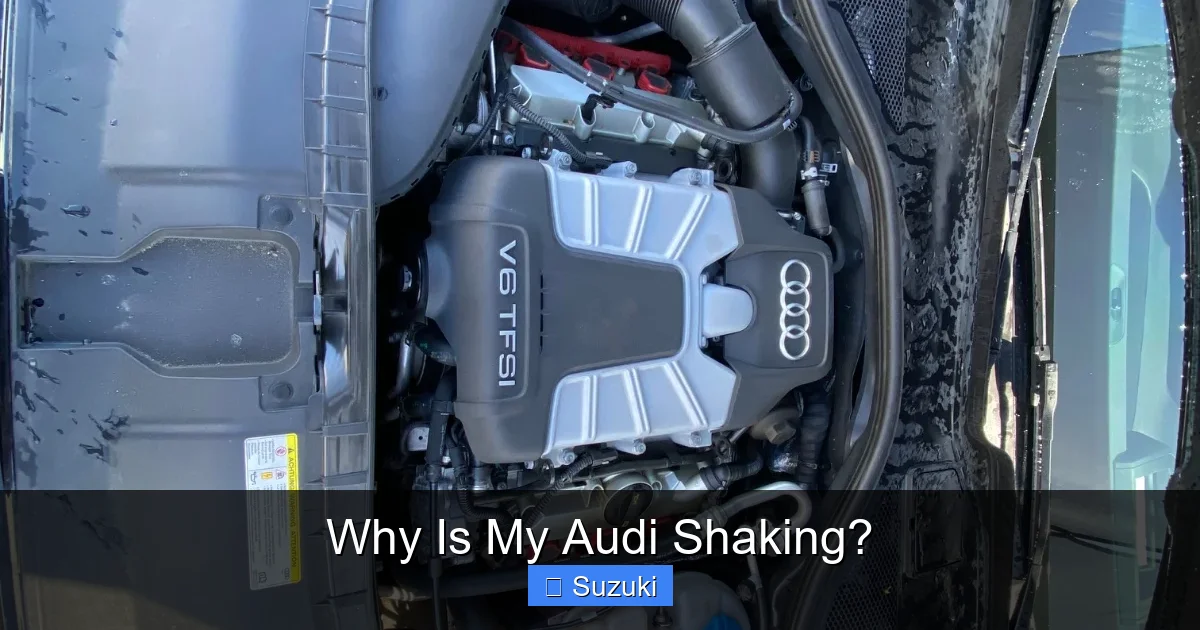
If the shaking happens at idle or during acceleration, the issue might be under the hood. Engine problems are a common cause of vibrations in Audis, especially as the vehicle ages.
Engine Misfires
An engine misfire occurs when one or more cylinders fail to ignite fuel properly. This causes a jerking or shaking sensation, often accompanied by a rough idle, reduced power, and the dreaded “check engine” light.
Misfires are commonly caused by faulty spark plugs, bad ignition coils, or fuel system issues. In Audi models, ignition coils are a known weak point and can fail over time, especially in high-mileage vehicles.
For example, if your Audi A4 starts shaking when you accelerate from a stop, it could be a sign that one of the ignition coils is failing. You might also notice a loss of fuel efficiency or a sulfur-like smell from the exhaust.
What to do: Use an OBD2 scanner to check for trouble codes. Codes like P0300 (random misfire) or P0301–P0304 (cylinder-specific misfires) will point you in the right direction. Replace faulty spark plugs or ignition coils as needed. Audi recommends replacing spark plugs every 60,000 to 100,000 miles, depending on the model.
Failing Engine Mounts
Engine mounts are rubber or hydraulic components that secure the engine to the chassis. They absorb vibrations and prevent the engine from moving excessively. When they wear out or break, the engine can shift or vibrate more than usual, causing noticeable shaking—especially at idle or when shifting gears.
You might hear clunking noises when accelerating or braking, or see the engine moving visibly under the hood.
What to do: Have a mechanic inspect the engine mounts. Replacing them is relatively straightforward but requires lifting the engine slightly. It’s best left to professionals, especially on Audi models with complex engine bays.
Air Intake or Vacuum Leaks
A leak in the air intake system or vacuum hoses can disrupt the air-fuel mixture, leading to rough idling and shaking. This is more common in older Audis or those with high mileage.
Symptoms include a hissing sound under the hood, poor acceleration, and inconsistent idle speed.
What to do: Inspect all vacuum hoses and intake components for cracks or loose connections. Replace any damaged parts. A smoke test can help locate hard-to-find leaks.
Brake System Issues That Cause Shaking
Visual guide about Why Is My Audi Shaking?
Image source: oceansidemotorsports.com
If your Audi shakes only when you apply the brakes, the problem is likely in the braking system. This type of vibration is often felt through the steering wheel or brake pedal and is usually a sign of warped brake rotors.
Warped Brake Rotors
Brake rotors can warp over time due to excessive heat, improper torque when installing wheels, or uneven wear. When the rotor isn’t perfectly flat, it causes the brake pads to pulsate against it, creating a shaking sensation when braking.
This is especially noticeable during hard stops or when slowing down from highway speeds.
What to do: Have your brake rotors inspected. If they’re warped, they can sometimes be resurfaced (machined) to restore a smooth surface. However, if they’re too thin or severely damaged, replacement is necessary. Always replace brake pads at the same time to ensure even wear.
Sticking Brake Calipers
A caliper that doesn’t release properly can cause constant friction on the rotor, leading to overheating, warping, and shaking. You might also notice a burning smell or reduced fuel economy due to drag.
What to do: Have a mechanic check the calipers for proper movement. Sticking calipers often need to be rebuilt or replaced. Regular brake maintenance can prevent this issue.
Suspension and Steering Problems
Your Audi’s suspension system is designed to absorb road shocks and keep the ride smooth. When components wear out, they can cause shaking, poor handling, and uneven tire wear.
Worn Shocks or Struts
Shocks and struts dampen the movement of the suspension. When they fail, your car may bounce excessively, feel unstable, or shake over bumps.
You might also notice longer stopping distances and a nose-dive when braking.
What to do: Have your suspension inspected. Most Audi models use strut assemblies that should be replaced in pairs (front or rear). Upgrading to OEM or high-quality aftermarket parts ensures a smooth ride.
Failed Control Arm Bushings or Ball Joints
Control arms connect the suspension to the chassis, and their bushings absorb vibrations. When these wear out, you may feel shaking, especially over rough roads.
Ball joints, which allow the wheels to pivot, can also wear and cause clunking or vibration.
What to do: A mechanic can inspect these components during a suspension check. Replacement is usually straightforward but requires alignment afterward.
Transmission and Drivetrain Issues
In automatic Audi models, transmission problems can cause shuddering during acceleration—especially when shifting gears.
Torque Converter Problems
The torque converter transfers engine power to the transmission. If it’s failing, you might feel a shudder when accelerating from a stop or at low speeds.
This is sometimes mistaken for an engine misfire but is specific to the transmission.
What to do: Have the transmission fluid checked. Low or dirty fluid can cause shuddering. A flush or filter change may help. In severe cases, the torque converter may need replacement.
CV Joint or Driveshaft Issues
In all-wheel-drive Audis, worn CV joints or a damaged driveshaft can cause shaking, especially during acceleration or turning.
You might hear clicking noises when turning or feel vibrations in the floor.
What to do: Inspect the CV boots for tears or leaks. If the joint is damaged, it should be replaced promptly to avoid further damage.
When to See a Mechanic
While some issues like tire balance or spark plug replacement can be DIY-friendly, others require professional diagnosis and repair. If your Audi is shaking and you’re unsure of the cause, it’s best to visit an Audi-certified technician.
They have the tools and expertise to perform advanced diagnostics, including scanning for fault codes, checking suspension geometry, and inspecting internal engine components.
Ignoring shaking can lead to more serious problems, including safety risks and costly repairs. Early intervention saves money and keeps your Audi running smoothly.
Preventing Future Shaking in Your Audi
Regular maintenance is the best way to prevent shaking and other issues. Follow your Audi’s recommended service schedule, including:
– Tire rotations every 5,000 to 7,000 miles
– Wheel alignments every 10,000 miles or after hitting a pothole
– Spark plug and ignition coil replacements as specified
– Brake inspections every 12,000 miles
– Suspension checks during routine service
Also, avoid aggressive driving, which can accelerate wear on tires, brakes, and suspension components.
Conclusion
Shaking in your Audi can be unsettling, but it’s rarely a sign of imminent disaster. Most causes—like tire imbalance, engine misfires, or brake issues—are fixable with timely attention. By understanding the symptoms and knowing when to act, you can keep your Audi performing at its best.
Don’t ignore the shake. Whether it’s a simple tire balance or a more complex engine issue, addressing it early ensures a safer, smoother ride and protects your investment in your luxury vehicle.
Frequently Asked Questions
Why is my Audi shaking at idle?
This is often due to engine misfires, failing engine mounts, or vacuum leaks. Check for a check engine light and have the ignition system inspected.
Can bad spark plugs cause my Audi to shake?
Yes, worn or faulty spark plugs are a common cause of engine misfires, which lead to shaking, especially during acceleration or idle.
Why does my Audi shake when braking?
Shaking during braking usually indicates warped brake rotors or sticking calipers. Have your brake system inspected and rotors resurfaced or replaced if needed.
Is it safe to drive my Audi if it’s shaking?
It depends on the cause. Minor vibrations may be safe temporarily, but severe shaking—especially during braking—can be dangerous. Get it checked as soon as possible.
How much does it cost to fix a shaking Audi?
Costs vary: tire balancing ($50–$100), spark plug replacement ($150–$300), brake rotor resurfacing ($100–$200), or engine mount replacement ($300–$600). Always get a diagnosis first.
Can wheel alignment fix shaking in my Audi?
Yes, if misalignment is the cause. Poor alignment leads to uneven tire wear and vibrations. A professional four-wheel alignment can resolve the issue.


