

Why Is Hyundai So Cheap?

Contents
- 1 Key Takeaways
- 2 📑 Table of Contents
- 3 The Price Tag: A Strategic Choice, Not an Accident
- 4 Depreciation: The Steep Slope of Value
- 5 Manufacturing and Materials: Where the Savings Happen
- 6 Target Market and Brand Perception
- 7 Warranty and Long-Term Value: The Counterargument
- 8 Is Hyundai Really “Cheap”? Redefining the Conversation
- 9 Who Should Buy a Hyundai? The Practical Verdict
- 10 Frequently Asked Questions

Car Ambient Light Kit

Car Seat Cover (Universal Fit)

LED Emergency Road Flares

Anti-Slip Dashboard Mat
Hyundai’s lower price point stems from strategic business decisions, not inferior quality. The brand focuses on high-volume manufacturing, cost-effective materials, and aggressive pricing to gain market share. While upfront costs are low, strong warranties and surprising reliability often provide excellent long-term value, challenging the “cheap” label.
You’re browsing a car lot, and your eyes land on a sleek, fully-loaded sedan with a sunroof, heated seats, and a fantastic warranty. The price tag seems almost too good to be true compared to a similarly sized model from a Japanese brand. You might whisper to yourself, Why is Hyundai so cheap? It’s a common question, and the answer is a fascinating mix of business strategy, manufacturing genius, and market dynamics. The word “cheap” carries a negative connotation, implying poor quality or corner-cutting. For Hyundai, the reality is far more nuanced. What appears as a low price is often a calculated strategy to deliver exceptional value. Let’s peel back the layers and understand the real reasons behind Hyundai’s competitive pricing.
Key Takeaways
- Strategic Market Positioning: Hyundai intentionally prices vehicles lower to compete with established brands like Toyota and Honda, prioritizing sales volume over high margins.
- Depreciation is a Key Factor: Hyundai’s resale values drop faster than many competitors, making the initial purchase price seem cheap but affecting long-term cost of ownership.
- Manufacturing Efficiency: The company leverages modern, high-volume factories and shared platforms (like the Kia-Hyundai partnership) to drastically reduce production costs.
- Material and Feature Choices: To hit a target price, Hyundai may use different materials (e.g., more plastic, less sound deadening) and standardize features across trims.
- Warranty as a Value Play: The industry-leading 10-year/100,000-mile powertrain warranty is a strategic tool to build trust and offset perceptions of lower quality.
- Insurance and Running Costs: Hyundai’s lower repair costs and safety ratings often lead to cheaper insurance, a significant part of the “cheap” ownership experience.
- “Cheap” vs. “Affordable”: The term is misleading; Hyundai offers a compelling value proposition with more standard features for the money, not necessarily lower quality.
📑 Table of Contents
- The Price Tag: A Strategic Choice, Not an Accident
- Depreciation: The Steep Slope of Value
- Manufacturing and Materials: Where the Savings Happen
- Target Market and Brand Perception
- Warranty and Long-Term Value: The Counterargument
- Is Hyundai Really “Cheap”? Redefining the Conversation
- Who Should Buy a Hyundai? The Practical Verdict
The Price Tag: A Strategic Choice, Not an Accident
First and foremost, Hyundai’s pricing is a deliberate business strategy. In the late 1990s and early 2000s, Hyundai was a struggling brand with a reputation for unreliable, low-quality vehicles. To break into the fiercely competitive American market dominated by Toyota, Honda, and domestic brands, they needed a powerful hook. That hook was an unbeatable combination of price, features, and warranty.
Aggressive Market Entry and Volume Goals
Hyundai adopted a high-volume, low-margin approach. Instead of trying to match the premium prices of Toyota or Honda, they undercut them significantly. The goal was to move massive numbers of units, achieve economies of scale, and build brand recognition quickly. This strategy worked. By offering more car for less money—like a midsize sedan with a standard touchscreen and Bluetooth when competitors charged extra—they attracted budget-conscious shoppers and skeptical reviewers alike. This foundational pricing philosophy still permeates the brand today. You’re not finding a bargain by accident; Hyundai designed the bargain to lure you in.
The Kia-Hyundai Synergy: Sharing the Load
A massive factor in Hyundai’s cost structure is its deep partnership with Kia. The two companies, though separate, share platforms, engines, transmissions, and even entire vehicle architectures. This isn’t just badge engineering; it’s a colossal pooling of research, development, and manufacturing resources. Developing a new global platform for a midsize SUV can cost billions. When Hyundai and Kia co-develop a platform (like the one underpinning the Tucson and Sportage), that cost is split between two massive sales volumes. This synergy slashes the per-vehicle R&D cost, allowing both brands to price their products aggressively while still turning a profit. It’s a masterclass in automotive collaboration.
Depreciation: The Steep Slope of Value
This is the single biggest reason Hyundai’s initial price feels “cheap” in the long run: resale value. Hyundai vehicles, on average, depreciate faster than their Japanese counterparts. A car’s value is a perception, and the market has historically perceived Hyundais as having a shorter desirable lifespan or lower prestige, which hurts used-car pricing.

Visual guide about Why Is Hyundai So Cheap?
Image source: autozonic.com
Understanding the Depreciation Curve
Let’s look at a practical example. A base-model 2017 Hyundai Sonata had an MSRP around $22,000. Today, its value is significantly lower than a similarly priced 2017 Toyota Camry or Honda Accord from a percentage standpoint. This faster depreciation means the “cheap” new car becomes a very affordable used car quickly. For a new buyer, this rapid drop can be a hidden cost if you plan to sell or trade within 5 years. However, for used-car shoppers, it’s a dream, creating a flood of affordable, low-mileage Hyundais on the market. You can see this trend in action by checking valuation guides for specific models, like a 2017 Hyundai Sonata or a 2016 model. The steep depreciation curve is a direct result of the initial low pricing strategy and brand perception, creating a cycle that reinforces the “cheap” label.
The Supply and Demand Dynamic
The used-car market is pure supply and demand. Because so many Hyundais are sold new (thanks to that low price), there’s a huge supply of used ones a few years later. High supply with moderate demand pushes prices down. Conversely, brands with lower initial sales and higher perceived reliability (like Toyota) have tighter used supply, holding their value better. This isn’t necessarily a reflection of the car’s mechanical durability but of its market narrative. A well-maintained Hyundai from this era can be an incredible used-car buy precisely because of this depreciation.
Manufacturing and Materials: Where the Savings Happen
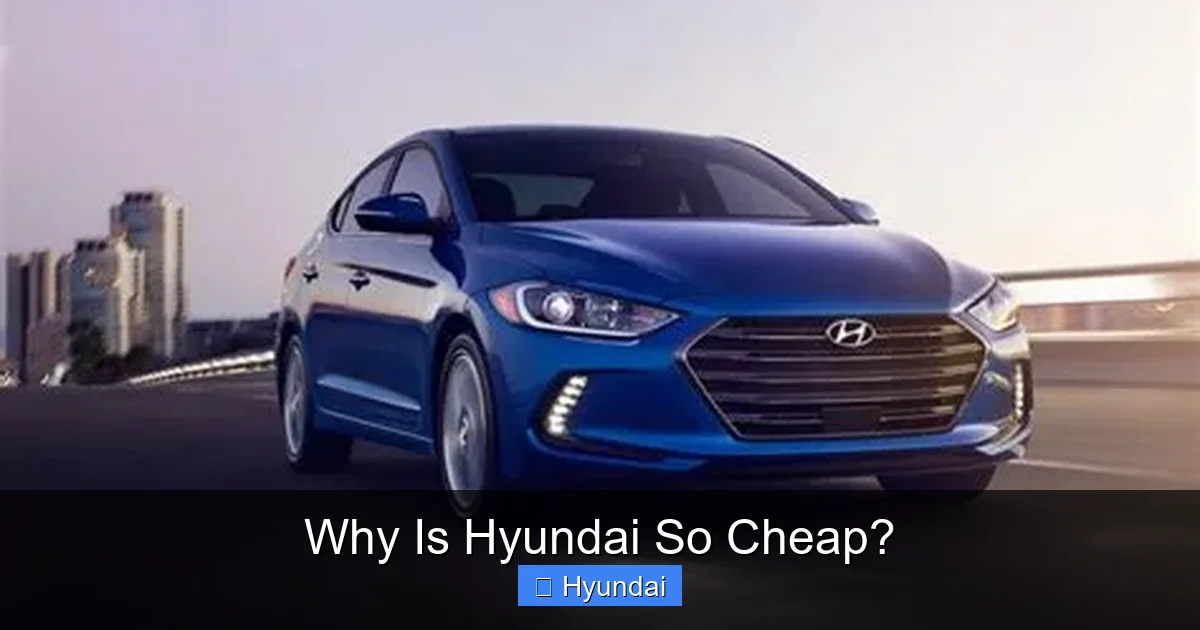
To hit a specific target price, engineers and designers make countless decisions. Hyundai is excellent at optimizing these decisions for cost without catastrophically sacrificing quality.
Visual guide about Why Is Hyundai So Cheap?
Image source: autozonic.com
Efficient, High-Volume Plants
Hyundai’s manufacturing facilities, like the massive plant in Ulsan, South Korea, are marvels of efficiency. They are designed for high throughput and automation, reducing labor costs per vehicle. The company also has plants in the U.S. (Alabama, Georgia) which help avoid import tariffs and reduce shipping costs for the North American market. These efficient factories allow Hyundai to produce vehicles at a lower base cost than a competitor with less efficient or lower-volume plants.
Cost-Effective Material Choices
This is where the “cheap” stereotype gets its fuel. To meet a price point, Hyundai may use:
- More Plastic: Interior panels, trunk liners, and even some structural components may use high-quality plastics instead of heavier, more expensive materials like aluminum or sound-deadening foam.
- Standardized Components: Using the same switchgear, infotainment unit, or seat mechanism across multiple models and trims reduces part complexity and cost.
- Simplified Construction: Sometimes, this means fewer welds, different panel gaps, or a simpler suspension design in non-performance models. These are engineering trade-offs that save money but don’t always impact daily drivability or safety.
The key is that Hyundai has become very good at making these trade-offs in areas the average buyer won’t notice or care about, while spending money on areas they *do* notice, like design, warranty, and infotainment tech.
Target Market and Brand Perception
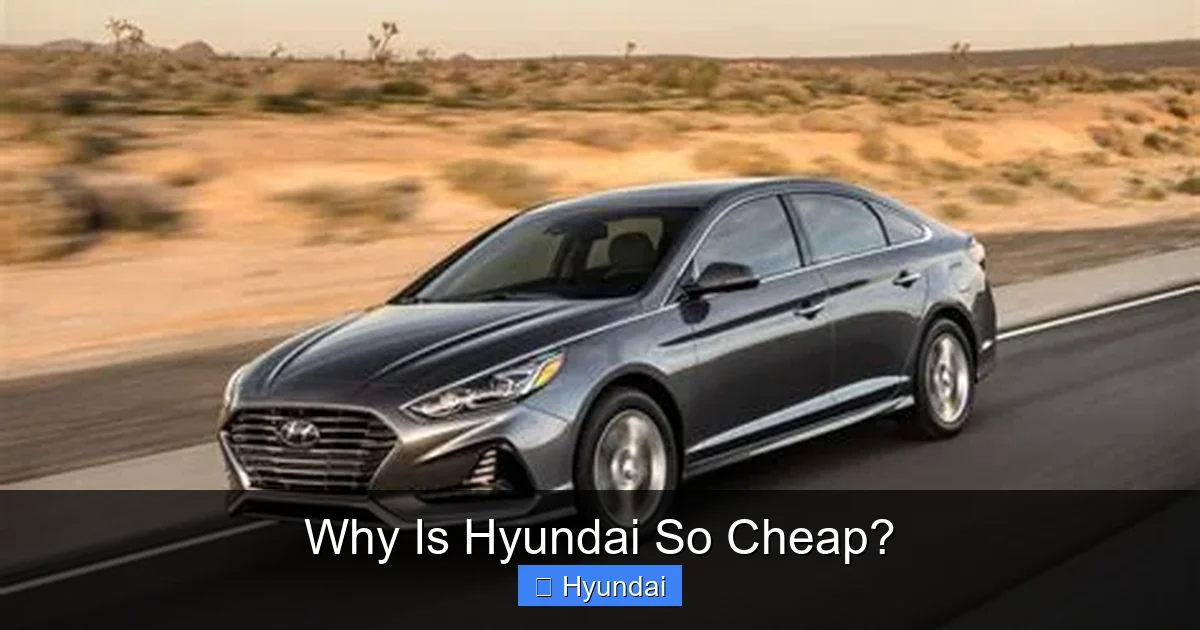
Hyundai isn’t trying to be BMW. Its core identity has been “value for money.” This self-perception allows them to price accordingly and attract a specific customer.
Visual guide about Why Is Hyundai So Cheap?
Image source: autozonic.com
The Value-Conscious Buyer
The primary Hyundai shopper is often a pragmatic, value-oriented individual or family. They want a reliable, spacious, and feature-packed vehicle without the premium price tag. Hyundai delivers exactly that. They aren’t shopping for a “status symbol”; they’re shopping for the best transportation dollar. By catering directly to this mindset, Hyundai avoids the costly game of trying to build brand prestige through marketing and exclusivity, which is a huge expense for brands like Audi or Lexus.
Overcoming the “Cheap” Stigma
For years, Hyundai battled a reputation for poor quality. Their 10-year/100,000-mile powertrain warranty was born from this—it was a necessary guarantee to overcome buyer skepticism. While that warranty remains a flagship benefit, the cars themselves have dramatically improved in quality, design, and driving dynamics. The “cheap” label is now a double-edged sword. It attracts new buyers but can still deter those who equate price with prestige. Hyundai’s challenge is to continue elevating perceived quality while maintaining its price advantage. Their stunning design language in the last decade has been a critical part of this shift.
Warranty and Long-Term Value: The Counterargument
If Hyundai is so “cheap,” why do they offer the best warranty in America? This is the most powerful rebuttal to the “cheap = bad” assumption.
The 10-Year/100,000-Mile Powertrain Warranty Explained
This warranty covers the engine, transmission, and drivetrain—the most expensive components to repair. It’s fully transferable to subsequent owners. This isn’t an act of charity; it’s a calculated business move. It directly addresses the primary fear of buying a “cheap” car: catastrophic repair bills. By eliminating that fear, Hyundai boosts consumer confidence, which supports their sales volume strategy. It also incentivizes owners to use Hyundai dealerships for all service, building a long-term service relationship. The warranty is a promise of confidence in their powertrain durability, which, based on recent reliability studies, is largely justified.
True Cost of Ownership
When evaluating “cheap,” you must look beyond the sticker price. The true cost of ownership includes depreciation, fuel, insurance, maintenance, and repairs. Here, Hyundai’s story gets interesting. While depreciation is high (a negative), repair costs for out-of-warranty issues are often lower than luxury brands due to simpler designs and parts commonality. Furthermore, insurance for a Hyundai is frequently less expensive than for a more powerful or premium-brand vehicle. For a practical owner who keeps a car for 10+ years, the low purchase price, good fuel economy, and reasonable repair bills can create a very low total cost of ownership, even with steep early depreciation. For instance, understanding insurance costs for a specific Hyundai model is a crucial part of this calculation.
Is Hyundai Really “Cheap”? Redefining the Conversation
After this analysis, the question “Why is Hyundai so cheap?” transforms. The better question is, “How does Hyundai offer so much value for the money?” The “cheap” descriptor fails because it focuses solely on one data point: the initial transaction price.
Value vs. Price
Price is what you pay. Value is what you get. Hyundai excels at maximizing value. You often get more standard features (like Apple CarPlay/Android Auto, advanced safety suites), a longer warranty, and a modern design for thousands less than the competition. You are trading some residual prestige and potentially slower depreciation for immediate affordability and features. For many, this is a perfect trade. The “cheap” perception is slowly changing as the product quality rises, but the pricing strategy remains anchored to its volume-driven origins.
The Competitive Landscape
It’s useful to compare Hyundai’s approach to another value leader: Toyota. Toyota commands higher prices and retains value better based on a decades-old reputation for bulletproof reliability and higher brand prestige. Hyundai’s play is different: deliver a near-equal (and in some areas superior) ownership experience for less money up front. The risk is higher depreciation. The reward is immediate access to a newer, more feature-rich vehicle. Neither approach is inherently wrong; they serve different buyer psychographics.
Who Should Buy a Hyundai? The Practical Verdict
Hyundai is an outstanding choice for a huge segment of car buyers. If you prioritize low monthly payments, want the latest tech and safety features without paying for a premium brand, plan to keep the car until the wheels fall off (leveraging that great warranty), or are a savvy used-car shopper looking for maximum value, Hyundai deserves a top spot on your list. If you buy a new car every 3-4 years and are highly sensitive to resale value, the steep depreciation might give you pause. However, even for this group, the low entry price can sometimes offset the lower trade-in value. Always do your homework on specific model depreciation. Resources like older model valuations can show you just how far prices have fallen, highlighting the opportunity for used buyers.
Frequently Asked Questions
Are Hyundai cars reliable enough for the low price?
Yes, modern Hyundai vehicles have significantly improved reliability and often earn good ratings from agencies like J.D. Power and Consumer Reports. The extensive powertrain warranty is a testament to their confidence in long-term durability, making them a reliable choice for most drivers.
Why do Hyundai cars depreciate so quickly?
Rapid depreciation is primarily due to high initial sales volume (creating high used-car supply) and a historical brand perception that still lags behind Toyota and Honda. The low new-car price sets a lower ceiling for used-car values, creating a steeper drop in the first few years.
Is Hyundai’s cheap price due to poor build quality?
Not necessarily. The lower price is more a result of strategic business decisions—high-volume manufacturing, shared platforms with Kia, and material cost management—than poor build quality. Fit, finish, and safety ratings are competitive, though some interior materials may feel less premium than costlier rivals.
How does Hyundai’s warranty make up for the low price?
The 10-year/100,000-mile powertrain warranty covers the most expensive repairs, dramatically reducing the financial risk of ownership. It builds buyer trust and effectively lowers the true cost of long-term ownership, offsetting concerns about quality that might arise from the low sticker price.
Are Hyundais cheaper to insure than other brands?
Generally, yes. Hyundais often have lower average insurance premiums compared to many competitors. This is due to their generally good safety ratings, lower repair costs for parts, and the profile of the typical driver. You can check specific model rates here for models like the Veloster.
Should I buy a new or used Hyundai for the best value?
For maximum immediate value, a slightly used Hyundai (1-3 years old) is often the smartest buy. You get a large portion of the warranty, a much lower price thanks to steep depreciation, and a vehicle that is barely broken in. The new-car buyer pays for the initial depreciation hit.


