
How Much Is a 2009 Hyundai Sonata Worth?

The 2009 Hyundai Sonata is a reliable midsize sedan that still offers solid value today, with prices typically ranging from $3,500 to $7,000 depending on condition, mileage, and trim. While not a luxury vehicle, it remains a smart choice for budget-conscious buyers seeking dependable transportation with decent features and fuel economy.
Key Takeaways
- Understanding How Much Is a 2009 Hyundai Sonata Worth?: Provides essential knowledge
📑 Table of Contents
- How Much Is a 2009 Hyundai Sonata Worth? A Complete Buyer’s and Seller’s Guide
- Understanding the 2009 Hyundai Sonata’s Market Position
- Factors That Determine the Value of a 2009 Hyundai Sonata
- 2009 Hyundai Sonata Engine and Performance Overview
- Interior, Features, and Technology
- Common Problems and Reliability of the 2009 Hyundai Sonata
- Tips for Buying or Selling a 2009 Hyundai Sonata
- Conclusion: Is the 2009 Hyundai Sonata Still a Good Buy?
How Much Is a 2009 Hyundai Sonata Worth? A Complete Buyer’s and Seller’s Guide
If you’re in the market for a reliable, no-frills midsize sedan that won’t break the bank, the 2009 Hyundai Sonata might just be the car you’ve been looking for. Over a decade after its release, this model continues to offer solid value, especially for buyers who prioritize affordability, fuel efficiency, and low maintenance costs. But how much is a 2009 Hyundai Sonata actually worth in today’s used car market?
The short answer? Most 2009 Hyundai Sonatas are priced between $3,500 and $7,000, depending on a variety of factors including mileage, condition, trim level, and location. While it’s not the flashiest car on the road, the 2009 Sonata has earned a reputation for reliability and practicality—two qualities that keep it relevant even in 2024. Whether you’re shopping for your first car, upgrading from an older model, or looking for a dependable commuter, understanding the true value of this vehicle can save you money and help you make a smarter purchase.
In this comprehensive guide, we’ll break down everything you need to know about the 2009 Hyundai Sonata’s current market value. We’ll explore pricing trends, examine what affects resale value, compare different trim levels, and offer practical tips for both buyers and sellers. By the end, you’ll have a clear picture of what to expect—and how to get the best deal.
Understanding the 2009 Hyundai Sonata’s Market Position
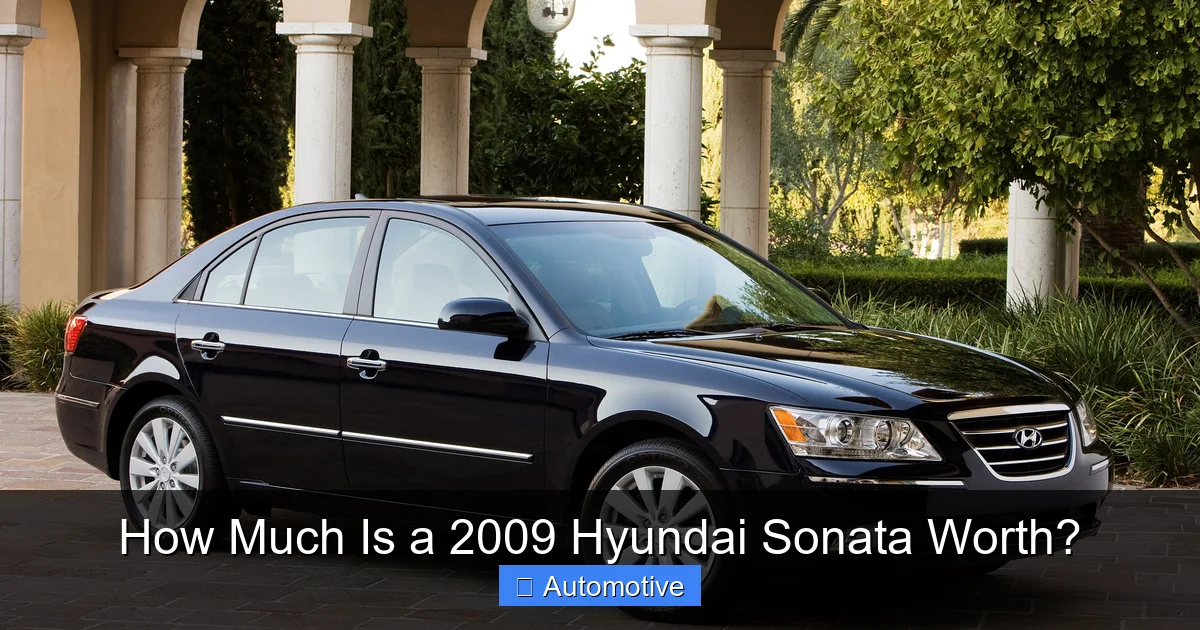
Visual guide about How Much Is a 2009 Hyundai Sonata Worth?
Image source: carsinvasion.com
The 2009 Hyundai Sonata arrived at a pivotal time for the brand. Hyundai was in the midst of a major image overhaul, shifting from being seen as a budget automaker to a serious contender in the midsize sedan market. The 2009 model played a key role in that transformation, offering a sleek redesign, improved interior quality, and a strong focus on value.
Compared to rivals like the Toyota Camry, Honda Accord, and Ford Fusion, the Sonata stood out with its generous standard features and competitive pricing. It wasn’t the most powerful or luxurious option, but it delivered where it counted: reliability, comfort, and affordability. Today, that same value proposition continues to attract used car buyers who want a dependable vehicle without the premium price tag.
One of the reasons the 2009 Sonata holds its value relatively well is its widespread availability. Thousands of these cars were sold during its production run, and many are still on the road thanks to Hyundai’s reputation for durability. This abundance means buyers have plenty of options, but it also means sellers need to be strategic about pricing to stand out.
Why the 2009 Model Year Stands Out
The 2009 model year was part of the fifth generation of the Sonata (2006–2010), which introduced a bold new design language for Hyundai. This generation featured a more aerodynamic shape, a roomier interior, and a host of modern amenities that were uncommon in its price range at the time.
One of the biggest selling points was the inclusion of standard safety features like anti-lock brakes (ABS), electronic stability control, and multiple airbags—features that were still optional on some competitors. The 2009 model also benefited from a revised suspension system that improved ride comfort and handling, making it a pleasant daily driver.
Additionally, Hyundai offered a strong warranty package, including a 5-year/60,000-mile basic warranty and a 10-year/100,000-mile powertrain warranty. While the powertrain warranty has likely expired for most 2009 models, the fact that it was offered at all helped build consumer trust and contributed to the car’s long-term reliability reputation.
How the Used Car Market Has Changed Since 2009
When the 2009 Sonata was new, the automotive landscape looked very different. Gas prices were volatile, SUVs were gaining popularity, and hybrid vehicles were still a niche market. Today, the used car market is influenced by factors like rising new car prices, supply chain issues, and increased demand for affordable transportation.
Because new cars are more expensive than ever—averaging over $48,000 in 2024—many buyers are turning to older, well-maintained used vehicles like the 2009 Sonata. This increased demand has helped stabilize prices for reliable models, even those over a decade old.
At the same time, the rise of online car shopping platforms like CarGurus, Autotrader, and Cars.com has made it easier for buyers to compare prices and find the best deals. Sellers, too, have more tools at their disposal to accurately price their vehicles and reach a wider audience.
Factors That Determine the Value of a 2009 Hyundai Sonata
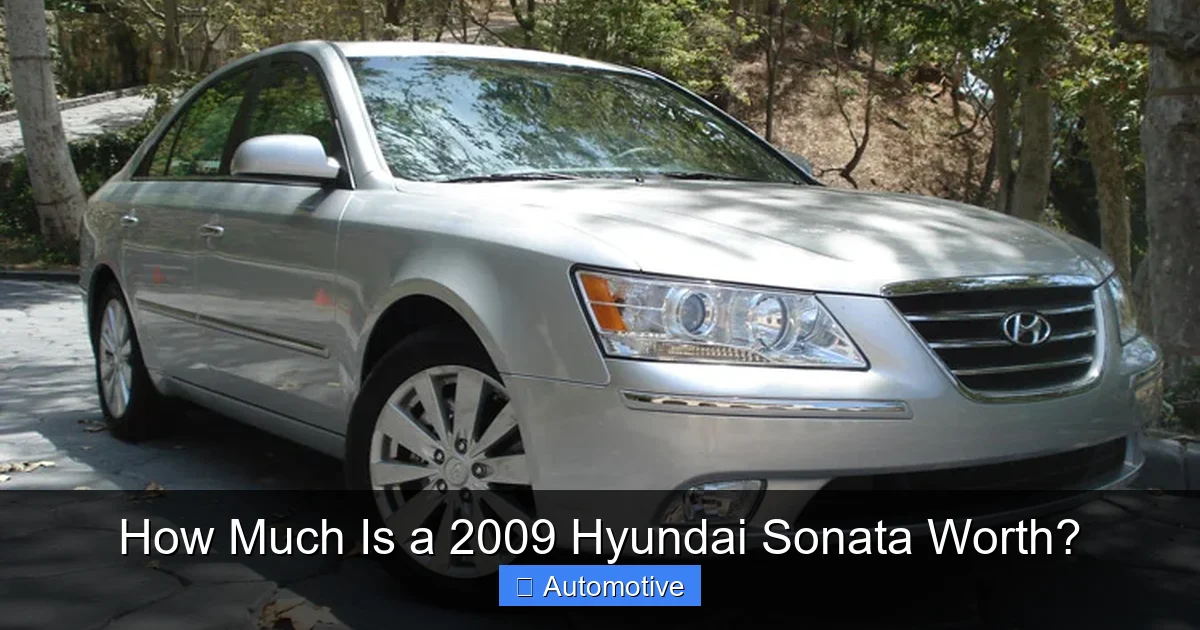
Visual guide about How Much Is a 2009 Hyundai Sonata Worth?
Image source: motortrend.com
So, what exactly determines how much a 2009 Hyundai Sonata is worth? While the average price range gives you a general idea, the actual value of any specific vehicle depends on several key factors. Understanding these can help you negotiate a fair price—whether you’re buying or selling.
Mileage: The Single Biggest Factor
Mileage is the most significant factor affecting a used car’s value, and the 2009 Sonata is no exception. As a general rule, lower mileage equals higher value. Here’s a rough breakdown of how mileage impacts pricing:
– **Under 80,000 miles:** These are considered low-mileage examples and can command prices at the top of the range—often $6,000 to $7,000 or more, especially if well-maintained.
– **80,000 to 120,000 miles:** This is the sweet spot for many buyers. Prices typically fall between $4,500 and $6,000.
– **120,000 to 150,000 miles:** Value starts to decline more noticeably. Expect to pay $3,500 to $5,000.
– **Over 150,000 miles:** These vehicles are priced at the lower end, often under $4,000, unless they have exceptional maintenance records or are rare trims.
For example, a 2009 Sonata with 75,000 miles, a clean title, and full service history might sell for $6,500. The same car with 160,000 miles—even in good condition—might only fetch $3,200.
Vehicle Condition and Maintenance History
A car’s physical and mechanical condition plays a huge role in its value. A 2009 Sonata that’s been garaged, regularly serviced, and free of major accidents will always be worth more than one that’s been neglected or poorly maintained.
Buyers should look for signs of regular oil changes, brake inspections, and timing belt replacements (if applicable). The 2.4L inline-4 engine in most 2009 Sonatas doesn’t have a timing belt—it uses a timing chain, which typically lasts the life of the engine—but other components like the water pump, alternator, and suspension parts may need attention over time.
A full maintenance log or Carfax report can add significant value. For instance, a seller who can provide records showing regular oil changes every 5,000 miles, new tires at 100,000 miles, and a recent brake job can justify a higher asking price.
Trim Level and Features
The 2009 Hyundai Sonata was available in three main trims: GLS, SE, and Limited. Each offers a different level of equipment, which directly affects resale value.
– **GLS:** The base model comes with essentials like air conditioning, power windows, and a CD player. It’s the most affordable but also the least feature-rich. Expect to pay $3,500 to $5,000.
– **SE:** Adds sport-tuned suspension, larger wheels, and upgraded interior materials. It’s a popular choice for buyers who want a bit more driving excitement. Prices range from $4,500 to $6,000.
– **Limited:** The top-tier trim includes leather seats, a sunroof, premium audio, dual-zone climate control, and more. These models hold their value best, often selling for $5,500 to $7,000 or more.
For example, a 2009 Sonata Limited with 90,000 miles and a clean history might sell for $6,200, while a GLS with similar mileage might only go for $4,800.
Accident History and Title Status
A clean title is essential for maximizing value. Vehicles with salvage, rebuilt, or flood-damaged titles can lose 20–40% of their value—even if they’re mechanically sound.
Buyers should always run a vehicle history report (like Carfax or AutoCheck) to check for accidents, odometer discrepancies, and previous ownership. A single minor fender bender might not affect value much, but a major collision—especially one involving frame damage—can significantly reduce resale potential.
Geographic Location and Market Demand
Used car prices vary by region due to differences in demand, climate, and local market conditions. For example, a 2009 Sonata in a mild climate like California or Arizona—where rust is less of an issue—might sell for more than the same car in a snowy state like Michigan or Minnesota, where road salt can cause corrosion.
Urban areas with higher population density often have more competitive pricing, while rural areas may see lower demand and slower sales. Additionally, regions with higher gas prices may see increased interest in fuel-efficient sedans like the Sonata.
2009 Hyundai Sonata Engine and Performance Overview
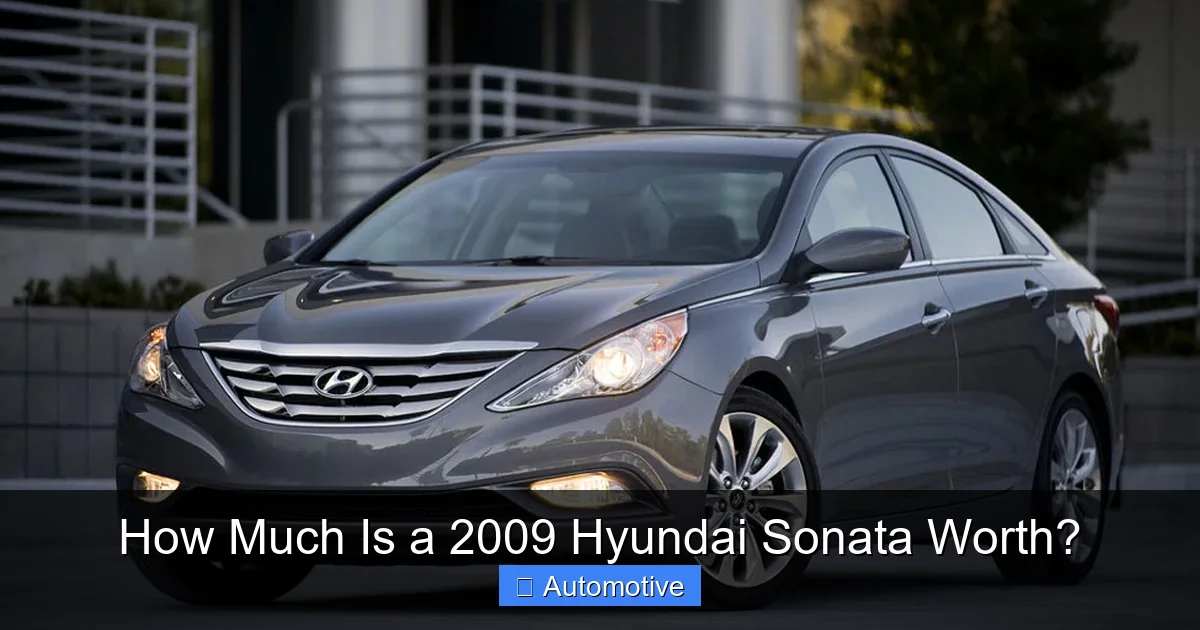
Visual guide about How Much Is a 2009 Hyundai Sonata Worth?
Image source: thesupercars.org
Under the hood, the 2009 Hyundai Sonata offers two engine options, both of which contribute to its reputation for reliability and efficiency.
2.4L Inline-4 Engine (Standard)
The base engine is a 2.4-liter inline-4 that produces 175 horsepower and 168 lb-ft of torque. Paired with either a 5-speed manual or 5-speed automatic transmission, it delivers smooth acceleration and excellent fuel economy.
– **City:** 22 MPG
– **Highway:** 32 MPG
– **Combined:** 25–27 MPG
This engine is known for its durability and low maintenance costs. Unlike some competitors that use timing belts (which require replacement every 60,000–100,000 miles), the 2.4L uses a timing chain that typically lasts the life of the engine. This reduces long-term ownership costs and adds to the car’s value.
3.3L V6 Engine (Optional on SE and Limited Trims)
For buyers who want more power, Hyundai offered a 3.3-liter V6 engine that delivers 249 horsepower and 229 lb-ft of torque. This engine is paired with a 5-speed automatic transmission and provides a more spirited driving experience.
– **City:** 19 MPG
– **Highway:** 29 MPG
– **Combined:** 22–24 MPG
While the V6 offers better performance, it comes with slightly lower fuel economy and higher maintenance costs. It’s also less common, which can affect resale value. A well-maintained V6 model might sell for $500–$1,000 more than a comparable 4-cylinder, but it may also have higher mileage due to its performance-oriented use.
Driving Experience and Ride Quality
The 2009 Sonata is not a sport sedan, but it offers a comfortable and composed ride. The suspension is tuned for comfort, absorbing bumps and potholes with ease. Steering is light and predictable, making it easy to maneuver in city traffic.
Noise levels are relatively low for a car in this class, and the cabin is well-insulated from road and wind noise. The seats are supportive, and the driving position is ergonomic, making long commutes more bearable.
One area where the Sonata falls short compared to rivals is handling. While it’s stable and secure, it doesn’t offer the sharp cornering or responsive steering of a Honda Accord or Mazda6. But for most buyers, that’s a fair trade-off for the added comfort and value.
Interior, Features, and Technology
Step inside the 2009 Hyundai Sonata, and you’ll find a cabin that punches above its weight in terms of design and functionality.
Spacious and Practical Interior
The Sonata offers generous interior space, with plenty of headroom and legroom for both front and rear passengers. The trunk holds 16.3 cubic feet of cargo—more than enough for groceries, luggage, or golf clubs.
Materials are a mix of hard plastics and soft-touch surfaces, with higher trims featuring upgraded upholstery and trim pieces. While it’s not as luxurious as a Toyota Camry or as modern as a newer Hyundai, it feels solid and well-built for its era.
Standard and Available Features
Even the base GLS trim comes well-equipped for a 2009 model. Standard features include:
– Air conditioning
– Power windows and locks
– Tilt/telescoping steering wheel
– AM/FM/CD audio system with auxiliary input
– Cruise control
Step up to the SE or Limited, and you’ll get:
– Leather-wrapped steering wheel and shift knob
– Upgraded audio system with USB input (on later models)
– Dual-zone automatic climate control
– Power driver’s seat
– Sunroof
– Alloy wheels
One notable feature is the available navigation system, though it’s rare and often outdated by today’s standards. Most buyers will rely on their smartphones for navigation via Bluetooth or auxiliary input.
Safety Features and Ratings
The 2009 Sonata earned good safety ratings from the National Highway Traffic Safety Administration (NHTSA), with 4 out of 5 stars overall. It also received “Good” ratings from the Insurance Institute for Highway Safety (IIHS) in most categories.
Standard safety features include:
– Dual front airbags
– Front side airbags
– Side curtain airbags
– Anti-lock brakes (ABS)
– Electronic stability control (ESC)
– Tire pressure monitoring system
These features were advanced for the time and helped the Sonata stand out in its class. Today, they contribute to its appeal as a safe, family-friendly vehicle.
Common Problems and Reliability of the 2009 Hyundai Sonata
No car is perfect, and the 2009 Sonata has a few known issues that buyers should be aware of. However, overall, it’s considered one of the more reliable midsize sedans of its era.
Known Mechanical Issues
– **Engine Oil Consumption:** Some 2.4L engines have been reported to consume oil between changes. This isn’t usually a sign of a major problem, but it’s something to monitor. Regular oil level checks are recommended.
– **Transmission Shudder:** A small number of automatic transmissions may exhibit a shudder or hesitation during acceleration. This is often related to the torque converter and can sometimes be resolved with a fluid change or software update.
– **Suspension Noise:** Over time, struts and sway bar links may wear out, leading to clunking noises over bumps. These are relatively inexpensive to replace.
– **Electrical Glitches:** Some owners report issues with power windows, door locks, or the audio system. These are usually minor and fixable.
Reliability and Longevity
Despite these issues, the 2009 Sonata has a strong reputation for longevity. Many examples are still on the road with well over 200,000 miles, especially those with regular maintenance.
Hyundai’s 10-year/100,000-mile powertrain warranty was a game-changer when it was introduced, and it helped build trust in the brand. Even though the warranty has expired for most 2009 models, the fact that so many are still running is a testament to their durability.
Maintenance and Ownership Costs
One of the biggest advantages of the 2009 Sonata is its low cost of ownership. Parts are widely available and affordable, and most repairs can be handled by independent mechanics.
Regular maintenance includes:
– Oil changes every 5,000–7,500 miles
– Tire rotations every 7,500 miles
– Brake inspections every 15,000 miles
– Coolant and transmission fluid changes every 60,000–100,000 miles
Annual maintenance costs typically range from $400 to $600, depending on driving habits and local labor rates.
Tips for Buying or Selling a 2009 Hyundai Sonata
Whether you’re in the market to buy or sell a 2009 Hyundai Sonata, these practical tips can help you get the best deal.
For Buyers: How to Find a Good Deal
– **Set a Budget:** Decide how much you’re willing to spend, including taxes, registration, and potential repairs.
– **Check Vehicle History:** Always run a Carfax or AutoCheck report to verify accident history and ownership.
– **Inspect the Car:** Have a trusted mechanic perform a pre-purchase inspection, especially if buying privately.
– **Compare Prices:** Use online tools like Kelley Blue Book (KBB), Edmunds, and NADA Guides to compare similar listings.
– **Negotiate:** Use any issues found during inspection as leverage to negotiate a lower price.
For Sellers: How to Maximize Value
– **Clean the Car:** A thorough wash, wax, and interior cleaning can make a big difference in perceived value.
– **Fix Minor Issues:** Replace burnt-out bulbs, fix small dents, and address any warning lights.
– **Gather Records:** Compile maintenance receipts and service records to show the car has been well cared for.
– **Price Competitively:** Research similar listings in your area and price your car fairly—don’t overprice.
– **Advertise Effectively:** Use high-quality photos and write a detailed description highlighting key features and condition.
Conclusion: Is the 2009 Hyundai Sonata Still a Good Buy?
So, how much is a 2009 Hyundai Sonata worth? The answer depends on your needs, budget, and expectations. But for the right buyer, this midsize sedan remains an excellent value.
With prices typically ranging from $3,500 to $7,000, the 2009 Sonata offers a compelling mix of reliability, fuel efficiency, and practicality. It may not have the latest tech or the most powerful engine, but it delivers where it counts: dependable transportation at an affordable price.
Whether you’re a first-time car buyer, a student, or someone looking for a no-nonsense commuter, the 2009 Sonata is worth considering. Just be sure to do your homework, inspect the vehicle thoroughly, and negotiate wisely.
In a world where new cars are increasingly expensive and complex, sometimes the best deal is a well-maintained used car that’s proven its worth over time. And for many drivers, the 2009 Hyundai Sonata fits that description perfectly.
Frequently Asked Questions
What is the average price of a 2009 Hyundai Sonata?
The average price ranges from $3,500 to $7,000, depending on mileage, condition, trim, and location. Lower-mileage, well-maintained models typically sell at the higher end of this range.
Is the 2009 Hyundai Sonata reliable?
Yes, the 2009 Sonata is known for its reliability and durability. Many are still on the road with high mileage, especially when properly maintained.
What engine does the 2009 Hyundai Sonata have?
Most models come with a 2.4L inline-4 engine (175 hp), while SE and Limited trims may have an optional 3.3L V6 (249 hp).
How many miles can a 2009 Hyundai Sonata last?
With proper maintenance, a 2009 Sonata can easily last 200,000 miles or more. Regular oil changes and timely repairs are key.
What are common problems with the 2009 Sonata?
Common issues include minor oil consumption, transmission shudder, and suspension noise. Most are manageable with routine maintenance.
Should I buy a 2009 Hyundai Sonata in 2024?
If you need an affordable, reliable sedan and can find a well-maintained example with a clean history, yes—it’s still a solid choice in 2024.
