Why Don’t Subaru Doors Lock Automatically

Contents
- 1 Key Takeaways
- 2 📑 Table of Contents
- 3 Why Don’t Subaru Doors Lock Automatically? Understanding the Design Choice
- 4 Safety First: The Core Reason Behind Manual Locking
- 5 User Control and Driver Awareness
- 6 Subaru’s Design Philosophy: Simplicity and Reliability
- 7 Aftermarket Solutions and Owner Workarounds
- 8 Comparing Subaru to Other Automakers
- 9 The Verdict: Is Manual Locking a Drawback or a Feature?
- 10 Final Thoughts: Embracing Subaru’s Unique Approach
- 11 Frequently Asked Questions


Subaru vehicles don’t automatically lock their doors for a mix of safety, design philosophy, and user control reasons. Unlike many modern cars, Subaru prioritizes driver awareness and emergency access over convenience, ensuring owners remain in charge of their vehicle’s security.
Key Takeaways
- Safety First: Subaru avoids automatic locking to prevent accidental lockouts and ensure quick exit in emergencies.
- User Control and Awareness: Manual locking encourages drivers to consciously secure their vehicle, reducing forgetfulness.
- Design Philosophy: Subaru values simplicity, reliability, and driver engagement over automated convenience features.
- No Industry Standard: Automatic door locking isn’t mandatory, and Subaru chooses to follow its own engineering principles.
- Aftermarket Solutions Available: Owners can install automatic locking systems if desired, though it may void warranties.
- Model and Trim Variations: Some higher-end Subaru models offer auto-lock features, but they’re not standard across the lineup.
- Focus on Real-World Usability: Subaru designs for practicality in diverse conditions, from snowy driveways to busy parking lots.
📑 Table of Contents
- Why Don’t Subaru Doors Lock Automatically? Understanding the Design Choice
- Safety First: The Core Reason Behind Manual Locking
- User Control and Driver Awareness
- Subaru’s Design Philosophy: Simplicity and Reliability
- Aftermarket Solutions and Owner Workarounds
- Comparing Subaru to Other Automakers
- The Verdict: Is Manual Locking a Drawback or a Feature?
- Final Thoughts: Embracing Subaru’s Unique Approach
Why Don’t Subaru Doors Lock Automatically? Understanding the Design Choice
If you’ve ever driven a Subaru—especially a newer model like the Outback, Forester, or Crosstrek—you may have noticed something unusual: the doors don’t automatically lock when you start driving. Unlike many modern vehicles that engage the locks once the car reaches a certain speed (usually around 10–15 mph), Subaru keeps things manual. You have to press the lock button or use the key fob to secure your doors.
At first glance, this might seem like an oversight or a cost-cutting measure. But the truth is far more intentional. Subaru’s decision to forgo automatic door locking is rooted in a blend of safety philosophy, user experience design, and brand identity. It’s not a flaw—it’s a feature, albeit one that takes some getting used to.
Subaru has long positioned itself as a brand that values practicality, safety, and driver engagement. From standard all-wheel drive to boxer engines, the company consistently makes engineering choices that prioritize real-world usability over flashy tech. The absence of automatic door locking fits squarely within this mindset. It’s about giving drivers control, promoting awareness, and ensuring that safety isn’t compromised by automation.
In this article, we’ll explore the reasons behind Subaru’s manual locking system, examine the benefits and drawbacks, and help you understand whether this design choice affects your daily driving experience. Whether you’re a longtime Subaru owner or considering your first purchase, knowing why the doors don’t lock automatically can help you appreciate the brand’s unique approach to automotive design.
Safety First: The Core Reason Behind Manual Locking
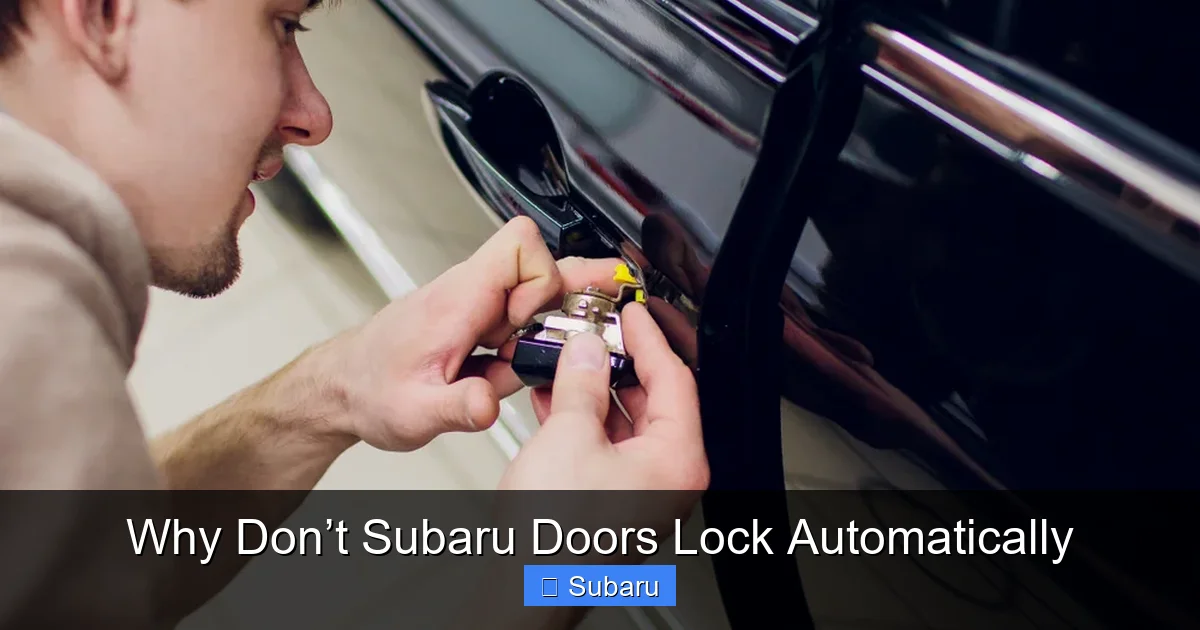
Visual guide about Why Don’t Subaru Doors Lock Automatically
Image source: acslocks.com
One of the most compelling reasons Subaru doesn’t include automatic door locking is safety—specifically, the risk of accidental lockouts and the need for quick egress in emergencies.
Imagine this scenario: You’re parked in a busy shopping center, unloading groceries into your trunk. You step out of the car, leave the keys inside, and close the door. In a vehicle with automatic locking, the doors might engage as soon as the car detects motion—even if you’re just walking a few feet away. Now you’re locked out, and your keys, phone, and wallet are all inside. That’s a frustrating and potentially dangerous situation, especially if you’re in an unfamiliar area or it’s late at night.
Subaru avoids this risk entirely by requiring manual input to lock the doors. This means the driver must consciously press the lock button or use the remote fob. It’s a simple but effective way to prevent accidental lockouts, which are surprisingly common. According to automotive safety experts, lockouts are one of the top reasons people call roadside assistance—and many of those incidents could be avoided with better design.
But safety isn’t just about avoiding lockouts. It’s also about ensuring that passengers—especially children—can exit the vehicle quickly in an emergency. In a crash or fire, every second counts. If the doors are automatically locked and the power system fails, unlocking them could become difficult or impossible. Subaru’s manual system ensures that doors remain accessible unless deliberately secured, giving occupants a better chance to escape.
Additionally, Subaru vehicles are often used in rural or remote areas—places where help might not arrive quickly. In such environments, the ability to exit a vehicle without relying on electronic systems can be a lifesaver. Whether you’re stuck in a snowbank or dealing with a mechanical failure, having manual control over door locks adds a layer of reliability that automated systems can’t always guarantee.
Emergency Egress and Child Safety
Subaru places a strong emphasis on family safety, and that includes designing vehicles that are safe for children. Many parents appreciate that Subaru doors don’t lock automatically because it reduces the risk of a child being trapped inside.
Consider a child left in a parked car—whether accidentally or during a quick errand. If the doors were to lock automatically when the car is turned off or moved slightly, a child might not be able to open them from the inside. While most Subarus have child safety locks that disable interior door handles, the exterior handles remain functional. This means a rescuer can still open the door from the outside, even if the child can’t.
Automatic locking systems can complicate this process. Some systems engage locks when the ignition is turned off, or when the vehicle is shifted into park. In a panic situation, a bystander might not know how to disable the locks, delaying rescue efforts. Subaru’s manual approach ensures that doors remain unlocked unless the driver chooses otherwise, making it easier for others to assist in an emergency.
User Control and Driver Awareness
Visual guide about Why Don’t Subaru Doors Lock Automatically
Image source: acslocks.com
Another key reason Subaru avoids automatic door locking is to promote driver awareness and responsibility. In an age where cars are becoming increasingly automated—handling everything from braking to steering—Subaru stands out by keeping certain functions manual.
When you have to press a button to lock your doors, you’re reminded that your vehicle’s security is in your hands. This small action reinforces good habits, like checking that your car is secure before walking away. It’s a subtle nudge toward mindfulness, which can translate to other aspects of driving, such as checking mirrors, fastening seatbelts, and staying alert.
Automatic systems, while convenient, can encourage complacency. If the car handles everything, drivers may become less attentive to basic safety practices. Subaru’s philosophy is that drivers should remain engaged and in control, not passive passengers in their own vehicles.
This approach also aligns with Subaru’s broader brand identity. The company markets itself as a “driver’s brand”—one that values connection between the person and the machine. Features like manual transmissions (still available on some models), analog gauges, and tactile controls all reflect this ethos. Automatic door locking, in this context, feels out of place. It’s a convenience feature that doesn’t enhance the driving experience—it just adds complexity.
Reducing Reliance on Electronics
Modern vehicles are packed with electronic systems, and while they offer many benefits, they also introduce potential points of failure. A malfunctioning sensor, a dead battery, or a software glitch could disable automatic locking features, leaving drivers stranded or vulnerable.
Subaru’s manual locking system is simple, mechanical, and reliable. There’s no software to update, no sensors to calibrate, and no risk of electronic failure. This simplicity is especially valuable in harsh environments—like the snowy winters of New England or the rugged terrain of the Pacific Northwest—where electronics can be less dependable.
By keeping door locking manual, Subaru ensures that this basic function remains accessible under almost any condition. Whether you’re driving through a blizzard or parked on a remote trail, you can count on being able to lock or unlock your doors with a simple button press or key turn.
Subaru’s Design Philosophy: Simplicity and Reliability
To truly understand why Subaru doors don’t lock automatically, it helps to look at the brand’s overall design philosophy. Subaru isn’t chasing the latest tech trends or trying to outdo luxury brands with flashy features. Instead, it focuses on building vehicles that are practical, durable, and easy to use.
This philosophy is evident in many aspects of Subaru engineering. For example, the brand continues to use boxer engines—a design that’s lower to the ground, improving stability and handling. It also offers standard all-wheel drive on nearly all models, enhancing traction in adverse weather. These choices aren’t about impressing with specs; they’re about delivering real-world performance and safety.
Automatic door locking doesn’t fit into this framework. It’s a convenience feature that doesn’t improve safety, performance, or reliability. In fact, it could introduce new risks, as we’ve discussed. Subaru engineers likely weighed the pros and cons and concluded that the potential downsides outweighed the benefits.
Moreover, Subaru vehicles are often used by people who value simplicity and functionality. Think outdoor enthusiasts, families, and commuters who need a dependable daily driver. For these users, a manual lock is just as effective as an automatic one—and often more trustworthy.
Consistency Across the Lineup
Another factor is consistency. Subaru aims to provide a uniform experience across its vehicle lineup. Whether you buy a base model Impreza or a fully loaded Outback Touring, you’ll find similar controls and features. This makes it easier for owners to switch between models or upgrade without relearning basic functions.
If automatic door locking were introduced on higher trims, it could create confusion. A driver used to manual locking might accidentally leave their doors unlocked on a new model, or vice versa. By keeping the system consistent, Subaru reduces the learning curve and minimizes user error.
Aftermarket Solutions and Owner Workarounds
While Subaru doesn’t offer automatic door locking as a factory feature, many owners have found ways to add it themselves. Aftermarket modules and electronic kits are available that can be installed to enable automatic locking based on speed or ignition status.
These systems typically connect to the car’s CAN bus (Controller Area Network) and use sensors to detect when the vehicle is in motion. Once the car reaches a set speed—say, 10 mph—the module sends a signal to lock the doors. Some kits even allow customization, such as delaying the lock or enabling it only when the transmission is in drive.
However, installing an aftermarket system comes with caveats. First, it may void parts of your warranty, especially if it involves modifying the electrical system. Second, improper installation can lead to malfunctions, such as doors locking at the wrong time or failing to unlock when needed. Finally, these systems add complexity, which goes against Subaru’s design principles.
That said, for owners who prioritize convenience, these solutions can be worthwhile. Many report that the peace of mind of automatic locking outweighs the minor hassle of installation. Just be sure to choose a reputable brand and have the system installed by a professional.
Factory Options on Higher Trims
It’s worth noting that some newer Subaru models—particularly higher trims like the Limited or Touring packages—do offer automatic door locking as an option. For example, the 2023 Subaru Outback Limited includes a feature called “Auto Door Lock/Unlock,” which locks the doors when the vehicle reaches 12 mph and unlocks them when the ignition is turned off.
This feature is typically part of a broader suite of convenience and safety technologies, such as keyless entry, push-button start, and driver-assist systems. It’s not standard, but it’s available for those who want it.
The availability of this feature shows that Subaru isn’t opposed to automation—it just wants to offer it thoughtfully. By making it optional, the company allows drivers to choose based on their preferences and needs.
Comparing Subaru to Other Automakers
To put Subaru’s approach in context, it’s helpful to compare it to other automakers. Many brands—especially in the mainstream and luxury segments—include automatic door locking as a standard feature.
For example, Honda, Toyota, and Ford all offer automatic locking on most of their vehicles. In many cases, the system engages when the car reaches a certain speed, and unlocks when the driver’s door is opened or the ignition is turned off. Some luxury brands, like BMW and Mercedes-Benz, take it further with proximity-based locking—doors lock when you walk away with the key fob.
These features are often marketed as part of a “smart” or “connected” driving experience. They appeal to consumers who want their cars to anticipate their needs and reduce the number of tasks they have to perform.
Subaru, by contrast, takes a more conservative approach. It doesn’t reject technology outright—features like EyeSight driver assistance and Starlink infotainment are evidence of that—but it prioritizes functionality over flash.
This difference reflects broader trends in the automotive industry. Some brands are racing toward full automation, while others—like Subaru—are taking a step back to ensure that core functions remain reliable and user-controlled.
Regional Differences and Regulations
It’s also worth noting that automatic door locking isn’t required by law in most countries. While some regions have safety standards for door latches and child locks, there’s no mandate for automatic engagement. This gives automakers the freedom to decide whether to include the feature.
In markets where convenience is highly valued—like the United States or Japan—automatic locking is more common. In regions with harsher climates or less developed infrastructure, manual systems may be preferred for their reliability.
Subaru sells vehicles globally, but its strongest markets are North America and Japan. In both regions, the brand has chosen to emphasize safety and simplicity over automation, even as competitors adopt more high-tech features.
The Verdict: Is Manual Locking a Drawback or a Feature?
So, why don’t Subaru doors lock automatically? The answer lies in a combination of safety, design philosophy, and user control. Subaru prioritizes reliability, emergency access, and driver awareness over convenience. It believes that certain functions—like locking your doors—should remain in the hands of the driver.
For some, this is a minor inconvenience. For others, it’s a welcome reminder that their car is a tool, not a robot. And for families, outdoor enthusiasts, and safety-conscious drivers, it’s a feature that enhances peace of mind.
Ultimately, whether manual locking is a pro or a con depends on your perspective. If you value automation and hands-free convenience, you might find Subaru’s approach outdated. But if you appreciate simplicity, reliability, and control, you’ll likely see it as a smart design choice.
And remember: if you really want automatic locking, you can always add it yourself—or choose a higher trim that includes it. But for many Subaru owners, the manual system is just another part of what makes their car feel honest, dependable, and uniquely Subaru.
Final Thoughts: Embracing Subaru’s Unique Approach
Subaru’s decision to forgo automatic door locking is more than just a technical detail—it’s a reflection of the brand’s values. In a world where cars are becoming increasingly automated, Subaru stands out by keeping things simple, safe, and driver-focused.
While automatic locking might seem like a small convenience, its absence encourages mindfulness and responsibility. It ensures that drivers remain aware of their vehicle’s status and reduces the risk of lockouts or emergencies. And for those who value reliability over flash, it’s a feature that makes perfect sense.
So the next time you’re driving your Subaru and reach over to lock the doors manually, don’t see it as a hassle. See it as a reminder that your car is designed with you in mind—not just to get you from point A to point B, but to do so safely, reliably, and with your full attention.
Whether you’re navigating city streets, mountain passes, or snowy backroads, that kind of control is something worth holding onto.
Frequently Asked Questions
Why don’t Subaru doors lock automatically when I start driving?
Subaru doesn’t include automatic door locking to prioritize safety and driver control. The design prevents accidental lockouts and ensures doors remain accessible in emergencies.
Can I add automatic door locking to my Subaru?
Yes, aftermarket modules are available that can enable automatic locking based on speed or ignition status. However, installation may void your warranty and should be done by a professional.
Do any Subaru models have automatic door locking?
Some higher trims, like the Outback Limited or Forester Touring, offer automatic locking as an optional feature. It’s not standard across the lineup.
Is automatic door locking safer than manual locking?
Not necessarily. While automatic locking can prevent doors from being left unlocked, it increases the risk of lockouts and may complicate emergency egress. Subaru favors manual control for safety.
Will Subaru ever add automatic door locking as standard?
It’s possible, but unlikely. Subaru’s design philosophy emphasizes simplicity and user control, so any future changes would likely remain optional rather than standard.
Does manual locking affect my car’s security?
No. Manual locking is just as secure as automatic locking when used properly. The key is developing the habit of locking your doors consciously before walking away.