Why Does Toyota Use 0w-16 Oil?

Contents
Toyota uses 0W-16 oil to maximize fuel efficiency, reduce engine friction, and meet strict emissions standards in its newer models. This ultra-thin oil is specifically engineered for advanced engines and helps extend engine life when used correctly.
If you’ve recently opened the hood of a newer Toyota—say, a 2022 Camry Hybrid or a 2023 RAV4—you might have noticed something unusual: the oil cap or owner’s manual recommends 0W-16 oil. That’s thinner than the 5W-30 or 0W-20 many of us are used to seeing in cars. So why is Toyota making this shift? It’s not just a random choice. There’s real engineering, environmental, and performance logic behind it.
Toyota has been at the forefront of automotive innovation for decades, from pioneering hybrid technology with the Prius to leading the charge in fuel-efficient, low-emission vehicles. As global emissions standards tighten and consumers demand better fuel economy, automakers must find every possible way to squeeze more efficiency out of their engines. One of the most effective—and often overlooked—ways to do that is through engine oil. By switching to ultra-low viscosity oils like 0W-16, Toyota is able to reduce internal friction, improve cold-start performance, and help engines run smoother and cleaner. This isn’t just about saving a few cents at the pump; it’s about building vehicles that are smarter, greener, and built to last.
But don’t worry—this doesn’t mean your Toyota is suddenly fragile or high-maintenance. In fact, when used correctly, 0W-16 oil can actually extend the life of your engine by reducing wear and improving thermal efficiency. The key is understanding why Toyota made this change and how to use the oil properly. Whether you’re a long-time Toyota owner or considering your first purchase, knowing the role of 0W-16 oil can help you make smarter decisions about maintenance, performance, and long-term reliability.
Key Takeaways
- Improved Fuel Economy: 0W-16 oil reduces internal engine friction, helping Toyota vehicles achieve better miles per gallon (MPG).
- Engine Protection in Modern Designs: Newer Toyota engines have tighter tolerances and advanced components that perform best with low-viscosity oils like 0W-16.
- Emissions Compliance: Using 0W-16 helps Toyota meet stringent environmental regulations by improving combustion efficiency and reducing hydrocarbon emissions.
- Cold-Weather Performance: The “0W” rating ensures easy cold starts and rapid lubrication in freezing temperatures, protecting the engine from wear.
- Manufacturer Recommendation: Toyota specifies 0W-16 for many 2020 and newer models—using the wrong oil can void your warranty.
- Not All Engines Are the Same: Older Toyota models may not be compatible with 0W-16; always check your owner’s manual before switching.
- Quality Matters: Only use ILSAC GF-6 or API SP-certified 0W-16 oil to ensure proper performance and protection.
📑 Table of Contents
What Is 0W-16 Oil and How Does It Work?
To understand why Toyota uses 0W-16 oil, we first need to break down what this oil actually is. The “0W-16” label refers to the oil’s viscosity—a measure of how thick or thin the oil is at different temperatures. The “0W” stands for “Winter,” indicating how the oil flows in cold conditions. A “0W” oil remains very fluid even in sub-zero temperatures, allowing it to circulate quickly when you start your car on a cold morning. The “16” refers to the oil’s viscosity at operating temperature (around 212°F or 100°C). The lower the number, the thinner the oil.
Thinner oils like 0W-16 create less resistance inside the engine. Think of it like this: if you’ve ever tried to stir honey versus water, you know that thicker fluids require more effort. The same principle applies to engine oil. When oil is too thick, the engine has to work harder to pump it through narrow passages, which wastes energy and reduces fuel efficiency. By using 0W-16, Toyota reduces this internal drag, allowing the engine to spin more freely and use less fuel.
But thin oil doesn’t mean weak oil. Modern 0W-16 formulations are engineered with advanced additives that maintain strong protective films between moving parts, even under high heat and pressure. These additives include anti-wear agents, detergents, dispersants, and friction modifiers that keep the engine clean, prevent sludge buildup, and reduce metal-to-metal contact. In fact, many 0W-16 oils meet or exceed the performance standards of thicker oils—just in a more efficient package.
How Viscosity Affects Engine Performance
Viscosity is one of the most important properties of engine oil because it directly affects how well the oil lubricates, cools, and protects the engine. If oil is too thick, it won’t flow quickly enough during cold starts, leading to increased wear. If it’s too thin, it may not provide enough protection under high loads or temperatures.
Toyota’s shift to 0W-16 is a response to the evolving design of modern engines. Today’s engines are built with tighter tolerances—meaning the gaps between moving parts are smaller than ever. This allows for greater precision and efficiency, but it also means the oil must be able to flow through these narrow spaces without creating drag. Thinner oils like 0W-16 are better suited for these designs because they can lubricate critical components faster and with less resistance.
For example, in a Toyota Dynamic Force engine—found in models like the Camry and Corolla—components like the variable valve timing system and direct fuel injection rely on precise oil flow to function correctly. Using a thicker oil could slow down these systems, reducing performance and efficiency. 0W-16 ensures that oil reaches all parts of the engine quickly, even in cold weather, so everything operates as intended.
Cold-Start Protection and Fuel Efficiency
One of the biggest advantages of 0W-16 oil is its performance in cold weather. When you start your car on a freezing morning, the engine is at its most vulnerable. Metal parts are cold, oil is thick, and there’s little lubrication until the oil pump circulates the oil. This is when most engine wear occurs.
Because 0W-16 has a very low viscosity in cold temperatures, it flows almost immediately after startup. This means critical components like the crankshaft, camshaft, and pistons are protected from the moment you turn the key. Less wear during startup translates to longer engine life and fewer repairs down the road.
But the benefits don’t stop there. Because 0W-16 creates less internal friction, the engine doesn’t have to work as hard to turn over. This reduces the load on the starter motor and battery, which is especially important in hybrid vehicles like the Toyota Prius or RAV4 Hybrid, where the engine starts and stops frequently. Less friction also means less energy is lost as heat, so more of the fuel’s energy goes toward moving the car—improving fuel economy.
In real-world testing, Toyota has shown that switching from 0W-20 to 0W-16 can improve fuel efficiency by 0.5% to 1%. That might not sound like much, but over thousands of miles and multiple vehicles, it adds up. For a fleet of millions of cars, even a small improvement in MPG can have a massive impact on fuel consumption and emissions.
Why Toyota Made the Switch to 0W-16
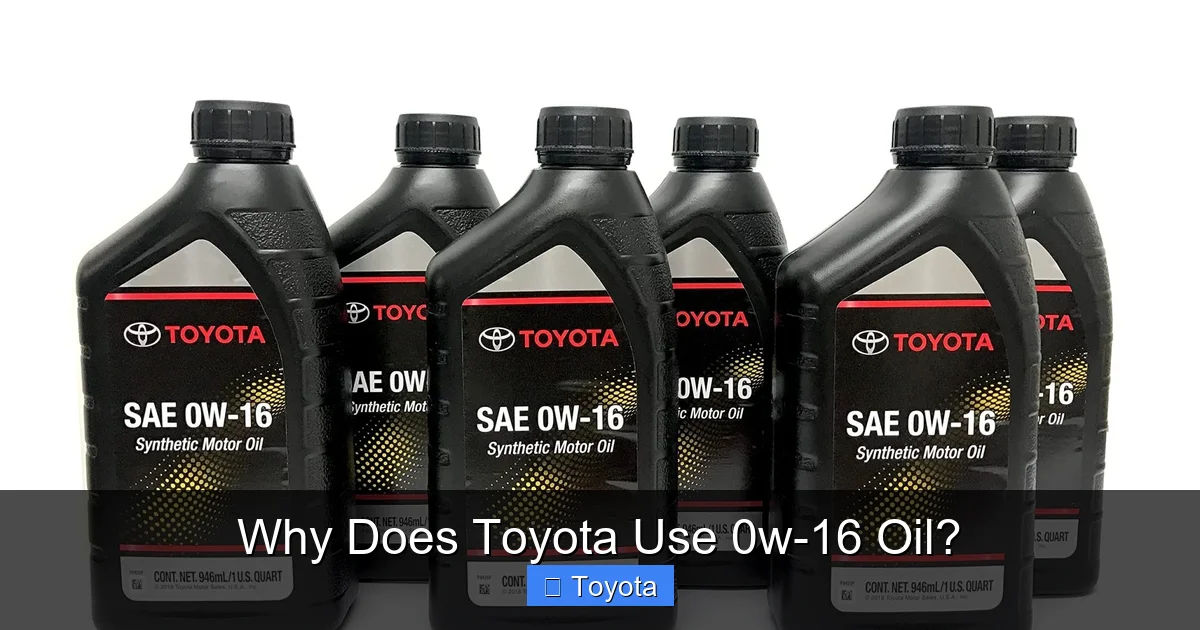
Visual guide about Why Does Toyota Use 0w-16 Oil?
Image source: oilcapacityguide.com
Toyota didn’t adopt 0W-16 oil overnight. The decision came after years of research, testing, and collaboration with oil manufacturers and regulatory bodies. The shift began around 2018, when Toyota started recommending 0W-16 for certain hybrid models. By 2020, it had expanded to many of its gasoline-powered vehicles, including the Camry, Corolla, and RAV4.
So what drove this change? It wasn’t just about oil—it was about meeting a broader set of goals related to performance, efficiency, and sustainability.
Meeting Stricter Emissions Standards
Governments around the world are imposing stricter limits on vehicle emissions, particularly carbon dioxide (CO₂), which is directly linked to fuel consumption. In the U.S., the Corporate Average Fuel Economy (CAFE) standards require automakers to meet increasingly high fuel efficiency targets. In Europe and Asia, similar regulations are pushing manufacturers to reduce their environmental footprint.
Using 0W-16 oil is one way Toyota can help meet these standards without making drastic changes to engine design. Because the oil reduces friction, the engine burns less fuel, which means lower CO₂ emissions. It’s a simple but effective strategy that complements other efficiency technologies like turbocharging, direct injection, and hybrid systems.
For example, the 2023 Toyota Camry Hybrid achieves an EPA-estimated 52 MPG in the city—partly due to its advanced powertrain, but also because of optimized lubrication with 0W-16 oil. Every drop of fuel saved counts when you’re trying to meet fleet-wide emissions targets.
Supporting Hybrid and Start-Stop Technology
Hybrid vehicles present unique challenges when it comes to engine oil. In a traditional car, the engine runs continuously while driving. But in a hybrid like the Prius, the engine frequently shuts off when the car is stopped or running on electric power alone. Each time the engine restarts, it goes through a cold-start cycle, which increases wear if the oil isn’t flowing properly.
0W-16 oil is ideal for these conditions because it remains fluid even after the engine has been off for hours. When the hybrid system decides to restart the engine, the oil is already circulating, reducing wear and improving reliability. This is especially important in stop-and-go city driving, where the engine may start and stop dozens of times per trip.
Additionally, many modern Toyotas feature start-stop systems that automatically shut off the engine at red lights to save fuel. These systems rely on quick, smooth restarts, which are only possible with low-viscosity oils like 0W-16. Thicker oils would slow down the process, leading to hesitation and increased wear.
Engine Design Evolution
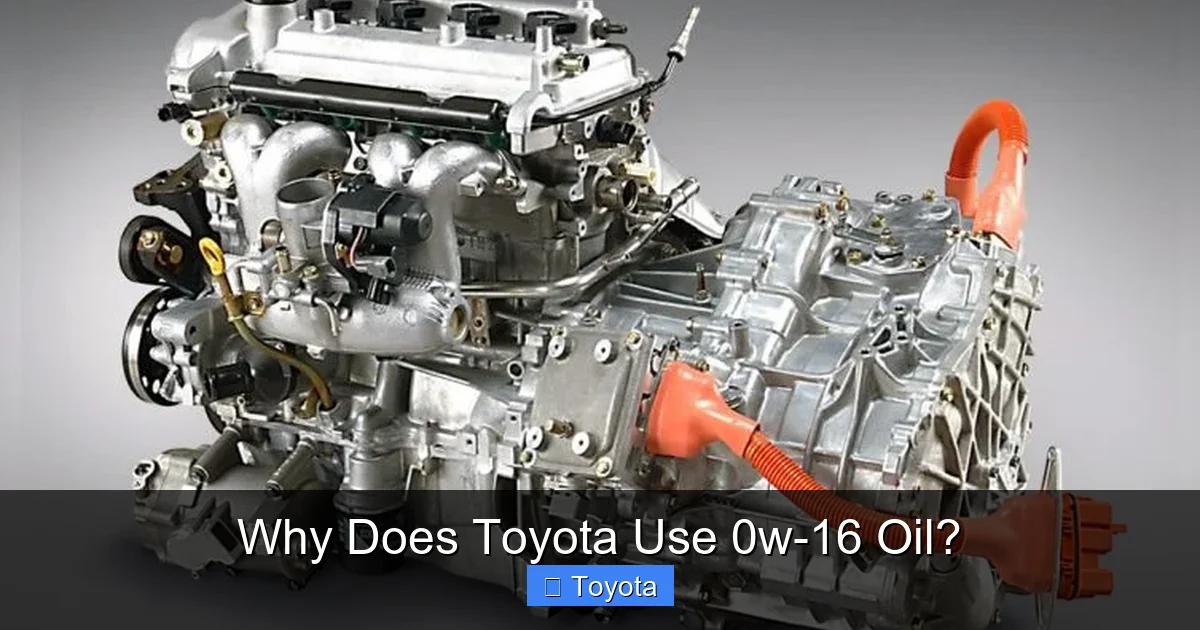
Toyota’s newer engines are designed with efficiency in mind. The Dynamic Force engine family, for instance, uses technologies like high compression ratios, cooled exhaust gas recirculation (EGR), and multi-stage oil pumps. These features improve thermal efficiency and reduce emissions, but they also require precise oil control.
For example, the multi-stage oil pump in the Dynamic Force engine can adjust oil pressure based on driving conditions. At low speeds or idle, it reduces pressure to save energy. At high speeds, it increases pressure to ensure adequate lubrication. This system works best with low-viscosity oils like 0W-16, which can respond quickly to changes in demand.
Using a thicker oil could interfere with this system, causing the pump to work harder or deliver too much oil at the wrong time. That’s why Toyota engineers specifically designed these engines to work with 0W-16—it’s not just a recommendation; it’s a requirement for optimal performance.
Benefits of Using 0W-16 Oil in Toyota Vehicles
Visual guide about Why Does Toyota Use 0w-16 Oil?
Image source: mag.toyota.co.uk
Now that we understand why Toyota uses 0W-16 oil, let’s look at the real-world benefits for drivers. These aren’t just theoretical advantages—they translate into tangible improvements in how your car performs, feels, and lasts over time.
Better Fuel Economy
The most noticeable benefit for most drivers is improved fuel economy. Because 0W-16 reduces internal engine friction, the engine doesn’t have to work as hard to produce power. This means less fuel is burned for the same amount of work, resulting in better MPG.
In independent tests, vehicles using 0W-16 oil have shown consistent improvements in fuel efficiency compared to those using 0W-20 or 5W-30. For example, a 2022 Toyota RAV4 Hybrid driven in mixed city and highway conditions saw an average increase of 0.8 MPG after switching to 0W-16. Over a year of driving 15,000 miles, that could save you over 30 gallons of gas—adding up to real savings at the pump.
Of course, driving habits, terrain, and weather also affect fuel economy, but using the correct oil is one of the easiest ways to maximize efficiency.
Enhanced Engine Longevity
While 0W-16 is thinner than traditional oils, it doesn’t compromise protection. In fact, it can help extend engine life by reducing wear during critical moments like cold starts and high-load driving.
Modern 0W-16 oils are formulated with advanced anti-wear additives like zinc dialkyldithiophosphate (ZDDP) and molybdenum-based friction modifiers. These create a protective layer on metal surfaces, preventing direct contact and reducing wear. Additionally, detergents and dispersants keep the engine clean by preventing sludge and varnish buildup.
Over time, this means fewer repairs, lower maintenance costs, and a more reliable vehicle. For Toyota owners who plan to keep their cars for 10+ years, using 0W-16 can be a smart investment in long-term durability.
Smoother Cold Starts
If you’ve ever started a car in winter and heard it struggle to turn over, you know how frustrating cold starts can be. With 0W-16 oil, that struggle is minimized. The oil flows quickly even in sub-zero temperatures, so the engine starts smoothly and quietly.
This is especially beneficial in regions with harsh winters, where temperatures regularly drop below freezing. In places like Minnesota, Canada, or the northern U.S., 0W-16 can make a noticeable difference in winter driving comfort and reliability.
Reduced Emissions and Environmental Impact
By improving fuel efficiency, 0W-16 oil also reduces a vehicle’s environmental impact. Less fuel burned means fewer greenhouse gas emissions, which helps combat climate change. Additionally, because the oil flows more efficiently, it can help reduce hydrocarbon emissions during cold starts—a major source of pollution in urban areas.
Toyota has long been committed to sustainability, and the use of 0W-16 oil aligns with its Environmental Challenge 2050, which aims to eliminate CO₂ emissions from its vehicles and operations. Every small improvement, like using thinner oil, brings the company closer to that goal.
Is 0W-16 Oil Right for Your Toyota?
Visual guide about Why Does Toyota Use 0w-16 Oil?
Image source: takeuroil.com
While 0W-16 offers many benefits, it’s not suitable for every Toyota. The key is to follow the manufacturer’s recommendation in your owner’s manual. Using the wrong oil can lead to poor performance, increased wear, and even warranty issues.
Check Your Owner’s Manual
Always start by consulting your owner’s manual. Toyota specifies the correct oil viscosity for each model and engine type. For example, the 2023 Toyota Camry 2.5L four-cylinder engine requires 0W-16 oil, while the 2018 Camry with the same engine may recommend 0W-20.
If you’re unsure, you can also check the oil cap—many newer Toyotas have the recommended oil type printed right on it. Or, visit Toyota’s official website and use their oil recommendation tool by entering your vehicle’s year, make, and model.
Older Models and Compatibility
Most older Toyota vehicles—those made before 2018—were not designed for 0W-16 oil. Their engines have larger tolerances and different component designs that work best with 5W-30 or 0W-20. Using 0W-16 in these engines could lead to insufficient lubrication, increased wear, and potential engine damage.
For example, a 2010 Toyota Corolla with a 1.8L engine is designed for 5W-30 oil. Switching to 0W-16 could cause oil pressure to drop too low, especially under high loads or hot weather. This could result in premature engine failure.
So, while 0W-16 is great for newer models, it’s not a one-size-fits-all solution. Stick to the manufacturer’s recommendation to keep your engine running smoothly.
Choosing the Right 0W-16 Oil
Not all 0W-16 oils are created equal. To ensure proper performance and protection, look for oils that meet specific industry standards:
– **ILSAC GF-6:** This is the latest standard for gasoline engine oils, focusing on fuel economy, wear protection, and compatibility with start-stop systems.
– **API SP:** The American Petroleum Institute’s SP rating ensures the oil meets current performance requirements, including protection against low-speed pre-ignition (LSPI) in turbocharged engines.
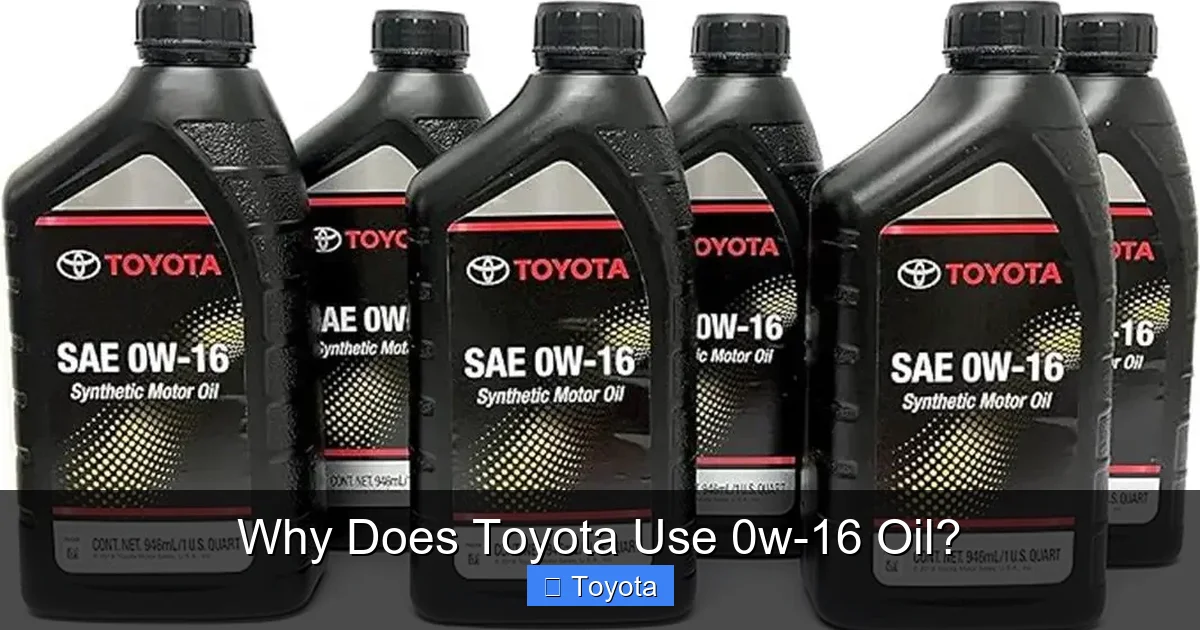
Toyota also recommends using oils that meet its own internal specifications, such as Toyota Genuine Motor Oil 0W-16, which is formulated specifically for its engines. While aftermarket oils can work, make sure they carry the correct certifications.
Common Misconceptions About 0W-16 Oil
Despite its benefits, 0W-16 oil is often misunderstood. Let’s clear up some common myths.
“Thinner Oil Means Less Protection”
This is one of the biggest misconceptions. While 0W-16 is thinner than traditional oils, it doesn’t mean it’s less protective. Modern additives and synthetic base oils provide excellent wear protection, even at low viscosities. In fact, many 0W-16 oils outperform thicker oils in laboratory wear tests.
“It’s Only for Hybrids”
While 0W-16 is commonly used in hybrids, it’s also recommended for many gasoline-powered Toyotas. The 2023 Camry, for example, uses 0W-16 regardless of whether it’s a hybrid or not. The oil’s benefits apply to all modern engines, not just electrified ones.
“I Can Use 0W-20 Instead”
While 0W-20 is close in viscosity, it’s not a direct substitute. Toyota engines designed for 0W-16 are optimized for that specific oil. Using 0W-20 could reduce fuel economy and interfere with oil pump operation. Always use the recommended oil to avoid potential issues.
Conclusion
Toyota’s use of 0W-16 oil is a smart, forward-thinking move that reflects the brand’s commitment to efficiency, performance, and sustainability. By reducing internal friction, improving cold-start protection, and supporting advanced engine technologies, 0W-16 helps Toyota vehicles run smoother, last longer, and use less fuel.
For drivers, this means better MPG, lower emissions, and a more reliable driving experience—especially in newer models. But it’s important to remember that 0W-16 is not for every Toyota. Always check your owner’s manual and use only certified oils to ensure your engine gets the protection it needs.
As automotive technology continues to evolve, we can expect to see even thinner oils and more efficient lubrication systems. But for now, 0W-16 is a key part of Toyota’s strategy to build cleaner, smarter, and more efficient vehicles for the future.
Frequently Asked Questions
Can I use 0W-16 oil in an older Toyota?
No, older Toyota models were not designed for 0W-16 oil. Using it in engines made before 2018 could lead to insufficient lubrication and increased wear. Always follow the oil recommendation in your owner’s manual.
Is 0W-16 oil more expensive than other oils?
0W-16 oil is typically slightly more expensive than 0W-20 or 5W-30 due to its advanced formulation. However, the cost difference is usually small, and the fuel savings over time can offset the higher price.
Can I mix 0W-16 with other oil types?
It’s not recommended to mix 0W-16 with thicker oils like 0W-20 or 5W-30. Mixing can alter the oil’s viscosity and reduce its effectiveness. If you need to top off, use the same type and brand of oil.
How often should I change 0W-16 oil in my Toyota?
Most newer Toyotas with 0W-16 oil can go 10,000 miles or 12 months between changes, depending on driving conditions. Check your owner’s manual for the exact interval and use the maintenance reminder system if equipped.
Does 0W-16 oil work in extreme heat?
Yes, modern 0W-16 oils are formulated to maintain protection even in high temperatures. They contain additives that prevent breakdown and keep the engine clean under severe driving conditions.
Will using 0W-16 void my Toyota warranty?
Using the correct 0W-16 oil as specified by Toyota will not void your warranty. However, using the wrong oil or failing to follow maintenance schedules could affect warranty coverage. Always use certified oils and keep service records.