
What Does a Blinking Tire Pressure Light Mean in a Toyota Camry?

A blinking tire pressure warning light in your Toyota Camry is not the same as a steady light. While a solid light means low tire pressure, a flashing light indicates a problem with the Tire Pressure Monitoring System (TPMS) itself—usually a faulty sensor, dead sensor battery, or system malfunction. This is a critical warning that requires immediate attention, as your car can no longer monitor tire pressure accurately. You should diagnose the issue promptly, as driving with a malfunctioning TPMS is unsafe and may prevent you from passing state inspections.
That little yellow exclamation point inside a tire cross-section on your dashboard is your car’s way of talking to you. In your Toyota Camry, it’s part of the Tire Pressure Monitoring System (TPMS), a crucial safety feature. But what does it mean when that light isn’t just on—it’s blinking? A flashing tire pressure light is a different, more urgent message than a steady glow. It’s not telling you your tires are low on air; it’s screaming that the system designed to tell you about low air is broken. Understanding this distinction is the first step toward keeping your Camry safe and roadworthy. Let’s dive deep into what causes that frantic flashing and exactly what you should do about it.
Key Takeaways
- Blinking vs. Solid: A blinking TPMS light means a system fault (sensor issue), while a solid light means actual low tire pressure in one or more tires.
- Common Culprit: The most frequent cause is a failed or dead TPMS sensor, often after 7-10 years of battery life.
- Safety First: Do not ignore a blinking light. Your primary safety net for tire pressure is now disabled.
- Check Everything: Always inspect all four tires and the spare (if equipped with a sensor) for proper pressure and visible damage.
- Reset Requires Fix: The light will not reset itself until the underlying fault is repaired and the system is relearned.
- Professional Help Often Needed: Diagnosing and replacing TPMS sensors typically requires a scan tool and proper procedure, best left to a technician.
- Prevention is Key: Regular tire pressure checks and careful tire service can help avoid many TPMS issues.
📑 Table of Contents
- How TPMS Works in Your Toyota Camry
- Blinking Light vs. Solid Light: A Critical Difference
- Common Causes of a Blinking TPMS Light in a Toyota Camry
- What to Do Immediately When the Light Blinks
- The Resetting and Relearning Process Explained
- Preventing Future TPMS Problems
- Conclusion: Safety Over Convenience
How TPMS Works in Your Toyota Camry
Before we diagnose the problem, we need to understand the system. Your Camry uses a direct TPMS. This means each wheel (and sometimes the spare) has a small, battery-powered sensor mounted inside the valve stem. These sensors constantly radio your tire pressure and temperature data to the car’s computer. When pressure drops 25% below the recommended level, the system triggers the warning light. Simple, right? But the blinking light introduces a new layer.
The Role of the “System” in TPMS
The TPMS isn’t just the sensors. It’s the entire network: the sensors, the receiver module, and the main computer (ECU). For the system to work, all parts must communicate. A blinking light means this communication has failed somewhere. The car’s computer has performed a self-test and found an anomaly—like a sensor that isn’t responding, a sensor with a dead battery, or corrupted data. It’s a “check engine” light for your tire pressure system. You can learn more about other dashboard warnings, such as what does RCD unavailable mean on a Toyota Camry, which also points to a system communication fault.
Blinking Light vs. Solid Light: A Critical Difference
This is the most important concept. Misinterpreting the light’s behavior leads to the wrong fix.
Visual guide about What Does a Blinking Tire Pressure Light Mean in a Toyota Camry?
Image source: cdn.opplehouse.com
What a Solid, Illuminated TPMS Light Means
A solid, non-flashing tire pressure light is a straightforward request: “Check your tire pressure.” It means one or more tires have dropped below the recommended PSI (often by 25% or more). The fix is usually simple: add air to the correct pressure, found on a sticker inside your driver’s door jamb. After driving a few minutes, the light should turn off as the sensors report the corrected pressure.
What a Blinking or Flashing TPMS Light Means
A blinking light, especially if it flashes for 30-90 seconds upon starting the car and then stays solid, or continues to flash while driving, is a system malfunction. The car is saying, “I cannot communicate with my tire pressure sensors. I am blind.” This points to a hardware or communication failure within the TPMS itself. The root cause is almost always a sensor-related issue. For a broader look at dashboard warnings, an article on what does it mean when the tire pressure light blinks explains this universal behavior across most vehicle makes.
Common Causes of a Blinking TPMS Light in a Toyota Camry
Why would your Camry’s TPMS fail? Here are the top suspects, in order of likelihood.
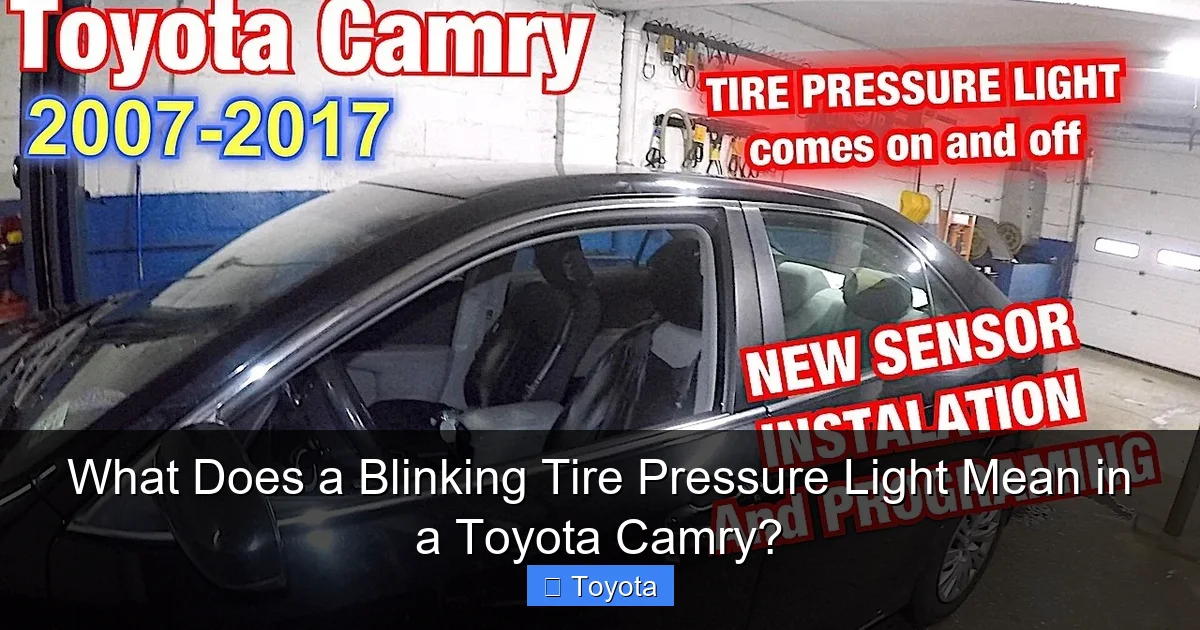
Visual guide about What Does a Blinking Tire Pressure Light Mean in a Toyota Camry?
Image source: i.ytimg.com
1. Failed or Dead TPMS Sensor
This is the #1 culprit. TPMS sensors are not lifetime parts. They contain a small, non-replaceable lithium-ion battery sealed inside. These batteries typically last 7-10 years. When the battery dies, the sensor goes silent, and the car detects a “missing” signal, triggering the blink. Physical damage from curb impact, road debris, or during an improper tire dismount can also kill a sensor.
2. Recent Tire Service or Rotation
If your light started blinking immediately after a tire rotation, new tire installation, or flat repair, the issue is often procedural. Technicians must sometimes “relearn” or “retrain” the sensors to the car’s computer after moving them to different wheels. If this step is skipped or done incorrectly, the system sees the sensors as new or unregistered and may blink. Always inform the shop you have a TPMS and require a relearn.
3. Extreme Temperature Changes
Rapid, drastic temperature swings can temporarily confuse the system. A very cold morning might cause a sensor’s signal to weaken, or a hot day might cause a marginal sensor to fail its self-check. Sometimes, the light will blink on startup in extreme cold but then go solid (or off) after the car warms up and tires heat from driving. If it persists, it’s a real fault.
4. Faulty Sensor in the Spare Tire
Many Camrys come with a full-size spare that also has a TPMS sensor. If that spare’s sensor battery is dead or it’s damaged, it can cause the system fault. Check your spare tire’s pressure (it should be higher than your normal tires, often 60 PSI) and consider having its sensor checked if other wheels are fine.
5. Damaged Valve Stem or Sensor
The TPMS sensor is built into the valve stem. A slow leak from a corroded or damaged valve stem can cause a loss of pressure and damage the sensor. A bent or broken valve stem from hitting a pothole can physically destroy the sensor.
6. Electrical or Module Failure (Less Common)
In rare cases, the problem lies with the car’s TPMS receiver module or a wiring issue. This is more complex to diagnose but possible, especially after electrical work or water intrusion.
What to Do Immediately When the Light Blinks
Do not panic, but do not ignore it. Follow these steps in order.
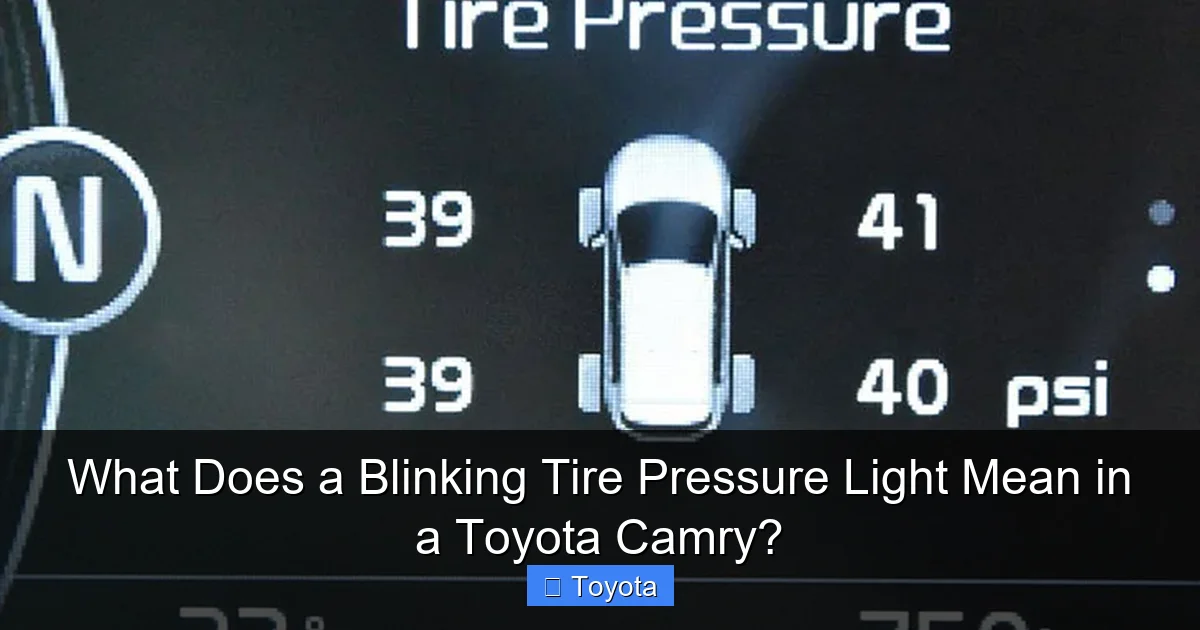
Visual guide about What Does a Blinking Tire Pressure Light Mean in a Toyota Camry?
Image source: bryansgarage.com
Step 1: Perform a Visual and Physical Inspection
Safely park and check all four tires with a reliable gauge. Inflate them to the pressure listed on your door jamb sticker. Don’t trust the sensor reading if the system is faulty. While you’re there, look for:
- Nails, screws, or other debris in the tread.
- Sidewall bubbles or bulges (sign of impact damage).
- Damaged, corroded, or leaking valve stems.
- Significant uneven wear (could indicate an alignment issue).
Also, check your spare tire’s pressure if it’s a full-size with a sensor.
Step 2: Attempt a Simple Reset (If Applicable)
Sometimes, a system glitch can be cleared. With the car parked, turn the ignition to “ON” (not start). Press and hold the TPMS reset button (usually under the steering wheel, check your manual) until the TPMS light blinks three times, then release. Start the engine and drive for 20-30 minutes at varied speeds. The system may relearn. Note: This often only works if the underlying fault is truly gone. A dead sensor battery will not be fixed by this.
Step 3: Use an OBD2 Scanner with TPMS Capability
If you have a advanced scan tool (like those from Autel, Launch, or professional shops), you can read the specific TPMS fault code. It will tell you which wheel (or sensor) is failing or if it’s a communication error. This is the fastest way to confirm it’s a sensor. Generic code readers often cannot access TPMS codes.
Step 4: Seek Professional Diagnosis
If the light persists after inflating tires and attempting a reset, you need a pro. A tire shop or dealership will:
- Use a TPMS scan tool to activate each sensor and check battery life/signal strength.
- Identify the faulty sensor.
- Replace it with a new, programmed sensor (sensors are often vehicle-specific and must be programmed to the car’s system).
- Perform a full system relearn procedure.
This is not typically a DIY job unless you have specialized tools and knowledge.
The Resetting and Relearning Process Explained
Fixing a blinking light is a two-part process: repair the hardware, then reset the software.
Why You Can’t Just “Clear” the Code
Think of it like a smoke detector with a dead battery. The chirp (blinking light) won’t stop until you replace the battery (sensor). Clearing the code without fixing the root cause is pointless; the light will return immediately on the next drive cycle.
The Relearn Procedure
After replacing a sensor, the car must learn the new sensor’s unique ID code. There are three common methods for Toyota:
- Drive Relearn: Drive at 40+ mph for 10-15 minutes. The system may auto-detect the new sensor.
- Manual Relearn via Button: Using the TPMS reset button in a specific sequence (detailed in your owner’s manual).
- Dealer/Shop Relearn with Tool: A technician uses a scan tool to trigger the sensor and program it to the ECU. This is the most reliable method, especially if multiple sensors are replaced.
Only after a successful relearn will the blinking light turn off permanently. Remember, other dashboard lights can also require specific procedures; for instance, understanding what does the wrench light mean on a Honda Civic involves different diagnostic steps.
Preventing Future TPMS Problems
While sensor failure is inevitable due to battery life, you can extend the system’s health.
1. Maintain Proper Tire Pressure Always
Check your tire pressure monthly with a gauge, and before long trips. Driving on significantly under-inflated tires stresses the sensor and can cause damage. Proper inflation also maximizes sensor battery life.
2. Be Cautious During Tire Service
When getting tires rotated, balanced, or changed, remind the shop you have a TPMS. Ask them to:
- Inspect sensors for damage.
- Replace valve stems if corroded.
- Perform the TPMS relearn procedure if sensors are moved.
Using a tire “breaker” machine that damages the sensor stem is a common cause of failure.
3. Avoid Road Hazards
Potholes, curbs, and debris are the enemies of TPMS sensors mounted on the valve stem. Drive cautiously on damaged roads.
4. Don’t Ignore the Solid Light
A persistent solid light means low pressure. Driving on under-inflated tires generates excess heat, which can damage the sensor over time. Fix the pressure issue promptly.
Conclusion: Safety Over Convenience
A blinking tire pressure light in your Toyota Camry is your car’s urgent cry for help. It’s not a minor inconvenience; it’s the failure of a key safety system designed to prevent blowouts, poor handling, and increased wear. While the cost of replacing a TPMS sensor (typically $50-$150 per sensor for parts + labor) might sting, it’s a small price for the peace of mind and safety it provides. The system exists to protect you. When it breaks, you must fix it. By understanding the difference between a blinking and solid light, knowing the common causes, and acting decisively, you ensure your Camry remains the reliable, safe machine it was built to be. Never reset the light without fixing the problem, and always prioritize professional diagnosis when the system faults. Your tires are your only contact with the road—keep their monitoring system in perfect working order.
Frequently Asked Questions
Can I drive my Camry with a blinking tire pressure light?
You can drive it a short distance to a safe location or repair shop, but you should not drive long distances or at high speeds. Your primary warning for low pressure is now disabled, which is a significant safety risk. Get it diagnosed as soon as possible.
How much does it cost to fix a blinking TPMS light in a Toyota Camry?
The cost depends on the faulty part. Replacing a single TPMS sensor (including parts and labor) typically ranges from $80 to $200. If the issue is a simple relearn after tire service, it may only cost $30-$60. A full system module failure would be more expensive.
Why does my tire pressure light blink for a few seconds then go off?
>This is often a normal system self-check that happens every time you start the car. The light should illuminate for 2-3 seconds as a bulb check, then turn off. If it blinks continuously for more than 30 seconds and then stays solid or continues blinking, that indicates a fault.
Will an oil change or tire rotation cause the TPMS light to blink?
A standard oil change won’t affect TPMS. A tire rotation or tire replacement absolutely can if the technician forgets to perform the TPMS sensor relearn procedure after moving the sensors to different wheels. Always ask for a relearn after any tire service.
Can cold weather cause the TPMS light to blink?
Extreme cold can cause a temporary drop in tire pressure, triggering a solid light. However, it can also expose a weak sensor battery, causing a blinking light as the sensor fails its self-test in the cold. If the blinking persists after the car warms up, it’s a faulty sensor.
How do I know which TPMS sensor is bad on my Camry?
Without a scan tool, it’s guesswork. A professional uses a TPMS activation tool to “wake up” each sensor individually and see which one doesn’t respond or shows a low battery. Some advanced code readers can also read the specific sensor ID fault from the car’s computer.
