
Why Does the Battery Light Come on in My Car

The battery warning light on your dashboard isn’t just a suggestion—it’s a critical alert that your car’s charging system isn’t working properly. Ignoring it can lead to a dead battery, stalling, or even being stranded. Understanding why it comes on helps you act fast and avoid bigger problems.
Key Takeaways
- It’s not just about the battery: The light often signals an issue with the alternator or charging system, not the battery itself.
- Dim lights and slow cranking are warning signs: These symptoms often appear before or alongside the battery light.
- Driving with the light on is risky: You may lose power steering, brakes, or even stall in traffic.
- Faulty belts or wiring can trigger the light: Loose, worn, or broken serpentine belts disrupt charging.
- Voltage issues matter: A healthy system runs at 13.5–14.5 volts; lower readings mean trouble.
- Get it checked immediately: A quick diagnostic at an auto shop can prevent a roadside breakdown.
- Regular maintenance helps prevent it: Inspecting belts, terminals, and the alternator extends system life.
📑 Table of Contents
Why Does the Battery Light Come on in My Car?
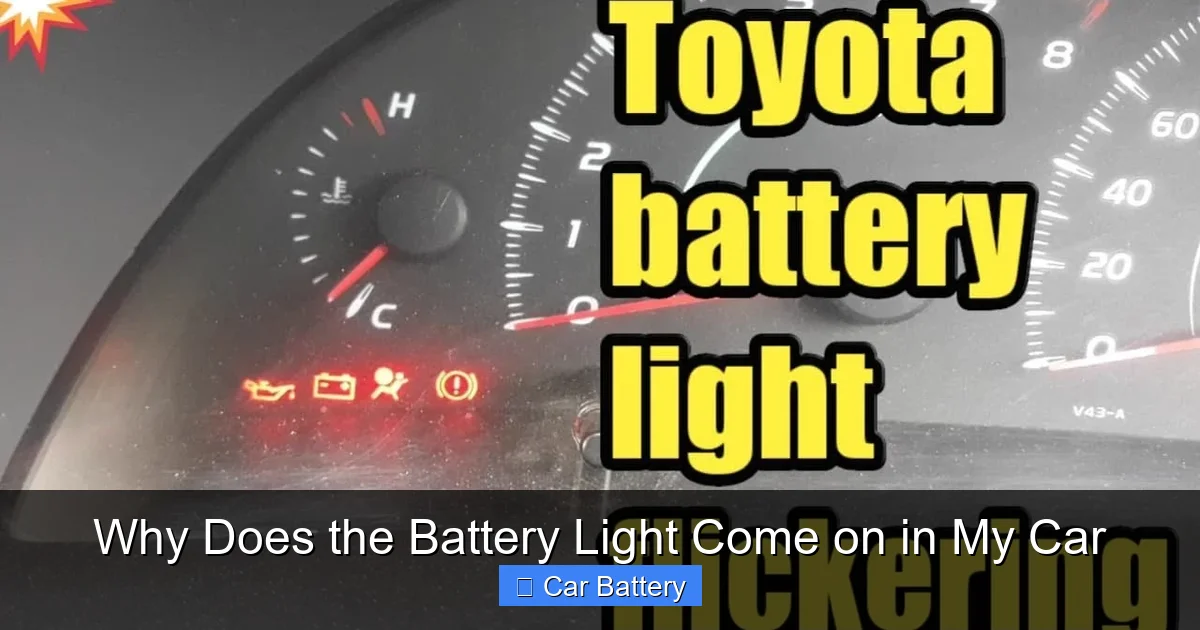
You’re driving along, maybe listening to your favorite podcast or catching up on the news, when suddenly—a small light on your dashboard glows red or amber. It looks like a battery with a plus and minus sign. Your heart skips a beat. What does it mean? Is your car about to die? Should you pull over right now?
That little light is your car’s way of saying, “Hey, something’s wrong with the charging system.” And while it might seem alarming, understanding what it means—and what to do about it—can save you from a stressful breakdown or expensive repair bill.
The battery warning light, often labeled “ALT,” “BATT,” or just a battery icon, isn’t just about the battery itself. In fact, in most cases, the battery is fine. The real issue usually lies elsewhere in the electrical system. Think of your car’s charging system like a team: the battery provides the initial power to start the engine, but once the engine is running, the alternator takes over to keep everything powered and recharge the battery. If that team isn’t working together, the light comes on.
Ignoring this warning is like ignoring a smoke alarm—it might not be an emergency yet, but it’s definitely a sign that something needs attention. The good news? Most causes are fixable, and catching them early can prevent bigger problems down the road.
What the Battery Light Really Means

Visual guide about Why Does the Battery Light Come on in My Car
Image source: i.ytimg.com
When the battery light illuminates, it’s signaling a problem with your vehicle’s charging system. This system includes the battery, alternator, voltage regulator, and associated wiring and belts. The light comes on when the car’s computer detects that the alternator isn’t producing enough voltage to keep the battery charged and power the electrical components.
In simpler terms: your car is running on borrowed time. The battery might still have enough charge to keep things going for a short while, but it’s not being recharged. Eventually, the battery will drain, and your car will stop running.
It’s important to note that the battery light doesn’t always mean the battery is dead or dying. In fact, a healthy battery can still trigger the light if the alternator fails. That’s why it’s called a “charging system” warning—not a “battery dead” warning.
The light typically comes on when the voltage drops below about 12 volts while the engine is running. A properly functioning alternator should maintain voltage between 13.5 and 14.5 volts. If it falls below that range, the car’s computer triggers the warning light to alert you.
How the Charging System Works
To understand why the light comes on, it helps to know how the charging system works. When you turn the key, the battery sends power to the starter motor, which cranks the engine. Once the engine starts, the alternator kicks in. It uses a belt connected to the engine’s crankshaft to generate electricity. This electricity powers the car’s lights, radio, air conditioning, and other electronics, while also recharging the battery.
The alternator contains a voltage regulator, which controls how much power is sent to the battery. If the regulator fails, the alternator might overcharge or undercharge the battery—both of which can damage the battery and other components.
The entire system is monitored by the car’s onboard computer. If it detects that the alternator isn’t producing enough power, it turns on the battery light to warn you.
Common Misconceptions
One of the biggest misconceptions is that the battery light means the battery is dead. While a dead or weak battery can cause electrical issues, it’s rarely the reason the light comes on while driving. If the battery were the problem, the light would likely come on when you first start the car—and the car might not start at all.
Another myth is that you can just “drive to the mechanic” without any risk. While you might make it a few miles, driving with the light on drains the battery quickly. Once the battery is dead, your car will stall, and you could be stranded—especially in traffic or bad weather.
Some people also think the light will go off on its own. Unfortunately, it won’t. The issue needs to be diagnosed and fixed. Ignoring it only increases the risk of a breakdown.
Top Causes of the Battery Warning Light

Visual guide about Why Does the Battery Light Come on in My Car
Image source: i.ytimg.com
Now that you know what the light means, let’s look at the most common reasons it comes on. Understanding these causes can help you identify the problem faster and communicate better with your mechanic.
1. Alternator Failure
The alternator is the heart of the charging system. If it fails, the battery light will almost certainly come on. Alternators typically last 7–10 years or 100,000–150,000 miles, but they can fail earlier due to heat, wear, or electrical issues.
Symptoms of a failing alternator include:
– Dim or flickering headlights
– Slow power windows or seats
– A burning smell (from overheating)
– The battery light staying on or flickering
If your alternator is bad, it won’t recharge the battery, and your car will eventually lose power. Replacing an alternator can cost $300–$800, depending on the vehicle, but it’s essential to avoid being stranded.
2. Loose or Worn Serpentine Belt
The serpentine belt (also called the drive belt) connects the engine to the alternator, power steering pump, and air conditioning compressor. If it’s loose, worn, or broken, the alternator won’t spin properly, and charging stops.
You might hear a squealing noise when you start the car or accelerate. In severe cases, the belt can snap, causing the alternator to stop working instantly.
Inspecting the belt regularly is easy. Look for cracks, fraying, or glazing (a shiny surface). If it’s loose, it may need tightening or replacement. Belts are relatively inexpensive ($20–$50) but critical to the charging system.
3. Bad Battery or Corroded Terminals
While the battery itself isn’t usually the cause of the light, a weak or old battery can contribute to charging problems. Batteries typically last 3–5 years. If yours is near the end of its life, it may not hold a charge well, causing the alternator to work harder and potentially fail.
Corroded battery terminals are another common issue. Corrosion (a white, powdery substance) prevents proper electrical contact, which can disrupt charging. Cleaning the terminals with a wire brush and baking soda solution can often fix the problem.
4. Faulty Voltage Regulator
The voltage regulator controls how much power the alternator sends to the battery. If it fails, the alternator might overcharge (damaging the battery) or undercharge (triggering the battery light).
In some cars, the voltage regulator is built into the alternator. In others, it’s a separate component. Either way, a failing regulator usually requires alternator replacement.
5. Damaged Wiring or Fuses
Loose, corroded, or broken wires between the alternator, battery, and fuse box can interrupt the charging circuit. A blown fuse in the charging system can also cause the light to come on.
These issues are often overlooked but can be easy to fix. A mechanic can test the wiring and fuses with a multimeter to find the problem.
6. Extreme Temperatures
Both extreme heat and cold can affect the charging system. Heat can damage the alternator and battery, while cold reduces battery efficiency. If you live in a hot or cold climate, your charging system may wear out faster.
Regular maintenance becomes even more important in these conditions. Checking the battery and alternator before summer or winter can prevent unexpected failures.
Symptoms That Often Accompany the Battery Light
Visual guide about Why Does the Battery Light Come on in My Car
Image source: i.ytimg.com
The battery light doesn’t always appear alone. It’s often accompanied by other symptoms that can help you diagnose the problem.
Dim or Flickering Lights
If your headlights, dashboard lights, or interior lights dim or flicker while driving, it’s a strong sign the alternator isn’t producing enough power. This is especially noticeable at idle or low speeds.
For example, you might notice the lights get brighter when you rev the engine. That’s because the alternator spins faster with higher RPMs, producing more power. If the lights stay dim even at high RPMs, the alternator is likely failing.
Slow Engine Crank or Difficulty Starting
If the battery isn’t being recharged, it will eventually lose its charge. You might notice the engine cranks slowly when you try to start the car, or it takes multiple attempts to turn over.
This is a red flag. If the battery is too weak to start the engine, you’ll need a jump start—and possibly a new battery or alternator.
Electrical Issues
Other electrical components may behave oddly when the charging system fails. For example:
– Power windows move slowly
– The radio cuts out
– The air conditioning blows warm air
– Warning lights on the dashboard flicker
These issues occur because the car isn’t receiving enough consistent power.
Burning Smell or Strange Noises
A burning smell could indicate an overheating alternator or a slipping belt. You might also hear a whining, grinding, or squealing noise from under the hood—especially when you first start the car.
These sounds often point to mechanical wear in the alternator or belt system.
Battery Light Flickers or Comes On Intermittently
If the light flickers or comes on only sometimes, it could be a loose connection, a failing alternator, or a belt that’s slipping under load. Intermittent issues are often harder to diagnose but shouldn’t be ignored.
What to Do When the Battery Light Comes On
Seeing the battery light can be stressful, but knowing what to do can keep you safe and prevent further damage.
1. Don’t Panic—But Don’t Ignore It
First, stay calm. The car may still run for a short time, but you need to act quickly. Avoid driving long distances or at night when visibility is low.
2. Turn Off Non-Essential Electronics
To conserve battery power, turn off the radio, air conditioning, heated seats, and other non-essential systems. This reduces the load on the battery and may help you reach a safe location or mechanic.
3. Check the Serpentine Belt
Pop the hood and look at the serpentine belt. Is it loose, cracked, or broken? If it’s visibly damaged, do not drive the car. Call for a tow.
If the belt looks okay, check the battery terminals for corrosion. Clean them if needed.
4. Drive to a Mechanic—But Don’t Delay
If the car is running and the belt looks fine, you can drive to a nearby repair shop—but keep the trip short. Avoid highways or busy roads if possible.
5. Get a Diagnostic Test
A mechanic can use a multimeter to test the battery voltage and alternator output. They’ll also inspect the belt, wiring, and fuses.
Most auto parts stores offer free battery and charging system tests. Take advantage of this—it could save you time and money.
6. Consider a Jump Start or Tow
If the car stalls or won’t start, you’ll need a jump start or tow. Once the battery is dead, the alternator can’t recharge it, so you’ll need professional help.
How to Prevent the Battery Light from Coming On
Prevention is always better than repair. Regular maintenance can keep your charging system running smoothly and extend the life of your battery and alternator.
1. Inspect the Serpentine Belt Regularly
Check the belt every 6 months or during oil changes. Look for cracks, fraying, or looseness. Replace it every 60,000–100,000 miles, or as recommended in your owner’s manual.
2. Clean Battery Terminals
Corrosion builds up over time. Clean the terminals with a wire brush and a mixture of baking soda and water. Apply a thin layer of petroleum jelly to prevent future corrosion.
3. Test the Battery and Charging System
Have your battery and alternator tested once a year, especially if your car is over 3 years old. Most auto parts stores do this for free.
4. Avoid Short Trips
Short trips don’t give the alternator enough time to fully recharge the battery. If you only drive a few minutes at a time, consider taking longer drives occasionally or using a battery maintainer.
5. Watch for Early Warning Signs
Pay attention to dim lights, slow cranking, or electrical glitches. These can signal a problem before the battery light comes on.
6. Replace the Battery on Schedule
Even if the battery seems fine, replace it every 3–5 years. A weak battery puts extra strain on the alternator and can lead to premature failure.
When to See a Mechanic
Some issues can be fixed at home, but others require professional help. See a mechanic if:
– The battery light stays on
– The alternator or belt needs replacement
– You’re unsure about the diagnosis
– The car stalls or won’t start
A qualified technician can perform a full charging system test and recommend the best course of action.
Conclusion
The battery warning light is your car’s way of saying, “Something’s wrong with the charging system.” While it can be alarming, understanding what it means—and what to do about it—can save you from a breakdown and costly repairs.
Remember, the light is usually about the alternator, belt, or wiring—not the battery itself. Common causes include a failing alternator, loose serpentine belt, corroded terminals, or damaged wiring. Symptoms like dim lights, slow cranking, and electrical issues often accompany the light.
If the light comes on, don’t ignore it. Turn off non-essential electronics, check the belt and terminals, and get to a mechanic as soon as possible. Regular maintenance—like inspecting the belt, cleaning terminals, and testing the system—can prevent the problem from happening in the first place.
Your car’s electrical system is complex, but with a little knowledge and care, you can keep it running smoothly for years to come. So the next time that little battery light glows, you’ll know exactly what to do.
Frequently Asked Questions
Can I drive with the battery light on?
You can drive a short distance to a mechanic, but it’s risky. The battery will drain quickly, and your car could stall. Avoid long trips or driving at night.
Is the battery light always a serious problem?
Not always, but it should never be ignored. It could be a simple fix like a loose belt or corroded terminals, but it could also mean a failing alternator.
How much does it cost to fix the battery light issue?
Costs vary. A belt replacement may cost $50–$150, while an alternator replacement can range from $300–$800, including labor.
Can a bad battery cause the battery light to come on?
Rarely. The light usually indicates a charging system problem. However, a very old or damaged battery can contribute to electrical issues.
How long can I drive with the battery light on?
It depends on the battery’s charge, but most cars will lose power within 30 minutes to a few hours. Drive to a mechanic immediately.
Will the battery light go off on its own?
No. The light will stay on until the underlying issue is fixed. It won’t reset itself, even if the car seems to run fine.
