Why Are Bmw Drivers So Arrogant?

Contents
- 1 Key Takeaways
- 2 📑 Table of Contents
- 3 The Stereotype That Won’t Die: Why Are BMW Drivers So Arrogant?
- 4 1. The “Ultimate Driving Machine”: How Marketing Shapes Behavior
- 5 2. The Driver’s Seat: Who Buys BMWs and Why?
- 6 3. The Psychology of the Status Symbol
- 7 4. The Nuance: It’s Not All About the Badge
- 8 5. Breaking the Wheel: What Can Be Done?
- 9 Conclusion: A Mirror Held Up to Our Assumptions
- 10 Frequently Asked Questions

Car Bumper Protector
Car Wash Mitt
Car Inverter

Car Hydraulic Jack
The stereotype of the arrogant BMW driver is a complex social phenomenon, not a simple truth. It stems from a combination of BMW’s powerful branding as a performance luxury icon, the demographics of its buyers, and the psychological effects of owning a high-status vehicle. However, it’s crucial to remember this is an overgeneralization; many BMW drivers are courteous, and arrogance exists in drivers of all car brands. The perception is often amplified by media portrayals and selective attention on the road.
Key Takeaways
- The stereotype is a social construct: The “arrogant BMW driver” is a widely recognized but oversimplified label that doesn’t apply to every owner.
- Brand image is a primary driver: BMW’s decades-long “Ultimate Driving Machine” marketing emphasizes performance, power, and prestige, which can influence owner behavior and public perception.
- Performance invites specific behaviors: The capable engineering of BMWs (strong acceleration, handling) can lead to more assertive driving, like merging aggressively or following closely.
- Demographics and leasing play a role: A significant portion of BMWs are leased, attracting younger professionals and those prioritizing image, which can correlate with different social behaviors on the road.
- Psychology of ownership matters: The “status symbol” effect can lead some individuals to feel a sense of entitlement or superiority while driving their vehicle.
- Confirmation bias fuels the myth: Drivers are more likely to notice and remember a rude BMW driver than a polite one, reinforcing the stereotype over time.
- It’s not unique to BMW: Similar stereotypes exist for other premium and performance brands (e.g., Audi, Mercedes-Benz, Tesla), though BMW’s particular brand identity makes it a frequent target.
📑 Table of Contents
- The Stereotype That Won’t Die: Why Are BMW Drivers So Arrogant?
- 1. The “Ultimate Driving Machine”: How Marketing Shapes Behavior
- 2. The Driver’s Seat: Who Buys BMWs and Why?
- 3. The Psychology of the Status Symbol
- 4. The Nuance: It’s Not All About the Badge
- 5. Breaking the Wheel: What Can Be Done?
- Conclusion: A Mirror Held Up to Our Assumptions
The Stereotype That Won’t Die: Why Are BMW Drivers So Arrogant?
You’re cruising in the right lane, minding your own business, when suddenly a sleek, kidney-grilled sedan roars up behind you. It’s a BMW. Before you even glance at the driver, a thought pops into your head: “Here we go.” You might brace for a tailgate, an aggressive lane change, or a look of disdain at your sensible sedan. The stereotype of the arrogant, impatient, and often rude BMW driver is one of the most persistent in car culture. But why? Is there any truth to it, or is it just a lazy, overused cliché?
As someone who has driven behind, beside, and even owned various cars, I’ve pondered this. The answer isn’t found in the metal and engineering alone. It’s a tangled web of marketing genius, human psychology, socioeconomic factors, and our own brains’ love for patterns. Let’s pop the hood on this stereotype and see what’s really running underneath.
It’s Not Just You: The Stereotype Is Real (In Perception)
First, let’s acknowledge the elephant in the room. You are not imagining this. Surveys, casual polls, and endless online forum threads consistently rank BMW drivers among the most “aggressive” or “arrogant” on the road. A 2016 study in the journal Proceedings of the National Academy of Sciences famously found a link between expensive cars and unethical driving behavior, with BMW and other luxury brands topping the list. While the study focused on a specific context (yielding to pedestrians), it fueled the existing narrative. The perception is globally recognized, from the “BMW driver” meme to jokes on every continent. So, the perception is real, even if the absolute truth is more nuanced.
1. The “Ultimate Driving Machine”: How Marketing Shapes Behavior
To understand the driver, you must first understand the machine’s message. For decades, BMW’s core slogan has been “The Ultimate Driving Machine.” This isn’t just a tagline; it’s a promise, a philosophy, and a carefully crafted identity. It sells a feeling of superiority—not just in build quality, but in driving *ability*. The message is: this car is better, and by extension, the person driving it is in command of something exceptional.
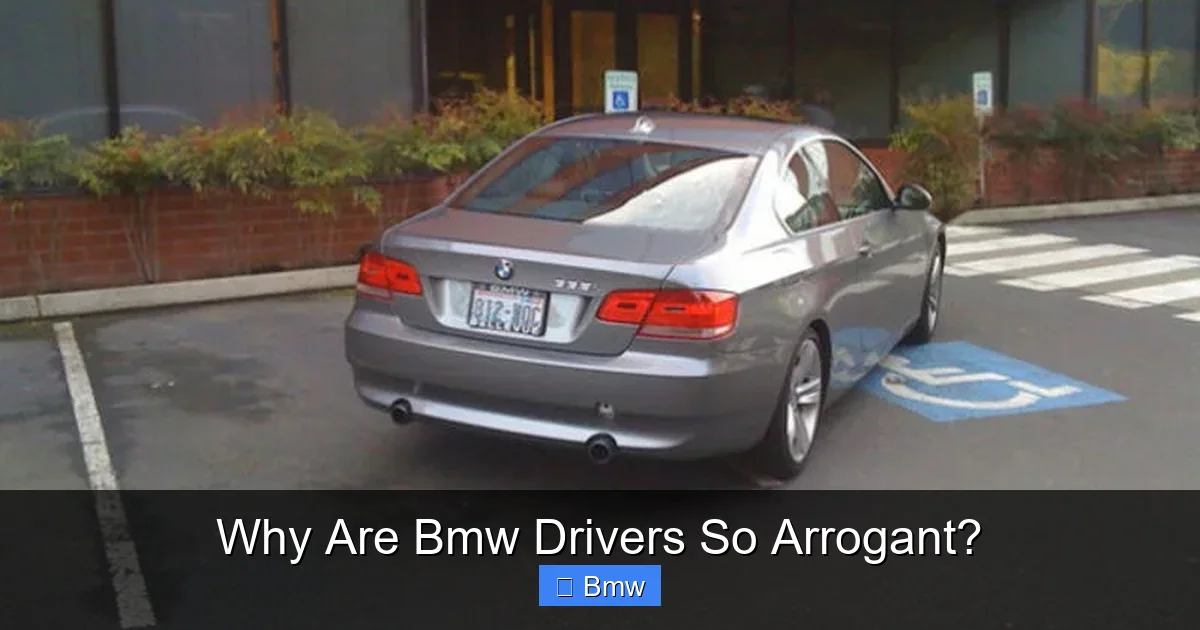
Visual guide about Why Are Bmw Drivers So Arrogant?
Image source: i.kinja-img.com
The Power of “The Ultimate”
Words matter. “Ultimate” implies finality, the best, the peak. This positioning attracts a certain type of buyer—someone who values performance, precision, and a sporty feel over pure comfort or fuel economy. It also creates an in-group/out-group dynamic. You’re not just driving a car; you’re part of an elite club that appreciates engineering prowess. This can subtly foster an “us vs. them” mentality on the road, where drivers of other brands are seen as merely “driving,” while BMW drivers are “piloting.”
Contrast this with brands like Toyota, whose reputation for reliability and practicality attracts buyers focused on longevity and value. The driver psychology is fundamentally different. The Toyota driver might feel prudent; the BMW driver might feel powerful. That feeling can manifest in driving style.
Performance as a Permission slip
BMWs are, by design and engineering, fantastic to drive. They offer strong acceleration (often with turbocharged engines), sharp steering, and balanced rear-wheel-drive dynamics (in many models). This performance isn’t locked away; it’s readily accessible. When you have 300 horsepower and a 0-60 time under 5 seconds at your right foot, it’s easier to feel like you have the “right” to use that performance to get ahead in traffic. The car’s capabilities can feel like a permission slip for assertive maneuvers that a 150-horsepower commuter car would struggle with. This isn’t an excuse, but a contextual factor. The same driver in a Honda Civic might behave entirely differently simply because the tool is different.
2. The Driver’s Seat: Who Buys BMWs and Why?
The stereotype is also shaped by the typical BMW buyer. While BMWs are bought by a wide range of people, certain trends in ownership demographics feed the narrative.
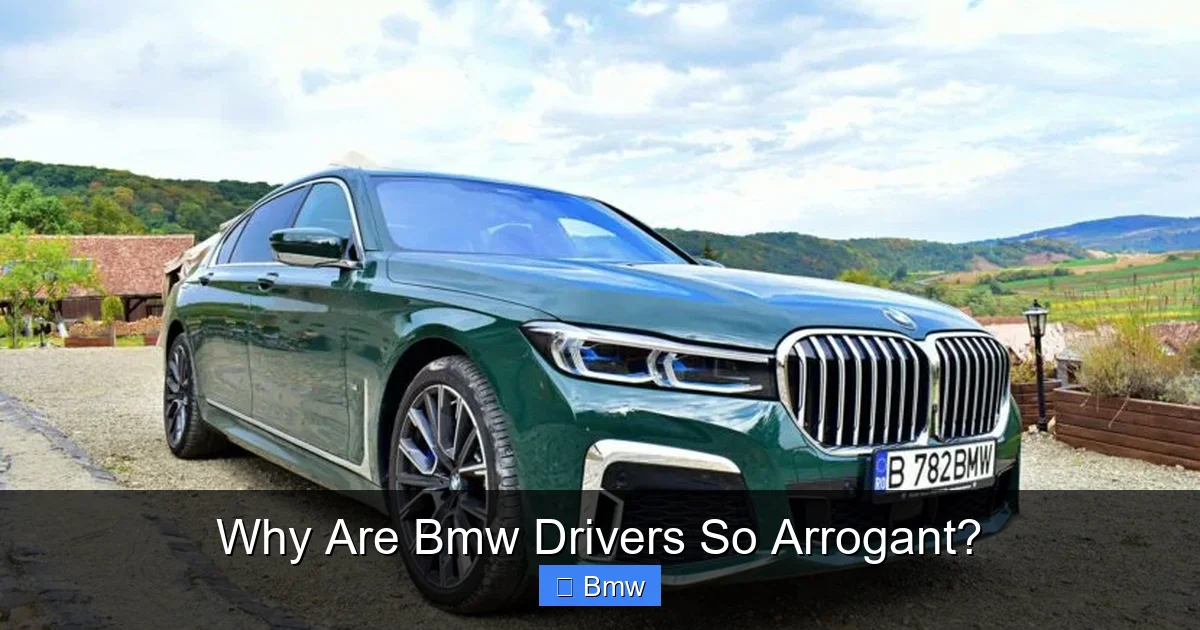
Visual guide about Why Are Bmw Drivers So Arrogant?
Image source: cdn.bmwblog.com
The Leasing Lifestyle
Unlike brands where buyers often finance or pay cash for long-term ownership, BMW has a massive leasing market. A significant percentage of new BMWs are leased for 2-3 years. This leasing model attracts a specific clientele: younger professionals, entrepreneurs, and those who prioritize driving the latest model with a lower monthly payment. The barrier to entry is a credit score and a manageable payment, not necessarily vast wealth. This can include individuals for whom the car is a major status symbol, a tangible proof of professional success. The pressure to “justify” the lease payment with a premium experience can translate into driving that feels more urgent or entitled.
This is different from the typical buyer of a Toyota Land Cruiser, for example, who is often a long-term owner planning for decades of use and adventure. The Land Cruiser buyer’s relationship with the vehicle is about capability and longevity; the 3 Series lessee’s relationship is often about image and experience. These different motivations can lead to different on-road behaviors.
Aggressive Ambition
There’s also a correlation, however loose, between the traits that drive someone to pursue a high-pressure, high-earning career (common among BMW’s target market) and the behaviors exhibited while driving. The same competitive, time-pressed, goal-oriented mindset that closes a business deal might manifest as tailgating the slowpoke in the left lane or cutting off a merge to “win” a spot in traffic. The road becomes an extension of the competitive workplace. This isn’t to say all ambitious people are bad drivers, but the stereotype taps into this identifiable cultural archetype.
3. The Psychology of the Status Symbol
Cars are one of the most public displays of personal wealth and taste. A BMW is a globally recognized status symbol. Psychology research shows that owning a high-status item can influence behavior, sometimes increasing feelings of entitlement and reducing empathy.

Visual guide about Why Are Bmw Drivers So Arrogant?
Image source: cdn.bmwblog.com
The “Car as Armor” Effect
Inside a luxury car, there’s a sense of separation from the outside world. The cabins are quiet, comfortable, and often feel like a private lounge. This physical and psychological barrier can make drivers less aware of, or less considerate toward, those outside their vehicle. The pedestrian, the cyclist, and the driver of the 10-year-old sedan can feel like part of the scenery, not fellow participants in traffic. This isn’t unique to BMWs, but the premium feel and higher price point amplify this cocooning effect.
Furthermore, the act of driving a valuable asset can trigger a “territorial” response. Someone might drive more defensively or aggressively to “protect” their expensive investment from perceived threats or delays, even though statistically, aggressive driving is far more likely to cause damage.
Confirmation Bias and Selective Attention
This is a huge part of why the stereotype feels so true. Our brains are wired to confirm existing beliefs. If you already believe “BMW drivers are arrogant,” every time you see a BMW cut someone off, your brain files it away as evidence. When a BMW driver lets you merge? You might not even register it, or you dismiss it as a fluke. The rude actions are memorable; the polite ones are invisible. This creates a powerful feedback loop that perpetuates the stereotype, regardless of the actual percentage of arrogant drivers among BMW owners. It’s a classic case of seeing what you expect to see on the road.
4. The Nuance: It’s Not All About the Badge
To paint all BMW drivers with the same brush is not only unfair but also illogical. The reality is far more complicated.
The Car Doesn’t Make the Driver
Arrogance, impatience, and aggression exist in drivers of every make and model. The person who tailgates in a BMW will likely tailgate in a Ford, a Honda, or a Hyundai. The difference is the visibility. A black 5 Series is more noticeable than a silver Camry. We also have stereotypes for other brands: the slow Toyota Camry driver, the reckless Subaru driver (as noted in articles like this one on Subaru driver behavior), the oblivious Volvo driver. These are all social shorthand, not accurate portraits.
Many BMW owners are enthusiasts who deeply respect the driving experience. They bought the car for its handling, its engine note, its build quality. They are often the first to wave at another BMW on the road, to follow the rules, to not use their car as a tool for road dominance. They might even be more skilled and therefore safer drivers because they understand their car’s capabilities. The arrogant driver gets the spotlight; the responsible enthusiast remains anonymous.
Regional and Model Variations
The stereotype also varies by region and model. In some European countries where BMWs are common family cars, the “arrogant driver” trope is less pronounced. In the U.S., where they carry more of a luxury/performance image, it’s stronger. Furthermore, the model matters. The driver of a high-performance M3 or M5 is often (though not always) a different person than the driver of a base-model 228i or an X1 SUV. The M car buyer is often a dedicated enthusiast who may track the car, which requires discipline and respect for performance. The stereotype is more frequently attached to the 3 Series and 5 Series sedans, the quintessential “executive” cars.
5. Breaking the Wheel: What Can Be Done?
If you’re a BMW owner tired of the label, or a driver frustrated by the behavior, what’s the solution? It starts with awareness.
For the BMW Driver: Self-Awareness is Key
If you own a BMW, ask yourself: does the car’s power ever make you more impatient? Do you ever use its capabilities to intimidate or gain an unfair advantage? The best way to combat the stereotype is to be a counter-example. Use your excellent car’s capabilities responsibly. Let people merge. Use your turn signals. Be predictable. Your driving behavior, not your badge, is what defines you. Remember, the car’s reputation for engineering excellence doesn’t give you a license for poor etiquette.
For Everyone Else: Check Your Bias
If you’re on the receiving end, notice your own thoughts. Did you automatically assume the BMW driver would be rude? Did you give the benefit of the doubt to the driver of the minivan next to them? Challenging your own confirmation bias is the first step to seeing drivers as individuals, not representatives of their car’s brand. Also, consider that stress, distraction, and time pressure affect all drivers. That BMW driver might be late for a critical meeting, dealing with a personal emergency, or simply having a bad day—just like anyone else.
Conclusion: A Mirror Held Up to Our Assumptions
The “arrogant BMW driver” is a compelling story because it’s simple. It gives us a clear villain on the road, an easy target for our traffic frustrations. But the truth is messy. The stereotype is a product of potent marketing that sells an image of superiority, a vehicle design that offers intoxicating performance, a leasing model that emphasizes image, and our own brain’s tendency to seek confirming evidence. It’s a perfect storm of perception.
Ultimately, the question “Why are BMW drivers so arrogant?” says less about BMW drivers and more about us. It reveals our desire to categorize, to find patterns in chaos, and to assign blame. While there may be a slightly higher concentration of aggressive drivers in a brand that markets aggression and performance, the vast majority are just people trying to get from A to B. The next time you see that blue-and-white propeller emblem, try to see the person behind the wheel, not the stereotype in your head. You might be surprised. And if you’re the one behind that wheel, remember: with great engineering comes great responsibility. Drive with the skill and courtesy your car’s reputation deserves.
Frequently Asked Questions
Are BMW drivers actually more arrogant, or is it just a stereotype?
It’s primarily a powerful and persistent stereotype. While some studies have found correlations between expensive cars and certain driving behaviors, arrogance exists in drivers of all vehicles. The stereotype is fueled by BMW’s performance marketing, the visibility of the brand, and our brain’s tendency to remember negative examples that confirm our biases.
Does driving a BMW make someone a worse driver?
Not inherently. In fact, many BMW owners are enthusiasts who respect the car’s capabilities and drive skillfully. However, the car’s accessible performance and premium status can *tempt* some drivers into more aggressive maneuvers, like speeding or tailgating, because they feel the car is capable of it. The car provides an opportunity; the driver’s mindset determines the action.
Why do BMW drivers often get blamed for tailgating?
Tailgating is common among many drivers, but BMWs are often noticed for it. Possible reasons include: the car’s strong acceleration makes closing gaps seem easier; drivers may be impatient due to time pressure (common among the professional demographic); and the stereotype makes us hyper-aware of this behavior when we see a BMW doing it. It’s a combination of actual behavior and heightened perception.
Is there any scientific evidence for the “arrogant driver” stereotype?
Research, like the 2016 PNAS study mentioned, has shown a link between the price of a car and the driver’s likelihood of yielding to pedestrians, with drivers of expensive cars (including BMW) being less likely to stop. This suggests a correlation between status symbols and reduced prosocial behavior on the road. However, it’s one piece of a large puzzle and doesn’t prove causation for every driver.
How does BMW’s marketing contribute to this perception?
BMW’s long-standing “Ultimate Driving Machine” campaign explicitly sells a sense of superiority in driving dynamics. This message can attract buyers who identify with that ethos and may unconsciously adopt a more assertive driving style to “match” the car’s perceived capabilities. The marketing creates an expectation of excellence that some may interpret as a right to dominate the road.
Is the stereotype fair to the many polite and skilled BMW drivers out there?
No, it’s fundamentally unfair. Like any broad stereotype, it unfairly judges millions of individuals based on the actions of a visible minority. Many BMW owners are courteous, defensive, and law-abiding drivers who simply appreciate the car’s engineering. The stereotype harms their reputation and contributes to a divisive “us vs. them” mentality on the road that benefits no one.