Why a Lexus Won’t Start but Still Has Power

Contents


If your Lexus won’t start but still has power—lights, radio, and electronics working—it’s likely not a dead battery. This frustrating issue often stems from ignition, starter, or sensor problems that prevent the engine from cranking despite having electrical power.
You’re running late for work, you hop into your sleek, reliable Lexus, turn the key—or press the start button—and… nothing. The dashboard lights up, the radio plays, the climate control hums, but the engine refuses to turn over. You’re left staring at a silent engine, wondering, “Why won’t my Lexus start but still has power?”
This is one of the most confusing and frustrating experiences for any car owner—especially when you’re driving a premium vehicle like a Lexus, known for its reliability and smooth performance. You expect it to start every time, no questions asked. But when it doesn’t crank despite having full electrical power, it’s easy to panic. The good news? This issue is usually fixable, and often doesn’t require a full engine overhaul. In most cases, the problem lies not with the battery or the engine itself, but with components that control the starting sequence.
Understanding why your Lexus won’t start but still has power begins with recognizing that “having power” doesn’t always mean “having enough power to start the engine.” Your car’s electrical system is complex. The battery powers everything from the infotainment system to the interior lights, but starting the engine requires a much higher surge of current—especially to turn over the starter motor. If that surge is blocked or interrupted, you’ll get lights and sounds, but no crank. This article will walk you through the most common causes, how to diagnose them, and what you can do to get your Lexus back on the road quickly and safely.
Key Takeaways
- Faulty starter motor: A worn or damaged starter may fail to engage even when the battery is fully charged.
- Ignition switch issues: A malfunctioning ignition switch can send power to accessories but not trigger the starter.
- Bad starter relay or fuse: A blown fuse or failed relay in the starting circuit can block power to the starter.
- Neutral safety switch failure: If the car doesn’t recognize it’s in Park or Neutral, it won’t allow the engine to start.
- Crankshaft position sensor problems: This sensor tells the engine when to fire; if it fails, the car won’t start despite having power.
- Weak or corroded battery connections: Even with surface-level power, poor connections can prevent sufficient current from reaching the starter.
- Security system or immobilizer glitch: The car’s anti-theft system may mistakenly block startup if it doesn’t recognize the key fob.
📑 Table of Contents
Understanding the Starting System in a Lexus
To solve the mystery of why your Lexus won’t start but still has power, it helps to understand how the starting system works. Unlike older cars that relied solely on mechanical linkages, modern Lexus vehicles use a sophisticated electronic network to manage engine startup. This system involves several key components working in harmony: the battery, ignition switch, starter motor, starter relay, fuses, sensors, and the vehicle’s computer (ECU).
When you turn the key or press the start button, a signal is sent to the engine control unit (ECU). The ECU checks various conditions—like whether the car is in Park or Neutral, if the brake pedal is pressed (for push-button start models), and whether the key fob is authenticated. If everything checks out, the EUC sends power to the starter relay, which then activates the starter motor. The starter motor spins the engine’s flywheel, allowing combustion to begin.
If any part of this chain fails, the engine won’t start—even if the battery is fully charged and the dashboard is lit up. For example, a bad relay might not send power to the starter, or a faulty sensor might trick the ECU into thinking the car isn’t in Park. That’s why diagnosing the issue requires a systematic approach, checking each component in the starting sequence.
How the Battery Powers Accessories vs. the Starter
One of the biggest misconceptions is that if the lights and radio work, the battery must be fine. While it’s true that a weak battery can cause starting problems, the opposite isn’t always the case. A battery can have just enough charge to power low-draw accessories like lights and the radio, but not enough to deliver the high current needed to spin the starter motor.
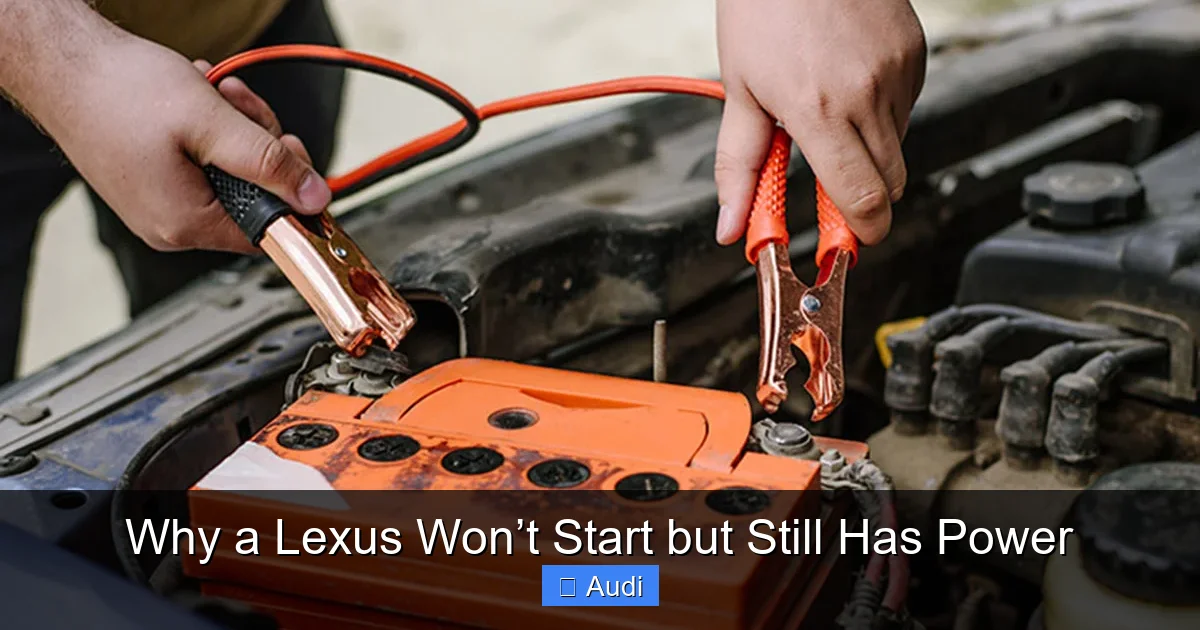
Think of it like a water tank with a small leak. It can still fill a cup (power the radio), but it can’t fill a bathtub (start the engine). This is why jump-starting a Lexus that won’t start but has power might work—it provides the extra surge needed to overcome resistance in the starter circuit.
Additionally, corroded or loose battery terminals can restrict current flow. Even if the battery reads 12.6 volts on a multimeter, poor connections can prevent that voltage from reaching the starter. Cleaning the terminals and ensuring tight connections is a simple but often overlooked fix.
The Role of the Engine Control Unit (ECU)
The ECU is the brain of your Lexus. It monitors hundreds of sensors and controls everything from fuel injection to ignition timing. When you attempt to start the car, the ECU performs a series of checks before allowing the starter to engage. If it detects a problem—such as a faulty crankshaft position sensor or an immobilizer issue—it may prevent the engine from cranking as a safety measure.
This is why a Lexus might not start even with a good battery and working electronics. The ECU is essentially saying, “I see power, but I don’t trust the conditions to start the engine safely.” In such cases, a diagnostic scan tool is needed to read error codes and pinpoint the issue.
Common Causes of a Lexus Not Starting Despite Having Power
Visual guide about Why a Lexus Won’t Start but Still Has Power
Image source: carglassadvisor.com
Now that we understand how the starting system works, let’s dive into the most common reasons your Lexus won’t start but still has power. These issues range from simple fixes like a blown fuse to more complex problems like sensor failures. The key is to diagnose them in order of likelihood and ease of repair.
1. Faulty Starter Motor
The starter motor is responsible for physically turning the engine over when you attempt to start the car. Over time, the starter’s internal components—such as the solenoid, brushes, and armature—can wear out or fail. When this happens, the starter may not engage, even if it receives power.
A common symptom of a bad starter is a clicking sound when you turn the key. This click usually comes from the starter relay trying to activate the solenoid, but the motor itself isn’t spinning. In some cases, there’s no sound at all—just silence.
To test the starter, you can try tapping it gently with a hammer while someone attempts to start the car. If the engine cranks after a few taps, the starter is likely failing and needs replacement. However, this is a temporary fix and shouldn’t be relied upon long-term.
2. Bad Starter Relay or Fuse
The starter relay acts as a switch that sends power from the battery to the starter motor. It’s usually located in the fuse box under the hood. If the relay fails, power won’t reach the starter, even if the battery is fully charged.
Similarly, a blown fuse in the starting circuit can interrupt the flow of electricity. Fuses are designed to protect the electrical system by breaking the circuit if there’s a surge or short. While rare, a blown fuse can prevent the starter from receiving power.
To check the relay and fuse, locate the fuse box (refer to your owner’s manual for the exact location). Look for the starter relay and fuse—they’re often labeled. You can swap the starter relay with a similar one (like the horn relay) to see if the problem resolves. If the car starts after the swap, the relay is faulty.
3. Ignition Switch Problems
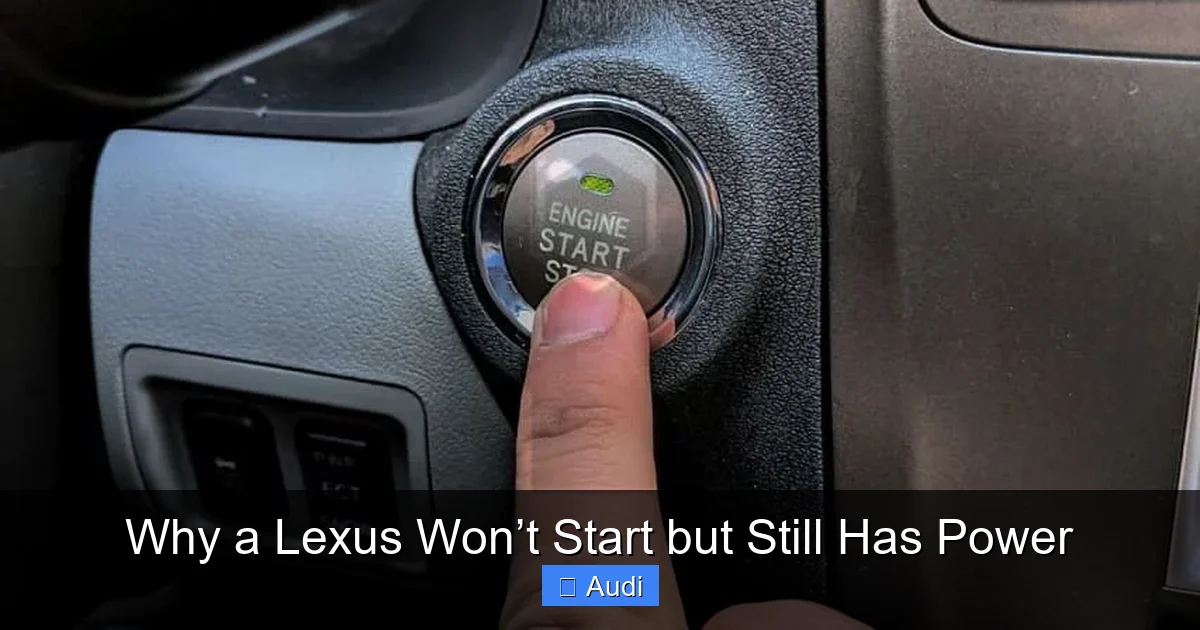
The ignition switch is what you turn (or press) to start the car. In older Lexus models, it’s a physical key tumbler; in newer ones, it’s a push-button system. Over time, the internal contacts in the ignition switch can wear out, causing intermittent or complete failure.
A failing ignition switch may still send power to accessories like the radio and lights, but it won’t send the signal to activate the starter. This is why your Lexus won’t start but still has power—the switch is partially working.
Symptoms include intermittent starting issues, the key getting stuck, or the dashboard lights flickering when you turn the key. If you suspect the ignition switch, a mechanic can test it with a multimeter or replace it if necessary.
4. Neutral Safety Switch Failure
The neutral safety switch (also called the park/neutral position switch) ensures the engine only starts when the transmission is in Park or Neutral. This is a critical safety feature that prevents the car from lurching forward if it’s in gear.
If this switch fails, the car may not recognize that it’s in Park, even if the shifter is clearly in the correct position. As a result, the ECU won’t allow the starter to engage.
To test this, try starting the car while gently wiggling the shifter in Park. If it starts after moving the shifter slightly, the neutral safety switch may be misaligned or faulty. In some cases, adjusting the switch can fix the issue, but replacement is often required.
5. Crankshaft Position Sensor Issues
The crankshaft position sensor (CKP sensor) monitors the speed and position of the crankshaft. This information is critical for the ECU to determine when to fire the spark plugs and inject fuel. If the sensor fails, the ECU may not allow the engine to start, even if everything else is working.
A failing CKP sensor often causes the engine to crank but not start. However, in some cases, it can prevent cranking altogether. You may also notice symptoms like stalling, rough idling, or a check engine light.
Diagnosing a bad CKP sensor usually requires a scan tool to read trouble codes. If the code points to the crankshaft sensor, it should be inspected and replaced if necessary.
6. Weak or Corroded Battery Connections
Even if your battery shows voltage, poor connections can prevent sufficient current from reaching the starter. Corrosion on the battery terminals or loose cables can create resistance, reducing the flow of electricity.
To check, inspect the battery terminals for white or green buildup. Clean them with a wire brush and baking soda solution if needed. Also, ensure the cables are tight and secure. A simple cleaning can often resolve starting issues.
7. Security System or Immobilizer Glitch
Modern Lexus vehicles are equipped with an immobilizer system that prevents the engine from starting unless the correct key fob is present. If the system doesn’t recognize the key—due to a dead fob battery, signal interference, or a fault in the immobilizer module—the car won’t start.
Symptoms include a flashing security light on the dashboard or the engine cranking but not firing. Try using a spare key fob or replacing the battery in your current fob. If that doesn’t work, the immobilizer system may need to be reset or repaired by a dealer.
How to Diagnose the Problem Step by Step
Visual guide about Why a Lexus Won’t Start but Still Has Power
Image source: i.ytimg.com
When your Lexus won’t start but still has power, a systematic diagnostic approach can save time and money. Here’s a step-by-step guide to help you identify the issue:
Step 1: Check the Battery and Connections
Start by inspecting the battery. Use a multimeter to check the voltage—it should read around 12.6 volts when the car is off. If it’s below 12 volts, the battery may be weak or discharged.
Next, check the battery terminals for corrosion or looseness. Clean and tighten them if necessary. Even a small amount of corrosion can disrupt current flow.
Step 2: Listen for Sounds When Starting
Turn the key or press the start button and listen carefully. A single loud click usually indicates a bad starter or relay. Rapid clicking suggests a weak battery. No sound at all could mean a faulty ignition switch or immobilizer issue.
Step 3: Test the Starter Relay and Fuse
Locate the starter relay in the fuse box. Swap it with a similar relay (like the horn relay) and try starting the car. If it starts, the relay is faulty. Also, check the starter fuse for signs of damage.
Step 4: Check the Neutral Safety Switch
Ensure the car is in Park (or Neutral for manual transmissions). Try starting while gently wiggling the shifter. If it starts, the neutral safety switch may need adjustment or replacement.
Step 5: Scan for Error Codes
Use an OBD2 scanner to check for trouble codes. Codes related to the crankshaft sensor, immobilizer, or starting system can point you in the right direction. If you don’t have a scanner, many auto parts stores offer free scans.
Step 6: Test the Key Fob and Immobilizer
Try starting the car with a spare key fob. If it works, the original fob may have a dead battery or signal issue. Also, check for a flashing security light on the dashboard.
When to Call a Professional

Visual guide about Why a Lexus Won’t Start but Still Has Power
Image source: cartireinflator.com
While many of these issues can be diagnosed at home, some require specialized tools or expertise. If you’ve tried the steps above and your Lexus still won’t start, it’s time to call a certified mechanic or visit a Lexus dealership.
A professional can perform advanced diagnostics, such as testing the starter motor’s current draw, checking the ECU for faults, or reprogramming the immobilizer system. They also have access to manufacturer-specific tools and software that can pinpoint issues not detectable with basic scanners.
Additionally, if the problem involves the transmission, wiring harness, or internal engine components, DIY repairs may not be safe or effective. In such cases, professional help is essential.
Preventative Maintenance Tips
To avoid future issues with your Lexus not starting, regular maintenance is key. Here are some tips to keep your starting system in top condition:
– Inspect and clean battery terminals every 6 months.
– Replace the key fob battery every 1–2 years.
– Have the starter and alternator tested during routine service.
– Keep the fuse box clean and dry to prevent corrosion.
– Address warning lights or unusual sounds promptly.
By staying proactive, you can reduce the chances of being stranded with a Lexus that won’t start but still has power.
Conclusion
Experiencing a Lexus that won’t start but still has power is frustrating, but it’s rarely a sign of a major mechanical failure. In most cases, the issue lies with components like the starter motor, ignition switch, relays, or sensors—all of which can be diagnosed and repaired with the right approach.
By understanding how the starting system works and following a step-by-step diagnostic process, you can often identify and resolve the problem yourself. However, don’t hesitate to seek professional help if the issue persists or involves complex systems like the immobilizer or ECU.
Remember, your Lexus is designed for reliability and performance. With proper care and attention, it will continue to start smoothly for years to come.
Frequently Asked Questions
Why won’t my Lexus start but the lights and radio work?
This usually means the battery has enough power for accessories but not enough to engage the starter. Common causes include a faulty starter motor, bad relay, or poor battery connections.
Can a bad key fob prevent my Lexus from starting?
Yes. If the key fob battery is dead or the immobilizer doesn’t recognize the fob, the car may not start even with full power. Try using a spare fob or replacing the battery.
What does it mean if I hear a clicking sound when trying to start?
A single loud click often indicates a bad starter or relay. Rapid clicking usually points to a weak or discharged battery.
How do I check if the neutral safety switch is faulty?
Try starting the car while gently wiggling the shifter in Park. If it starts after moving the shifter, the switch may be misaligned or failing.
Can a blown fuse cause a Lexus not to start?
Yes. A blown fuse in the starting circuit can interrupt power to the starter. Check the fuse box for damaged fuses and replace them if needed.
Is it safe to jump-start a Lexus that won’t start?
Yes, but only if the battery is weak. Use proper jumper cables and follow safety precautions. If the car still won’t start after jumping, the issue is likely not the battery.