Who Makes Toyota Oil Filters?

Contents
- 1 Key Takeaways
- 2 📑 Table of Contents
- 3 Who Makes Toyota Oil Filters? A Deep Dive into OEM Manufacturing
- 4 The Role of Toyota Genuine Parts
- 5 Meet the OEM Suppliers: Denso and Akebono
- 6 The Science Behind Oil Filtration
- 7 Warranty, Maintenance, and Best Practices
- 8 Aftermarket Alternatives: Are They Worth It?
- 9 The Bottom Line: Why Genuine Toyota Oil Filters Are Worth It
- 10 Frequently Asked Questions

Windshield Cleaning Tool

Car Floor Mats (Universal)

Rear View Camera

Car Glass Cleaner
Toyota oil filters are primarily manufactured by Toyota Genuine Parts, with production handled in-house and through trusted OEM partners like Denso and Akebono. These filters are engineered to meet strict Toyota specifications for optimal engine protection, efficiency, and longevity. Using genuine Toyota oil filters ensures compatibility, reliability, and peace of mind for your vehicle’s maintenance.
Key Takeaways
- Toyota designs and oversees oil filter production: While Toyota doesn’t always manufacture filters in its own factories, it tightly controls design, testing, and quality standards through its Genuine Parts division.
- Denso and Akebono are key OEM suppliers: These Japanese automotive giants produce many Toyota oil filters under contract, leveraging decades of engineering expertise.
- Genuine Toyota filters meet exact specifications: They are built to match your engine’s flow rate, filtration efficiency, and durability requirements—something aftermarket filters may not guarantee.
- Using non-genuine filters can void warranties: Toyota recommends genuine parts to maintain warranty coverage and ensure long-term engine health.
- Oil filters impact engine performance and longevity: A high-quality filter removes contaminants, maintains proper oil pressure, and protects critical engine components.
- Regular oil and filter changes are essential: Follow Toyota’s recommended service intervals—typically every 5,000 to 10,000 miles—to keep your engine running smoothly.
- You can identify genuine Toyota filters: Look for the Toyota logo, part number, and tamper-proof packaging when purchasing.
📑 Table of Contents
- Who Makes Toyota Oil Filters? A Deep Dive into OEM Manufacturing
- The Role of Toyota Genuine Parts
- Meet the OEM Suppliers: Denso and Akebono
- The Science Behind Oil Filtration
- Warranty, Maintenance, and Best Practices
- Aftermarket Alternatives: Are They Worth It?
- The Bottom Line: Why Genuine Toyota Oil Filters Are Worth It
Who Makes Toyota Oil Filters? A Deep Dive into OEM Manufacturing
When it comes to maintaining your Toyota vehicle, few components are as critical—and often overlooked—as the oil filter. It’s easy to assume that any oil filter will do, especially when you’re trying to save a few dollars at the auto parts store. But if you’re serious about protecting your engine and preserving your car’s performance, understanding who makes Toyota oil filters is essential.
Toyota doesn’t operate a standalone factory dedicated solely to oil filters. Instead, the company relies on a tightly controlled network of Original Equipment Manufacturer (OEM) partners and its own Genuine Parts division to design, test, and produce filters that meet its rigorous standards. These filters are engineered specifically for Toyota engines, taking into account everything from oil viscosity and flow dynamics to thermal stability and contaminant capture efficiency.
The result? A product that’s not just “good enough”—it’s built to work seamlessly with your vehicle’s engineering. Whether you drive a compact Corolla, a rugged Tacoma, or a hybrid Prius, using a genuine Toyota oil filter ensures that your engine gets the protection it was designed for.
The Role of Toyota Genuine Parts
Visual guide about Who Makes Toyota Oil Filters?
Image source: rparts-sites.s3.amazonaws.com
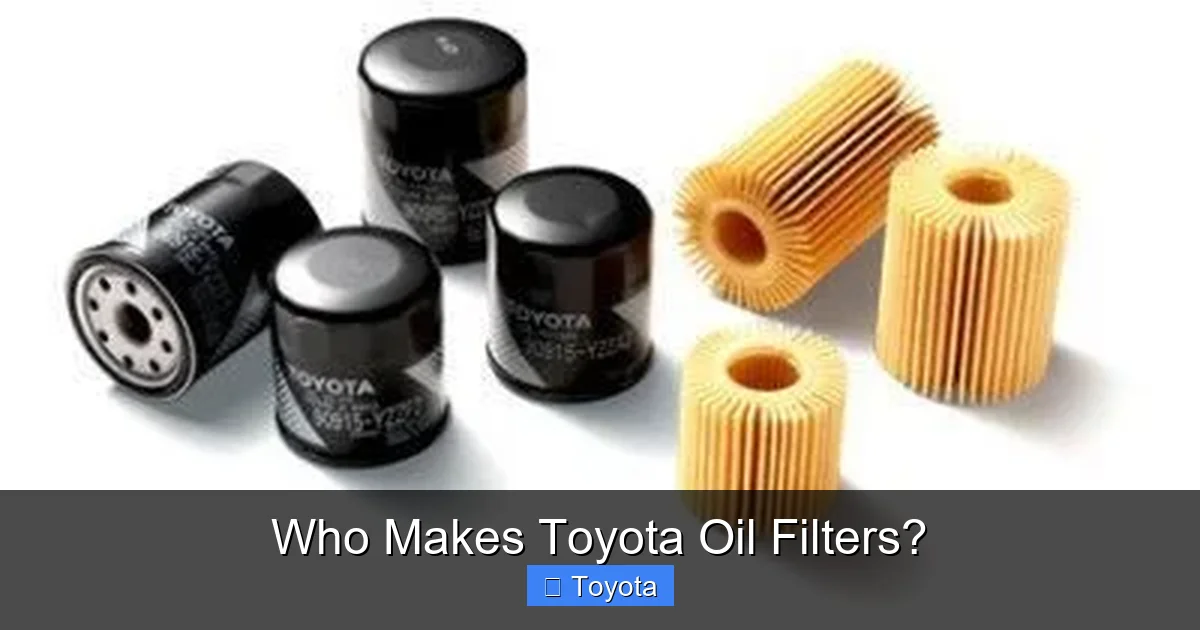
At the heart of Toyota’s oil filter production is the Toyota Genuine Parts (TGP) program. This division oversees the development, quality control, and distribution of all factory-recommended components, including oil filters. While Toyota doesn’t stamp “Made by Toyota” on every filter, the TGP stamp of approval means that each unit has passed stringent testing and meets or exceeds OEM specifications.
Toyota Genuine Parts are designed with input from the same engineering teams that developed your vehicle. That means every oil filter is tailored to the specific needs of Toyota engines—whether it’s a high-revving 4-cylinder or a turbocharged V6. The filters are tested under real-world conditions, including extreme temperatures, high RPMs, and prolonged use, to ensure they perform reliably over time.
One of the biggest advantages of using Toyota Genuine Parts is consistency. Because Toyota controls the entire supply chain—from design to distribution—you can trust that every filter you buy is identical in quality and performance. This level of standardization is rare in the aftermarket world, where quality can vary widely between brands and even between batches.
Why Genuine Matters
You might be wondering: “If it fits, doesn’t it work?” The short answer is no. While many aftermarket filters claim compatibility with Toyota vehicles, few are held to the same standards as genuine parts. A filter that’s slightly off in diameter, thread pitch, or bypass valve pressure can lead to oil leaks, reduced filtration, or even engine damage over time.
For example, a poorly designed filter might allow unfiltered oil to bypass the media during cold starts or high-pressure situations. This can introduce contaminants into your engine, accelerating wear on bearings, camshafts, and piston rings. Over time, this wear can lead to reduced performance, increased oil consumption, and costly repairs.
Toyota Genuine oil filters are engineered to prevent these issues. They feature precision-machined housings, high-quality filter media, and reliable pressure relief valves that open only when necessary. This ensures that your engine always receives clean, properly pressurized oil—no matter the driving conditions.
Meet the OEM Suppliers: Denso and Akebono
Visual guide about Who Makes Toyota Oil Filters?
Image source: rxmechanic.com
While Toyota Genuine Parts oversees the program, the actual manufacturing of many Toyota oil filters is handled by two of Japan’s most respected automotive suppliers: Denso and Akebono.
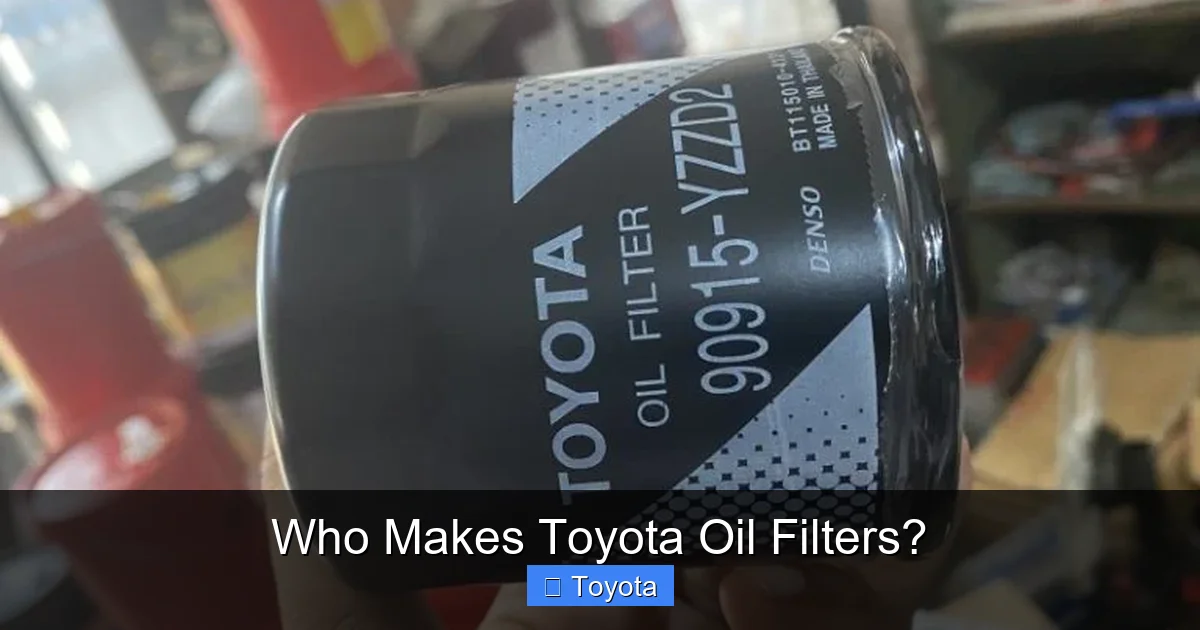
Denso Corporation, a subsidiary of the Toyota Group, is one of the world’s largest automotive component manufacturers. Founded in 1949 as Nippon Denso Co., Ltd., Denso has been a key supplier to Toyota for decades, producing everything from fuel injectors and alternators to air conditioning systems and oil filters. Many Toyota oil filters bear the Denso name or are produced in Denso facilities under Toyota’s supervision.
Denso’s expertise in filtration technology is unmatched. The company uses advanced materials like synthetic fiber media and multi-layered filtration systems to capture particles as small as 20 microns—roughly one-third the width of a human hair. This level of precision ensures that even the tiniest contaminants are removed from the oil, protecting your engine from internal wear.
Akebono Brake Industry Co., Ltd., another Japanese giant, is best known for its braking systems, but it also produces high-performance oil filters for Toyota and other automakers. Akebono’s filters are renowned for their durability and resistance to high temperatures and pressure spikes. They often feature reinforced steel housings and silicone-based anti-drain back valves, which prevent oil from draining out of the filter when the engine is off—a common issue with cheaper filters.
Both Denso and Akebono operate under strict quality control protocols set by Toyota. Their factories are regularly audited, and every batch of filters undergoes rigorous testing before being approved for sale. This ensures that whether your filter was made in a Denso plant in Japan or an Akebono facility in the U.S., it meets the same high standards.
How to Identify a Genuine Toyota Oil Filter
With so many filters on the market, it’s important to know how to spot a genuine Toyota oil filter. Here are a few tips:
– Look for the Toyota logo and “Genuine Parts” branding on the packaging.
– Check the part number—genuine filters will match the number listed in your owner’s manual or on Toyota’s official parts website.
– Inspect the filter itself: genuine filters have a clean, professional finish with no rough edges or loose components.
– Purchase from authorized Toyota dealers or certified online retailers to avoid counterfeit products.
Counterfeit filters are a growing problem, especially on online marketplaces. These knockoffs may look similar to genuine parts but are often made with inferior materials and poor construction. Using a counterfeit filter can compromise your engine’s performance and void your warranty.
The Science Behind Oil Filtration
Visual guide about Who Makes Toyota Oil Filters?
Image source: rxmechanic.com
To truly appreciate why Toyota oil filters are so important, it helps to understand how oil filtration works. Engine oil does more than just lubricate moving parts—it also carries away heat, suspends contaminants, and helps seal piston rings. But over time, the oil picks up dirt, metal shavings, soot, and other debris that can damage your engine if left unchecked.
That’s where the oil filter comes in. As oil circulates through the engine, it passes through the filter, where a porous media traps contaminants while allowing clean oil to flow through. A high-quality filter can capture particles down to 10–20 microns in size, which is critical for protecting sensitive components like hydraulic lifters and turbochargers.
Toyota oil filters are designed with several key features to maximize efficiency:
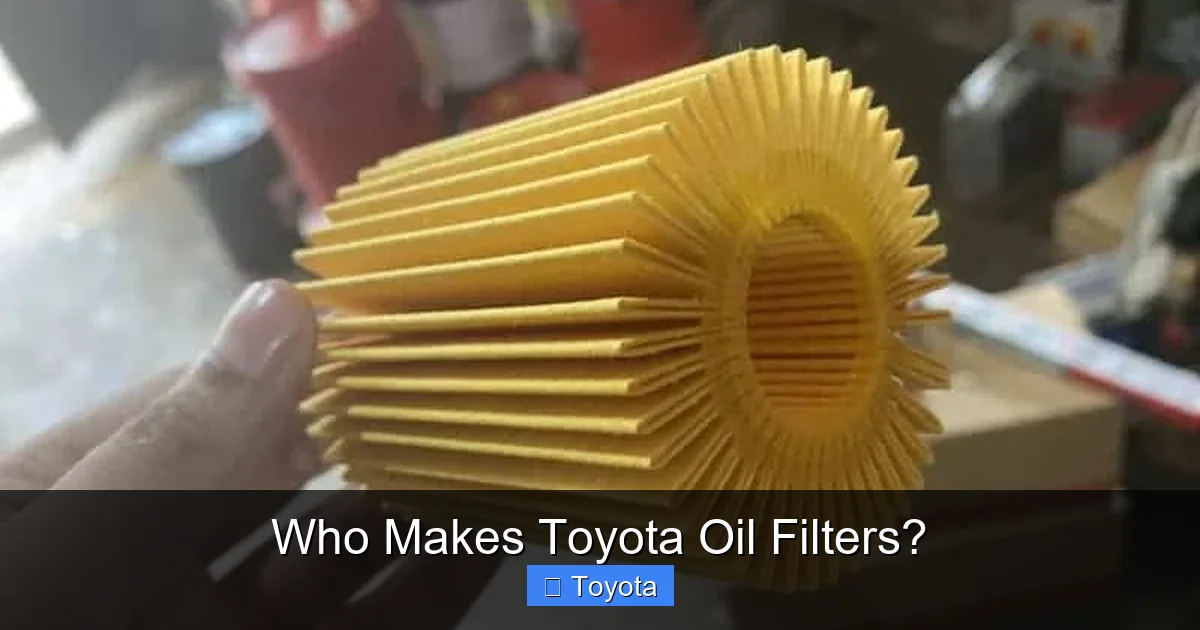
– **High-efficiency media:** Made from synthetic fibers or cellulose blends, this material offers superior dirt-holding capacity without restricting oil flow.
– **Anti-drain back valve:** Prevents oil from draining out of the filter when the engine is off, ensuring immediate lubrication at startup.
– **Bypass valve:** Opens under extreme pressure (e.g., cold starts or clogged media) to allow oil to bypass the filter and keep the engine running—though this should be a last resort.
– **Steel end caps and center tube:** Provide structural integrity and prevent collapse under high pressure.
These features work together to ensure that your engine always receives clean, pressurized oil—even under demanding conditions.
Real-World Impact: What Happens Without a Good Filter?
Let’s say you skip the genuine filter and opt for a cheap aftermarket alternative. At first, everything seems fine. Your car starts, runs smoothly, and you save $5. But over time, the consequences can be severe.
A low-quality filter may have a weaker media that collapses under pressure, allowing unfiltered oil to circulate. Or it might have a faulty anti-drain back valve, causing oil to drain out overnight. This means your engine starts dry, leading to increased wear on camshafts, lifters, and bearings.
In extreme cases, a failed filter can cause oil starvation, leading to overheating, seized pistons, or even engine failure. Repairing such damage can cost thousands of dollars—far more than the few dollars you saved on the filter.
Toyota’s testing shows that genuine filters last longer and perform better under stress. In lab tests, Toyota oil filters maintained 99% efficiency after 10,000 miles of simulated driving, while some aftermarket filters dropped below 80% efficiency after just 5,000 miles.
Warranty, Maintenance, and Best Practices
Using genuine Toyota oil filters isn’t just about performance—it’s also about protecting your investment. Toyota recommends using only Genuine Parts during scheduled maintenance to maintain warranty coverage. If you use a non-genuine filter and experience engine problems, Toyota may deny warranty claims, arguing that improper maintenance contributed to the issue.
This is especially important for newer Toyota models with advanced engines, such as the Dynamic Force series or hybrid powertrains. These engines operate at higher efficiencies and tighter tolerances, making them more sensitive to oil quality and filtration.
Recommended Oil Change Intervals
Toyota typically recommends changing your oil and filter every 5,000 to 10,000 miles, depending on driving conditions. For normal driving, many models can go up to 10,000 miles with synthetic oil. However, if you frequently drive in stop-and-go traffic, extreme temperatures, or dusty environments, you should change the oil and filter every 5,000 miles.
Always consult your owner’s manual for the specific interval for your vehicle. And when you do change the oil, make sure to replace the filter with a genuine Toyota unit.
DIY vs. Professional Service
Many Toyota owners choose to change their oil and filter themselves to save money. While this is perfectly fine, it’s important to use the right tools and follow proper procedures. Over-tightening the filter can damage the gasket and cause leaks, while under-tightening can lead to oil seepage.
If you’re not comfortable doing it yourself, visit a Toyota service center or a trusted mechanic who uses genuine parts. Many dealerships offer competitive pricing on oil changes, and you’ll have the peace of mind knowing the job was done right.
Aftermarket Alternatives: Are They Worth It?
With so many aftermarket oil filters on the market—from brands like Fram, Purolator, K&N, and WIX—it’s natural to wonder if they’re a viable alternative to genuine Toyota filters.
The short answer: some are, but most aren’t.
High-end aftermarket filters from reputable brands can offer comparable performance to genuine parts, especially if they’re specifically designed for Toyota vehicles. For example, K&N’s high-flow filters use synthetic media and are built to last longer than standard filters. However, even these may not meet Toyota’s exact specifications for bypass pressure or anti-drain back performance.
The bigger issue is consistency. Aftermarket filters are not held to the same quality control standards as OEM parts. A filter that works well in one batch might fail prematurely in another. And because they’re not designed by Toyota engineers, they may not account for unique features of your engine, such as variable valve timing or direct injection systems.
When Aftermarket Might Make Sense
There are a few scenarios where an aftermarket filter could be acceptable:
– You’re on a tight budget and need a temporary solution.
– You’re using a high-performance synthetic oil that’s compatible with your engine.
– You’ve done your research and found a filter with verified compatibility and positive reviews.
But even in these cases, it’s important to weigh the risks. A failed filter can cause far more damage than the cost difference between genuine and aftermarket.
The Bottom Line: Why Genuine Toyota Oil Filters Are Worth It
At the end of the day, your Toyota is more than just a car—it’s a finely tuned machine built to last. Every component, from the engine block to the oil filter, plays a role in its performance and longevity.
Using a genuine Toyota oil filter ensures that your engine receives the protection it was designed for. It’s not just about filtering oil—it’s about maintaining proper pressure, preventing wear, and preserving your vehicle’s value.
Yes, genuine filters may cost a bit more than aftermarket options. But when you consider the potential cost of engine repairs, the peace of mind, and the warranty protection, the investment is well worth it.
So the next time you’re due for an oil change, ask yourself: Do I want the best for my Toyota? If the answer is yes, choose a genuine Toyota oil filter—because your engine deserves nothing less.
Frequently Asked Questions
Are Toyota oil filters made by Toyota?
Toyota doesn’t manufacture oil filters in its own factories, but it designs and oversees production through its Genuine Parts division. Filters are made by trusted OEM partners like Denso and Akebono under strict Toyota standards.
Can I use an aftermarket oil filter in my Toyota?
You can, but it’s not recommended. Aftermarket filters may not meet Toyota’s specifications for flow rate, pressure, or filtration efficiency, which can lead to engine wear or warranty issues.
How often should I change my Toyota oil filter?
Toyota recommends changing the oil and filter every 5,000 to 10,000 miles, depending on driving conditions. Check your owner’s manual for the exact interval for your model.
What happens if I use a cheap oil filter?
Cheap filters may have weak media, faulty valves, or poor seals, leading to oil leaks, reduced filtration, or engine damage. They can also void your warranty if problems arise.
How can I tell if an oil filter is genuine?
Look for the Toyota logo, correct part number, and tamper-proof packaging. Buy from authorized dealers or certified retailers to avoid counterfeits.
Do hybrid Toyotas need special oil filters?
Hybrid engines still require standard oil filtration, but they may have unique maintenance schedules. Always use a genuine Toyota filter and follow the recommended service interval.