
Who Makes Toyota 0w-16 Oil?

Toyota 0W-16 oil is specially formulated to meet strict fuel efficiency and engine protection standards for modern Toyota vehicles. While Toyota doesn’t manufacture the oil itself, it approves and licenses several top-tier oil brands to produce this ultra-low viscosity lubricant under strict quality guidelines.
Key Takeaways
- Toyota doesn’t make 0W-16 oil directly: Instead, it licenses and approves third-party oil manufacturers to produce oil that meets its exact specifications.
- Approved brands include Mobil 1, Idemitsu, and Genuine Toyota Oil: These companies formulate 0W-16 oil to pass Toyota’s rigorous testing for performance and longevity.
- 0W-16 oil improves fuel economy: Its ultra-thin viscosity reduces engine friction, helping hybrid and fuel-efficient models achieve better MPG.
- Only use Toyota-approved 0W-16 oil: Using non-approved oils may void your warranty or harm engine performance over time.
- Check your owner’s manual: Not all Toyotas require 0W-16—only specific models like the Prius, Corolla Hybrid, and RAV4 Hybrid do.
- Oil changes still matter: Even with long-life claims, regular maintenance ensures optimal engine health and performance.
- Synthetic is a must: 0W-16 is a full synthetic oil, offering superior protection in extreme temperatures and driving conditions.
📑 Table of Contents
- Who Makes Toyota 0W-16 Oil? A Complete Guide
- Why 0W-16 Oil? The Science Behind the Viscosity
- Who Actually Manufactures Toyota 0W-16 Oil?
- Why You Should Only Use Toyota-Approved 0W-16 Oil
- Where to Buy Toyota 0W-16 Oil
- Common Misconceptions About 0W-16 Oil
- Tips for Maintaining Your Toyota with 0W-16 Oil
- Conclusion: Making the Right Choice for Your Toyota
Who Makes Toyota 0W-16 Oil? A Complete Guide
If you own a modern Toyota—especially a hybrid like the Prius, Corolla Hybrid, or RAV4 Hybrid—you’ve probably noticed something different under the hood: a recommendation for 0W-16 motor oil. This ultra-thin, full synthetic oil is a game-changer for fuel efficiency, but it also raises a common question: Who actually makes Toyota 0W-16 oil?
The short answer? Toyota doesn’t manufacture the oil itself. Instead, the automaker partners with leading global lubricant companies to produce oil that meets its strict performance standards. These oils are formulated, bottled, and distributed by trusted brands—but only after passing Toyota’s rigorous approval process. Think of it like a restaurant chain that doesn’t cook its own food but sets the recipe and quality standards for its suppliers.
In this guide, we’ll dive deep into the world of Toyota 0W-16 oil. We’ll explore which companies are authorized to make it, why this oil is so important for your vehicle, and how to ensure you’re using the right product. Whether you’re a DIY mechanic or just want to understand what’s going into your engine, this article will give you the clarity and confidence you need.
Why 0W-16 Oil? The Science Behind the Viscosity
Visual guide about Who Makes Toyota 0w-16 Oil?
Image source: japanoil-export.com
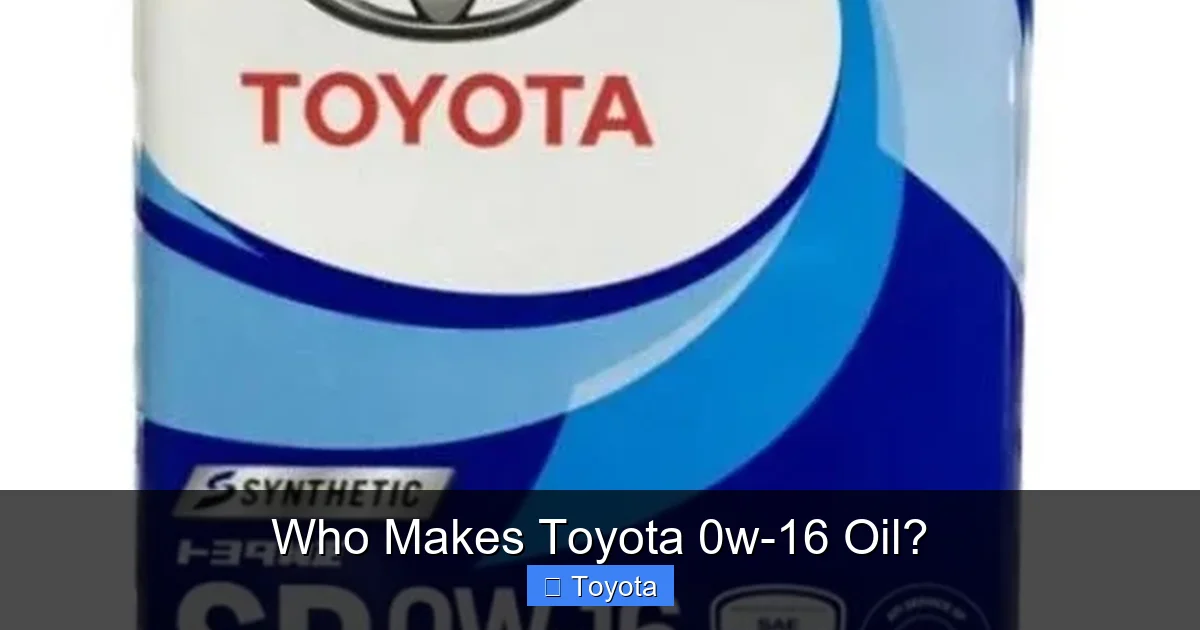
Before we get into who makes the oil, let’s talk about why Toyota uses 0W-16 in the first place. Viscosity—the measure of an oil’s thickness—plays a huge role in engine performance. The “0W” means the oil flows like a 0-weight oil in cold weather (the “W” stands for winter), while the “16” indicates its thickness at operating temperature.
So why go so thin? Modern Toyota engines, especially in hybrid models, are designed for maximum fuel efficiency. Thinner oil creates less internal friction, allowing the engine to spin more freely. This translates to better gas mileage—sometimes by as much as 1–2 MPG compared to thicker oils like 5W-30.
But thin doesn’t mean weak. Toyota’s 0W-16 oil is a full synthetic, meaning it’s engineered at the molecular level to maintain strength under pressure. It contains advanced additives that protect against wear, sludge, and oxidation—even in extreme heat or stop-and-go traffic.
Fuel Efficiency and Emissions Reduction
One of the biggest drivers behind 0W-16 oil is environmental regulation. Automakers are under increasing pressure to reduce CO₂ emissions and improve fleet-wide fuel economy. By using ultra-low viscosity oils, Toyota can squeeze every last drop of efficiency out of its engines.
For example, the 2023 Toyota Prius uses 0W-16 oil to help achieve an EPA-estimated 57 MPG combined. That kind of efficiency wouldn’t be possible with thicker oils. The oil reduces drag on moving parts, allowing the engine and electric motor to work together more smoothly.
Engine Protection in Modern Designs
You might worry that such thin oil can’t protect your engine. But Toyota’s engineers have designed 0W-16 oil to work hand-in-hand with advanced engine components. Modern Toyota engines use tighter tolerances, variable valve timing, and direct injection—all of which benefit from low-viscosity lubricants.
The oil forms a strong film on metal surfaces, even under high heat and pressure. Plus, it flows quickly during cold starts, reducing wear during the most vulnerable phase of engine operation.
Who Actually Manufactures Toyota 0W-16 Oil?
Visual guide about Who Makes Toyota 0w-16 Oil?
Image source: takeuroil.com
Now for the million-dollar question: Who makes Toyota 0W-16 oil? As mentioned, Toyota doesn’t produce the oil in-house. Instead, it licenses its specifications to a select group of oil manufacturers. These companies must meet Toyota’s exacting standards before their products can carry the “Toyota Genuine Motor Oil” label or be approved for use in Toyota vehicles.
The approval process is strict. Oils are tested for viscosity stability, wear protection, deposit control, and compatibility with engine materials. Only after passing these tests can a brand sell 0W-16 oil as “Toyota-approved.”
Major Brands That Make Toyota 0W-16 Oil
Several well-known oil companies produce 0W-16 oil that meets Toyota’s specifications. Here are the most common and trusted names:
- Mobil 1: One of the most widely available brands, Mobil 1 offers a Toyota-approved 0W-16 synthetic oil. It’s often sold at dealerships, auto parts stores, and online. Mobil 1’s formula includes advanced anti-wear additives and excellent cold-flow properties.
- Idemitsu Kosan: A Japanese company with deep ties to Toyota, Idemitsu is actually one of the original developers of 0W-16 oil. They supply oil directly to Toyota factories and produce aftermarket versions for consumers. Idemitsu’s 0W-16 is known for its precision formulation and long-lasting performance.
- Genuine Toyota Motor Oil: Sold at Toyota dealerships, this oil is typically sourced from Idemitsu or Mobil 1 but branded under Toyota’s name. It’s the safest bet if you want to ensure compatibility, though it often comes at a higher price.
- Chevron (via Techron): Chevron produces 0W-16 oil under its Techron brand, which is approved for use in Toyota vehicles. It’s less common than Mobil 1 or Idemitsu but still a reliable option.
- Shell (via Pennzoil): Pennzoil offers a synthetic 0W-16 oil that meets Toyota’s standards. It’s formulated with natural gas-based base oils for enhanced purity and performance.
How to Identify Approved Oils
Not all 0W-16 oils are created equal. To ensure you’re using a Toyota-approved product, look for the following:
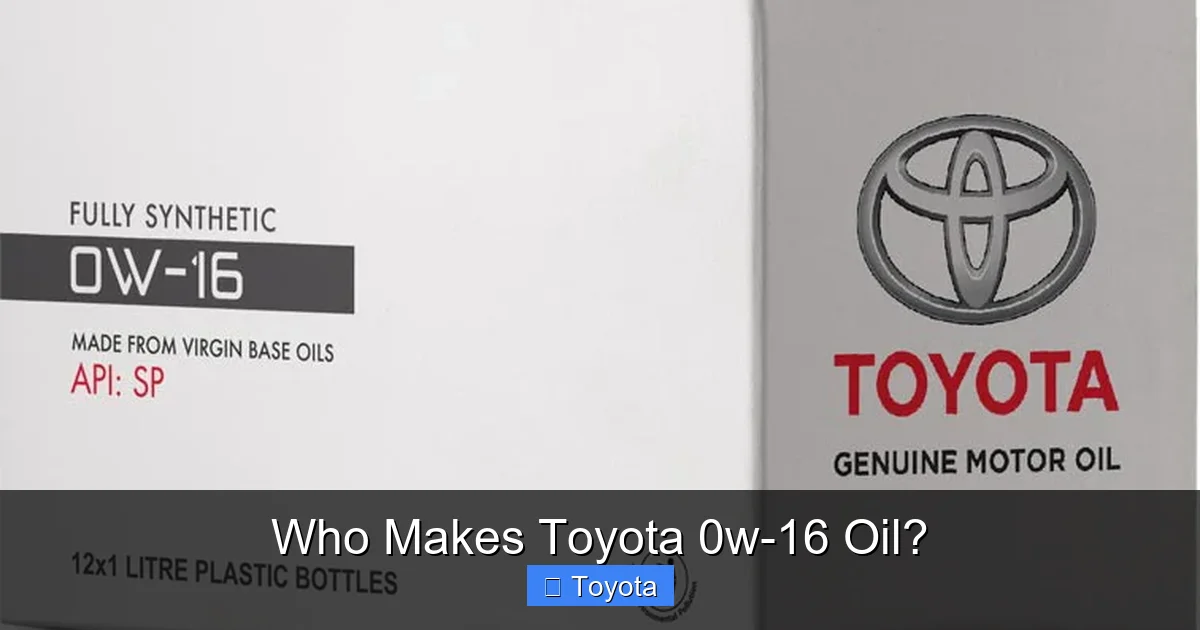
- The phrase “Meets Toyota Specification” or “Toyota Approved” on the label.
- A license number or certification code (e.g., “Toyota License No. 001”).
- The API (American Petroleum Institute) “Starburst” symbol, indicating it meets current engine protection standards.
- The ILSAC GF-6A or GF-6B certification, which confirms fuel efficiency and wear protection.
Always check the back label or the manufacturer’s website for confirmation. If in doubt, ask your Toyota dealer or consult your owner’s manual.
Why You Should Only Use Toyota-Approved 0W-16 Oil
Visual guide about Who Makes Toyota 0w-16 Oil?
Image source: aljoc.com
Using the wrong oil might seem like a small thing, but it can have big consequences. Toyota designs its engines and oil recommendations with precision. Deviating from those specs—even slightly—can lead to problems down the road.
Warranty Protection
One of the biggest reasons to stick with approved oil is your vehicle warranty. Toyota’s warranty requires that you use oil that meets its specifications. If you use a non-approved 0W-16 oil—or worse, a thicker oil like 5W-20—and an engine problem arises, Toyota may deny your warranty claim.
For example, if your hybrid engine develops sludge or premature wear, and you’ve been using an unapproved oil, the dealer may determine that improper maintenance caused the issue. That could leave you on the hook for thousands in repairs.
Engine Performance and Longevity
Even if your warranty isn’t at risk, using the wrong oil can hurt your engine’s performance. Thicker oils increase friction, reducing fuel economy and putting extra strain on the engine. Over time, this can lead to increased wear, reduced power, and higher emissions.
On the flip side, using a non-approved 0W-16 oil—even if it’s the right viscosity—might lack the specific additives Toyota requires. For instance, some oils don’t have enough anti-wear agents or detergents to handle the unique demands of a hybrid engine that frequently starts and stops.
Real-World Example: The Prius Oil Change
Let’s say you own a 2022 Toyota Prius. The owner’s manual specifies 0W-16 synthetic oil and recommends changes every 10,000 miles or 12 months (whichever comes first). You take it to a quick-lube shop, and they offer you a “generic” 0W-16 oil at a discount.
Sounds good, right? But if that oil isn’t Toyota-approved, you’re taking a risk. The shop might not know the difference, or they might assume all 0W-16 oils are the same. But Toyota’s specifications go beyond viscosity—they include additive packages, shear stability, and compatibility with hybrid systems.
By choosing a Mobil 1 or Idemitsu 0W-16 oil with Toyota approval, you ensure your Prius runs as efficiently and reliably as possible.
Where to Buy Toyota 0W-16 Oil
Now that you know who makes it and why it matters, where can you buy Toyota 0W-16 oil? The good news is, it’s widely available—but you’ll want to shop smart.
Toyota Dealerships
The most reliable source is your local Toyota dealer. They carry Genuine Toyota Motor Oil, which is guaranteed to meet specifications. The downside? It’s often the most expensive option—sometimes 20–30% more than aftermarket brands.
But for many owners, the peace of mind is worth it. Dealers also offer professional oil changes, so you can have the job done correctly with the right filter and disposal.
Auto Parts Stores
Major retailers like AutoZone, O’Reilly Auto Parts, Advance Auto Parts, and NAPA carry Toyota-approved 0W-16 oils from brands like Mobil 1, Idemitsu, and Pennzoil. These stores often run promotions, and you can usually find coupons online.
When shopping, look for the “Toyota Approved” label and check the product description. Some stores even let you filter search results by vehicle make and model.
Online Retailers
Amazon, Walmart.com, and RockAuto are great options for buying 0W-16 oil online. You can compare prices, read reviews, and often get free shipping.
Just be cautious of third-party sellers on platforms like Amazon. Make sure the oil is sold and shipped by a reputable retailer (like Amazon itself or a known auto parts store). Counterfeit or mislabeled oils do exist, so stick to trusted sources.
DIY vs. Professional Oil Changes
If you’re comfortable doing your own oil change, buying oil and a filter online can save you money. Just make sure to use a Toyota-approved oil filter (like the OEM Toyota filter) and dispose of the old oil responsibly.
For those who prefer convenience, many dealerships and independent shops now offer 0W-16 oil changes. Call ahead to confirm they stock Toyota-approved oil—some shops may still use older viscosities unless specifically requested.
Common Misconceptions About 0W-16 Oil
Despite its growing popularity, 0W-16 oil is still misunderstood by many drivers. Let’s clear up some of the most common myths.
“Thin Oil Means Less Protection”
This is the biggest misconception. While 0W-16 is thinner than traditional oils, it’s not weak. Modern synthetics are engineered to maintain film strength under extreme conditions. In fact, 0W-16 often outperforms thicker oils in wear tests, thanks to advanced additive technology.
“Any 0W-16 Oil Will Do”
Not true. As we’ve discussed, only oils that meet Toyota’s specifications should be used. A random 0W-16 oil from a no-name brand might not have the right additives or certifications, putting your engine at risk.
“0W-16 Is Only for Hybrids”
While hybrids like the Prius and RAV4 Hybrid were the first to use 0W-16, it’s now appearing in other fuel-efficient models. For example, some versions of the Toyota Camry and Corolla now recommend 0W-16. Always check your owner’s manual.
“You Can’t Use 0W-16 in Cold Climates”
Actually, 0W-16 is excellent in cold weather. The “0W” rating means it flows easily at temperatures as low as -40°F (-40°C). That’s better than 5W or 10W oils, which thicken in the cold and delay lubrication.
“Oil Changes Are Less Important with 0W-16”
Even though 0W-16 is designed for long-life performance, regular oil changes are still essential. Contaminants build up over time, and additives break down. Skipping changes can lead to sludge, corrosion, and reduced engine life.
Tips for Maintaining Your Toyota with 0W-16 Oil
Using the right oil is just the first step. To get the most out of your Toyota, follow these maintenance tips:
- Follow the maintenance schedule: Check your owner’s manual for oil change intervals. Most Toyotas with 0W-16 recommend changes every 10,000 miles or 12 months.
- Use a quality oil filter: Always replace the oil filter with each change. OEM Toyota filters are designed to work with 0W-16 oil and trap contaminants effectively.
- Check oil levels regularly: Even with synthetic oil, levels can drop due to consumption or leaks. Check the dipstick monthly.
- Keep records: Whether you do it yourself or go to a shop, keep a log of oil changes. This helps with warranty claims and resale value.
- Don’t mix oils: If you need to top off, use the same brand and type of 0W-16 oil. Mixing different formulations can dilute performance.
- Consider oil analysis: For high-mileage vehicles, sending an oil sample to a lab can reveal hidden engine issues before they become serious.
Conclusion: Making the Right Choice for Your Toyota
So, who makes Toyota 0W-16 oil? The answer is a network of trusted global manufacturers—like Mobil 1, Idemitsu, and others—who produce oil under Toyota’s strict licensing and approval process. While Toyota doesn’t bottle the oil itself, it ensures that every drop meets its high standards for performance, efficiency, and engine protection.
Using the right 0W-16 oil isn’t just about following the manual—it’s about protecting your investment. Whether you drive a Prius, RAV4 Hybrid, or another fuel-efficient Toyota, this ultra-thin synthetic oil helps your engine run smoother, last longer, and save fuel.
By choosing a Toyota-approved brand, following the maintenance schedule, and staying informed, you’ll keep your Toyota in peak condition for years to come. And when it’s time for an oil change, remember: it’s not just about the viscosity—it’s about the quality, the certification, and the peace of mind that comes with knowing you’re doing what’s best for your vehicle.
Frequently Asked Questions
Can I use any 0W-16 oil in my Toyota?
No, you should only use 0W-16 oil that is specifically approved by Toyota. Look for labels that say “Meets Toyota Specification” or “Toyota Approved” to ensure compatibility and warranty protection.
Is 0W-16 oil only for hybrid Toyotas?
While hybrids like the Prius and RAV4 Hybrid were the first to use 0W-16, it’s now recommended for other fuel-efficient models, including some Camry and Corolla variants. Always check your owner’s manual.
Can I switch from 0W-16 to 5W-20 if I can’t find 0W-16?
No, you should not switch to a different viscosity unless specified by a Toyota technician. Using the wrong oil can reduce fuel efficiency, increase wear, and potentially void your warranty.
How often should I change 0W-16 oil in my Toyota?
Most Toyotas recommend changing 0W-16 oil every 10,000 miles or 12 months, whichever comes first. However, severe driving conditions (like frequent short trips or towing) may require more frequent changes.
Is 0W-16 oil more expensive than other oils?
0W-16 oil is typically more expensive than conventional oils due to its synthetic formulation and advanced additives. However, prices vary by brand and retailer, and aftermarket options like Mobil 1 are often more affordable than Genuine Toyota Oil.
Can I mix different brands of 0W-16 oil?
It’s best to avoid mixing brands. While occasional top-offs may be unavoidable, consistent use of the same approved oil ensures optimal performance and additive compatibility.
