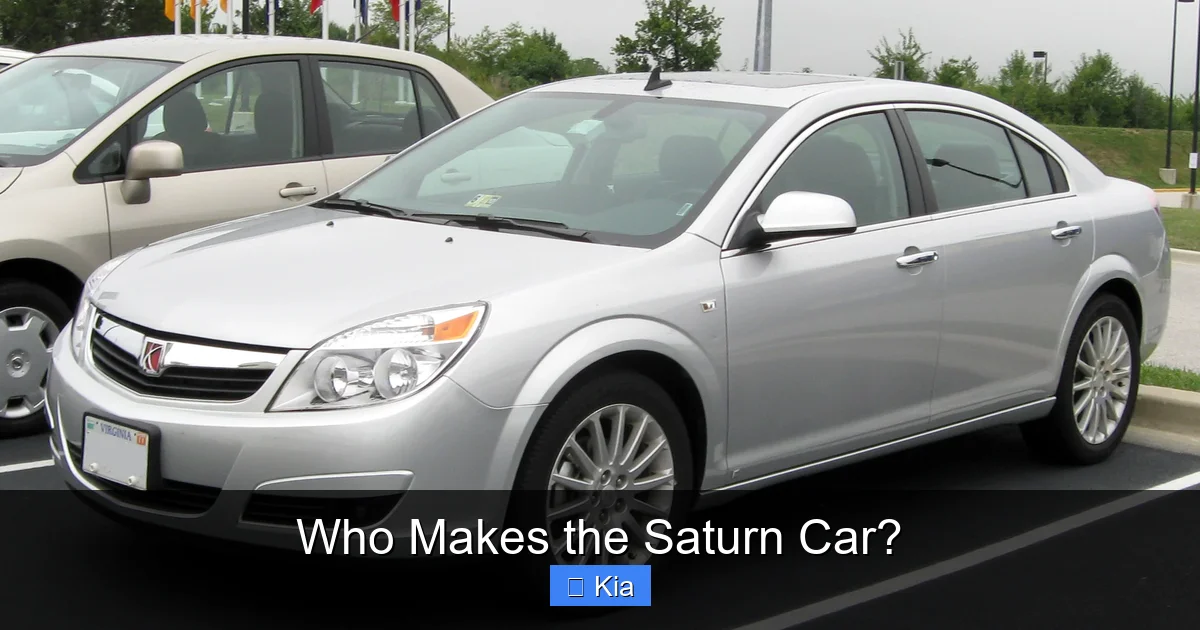
Who Makes the Saturn Car?

Contents
- 1 Key Takeaways
- 2 📑 Table of Contents
- 3 The Birth of Saturn: A Bold Move by General Motors
- 4 Saturn’s Golden Years: Innovation and Growth
- 5 The Decline: Challenges and Changes
- 6 Saturn’s Legacy and Influence on Modern Brands
- 7 Saturn Cars Today: Still on the Road
- 8 Kia and the Spirit of Saturn
- 9 Conclusion: A Legacy That Lives On
- 10 Frequently Asked Questions


The Saturn car was originally made by General Motors (GM) as a standalone brand from 1985 to 2010. Though Saturn is no longer in production, its innovative spirit lives on in today’s automotive market, including influences seen in brands like Kia.
If you’ve ever wondered, “Who makes the Saturn car?” you’re not alone. Saturn was once a bold experiment in the American automotive industry—a brand designed to challenge the dominance of Japanese imports like Toyota and Honda. Launched by General Motors in the mid-1980s, Saturn stood out not just for its cars, but for its entire approach to car buying and ownership. It promised a no-haggle experience, friendly service, and vehicles built with innovation and reliability in mind.
But despite its strong start and loyal customer base, Saturn eventually faded from the market. Production officially ended in 2010, and the brand was discontinued as part of GM’s broader restructuring during the financial crisis. Yet, even though Saturn cars are no longer being made, their influence lingers. From their unique plastic body panels to their customer-first philosophy, Saturn left a mark on how cars are designed and sold today. And while Kia wasn’t involved in making Saturn vehicles, the South Korean automaker shares some of the same values—affordability, reliability, and a focus on the everyday driver—that made Saturn so appealing in its heyday.
So, who really made the Saturn car? The short answer is General Motors. But the longer story is one of innovation, ambition, and the challenges of staying relevant in a fast-changing industry. Let’s dive deeper into Saturn’s origins, its rise and fall, and how its legacy connects to modern brands like Kia.
Key Takeaways
- Saturn was created by General Motors (GM): Launched in 1985, Saturn was GM’s attempt to compete with Japanese automakers by offering reliable, affordable, and customer-friendly vehicles.
- Saturn operated as a separate division: Unlike other GM brands, Saturn had its own manufacturing plants, dealer network, and corporate culture focused on no-haggle pricing and customer satisfaction.
- Production ended in 2010: Due to financial struggles during the 2008 recession and GM’s restructuring, Saturn was discontinued as part of GM’s bankruptcy reorganization.
- Saturn’s legacy influenced modern car design: Features like plastic body panels, strong customer service, and compact efficiency paved the way for today’s value-focused brands, including Kia.
- Kia and Saturn share a focus on affordability and reliability: While Kia didn’t make Saturn cars, both brands emphasize quality, warranty support, and accessible pricing for mainstream buyers.
- Saturn vehicles are still on the road: Many Saturn models, like the Saturn Ion and Saturn Vue, remain in use today, praised for their durability and low maintenance costs.
- Enthusiast communities keep Saturn alive: Dedicated fan groups, online forums, and restoration projects continue to celebrate Saturn’s unique place in automotive history.
📑 Table of Contents
The Birth of Saturn: A Bold Move by General Motors
In the early 1980s, American automakers were struggling. Japanese brands like Toyota, Honda, and Nissan were gaining ground with fuel-efficient, reliable, and well-built cars. American consumers were increasingly turning to imports, and domestic brands like GM, Ford, and Chrysler were losing market share. Something had to change.
That’s when General Motors decided to try something radical. Instead of tweaking existing brands, GM launched an entirely new division: Saturn. Announced in 1983 and officially debuting in 1985, Saturn was designed from the ground up to compete with the best imports. The goal was simple: create a car company that could match Japanese quality, offer fair pricing, and deliver a better customer experience.
A Separate Identity from Day One
What set Saturn apart wasn’t just the cars—it was the entire business model. GM gave Saturn its own manufacturing plant in Spring Hill, Tennessee, which became the heart of the brand. This wasn’t just a factory; it was a symbol of Saturn’s independence. Workers were encouraged to participate in decision-making, and the plant operated with a team-based approach that emphasized collaboration over hierarchy.
Saturn also built its own dealer network. Unlike traditional GM dealerships, Saturn retailers were required to follow strict guidelines. No haggling was allowed—prices were fixed, and salespeople were trained to focus on customer service, not pressure tactics. This “no-haggle” policy was revolutionary at the time and helped build trust with buyers who were tired of aggressive sales tactics.
The First Saturn Models
The first Saturn car, the Saturn SL, rolled off the assembly line in 1990. It was a compact sedan designed for efficiency and affordability. Powered by a small but reliable 1.9-liter engine, the SL offered good fuel economy and a surprisingly spacious interior for its size. It quickly became a hit with young buyers, families, and commuters looking for a no-fuss vehicle.
Alongside the SL, Saturn launched the SC coupe and the SW wagon, giving customers a range of body styles to choose from. All three models shared the same platform and many components, which helped keep costs down and simplified maintenance. Saturn’s use of plastic body panels was another innovation—these panels resisted dents and rust, making the cars more durable in everyday use.
Saturn’s Golden Years: Innovation and Growth

Visual guide about Who Makes the Saturn Car?
Image source: momentcar.com
Throughout the 1990s and early 2000s, Saturn enjoyed a period of steady growth and innovation. The brand expanded its lineup, introduced new technologies, and built a loyal following. Saturn wasn’t just selling cars—it was selling a lifestyle centered on simplicity, honesty, and value.
Expanding the Lineup
As demand grew, Saturn added more models to its range. The Saturn L-Series, introduced in 1999, offered larger sedans and wagons with more power and features. These cars were aimed at buyers who wanted a bit more space and performance without stepping up to a full-size vehicle.
In 2002, Saturn launched the Vue, a compact SUV that became one of the brand’s best-selling models. The Vue was based on a platform shared with other GM brands, but Saturn gave it a unique design and focused on fuel efficiency and practicality. It was available with front-wheel or all-wheel drive and offered a choice of four- or six-cylinder engines.
Saturn also introduced the Ion in 2003, a compact car that replaced the SL and SC. The Ion came in both sedan and coupe versions and featured a modern design, improved safety features, and a more refined ride. It was also one of the first Saturns to offer a quad-coupe option, appealing to younger drivers.
Customer-Centric Philosophy
One of Saturn’s biggest strengths was its commitment to customer satisfaction. The brand promoted a “no-hassle” buying experience, where customers could walk into a dealership knowing the price upfront. Salespeople were trained to be helpful, not pushy, and many Saturn dealers offered perks like free car washes and loaner vehicles during service visits.
Saturn also stood out for its warranty and service policies. Early models came with a 3-year/36,000-mile bumper-to-bumper warranty, which was competitive for the time. Later, Saturn introduced longer powertrain warranties and roadside assistance programs, giving buyers peace of mind.
Community and Culture
Saturn fostered a strong sense of community among its owners. The brand hosted events like “Saturn Rendezvous,” where owners could meet, show off their cars, and participate in activities. These gatherings helped build brand loyalty and turned Saturn owners into passionate advocates.
Online forums and fan sites also flourished. Owners shared tips on maintenance, modifications, and troubleshooting, creating a supportive network that extended beyond the dealership. This grassroots enthusiasm was a testament to Saturn’s impact on its customers.
The Decline: Challenges and Changes

Visual guide about Who Makes the Saturn Car?
Image source: momentcar.com
Despite its early success, Saturn began to face challenges in the 2000s. Changing market conditions, increased competition, and shifts within GM itself started to take a toll on the brand.
Increased Competition
By the mid-2000s, the automotive landscape had changed dramatically. Japanese brands continued to dominate the compact and midsize segments, but now they were joined by strong competitors from South Korea, including Hyundai and Kia. These brands offered similar value propositions—affordable prices, long warranties, and improving quality—but with more modern designs and advanced features.
At the same time, American consumers were shifting toward SUVs and crossovers. Saturn’s lineup, while solid, didn’t keep pace with this trend. The Vue was popular, but it faced stiff competition from the Honda CR-V, Toyota RAV4, and newer entrants like the Kia Sportage. Saturn’s sedans and coupes, once its strength, began to feel outdated.
GM’s Restructuring and Cost-Cutting
As GM struggled financially, it began to consolidate its brands and cut costs. Saturn, once a standalone division, was gradually integrated into the broader GM structure. This meant sharing platforms, engines, and components with other GM brands like Chevrolet and Pontiac.
While this helped reduce development costs, it also diluted Saturn’s unique identity. The Vue, for example, shared its platform with the Chevrolet Equinox and Pontiac Torrent. The Ion was based on a GM global compact platform used by several brands. These shared components made Saturn cars more efficient to produce, but they also made them less distinctive.
The 2008 Financial Crisis
The final blow came during the 2008 financial crisis. GM, already under pressure, faced bankruptcy and needed a government bailout to survive. As part of its restructuring plan, GM announced it would discontinue several brands, including Saturn, Pontiac, and Hummer.
In 2009, GM began seeking a buyer for Saturn. Penske Automotive Group, a major dealership chain, reached a tentative agreement to acquire the brand. However, the deal fell through when Penske couldn’t secure a manufacturing agreement with another automaker to continue producing Saturn vehicles.
With no buyer and no production plan, GM officially ended Saturn production in 2010. The Spring Hill plant was retooled for other GM models, and the Saturn brand was retired.
Saturn’s Legacy and Influence on Modern Brands
Visual guide about Who Makes the Saturn Car?
Image source: carmodelslist.com
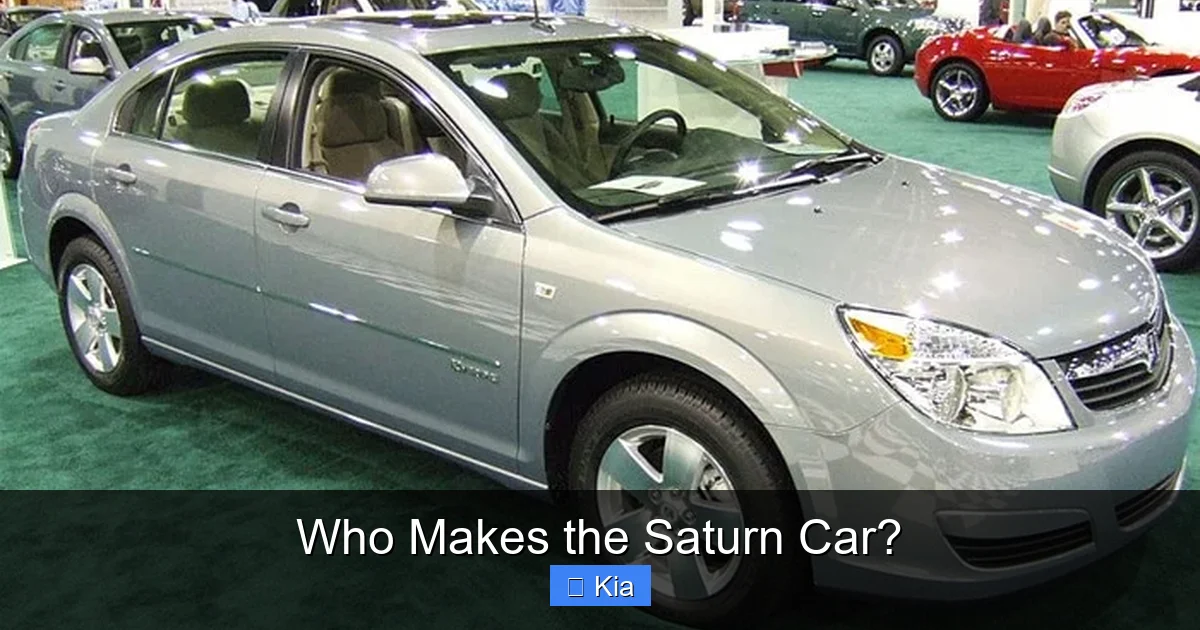
Even though Saturn is no longer in production, its influence can still be felt in the automotive world. Many of the ideas and practices Saturn pioneered have been adopted by other brands, including Kia.
Focus on Affordability and Value
Saturn was built on the idea that customers wanted reliable, affordable cars without sacrificing quality. This same philosophy drives brands like Kia today. Kia offers a wide range of vehicles—from the compact Rio to the midsize Sorento—that are priced competitively and come with strong warranties.
Like Saturn, Kia emphasizes value for money. Many Kia models include features like touchscreen infotainment, advanced safety systems, and modern designs at prices that undercut rivals. This focus on affordability has helped Kia grow its market share in the U.S. and around the world.
Long Warranties and Customer Confidence
One of Saturn’s early selling points was its warranty coverage. Kia has taken this idea even further with its industry-leading 10-year/100,000-mile powertrain warranty. This level of coverage gives buyers confidence in their purchase and reduces the fear of unexpected repair costs.
Kia also offers strong roadside assistance and service programs, similar to what Saturn provided. Dealerships often include free maintenance for the first few years, making ownership even more appealing.
Innovation in Design and Materials
Saturn’s use of plastic body panels was controversial at the time, but it demonstrated a willingness to innovate. Today, automakers are exploring new materials and manufacturing techniques to improve durability, reduce weight, and lower costs.
Kia, for example, uses high-strength steel and advanced composites in its vehicles to enhance safety and efficiency. The brand also focuses on aerodynamic design and fuel economy, much like Saturn did with its early models.
Customer Experience and Dealer Relations
Saturn’s no-haggle pricing and friendly service set a new standard for car buying. While not all dealers have adopted this model, many now offer transparent pricing and online buying options to reduce stress for customers.
Kia has embraced this trend with digital tools that let buyers configure, price, and even purchase vehicles online. Many Kia dealerships also emphasize customer service, offering perks like free car washes, loaner vehicles, and extended service hours.
Saturn Cars Today: Still on the Road
Even though new Saturns aren’t being made, thousands of them are still on the road. Models like the Saturn Ion, Vue, and Aura remain popular among budget-conscious drivers and car enthusiasts.
Reliability and Low Cost of Ownership
One reason Saturn cars have lasted so long is their reliability. Early models, in particular, were known for their durable engines and simple mechanical systems. With regular maintenance, many Saturns have surpassed 200,000 miles.
Parts are still widely available, and many independent mechanics are familiar with Saturn vehicles. This makes repairs affordable and accessible, even years after production ended.
Enthusiast Communities
Saturn may be gone, but it’s not forgotten. Dedicated fan groups, online forums, and social media communities keep the brand alive. Owners share restoration projects, performance upgrades, and stories about their Saturns.
Events like car shows and meetups give Saturn fans a chance to connect and celebrate their vehicles. Some owners even modify their Saturns with custom paint, suspension upgrades, and engine swaps, proving that the brand’s spirit of innovation lives on.
Collectibility and Nostalgia
While Saturns aren’t typically considered collectibles like classic muscle cars, some models are gaining attention among niche enthusiasts. The Saturn Sky, a two-seat roadster based on the Pontiac Solstice, is particularly sought after for its sporty design and driving dynamics.
Nostalgia also plays a role. For many buyers who grew up in the 1990s and 2000s, Saturn represents a simpler time in the automotive world—a time when cars were affordable, honest, and fun to drive.
Kia and the Spirit of Saturn
So, who makes the Saturn car? The answer is General Motors. But the values that made Saturn special—affordability, reliability, customer focus—are now being carried forward by brands like Kia.
Kia didn’t make Saturn cars, but it shares many of the same goals. Both brands aim to provide high-quality vehicles at accessible prices. Both emphasize strong warranties and customer support. And both have built loyal followings by listening to what drivers really want.
If you’re looking for a modern car that captures the spirit of Saturn, Kia is a great place to start. Models like the Kia Forte, Kia Soul, and Kia Sportage offer the kind of value, efficiency, and practicality that made Saturn so popular. And with Kia’s reputation for quality and innovation, you can feel confident that you’re getting a car built to last.
Conclusion: A Legacy That Lives On
The story of Saturn is one of ambition, innovation, and ultimately, change. Created by General Motors to challenge the status quo, Saturn succeeded in many ways—offering reliable cars, a better buying experience, and a strong sense of community. Though the brand is no longer in production, its influence can still be seen in today’s automotive market.
Brands like Kia continue to build on Saturn’s legacy by focusing on affordability, reliability, and customer satisfaction. While the cars may look different, the values remain the same. And for those who still drive a Saturn or remember the brand fondly, the spirit of innovation and honesty lives on.
So, the next time someone asks, “Who makes the Saturn car?” you can tell them it was General Motors—and that its impact is still being felt, one reliable, affordable vehicle at a time.
Frequently Asked Questions
Who originally made the Saturn car?
The Saturn car was made by General Motors (GM) as a standalone division from 1985 to 2010. It was created to compete with Japanese automakers by offering reliable, affordable vehicles with a customer-friendly buying experience.
Is Saturn still in production?
No, Saturn is no longer in production. GM discontinued the brand in 2010 as part of its restructuring during the financial crisis. The last Saturn vehicles were built in 2009.
Did Kia ever make Saturn cars?
No, Kia did not make Saturn cars. Saturn was exclusively a General Motors brand. However, Kia shares similar values like affordability, reliability, and strong warranties, which echo Saturn’s original mission.
What happened to the Saturn brand after it was discontinued?
After Saturn was discontinued, GM sold off its assets and retooled the Spring Hill manufacturing plant for other GM models. The brand name and trademarks were eventually retired, and no new Saturn vehicles have been produced since.
Are Saturn cars still reliable today?
Yes, many Saturn cars are still considered reliable, especially early models like the SL and Ion. With proper maintenance, these vehicles can last well over 200,000 miles, and parts remain widely available.
Why was Saturn discontinued?
Saturn was discontinued due to a combination of factors, including increased competition, shifting consumer preferences toward SUVs, GM’s financial struggles during the 2008 recession, and the failure to find a buyer after GM’s bankruptcy restructuring.