Who Makes Subaru Batteries?

Contents
- 1 Key Takeaways
- 2 📑 Table of Contents
- 3 Who Makes Subaru Batteries? A Deep Dive into the Brands Behind the Power
- 4 The Major Manufacturers Behind Subaru Batteries
- 5 Why Subaru Chooses These Manufacturers
- 6 Types of Batteries Used in Subaru Vehicles
- 7 How to Identify Your Subaru’s Battery Manufacturer
- 8 Tips for Maintaining and Replacing Your Subaru Battery
- 9 Conclusion: Trust the Experts Behind Subaru’s Power
- 10 Frequently Asked Questions

Multipurpose Lubricant Spray

Car Cup Holder Expander

Radiator Coolant

Battery Terminal Cleaner
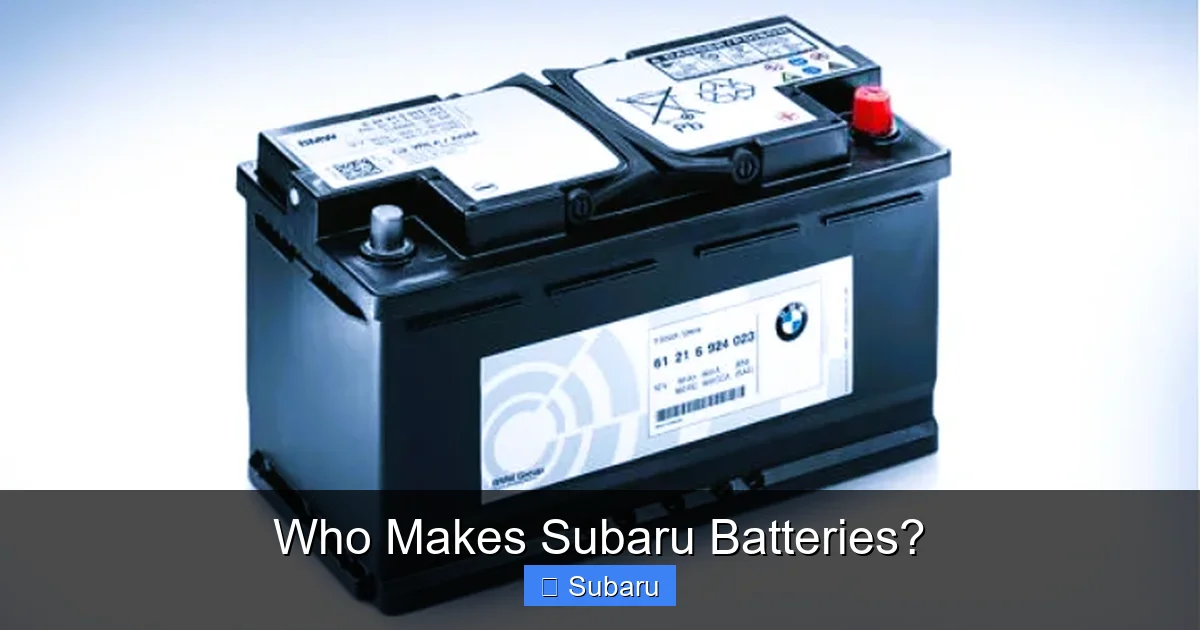
Subaru batteries are not made by Subaru itself but are manufactured by leading automotive battery companies like Exide, Johnson Controls (Clarios), and East Penn Manufacturing. These industry leaders supply high-quality, durable batteries designed specifically for Subaru’s performance and climate needs.
Key Takeaways
- Subaru does not manufacture its own batteries: Instead, it partners with top-tier battery suppliers to ensure quality and reliability.
- Exide Technologies is a primary supplier: Known for durable, high-performance batteries, Exide provides many OEM (Original Equipment Manufacturer) batteries for Subaru vehicles.
- Clarios (formerly Johnson Controls) also supplies Subaru: This global leader produces advanced AGM and flooded batteries used in newer Subaru models.
- East Penn Manufacturing contributes to Subaru’s battery lineup: Their DEKA brand offers long-lasting, maintenance-free options for various Subaru trims.
- Battery type depends on model and year: Older Subarus often use standard flooded batteries, while newer models may require AGM (Absorbent Glass Mat) technology.
- Climate affects battery choice: Subaru owners in cold regions benefit from batteries with higher cold cranking amps (CCA).
- Always check your owner’s manual: Using the correct battery type ensures optimal performance and warranty compliance.
📑 Table of Contents
- Who Makes Subaru Batteries? A Deep Dive into the Brands Behind the Power
- The Major Manufacturers Behind Subaru Batteries
- Why Subaru Chooses These Manufacturers
- Types of Batteries Used in Subaru Vehicles
- How to Identify Your Subaru’s Battery Manufacturer
- Tips for Maintaining and Replacing Your Subaru Battery
- Conclusion: Trust the Experts Behind Subaru’s Power
Who Makes Subaru Batteries? A Deep Dive into the Brands Behind the Power
If you’re a Subaru owner, you know these vehicles are built for adventure—whether you’re navigating snowy mountain passes, cruising coastal highways, or exploring rugged backroads. But behind every reliable start and smooth drive is a critical component that often goes unnoticed: the battery. So, who makes Subaru batteries?
The short answer? Subaru doesn’t actually manufacture its own batteries. Instead, the automaker partners with some of the most trusted names in the automotive battery industry to supply power units that meet Subaru’s strict performance, durability, and safety standards. These partnerships ensure that every Subaru rolling off the assembly line is equipped with a battery capable of handling everything from sub-zero winters to summer road trips.
Understanding who makes Subaru batteries isn’t just about brand curiosity—it’s about making informed decisions when it’s time to replace your battery. Whether you’re shopping for an OEM (Original Equipment Manufacturer) replacement or considering an aftermarket option, knowing the manufacturers behind Subaru’s power source helps you choose wisely. In this article, we’ll explore the key companies responsible for Subaru batteries, how they’re selected, what types are used, and tips for maintaining and replacing them.
The Major Manufacturers Behind Subaru Batteries

Visual guide about Who Makes Subaru Batteries?
Image source: images.cars.com
Subaru relies on a select group of global battery manufacturers to supply its vehicles. These companies are leaders in automotive energy storage, with decades of experience and advanced technology. Let’s take a closer look at the main players.
Exide Technologies: A Longstanding Partner
One of the most prominent names in Subaru’s battery supply chain is Exide Technologies. Based in the United States, Exide has been a major supplier of automotive batteries for over a century. They are known for producing reliable, high-capacity batteries that perform well in extreme temperatures—a crucial factor for Subaru drivers in colder climates.
Exide supplies many of the original equipment batteries found in Subaru models, especially in North American markets. Their batteries are often labeled with Subaru branding but are manufactured under Exide’s engineering and quality control. For example, a 2020 Subaru Outback might come equipped with an Exide-made battery that meets Subaru’s specifications for cold cranking amps (CCA), reserve capacity, and vibration resistance.
What sets Exide apart is their focus on durability. Subaru vehicles are often used in demanding conditions—think off-roading, towing, or daily commutes in harsh weather. Exide batteries are built to withstand these challenges, with reinforced plates, enhanced electrolyte retention, and robust casing materials.
Clarios (Formerly Johnson Controls): Innovation in Battery Technology
Another key player is Clarios, a global leader in advanced battery solutions. Clarios was formerly part of Johnson Controls, a company with a long history in automotive energy systems. Today, Clarios operates as an independent entity and continues to supply cutting-edge batteries to automakers worldwide—including Subaru.
Clarios is particularly known for its Absorbent Glass Mat (AGM) batteries, which are increasingly used in modern Subaru models. AGM technology offers several advantages over traditional flooded lead-acid batteries: better performance in extreme temperatures, longer lifespan, faster recharge rates, and the ability to support advanced electrical systems like start-stop technology.
For instance, newer Subaru models such as the 2023 Forester and 2024 Crosstrek often come equipped with Clarios-made AGM batteries. These batteries are designed to handle the increased electrical load from features like touchscreen infotainment systems, advanced driver-assistance systems (ADAS), and electric parking brakes.
Clarios also emphasizes sustainability. Their batteries are built with recyclable materials and designed for longer service life, reducing waste and environmental impact—something that aligns well with Subaru’s commitment to eco-friendly practices.
East Penn Manufacturing and the DEKA Brand
East Penn Manufacturing, based in Pennsylvania, is another major supplier of Subaru batteries. While not as widely recognized as Exide or Clarios, East Penn is a powerhouse in the battery industry, producing over 80 million batteries annually under its DEKA brand.
DEKA batteries are known for their reliability and value. They offer a range of options, from standard flooded batteries to advanced AGM models. Many Subaru dealerships stock DEKA batteries as OEM replacements, especially for older or base-model vehicles.
One advantage of DEKA batteries is their widespread availability. Whether you’re in a rural area or a major city, you’re likely to find a DEKA battery at an auto parts store or Subaru service center. They also come with strong warranties—often 3 to 5 years—giving Subaru owners peace of mind.
East Penn’s manufacturing process emphasizes precision and consistency. Each battery is tested rigorously to ensure it meets or exceeds industry standards. This attention to detail makes DEKA a trusted choice for Subaru owners who want a dependable, cost-effective battery solution.
Why Subaru Chooses These Manufacturers
Visual guide about Who Makes Subaru Batteries?
Image source: batterytools.net
So, why does Subaru partner with these specific companies? The answer lies in a combination of performance, reliability, and global supply chain efficiency.
Meeting Subaru’s Performance Standards
Subaru vehicles are engineered for performance and durability. Whether it’s the symmetrical all-wheel-drive system or the boxer engine design, every component must work in harmony. The battery is no exception.
Subaru sets strict requirements for battery performance, including:
– Cold cranking amps (CCA): Essential for starting in freezing temperatures.
– Reserve capacity: How long the battery can power the vehicle if the alternator fails.
– Vibration resistance: Subaru vehicles often traverse rough terrain, so batteries must withstand constant movement.
– Electrical load support: Modern Subarus have more electronics than ever, requiring batteries that can handle high demand.
Manufacturers like Exide, Clarios, and East Penn have the technology and expertise to meet these demands. Their batteries undergo extensive testing to ensure compatibility with Subaru’s electrical systems and driving conditions.
Global Supply Chain and Regional Preferences
Subaru operates manufacturing plants in Japan (Ota, Gunma) and the United States (Lafayette, Indiana). Depending on where your Subaru was built and sold, the battery may come from different suppliers.
For example, Subarus sold in North America are more likely to have Exide or DEKA batteries, while those in Japan or Europe might use batteries from local Clarios facilities. This regional approach allows Subaru to optimize logistics, reduce shipping costs, and ensure timely delivery.
Additionally, Subaru works closely with these manufacturers to customize battery designs. This includes everything from terminal placement to casing materials, ensuring a perfect fit for each model.
Types of Batteries Used in Subaru Vehicles

Visual guide about Who Makes Subaru Batteries?
Image source: whomakehub.com
Not all Subaru batteries are the same. The type of battery your Subaru uses depends on the model, year, and trim level. Understanding these differences helps you choose the right replacement.
Flooded Lead-Acid Batteries
The most common type of battery in older Subaru models is the flooded lead-acid battery. These are the traditional, maintenance-free batteries that have been used in cars for decades.
Flooded batteries are cost-effective and reliable for standard driving conditions. They’re typically found in base-model Subarus like the Impreza or older Outbacks. However, they have some limitations: they can lose electrolyte over time, are less efficient in extreme cold, and don’t support high electrical loads as well as newer technologies.
If your Subaru uses a flooded battery, it’s important to check the water level (if applicable) and ensure the terminals are clean and tight. While many modern flooded batteries are sealed and maintenance-free, regular inspections can extend their life.
AGM (Absorbent Glass Mat) Batteries
AGM batteries are the future of automotive power—and Subaru is embracing them. These batteries use a fiberglass mat to absorb the electrolyte, making them spill-proof, vibration-resistant, and more efficient.
AGM batteries are ideal for Subaru models with start-stop systems, which automatically shut off the engine at red lights to save fuel. They can also handle the high electrical demands of advanced infotainment systems, heated seats, and driver-assistance features.
For example, the 2022 Subaru Ascent comes standard with an AGM battery. If you own a newer Subaru with these features, replacing the battery with a standard flooded type could lead to performance issues or electrical problems.
AGM batteries also have a longer lifespan—typically 5 to 7 years—compared to 3 to 5 years for flooded batteries. However, they are more expensive upfront. The good news? Many Subaru service centers offer battery replacement programs that include recycling and installation.
Enhanced Flooded Batteries (EFB)
Some mid-range Subaru models use Enhanced Flooded Batteries (EFB), which are a step up from standard flooded batteries. EFBs offer better performance in start-stop systems and higher charge acceptance than traditional batteries.
While not as advanced as AGM, EFBs are a cost-effective option for vehicles with moderate electrical demands. They’re often used in Subarus that have basic start-stop functionality but don’t require the full power of an AGM battery.
How to Identify Your Subaru’s Battery Manufacturer
Curious about who made the battery currently powering your Subaru? Here’s how to find out.
Check the Battery Label
The easiest way is to pop the hood and look at the battery itself. Most OEM Subaru batteries have a label that includes the manufacturer’s name or logo.
For example:
– Exide batteries often have “Exide” printed in white or blue lettering.
– Clarios batteries may display “Clarios” or “Johnson Controls” (on older models).
– DEKA batteries will clearly say “DEKA” along with the model number.
You’ll also find the battery’s specifications, such as CCA, reserve capacity, and group size (e.g., Group 35 or Group 24F).
Consult Your Owner’s Manual
Your Subaru owner’s manual includes information about the recommended battery type and specifications. It may not name the manufacturer, but it will tell you the required group size, CCA rating, and whether an AGM battery is needed.
For example, the 2021 Subaru Legacy manual specifies a Group 35 battery with a minimum of 600 CCA. If your battery meets these specs, it’s likely an OEM-compatible unit from one of the manufacturers we’ve discussed.
Ask Your Subaru Dealer
If you’re unsure, your local Subaru dealership can look up your vehicle’s original battery using the VIN (Vehicle Identification Number). They can tell you the exact manufacturer and model that came with your car.
This is especially helpful if you’re buying a used Subaru and want to verify the battery’s origin and condition.
Tips for Maintaining and Replacing Your Subaru Battery
A healthy battery is key to a reliable Subaru. Here are some practical tips to keep your battery in top shape.
Regular Inspections
Check your battery every 6 months. Look for:
– Corrosion on terminals (clean with a baking soda and water solution)
– Loose or damaged cables
– Swelling or cracks in the casing
If you notice any issues, have your battery tested at a service center.
Keep It Charged
Short trips and infrequent driving can drain your battery. If you don’t drive often, consider using a battery maintainer or trickle charger to keep it charged.
Modern Subarus with advanced electronics can draw small amounts of power even when off (called parasitic drain). Over time, this can lead to a dead battery.
Replace at the Right Time
Most Subaru batteries last 3 to 5 years. If your battery is older than 4 years, have it tested annually. Many auto parts stores offer free battery testing.
When replacing, always use a battery that matches your Subaru’s specifications. Using the wrong type—especially swapping an AGM for a flooded battery—can damage your vehicle’s electrical system.
Choose OEM or High-Quality Aftermarket
While OEM batteries are ideal, high-quality aftermarket options from trusted brands (like Optima, DieHard, or Bosch) can also work well—as long as they meet Subaru’s requirements.
Avoid cheap, no-name batteries. They may save you money upfront but can fail prematurely and leave you stranded.
Recycle Your Old Battery
Automotive batteries contain lead and acid, which are hazardous if not disposed of properly. Most Subaru dealers and auto parts stores will recycle your old battery for free when you purchase a new one.
Conclusion: Trust the Experts Behind Subaru’s Power
So, who makes Subaru batteries? The answer is a team of industry-leading manufacturers—Exide, Clarios, and East Penn—who bring decades of expertise to every battery that powers a Subaru. These companies don’t just meet Subaru’s standards; they help define them, ensuring that every vehicle starts reliably, performs efficiently, and stands up to the demands of real-world driving.
Whether you’re cruising through city streets or exploring the great outdoors, your Subaru’s battery is working hard behind the scenes. By understanding who makes it and how to care for it, you can enjoy peace of mind and keep your adventures going strong.
When it’s time for a replacement, remember: choose the right type, stick to trusted brands, and follow Subaru’s recommendations. Your vehicle—and your next journey—will thank you.
Frequently Asked Questions
Does Subaru manufacture its own batteries?
No, Subaru does not manufacture its own batteries. Instead, it partners with leading battery companies like Exide, Clarios, and East Penn to supply high-quality, reliable batteries for its vehicles.
Are Subaru batteries made by Exide?
Yes, Exide Technologies is one of the primary manufacturers of Subaru batteries, especially in North America. Many OEM Subaru batteries are produced by Exide under Subaru’s specifications.
What type of battery does a 2023 Subaru Outback use?
The 2023 Subaru Outback typically uses an AGM (Absorbent Glass Mat) battery, often manufactured by Clarios. This advanced battery supports the vehicle’s start-stop system and high electrical demands.
Can I replace my Subaru battery with any brand?
You can use aftermarket brands, but they must meet Subaru’s specifications for group size, CCA, and type (e.g., AGM vs. flooded). Always check your owner’s manual or consult a dealer.
How long do Subaru batteries last?
Most Subaru batteries last between 3 to 5 years, depending on driving habits, climate, and maintenance. AGM batteries may last up to 7 years with proper care.
Where can I buy a replacement Subaru battery?
You can purchase OEM or compatible batteries at Subaru dealerships, auto parts stores (like AutoZone or Advance Auto Parts), or online retailers. Always ensure the battery matches your vehicle’s requirements.