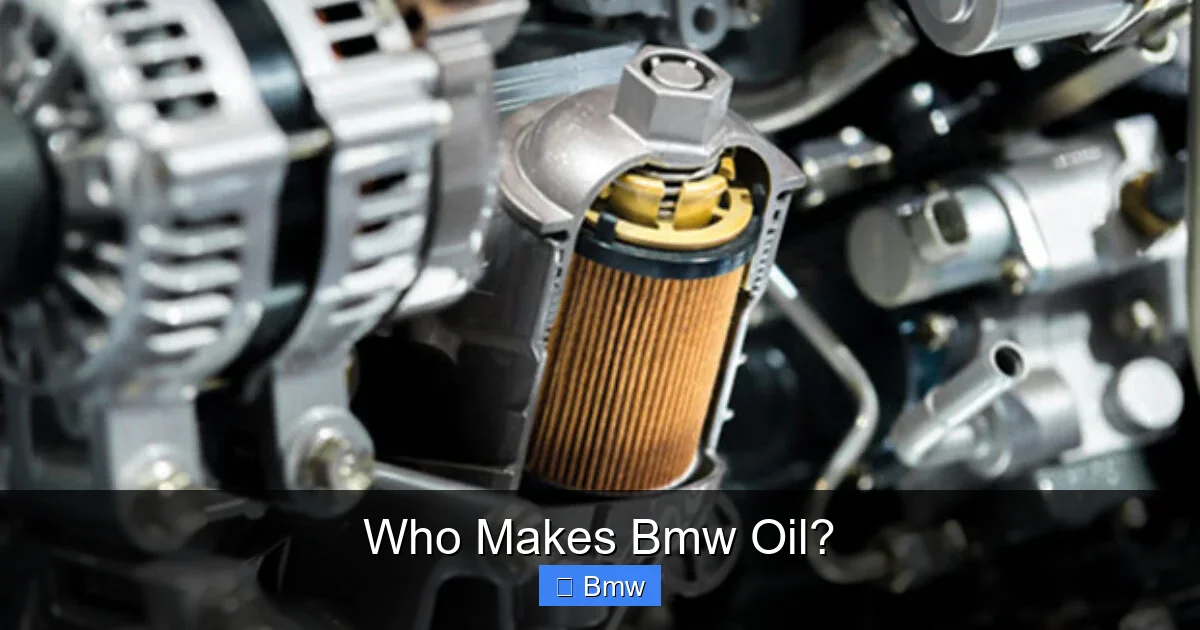
Who Makes Bmw Oil?

Contents
- 1 Key Takeaways
- 2 📑 Table of Contents
- 3 The Great Misconception: Does BMW Make Its Own Oil?
- 4 The Official Manufacturers: BMW’s Lubricant Partners
- 5 Decoding the Label: What “BMW-Approved” Really Means
- 6 How to Know What’s in Your “BMW” Bottle
- 7 Practical Advice: Should You Care Who Makes It?
- 8 Conclusion: An Engineering Partnership, Not a Factory
- 9 Frequently Asked Questions

Liquid Car Polish
Interior Cleaner Spray

Engine Flush Cleaner

Car Trash Can
BMW does not manufacture its own motor oil. Instead, the company partners with major global oil companies like Castrol, Mobil 1, and Shell to develop and produce its branded lubricants to exact specifications. These partnerships ensure the oil meets BMW’s rigorous performance standards for their high-performance engines. Understanding this helps you make informed choices about maintenance, whether you use BMW-branded oil or a qualifying aftermarket equivalent that meets the same specs.
Key Takeaways
- BMW is not an oil company: BMW designs engines and specifications but outsources all motor oil production to certified global lubricant manufacturers.
- Primary partners are Big Oil: The main manufacturers of “BMW” branded oil are industry giants like Castrol (most common), Mobil 1, and Shell, who produce it in their own facilities.
- Specification trumps brand: The most critical factor is that the oil meets BMW’s current specification (e.g., LL-04, LL-17 FE+), not necessarily that it has a BMW label.
- OEM vs. aftermarket is a false choice: High-quality aftermarket oils from brands like Liqui Moly, Ravenol, or Motul often exceed OEM specs and are manufactured to the same or better standards.
- Your dealer’s oil is branded, not made by BMW: The “BMW” or “BMW TwinPower Turbo” oil you buy at the dealership is manufactured by one of their partner companies under strict license.
- Always check your owner’s manual: Your BMW’s required oil specification is non-negotiable and is the single most important piece of information for selecting oil.
📑 Table of Contents
The Great Misconception: Does BMW Make Its Own Oil?
If you own a BMW or are just curious about the brand, you’ve likely seen the “BMW” or “BMW TwinPower Turbo” labels on bottles of motor oil at the dealership or auto parts store. It’s a natural assumption that the iconic Bavarian carmaker, known for its engineering prowess, would also refine and blend its own crude oil into high-performance lubricants. After all, they make everything from the engine block to the iDrive system. But here’s the surprising truth: BMW does not manufacture a single drop of motor oil. The company is an automotive original equipment manufacturer (OEM), not a petroleum refinery.
So, who makes BMW oil? The answer is a fascinating look into the world of corporate partnerships, chemical engineering, and strict quality control. BMW sets the incredibly demanding performance standards and specifications that any oil must meet to carry its name. Then, they contract this work to a small, elite group of the world’s largest and most sophisticated lubricant producers. These partners use their proprietary base stocks and additive packages to formulate a product that not only meets but often exceeds BMW’s benchmarks. Think of BMW as the architect who designs an ultra-secure, high-tech building, and then hires a world-renowned construction firm with the specific expertise and materials to build it exactly to plan.
Why Doesn’t BMW Make Its Own Oil?
The decision is pure business and focus logic. Building and operating a refinery, along with the immense research & development infrastructure for lubricant chemistry, is a multi-billion dollar endeavor. Companies like ExxonMobil, Shell, and BP have spent over a century mastering this science. For BMW, the core competency is vehicle dynamics, engine design, and luxury integration. Outsourcing fluid engineering allows them to leverage the deepest expertise in the field while maintaining absolute control over the final product’s performance through their specification process. It’s a model used by virtually every premium automaker, from Mercedes-Benz (which partners with Mobil 1 and others) to Porsche (which has long-standing relationships with various suppliers).
The Official Manufacturers: BMW’s Lubricant Partners
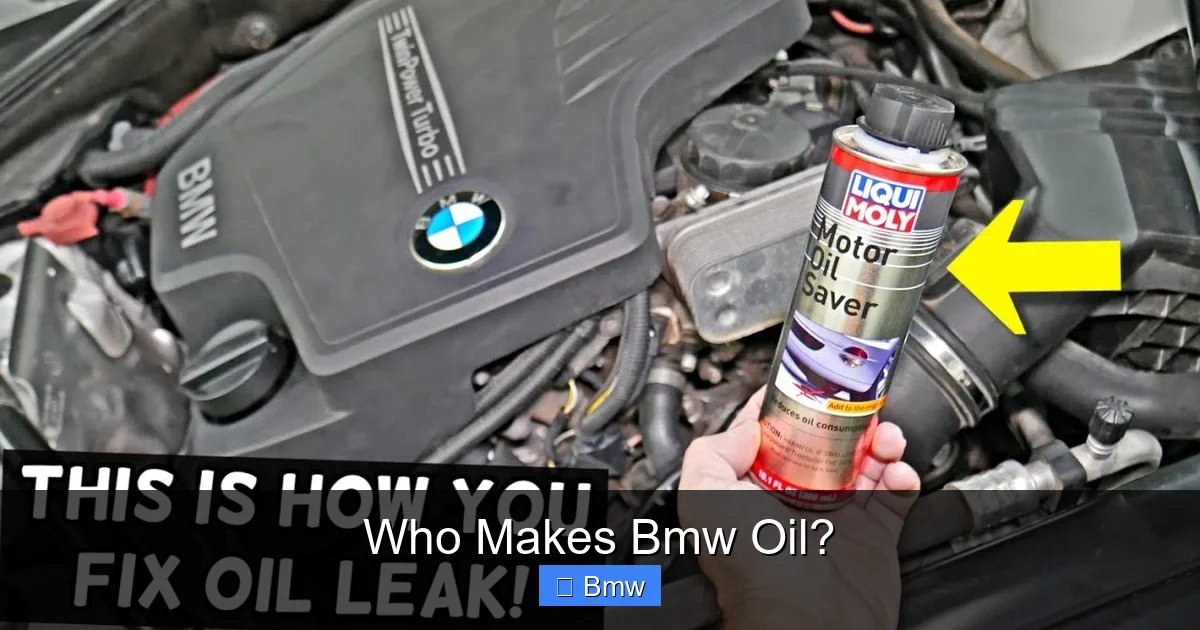
BMW maintains a formal, rigorous approval process for lubricant manufacturers. To become a licensed producer of “BMW” branded oil, a company must submit formulations for exhaustive testing in BMW’s own engineering labs and on test benches and in real-world vehicles. Only after passing these trials are they granted the license to produce and bottle oil under the BMW name. The “who” is a rotating cast of the oil industry’s elite, with one partner typically dominating the supply for specific regions and specifications.
Visual guide about Who Makes Bmw Oil?
Image source: i.ytimg.com
Castrol: The Long-Standing Primary Partner
For decades, Castrol has been the most visible and widely available manufacturer of BMW-branded oil, particularly in North America and Europe. The iconic “BMW TwinPower Turbo” label you see is almost always a Castrol product. Their relationship is so deep that many BMW factory fills and dealership-supplied oil comes directly from Castrol’s production lines. Castrol’s expertise in formulation, particularly with their proprietary Power 1 technology, aligns perfectly with BMW’s needs for high shear stability, deposit control, and fuel efficiency. When you buy a bottle of “BMW 0W-30 LL-04” from a dealership, you are very likely buying a Castrol product.
Mobil 1: The Premium Performance Specialist
Mobil 1, part of ExxonMobil, is another key licensed manufacturer. Their partnership is often highlighted in marketing for BMW’s high-performance M models and vehicles requiring the latest fuel-efficient specifications. Mobil 1’s reputation in motorsports and premium synthetic lubrication makes them a natural fit for BMW’s most demanding engines. In some markets and for specific oil specs like the older BMW LL-01, Mobil 1 was the exclusive or primary formulator. Their involvement ensures that BMW-branded oil benefits from cutting-edge research in areas like extreme temperature protection and longevity.
Shell and Others: A Global Network
In various global regions, other giants step in. Shell is a significant manufacturer of BMW-branded oils in parts of Europe and Asia. Their Helix brand technology is adapted to meet BMW’s specs. Even Pennzoil (part of Shell) has produced oils for BMW in certain markets. The key takeaway is that the manufacturer can change based on the specific oil specification (LL-04 vs. LL-17 FE+), the region you’re in, and supply chain logistics. BMW’s quality control ensures that whether the bottle was filled by Castrol in Germany or Mobil 1 in Belgium, the product inside meets the identical BMW specification.
Decoding the Label: What “BMW-Approved” Really Means
This is where the concept of “who makes it” gets nuanced. You’ll see two main types of oil related to BMW:
Visual guide about Who Makes Bmw Oil?
Image source: engineoiljournal.com
- BMW-Branded Oil: This is the oil sold with the BMW logo on the bottle (e.g., “BMW TwinPower Turbo”). It is manufactured by one of their licensed partners (Castrol, Mobil 1, Shell) under a strict agreement. You are paying for the BMW brand assurance and convenience.
- BMW-Specified / Approved Oil: This is any oil from any manufacturer that has passed BMW’s rigorous testing and is listed on the official BMW approval list for a given specification (e.g., has BMW LL-04 approval). This includes oils from brands like Liqui Moly, Ravenol, Motul, Red Line, and Amsoil. These companies are not bottling “BMW” oil; they are making their own premium oil that independently meets or exceeds BMW’s standards.
The specification code is the most important thing on the bottle. LL-04 (LongLife-04) is for most modern BMWs with and without particulate filters. LL-17 FE+ (Fuel Economy Plus) is for the newest engines requiring extreme fuel efficiency. LL-01 is for older models (pre-2014ish). An oil with the correct spec will protect your engine just as well as the branded bottle, regardless of who filled it. For a deep dive into understanding these specs and choosing the right one for your specific model, you should consult The Ultimate Guide To Bmw Car Engine Oil.
The “OEM” Bottle vs. The Aftermarket Bottle
Many enthusiasts debate whether to use the dealership-sourced “OEM” branded oil or a high-quality aftermarket alternative. The reality is they are often chemically very similar or identical. The licensed partner uses their own base oil stocks and additive packages to create a formula that passes BMW’s tests. An aftermarket brand like Ravenol will use its own, possibly superior, chemistry to pass those same tests. The performance difference on the street is usually negligible if both meet the correct spec. The choice often comes down to price, brand loyalty, and specific additive preferences (e.g., some aftermarket oils have higher levels of anti-wear additives like molybdenum).
How to Know What’s in Your “BMW” Bottle
Curiosity often strikes when holding that familiar blue and white bottle. Is it Castrol? Mobil 1? The answer isn’t always on the front label, but it’s usually on the back or bottom in fine print. You must look for the “BBl” or “Manufactured for” line.
Visual guide about Who Makes Bmw Oil?
Image source: i.ytimg.com
- Look for the fine print: On the back label, you’ll find text like “Distributed by BMW of North America” or “Manufactured for BMW Group.” Below that, it will often state “Product of Germany” or “Packed for BMW by Castrol Limited” or “by ExxonMobil.” This is your definitive source.
- Check the bottle code: Some bottles have a code that can be traced back to the production facility. Online communities have compiled lists correlating BMW oil part numbers to their manufacturer.
- Regional differences: In the US, Castrol has historically been the primary packer. In the UK and parts of Europe, you’ll find more Mobil 1 and Shell. In the Middle East, different partners may be used.
This transparency is required by law but is often overlooked. The next time you’re at the parts counter, flip the bottle over. You’ll likely find the name of the company that actually made the product you’re buying. It’s a fascinating glimpse into the global supply chain behind a single component.
Practical Advice: Should You Care Who Makes It?
For the vast majority of BMW owners, the manufacturer’s name on the bottle is a point of trivia, not a critical performance factor. Here is the practical hierarchy of what matters:
- 1. Correct Specification (LL-XX): This is non-negotiable. Using an oil that does not meet your engine’s required BMW specification is the single biggest mistake you can make. It can lead to premature wear, turbocharger failure, or emissions system damage. Always verify the spec in your owner’s manual.
- 2. Viscosity (e.g., 0W-30, 5W-30): Using the wrong viscosity can affect cold-start protection, fuel economy, and high-temperature stability. Follow the manual.
- 3. Authenticity: Buy from reputable sources (dealership, major auto parts stores, trusted online retailers) to avoid counterfeit oil, which is a real problem.
- 4. Manufacturer (Brand): Once the first three are satisfied, choose a brand you trust at a price point you’re comfortable with. Whether it’s the BMW-branded Castrol, a high-end Ravenol, or a bulk purchase of Mobil 1 Extended Service, you are making a fine choice.
A common point of confusion is oil capacity. Even with the perfect oil, using the wrong amount can be disastrous. If you’re unsure about your specific model’s capacity, resources like How Much Oil Does A Bmw X3 Take provide model-specific data to prevent over or under-filling.
The Aftermarket Advantage: Why Some Choose Non-BMW Brands
Many seasoned BMW owners and independent mechanics prefer top-tier aftermarket oils for a few reasons:
- Value: You can often buy a superior 5-quart jug of Liqui Moly or Motul for the same price or less than a 1-quart BMW-branded bottle from the dealer.
- Specialized Formulations: Brands like Ravenol (a German company) are famous for their ester-based oils, which offer exceptional boundary lubrication and are favored for high-RPM, high-heat applications. Liqui Moly is renowned for its additive packages focused on cleanliness.
- Transparency: Aftermarket brands are often more forthcoming about their exact base stock composition (Group III, IV, V) and additive levels, which appeals to technical enthusiasts.
The message is clear: you do not need a BMW label on the bottle to have the best possible protection for your engine. The specification is the key.
Conclusion: An Engineering Partnership, Not a Factory
So, to definitively answer “Who makes BMW oil?”: It is made by the world’s leading lubricant manufacturers—primarily Castrol, Mobil 1, and Shell—under strict license and specification from BMW. The Bavarian Motor Works provides the engineering requirements, performance targets, and quality audits. Their partners provide the chemical science, refining, and production. This symbiotic relationship allows BMW to guarantee a product that meets the extreme demands of its high-performance, turbocharged engines without the colossal investment of building an oil empire from the ground up.
As a BMW owner, your focus should be laser-targeted on the oil specification, not the label on the bottle. Whether you choose the convenience and brand assurance of BMW TwinPower Turbo (made by Castrol) or opt for a respected aftermarket equivalent that carries the required LL-04 or LL-17 FE+ specification, you are providing your engine with exactly what it needs. The “who” behind the blending is less important than the “what” inside the bottle—and that “what” is dictated by BMW’s engineering, fulfilled by their chosen manufacturing partners. For those keeping their BMW for the long haul, understanding this system empowers you to make savvy, cost-effective decisions without compromising on the protection your precision-engineered vehicle deserves.
Frequently Asked Questions
Is the oil sold at BMW dealerships actually made by BMW?
No. The oil sold at BMW dealerships under the “BMW” or “BMW TwinPower Turbo” brand is manufactured by licensed partners like Castrol, Mobil 1, or Shell. BMW sets the formulation standards and quality controls, but the physical production happens at the facilities of these major oil companies.
Can I use regular Valvoline or Pennzoil in my BMW instead of BMW-branded oil?
You can, but only if that specific Valvoline or Pennzoil product carries the official BMW specification approval (e.g., LL-04, LL-17 FE+) for your engine. Many major brands have lines that meet these specs. The brand name is irrelevant; the specification code is everything.
Is aftermarket oil like Liqui Moly or Ravenol better than BMW-branded oil?
“Better” is subjective. Top-tier aftermarket oils often use more advanced or ester-rich base stocks and can exceed the minimum requirements of a BMW spec. They can offer excellent performance and value. The BMW-branded oil is guaranteed to meet the spec. Both are excellent choices when they carry the correct BMW approval for your vehicle.
How can I find out which company actually made the bottle of BMW oil I bought?
Check the small print on the back or bottom label of the bottle. It will state something like “Manufactured for BMW by Castrol Limited” or “Packed by ExxonMobil.” This is the definitive source. The manufacturer can vary by region and oil specification.
Does using non-BMW branded oil void my warranty?
No, as long as the oil you use meets the exact specification (LL-XX) required in your owner’s manual and you keep your receipt as proof. BMW cannot require the use of their branded oil to maintain warranty coverage, only that the product meets their published specification.
What’s the difference between BMW LL-04 and LL-17 FE+ oil?
LL-04 is the standard long-life specification for most modern BMWs (2014 and newer), including diesels and gas engines, with or without particulate filters. LL-17 FE+ (Fuel Economy Plus) is a newer, more stringent spec for the latest engines (starting around 2017-2018) that prioritizes extreme fuel efficiency and low viscosity, often for gasoline engines only. Always use the spec your owner’s manual calls for.