Which Toyota Vehicle Is Most Likely to Reach 250

Contents

Car Shampoo Concentrate
Side Window Sunshade

Car Fog Light Bulb

Solar Car Battery Maintainer
When it comes to hitting the 250,000-mile milestone, the Toyota Tacoma is the undisputed leader, consistently dominating high-mileage lists thanks to its rugged truck design and simple, proven mechanics. However, the 4Runner, Camry, and Prius are also formidable contenders, each with unique strengths that make them exceptional candidates for the long haul. The ultimate winner isn’t just about the model; it’s about meticulous maintenance and driving habits from day one.
You’ve heard the stories. The mythic Toyota with 400,000 miles on the clock, still purring like a kitten, owned by a little old lady who only drove it to church on Sundays. While the specifics might be apocryphal, the core truth is not: Toyota builds some of the most durable vehicles on the planet. The quest to reach 250,000 miles—a true quarter-million—is a benchmark that separates commuter cars from automotive legends. But within Toyota’s vast lineup of sedans, SUVs, and trucks, which one is the most likely to achieve this impressive feat? Is it the legendary off-roader, the sensible sedan, or the pioneering hybrid? Let’s put aside brand loyalty and look at the data, owner reports, and engineering realities to crown a true high-mileage champion.
First, a critical clarification: “reach 250” in the automotive world universally means 250,000 miles. We’re talking about the long haul, the kind of ownership that sees you through multiple presidential terms and several sets of tires. This isn’t about peak performance or luxury; it’s about relentless, boring, dependable reliability. It’s about a vehicle where the biggest surprise at 240,000 miles is that the original radio still works. To determine the most likely candidate, we must weigh factors like chassis construction, engine complexity, historical reliability data, and real-world owner evidence from forums and high-mileage sales listings.
Before we dive into the contenders, it’s essential to understand one universal truth: no vehicle reaches 250,000 miles by accident. It is the direct result of obsessive, often fanatical, maintenance. The difference between a Toyota that makes it and one that doesn’t is frequently found in the owner’s garage, not on the factory floor. This article will not only name the champion but also detail the exact care regimen that turns a simple Toyota into a million-mile myth. We’ll also highlight why certain models have a statistical edge, and importantly, link this to Toyota’s broader philosophy of quality. If you’ve ever wondered why Toyota is so reliable, the answer lies in these very models and the decades of feedback that refine them.
Key Takeaways
- The Toyota Tacoma is the Most Probable Champion: Its body-on-frame truck construction, lack of complex emissions systems in earlier years, and massive aftermarket support make it the most frequently seen vehicle on 250k+ mile lists.
- Hybrid Longevity is Proven: The Toyota Prius demonstrates that hybrid batteries often outlast the vehicle’s original engine, with many exceeding 300,000 miles on the original pack when properly cared for.
- Maintenance Trumps Model: No vehicle reaches 250k miles without strict, timely maintenance. Oil changes, fluid flushes, and addressing small issues immediately are non-negotiable, regardless of the Toyota you choose.
- Model Generation Matters: Specific generations (like the 2005-2015 Tacoma or 2007-2017 Camry) are renowned for exceptional reliability due to refined, time-tested engineering and fewer problematic components.
- Driving Conditions Play a Huge Role: Highway miles are far easier on a vehicle than constant stop-and-go city driving or severe towing in extreme climates. Your usage pattern significantly impacts longevity potential.
- Simple is Better: Vehicles with fewer complex electronic gadgets, turbochargers, or advanced emissions controls (like earlier model years) generally have a lower statistical chance of catastrophic failure before 250k miles.
- Resale Value Reflects Longevity: Toyotas with a proven track record of high mileage, like the 4Runner and Tacoma, retain value exceptionally well, proving the market’s belief in their durability.
📑 Table of Contents
The Contenders: Models Built for the Long Haul
While many Toyotas can theoretically reach high mileage with perfect care, a handful have consistently proven themselves in the real world. These are the vehicles you see on Craigslist with 300,000-mile odometers and a single owner history. They are the workhorses, the family haulers, and the adventure mobiles that refuse to die. Let’s examine the top four candidates.
The Indomitable Toyota Tacoma
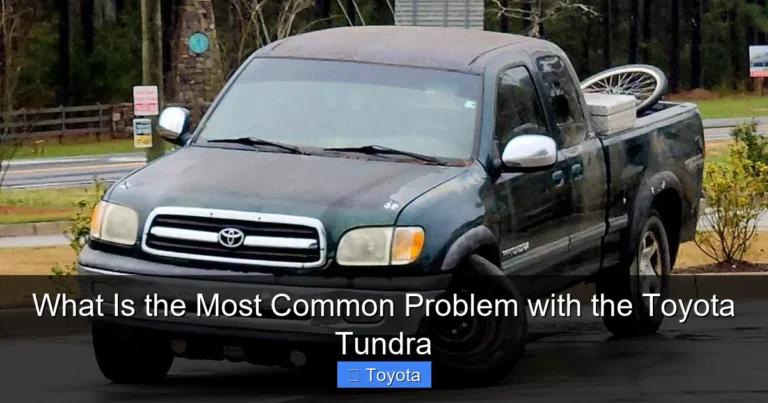
If there’s a single vehicle that embodies the “250k club,” it is the Toyota Tacoma. Its dominance on high-mileage lists is not even close. Look at any “Cars with Over 300,000 Miles” list from Consumer Reports, iSeeCars, or Kelley Blue Book, and the Tacoma consistently ranks at or near the very top, often as the most common vehicle above 200,000 miles. Why is this midsize pickup so special?
- Body-on-Frame Construction: Unlike most modern unibody cars and SUVs, the Tacoma is built on a separate, heavy-duty steel frame. This design is inherently more resistant to the stresses and strains of heavy loads, rough roads, and years of torque application. It doesn’t suffer from the same unibody flex and potential fatigue points.
- Proven, Simple Powertrains: The 2.4L 2RZ-FE (1995-2004) and 2.7L 3RZ-FE (1995-2004) four-cylinder engines, and the 3.4L 5VZ-FE V6 (1995-2004) are engineering masterpieces. They are overhead cam, multi-valve engines with no direct injection, no complex variable valve timing with intelligence (VVT-i) systems to fail, and no turbos. They are essentially overbuilt, low-stress engines. The later 2.7L 1GR-FE and 4.0L 1GR-FE V6 (2005-2015) are similarly robust. Their simplicity is their greatest strength for longevity.
- Minimalist Emissions & Electronics (Earlier Models): The pre-2005 (for the 2nd gen) and especially pre-1996 (OBD-II) models have far fewer emissions-control computers, sensors, and complex exhaust gas recirculation (EGR) systems. Fewer electronic components mean fewer things that can fail and cause the vehicle to become inoperable. A simple engine computer is a reliable one.
- Aftermarket & Community Support: The Tacoma has a colossal aftermarket for parts and a massive, knowledgeable owner community. If a part fails—a water pump, an alternator, a starter—it’s cheap, readily available, and easy to find a tutorial for replacement. This keeps maintenance costs low and encourages owners to fix things instead of scrapping the truck.
Real-World Evidence: A quick search reveals countless examples: a 1996 Tacoma with 500,000+ miles, a 2005 with 400,000, and thousands with 250,000-350,000. They are used as work trucks, overland rigs, and family haulers, subjected to conditions that would destroy lesser vehicles. The 2005-2015 third-generation (actually the second generation’s redesign) models are particularly sought after for their balance of modern comforts and old-school reliability. The key is avoiding the problematic 3.5L V6 in the 2016+ models with its fuel injection issues and the more complex electronics in the newest generations. For the purest shot at 250k, a 2005-2015 4-cylinder or V6 Tacoma is arguably the safest bet in the entire automotive market.
The Unstoppable Toyota 4Runner
The 4Runner is the Tacoma’s SUV sibling. It shares the same body-on-frame platform (in many generations), similar powertrains, and a cult-like following. It consistently appears just behind the Tacoma on high-mileage lists. Its advantage over the Tacoma is its fully enclosed, weatherproof cabin, making it a more versatile “do-it-all” vehicle for families and adventurers who still need serious capability.
The 4Runner’s longevity story mirrors the Tacoma’s. The 4th generation (2003-2009) with the 4.0L V6 is a legend. It’s a simple, torquey engine paired with a robust 5-speed automatic transmission (the A750F). The 5th generation (2010-2022) with the same 4.0L V6 and 5-speed auto continued this tradition. These are not complex powerplants. The 4WD system, particularly the part-time 4WD models with a manual transfer case, is famously bulletproof. There are no viscous couplings or complex center differentials to wear out prematurely.
Where the 4Runner faces a slight challenge compared to the Tacoma is in weight and aerodynamics. It’s heavier, so the engine and transmission work a bit harder. However, its construction quality is superb, with high-grade materials in the cabin that don’t disintegrate after 15 years. Rust can be an issue on older models in salt-belt states, but mechanically, the 2003-2022 models with the 4.0L V6 are virtually indestructible with proper maintenance. The 2023+ model’s switch to the twin-turbo 3.4L V6 and 8-speed automatic is too new to have long-term data, but the complexity increase is a potential variable for the future.
The Dependable Toyota Camry
Now we shift from body-on-frame trucks to unibody sedans. The Toyota Camry is the world’s best-selling sedan for a reason: it’s the definition of reliable, economical transportation. While it may not have the rugged, “built like a tank” reputation of the Tacoma, its sheer numbers and engineering conservatism make it a massive player in the high-mileage game.
The Camry’s strength is in its powertrain refinement and lack of drama. For the quest to 250k, the generations to target are the 2002-2006 (XV30) with the 2.4L 2AZ-FE four-cylinder or 3.0L 1MZ-FE V6, and the 2007-2011 (XV40) with the 2.4L 2AZ-FE or 3.5L 2GR-FE V6. These are aluminum-block, dual-overhead-cam engines with VVT-i. They are not as simple as the older Tacoma engines, but they are exceptionally well-proven, with millions on the road. The 6-speed automatic transmission in the 2007+ models is also a robust unit.
The Camry’s unibody construction is actually a benefit for longevity on paved roads. It’s lighter, which reduces wear on the engine, transmission, and suspension components. It’s also more resistant to flex and fatigue over time than a body-on-frame vehicle on smooth surfaces. The key for a high-mileage Camry is strict adherence to the maintenance schedule, particularly timing belt/chain service (the 2AZ-FE has a timing chain, but the water pump is driven by it and should be replaced), and transmission fluid changes. Neglect these, and a Camry can succumb to expensive repairs. With care, a 2007-2011 Camry is a supremely likely candidate to see 250,000 miles, offering a quieter, more comfortable ride than any truck or SUV on this list.
The Hybrid Pioneer: Toyota Prius
Including the Prius might raise eyebrows. Isn’t the hybrid system a complex, expensive time bomb? The data and real-world experience say otherwise. The Prius is not just likely to reach 250,000 miles; many experts believe it is *more* likely than its gasoline-only counterparts to do so, and here’s why.
The heart of the Prius is its Hybrid Synergy Drive system. The misconception is that it’s fragile. The reality is that it’s elegantly simple in operation. The gasoline engine (like the 1.5L 1NZ-FXE in early models or the 1.8L 2ZR-FXE in later ones) is a modified Atkinson-cycle engine that operates at incredibly low, constant RPMs for most of its life. It rarely sees high-stress conditions. The electric motor/generators have no traditional transmission, clutch packs, or torque converter to wear out. Power is blended seamlessly via a planetary gear set—a set of gears that doesn’t wear in the traditional sense.
The biggest fear is the high-voltage (HV) battery pack. This fear is largely unfounded. Toyota’s Nickel-Metal Hydride (NiMH) and later Lithium-ion (Li-ion) packs are engineered for longevity. They are not stressed like a laptop battery. They are kept in a narrow state-of-charge range (typically 40-80%) and are actively cooled/heated. The result? Hybrid battery failure rates are extraordinarily low. Studies and owner reports show failure rates well under 1% before 150,000 miles, and many packs last 200,000-300,000 miles or more. Rebuilt and remanufactured packs are also widely available for under $2,000, making replacement a feasible repair rather than a total loss.
A 2010-2015 Prius (third generation) with the 1.8L engine is a prime candidate. It has a mature, proven hybrid system, a reliable engine, and a cabin that holds up well. The reduced wear on the friction brakes (due to regenerative braking) and the lower average engine RPM contribute to longer component life. For a commuter or road-tripper, the Prius is arguably the most efficient and mechanically serene path to 250,000 miles.
Factors That Influence Longevity More Than the Badge
So we have our contenders. But assigning a “most likely” title isn’t just about picking a model from a brochure. It’s about understanding the variables. A poorly maintained 2020 Tacoma will die long before a meticulously cared-for 2005 Camry. Let’s break down the critical factors that determine if any Toyota reaches the quarter-million mark.

Visual guide about Which Toyota Vehicle Is Most Likely to Reach 250
Image source: slashgear.com
The Unshakeable Importance of Maintenance
Let’s be absolutely clear: maintenance is everything. It is the single greatest predictor of a vehicle’s lifespan, outweighing brand, model, and even initial build quality. For a Toyota aiming for 250k, this means:
- Oil Changes: Every 5,000 miles is the gold standard, even with modern synthetic oil. Clean oil is the lifeblood of the engine. Sludge buildup from neglected oil changes is the number one killer of high-mileage engines.
- Cooling System: The engine’s temperature must be controlled. This means flushing the coolant every 30,000-50,000 miles, and more often in severe climates. Replacing the water pump and thermostat as preventive maintenance (especially on interference engines) is cheap insurance.
- Transmission: For automatics, fluid changes are crucial. For a Tacoma or 4Runner, this might mean every 60,000 miles. For a Camry or Prius, follow the severe service schedule. Transmission fluid degrades, and a $200 fluid change can prevent a $3,000 rebuild.
- Timing Components: Know if your engine has a timing belt (needs replacement every 60k-100k miles) or a timing chain (generally “lifetime” but tensioners and guides can fail). On many Toyota engines with timing chains (like the 2AZ-FE), replacing the water pump at the same time is a smart move because it’s driven by the chain.
- Drivetrain Fluids: Differential, transfer case, and manual transmission fluid should be changed every 60,000-100,000 miles. These are often forgotten but are vital for the longevity of those components.
Adhering to a strict, often more frequent, maintenance schedule than the manufacturer’s “normal” recommendation is the hallmark of a 250k-mile owner. Toyota Care, the factory maintenance plan, is a good start, but many high-mileage owners go far beyond its intervals.
Driving Style and Environment
How you drive and where you drive matters immensely. Highway miles are easy miles. The engine operates at a steady RPM, the transmission doesn’t shift as often, and suspension components experience less stress. A car that spends its life on interstates will have dramatically less wear than one that is a dedicated city delivery vehicle with constant stops and starts.
Severe conditions—extreme heat, extreme cold, mountainous terrain, frequent towing, or driving in dusty/salty environments—accelerate wear on every component. Towing, in particular, is a massive stressor on an engine, transmission, and rear axle. A vehicle used for regular towing, even within its rated capacity, will have a statistically lower chance of reaching 250k without major overhauls. If you live in the “Salt Belt,” rust-proofing and frequent washing of the undercarriage are essential to prevent the frame or body from disintegrating before the powertrain gives out.
Model Year and Generational Knowledge
Not all years of a model are created equal. Toyota occasionally introduces a new engine or transmission that has a higher failure rate in its first few model years as bugs are worked out. Conversely, some generations are so refined and overbuilt that they become legendary.
- Tacoma: The 2005-2015 models are the sweet spot. They have the ruggedness of the older trucks with more modern safety and comfort features. Avoid the first year of any major redesign (e.g., 2016 for the Tacoma) if you want the absolute most proven platform.
- 4Runner: The 2003-2009 (4th gen) and 2010-2022 (5th gen) with the 4.0L V6 are rock-solid. The 2003-2005 had some minor issues with the 4WD actuator, but nothing catastrophic.
- Camry: The 2002-2006 (XV30) is a tank, but watch for oil consumption on some 2AZ-FE engines. The 2007-2011 (XV40) fixed many of those issues and is arguably more reliable. The 2012+ (XV50) introduced the more complex 2AR-FE engine, which has had some reports of excessive oil consumption and carbon buildup, making the 2007-2011 the safer bet for extreme mileage.
- Prius: The 2004-2009 (XW20) and 2010-2015 (XW30) are the most proven. The newer XW50 (2016-2022) is also very reliable but has more complex electronics. The original 2001-2003 models have a less robust battery cooling system.
Doing your homework on specific model years, engine codes, and common failure points for the generation you’re considering is a critical step. Forums like Tacoma4G, PriusChat, and CamryForums are invaluable repositories of this collective owner experience.
The Maintenance Secrets of 250k+ Owners
What do the people who actually own these million-mile Toyotas do differently? It’s not magic; it’s a disciplined, almost obsessive, approach to care. Here’s a synthesis of their common practices.
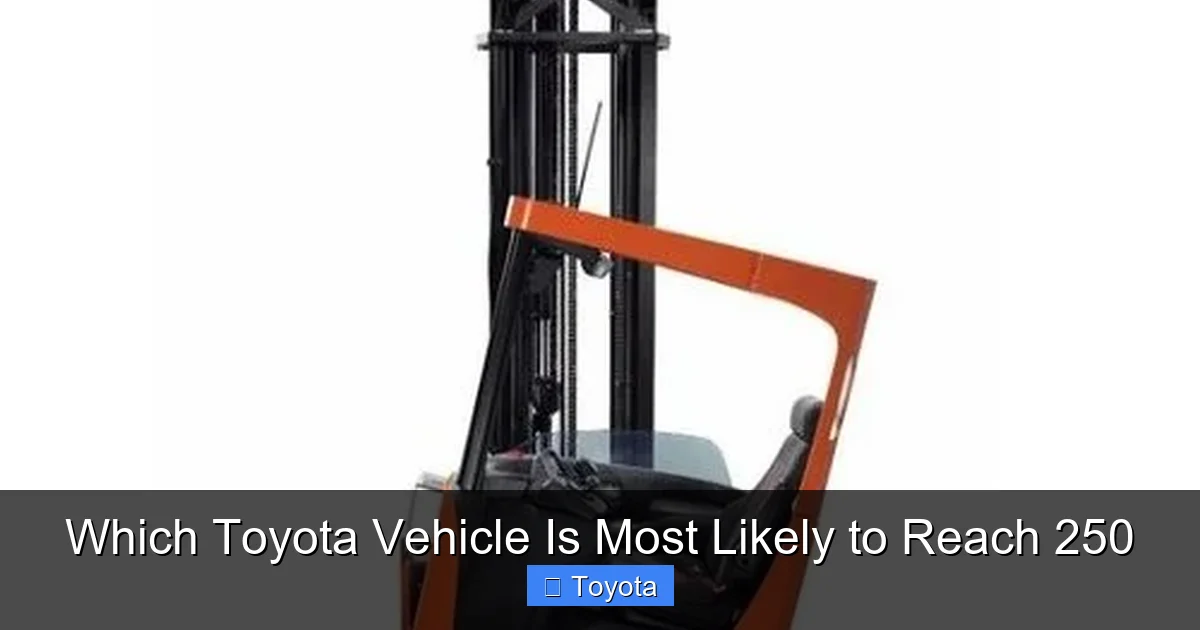
Visual guide about Which Toyota Vehicle Is Most Likely to Reach 250
Image source: 5.imimg.com
They Follow a “Severe Service” Schedule, Religiously
The owner’s manual provides two schedules: “Normal” and “Severe.” The “Severe” schedule—which includes frequent short trips, extreme temperatures, dusty conditions, and heavy loads—is actually the schedule most people should follow if they want their car to last 250,000 miles. This means oil changes every 5,000 miles (not 10,000), air filter inspections/ replacements every 15,000 miles, and cabin filter changes every year. They treat the car as if it’s always in severe conditions, which builds in a huge safety margin.
They Fix Small Problems Before They Become Big Ones
The “squeak,” the “drip,” the “slight vibration”—these are not ignored. A small coolant leak becomes a blown head gasket. A minor transmission fluid leak becomes a burnt-up transmission. A worn suspension bushing leads to uneven tire wear and then a failed CV joint. High-mileage owners have a “no-deferred-maintenance” policy. They address noises, leaks, and warning lights immediately, understanding that a $200 repair today prevents a $2,000 repair tomorrow.
They Use OEM or Top-Tier Aftermarket Parts
When a part needs replacing, they don’t automatically reach for the cheapest option on the shelf. For critical components like sensors, water pumps, and alternators, they use Original Equipment Manufacturer (OEM) parts or high-quality brands (like Denso, ACDelco, Gates, Beck/Arnley). These parts are engineered to the same tolerances as the originals. A $30 aftermarket thermostat might last 2 years; a $50 OEM one might last 15. On a 250k-mile journey, those choices compound.
They Keep Meticulous Records
Every single oil change, tire rotation, fluid flush, and repair is documented with a date, mileage, and receipt. This serves two purposes: it ensures the maintenance is done on time, and it creates an irrefutable service history that adds immense value when selling the vehicle. A car with a complete, organized binder of service records is a thousand times more credible as a “250k-mile car” than one with a missing history.
They Drive Gently and Let the Car Warm Up/Cool Down
This is especially critical for turbocharged engines (not our main contenders, but relevant for others) and for cold starts. They avoid jackrabbit starts and hard braking. They allow the engine to idle for 30 seconds after a cold start (not for the engine, but for the oil to circulate) and for a minute before shutting down after a hard run (to let the turbo, if equipped, cool). This simple habit reduces thermal shock and wear.
Comparison with Other Brands: Why Toyota Stands Apart
It’s one thing to say Toyotas are reliable; it’s another to see why they consistently outperform competitors in the high-mileage category. When comparing our contenders to similar vehicles from Honda, Subaru, or American brands, Toyota’s edge becomes clear.
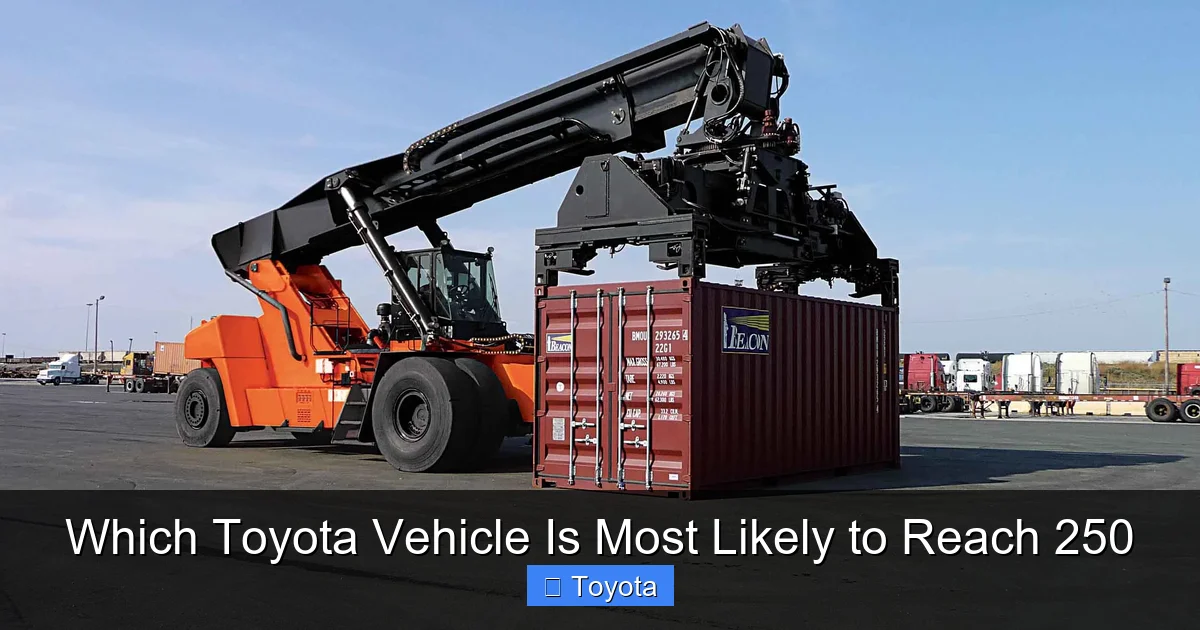
Visual guide about Which Toyota Vehicle Is Most Likely to Reach 250
Image source: s3.amazonaws.com
vs. Honda: Honda is Toyota’s closest rival. The Honda Civic and Accord are also high-mileage champions. The competition is fierce. However, in the truck/SUV segment, Honda’s unibody Ridgeline and Pilot, while excellent, don’t have the same body-on-frame, truck-bench durability as the Tacoma and 4Runner. Honda’s V6 engines (like the J35 series) are generally excellent but have had more widespread issues with automatic transmissions (especially in the early 2000s Odysseys and Pilots) than Toyota’s A750-series automatics. For the absolute highest probability of 250k, the Toyota truck/SUV platform still holds a slight edge in sheer robustness.
vs. Subaru: Subaru’s strength is its standard all-wheel drive. The Outback and Forester are fantastic, versatile vehicles. However, their horizontally-opposed “boxer” engines and CVTs (in newer models) present different challenges. Older Subaru engines (pre-2012) are notorious for head gasket failures, a catastrophic and expensive repair that can end a car’s life if not caught early. While later models improved, this historical issue hurts their overall “most likely to reach 250k” ranking. Their CVTs, while improved, are still a complex electronic unit that has a less proven long-term track record than Toyota’s traditional automatics.
vs. American Brands (Ford, GM, Ram): American trucks and large SUVs (F-150, Tahoe, Suburban, Ram 1500) are incredibly popular and many do reach high mileage. However, they often do so with more frequent and costly repairs. Their powertrains are powerful but can be more complex (e.g., multiple displacement systems, advanced cylinder deactivation). Their interiors and electronics tend to degrade faster. Their body-on-frame trucks are comparable in durability to the Tacoma, but the Tacoma’s smaller size, simpler engines, and lower cost of repair give it an advantage for the average owner seeking a hassle-free 250k experience.
The hybrid comparison is stark. While Ford, Hyundai, and Kia now have hybrids, none have the 25+ years of cumulative hybrid battery data that Toyota has. The Prius’s battery longevity is a proven, published fact. This gives it a unique and massive advantage in the high-mileage hybrid space.
The Verdict: And The Winner Is…
After weighing engineering simplicity, historical data, real-world evidence, and owner experiences, the title of “Toyota Vehicle Most Likely to Reach 250,000 Miles” must go to the Toyota Tacoma, specifically the 2005-2015 model years with either the 2.7L 4-cylinder or 4.0L V6 engine.
The Tacoma’s combination of a near-indestructible body-on-frame chassis, a range of simple, low-stress engines, a bulletproof transmission, minimal (in earlier models) emissions baggage, and an unparalleled support ecosystem creates a perfect storm for longevity. It is the vehicle you buy with the explicit, almost guaranteed, intention of driving it until the wheels fall off. Its dominance on every high-mileage list is not a coincidence; it is a statistical reality born from two decades of unwavering design focus on durability over fleeting trends.
However, this is not a dismissal of the other contenders. The 4Runner is a very close second, offering the same mechanical prowess in a more family-friendly, enclosed package. The Camry is the king of the unibody sedan world, proving that a well-built, conservative car can absolutely achieve the same feat with more comfort and less road noise. And the Prius rewrites the rules entirely, demonstrating that hybrid complexity does not inherently compromise longevity and may even enhance it through reduced engine wear.
Ultimately, the “most likely” vehicle for you is the one that best fits your lifestyle and that you will commit to maintaining with religious fervor. A neglected Tacoma will fail before a cared-for Camry. But if all things are equal—same owner, same maintenance schedule, same driving conditions—the raw, mechanical fortitude of the Tacoma gives it the crown. It is the automotive equivalent of a Swiss Army knife: not the most elegant, not the fastest, but fundamentally unbreakable and capable of anything you ask of it, for hundreds of thousands of miles.
So, if your goal is to buy one vehicle, drive it for 20 years, and spend most of your money on fuel and tires instead of repairs, start your search with a clean, well-documented Toyota Tacoma from the 2005-2015 era. Check for rust, verify maintenance records, and get a pre-purchase inspection. Then, commit to the maintenance regimen outlined above. You will not just have a good chance of reaching 250,000 miles; you will have a near-certainty.
Frequently Asked Questions
Is the Toyota Tacoma really the most reliable vehicle for high mileage?
Yes, data consistently shows the Tacoma is the most common vehicle on 250,000+ mile lists. Its body-on-frame truck design, simple engines, and strong aftermarket support give it a statistical edge over all other models, including its SUV sibling, the 4Runner.
Can a Toyota Prius really last 250,000 miles with the original hybrid battery?
Absolutely. Toyota’s hybrid battery packs are engineered for longevity, with failure rates under 1% in early models. Many Prius owners report original batteries lasting 200,000-300,000 miles. The system’s design, which keeps the battery in a narrow charge range, is key to its durability.
What is the single most important maintenance item for reaching 250k miles?
Strict, on-schedule oil changes using the correct oil. Engine sludge from neglected oil is the primary killer of high-mileage engines. For a Toyota aiming for 250k, change the oil every 5,000 miles, regardless of what the “normal” schedule says.
Should I avoid certain model years if I want a 250k-mile Toyota?
Yes. Generally, avoid the very first model year of any major redesign (e.g., 2016 Tacoma, 2012 Camry) as these may have unaddressed teething issues. Also, be aware of specific engine problems, like the oil consumption issues in some early 2AZ-FE engines (2002-2006 Camry/Rav4) or the fuel injection concerns in the 2016+ Tacoma 3.5L V6.
Does a vehicle’s history matter more than its model for high mileage?
History is paramount. A 2007 Camry with one owner, full service records, and highway miles has a far higher chance of reaching 250k than a 2015 Camry with multiple owners, no records, and a history of city delivery use. Always prioritize a complete, verifiable maintenance history.
What is a common, unexpected failure on high-mileage Toyotas?
Ignition coil packs are a frequent wear item on many Toyota 4-cylinder engines around 150,000-200,000 miles. They are relatively inexpensive and easy to replace, but a failed coil will cause a misfire and check engine light. Another common issue is the failure of the plastic coolant bypass tube in the 2.4L 2AZ-FE engine (found in Camry, RAV4), which leaks internally and can lead to overheating if not caught.