Which Do You Connect First on a Car Battery

Always connect the positive (red) terminal first when jump-starting or installing a car battery to minimize the risk of sparks, short circuits, or electrical damage. Only after the positive cable is securely attached should you connect the negative (black) terminal, preferably to a grounded metal surface away from the battery to prevent dangerous hydrogen gas ignition. This simple sequence ensures safety and protects both you and your vehicle’s electrical system.
In This Article
- 1 Key Takeaways
- 2 📑 Table of Contents
- 3 Which Do You Connect First on a Car Battery
- 4 Understanding Car Battery Basics
- 5 The Correct Order: Which Terminal to Connect First
- 6 Common Mistakes and How to Avoid Them
- 7 Safety Tips for Handling Car Batteries
- 8 When to Replace Your Car Battery
- 9 Real-World Example: Jump-Starting in the Rain
- 10 Data Table: Car Battery Connection Best Practices
- 11 Conclusion
- 12 Frequently Asked Questions
- 12.1 Which terminal should you connect first when jump-starting a car battery?
- 12.2 Why is it important to connect the positive cable first on a car battery?
- 12.3 Can you connect the negative terminal first on a car battery?
- 12.4 What is the correct order for connecting battery cables?
- 12.5 Does connecting battery terminals in the wrong order damage the car?
- 12.6 Which do you connect first on a car battery—positive or negative?
Key Takeaways
- Connect the positive terminal first to reduce the risk of short circuits and sparks.
- Disconnect the negative terminal last when removing the battery for added safety.
- Use insulated tools to prevent accidental contact with metal parts.
- Ensure the vehicle is off before connecting or disconnecting battery terminals.
- Wear safety gloves and goggles to protect against acid and electrical hazards.
- Follow the correct sequence to avoid damaging the car’s electrical system.
📑 Table of Contents
- Which Do You Connect First on a Car Battery
- Understanding Car Battery Basics
- The Correct Order: Which Terminal to Connect First
- Common Mistakes and How to Avoid Them
- Safety Tips for Handling Car Batteries
- When to Replace Your Car Battery
- Real-World Example: Jump-Starting in the Rain
- Data Table: Car Battery Connection Best Practices
- Conclusion
Which Do You Connect First on a Car Battery
Ever found yourself staring under the hood of your car, jumper cables in hand, wondering, “Wait… which one do I connect first?” You’re not alone. Whether you’re jump-starting a dead battery or simply replacing it, knowing the correct order to connect the terminals can mean the difference between a smooth fix and a dangerous mishap. I remember my first time trying to jump-start my old sedan—I was nervous, sweating in the cold, and convinced I was about to fry the car’s electrical system. Spoiler: I didn’t, but only because I took a deep breath and followed the right steps.
Car batteries are powerful—literally. They store enough energy to start your engine, power your lights, and keep your electronics running. But that same power can be risky if mishandled. One wrong move, like connecting the cables in the wrong order, can lead to sparks, damaged electronics, or even an explosion. That’s why understanding the proper sequence—especially which terminal to connect first—isn’t just helpful; it’s essential. In this guide, we’ll walk through everything you need to know about connecting a car battery safely and correctly, with real-world tips and practical advice so you can handle your next battery job with confidence.
Understanding Car Battery Basics
Before we dive into the “which comes first” debate, let’s take a quick look at how a car battery works. Think of your car battery like a rechargeable power pack. It stores electrical energy in chemical form and delivers it when you turn the key. Most cars use a 12-volt lead-acid battery, which has two main terminals: positive (+) and negative (−). The positive terminal is usually marked with a red cover or a “+” symbol, while the negative is black or marked with a “−”.
How a Car Battery Powers Your Vehicle
When you start your car, the battery sends a surge of electricity to the starter motor, which cranks the engine. Once the engine is running, the alternator takes over, recharging the battery and powering the car’s electrical systems. This cycle keeps your vehicle running smoothly. But if the battery is dead or disconnected, that flow of energy is interrupted—and that’s when you might need to jump-start or replace it.
Why Terminal Order Matters
Here’s the key thing to remember: electricity follows the path of least resistance. When you connect jumper cables or reinstall a battery, you’re completing a circuit. If you connect the negative terminal first while the positive is still loose, and that loose cable touches any metal part of the car (which is grounded), you create a short circuit. That can cause sparks, melt cables, or even damage the car’s computer systems.
For example, imagine you’re replacing a battery and you attach the negative cable first. If the positive terminal accidentally touches the car’s frame while you’re fumbling with the cables, boom—sparks fly. That’s not just scary; it can ruin sensitive electronics like your radio, dashboard display, or engine control unit (ECU).
The Correct Order: Which Terminal to Connect First
So, which do you connect first on a car battery? The answer is simple: always connect the positive terminal first, then the negative. This rule applies whether you’re jump-starting a dead battery, installing a new one, or reconnecting after maintenance.
Step-by-Step: Connecting a Car Battery Safely
Let’s walk through the process like you’re doing it right now. Say your battery died overnight, and you’re using jumper cables to get your car running again. Here’s how to do it safely:
- Step 1: Park the donor car close (but not touching) the dead car. Turn off both engines and remove the keys.
- Step 2: Identify the terminals. Look for the red (+) and black (−) markings. The positive terminal is usually larger and may have a red cap.
- Step 3: Connect the red (positive) clamp to the positive terminal of the dead battery. This is the first connection—no exceptions.
- Step 4: Connect the other red clamp to the positive terminal of the good battery.
- Step 5: Connect the black (negative) clamp to the negative terminal of the good battery.
- Step 6: Connect the final black clamp to an unpainted metal surface on the dead car’s engine block or frame—not the battery terminal. This is called grounding, and it reduces the risk of sparks near the battery, where flammable gases may be present.
- Step 7: Start the donor car and let it run for a few minutes to charge the dead battery.
- Step 8: Try starting the dead car. If it starts, leave it running and disconnect the cables in reverse order: negative first, then positive.
Why Positive First?
Connecting the positive terminal first minimizes the risk of a short circuit. Since the negative terminal is grounded to the car’s chassis, attaching it last ensures that the circuit isn’t completed until you’re ready. If you were to connect the negative first and then accidentally touch the positive cable to metal, you’d create a direct path to ground—causing a spark or worse.
Think of it like turning on a water faucet. You don’t want the water (electricity) to flow until everything is properly connected. By attaching positive first, you’re essentially “arming” the system safely, then completing the circuit with the negative connection.
Common Mistakes and How to Avoid Them
Even experienced drivers can make mistakes when handling car batteries. Let’s look at some common errors and how to avoid them.
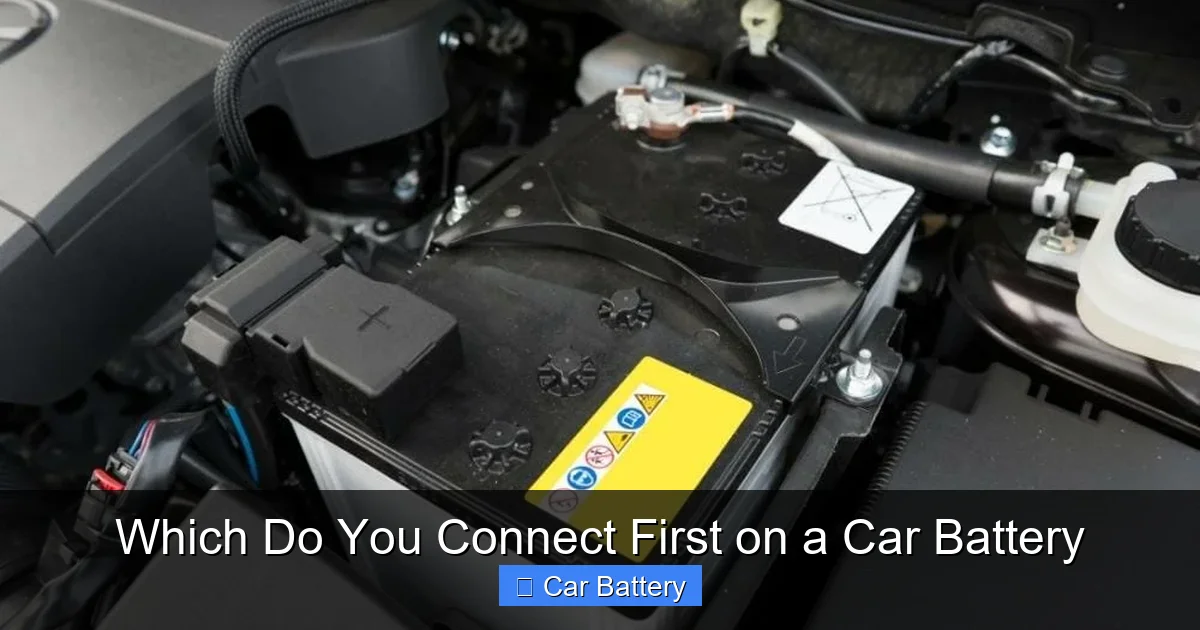
Visual guide about Which Do You Connect First on a Car Battery
Image source: vehiclefreak.com
Connecting Negative First
This is the most common mistake. People often think it doesn’t matter which order they connect the cables, but it absolutely does. Connecting the negative terminal first increases the risk of a short circuit if the positive cable touches any metal part of the car. Always remember: positive first, negative last.
Connecting the Final Negative Clamp to the Battery Terminal
When jump-starting, never connect the final black clamp directly to the negative terminal of the dead battery. Why? Because car batteries can release hydrogen gas, which is highly flammable. A spark near the battery could ignite it. Instead, attach the final clamp to a clean, unpainted metal part of the engine or frame—like a bolt or bracket. This grounds the circuit safely away from the battery.
Using Damaged or Frayed Cables
Jumper cables with cracked insulation or exposed wires are dangerous. They can cause shocks, short circuits, or fires. Always inspect your cables before use. If they’re worn out, replace them. A good set of heavy-duty cables with thick clamps is worth the investment.
Forgetting to Turn Off Electronics
Before connecting or disconnecting a battery, turn off all electronics—lights, radio, AC, phone chargers. These devices draw power and can cause voltage spikes when the battery is reconnected, potentially damaging sensitive components.
Not Waiting Long Enough After Jump-Starting
Once your car starts, don’t shut it off immediately. Let it run for at least 15–20 minutes to allow the alternator to recharge the battery. If you turn it off too soon, the battery may not have enough charge to start the car again.
Safety Tips for Handling Car Batteries
Car batteries contain sulfuric acid and produce explosive gases, so safety should always come first. Here are some essential tips to protect yourself and your vehicle.
Wear Protective Gear
Always wear safety glasses and gloves when working with a car battery. Acid can cause severe burns, and sparks can fly unexpectedly. If battery acid gets on your skin, rinse it off immediately with plenty of water.
Work in a Well-Ventilated Area
Never work on a battery in a closed garage. Hydrogen gas can build up and ignite. Open the garage door or work outside if possible.
Keep Metal Objects Away
Remove jewelry, watches, or tools that could accidentally bridge the terminals. A wrench touching both terminals can create a short circuit, leading to sparks, heat, or even an explosion.
Check for Leaks or Swelling
Before handling a battery, inspect it for cracks, leaks, or swelling. A damaged battery can be dangerous and should be replaced immediately. If you notice a rotten egg smell (sulfur), that’s a sign of a leaking battery—handle with extreme caution.
Dispose of Old Batteries Properly
Car batteries are highly recyclable and contain hazardous materials. Never throw them in the trash. Most auto parts stores or recycling centers will take old batteries for free. In fact, many will even give you a discount on a new battery when you return the old one.
When to Replace Your Car Battery
Even with proper care, car batteries don’t last forever. Most last between 3 to 5 years, depending on climate, driving habits, and maintenance. Here are some signs it’s time for a replacement:
- Slow engine crank: The engine takes longer to start, especially in cold weather.
- Check Engine or Battery Light: These warnings may indicate a charging system problem.
- Swollen or bloated battery case: This is often caused by overheating or overcharging.
- Old age: If your battery is over 4 years old, consider testing it or replacing it proactively.
- Electrical issues: Dim lights, flickering dashboard, or malfunctioning accessories can point to a weak battery.
Testing Your Battery
You don’t need to guess when your battery is failing. Most auto parts stores offer free battery testing. They’ll check the voltage, cold cranking amps (CCA), and overall health. A healthy 12-volt battery should read around 12.6 volts when the car is off and 13.7 to 14.7 volts when the engine is running.
Choosing the Right Replacement
When buying a new battery, match the specifications of your old one. Check your owner’s manual for the correct group size, CCA rating, and reserve capacity. Don’t go for the cheapest option—invest in a quality battery from a reputable brand like Optima, Interstate, or Bosch.
Real-World Example: Jump-Starting in the Rain
Let me share a quick story. Last winter, I was stuck in a parking lot with a dead battery during a downpour. My phone was at 3%, and I had no one to call. I remembered the steps: positive first, negative last, ground the final clamp. I found a dry spot under the hood, wiped off the terminals with a cloth, and carefully connected the cables. I attached the final negative clamp to a bolt on the engine block—not the battery. After a few minutes, the car started. I let it run for 20 minutes, then drove home safely.
The rain made it slippery and stressful, but knowing the correct order gave me confidence. That’s the power of preparation. Whether you’re in a storm or just doing routine maintenance, following the right steps keeps you safe and your car running.
Data Table: Car Battery Connection Best Practices
| Step | Action | Why It Matters |
|---|---|---|
| 1 | Connect red (positive) clamp to dead battery’s positive terminal | Starts the circuit safely; reduces risk of short |
| 2 | Connect other red clamp to good battery’s positive terminal | Completes the positive side of the circuit |
| 3 | Connect black (negative) clamp to good battery’s negative terminal | Establishes ground reference |
| 4 | Connect final black clamp to unpainted metal on dead car (not battery) | Prevents sparks near flammable battery gases |
| 5 | Start donor car, then dead car | Allows safe transfer of charge |
| 6 | Disconnect in reverse order: negative first, then positive | Minimizes risk during disconnection |
Conclusion
So, which do you connect first on a car battery? The answer is clear: always connect the positive terminal first, then the negative. This simple rule protects you, your vehicle, and everyone around you from potential harm. Whether you’re jump-starting a friend’s car, replacing your own battery, or just doing some under-hood maintenance, following the correct sequence is non-negotiable.
Remember, car batteries are not toys. They store a lot of energy and contain hazardous materials. But with the right knowledge and a little caution, you can handle them safely and confidently. Keep your jumper cables in good condition, wear protective gear, and never rush the process. And if you’re ever unsure, don’t hesitate to call a professional.
Taking the time to learn these basics doesn’t just make you a better driver—it makes you a smarter, safer one. So next time you’re under the hood, you’ll know exactly what to do. No panic, no sparks, just smooth sailing. Your car (and your peace of mind) will thank you.
Frequently Asked Questions
Which terminal should you connect first when jump-starting a car battery?
You should always connect the positive terminal first when jump-starting a car battery. This reduces the risk of sparking near the battery, which can prevent potential explosions.
Why is it important to connect the positive cable first on a car battery?
Connecting the positive cable first helps minimize the chance of a short circuit. Since the negative terminal is grounded to the car’s chassis, attaching it last adds an extra layer of safety.
Can you connect the negative terminal first on a car battery?
It’s not recommended to connect the negative terminal first. Doing so increases the risk of sparking if the wrench touches metal, which could ignite hydrogen gas emitted by the battery.
What is the correct order for connecting battery cables?
The correct order is: positive (red) to the dead battery, positive to the good battery, negative (black) to the good battery, and negative to an unpainted metal surface on the dead car. This ensures safe and effective jump-starting.
Does connecting battery terminals in the wrong order damage the car?
Yes, connecting terminals in the wrong order can cause sparks, damage electronics, or even blow a fuse. Always follow the proper sequence to protect both vehicles and avoid electrical hazards.
Which do you connect first on a car battery—positive or negative?
You should connect the positive terminal first when attaching jumper cables. This standard practice enhances safety by reducing the risk of accidental short circuits during the process.