
Best Battery Charger for Car

Choosing the best battery charger for car ensures your vehicle starts reliably, extends battery life, and saves you from unexpected breakdowns. With so many options available, it’s important to pick one that matches your needs—whether you drive daily, store a classic car, or live in a cold climate.
Key Takeaways
- Smart chargers are the best choice: They automatically adjust voltage and current, preventing overcharging and extending battery life.
- Consider your battery type: Lead-acid, AGM, gel, and lithium batteries require different charging profiles—make sure your charger supports yours.
- Amperage matters for speed: A 10-amp charger refuels faster than a 2-amp trickle charger, ideal for quick boosts.
- Portability and safety features count: Look for spark-proof clamps, reverse polarity protection, and compact designs for home or roadside use.
- Maintenance mode is essential for storage: Use a float or maintenance mode to keep batteries topped up during long periods of inactivity.
- Weather resistance adds durability: If you live in extreme temperatures, choose a charger rated for cold or hot environments.
- Brand reputation and warranty matter: Trusted brands like NOCO, Battery Tender, and CTEK offer reliable performance and solid customer support.
📑 Table of Contents
- Why You Need a Quality Car Battery Charger
- How Car Battery Chargers Work
- Key Features to Look for in a Car Battery Charger
- Top Picks: Best Battery Chargers for Car in 2024
- How to Choose the Right Charger for Your Needs
- Tips for Safe and Effective Battery Charging
- Conclusion: Invest in the Best Battery Charger for Car Reliability
Why You Need a Quality Car Battery Charger
Let’s face it—no one likes turning the key and hearing that dreaded clicking sound. A dead battery can ruin your morning commute, delay a road trip, or leave you stranded in a parking lot. While jump-starting works in a pinch, it’s not a long-term solution. That’s where a reliable car battery charger comes in.
A good battery charger doesn’t just revive a dead battery—it helps maintain it. Over time, car batteries lose charge due to age, extreme temperatures, or infrequent use. A quality charger can slow this process, keeping your battery in peak condition. Whether you drive every day or only take your car out on weekends, a charger is a smart investment.
But not all chargers are created equal. Some are basic trickle chargers that take hours to work. Others are smart, high-tech devices that adapt to your battery’s needs. The best battery charger for car use balances speed, safety, and smart technology. In this guide, we’ll walk you through everything you need to know to pick the right one for your vehicle and lifestyle.
How Car Battery Chargers Work
Visual guide about Best Battery Charger for Car
Image source: imore.com
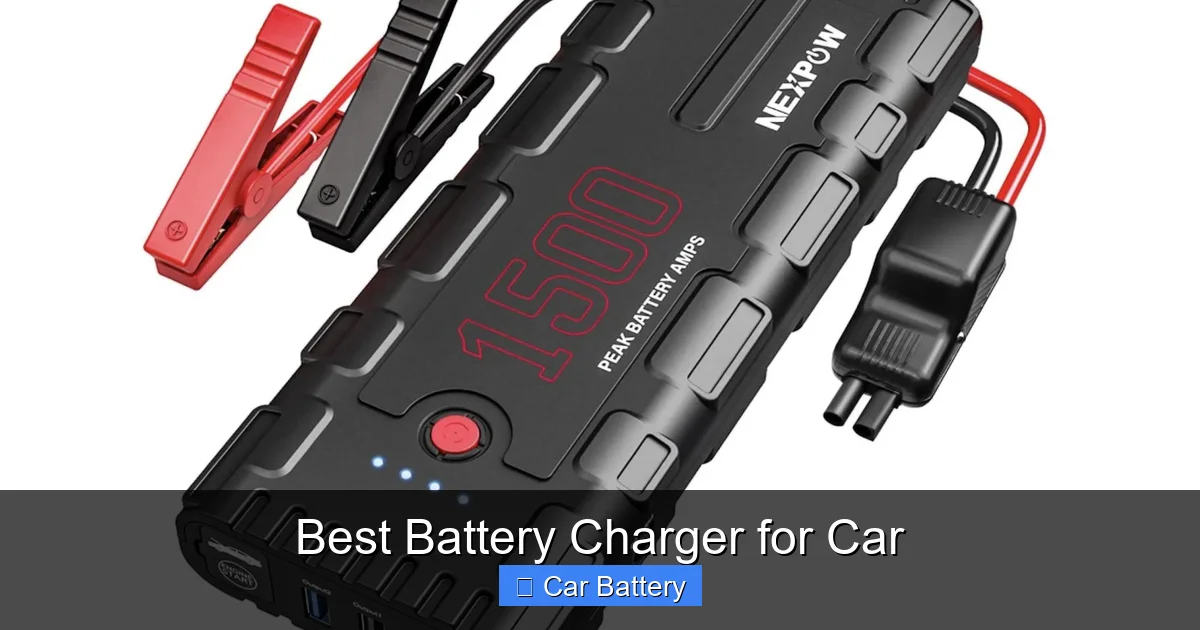
At its core, a car battery charger converts AC power from your wall outlet into DC power that your battery can store. But modern chargers do much more than that. They monitor voltage, adjust current, and even “talk” to your battery to determine the best charging method.
The Charging Process Explained
When you connect a charger, it starts by assessing the battery’s current state. Is it completely dead? Partially charged? Overheated? Based on this, the charger selects the appropriate charging stage. Most smart chargers follow a multi-stage process:
– Bulk Charge: Delivers maximum current to quickly raise the battery’s voltage.
– Absorption Charge: Slows down the current as the battery nears full capacity to avoid overcharging.
– Float (Maintenance) Charge: Keeps the battery topped up at a safe voltage, ideal for long-term storage.
This staged approach ensures your battery charges efficiently and safely. Without it, you risk overcharging, which can damage the battery or even cause it to leak or explode.
Types of Chargers: Trickle vs. Smart
There are two main types of car battery chargers: trickle chargers and smart chargers.
Trickle chargers deliver a slow, steady current—usually 1–2 amps. They’re inexpensive and great for maintaining a battery over weeks or months. But they can’t adjust to the battery’s needs. If left connected too long, they may overcharge and damage the battery.
Smart chargers, on the other hand, use microprocessors to monitor and adjust the charging process. They can detect battery type, temperature, and charge level, then respond accordingly. Many even have safety features like automatic shutoff and reverse polarity protection. For most drivers, a smart charger is the best battery charger for car use because it’s safer, faster, and more efficient.
Key Features to Look for in a Car Battery Charger
Visual guide about Best Battery Charger for Car
Image source: mobileimages.lowes.com
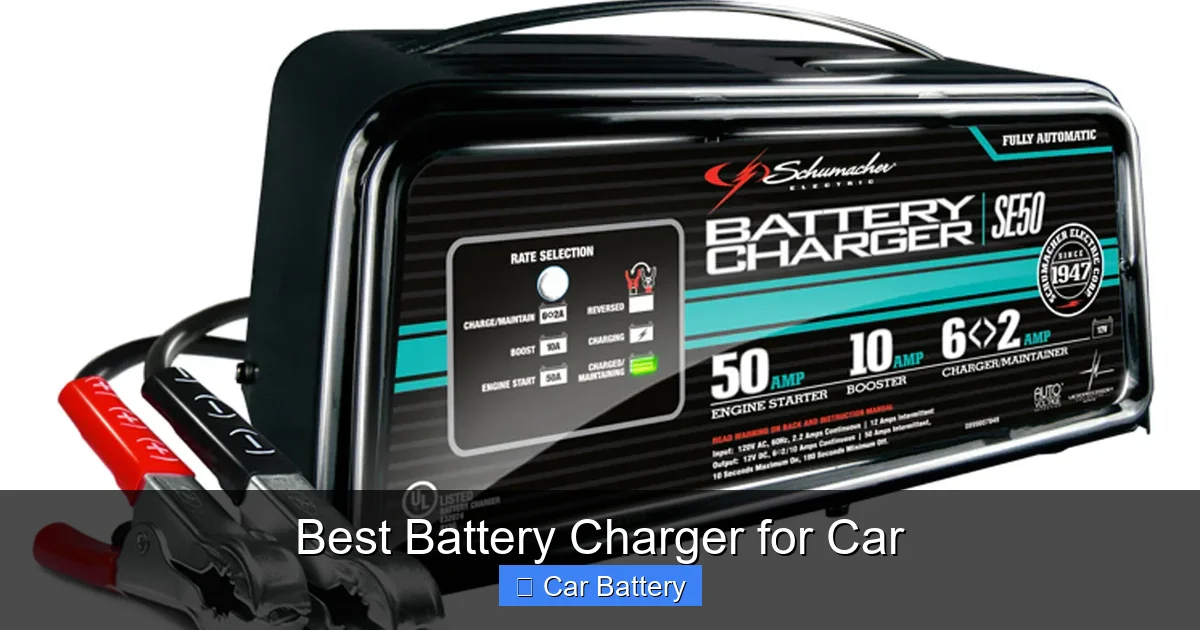
With so many models on the market, it’s easy to get overwhelmed. But focusing on a few key features can help you narrow down your options.
Charging Speed and Amperage
Amperage (amps) determines how fast a charger can refill your battery. A 2-amp charger might take 24 hours or more to fully charge a dead battery. A 10-amp charger can do it in just a few hours.
For everyday use, a 4–6 amp charger is a good balance of speed and safety. If you need a quick boost—say, before a long drive—go for 10 amps or higher. But avoid ultra-high amperage chargers (like 50+ amps) unless you’re a professional. They can overheat or damage batteries if not used carefully.
Battery Compatibility
Not all chargers work with all battery types. Most cars use standard lead-acid batteries, but some newer vehicles—especially luxury or performance models—use AGM (Absorbent Glass Mat) or gel batteries. Electric and hybrid cars may use lithium-ion batteries.
Make sure your charger supports your battery type. Many smart chargers offer multiple modes (e.g., “Standard,” “AGM,” “Gel”) so you can select the right one. Using the wrong mode can reduce battery life or cause failure.
Safety Features
Safety should be a top priority. Look for chargers with:
– Spark-proof clamps: Prevent sparks when connecting to the battery.
– Reverse polarity protection: Alerts you if the clamps are connected incorrectly.
– Overcharge protection: Automatically stops charging when the battery is full.
– Short-circuit protection: Shuts off power if a fault is detected.
These features not only protect your battery but also reduce the risk of fire or injury.
Portability and Ease of Use
If you plan to use your charger at home, a compact, lightweight model is ideal. But if you want to keep it in your car for emergencies, consider a portable charger with a built-in handle or carrying case.
Also, check the cord length. A 6–8 foot power cord and 4–6 foot battery cables give you enough flexibility to reach the battery without straining. Some models even come with wall mounts or storage bags for easy organization.
Maintenance and Float Mode
If you store your car for weeks or months—like a classic car, motorcycle, or RV—look for a charger with a maintenance or float mode. This feature keeps the battery at 100% without overcharging, which is perfect for long-term storage.
Some chargers also have a “desulfation” mode that helps break down sulfate crystals that form on battery plates over time. This can extend the life of older batteries.
Top Picks: Best Battery Chargers for Car in 2024
Visual guide about Best Battery Charger for Car
Image source: images-na.ssl-images-amazon.com
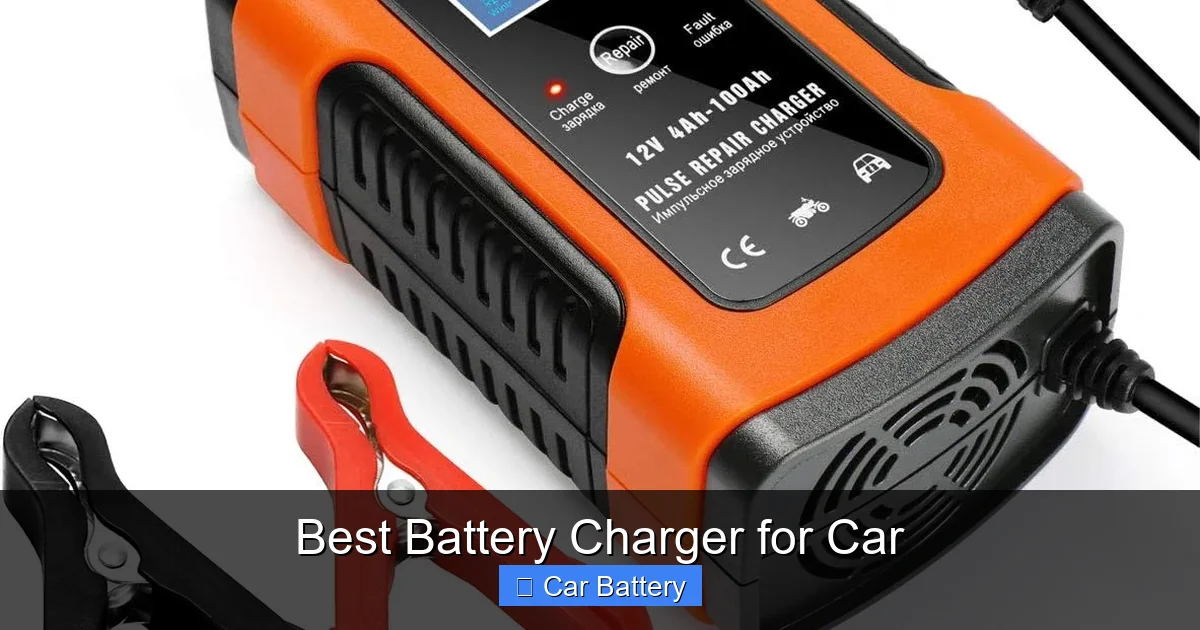
After testing and reviewing dozens of models, here are our top recommendations for the best battery charger for car use in 2024.
1. NOCO Genius 10
The NOCO Genius 10 is a favorite among car enthusiasts and professionals alike. It’s a 10-amp smart charger that works with all 6V and 12V lead-acid and lithium batteries, including AGM and gel.
What makes it stand out? Its advanced diagnostics. The Genius 10 can detect a dead battery, assess its condition, and choose the best charging method. It also has a repair mode that can revive batteries with as low as 1 volt.
Other features include:
– Spark-proof technology
– Reverse polarity protection
– Water and shock-resistant design
– 5-year warranty
It’s a bit pricier than basic models, but the performance and safety features make it worth the investment.
2. Battery Tender Plus 12V 1.25-Amp
If you’re looking for a reliable trickle charger for long-term maintenance, the Battery Tender Plus is a top choice. It delivers 1.25 amps, which is perfect for keeping a battery topped up without overcharging.
It’s ideal for seasonal vehicles like motorcycles, boats, or classic cars. The charger automatically switches to float mode once the battery is full, so you can leave it connected indefinitely.
Pros:
– Compact and lightweight
– LED indicators for charging status
– Safe for all 12V lead-acid batteries
– Affordable price
Cons:
– Slower charging speed
– No lithium battery support
For casual users who need a simple, no-fuss solution, this is one of the best battery chargers for car storage.
3. CTEK MXS 5.0
The CTEK MXS 5.0 is a premium smart charger designed for performance and durability. It delivers 4.3 amps and supports all 12V battery types, including AGM, gel, and lithium.
One of its standout features is the “Recond” mode, which restores deeply discharged batteries by breaking down sulfation. It also has a built-in temperature sensor that adjusts charging based on ambient conditions.
Other highlights:
– 8-step charging process
– IP65-rated for water and dust resistance
– 5-year warranty
– Compact design with easy-grip clamps
It’s a bit more expensive, but if you want a charger that can handle tough conditions and revive old batteries, the CTEK MXS 5.0 is hard to beat.
4. Schumacher SC1359
For those who want speed and power, the Schumacher SC1359 is a 10-amp charger that can fully charge a dead battery in under 6 hours. It’s compatible with standard, AGM, and gel batteries.
It features a digital display that shows voltage, charging progress, and error codes. The charger also has automatic voltage detection and reverse hook-up protection.
Pros:
– Fast charging
– Clear digital display
– Affordable for a 10-amp model
– Built-in handle for portability
Cons:
– No lithium battery support
– Slightly bulkier than other models
If you need a powerful charger for daily use or frequent jump-starts, this is a solid mid-range option.
5. BLACK+DECKER BM3B
The BLACK+DECKER BM3B is a budget-friendly smart charger that punches above its weight. It delivers 6 amps and works with all 12V lead-acid batteries.
It has a 3-stage charging process and automatically switches to maintenance mode when the battery is full. The LED indicators make it easy to monitor progress.
Pros:
– Affordable price
– Compact and lightweight
– Safe and reliable
– Great for beginners
Cons:
– No AGM or lithium support
– Shorter cables
For drivers who want a simple, effective charger without breaking the bank, the BM3B is one of the best battery chargers for car owners on a budget.
How to Choose the Right Charger for Your Needs
With so many great options, how do you pick the best battery charger for car use? It all comes down to your specific needs.
Daily Drivers
If you use your car every day, you probably don’t need a high-amp charger. A 4–6 amp smart charger is usually sufficient. Look for one with automatic shutoff and maintenance mode to keep your battery in good shape between uses.
Seasonal or Infrequent Use
For cars that sit for weeks or months—like classic cars, RVs, or motorcycles—a trickle charger or smart charger with float mode is essential. The Battery Tender Plus or NOCO Genius 5 are excellent choices.
Cold Climates
In cold weather, batteries lose charge faster and are harder to start. A charger with a desulfation mode and temperature compensation (like the CTEK MXS 5.0) can help maintain performance in freezing conditions.
Multiple Vehicles or Battery Types
If you own different types of vehicles—say, a car with a standard battery and a motorcycle with AGM—choose a versatile charger like the NOCO Genius 10 or Schumacher SC1359 that supports multiple battery types.
Budget Considerations
You don’t need to spend $200 to get a good charger. Models like the BLACK+DECKER BM3B offer solid performance for under $50. But if you can afford it, investing in a higher-end model with advanced features will pay off in the long run.
Tips for Safe and Effective Battery Charging
Using a battery charger is simple, but doing it safely and correctly makes a big difference.
Step-by-Step Charging Guide
1. Turn off the engine and remove keys. Make sure the car is off and the ignition is removed.
2. Locate the battery. Most are under the hood, but some are in the trunk or under a seat.
3. Clean the terminals. Use a wire brush to remove corrosion from the positive (+) and negative (−) terminals.
4. Connect the charger. Attach the red clamp to the positive terminal and the black clamp to the negative. Double-check the connections.
5. Plug in the charger. Make sure the outlet is grounded and the area is dry.
6. Select the correct mode. If your charger has multiple settings (e.g., AGM, standard), choose the right one.
7. Let it charge. Most smart chargers will indicate when charging is complete.
8. Disconnect in reverse order. Unplug the charger, then remove the black clamp, then the red.
Safety Tips
– Never charge a frozen battery. Warm it to room temperature first.
– Avoid charging in enclosed spaces. Batteries can release hydrogen gas, which is flammable.
– Wear safety glasses and gloves when handling batteries.
– Don’t leave a charger unattended for long periods, especially if it’s not a smart model.
Maintenance Tips
– Store your charger in a dry, cool place.
– Check cables and clamps for wear or damage.
– Clean the charger’s exterior with a dry cloth.
– Recharge your battery every 3–6 months if the car isn’t used regularly.
Conclusion: Invest in the Best Battery Charger for Car Reliability
A car battery charger is more than just a backup tool—it’s a proactive way to protect your vehicle and avoid unexpected breakdowns. Whether you drive daily or only on weekends, the right charger can extend your battery’s life, save you money on replacements, and give you peace of mind.
When shopping, focus on smart technology, safety features, and compatibility with your battery type. Models like the NOCO Genius 10, CTEK MXS 5.0, and Battery Tender Plus offer excellent performance for different needs and budgets.
Remember, the best battery charger for car use isn’t necessarily the most expensive—it’s the one that fits your lifestyle and keeps your vehicle ready to go. With the right charger, you’ll never have to worry about a dead battery again.
Frequently Asked Questions
Can I leave a battery charger connected overnight?
Yes, but only if it’s a smart charger with automatic shutoff and float mode. These features prevent overcharging. Trickle chargers should not be left connected for more than 24 hours unless they have a maintenance mode.
What’s the difference between a battery charger and a jump starter?
A battery charger refuels a battery slowly using AC power, while a jump starter delivers a quick burst of power to start the car. Chargers are for long-term maintenance; jump starters are for emergencies.
Can I charge a lithium battery with a regular charger?
No. Lithium batteries require a specific charging profile. Use a charger labeled for lithium-ion batteries to avoid damage or fire risk.
How long does it take to charge a car battery?
It depends on the charger’s amperage and the battery’s state. A 10-amp charger can fully charge a dead battery in 3–6 hours. A 2-amp charger may take 24+ hours.
Is it safe to charge a battery while it’s still in the car?
Yes, as long as the car is off and the charger is properly connected. Avoid charging near flammable materials and ensure good ventilation.
Do I need a special charger for an AGM battery?
Yes. AGM batteries require a lower voltage and specific charging stages. Use a smart charger with an AGM mode to ensure safe and effective charging.
