Which Audi Q5 Years Should You Avoid?

Contents
- 1 Key Takeaways
- 2 📑 Table of Contents
- 3 Which Audi Q5 Years Should You Avoid?
- 4 Understanding the Audi Q5 Generations
- 5 The Audi Q5 Years You Should Avoid
- 6 Common Problems in Audi Q5 Models
- 7 How to Spot a Good Audi Q5 (Even in Risky Years)
- 8 Best Audi Q5 Years to Buy
- 9 Final Thoughts: Buy Smart, Drive Happy
- 10 Frequently Asked Questions


Not all Audi Q5 models are created equal—some years have serious reliability problems that can cost you thousands in repairs. This guide breaks down the specific Audi Q5 years you should avoid, highlights the most common issues, and offers tips to help you choose a dependable used model with confidence.
Key Takeaways
- Avoid the 2011–2014 Audi Q5 models: These years are plagued by engine oil consumption, timing chain failures, and turbocharger issues, leading to expensive repairs.
- Steer clear of the 2017 Q5: Early reports of the redesigned model revealed transmission hesitation, electrical glitches, and premature brake wear.
- The 2018–2020 Q5s improved but still have concerns: While more reliable, some owners report infotainment system freezes and minor electrical faults.
- Check maintenance records religiously: Audi Q5s are high-performance luxury SUVs that demand consistent, high-quality servicing to avoid major breakdowns.
- Prefer 2021 and newer models if possible: These benefit from updated software, stronger build quality, and fewer reported mechanical issues.
- Always get a pre-purchase inspection: Even in “safe” model years, a professional inspection can uncover hidden problems before you buy.
- Consider certified pre-owned (CPO) options: Audi’s CPO program includes extended warranties and thorough inspections, offering peace of mind.
📑 Table of Contents
Which Audi Q5 Years Should You Avoid?
So, you’re thinking about buying an Audi Q5. Great choice—this luxury compact SUV blends German engineering, sleek styling, and a comfortable ride into one impressive package. It’s stylish enough for date night, capable enough for weekend adventures, and packed with tech that makes daily driving a pleasure. But here’s the thing: not every Audi Q5 is created equal.
While the Q5 has earned a solid reputation over the years, certain model years have developed a not-so-great track record for reliability. If you’re shopping used—and let’s be honest, most of us are—you need to know which Audi Q5 years to avoid. Why? Because a few bad apples can cost you big in repairs, downtime, and stress. We’re talking about issues like excessive oil consumption, timing chain failures, transmission hiccups, and electrical gremlins that seem to appear out of nowhere.
In this guide, we’ll walk you through the Audi Q5 model years that raise red flags, explain the most common problems, and help you spot a good deal. Whether you’re a first-time luxury SUV buyer or upgrading from an older vehicle, this info could save you thousands. Let’s dive in.
Understanding the Audi Q5 Generations

Visual guide about Which Audi Q5 Years Should You Avoid?
Image source: warninglights.net
Before we get into which years to avoid, it helps to understand the Q5’s generational timeline. The Audi Q5 first hit the market in 2008 as part of Audi’s push into the growing luxury SUV segment. It quickly became one of the brand’s best-selling models, thanks to its balanced mix of performance, comfort, and tech.
The first generation ran from 2008 to 2017. These models were built on the Volkswagen Group’s MLB platform and came with a range of engines, including the popular 2.0L turbocharged four-cylinder and the more powerful 3.0L V6. The 2011–2014 models, in particular, are the ones we’ll be focusing on as high-risk years.
In 2018, Audi launched the second-generation Q5, which brought a complete redesign—new styling, updated infotainment, improved fuel efficiency, and better safety features. This generation continues through the 2024 model year and includes mild-hybrid technology and more advanced driver-assistance systems.
Knowing which generation you’re looking at is crucial. First-gen models (especially 2011–2014) have well-documented issues, while second-gen models (2018+) are generally more reliable—though not without their quirks. The 2017 model year is a bit of a wildcard, as it’s the final year of the first generation but also saw some early teething problems with the transition to new tech.
First Generation (2008–2017): A Mixed Bag
The first-gen Q5 was a hit from the start, but early models had some growing pains. The 2008–2010 models were relatively solid, with fewer reported issues. However, things took a turn for the worse in the 2011–2014 range. These years are often referred to as the “problem years” of the Q5 lineup, and for good reason.
Engine problems became widespread, especially with the 2.0T engine. Owners reported excessive oil consumption—sometimes a quart every 1,000 miles—which, if ignored, could lead to catastrophic engine failure. Audi eventually issued technical service bulletins (TSBs) and extended warranties for some of these issues, but many owners still faced costly repairs out of pocket.
The timing chain tensioner was another weak point. On some 2.0T engines, the tensioner could fail prematurely, causing the timing chain to stretch or skip. This could result in bent valves and engine damage—repairs that often cost $5,000 or more. While not every 2011–2014 Q5 suffered from this, the risk was high enough to make these years a gamble.
Second Generation (2018–Present): A Step Forward
The 2018 redesign marked a major improvement for the Q5. Audi addressed many of the first-gen’s shortcomings with better build quality, updated software, and more reliable components. The new 2.0L TFSI engine was more efficient and less prone to oil consumption issues. The infotainment system got a major upgrade with the MMI touch interface, and standard safety features like automatic emergency braking became more common.
That said, the second-gen Q5 isn’t perfect. Early models (2018–2020) still had some software glitches, particularly with the infotainment system freezing or rebooting unexpectedly. Some owners also reported issues with the virtual cockpit display and Bluetooth connectivity. These aren’t deal-breakers, but they can be annoying in a luxury vehicle where seamless tech is expected.
Overall, the 2018 and newer Q5s are much safer bets—especially if they’ve been well-maintained. But even in these years, skipping maintenance or buying a neglected example can lead to trouble.
The Audi Q5 Years You Should Avoid
Visual guide about Which Audi Q5 Years Should You Avoid?
Image source: warninglights.net
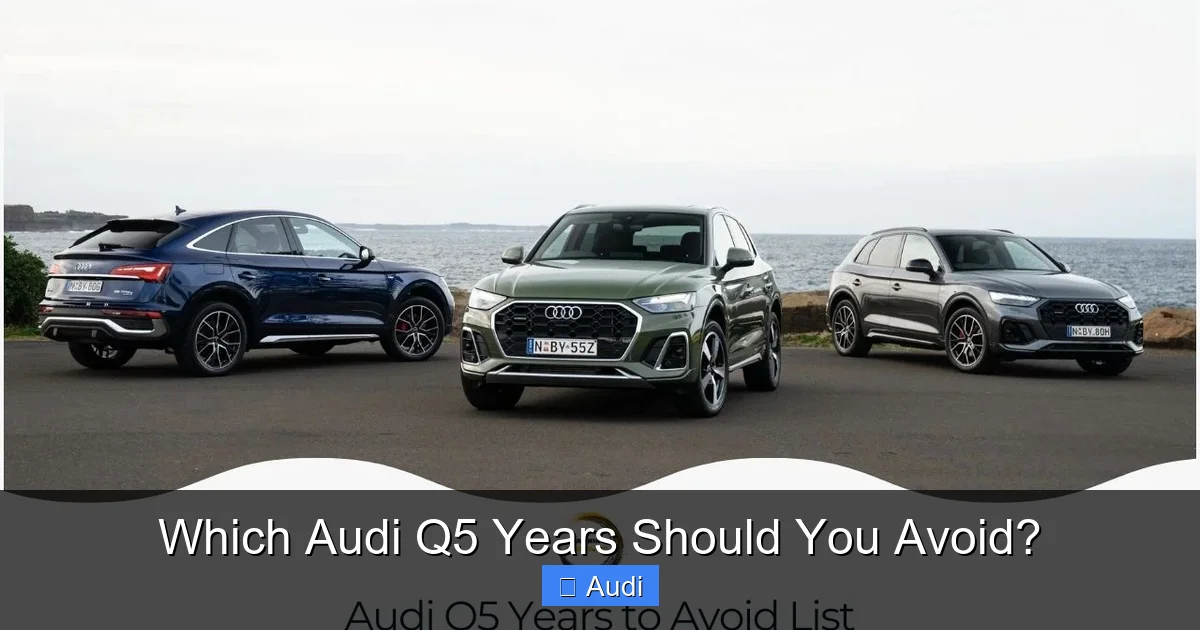
Now, let’s get to the heart of the matter: which Audi Q5 years should you avoid? Based on owner complaints, repair data, and expert reviews, here are the model years that consistently show up on the “avoid” list.
2011–2014 Audi Q5: The Problem Years
If there’s one range of years you should approach with extreme caution, it’s 2011 to 2014. These models are notorious for a handful of serious mechanical issues that can turn a dream purchase into a money pit.
The biggest culprit? Excessive oil consumption. Many 2.0T engines in these years burned through oil at an alarming rate. Audi acknowledged the issue and extended the warranty on some components, but only if the vehicle met specific criteria. If you’re buying used, there’s no guarantee the previous owner followed the proper oil consumption testing procedure—or that the issue was ever addressed.
Then there’s the timing chain tensioner. This small but critical part can fail without warning, leading to timing chain slippage and potential engine damage. The repair is not only expensive but often requires a full engine teardown. Some owners reported the problem occurring as early as 60,000 miles, which is far too soon for a luxury vehicle.
Turbocharger failures were also common in these years. The turbo on the 2.0T engine could develop leaks or fail due to oil starvation—especially if oil changes were skipped or done with the wrong type of oil. Replacing a turbo isn’t cheap, and when combined with other engine issues, it can make ownership unsustainable.
2017 Audi Q5: The Transition Year Trap
The 2017 model year is tricky. It’s the last of the first generation, but it also introduced some new tech that wasn’t fully refined. As a result, it sits in a gray area—better than the 2011–2014 models, but still risky.
One of the main issues with the 2017 Q5 is transmission hesitation. Owners reported jerky shifts, delayed acceleration, and occasional slipping—especially in stop-and-go traffic. While some of these problems were software-related and fixable with a TCM (transmission control module) update, others pointed to deeper mechanical concerns.
Electrical issues also popped up more frequently in 2017 models. Problems with the infotainment system, dashboard warning lights, and even the power tailgate were reported. Some owners experienced random battery drain, which could leave them stranded.
Additionally, the 2017 Q5 had higher-than-average reports of premature brake wear. While brake pads and rotors do wear out over time, some owners found themselves replacing them well before the 50,000-mile mark—something that shouldn’t happen on a well-maintained luxury SUV.
Why These Years Are Risky
So why do these years stand out as problematic? It often comes down to a combination of design flaws, cost-cutting measures, and the complexity of modern engines. Audi, like many automakers, pushed for higher performance and efficiency, sometimes at the expense of long-term reliability.
The 2.0T engine, for example, was designed to deliver strong power from a small displacement. But the high-pressure fuel system and turbocharging put extra stress on internal components. When combined with infrequent maintenance or low-quality oil, these engines were more prone to failure.
Timing chain issues were partly due to a design flaw in the tensioner mechanism. Audi later revised the part, but many early models still had the original, weaker version. And because the timing chain is buried deep in the engine, diagnosing and fixing the problem is labor-intensive.
Transmission and electrical problems in the 2017 model were often linked to software bugs. While updates can fix many of these issues, they require a visit to the dealership—and not all owners are proactive about recalls and TSBs.
Common Problems in Audi Q5 Models

Visual guide about Which Audi Q5 Years Should You Avoid?
Image source: warninglights.net
Even outside the “avoid” years, the Audi Q5 has some recurring issues that buyers should be aware of. Knowing what to look for can help you avoid a lemon—even in a generally reliable model year.
Engine Oil Consumption
Oil consumption is the most infamous issue in early Q5 models. The 2.0T engine was designed to consume a small amount of oil between changes—this is normal for turbocharged engines. But in some cases, consumption exceeded one quart per 1,000 miles, which is excessive.
Audi’s official stance was that consumption up to 1.1 quarts per 1,000 miles was acceptable. But many owners found their engines burning through oil much faster. If not monitored, low oil levels can lead to engine damage, especially under hard driving or towing.
The fix? Regular oil level checks and top-offs. But if the engine is already damaged, a rebuild or replacement may be necessary—costing $6,000 or more.
Timing Chain and Tensioner Failures
The timing chain keeps the engine’s valves and pistons in sync. If it fails, the engine can suffer internal damage. In the 2011–2014 Q5, the tensioner that keeps the chain tight was prone to failure.
Symptoms include a rattling noise at startup, especially when cold, and a check engine light. If you hear a “ticking” or “clattering” sound from the engine, have it checked immediately.
Audi issued a revised tensioner design, but many vehicles still had the original part. A replacement can cost $1,500–$3,000, depending on labor rates.
Transmission Issues
The Q5 uses a seven-speed S tronic dual-clutch transmission (DCT) in most models. While generally smooth, some owners report hesitation, jerking, or delayed shifts—especially in early 2017 models.
Software updates can often resolve these issues, but if the clutch packs or mechatronics unit are worn, repairs can exceed $4,000.
Electrical and Infotainment Glitches
Modern Audis are packed with tech, and that means more potential points of failure. Common issues include:
– Infotainment system freezing or rebooting
– Bluetooth pairing failures
– Virtual cockpit display flickering
– Power tailgate malfunctions
Many of these are software-related and can be fixed with updates. But if the hardware is faulty—like a failing control module—replacement parts can be expensive.
Suspension and Brake Wear
The Q5’s sport-tuned suspension provides a great ride, but it can wear out faster than on more comfort-oriented SUVs. Front control arms, sway bar links, and struts may need replacement by 80,000–100,000 miles.
Brake wear is also higher than average, especially in 2017 models. Aggressive driving and city traffic accelerate pad and rotor wear. Expect to budget $400–$800 for a full brake job.
How to Spot a Good Audi Q5 (Even in Risky Years)
Just because a model year has a bad reputation doesn’t mean every example is a disaster. With careful shopping, you can find a well-maintained Q5—even in the 2011–2014 range.
Check the Maintenance History
A complete service record is your best friend. Look for regular oil changes (every 5,000–7,500 miles), timing belt/chain inspections, and transmission fluid changes. Audi recommends changing the transmission fluid every 40,000 miles—many owners skip this, which can lead to premature wear.
Get a Pre-Purchase Inspection (PPI)
Never skip a PPI. A qualified mechanic—preferably one familiar with Audis—can check for oil leaks, timing chain noise, transmission behavior, and electrical faults. A PPI typically costs $100–$200 but can save you thousands.
Test Drive Thoroughly
During the test drive, pay attention to:
– Engine noise (especially cold starts)
– Transmission smoothness
– Brake feel and noise
– Infotainment responsiveness
– Suspension comfort over bumps
If anything feels off, walk away.
Consider Certified Pre-Owned (CPO)
Audi’s CPO program includes a 12-month/12,000-mile warranty, a 300-point inspection, and roadside assistance. While CPO models cost more, the peace of mind is worth it—especially for high-mileage or older vehicles.
Best Audi Q5 Years to Buy
If you’re looking for the sweet spot in reliability and value, consider these model years:
– 2015–2016: These years benefited from some of Audi’s early fixes to the 2.0T engine. Oil consumption issues were less common, and timing chain problems were rarer.
– 2019–2021: Second-gen models with updated software and improved reliability. The 2020 and 2021 models, in particular, have fewer reported issues.
– 2022–2024: The latest models offer the best tech, safety, and reliability. If your budget allows, these are the safest long-term bets.
Final Thoughts: Buy Smart, Drive Happy
The Audi Q5 is a fantastic SUV—when it’s in good shape. But like any luxury vehicle, it demands respect when it comes to maintenance and ownership. Avoiding the 2011–2014 and 2017 model years significantly reduces your risk of major repairs. Even in safer years, always do your homework: check records, get an inspection, and test drive thoroughly.
Remember, a used car is only as good as its history. A well-cared-for 2013 Q5 might be a better buy than a neglected 2020 model. But if you’re not ready to play mechanic, stick to the later years or go CPO.
With the right approach, you can enjoy all the luxury, performance, and style the Audi Q5 has to offer—without the headaches.
Frequently Asked Questions
Which Audi Q5 years have the most engine problems?
The 2011–2014 Audi Q5 models are known for excessive oil consumption, timing chain tensioner failures, and turbocharger issues. These problems can lead to costly engine repairs if not addressed early.
Is the 2017 Audi Q5 reliable?
The 2017 Q5 is a transition year with some reliability concerns, including transmission hesitation, electrical glitches, and premature brake wear. While not as problematic as 2011–2014 models, it still carries risks.
Can oil consumption issues be fixed in older Q5s?
Yes, but only if caught early. Regular oil top-offs and monitoring can prevent engine damage. In severe cases, internal engine repairs or replacement may be necessary, which can cost thousands.
Are 2018 and newer Audi Q5s reliable?
Generally, yes. The second-generation Q5 (2018+) is more reliable, with fewer mechanical issues. However, some owners report infotainment freezes and minor electrical faults, usually fixable with software updates.
Should I buy a used Audi Q5?
Yes, if you do your research. Avoid high-risk years, check maintenance records, and always get a pre-purchase inspection. Certified pre-owned models offer the best protection.
How often should I change the oil in an Audi Q5?
Audi recommends oil changes every 10,000 miles or 12 months, but many experts suggest every 5,000–7,500 miles—especially in older models or turbocharged engines—to prevent oil consumption and sludge buildup.