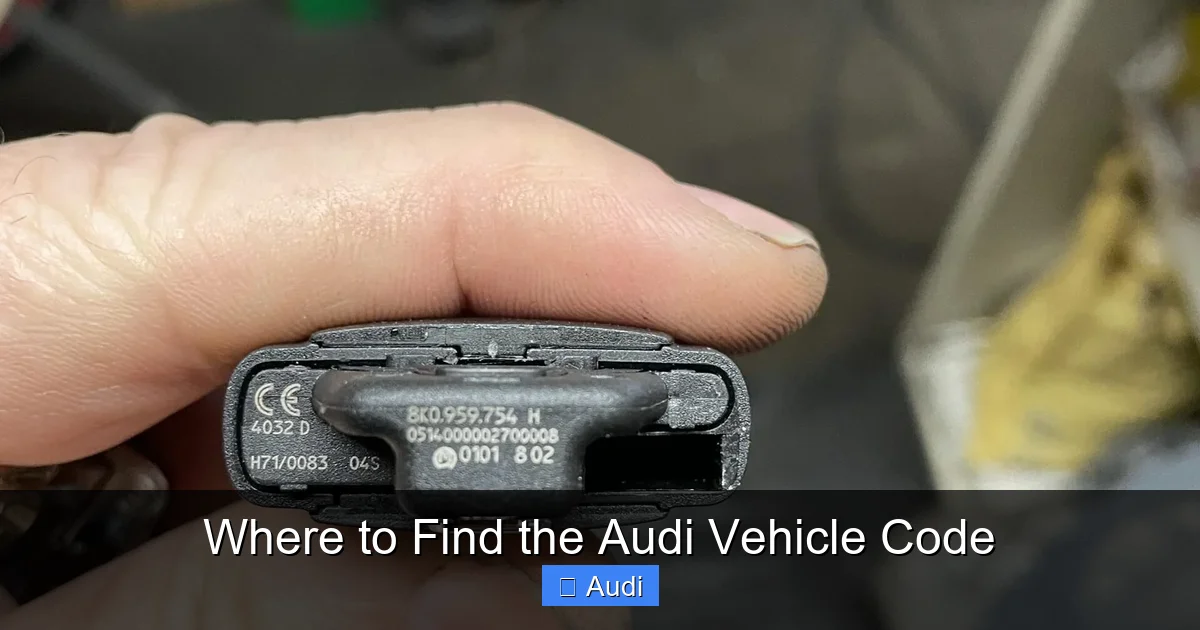
Where to Find the Audi Vehicle Code

Contents
- 1 Key Takeaways
- 2 📑 Table of Contents
- 3 Where to Find the Audi Vehicle Code
- 4 What Is the Audi Vehicle Code and Why Do You Need It?
- 5 Primary Locations to Find the Audi Vehicle Code
- 6 Alternative Methods to Retrieve the Audi Vehicle Code
- 7 Practical Tips and Common Pitfalls
- 8 Summary Table: Where to Find the Audi Vehicle Code
- 9 Final Thoughts and Recommendations
- 10 Frequently Asked Questions




The Audi Vehicle Code is essential for accessing owner-specific services, and it’s most commonly found on the vehicle registration document or insurance papers. If those aren’t available, check the driver’s side door jamb, the spare tire well, or your Audi account online—each location provides quick access to this critical identifier. Having the code on hand ensures seamless support, software updates, and personalized features tailored to your Audi.
Key Takeaways
- Check your owner’s manual: The vehicle code is often listed on the first few pages or in the service section.
- Look inside the glove compartment: Many Audi models have a sticker with the code behind the glove box door.
- Inspect the driver’s side door jamb: A label here may include the vehicle code near the VIN.
- Access the MMI system: Navigate to Vehicle > Settings > Car Information to find the code digitally.
- Contact an Audi dealership: Provide your VIN and proof of ownership to retrieve the code securely.
- Review service records: Previous maintenance documents often include the vehicle code for reference.
📑 Table of Contents
- Where to Find the Audi Vehicle Code
- What Is the Audi Vehicle Code and Why Do You Need It?
- Primary Locations to Find the Audi Vehicle Code
- Alternative Methods to Retrieve the Audi Vehicle Code
- Practical Tips and Common Pitfalls
- Summary Table: Where to Find the Audi Vehicle Code
- Final Thoughts and Recommendations
Where to Find the Audi Vehicle Code
So, you’ve got your hands on a sleek Audi—maybe it’s a sporty A4, a luxurious Q7, or even a high-performance RS6. You love the way it drives, the way it looks, and the quiet confidence it gives you on the road. But now, you’re trying to pair your phone via Bluetooth, unlock a hidden feature, or maybe even program a new key fob, and suddenly you’re stuck. The system is asking for something called the “Audi Vehicle Code.”
Don’t worry—you’re not alone. Thousands of Audi owners have been in your shoes, scratching their heads and Googling frantically. The Audi Vehicle Code, also known as the Vehicle Identification Code (VIC), Vehicle Code Number (VCN), or sometimes the “PIN code,” is a critical piece of information that unlocks access to various vehicle functions. Whether you’re troubleshooting infotainment issues, setting up Audi Connect, or working with a technician during service, this code is often required. But where exactly do you find it? That’s the million-dollar question—and one we’re going to answer thoroughly in this guide.
In this post, we’ll walk you through every possible location where the Audi Vehicle Code might be hiding—from physical labels in your car to digital records and dealership tools. We’ll also explain what the code is used for, why it’s important, and how to retrieve it safely without voiding your warranty or risking security. Think of this as your friendly, no-jargon roadmap to finding that elusive code—so you can get back to enjoying your Audi the way it was meant to be enjoyed.
What Is the Audi Vehicle Code and Why Do You Need It?
Understanding the Purpose of the Vehicle Code
The Audi Vehicle Code is a unique numeric sequence—usually 4 to 6 digits long—assigned to your specific vehicle during manufacturing. It acts like a digital fingerprint, allowing authorized systems and technicians to authenticate and configure your car’s electronic modules. Unlike the VIN (Vehicle Identification Number), which identifies the car’s make, model, and production details, the Vehicle Code is more like a security key used for internal communication between components.

Visual guide about Where to Find the Audi Vehicle Code
Image source: thecarhow.com
This code is essential for a variety of functions. For example, when you’re setting up Audi Connect services—like real-time traffic, remote start, or vehicle status checks—the system may prompt you to enter the Vehicle Code to verify ownership. It’s also used when programming new keys, resetting the infotainment system, or performing software updates. In some cases, dealerships or independent repair shops need it to access diagnostic modes or reconfigure control units after repairs.
Common Scenarios Where the Code Is Required
Let’s say you’re trying to pair your smartphone with the MMI (Multi Media Interface) system, and it keeps failing. You’ve tried restarting the system, forgetting the device, and even resetting the Bluetooth settings—but nothing works. Then, during a service visit, the technician mentions they need the Vehicle Code to “unlock” the module for pairing. Sound familiar?
Or maybe you’ve purchased a used Audi and want to activate Audi Connect, but the previous owner never transferred the services. Without the Vehicle Code, you can’t complete the activation process online. Even updating the navigation maps might require this code if the system detects a security lock.
Another common situation is key fob programming. If you’ve lost a key or want to add a spare, the immobilizer system often requires the Vehicle Code to authorize the new key. This is a security feature designed to prevent unauthorized duplication—but it can be frustrating if you don’t know where to find the code.
Security and Privacy Considerations
Because the Audi Vehicle Code grants access to sensitive vehicle functions, it’s treated as confidential information. Audi doesn’t publish it openly, and for good reason. If someone gains access to your code, they could potentially interfere with your car’s electronics or even disable certain security features.
That’s why it’s important to keep your code secure. Never share it on public forums, social media, or unverified websites. If you’re working with a repair shop, make sure they’re reputable and explain why they need the code. Most legitimate technicians will understand your concern and respect your privacy.
Primary Locations to Find the Audi Vehicle Code
Inside the Vehicle: Common Physical Locations
The most straightforward way to find your Audi Vehicle Code is by looking inside the car itself. Audi often places a label or sticker containing the code in one of several standard locations. Here are the most common spots to check:

Visual guide about Where to Find the Audi Vehicle Code
Image source: cimg1.ibsrv.net
- Glove Compartment: Open the glove box and look on the inside panel, especially near the hinges or on the back wall. Some models have a small white or yellow sticker with the code printed clearly.
- Driver’s Side Door Jamb: Open the driver’s door and inspect the area where the door latches. You might find a label with various codes, including the Vehicle Code. It’s often listed alongside the VIN and paint code.
- Trunk or Luggage Compartment: Lift the floor mat in the trunk and check the spare tire well or the side panels. Some Audi models store the code here, especially if the glove box label is missing.
- Under the Hood: Pop the hood and look near the windshield on the firewall or on the strut tower. While less common, some older models have the code printed on a label in this area.
When inspecting these areas, look for a sticker that includes numbers like “VIC,” “VCN,” or “PIN.” The code is usually 4 to 6 digits long and may be labeled as “Vehicle Code” or “Security Code.” If you see a long alphanumeric string, that’s likely the VIN—not the Vehicle Code.
Checking the Owner’s Manual and Documentation
If you can’t find a physical sticker in the car, the next place to look is your owner’s manual or vehicle documentation. When you purchased your Audi—whether new or used—the dealer may have included a welcome packet or service booklet that contains the Vehicle Code.
For newer models, especially those sold after 2015, Audi often provides a digital copy of the code via the MyAudi portal (more on that below). However, older vehicles may have a printed card or envelope tucked into the manual. Some owners report finding a small white card labeled “Vehicle Code” in the glove box or center console.
If you’ve misplaced your manual, don’t panic. You can often download a digital copy from Audi’s official website by entering your VIN. While the manual itself won’t contain the code, it may reference where to find it or how to retrieve it through other means.
Using the MyAudi App and Online Portal
For Audi owners with vehicles from 2016 onward, the MyAudi app and online portal are powerful tools for accessing vehicle information—including the Vehicle Code. Here’s how to use them:
- Download the MyAudi app (available on iOS and Android) or visit my.audi.com.
- Create an account or log in with your existing credentials.
- Add your vehicle by entering the VIN and confirming ownership.
- Navigate to the “Vehicle Details” or “Security” section.
- Look for an option labeled “Vehicle Code,” “PIN,” or “Security Code.”
In many cases, the code will be displayed directly in the app or available for download as a PDF. Some users report that the code is only visible after enabling two-factor authentication or verifying their identity via email or SMS.
Note: Not all Audi models or regions support this feature. If you don’t see the code in the app, it may not be available digitally for your vehicle. In that case, you’ll need to rely on physical labels or contact Audi support.
Alternative Methods to Retrieve the Audi Vehicle Code
Contacting an Audi Dealership or Authorized Service Center
If you’ve exhausted all physical and digital options, your best bet is to contact an Audi dealership or authorized service center. As the original point of sale or service provider, they have access to your vehicle’s records and can retrieve the code for you.
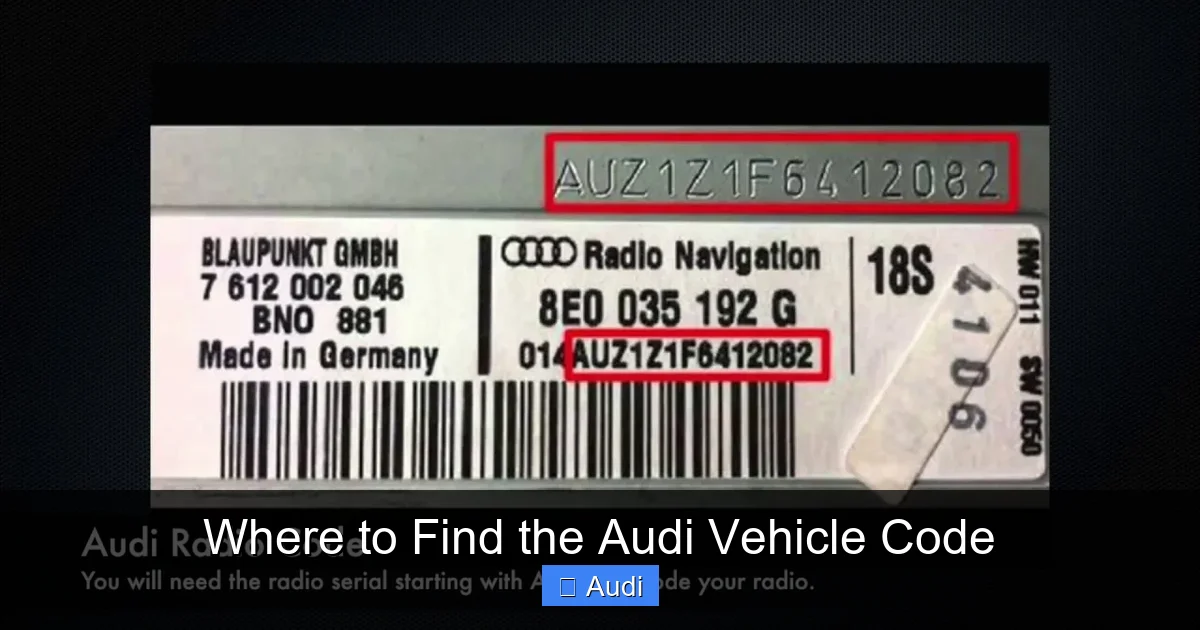
Visual guide about Where to Find the Audi Vehicle Code
Image source: i.ytimg.com
To do this, you’ll typically need to provide:
- Your full name and contact information
- The vehicle’s VIN
- Proof of ownership (such as registration or insurance documents)
- A valid reason for requesting the code (e.g., key programming, infotainment reset)
Most dealerships will verify your identity before releasing the code, often requiring you to visit in person or speak with a service advisor over the phone. Some may charge a small fee for this service, especially if the vehicle is out of warranty.
Tip: Call ahead and ask if they can email or text the code. Some service centers are willing to send it securely, while others insist on in-person pickup for security reasons.
Using OBD-II Scanners and Diagnostic Tools
For tech-savvy owners or those working with independent mechanics, OBD-II (On-Board Diagnostics) scanners can sometimes retrieve the Vehicle Code directly from the car’s computer. However, this method requires specialized equipment and knowledge.
Not all OBD-II scanners can access the Vehicle Code. You’ll need a professional-grade tool like an Audi-specific VCDS (VAG-COM Diagnostic System), ODIS (Offboard Diagnostic Information System), or a high-end aftermarket scanner with Audi compatibility.
Here’s how it works:
- Connect the scanner to the OBD-II port (usually under the dashboard near the steering wheel).
- Power on the ignition (do not start the engine).
- Navigate to the “Security” or “Immobilizer” module.
- Look for an option to “Read PIN” or “Retrieve Vehicle Code.”
Some tools may require additional steps, such as entering a login code or connecting to a manufacturer database. Be cautious—incorrect use of diagnostic tools can cause system errors or void your warranty.
Important: Only attempt this if you’re experienced or working with a qualified technician. If you’re unsure, it’s safer to go through a dealership.
Third-Party Services and Online Code Retrieval
In recent years, several online services have emerged that claim to retrieve Audi Vehicle Codes for a fee. These websites typically ask for your VIN, vehicle model, and sometimes photos of the car or documentation.
While some of these services are legitimate, many are scams or operate in a legal gray area. There’s no guarantee they’ll deliver the correct code, and you risk exposing your personal information to untrusted parties.
If you choose to use a third-party service, do your research:
- Check reviews on trusted platforms like Trustpilot or Reddit.
- Avoid sites that ask for payment upfront without verification.
- Never provide your VIN or personal details to unverified sources.
In most cases, it’s safer and more reliable to go through an Audi dealership or use official channels like the MyAudi portal.
Practical Tips and Common Pitfalls
How to Store and Protect Your Vehicle Code
Once you’ve found your Audi Vehicle Code, it’s important to store it securely. Here are a few best practices:
- Write it down: Keep a physical copy in a safe place, such as a locked drawer or safety deposit box. Avoid storing it in the car.
- Digital backup: Save it in a password-protected note on your phone or a secure cloud service like Google Drive or iCloud (with encryption enabled).
- Share wisely: Only give the code to trusted mechanics or family members who need it for legitimate purposes.
Remember: Losing the code isn’t the end of the world, but it can be a hassle to retrieve. Treat it like a spare key—valuable and worth protecting.
What to Do If You Can’t Find the Code
If you’ve checked every possible location and still can’t locate the code, don’t panic. Here’s a step-by-step plan:
- Double-check all physical locations, including less obvious spots like under floor mats or behind trim panels.
- Log in to the MyAudi portal and verify your vehicle is correctly registered.
- Contact your nearest Audi dealership with your VIN and proof of ownership.
- If the car is used, reach out to the previous owner (if possible) to see if they have the code.
- As a last resort, consult a certified Audi technician who can retrieve it via diagnostic tools.
In rare cases, the code may have been lost due to a module replacement or software update. In such situations, the dealership may need to reinitialize the system, which could involve additional costs.
Avoiding Scams and Misinformation
The internet is full of misleading advice about retrieving Audi Vehicle Codes. Some forums suggest “hacking” the system or using free online generators—these are almost always scams.
Stick to official sources: Audi dealerships, the MyAudi portal, or certified repair shops. If a website promises instant code retrieval for free, it’s likely trying to collect your data or install malware.
Also, be wary of YouTube tutorials that show “secret” methods for extracting the code. While some may be helpful, others can damage your vehicle’s electronics or void your warranty.
Summary Table: Where to Find the Audi Vehicle Code
| Location | How to Access | Success Rate | Notes |
|---|---|---|---|
| Glove Compartment | Open glove box, check inside panel | High | Most common location; look for white/yellow sticker |
| Driver’s Door Jamb | Open door, inspect latch area | Medium | May be grouped with VIN and paint codes |
| Trunk/Luggage Area | Lift floor mat, check spare tire well | Medium | Common in older models |
| MyAudi App/Portal | Log in, navigate to vehicle details | High (for newer models) | Requires account and vehicle registration |
| Audi Dealership | Call or visit with VIN and ID | Very High | Most reliable method; may involve fee |
| OBD-II Scanner | Use VCDS or ODIS tool | Medium | Requires technical knowledge; risk of errors |
Final Thoughts and Recommendations
Finding the Audi Vehicle Code doesn’t have to be a frustrating ordeal. With the right approach, you can locate it quickly and securely—whether it’s tucked away in your glove box, accessible through the MyAudi app, or available through your local dealership. The key is knowing where to look and understanding why the code is needed in the first place.
Remember, this code is more than just a number—it’s a gateway to your car’s advanced features and security systems. Treat it with care, store it safely, and only share it when absolutely necessary. And if you ever find yourself stuck, don’t hesitate to reach out to an Audi professional. They’re there to help, and they’ve seen it all before.
So the next time your Audi asks for that mysterious code, you’ll know exactly what to do. No more guessing, no more stress—just smooth sailing (or driving, in this case). After all, your Audi deserves to be enjoyed to the fullest, and that starts with having the right information at your fingertips.
Frequently Asked Questions
Where is the Audi vehicle code located?
The Audi vehicle code, also known as the Vehicle Identification Number (VIN), can typically be found on the driver’s side dashboard near the windshield. You can also locate it on the driver’s side door jamb when you open the door.
How do I find the Audi vehicle code for registration?
The Audi vehicle code (VIN) is required for registration and can be found on your vehicle’s registration documents, insurance card, or directly on the car at the locations mentioned above. It’s a 17-character alphanumeric code unique to your Audi.
Can I find the Audi vehicle code in the owner’s manual?
Yes, the Audi vehicle code is often printed on a label inside the owner’s manual or on a separate documentation card provided by the dealer. This can be a helpful backup if you can’t access the physical VIN on the vehicle.
Is the Audi vehicle code the same as the VIN?
Yes, the Audi vehicle code refers to the Vehicle Identification Number (VIN), which uniquely identifies your car. It contains information about the manufacturer, model, year, and production details.
Where else can I find my Audi vehicle code besides the car?
In addition to the physical locations on the vehicle, you can find the Audi vehicle code on official documents such as the title, insurance policy, or service records. Some online Audi portals may also display it if you’re registered.
Why do I need the Audi vehicle code?
You may need the Audi vehicle code for servicing, ordering parts, registering the vehicle, or verifying its history. It ensures accurate identification and helps prevent fraud or errors in documentation.