
Can a Clogged Catalytic Converter Cause a Car to Overheat?

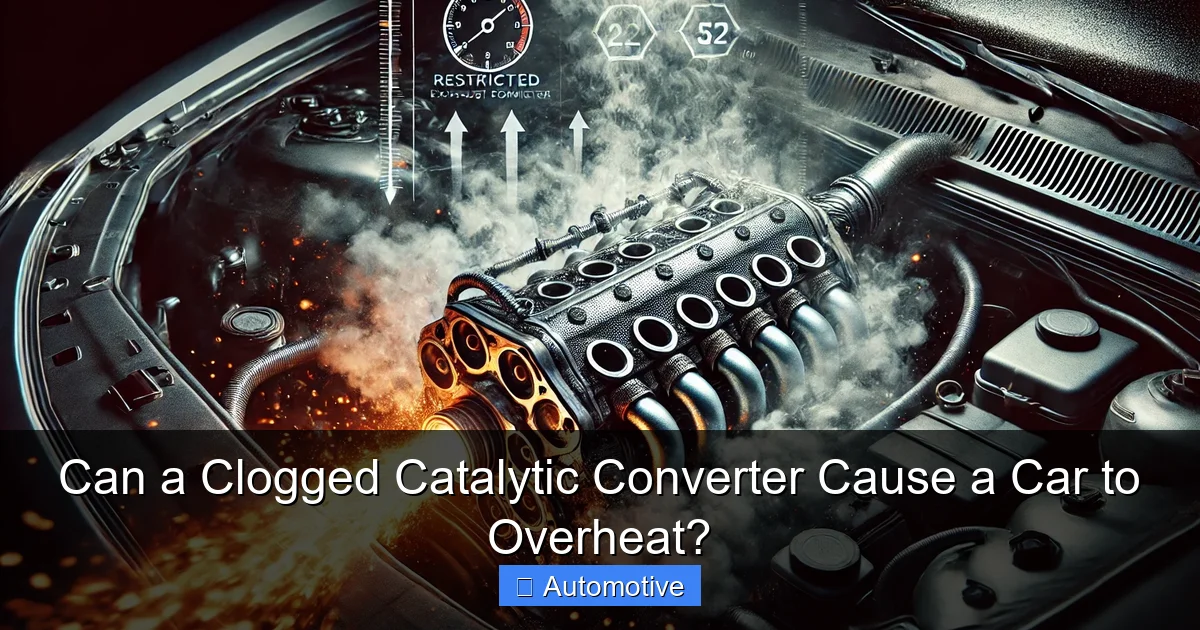
A clogged catalytic converter can indeed cause a car to overheat by restricting exhaust flow and increasing backpressure. This forces the engine to work harder, generating excess heat that may overwhelm the cooling system. Early detection and maintenance are key to preventing serious engine damage.
Key Takeaways
- A clogged catalytic converter restricts exhaust flow, increasing backpressure and making the engine work harder, which can lead to overheating.
- Overheating occurs when exhaust gases can’t escape efficiently, causing heat to build up in the combustion chamber and exhaust system.
- Symptoms include reduced engine power, poor fuel economy, and a sulfur smell—all signs that should prompt immediate inspection.
- Ignoring a clogged catalytic converter can damage the engine, oxygen sensors, and other components due to excessive heat and pressure.
- Regular maintenance and using quality fuel can help prevent catalytic converter clogs and related overheating issues.
- Diagnosing the root cause is essential—overheating may stem from cooling system problems, not just the catalytic converter.
- Professional inspection is recommended if you suspect a clog, as DIY fixes may not resolve underlying engine issues.
📑 Table of Contents
- Can a Clogged Catalytic Converter Cause a Car to Overheat?
- What Is a Catalytic Converter and How Does It Work?
- How a Clogged Catalytic Converter Leads to Overheating
- Signs and Symptoms of a Clogged Catalytic Converter
- Other Causes of Overheating to Rule Out
- How to Diagnose a Clogged Catalytic Converter
- Prevention and Maintenance Tips
- Conclusion
Can a Clogged Catalytic Converter Cause a Car to Overheat?
You’re driving down the highway, enjoying the breeze through your open window, when suddenly your temperature gauge starts creeping into the red zone. Your car feels sluggish, and you catch a whiff of something that smells like rotten eggs. You pull over, pop the hood, and wonder—what’s going on? Could it be the catalytic converter?
It’s a question many drivers ask, especially when their car starts acting up without a clear cause. The catalytic converter is one of those parts you don’t think about—until something goes wrong. And when it does, the consequences can be serious. One of the most concerning issues is whether a clogged catalytic converter can actually cause your car to overheat.
The short answer? Yes, it can. While the catalytic converter isn’t directly part of the cooling system, it plays a crucial role in managing exhaust flow and engine performance. When it becomes clogged, it disrupts the delicate balance of your engine’s operation, leading to increased heat and potential overheating. But how exactly does this happen? And what can you do to prevent it?
In this article, we’ll dive deep into the relationship between a clogged catalytic converter and engine overheating. We’ll explore the science behind it, the warning signs to watch for, and the steps you can take to protect your vehicle. Whether you’re a seasoned car enthusiast or just trying to keep your daily driver running smoothly, understanding this connection could save you time, money, and a lot of stress.
What Is a Catalytic Converter and How Does It Work?
Visual guide about Can a Clogged Catalytic Converter Cause a Car to Overheat?
Image source: badcatalytic.com
Before we get into how a clogged catalytic converter can cause overheating, let’s first understand what this component does and why it’s so important.
The catalytic converter is a key part of your vehicle’s exhaust system. It’s usually located between the engine and the muffler, and its main job is to reduce harmful emissions. Inside the converter, precious metals like platinum, palladium, and rhodium act as catalysts—hence the name—to convert toxic gases like carbon monoxide, nitrogen oxides, and unburned hydrocarbons into less harmful substances like carbon dioxide, nitrogen, and water vapor.
This process happens through a series of chemical reactions that occur at high temperatures. For the catalytic converter to work efficiently, it needs to reach and maintain a certain temperature—typically between 600°F and 1,000°F (315°C to 540°C). That’s why you’ll often hear that the converter “lights off” after the engine has been running for a few minutes.
The converter is made up of a honeycomb-like structure, usually ceramic, coated with the catalytic metals. This design maximizes surface area, allowing more exhaust gases to come into contact with the catalysts. As exhaust flows through this structure, the harmful pollutants are converted into safer emissions before exiting through the tailpipe.
Now, here’s where things can go wrong. Over time, this honeycomb structure can become clogged. This can happen for several reasons: oil or coolant leaking into the combustion chamber, using low-quality fuel, or simply normal wear and tear. When the passages inside the converter get blocked, exhaust gases can’t flow through as easily. This creates backpressure—a buildup of pressure in the exhaust system that pushes back against the engine.
And that’s where the trouble starts.
How a Clogged Catalytic Converter Leads to Overheating

Visual guide about Can a Clogged Catalytic Converter Cause a Car to Overheat?
Image source: vehiclefreak.com
So, how exactly does a clogged catalytic converter cause a car to overheat? It’s not as straightforward as a radiator leak or a broken water pump, but the connection is very real.
When the catalytic converter becomes clogged, it restricts the flow of exhaust gases out of the engine. This creates backpressure in the exhaust system. Think of it like trying to blow air through a straw that’s been pinched shut—it’s much harder to push the air out.
This backpressure forces the engine to work harder to expel exhaust gases. Normally, after combustion, the exhaust gases are pushed out by the piston on the exhaust stroke. But if the path is blocked, those gases can’t escape easily. As a result, some of the exhaust remains in the cylinder, mixing with the fresh air-fuel mixture on the next intake stroke.
This contaminated mixture leads to incomplete combustion. Instead of burning cleanly, the fuel burns less efficiently, producing more heat and less power. The engine has to compensate by working harder, which generates even more heat. Over time, this cycle can cause the engine temperature to rise significantly.
Additionally, the trapped heat from the exhaust system can radiate back into the engine compartment. The catalytic converter itself can become extremely hot—sometimes over 1,600°F (870°C)—when clogged. This intense heat can affect nearby components, including sensors, wiring, and even the engine block.
Another factor is the impact on the oxygen sensors. Modern engines rely on oxygen (O2) sensors to monitor the air-fuel ratio and adjust fuel injection accordingly. If the catalytic converter is clogged, the O2 sensors may detect abnormal readings and signal the engine control unit (ECU) to enrich the fuel mixture. A richer mixture burns hotter, further increasing engine temperature.
In severe cases, the engine may go into “limp mode” to protect itself from damage. This reduces power and performance, but it doesn’t always prevent overheating. If the root cause—the clogged converter—isn’t addressed, the problem will persist.
Let’s look at a real-world example. Imagine you’re driving up a steep hill in hot weather. Your engine is already under stress, working hard to maintain speed. If your catalytic converter is partially clogged, the added backpressure makes it even harder for the engine to breathe. The cooling system may not be able to keep up with the extra heat being generated. The result? The temperature gauge spikes, and you’re forced to pull over.
This scenario shows how a clogged catalytic converter doesn’t just affect emissions—it can directly contribute to engine overheating, especially under load or in hot conditions.
Signs and Symptoms of a Clogged Catalytic Converter

Visual guide about Can a Clogged Catalytic Converter Cause a Car to Overheat?
Image source: badcatalytic.com
Now that we understand how a clogged catalytic converter can cause overheating, let’s talk about how to spot the problem before it gets serious.
One of the first signs is a noticeable loss of engine power. You might notice that your car feels sluggish, especially when accelerating or going uphill. This happens because the engine can’t expel exhaust gases efficiently, so it can’t draw in fresh air-fuel mixture as effectively. The result is reduced combustion and less power.
Another common symptom is poor fuel economy. If your catalytic converter is clogged, the engine has to work harder to produce the same amount of power. This means it burns more fuel, leading to decreased miles per gallon. You might find yourself filling up the tank more often than usual.
A sulfur or rotten egg smell coming from the exhaust is another red flag. This odor is caused by hydrogen sulfide, a byproduct of incomplete combustion. When the catalytic converter is clogged, it can’t process all the sulfur compounds in the fuel, so they escape through the tailpipe.
You might also hear unusual noises. A clogged converter can cause a rattling sound, especially when the engine is idling or under load. This happens when the honeycomb structure inside breaks apart due to heat and pressure. The broken pieces rattle around, creating a metallic noise.
The check engine light is another indicator. Modern vehicles are equipped with onboard diagnostics that monitor the performance of the catalytic converter. If the O2 sensors detect that the converter isn’t working efficiently, the ECU will trigger the check engine light. Common trouble codes include P0420 and P0430, which indicate low catalytic converter efficiency.
Finally, and most importantly, you may notice your engine overheating. If the temperature gauge rises above normal or the coolant warning light comes on, it’s a sign that something is wrong. While overheating can have many causes—low coolant, a faulty thermostat, a bad water pump—it’s important to consider the catalytic converter, especially if other symptoms are present.
It’s worth noting that these symptoms can develop gradually. A partially clogged converter might not cause immediate problems, but over time, the blockage can worsen, leading to more severe issues. That’s why early detection is key.
Other Causes of Overheating to Rule Out
While a clogged catalytic converter can cause overheating, it’s not the only possible culprit. In fact, many overheating issues are related to the cooling system itself. Before jumping to conclusions, it’s important to rule out other common causes.
One of the most frequent causes of overheating is low coolant levels. Coolant, also known as antifreeze, circulates through the engine and radiator to absorb and dissipate heat. If the coolant level is low—due to a leak, evaporation, or improper maintenance—the engine can’t cool itself effectively. This leads to a rapid rise in temperature.
A faulty thermostat is another common issue. The thermostat regulates the flow of coolant based on engine temperature. If it gets stuck in the closed position, coolant can’t flow to the radiator, causing the engine to overheat. If it’s stuck open, the engine may take longer to warm up, but it usually doesn’t cause overheating.
The water pump is responsible for circulating coolant through the system. If the pump fails—due to a broken impeller, worn bearings, or a leaking seal—coolant won’t flow properly. This can lead to localized hot spots and eventual overheating.
A clogged radiator can also cause problems. Over time, debris, rust, and sediment can build up inside the radiator, blocking the flow of coolant. This reduces its ability to dissipate heat, especially at low speeds or in traffic.
A blown head gasket is a more serious issue that can cause overheating. The head gasket seals the engine block and cylinder head. If it fails, combustion gases can leak into the coolant passages, increasing pressure and temperature. You might notice white smoke from the exhaust, coolant in the oil, or bubbles in the radiator.
Finally, a malfunctioning cooling fan can lead to overheating, especially when idling or driving in slow traffic. The fan helps draw air through the radiator when the car isn’t moving fast enough to create natural airflow. If the fan isn’t working—due to a bad motor, relay, or sensor—the engine can overheat even if everything else is functioning properly.
The key takeaway? Overheating is a symptom, not a diagnosis. While a clogged catalytic converter can be the cause, it’s essential to have a professional mechanic perform a thorough inspection to identify the root issue.
How to Diagnose a Clogged Catalytic Converter
If you suspect your catalytic converter is clogged, there are several diagnostic steps you can take—though some are best left to professionals.
One simple test is to check engine performance under load. Try accelerating from a stop or driving up a hill. If the car feels sluggish or loses power, it could indicate a clog. You can also try revving the engine in neutral. If the RPMs don’t increase smoothly or the engine bogs down, that’s another sign.
Another method is to use a vacuum gauge. Connect it to a manifold vacuum port and observe the reading at idle. A healthy engine should show a steady vacuum of around 18–22 inches of mercury. If the vacuum drops and stays low, or if it fluctuates wildly, it could indicate an exhaust restriction.
A more advanced technique is to measure backpressure in the exhaust system. This requires a pressure gauge installed in the oxygen sensor port. With the engine running at 2,500 RPM, a reading above 1.5 psi may indicate a clogged converter. However, this test should be performed by a trained technician, as incorrect installation can damage sensors.
Modern vehicles also allow for onboard diagnostics. A mechanic can use a scan tool to read trouble codes and monitor live data from the O2 sensors. If the downstream O2 sensor shows little to no activity compared to the upstream sensor, it suggests the catalytic converter isn’t processing exhaust gases effectively.
In some cases, a visual inspection may reveal physical damage. If the converter is dented, rusted, or has melted internal components, it’s likely clogged or failing. However, internal clogs may not be visible without removing the unit.
Prevention and Maintenance Tips
The best way to avoid a clogged catalytic converter—and the overheating it can cause—is through regular maintenance and smart driving habits.
First, use high-quality fuel. Cheap or contaminated fuel can leave deposits that clog the converter over time. Look for gasoline with detergents that help keep the fuel system clean.
Second, fix engine problems promptly. Oil or coolant leaks into the combustion chamber can quickly destroy a catalytic converter. If you notice blue smoke (oil burning) or white smoke (coolant burning), have your engine inspected immediately.
Third, avoid short trips. The catalytic converter needs to reach high temperatures to work properly. Frequent short drives don’t allow it to heat up fully, leading to incomplete combustion and carbon buildup.
Fourth, don’t ignore the check engine light. Even if the car seems to run fine, a pending code could indicate an early problem with the converter or related systems.
Finally, have your vehicle inspected regularly. A professional mechanic can check the exhaust system, oxygen sensors, and overall engine health to catch issues before they become serious.
Conclusion
So, can a clogged catalytic converter cause a car to overheat? The answer is a resounding yes. While it’s not the most common cause of overheating, it’s a serious one that can lead to significant engine damage if left unchecked.
By restricting exhaust flow, a clogged converter increases backpressure, forces the engine to work harder, and generates excess heat. This can overwhelm the cooling system, especially under load or in hot weather. Symptoms like reduced power, poor fuel economy, and a sulfur smell should prompt immediate attention.
However, it’s important to remember that overheating can have many causes. A thorough diagnosis is essential to identify the root issue and avoid unnecessary repairs.
The good news? With proper maintenance and early detection, you can prevent catalytic converter problems and keep your engine running cool and efficient. Don’t wait for the temperature gauge to hit red—stay proactive, listen to your car, and address warning signs promptly.
Your engine—and your wallet—will thank you.
Frequently Asked Questions
Can a clogged catalytic converter cause a car to overheat?
Yes, a clogged catalytic converter can cause a car to overheat by restricting exhaust flow and increasing backpressure. This forces the engine to work harder, generating excess heat that may overwhelm the cooling system.
What are the signs of a clogged catalytic converter?
Common signs include reduced engine power, poor fuel economy, a sulfur or rotten egg smell, unusual rattling noises, and the check engine light coming on. Overheating may also occur in severe cases.
How do I know if my car is overheating due to the catalytic converter?
If your car is overheating along with symptoms like loss of power or a bad exhaust smell, the catalytic converter could be the cause. A professional diagnostic test is needed to confirm.
Can I drive with a clogged catalytic converter?
Driving with a clogged catalytic converter is not recommended. It can lead to engine damage, overheating, and increased emissions. Have it inspected and repaired as soon as possible.
How much does it cost to replace a catalytic converter?
Replacement costs vary widely, from $500 to $2,500 or more, depending on the vehicle and whether you use OEM or aftermarket parts. Labor costs also add to the total.
Can I clean a clogged catalytic converter?
In some cases, a catalytic converter cleaner additive may help with minor buildup. However, severe clogs usually require replacement, as cleaning won’t restore full function.