Where to Find Audi Vehicle Code

Contents
- 1 Key Takeaways
- 2 Why the Audi Vehicle Code Matters
- 3 What Is the Audi Vehicle Code?
- 4 Official Sources for Finding Your Audi Vehicle Code
- 5 Hidden and Physical Locations in Your Audi
- 6 Retrieving the Code Digitally
- 7 What to Do If You’ve Lost the Code
- 8 Protecting Your Audi Vehicle Code
- 9 Conclusion
- 10 Frequently Asked Questions

Car Vacuum Cleaner (Portable)

Car Window Tint Film

Car Emergency Roadside Kit

Car Mud Flaps (Universal)
Finding your Audi vehicle code doesn’t have to be confusing. Whether you’re programming a key fob, activating a new radio, or troubleshooting an immobilizer issue, knowing where to locate this crucial 14-digit code saves time and stress. This guide covers every official and hidden source—from the owner’s manual to under the dashboard—so you’ll never be stuck again.
This is a comprehensive guide about Where to Find Audi Vehicle Code.
Key Takeaways
- Check the Owner’s Manual: The Audi vehicle code is often printed on a white or yellow sticker inside the manual pouch or on the last page of the manual itself.
- Look Inside the Glove Box: Many Audi models include a small laminated card or sticker with the vehicle code tucked behind the glove compartment or on its inner wall.
- Inspect the Driver’s Side Door Jamb: Open the driver’s door and examine the sticker on the B-pillar—sometimes the code is listed near the VIN or tire pressure info.
- Access the Radio or Navigation System: Use the radio’s menu or navigation settings to retrieve the code electronically, especially if it was previously entered.
- Contact an Audi Dealership: With proof of ownership, your local Audi service center can retrieve your vehicle code from their secure database.
- Check Under the Dashboard or Near the OBD Port: On older models, the code may be printed on a label near the fuse box or under the steering column.
- Never Share Your Code Publicly: The vehicle code is sensitive—treat it like a password to prevent unauthorized access to your car’s systems.
[FEATURED_IMAGE_PLACEHOLDER]
Why the Audi Vehicle Code Matters
Imagine this: you’ve just bought a used Audi A4, and you want to program a spare key fob. Or maybe your radio keeps asking for a code after the battery died. Suddenly, you’re stuck—because you don’t know your Audi vehicle code. It’s a frustrating moment, but one that happens more often than you’d think.
The Audi vehicle code—also known as the immobilizer code, radio code, or security code—is a unique 14-digit number assigned to your car at the factory. It acts like a digital handshake between your vehicle’s electronic systems and components like the key fob, radio, or navigation unit. Without it, certain functions simply won’t work. Whether you’re replacing a lost key, resetting your infotainment system, or selling your car, this code is essential.
But here’s the good news: finding your Audi vehicle code isn’t as hard as it seems. With a little know-how and some detective work, you can locate it in minutes. This guide will walk you through every possible location—official, hidden, and digital—so you’ll never be left guessing again. We’ll also cover what to do if you’ve lost the code entirely and how to protect it once you’ve found it.
What Is the Audi Vehicle Code?
Before we dive into where to find it, let’s clarify what the Audi vehicle code actually is. It’s not the same as your VIN (Vehicle Identification Number), though they’re often confused. The VIN is a 17-character alphanumeric code that identifies your car’s make, model, year, and production details. The vehicle code, on the other hand, is a 14-digit numeric sequence used specifically for security and programming purposes.
How the Code Is Used
The primary use of the Audi vehicle code is to authenticate electronic components. For example:
- Key Fob Programming: When adding a new key or replacing a lost one, the immobilizer system requires the vehicle code to sync the fob with your car.
- Radio Activation: If your car battery dies or is disconnected, the radio may lock and ask for the code to reactivate.
- Navigation System Setup: Some Audi models with built-in GPS require the code during initial setup or after a software update.
- Service and Diagnostics: Technicians may need the code to perform advanced diagnostics or reset security systems.
Think of it as your car’s digital signature—a private key that ensures only authorized users can access or modify sensitive systems. That’s why it’s never shared publicly and should be stored securely.
Is It the Same as the Radio Code?
Not always. While the terms are often used interchangeably, there’s a subtle difference. The radio code is typically a 4- to 5-digit number used specifically to unlock the infotainment system. The vehicle code, however, is longer (14 digits) and used for broader security functions, including the immobilizer. In many cases, the radio code is derived from the vehicle code, but they’re not identical. Always confirm which one you need based on the situation.
Official Sources for Finding Your Audi Vehicle Code
The best place to start your search is with official documentation and built-in systems. These sources are reliable, secure, and designed to help Audi owners access their codes when needed.
1. Owner’s Manual and Documentation Pouch
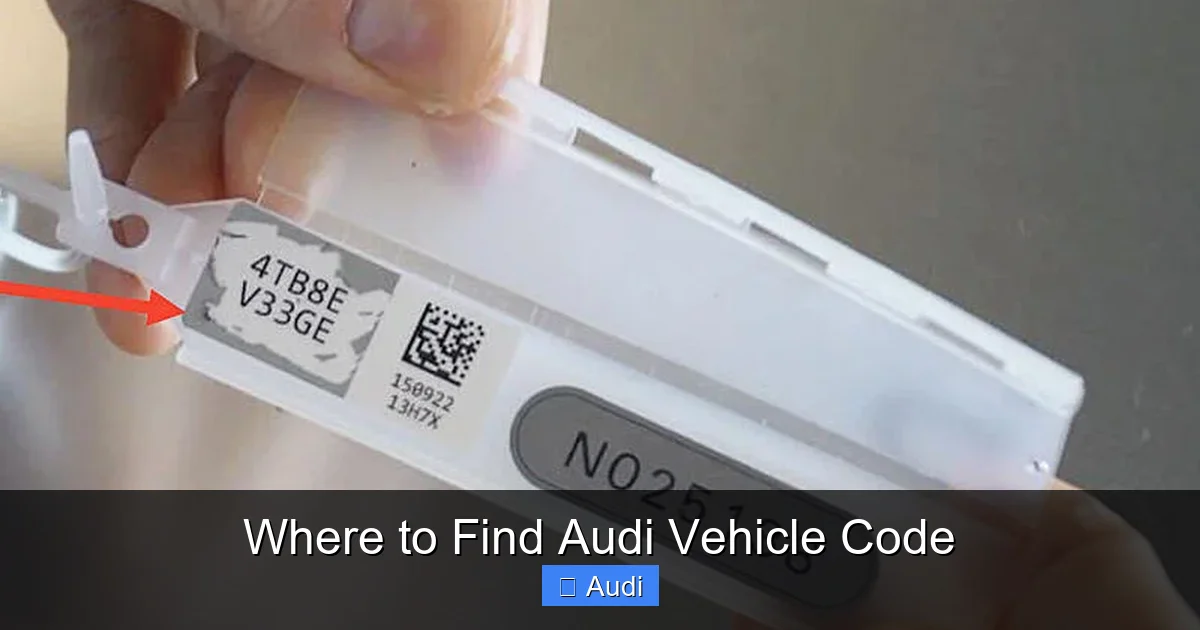
This is the most common and trusted location. When you purchase a new or certified pre-owned Audi, the vehicle code is usually included in the owner’s manual or the documentation pouch that comes with the car. Look for a small white or yellow sticker—often labeled “Immobilizer Code,” “Security Code,” or “Vehicle Code”—affixed to the inside cover or last page of the manual.
For example, in an Audi A3 or Q5, you might find a laminated card tucked into the back of the manual with the code clearly printed. Some models even include a separate “Security Information” booklet dedicated to this purpose. If you bought your car used, check if the previous owner left the documentation intact.
2. Glove Box or Storage Compartment
Many Audi owners are surprised to find the code hidden in plain sight. Open the glove box and look behind it—sometimes there’s a small pocket or flap where the code card is stored. Alternatively, check the inner wall of the glove box itself. A sticker or card may be affixed there, often near the manual or registration documents.
In some newer models like the Audi e-tron or A6, the code might be printed on a removable card that slides into a slot inside the glove box. This design keeps it accessible but out of sight, reducing the risk of theft.
3. Audi Dealership or Service Center
If you can’t find the code in your car, your local Audi dealership is your next best bet. With proof of ownership—such as your driver’s license, registration, and VIN—they can retrieve the code from Audi’s secure database. This service is typically free for current owners, though some dealers may charge a small fee for administrative costs.
To speed up the process, call ahead and ask what documents they’ll need. Most will require:
- Your full name and contact information
- Vehicle registration or title
- Driver’s license
- VIN (found on the dashboard or driver’s door jamb)
Note: Dealers will not provide the code over the phone without verification. You may need to visit in person or submit documents via secure upload.
4. MyAudi Portal or Mobile App
For owners of newer Audi models (typically 2016 and later), the MyAudi portal or mobile app may offer digital access to your vehicle code. After creating an account and linking your VIN, you can view certain vehicle details, including service history and sometimes the immobilizer code.
To check:
- Download the MyAudi app (available on iOS and Android).
- Register your vehicle using your VIN and ownership details.
- Navigate to “Vehicle Information” or “Security Settings.”
- Look for an option like “Retrieve Immobilizer Code” or “View Security Data.”
Keep in mind that not all models support this feature, and access may require additional verification, such as a one-time password sent to your phone.
Hidden and Physical Locations in Your Audi
If the official sources don’t yield results, it’s time to play detective. The vehicle code is sometimes printed in less obvious places within the car—locations that require a bit of exploration but are still accessible to the average owner.
1. Driver’s Side Door Jamb (B-Pillar)
Open the driver’s door and look at the sticker on the B-pillar (the vertical panel between the front and rear doors). This sticker usually contains the VIN, tire pressure recommendations, and manufacturing details. On some Audi models, especially older ones like the A4 B7 or TT Mk2, the vehicle code is printed here as well—often in small font near the bottom.
Tip: Use a flashlight and magnifying glass if the text is hard to read. The code may be listed under “Immobilizer Code” or simply as a 14-digit number.
2. Under the Dashboard or Near the Fuse Box
In certain Audi models, particularly those from the early 2000s, the vehicle code is printed on a label under the dashboard—usually near the steering column or the fuse box. To access it:
- Kneel in the driver’s footwell and look upward toward the dashboard.
- Use a flashlight to scan for small stickers or labels.
- Check near the OBD-II port (the diagnostic port used for scanning tools).
For example, in an Audi A3 8P, the code is sometimes found on a white label attached to the wiring harness beneath the steering column. It’s not glamorous, but it’s effective.
3. Inside the Trunk or Spare Tire Well
Believe it or not, some Audi owners have found their vehicle code tucked away in the trunk. Check the spare tire compartment—sometimes there’s a small envelope or sticker attached to the underside of the trunk liner. This is more common in convertibles like the Audi A5 Cabriolet, where interior space is limited.
Also, inspect the sides of the trunk—especially near the hinges or under the carpet. A previous owner might have hidden the code there for safekeeping.
4. Behind the Radio or Navigation Unit
In rare cases, especially with aftermarket installations or older models, the code may be written on a label behind the radio or navigation screen. To check:
- Remove the radio trim (use a plastic pry tool to avoid scratches).
- Carefully pull out the radio unit.
- Look for a sticker on the side or back of the unit.
Warning: Only attempt this if you’re comfortable with basic car electronics. Disconnect the battery first to avoid short circuits.
Retrieving the Code Digitally
Modern Audi vehicles come equipped with advanced electronics that can sometimes retrieve or display the vehicle code directly—no physical search required.
Using the Radio or Infotainment System
If your radio has locked due to a power interruption, it may prompt you to enter the code. But here’s a pro tip: some systems allow you to view the code if it was previously entered.
- Turn on the ignition (do not start the engine).
- Press and hold the “Setup” or “Menu” button on the radio.
- Navigate to “Security” or “System Info.”
- Look for an option like “View Code” or “Display Immobilizer Code.”
This feature varies by model and year. For instance, Audi MMI systems in the A4 B9 or Q7 4M may support this, while older Concert or Symphony radios might not.
Using an OBD-II Scanner or Diagnostic Tool
For tech-savvy owners, an OBD-II scanner with advanced capabilities can sometimes read the vehicle code directly from the car’s ECU (Engine Control Unit). Tools like the VCDS (VAG-COM Diagnostic System) or OBDeleven are popular among Audi enthusiasts.
- Connect the scanner to the OBD-II port (usually under the dashboard).
- Launch the software and select “Immobilizer” or “Security” module.
- Look for a function like “Read Immobilizer Code” or “Retrieve Security Data.”
Note: This method requires technical knowledge and may void warranties if done incorrectly. Always back up data before making changes.
Contacting Audi Customer Support
If all else fails, Audi’s national customer support team can assist. Call the Audi USA support line (1-800-822-2834) or visit the official Audi website to submit a request. You’ll need to provide:
- Full name and address
- VIN
- Proof of ownership (photo of registration or title)
- Vehicle purchase date and dealership (if known)
Support agents will verify your identity and may email or mail the code within 24–48 hours. This is a secure and reliable option, especially if you’re in a hurry.
What to Do If You’ve Lost the Code
Losing your Audi vehicle code can feel like hitting a dead end—but don’t panic. There are still solutions, though they may take more time and effort.
Contact the Previous Owner
If you bought your Audi used, reach out to the previous owner. They may have kept the code in their records or know where it was stored. Be polite and explain the situation—most people are happy to help.
Check Old Emails or Digital Records
Search your email inbox for terms like “Audi code,” “immobilizer,” or “radio code.” You might have received it during purchase, service, or from a previous owner. Also, check cloud storage, notes apps, or password managers where you might have saved it.
Visit an Independent Audi Specialist
Some independent mechanics and locksmiths specialize in European cars and have tools to retrieve or reset the code. While not as secure as a dealership, they can be faster and cheaper. Always choose a reputable shop with good reviews.
Factory Reset (Last Resort)
In extreme cases, a factory reset of the immobilizer system may be possible—but this usually requires specialized equipment and can be costly. It’s typically only done by dealerships or certified technicians. Avoid this unless absolutely necessary, as it may affect other systems.
Protecting Your Audi Vehicle Code
Once you’ve found your code, treat it like a password. Never write it on the car, share it online, or leave it in an unsecured location. Here’s how to keep it safe:
- Store it digitally: Save it in a password manager like LastPass or 1Password.
- Keep a physical copy: Store it in a locked safe or safety deposit box.
- Share only when necessary: Only give it to trusted mechanics or dealerships.
- Update your records: If you sell the car, provide the code to the new owner—but remove it from your devices first.
Conclusion
Finding your Audi vehicle code doesn’t have to be a headache. Whether it’s tucked in your owner’s manual, hidden under the dashboard, or accessible through the MyAudi app, there are multiple ways to retrieve this essential number. Start with the official sources, explore physical locations, and use digital tools if needed. And if all else fails, your dealership or Audi support team is just a call away.
Remember: the vehicle code is your car’s digital key. Keep it secure, use it wisely, and you’ll never be stuck without access to your Audi’s features again. With this guide in hand, you’re ready to tackle any immobilizer, radio, or key fob issue with confidence.
Frequently Asked Questions
What is an Audi vehicle code?
The Audi vehicle code is a 14-digit number used to authenticate electronic systems like the immobilizer, key fob, and radio. It ensures only authorized users can access or modify your car’s security features.
Can I find the vehicle code without the owner’s manual?
Yes. Check the glove box, driver’s door jamb, under the dashboard, or use the MyAudi app. You can also contact an Audi dealership with proof of ownership.
Is the vehicle code the same as the VIN?
No. The VIN is a 17-character identifier for your car’s make, model, and production details. The vehicle code is a 14-digit security number used for programming and authentication.
What if my radio asks for a code after a battery change?
This is normal. Use the vehicle code or radio code (often derived from it) to reactivate the system. Check your manual, glove box, or contact Audi support if you don’t have it.
Can I retrieve the code myself using a scanner?
Yes, with advanced tools like VCDS or OBDeleven. However, this requires technical knowledge and may void warranties. For most owners, a dealership is safer and easier.
Is it safe to share my Audi vehicle code online?
No. Never post your code on forums, social media, or public sites. It can be used to clone keys or disable your car’s security. Only share it with trusted professionals.