Where Is the Tpms Reset Button on a 2015 Toyota Camry

Contents
- 1 Key Takeaways
- 2 📑 Table of Contents
- 3 Introduction: Demystifying Your Camry’s Tire Pressure Monitor
- 4 Understanding Your 2015 Camry’s TPMS: How It Works
- 5 The Great Hunt: Locating Your “Reset Button”
- 6 Step-by-Step: Resetting the TPMS on Your 2015 Toyota Camry
- 7 When and Why You Need to Perform a TPMS Reset
- 8 Troubleshooting: What If the Reset Doesn’t Work?
- 9 Frequently Asked Questions (FAQs)
- 10 Conclusion: Taking Control of Your TPMS
- 11 Frequently Asked Questions


The TPMS reset button on a 2015 Toyota Camry is not a traditional button at all. It is a sequence you perform using the odometer/trip meter reset stalk on the steering column. You must first correct the tire pressure, then use the stalk to navigate to the TPMS menu and hold to initiate the reset. The process takes about 2-3 minutes and requires the vehicle to be stationary with the ignition on.
Key Takeaways
- No Physical Button: The 2015 Camry uses a menu-driven reset via the steering column stalk, not a dedicated dash or footwell button.
- Prerequisite is Correct Pressure: You must inflate all tires to the exact manufacturer’s PSI (found on the driver’s door jamb sticker) before attempting the reset.
- Process is Menu-Based: The reset involves turning the ignition on, using the stalk to find the “TPMS” menu on the multi-information display, and holding the button to reset.
- Light Behavior is Key: A solid TPMS light means low pressure; a blinking light for ~60 seconds then solid indicates a sensor fault, which this reset will not fix.
- Aftermarket Sensors May Need Special Tools: If your Camry has aftermarket or generic TPMS sensors, a simple button reset might not work; a scan tool may be required.
- Reset After Tire Service: Always reset the TPMS after tire rotation, replacement, or pressure adjustment to recalibrate the system to the new positions.
- Procedure is Universal for 2012-2017: This same stalk-based reset method applies to most 2012-2017 Toyota Camry models.
📑 Table of Contents
- Introduction: Demystifying Your Camry’s Tire Pressure Monitor
- Understanding Your 2015 Camry’s TPMS: How It Works
- The Great Hunt: Locating Your “Reset Button”
- Step-by-Step: Resetting the TPMS on Your 2015 Toyota Camry
- When and Why You Need to Perform a TPMS Reset
- Troubleshooting: What If the Reset Doesn’t Work?
- Frequently Asked Questions (FAQs)
- Conclusion: Taking Control of Your TPMS
Introduction: Demystifying Your Camry’s Tire Pressure Monitor
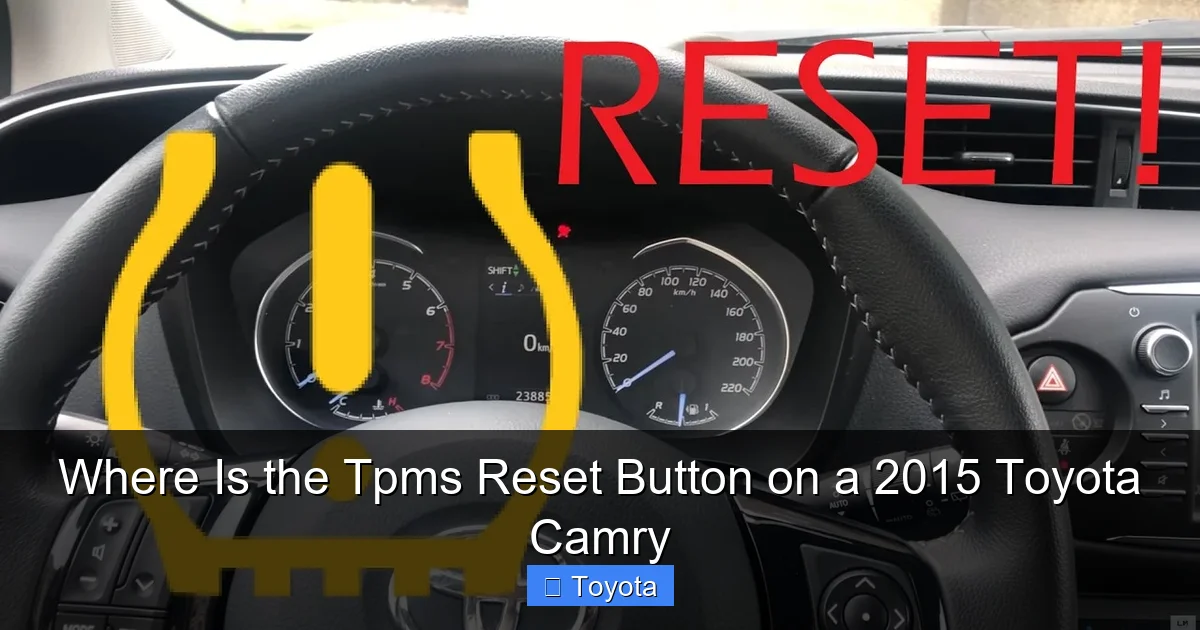
That little yellow exclamation point on your dashboard, shaped like a horseshoe with an exclamation mark inside, is your Tire Pressure Monitoring System (TPMS) warning light. It’s a critical safety feature, and when it comes on in your reliable 2015 Toyota Camry, it’s trying to tell you something important. Often, the fix is simple: check your tire pressure, inflate them to the correct level, and then reset the system. But where is that reset button? If you’re picturing a small, mysterious button somewhere under the dash or in the glovebox, you can stop looking. The 2015 Camry, like many modern Toyotas, doesn’t have a physical “TPMS reset button” in the traditional sense. Instead, it uses a clever, integrated electronic sequence. This guide will walk you through exactly where to find the control and how to perform the reset, turning that frustrating warning light off for good.
Understanding this process saves you a trip to the dealer or tire shop for a simple task. It’s all about communicating with your car’s computer through the instruments on your steering wheel. We’ll break it down step-by-step, explain why the light might be on in the first place, and troubleshoot what to do if the reset doesn’t work. Let’s get that light out of your life.
Understanding Your 2015 Camry’s TPMS: How It Works
Before we hunt for the “button,” it helps to understand what the TPMS actually does. Your 2015 Camry uses a direct TPMS. This means each wheel has a small sensor mounted inside the valve stem. These sensors constantly monitor the air pressure and temperature in each tire and transmit that data wirelessly to the car’s main computer (the ECU). When the pressure in any tire drops 25% or more below the recommended level, the system triggers the warning light on your dash.
Visual guide about Where Is the Tpms Reset Button on a 2015 Toyota Camry
Image source: i.ytimg.com
The “Reset” is Actually a Re-Learn Process
Here’s the key concept: the TPMS doesn’t just know “tire pressure is low.” It learns which sensor is in which wheel position. When you rotate your tires or replace a sensor, the car’s computer still thinks the old sensor locations are correct. The “reset” or “re-learn” process tells the system: “Hey, the sensor that was on the front right is now on the rear left. Update your memory.” This is why you must perform the reset *after* you have already corrected the tire pressures. The system needs to verify the new pressure readings from the correctly positioned sensors before it can safely turn the light off.
The Great Hunt: Locating Your “Reset Button”
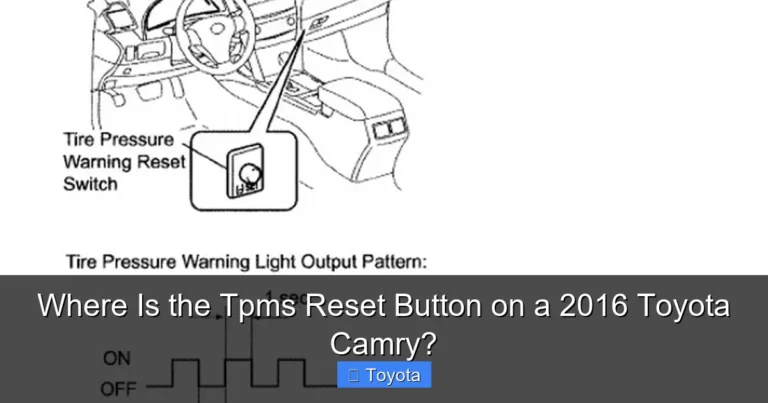
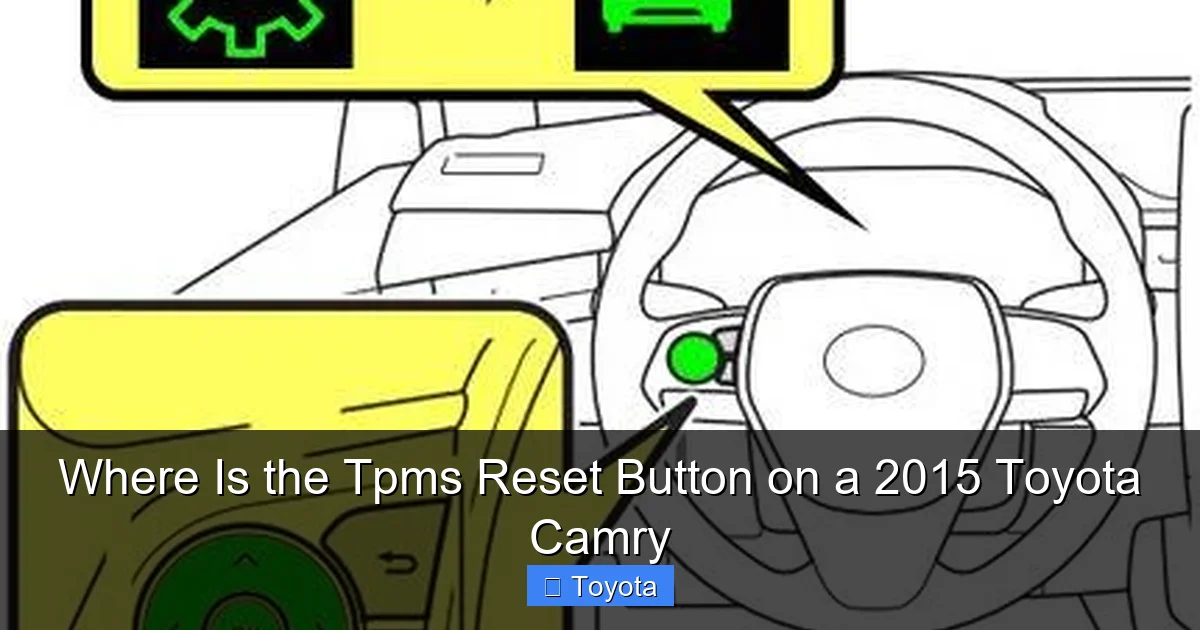
Now, for the moment you’ve been waiting for. Stand in the driver’s seat of your 2015 Camry and look at the steering column. You won’t find a button on the dashboard, the center console, or the driver’s door panel. Your control center is the stalk that protrudes from the right side of the steering column. This is the same stalk you use to adjust your cruise control, scroll through your odometer and trip meters, and control your headlights.

Visual guide about Where Is the Tpms Reset Button on a 2015 Toyota Camry
Image source: knowmyauto.b-cdn.net
Specifically, you will be using the trip meter/odometer reset button, which is the small button at the end of that stalk, often with a diagram of a page and an arrow or a “TRIP” label. This button, in combination with the ignition position and the multi-information display (the screen in the gauge cluster), is your TPMS reset interface. Think of it as a remote control for your car’s computer menus. If you’ve ever reset your trip meter or changed the clock using this stalk, you’re already familiar with the basic principle.
Step-by-Step: Resetting the TPMS on Your 2015 Toyota Camry
Follow these instructions precisely. The sequence is specific and must be done in order. Make sure all doors are closed and the vehicle is parked, with the parking brake set.
Visual guide about Where Is the Tpms Reset Button on a 2015 Toyota Camry
Image source: i.ytimg.com
Step 1: Correct the Tire Pressures
This is the non-negotiable first step. Use a reliable tire pressure gauge. Remove the valve stem caps and check the pressure in all four tires, including the spare if it’s a full-size spare with a sensor. Inflate or deflate each tire to match the exact psi listed on the driver’s door jamb sticker (not the tire sidewall). This is typically 32 psi for most 2015 Camry trims, but always verify with your sticker. Replace the valve stem caps securely.
Step 2: Turn the Ignition to the “ON” Position
Do not start the engine. Insert your key and turn it to the “ACC/ON” position, or if you have a push-button start, press the “START” button twice without touching the brake pedal. All dashboard lights should illuminate, and you should see the TPMS warning light (and possibly other lights) on for a few seconds as a bulb check, then they should go off. If the TPMS light stays solid after the bulb check, it means the system still detects low pressure—re-check your tire pressures.
Step 3: Navigate to the TPMS Menu
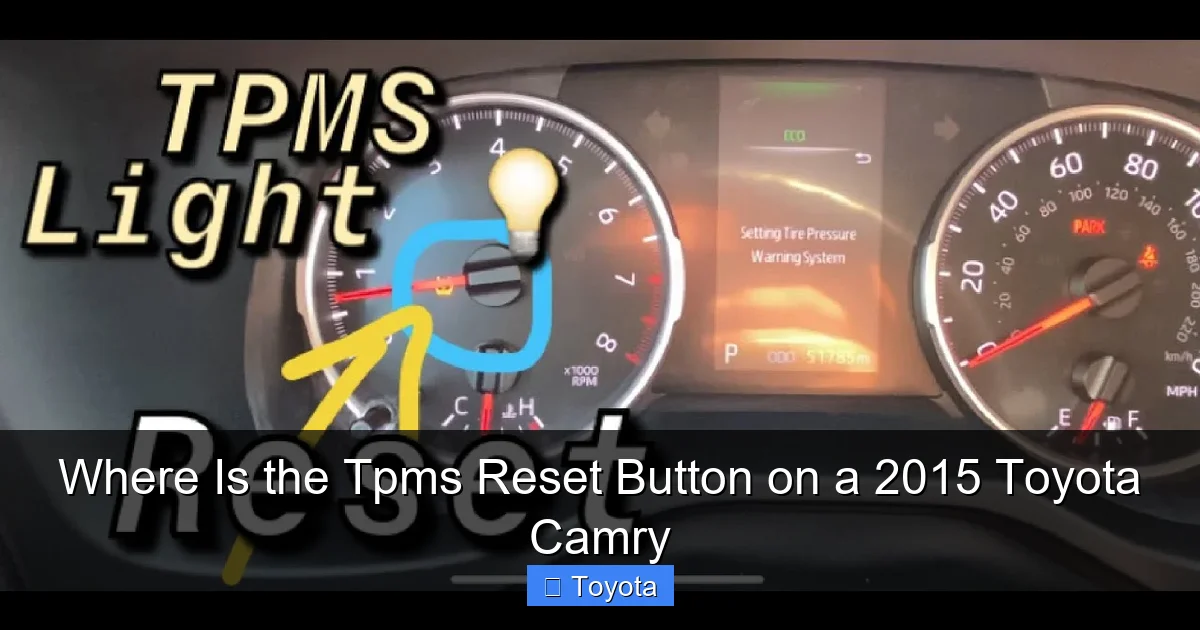
This is where you use the steering wheel stalk. Quickly press the trip meter/odometer reset button (the button at the end of the stalk) multiple times. You are cycling through the different displays in your multi-information screen. Keep pressing until you see a screen that says “TPMS” or shows a graphic of a car with tire pressure values. The exact wording may vary slightly by trim level (LE, SE, XLE), but it will clearly indicate it’s the tire pressure menu.
Step 4: Initiate the Reset
Once the “TPMS” screen is displayed, press and hold the same trip meter button for about 2-3 seconds. You may hear a beep, or the display might change, showing a message like “Initializing” or a blinking tire icon. This indicates the reset process has started. It can take 30 seconds to 2 minutes for the system to communicate with all four sensors and verify the new pressures. The TPMS warning light on your dash may continue to blink during this time—this is normal.
Step 5: Confirmation
After the system finishes learning the new sensor positions and pressures, the TPMS warning light on your dashboard should turn off. The multi-information display will usually return to a normal screen showing the tire pressures or the odometer reading. If the light remains on after a couple of minutes, or if it starts blinking again, the reset was not successful. Re-check tire pressures and repeat the process from Step 3.
When and Why You Need to Perform a TPMS Reset
Knowing the location and process is one thing; knowing *when* to use it is just as important. Here are the most common scenarios that require a TPMS reset on your 2015 Camry:
- After Tire Rotation: This is the #1 reason. Since the sensors move to new wheel positions, the car’s computer must be told to update its memory. Not resetting after a rotation will cause the TPMS light to come on, even with correct pressures, because the system thinks the sensors are in the wrong places.
- After Replacing a Tire or Sensor: If you get a flat repaired with a plug, or you replace a damaged sensor, the new sensor has a unique ID that the car’s computer doesn’t recognize until you perform the reset procedure.
- After Changing a Flat for the Spare: If you install your full-size spare (which has its own sensor), the system will detect a fifth sensor and likely trigger a fault. Once the original tire is reinstalled and all pressures are correct, you must reset.
- After Adjusting Pressures: If you manually added air to fix a low-pressure warning, you must reset the system to clear the light. The system doesn’t automatically realize the problem is fixed; it needs the manual reset command.
- After an Accident or Impact: A hard pothole hit can sometimes jostle a sensor or cause a temporary communication fault. A reset can sometimes clear this, but if the light returns, the sensor may be damaged.
Pro Tip: It’s a good habit to perform a TPMS reset anytime you have any work done on your tires or wheels, even if the light hasn’t come on yet. It’s a simple preventive step that ensures your system is accurately calibrated.
Troubleshooting: What If the Reset Doesn’t Work?
You followed all the steps, the pressures are perfect, but that stubborn TPMS light is still glowing. Don’t panic. Here’s a systematic checklist to diagnose the issue:
1. Re-verify the Tire Pressures
This seems obvious, but it’s the most common mistake. Use a high-quality digital gauge. Check pressures when the tires are cold (driven less than 1-2 miles). Compare the reading on each tire to the spec on your door jamb sticker. A difference of even 1-2 psi can keep the light on. Also, don’t forget the spare if it’s a full-size, sensor-equipped spare.
2. Check for a Faulty Sensor (Blinking Light)
If your TPMS light blinked for 60 seconds and then stayed solid before you tried the reset, that’s a sensor fault code. The reset procedure will not fix a dead or failing sensor. A blinking TPMS light indicates one or more sensors are not communicating at all, have a dead battery (sensor batteries last 7-10 years), or are physically damaged. In this case, you need a professional with a TPMS scan tool to identify which sensor has failed and replace it.
3. Consider Aftermarket or Generic Sensors
If your Camry has aftermarket wheels or if a previous owner installed generic, non-OEM TPMS sensors, they may not be fully compatible with Toyota’s system. The reset procedure might not initiate or the system might not “learn” them. This often requires a dedicated TPMS programming tool at a tire shop to teach the new sensor IDs to the car’s computer.
4. The Reset Procedure Wasn’t Followed Correctly
It’s easy to miss a step. Did you make sure the vehicle was stationary? Did you hold the button long enough? Try the entire process again from the beginning, being very deliberate. Sometimes it takes two attempts.
5. There is an Underlying Electrical Issue
Rarely, the problem could be a blown fuse for the TPMS module or a wiring issue. This is uncommon but possible, especially if other dashboard gauges are acting strangely. This requires professional diagnosis.
If you’ve exhausted these steps and the light persists, it’s time to visit a trusted tire shop or your Toyota dealer. They have advanced diagnostic scanners that can read TPMS codes, test sensor signals, and identify the exact problem. For more complex sensor issues, you might need to look into how to tell which TPMS sensor is bad on a Toyota, which involves using a professional scan tool to listen for each sensor’s signal.
Frequently Asked Questions (FAQs)
Where is the TPMS reset button on a 2015 Toyota Camry physically located?
There is no single physical reset button. The “button” is the trip meter/odometer reset stalk on the right side of your steering column. You use it to navigate the dash display menu to the TPMS screen and hold it to reset.
My TPMS light is blinking, not solid. Can I still reset it?
A blinking TPMS light (usually for about 60 seconds) indicates a sensor communication fault, not just low pressure. The standard reset procedure will not fix this. A blinking light means one or more sensors are not being detected by the car’s computer, likely due to a dead sensor battery or physical damage. This requires diagnosis with a scan tool to identify and replace the faulty sensor.
Can I reset the TPMS without starting the car?
Yes, and you should not start the car. The ignition only needs to be in the “ON” or “ACC” position (all dash lights on). Starting the engine is not required and can sometimes interfere with the reset sequence.
How long does the TPMS reset process take?
Once you initiate the reset by holding the stalk button, the system takes approximately 30 seconds to 2 minutes to communicate with all four sensors and verify their new positions and pressures. Keep the ignition on during this time. The TPMS light may blink during learning and should turn off when complete.
Will disconnecting the battery reset the TPMS?
No. Disconnecting the battery will reset the car’s clock and radio presets, but it will not reset the TPMS. The TPMS module retains its memory of sensor locations even when the main battery is disconnected. You must use the specific menu-driven procedure described above.
What if my Camry has aftermarket wheels with generic TPMS sensors?
This is a common issue. Generic sensors may not be recognized properly by Toyota’s system. The standard reset might not work. You may need a professional TPMS tool to “program” or “teach” the new sensor IDs to your car’s computer, a process sometimes called “relearn” or “registration.” A tire shop can perform this service.
Conclusion: Taking Control of Your TPMS
Your 2015 Toyota Camry’s TPMS reset process is a perfect example of how modern cars integrate functions into digital interfaces. While the absence of a simple, labeled button can be confusing at first, the method using the steering column stalk is efficient and logical once you know the steps. The golden rule remains: always ensure your tire pressures are perfectly set to the manufacturer’s specification before attempting any reset. The system is designed to warn you of a genuine safety issue, so never ignore a persistent TPMS light. By mastering this simple procedure, you empower yourself to handle a common maintenance task quickly and correctly, saving time and money. You’ve now got the knowledge to keep your Camry’s tires—and your safety—in perfect harmony.
Frequently Asked Questions
Do I need a special tool to reset the TPMS on a 2015 Camry?
No, you do not need any special tools. The reset is performed using only the ignition key and the trip meter stalk on your steering column. It’s a completely manual, menu-driven process.
Why does my TPMS light come on in cold weather?
Cold weather causes air in your tires to contract, dropping the pressure. This often triggers the TPMS light. The solution is to check and inflate your tires to the correct cold pressure (found on your door jamb sticker). After inflating, you will need to perform the reset procedure to turn the light off.
Can I just ignore the TPMS light if the tires look fine?
No. You should never ignore the TPMS warning light. Even if the tires appear normal, they could be under-inflated by up to 25%, which affects fuel economy, tire wear, and handling safety. Always check pressures immediately when the light comes on.
Is the TPMS reset procedure the same for all 2015 Camry trims?
Yes, for the most part. Whether you have a base LE, a sporty SE, or a luxurious XLE, the process is identical because they all use the same steering column stalk and multi-information display interface. The wording on the screen might vary slightly, but the steps are the same.
My TPMS light came on after I got new tires. What should I do?
This is very common. The tire shop may have rotated your tires or installed new sensors. First, verify all four tires are inflated to the correct door jamb psi. Then, perform the reset procedure using your steering stalk. If the light persists, ask the shop if they used OEM or programmable sensors and if they performed a relearn.
What is the difference between a solid and a blinking TPMS light?
A solid TPMS light means one or more tires are significantly under-inflated. A blinking light (that blinks for about a minute then goes solid) indicates a fault in the TPMS system itself—usually a dead sensor battery, a damaged sensor, or a communication problem. A blinking light requires diagnostic scanning, not just a pressure reset.