Where Is the Rear Window Washer Fluid Reservoir on a Toyota Highlander?

Contents
- 1 Key Takeaways
- 2 📑 Table of Contents
- 3 Where Is the Rear Window Washer Fluid Reservoir on a Toyota Highlander?
- 4 Understanding the Rear Washer System in the Toyota Highlander
- 5 Locating the Rear Window Washer Fluid Reservoir
- 6 How to Refill the Rear Window Washer Fluid
- 7 Troubleshooting Common Rear Washer Issues
- 8 Maintenance Tips for Long-Term Reliability
- 9 Conclusion
- 10 Frequently Asked Questions

Car Bumper Protector

Bluetooth FM Transmitter

Liquid Car Polish
Reflective Safety Triangle
Locating the rear window washer fluid reservoir on a Toyota Highlander is simple once you know where to look. This guide walks you through the exact location, how to access it, and essential maintenance tips to keep your rear washer system working smoothly.
Key Takeaways
- Location: The rear window washer fluid reservoir is typically integrated with the front reservoir under the hood, but on some Highlander models, it’s a separate unit near the rear suspension or inside the rear bumper area.
- Access: You may need to remove interior trim panels or access the reservoir from underneath the vehicle, depending on the model year.
- Refill Process: Use only washer fluid rated for cold weather if you live in a colder climate—never use plain water.
- Common Issues: Clogged nozzles, frozen lines, or a faulty pump can prevent fluid from spraying—check these if the system isn’t working.
- Maintenance: Inspect the reservoir and hoses annually for cracks, leaks, or wear to avoid unexpected failures.
- Safety Tip: Always disconnect the battery before working near electrical components like the washer pump.
- DIY Friendly: Most Highlander owners can refill or troubleshoot the rear washer system with basic tools and minimal mechanical experience.
📑 Table of Contents
- Where Is the Rear Window Washer Fluid Reservoir on a Toyota Highlander?
- Understanding the Rear Washer System in the Toyota Highlander
- Locating the Rear Window Washer Fluid Reservoir
- How to Refill the Rear Window Washer Fluid
- Troubleshooting Common Rear Washer Issues
- Maintenance Tips for Long-Term Reliability
- Conclusion
Where Is the Rear Window Washer Fluid Reservoir on a Toyota Highlander?
If you’ve ever driven in rain, snow, or dusty conditions, you know how important a clear rear window is—especially in a larger SUV like the Toyota Highlander. While most drivers are familiar with the front windshield washer system, the rear window washer often gets overlooked until it stops working. One of the first questions that comes up is: “Where is the rear window washer fluid reservoir on a Toyota Highlander?”
The answer isn’t always straightforward, because it varies slightly depending on the model year and trim level. Unlike some vehicles that have a completely separate reservoir for the rear washer, many Toyota Highlanders share a single reservoir for both front and rear systems. However, in certain configurations—particularly in newer models or hybrid versions—the rear washer may use a dedicated pump and reservoir located in a less obvious spot.
This guide will help you locate the rear window washer fluid reservoir on your Toyota Highlander, whether you’re driving a 2010 model or a 2024 Hybrid Limited. We’ll cover the most common locations, how to access them, and what to do if your rear washer isn’t working. Whether you’re performing routine maintenance or troubleshooting a problem, this information will save you time and frustration.
Understanding the Rear Washer System in the Toyota Highlander

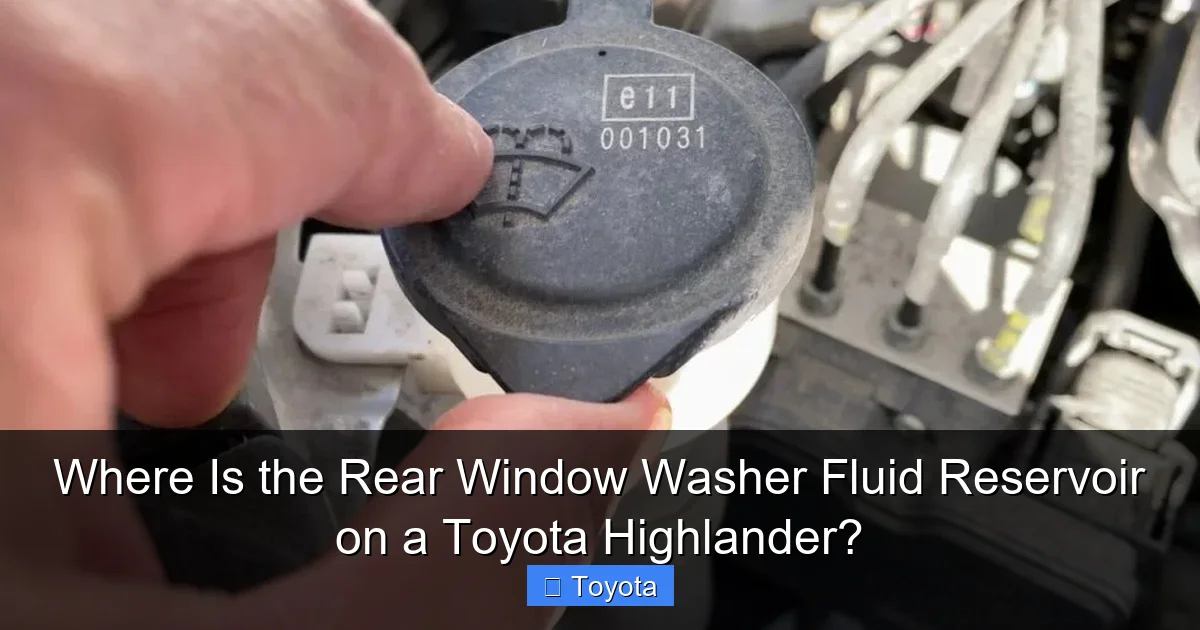
Visual guide about Where Is the Rear Window Washer Fluid Reservoir on a Toyota Highlander?
Image source: s3.amazonaws.com
Before diving into the physical location of the reservoir, it helps to understand how the rear window washer system works in the Toyota Highlander. The system consists of three main components: the fluid reservoir, the electric pump, and the spray nozzle mounted on the rear windshield.
When you activate the rear washer (usually by pulling the wiper stalk toward you or pressing a dedicated button), the pump draws fluid from the reservoir and sends it through a small hose to the nozzle. The nozzle then sprays the fluid onto the glass, helping to clear dirt, mud, or road grime.
In most Highlander models, the front and rear washers share the same reservoir. This reservoir is typically a translucent plastic tank located under the hood, near the front passenger side fender. It has two chambers or two separate inlet ports—one for the front washer pump and one for the rear. This design simplifies maintenance, as you only need to check and refill one tank.
However, some newer Highlander models—especially those with advanced safety features or hybrid powertrains—may use a separate rear reservoir. This is more common in vehicles equipped with a rear wiper and washer system that operates independently. In these cases, the rear reservoir is often smaller and located closer to the rear of the vehicle.
How the System Differs by Model Year
The design of the washer system has evolved over the years. Early Highlander models (2001–2007) typically used a single reservoir under the hood. The second-generation Highlander (2008–2013) continued this trend, with minor updates to the pump and hose routing.
Starting with the third generation (2014–2019), Toyota began integrating more electronic controls and sometimes added a secondary pump for the rear washer. This means that while the fluid still comes from the main reservoir, the rear pump may be located elsewhere—often near the rear suspension or behind the rear bumper.
The fourth-generation Highlander (2020–present), including the Hybrid models, features a more streamlined design. In many of these vehicles, the rear washer pump is mounted directly on or near the reservoir, but the reservoir itself remains under the hood. However, in some configurations—particularly in models with a rear wiper arm that folds or retracts—the system may include a small auxiliary reservoir in the rear.
Why the Rear Washer Matters
You might wonder why the rear washer is important. After all, most driving visibility comes from the front windshield and side mirrors. But the rear window plays a critical role, especially when reversing, changing lanes, or driving in low-visibility conditions.
In the Highlander, the rear window is large and slopes slightly, which means it collects dirt, snow, and road spray quickly. Without a functioning washer, the rear camera (if equipped) can become obscured, reducing the effectiveness of backup assist systems. Additionally, many states require rear washers on vehicles with rear wipers, so keeping the system in good working order isn’t just convenient—it’s often a legal requirement.
Locating the Rear Window Washer Fluid Reservoir

Visual guide about Where Is the Rear Window Washer Fluid Reservoir on a Toyota Highlander?
Image source: storables.com
Now that you understand how the system works, let’s get to the main question: where is the rear window washer fluid reservoir on a Toyota Highlander?
In the vast majority of cases, the answer is: under the hood, near the front passenger side. But let’s break it down step by step.
Step 1: Open the Hood
Start by pulling the hood release lever inside the cabin, usually located under the dashboard on the driver’s side. Then, go to the front of the vehicle and lift the hood. Secure it with the prop rod or hydraulic strut.
Step 2: Look for the Washer Fluid Reservoir
Once the hood is open, look along the inner fender wall on the passenger side. You’ll see a translucent plastic tank with a blue or black cap. This is the main washer fluid reservoir. It’s usually labeled with a symbol that looks like a windshield with water droplets.
The reservoir is typically mounted near the firewall, close to the brake fluid reservoir and battery. It’s made of semi-clear plastic so you can see the fluid level without opening it.
Step 3: Identify the Rear Washer Connection
Now, here’s the key detail: this single reservoir supplies fluid to both the front and rear washers. Look for two small hoses connected to the bottom or side of the tank. One hose goes to the front washer pump (usually on the driver’s side), and the other goes to the rear washer pump.
The rear hose is often routed along the frame rail or under the vehicle, running toward the rear. You may not see the entire hose, but you can usually trace it from the reservoir to where it disappears into the body.
What If You Don’t See a Separate Rear Reservoir?
If you’re looking for a second, smaller tank near the back of the vehicle and don’t find one, that’s normal. Most Highlanders don’t have a dedicated rear reservoir. Instead, they rely on the main tank under the hood.
However, if your Highlander has a rear wiper and washer system that seems to operate independently—especially if the rear washer works but the front doesn’t, or vice versa—there may be a secondary pump or reservoir.
In these cases, the rear pump is often located behind the rear bumper or near the spare tire well. You may need to remove interior trim panels in the cargo area or look underneath the vehicle to find it.
Hybrid and AWD Models: Special Considerations
Toyota Highlander Hybrid and all-wheel-drive (AWD) models may have slightly different layouts due to the placement of the electric motor and battery pack. In some hybrids, the rear washer pump is mounted on the rear suspension crossmember or inside the rear bumper cover.
To access it, you might need to remove the rear bumper trim or look through the wheel well. This is more common in 2020 and newer models, where space under the hood is tighter.
How to Refill the Rear Window Washer Fluid

Visual guide about Where Is the Rear Window Washer Fluid Reservoir on a Toyota Highlander?
Image source: storables.com
Refilling the washer fluid is one of the easiest maintenance tasks you can do on your Highlander. Here’s how to do it safely and correctly.
Step 1: Choose the Right Washer Fluid
Not all washer fluids are created equal. If you live in a cold climate, use a winter-grade fluid that won’t freeze. These fluids contain methanol or ethanol and are rated for temperatures as low as -20°F or -30°F.
Avoid using plain water, especially in winter. Water can freeze in the lines and reservoir, causing cracks or blockages. It also doesn’t clean as effectively and can promote bacterial growth.
Look for a high-quality washer fluid with added cleaning agents and anti-corrosion properties. Many brands offer “all-season” formulas that work well in most climates.
Step 2: Open the Reservoir Cap
Locate the blue or black cap on top of the reservoir. Twist it counterclockwise to remove it. Some caps have a small dipstick attached to check the fluid level.
Step 3: Add Fluid
Slowly pour the washer fluid into the reservoir until it reaches the “Full” line. Most reservoirs have markings on the side indicating minimum and maximum levels.
Don’t overfill. Leave a small air gap to allow for expansion, especially in hot weather.
Step 4: Replace the Cap and Test
Screw the cap back on securely. Close the hood and test the rear washer by activating it from inside the vehicle. You should see fluid spray onto the rear window within a few seconds.
If nothing happens, don’t panic. There could be a clog, a blown fuse, or a faulty pump. We’ll cover troubleshooting in the next section.
Pro Tip: Use a Funnel
To avoid spills, use a small funnel when pouring fluid into the reservoir. This is especially helpful if the opening is narrow or hard to reach.
Troubleshooting Common Rear Washer Issues
Even with regular maintenance, the rear washer system can develop problems. Here are the most common issues and how to fix them.
No Fluid Spraying
If you activate the rear washer and nothing comes out, check the following:
– **Fluid Level:** Is the reservoir empty? Refill if necessary.
– **Clogged Nozzle:** Dirt or debris can block the spray nozzle. Use a pin or needle to gently clear the opening.
– **Frozen Lines:** In cold weather, fluid can freeze in the hose. Park the vehicle in a warm garage and let it thaw.
– **Blown Fuse:** Check the fuse box (usually under the dashboard or hood) for a blown fuse related to the washer system.
– **Faulty Pump:** If the pump isn’t running, it may need replacement. Listen for a humming sound when you activate the washer.
Weak or Intermittent Spray
A weak spray often indicates a partial blockage or low fluid pressure. Try cleaning the nozzle and checking for kinks in the hose. If the problem persists, the pump may be failing.
Fluid Leaking
If you notice fluid under the vehicle or around the reservoir, inspect the tank and hoses for cracks or loose connections. Replace damaged parts promptly to avoid fluid loss or electrical issues.
Pump Not Working
If the pump doesn’t run at all, it could be electrical. Use a multimeter to check for power at the pump connector. If there’s power but the pump doesn’t run, replace the pump. If there’s no power, check the fuse, relay, and wiring.
Maintenance Tips for Long-Term Reliability
To keep your rear washer system working smoothly, follow these simple maintenance tips.
Check Fluid Level Monthly
Make it a habit to check the washer fluid level every month, especially before long trips or winter driving.
Clean the Nozzle Regularly
Use a soft cloth and a pin to clean the rear nozzle every few months. This prevents clogs and ensures a strong spray.
Inspect Hoses and Connections
Once a year, inspect the hoses running from the reservoir to the rear pump. Look for cracks, leaks, or loose fittings.
Replace the Pump if Needed
Washer pumps typically last 5–10 years. If yours fails, replacement is straightforward and costs around $30–$60 for the part.
Use Quality Fluid
Invest in a good washer fluid. Cheap fluids can leave residue or damage rubber components over time.
Conclusion
Finding the rear window washer fluid reservoir on a Toyota Highlander is easier than you might think. In most models, it’s part of the main reservoir under the hood, located on the passenger side near the fender. While some newer or hybrid models may have a separate rear pump or auxiliary reservoir, the fluid source is usually the same.
Regular maintenance—like checking fluid levels, cleaning nozzles, and using the right washer fluid—can prevent most issues. And if your rear washer stops working, don’t assume it’s a major problem. Often, it’s something simple like a clog or a blown fuse.
By understanding how your Highlander’s washer system works and where the components are located, you can keep your rear window clear and your driving experience safe and comfortable. Whether you’re navigating city streets or heading out on a family road trip, a functioning rear washer is a small but essential part of your vehicle’s safety system.
Frequently Asked Questions
Is the rear washer fluid reservoir separate from the front on a Toyota Highlander?
In most Toyota Highlander models, the rear and front washers share the same reservoir located under the hood. However, some newer or hybrid models may have a separate rear pump, but the fluid still comes from the main tank.
Can I use regular water instead of washer fluid?
No, you should never use plain water. It can freeze in cold weather, promote bacterial growth, and doesn’t clean as effectively. Always use a proper washer fluid, especially one rated for winter conditions if you live in a cold climate.
Why isn’t my rear washer spraying fluid?
Common causes include low fluid level, a clogged nozzle, a blown fuse, a faulty pump, or frozen lines. Check the fluid first, then inspect the nozzle and electrical components.
How often should I refill the washer fluid?
Check the fluid level monthly and refill as needed. If you use the washer frequently, you may need to top it off every few weeks, especially in winter or during long trips.
Where is the rear washer pump located on a Highlander?
The rear washer pump is usually mounted near the reservoir under the hood or routed along the frame to the rear. On some models, it’s located behind the rear bumper or near the spare tire well.
Can I drive without a working rear washer?
While it’s not illegal in all areas, many states require rear washers on vehicles with rear wipers. More importantly, a clear rear window improves safety, especially when reversing or driving in poor conditions.