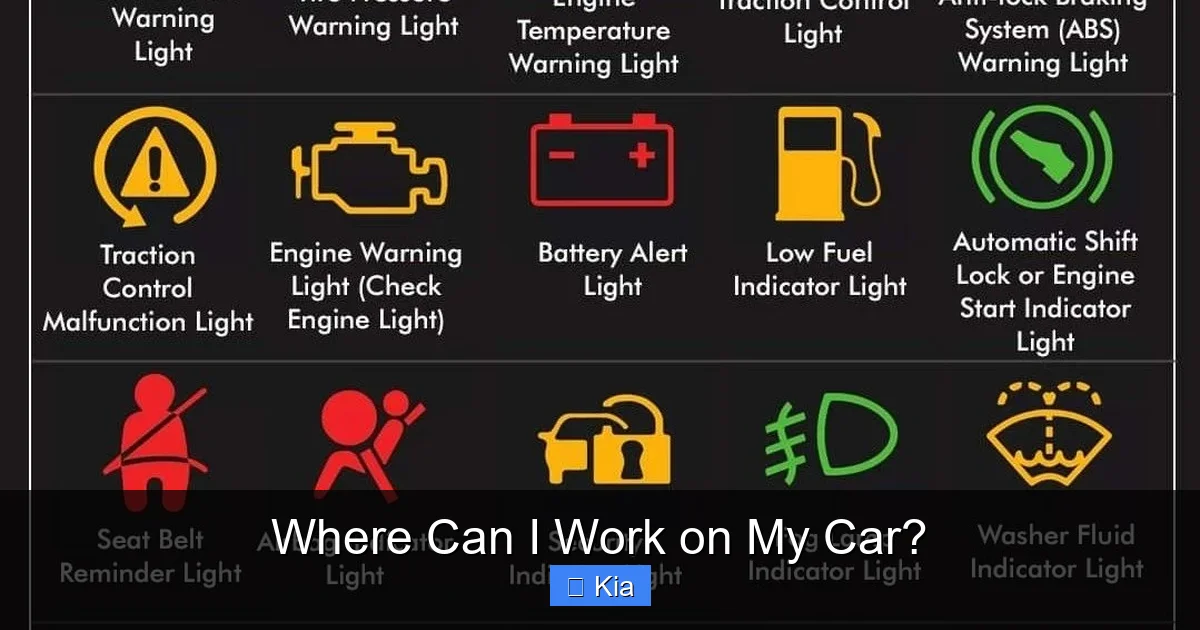
Where Can I Work on My Car?

Contents
- 1 Key Takeaways
- 2 📑 Table of Contents
- 3 1. Your Home Garage or Driveway
- 4 2. Community Workshops and DIY Garages
- 5 3. Public Parking Lots and Street Parking (With Caution)
- 6 4. Professional Repair Shops and Dealerships
- 7 5. Mobile Mechanics and At-Home Services
- 8 6. Choosing the Right Space for Your Kia
- 9 Frequently Asked Questions


Whether you’re tuning up your Kia or tackling a major repair, knowing where to work on your car safely and effectively is key. From your driveway to a professional garage, this guide covers all your options with practical tips and expert advice.
[FEATURED_IMAGE_PLACEOLDER]
So, you’ve got a Kia—maybe a Sportage, a Sorento, or even a sleek Kia EV6—and you’re itching to do some work on it. Maybe it’s a simple oil change, a brake pad replacement, or something more involved like a suspension upgrade. The big question now is: Where can I work on my car?
The good news? You’ve got more options than ever. Gone are the days when your only choices were a cramped driveway or an expensive dealership service bay. Today, car enthusiasts—especially Kia owners who value reliability and affordability—can choose from a range of spaces that fit their skill level, budget, and project scope. Whether you’re a weekend warrior or a full-time DIYer, the right workspace can make all the difference between a frustrating afternoon and a satisfying repair job.
But it’s not just about convenience. Safety, tool access, and environmental factors all play a role. Working on a Kia—known for its modern engineering and tech-forward features—requires thoughtful planning. You don’t want to strip a bolt because you’re using the wrong socket, or worse, injure yourself because you didn’t use proper support. That’s why knowing where to work is just as important as how to work.
In this guide, we’ll walk you through the best places to work on your Kia, from your own backyard to community garages and professional shops. We’ll cover what each space offers, what kinds of jobs are suitable, and how to stay safe and legal. Whether you’re changing your own oil or rebuilding an engine, you’ll find the perfect spot—and the confidence—to get the job done right.
Key Takeaways
- Your driveway or garage is ideal for basic maintenance like oil changes, tire rotations, and air filter replacements—just ensure proper lighting and ventilation.
- Community workshops offer affordable access to tools and space if you lack equipment at home, especially for Kia owners in urban areas.
- DIY garages and makerspaces are growing in popularity and provide lift access, specialized tools, and mentorship for more complex repairs.
- Professional repair shops are best for advanced diagnostics and warranty-covered work, particularly for newer Kia models with advanced electronics.
- Always prioritize safety—use jack stands, wear protective gear, and follow Kia’s service manuals to avoid injury or damage.
- Check local regulations before working on your car in public or shared spaces to avoid fines or towing.
- Invest in quality tools gradually—start with basics like wrenches, sockets, and a torque wrench tailored for Kia vehicles.
📑 Table of Contents
1. Your Home Garage or Driveway
For many Kia owners, the most convenient place to work on their car is right at home. Your garage or driveway offers privacy, control, and the comfort of working on your own schedule. Plus, you can leave tools and parts out between sessions—no need to pack up after every visit.
Why Your Garage Is a Great Starting Point
Your home garage is ideal for routine maintenance and minor repairs. Think oil changes, air filter swaps, wiper blade replacements, and even brake inspections. These tasks don’t require heavy machinery or specialized lifts, making them perfect for a home setup. Kia vehicles, with their straightforward mechanical designs, are especially friendly to DIYers.
One major advantage? You can work at your own pace. Got a free Sunday afternoon? Perfect. You can take your time, double-check your work, and even watch a tutorial mid-job. No rush, no pressure. Plus, you’re not paying hourly shop rates—every dollar saved adds up over time.
Setting Up a Functional Workspace
To make the most of your home garage, you’ll want to create a functional workspace. Start with good lighting—overhead LED lights or a portable work light can illuminate dark undercarriage areas. A clean, flat floor is essential, especially if you’re using a jack and jack stands.
Invest in a quality hydraulic jack and a set of jack stands rated for your Kia’s weight. Never rely on just the jack—always use stands for safety. A creeper or mechanic’s stool helps you slide under the car comfortably. And don’t forget storage: a rolling toolbox keeps your wrenches, sockets, and fluids organized and within reach.
For Kia models with low ground clearance—like the Kia Forte or Rio—consider using wheel ramps instead of a jack for oil changes. They’re easier to use and reduce the risk of slipping.
Safety Tips for Home Repairs
Safety should always come first. Always disconnect the battery before working on electrical components, especially on newer Kias with advanced driver-assistance systems (ADAS). Wear safety glasses and gloves to protect against cuts, burns, and fluid exposure.
Ventilation is key, too. If you’re working in an enclosed garage, crack the door or use a fan to avoid inhaling fumes from oil, coolant, or brake cleaner. And never work under a car supported only by a jack—jack stands are non-negotiable.
Lastly, keep a fire extinguisher nearby. While rare, fluid spills or electrical shorts can pose fire risks. A simple Class ABC extinguisher can handle most automotive fires.
2. Community Workshops and DIY Garages

Visual guide about Where Can I Work on My Car?
Image source: i.pinimg.com
Not everyone has a garage or the tools to tackle bigger jobs. That’s where community workshops and DIY garages come in. These shared spaces are popping up in cities across the U.S. and Canada, offering affordable access to professional-grade equipment and expert guidance.
What Are DIY Garages?
DIY garages—also called makerspaces or community auto shops—are membership-based facilities where you can rent time and tools to work on your car. Think of them as gyms, but for car repair. For a monthly or per-session fee, you get access to lifts, air compressors, torque wrenches, and even diagnostic scanners.
These spaces are especially helpful for Kia owners who want to do more than basic maintenance. Need to replace struts on your Kia Seltos? A lift makes that job much safer and easier. Want to flush your transmission? Many DIY garages have fluid exchange machines you can use.
Benefits for Kia Owners
One big advantage? Access to Kia-specific tools. Some community shops stock specialty sockets and adapters designed for Hyundai-Kia platforms, which share many components. This means you’re less likely to strip bolts or damage trim pieces.
Another perk? Mentorship. Many DIY garages host workshops or have experienced members who can guide you through tricky repairs. Stuck on a check engine light? Someone might help you interpret the OBD2 code and point you in the right direction.
Plus, these spaces foster a sense of community. You’ll meet other Kia enthusiasts, swap tips, and maybe even find a buddy for your next project.
Finding a Workshop Near You
Start by searching online for “DIY garage near me” or “community auto shop.” Websites like ShareSpace, Workshop Ninja, or local Facebook groups often list available facilities. Some libraries and vocational schools also offer public access to tools and workspace.
When visiting, ask about membership tiers, tool availability, and whether they support hybrid or electric vehicles—important if you drive a Kia Niro or EV6. Also check hours, reservation policies, and whether you need to bring your own fluids and filters.
3. Public Parking Lots and Street Parking (With Caution)

Visual guide about Where Can I Work on My Car?
Image source: d356qujqspw52j.cloudfront.net
Sometimes, you need to work on your Kia in a pinch—maybe you’re on a road trip and notice a strange noise, or your battery dies in a mall parking lot. In these cases, public spaces might be your only option. But before you pop the hood, know the risks and rules.
When It’s Okay (and Legal)
In many cities, it’s legal to perform minor repairs in public parking lots—like jump-starting a battery, changing a flat tire, or topping off fluids. However, laws vary by location. Some municipalities ban any work that involves jacking up the car or spilling fluids.
Always check local ordinances. For example, in Los Angeles, you can’t work on a vehicle in a public lot if it blocks traffic or creates a hazard. In New York City, street repairs are generally prohibited unless it’s an emergency.
If you must work in public, choose a well-lit, low-traffic area. Use cones or flares to mark your space, and keep your work brief and tidy.
Safety and Etiquette Tips
Even if it’s legal, working in public comes with risks. You’re exposed to weather, traffic, and potential theft. Keep your tools secure and never leave valuables in plain sight.
Also, be mindful of others. Don’t block parking spaces or sidewalks. Clean up any spills immediately—oil and coolant can damage pavement and harm the environment. And if someone asks what you’re doing, be polite and brief. Most people are curious, not confrontational.
Best for Emergency Fixes Only
Public spaces should only be used for quick, emergency repairs. For anything beyond a tire change or battery jump, head to a safer, more controlled environment. Your Kia deserves better than a rushed job on a busy street corner.
4. Professional Repair Shops and Dealerships

Visual guide about Where Can I Work on My Car?
Image source: logos-world.net
When the job is too complex, dangerous, or covered under warranty, it’s time to visit a professional. Kia dealerships and independent repair shops offer expertise, specialized tools, and peace of mind—especially for newer models.
Why Choose a Professional Shop?
Modern Kias are packed with technology. From turbocharged engines to regenerative braking systems in hybrids, these vehicles require specialized knowledge. A certified technician has access to Kia’s technical service bulletins (TSBs), factory diagnostic tools, and training.
For example, if your Kia Stinger is throwing a transmission code, a dealership can run a full scan and update the software—something most DIYers can’t do at home. Similarly, airbag or ADAS calibrations must be done with precision equipment to ensure safety.
Dealership vs. Independent Shop
Kia dealerships offer OEM (original equipment manufacturer) parts and technicians trained specifically on Kia vehicles. This is ideal for warranty work or complex electrical issues. However, labor rates can be higher.
Independent shops often charge less and may use high-quality aftermarket parts. Many are just as skilled—look for ASE-certified mechanics with experience in Korean imports. Some even specialize in Kia and Hyundai models.
Ask for recommendations from Kia owner forums or local Facebook groups. A trusted mechanic can save you money and prevent costly mistakes.
When to Go Pro
Consider a professional shop for:
– Engine or transmission rebuilds
– Electrical diagnostics (e.g., infotainment or sensor issues)
– Airbag or safety system repairs
– Warranty-covered maintenance
– Hybrid or EV battery work
Even if you’re a skilled DIYer, some jobs are best left to the experts—especially when safety is on the line.
5. Mobile Mechanics and At-Home Services
Imagine a mechanic coming to your driveway to change your oil or replace your brakes. That’s the convenience of mobile mechanics—a growing trend that’s perfect for busy Kia owners.
How Mobile Mechanics Work
Mobile mechanics operate out of vans equipped with tools, fluids, and sometimes even small lifts. They come to your home, office, or parking lot to perform repairs on-site. Services range from oil changes to brake jobs, battery replacements, and even minor engine work.
Many mobile services are licensed and insured, and some specialize in specific brands—including Kia. Apps like YourMechanic, Wrench, and RepairSmith connect you with certified technicians in your area.
Pros and Cons
The biggest advantage? Convenience. No need to drop off your car or wait at a shop. You can work, relax, or run errands while your Kia gets serviced.
However, mobile mechanics have limitations. They can’t handle major repairs that require lifts or extensive disassembly. And if they don’t have the right part on hand, you may need to reschedule.
Also, costs can be higher than traditional shops due to travel fees. But for routine maintenance, the time saved often outweighs the extra cost.
Tips for Using Mobile Services
Book in advance, especially during peak seasons. Confirm the mechanic’s certification and ask about parts sourcing—will they use OEM or aftermarket components? And always be present during the service to ask questions and inspect the work.
6. Choosing the Right Space for Your Kia
So, where should you work on your Kia? The answer depends on the job, your skill level, and your resources.
Match the Job to the Location
Use this quick guide:
– **Home garage/driveway:** Oil changes, filters, wipers, brakes, minor suspension work
– **DIY garage/community shop:** Struts, exhaust, transmission fluid, diagnostics
– **Public space:** Emergency tire change, jump-start, fluid top-off
– **Professional shop:** Engine work, electrical issues, warranty repairs
– **Mobile mechanic:** Routine maintenance, brake jobs, battery replacement
Consider Your Skill Level
If you’re new to car repair, start small. Change your own oil before tackling a timing belt. Use YouTube tutorials, Kia forums, and repair manuals (like those from Helm Inc.) to build confidence.
As you gain experience, you can take on more complex projects—especially with the right tools and space.
Budget and Tool Investment
Working at home saves money long-term, but requires an upfront investment in tools. Start with a basic socket set, torque wrench, and jack stands. Over time, add specialty tools like a scan tool or impact wrench.
Community shops reduce tool costs but charge per session. Calculate which option saves you more based on how often you work on your Kia.
Final Thoughts on Location
The best place to work on your Kia is wherever you feel safe, equipped, and confident. Whether it’s your driveway, a shared workshop, or a professional garage, the key is to plan ahead, prioritize safety, and respect your vehicle’s complexity.
With the right space and mindset, you’ll keep your Kia running smoothly for years to come.
Frequently Asked Questions
Can I work on my Kia in a public parking lot?
Yes, but only for minor, emergency repairs like changing a tire or jump-starting the battery. Always check local laws, avoid blocking traffic, and clean up any spills immediately.
Do I need special tools to work on a Kia?
Most Kia repairs use standard tools, but some jobs—like removing certain engine covers or sensors—may require specialty sockets. Check your repair manual or online forums for Kia-specific tips.
Are DIY garages worth the cost?
If you lack tools or space, yes. DIY garages offer lifts, air tools, and expert help for a fraction of dealership prices. Great for intermediate to advanced repairs.
Can I void my Kia warranty by working on it myself?
No, as long as you use proper procedures and quality parts. The Magnuson-Moss Warranty Act protects your right to DIY. Just keep records of all work and parts used.
What’s the safest way to lift my Kia?
Use a hydraulic jack to raise the car, then place it on jack stands at the manufacturer-recommended lift points. Never work under a car supported only by a jack.
Should I use OEM or aftermarket parts on my Kia?
OEM parts ensure perfect fit and performance, especially for critical systems. Aftermarket parts can save money and are often high quality—just choose reputable brands and check reviews.