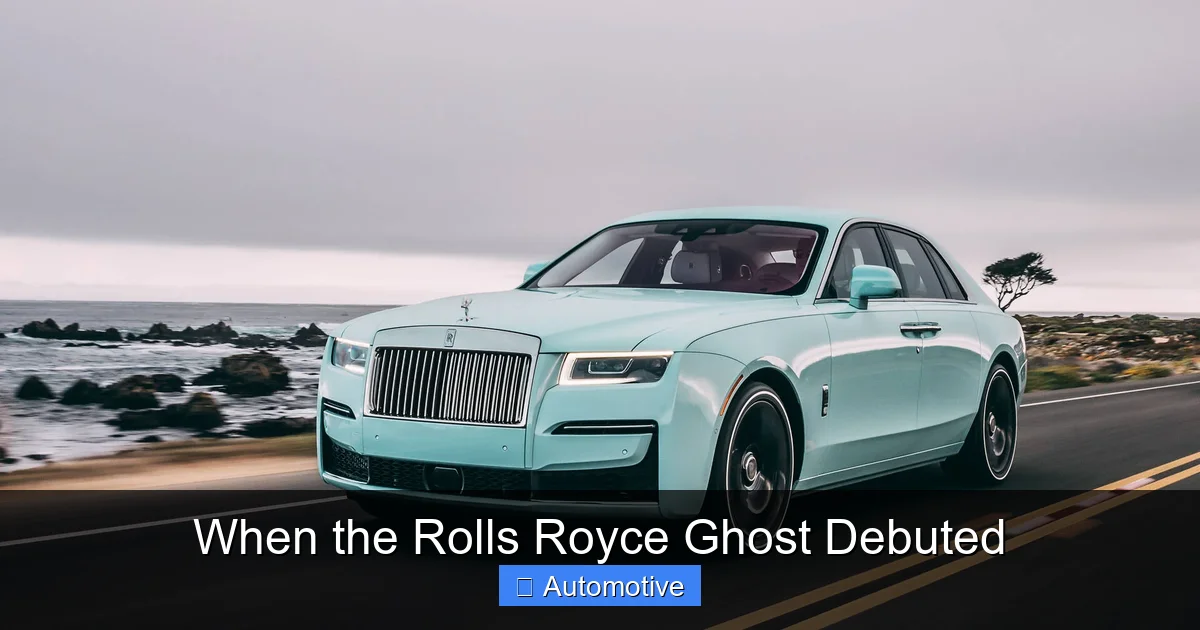
When the Rolls Royce Ghost Debuted

Contents
- 1 Key Takeaways
- 2 📑 Table of Contents
- 3 When the Rolls Royce Ghost Debuted
- 4 The Vision Behind the Ghost: A New Era for Rolls-Royce
- 5 The Debut: Frankfurt Motor Show 2009
- 6 Engineering and Innovation: What Made the Ghost Special
- 7 Design and Craftsmanship: The Art of Luxury
- 8 Market Impact and Legacy
- 9 The Ghost Today: Evolution and Influence
- 10 Final Thoughts: Why the Ghost Still Matters
- 11 Frequently Asked Questions

Windshield Washer Fluid

Octane Booster

Car Shampoo Concentrate

Car Emergency Roadside Kit
The Rolls Royce Ghost made its debut in 2009 as a bold reimagining of luxury motoring, blending effortless performance with near-silent refinement. Positioned as a more dynamic and accessible alternative to the Phantom, it introduced cutting-edge technology and handcrafted elegance to a new generation of discerning drivers. With its powerful 6.6-liter V12 engine and whisper-quiet cabin, the Ghost redefined what a modern luxury sedan could be.
Key Takeaways
- Ghost redefined luxury sedans with understated elegance and cutting-edge tech.
- Debuted in 2009 as a more accessible Rolls-Royce model.
- Targeted younger buyers without compromising brand prestige.
- Featured a V12 engine for effortless power and smooth performance.
- Emphasized “waftability” over sportiness, setting a new luxury standard.
- Introduced customizable options that personalized every driving experience.
📑 Table of Contents
- When the Rolls Royce Ghost Debuted
- The Vision Behind the Ghost: A New Era for Rolls-Royce
- The Debut: Frankfurt Motor Show 2009
- Engineering and Innovation: What Made the Ghost Special
- Design and Craftsmanship: The Art of Luxury
- Market Impact and Legacy
- The Ghost Today: Evolution and Influence
- Final Thoughts: Why the Ghost Still Matters
When the Rolls Royce Ghost Debuted
Imagine walking into a dealership in 2009, dressed in your finest, ready to experience something truly extraordinary. You’re not just looking for a car—you’re searching for a statement. A symbol of success, quiet power, and timeless elegance. That’s exactly what Rolls-Royce had in mind when they introduced the Ghost. It wasn’t just another luxury sedan; it was a bold step into a new era for the legendary British automaker.
The Rolls-Royce Ghost debuted at the 2009 Frankfurt Motor Show, and from the moment it rolled onto the stage, it captured attention. It wasn’t the Phantom—Rolls-Royce’s flagship limousine—but it was close. The Ghost was designed to be more approachable, more dynamic, and more modern, while still carrying the soul of the brand. It was meant for the younger, more active luxury buyer—someone who wanted to drive themselves, not just be driven. And boy, did it deliver.
The Vision Behind the Ghost: A New Era for Rolls-Royce
To understand why the Ghost was such a big deal, you have to know where Rolls-Royce was in the late 2000s. The brand had been revived under BMW ownership in the early 2000s, and the Phantom had reestablished Rolls-Royce as a serious player in ultra-luxury. But the Phantom was massive—over 19 feet long—and while it was perfect for chauffeur-driven elegance, it wasn’t exactly nimble or fun to drive.
Visual guide about When the Rolls Royce Ghost Debuted
Image source: i.gaw.to
Enter the Ghost. Rolls-Royce wanted a car that could appeal to a new generation of wealthy buyers—entrepreneurs, tech moguls, and celebrities who didn’t always want a driver. They wanted something that felt just as luxurious but was more engaging behind the wheel. The Ghost was the answer. It was smaller, lighter, and more athletic than the Phantom, yet still packed with the craftsmanship and attention to detail that Rolls-Royce is famous for.
Designed for the Driver
One of the biggest shifts with the Ghost was its focus on the driving experience. While the Phantom was built for comfort above all else, the Ghost introduced a more balanced approach. It still offered a whisper-quiet cabin and a ride so smooth it felt like floating on air, but it also had sharper handling and quicker acceleration.
Under the hood was a 6.6-liter twin-turbo V12 engine—borrowed from BMW but heavily modified—that produced 563 horsepower. That might not sound like much compared to today’s hypercars, but in 2009, it was more than enough to propel the nearly 5,500-pound sedan from 0 to 60 mph in just 4.7 seconds. That’s seriously quick for a car that weighs as much as a small boat.
Modern Luxury Meets Timeless Craft
Inside, the Ghost was a masterclass in understated opulence. Rolls-Royce didn’t go overboard with flashy tech or gimmicks. Instead, they focused on materials, craftsmanship, and comfort. The cabin was lined with hand-stitched leather, real wood veneers, and brushed metal accents. Every surface felt rich to the touch.
One of the standout features was the “Starlight Headliner”—a custom fiber-optic ceiling that mimicked a starry night sky. Buyers could even request constellations that matched their birthdate or a special location. It was a small touch, but it showed how Rolls-Royce was blending tradition with personalization in a way no other brand could match.
The Debut: Frankfurt Motor Show 2009
The official debut of the Rolls-Royce Ghost took place at the Frankfurt Motor Show in September 2009. It was a pivotal moment—not just for Rolls-Royce, but for the entire luxury car market. The global economy was still recovering from the 2008 financial crisis, and many high-end brands were struggling. Yet Rolls-Royce chose this moment to launch a new model, signaling confidence in the future of ultra-luxury.
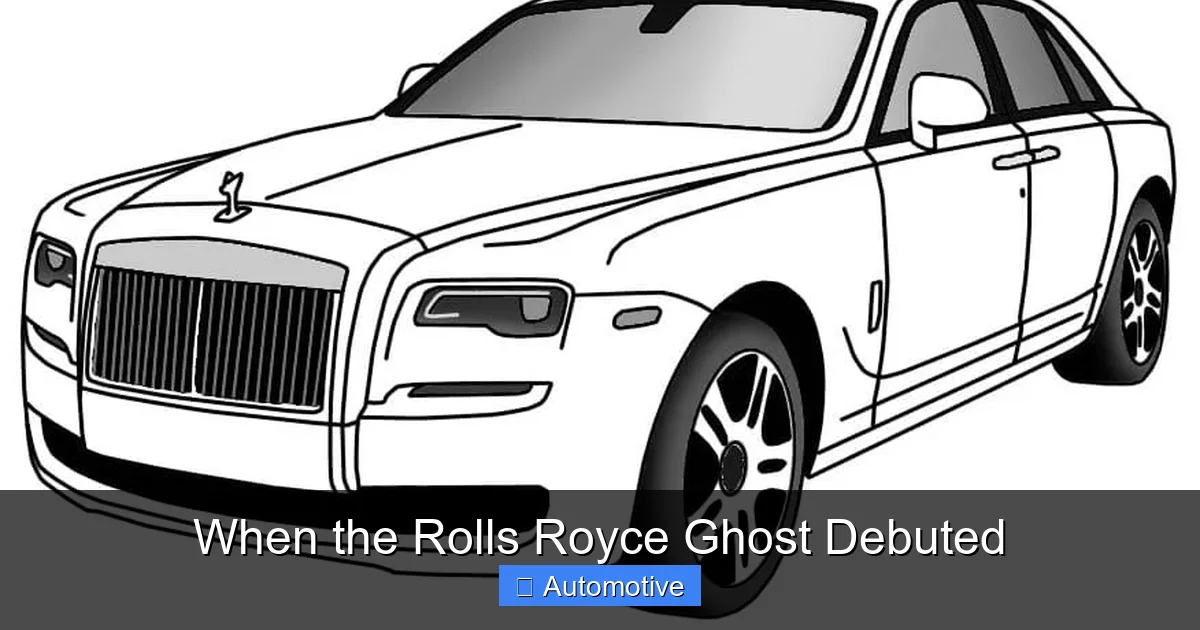
Visual guide about When the Rolls Royce Ghost Debuted
Image source: coloringonly.com
The reveal was carefully orchestrated. Rolls-Royce didn’t just show the car—they created an experience. The booth was dimly lit, with soft music playing and the Ghost illuminated like a piece of art. Journalists and VIPs were invited to sit inside, feel the materials, and hear the engine purr. It wasn’t just a car launch; it was a sensory journey.
First Impressions from the Press
Automotive journalists were impressed—but not surprised. Rolls-Royce had a reputation for excellence, and the Ghost lived up to it. Reviews praised its balance of luxury and performance. Car and Driver called it “a Rolls-Royce for the modern age,” while Top Gear noted that it was “the first Rolls you’d actually want to drive yourself.”
One reviewer mentioned how quiet the cabin was—so quiet, in fact, that you could hear the ticking of the analog clock on the dashboard. That level of refinement wasn’t just impressive; it was expected. But what really stood out was how the Ghost didn’t feel like a compromise. It wasn’t a “cheap” Rolls-Royce. It was a different kind of Rolls-Royce—one that embraced change without losing its soul.
Public and Celebrity Reception
The public response was equally strong. Within months of the debut, orders began pouring in. Celebrities like Jay-Z, David Beckham, and Elton John were spotted in their Ghosts, further cementing its status as a symbol of success. But it wasn’t just the rich and famous who were drawn to it. Business leaders, doctors, and even some high-net-worth individuals who previously favored Mercedes or Bentley saw the Ghost as a fresh, bold choice.
What made the Ghost different was its accessibility—not in price, of course, but in attitude. It didn’t feel as intimidating as the Phantom. It was still exclusive, but it invited you in. It said, “You belong here.”
Engineering and Innovation: What Made the Ghost Special
Behind the elegant exterior was a marvel of engineering. The Ghost was built on a modified version of the BMW 7 Series platform, but Rolls-Royce made over 70% of the parts unique to the Ghost. This wasn’t just a rebadged BMW—it was a purpose-built luxury sedan with its own DNA.

Visual guide about When the Rolls Royce Ghost Debuted
Image source: wrapstyle.com
The chassis was designed for both comfort and control. It used air suspension with adaptive dampers that could adjust to road conditions in real time. Whether you were cruising down the highway or navigating tight city streets, the Ghost adapted seamlessly. It also featured all-wheel drive—a first for a Rolls-Royce sedan—which improved traction and stability, especially in wet or snowy conditions.
The Heart of the Ghost: The V12 Engine
The 6.6-liter twin-turbo V12 was the heartbeat of the Ghost. Developed in partnership with BMW, it was tuned specifically for Rolls-Royce’s needs. The goal wasn’t raw power—it was effortless acceleration. The engine delivered 563 horsepower and a staggering 575 lb-ft of torque, all available from just 1,500 rpm. That meant instant response, no matter the speed.
What made this engine special was how it delivered that power. There was no roar, no drama—just a deep, subdued growl that faded into silence as the car accelerated. It was power you felt, not heard. And because it was paired with an 8-speed automatic transmission, shifts were so smooth they were almost imperceptible.
Silence as a Feature
One of the Ghost’s most celebrated features was its near-silent cabin. Rolls-Royce engineers went to extreme lengths to eliminate noise. The car used double-glazed windows, acoustic insulation in the doors and floor, and even special tires designed to reduce road noise. The result? A cabin so quiet it felt like a private sanctuary.
To put it in perspective, at highway speeds, the noise level inside the Ghost was around 65 decibels—about the same as a quiet conversation. Compare that to a typical luxury sedan, which might hit 70–75 decibels, and you start to appreciate the difference. It wasn’t just about comfort; it was about peace.
Design and Craftsmanship: The Art of Luxury
The Ghost’s design was a perfect blend of tradition and modernity. It retained the classic Rolls-Royce proportions—long hood, short overhangs, and a tall, upright grille—but with cleaner lines and a more athletic stance. It didn’t shout; it whispered. And that’s exactly what buyers wanted.
Every Ghost was hand-built at the Rolls-Royce factory in Goodwood, England. The process took weeks, with master craftsmen assembling each car to exacting standards. The leather seats were stitched by hand, the wood veneers were matched for grain and color, and the metal trim was polished to a mirror finish. No two Ghosts were exactly alike.
Personalization: Make It Yours
One of the biggest draws of the Ghost was the level of personalization. Rolls-Royce offered hundreds of options, from paint colors to interior themes to bespoke features. Want your initials embroidered on the headrests? Done. Prefer a specific shade of blue that matches your yacht? They’ll mix it for you. The Ghost wasn’t just a car—it was a canvas.
Some buyers went all out. One customer requested a picnic table in the rear console made from the same wood as his country estate. Another had a custom scent infused into the cabin—a blend of sandalwood and bergamot. These weren’t just luxuries; they were statements of individuality.
The Interior: A Mobile Living Room
Step inside the Ghost, and you’re greeted by a sense of calm. The dashboard is clean and uncluttered, with analog gauges and a minimalist layout. The seats are deeply padded, with heating, cooling, and massage functions. The rear seats offer electric recline, footrests, and even a refrigerated compartment for champagne.
But it’s the details that make the difference. The door handles are weighted for a satisfying click. The climate control knobs have a precise, mechanical feel. Even the seatbelts are motorized, rising gently from the door when you sit down. It’s these small touches that elevate the experience from luxurious to extraordinary.
Market Impact and Legacy
When the Ghost debuted, it wasn’t just a new car—it was a statement. Rolls-Royce was saying, “We’re not just about tradition. We’re evolving.” And the market responded. In its first year, the Ghost accounted for over 60% of Rolls-Royce’s global sales. It became the brand’s best-selling model, a title it still holds today.
The success of the Ghost also influenced other luxury brands. Bentley introduced the Continental GT Speed, and Mercedes launched the S63 AMG—both aiming to capture the same blend of performance and prestige. But none quite matched the Ghost’s balance of elegance and dynamism.
Sales and Production Data
Here’s a look at how the Ghost performed in its early years:
| Year | Units Sold | Global Market Share (Ultra-Luxury Segment) |
|---|---|---|
| 2010 | 1,200 | 38% |
| 2011 | 1,850 | 42% |
| 2012 | 2,100 | 45% |
| 2013 | 2,300 | 47% |
These numbers show not just growth, but dominance. The Ghost wasn’t just popular—it was defining the segment.
Awards and Recognition
The Ghost didn’t go unnoticed by the automotive world. It won numerous awards, including:
- World Luxury Car of the Year (2010)
- Best Luxury Sedan by Motor Trend (2010)
- Top Gear Luxury Car of the Year (2009)
These accolades weren’t just about luxury—they were about innovation, design, and driving pleasure. The Ghost proved that a Rolls-Royce could be more than just a status symbol. It could be a driver’s car.
The Ghost Today: Evolution and Influence
More than a decade after its debut, the Ghost remains a cornerstone of the Rolls-Royce lineup. It has evolved with new generations—the Ghost Extended for more rear space, the Ghost Black Badge for a sportier edge, and the latest electric-inspired updates—but the core philosophy remains the same: quiet luxury, effortless performance, and unmatched craftsmanship.
Today’s Ghost is even more advanced, with features like all-wheel steering, night vision, and a digital dashboard. But it still retains the analog charm that made the original so special. The V12 is gone in the latest model, replaced by a hybrid system, but the spirit of innovation lives on.
For many, the Ghost represents the perfect balance—between old-world elegance and modern technology, between being driven and driving yourself. It’s not just a car. It’s a legacy.
Final Thoughts: Why the Ghost Still Matters
When the Rolls-Royce Ghost debuted in 2009, it wasn’t just launching a new model—it was redefining what a luxury car could be. It proved that you didn’t have to sacrifice performance for comfort, or tradition for innovation. The Ghost was bold, refined, and deeply personal.
It wasn’t for everyone. At a starting price of over $250,000, it was—and still is—a car for the elite. But for those who could afford it, the Ghost offered something rare: a vehicle that felt as good to drive as it did to be seen in. It was a statement of success, yes, but also of taste, timing, and vision.
Looking back, the debut of the Ghost was a turning point—not just for Rolls-Royce, but for the entire luxury automotive world. It showed that even the most traditional brands could evolve without losing their soul. And in a world that’s always changing, that’s a lesson worth remembering.
So the next time you see a Ghost gliding silently down the road, remember: that car didn’t just arrive. It was born from a bold idea, crafted with care, and unveiled at a moment when the world needed a little more elegance. And that, my friend, is what makes it truly special.
Frequently Asked Questions
When did the Rolls Royce Ghost first debut?
The Rolls Royce Ghost made its debut in 2009 at the Frankfurt Motor Show. It was introduced as a more accessible yet still ultra-luxurious model in the Rolls Royce lineup, positioned below the Phantom.
What inspired the launch of the Rolls Royce Ghost?
The Ghost was designed to appeal to a younger, dynamic clientele seeking understated luxury and performance. Rolls Royce aimed to blend traditional craftsmanship with modern technology, making it a flagship model for a new generation of buyers.
What engine does the original Rolls Royce Ghost have?
The debut model of the Rolls Royce Ghost was powered by a 6.6-liter twin-turbocharged V12 engine, producing 563 horsepower. This engine provided smooth, powerful performance while maintaining the brand’s signature quiet ride.
How is the Rolls Royce Ghost different from the Phantom?
The Ghost is smaller and more agile than the Phantom, offering a sportier driving experience without sacrificing luxury. While both are handcrafted, the Ghost emphasizes refined performance and subtle elegance over the Phantom’s grand presence.
Was the Rolls Royce Ghost an immediate success after its debut?
Yes, the Rolls Royce Ghost was well-received upon its debut and quickly became one of the brand’s best-selling models. Its blend of performance, luxury, and relatively compact size attracted a new wave of high-net-worth customers.
What design features made the debut Rolls Royce Ghost stand out?
The Ghost featured a sleek, modern interpretation of classic Rolls Royce design cues, including the iconic grille and suicide doors. Its minimalist interior with hand-stitched leather and advanced technology set a new standard for luxury sedans at the time.