
When Should a Toyota Corolla Fuel Filter Be Changed?

Changing your Toyota Corolla’s fuel filter is a critical, often overlooked maintenance task that protects your engine from contaminants and ensures optimal performance. While modern Corollas may have “lifetime” filters in the tank, most models from the late 1990s through the early 2010s require a replacement every 30,000 to 60,000 miles. Ignoring a clogged filter leads to poor acceleration, stalling, and can cause expensive fuel pump damage. Always consult your owner’s manual for your specific model year, and consider professional help for in-tank filters due to the complexity and safety risks involved.
Your Toyota Corolla is famous for its reliability, its “go forever” reputation built on solid engineering and simple, effective systems. But even the most dependable engine needs clean fuel to breathe. That’s the job of the humble fuel filter—a small, cylindrical component that stands between your gas tank and your engine’s fuel injectors, trapping rust, dirt, debris, and other contaminants. Think of it as the kidney for your car’s circulatory system. When this filter gets clogged, your engine is essentially trying to run on a choked diet, leading to a host of problems. So, the big question for every Corolla owner is: when should this vital part be changed? The answer isn’t as simple as “every X miles” because it depends heavily on your car’s model year, driving conditions, and the filter’s design. This guide will walk you through everything you need to know, from the science of filtration to the practical steps of replacement.
Key Takeaways
- Intervals Vary by Model Year: Pre-2000s Corollas often need a change every 30k miles. Models from the 2000s-2010s typically recommend 40k-60k miles. Many post-2013 models have internal, “lifetime” filters that are only replaced with the fuel pump.
- Watch for Performance Symptoms: A struggling engine, hesitation under acceleration, hard starts (especially when hot), and random misfires are classic signs of a fuel-starved engine due to a clogged filter.
- Location Dictates Difficulty: Older Corollas have an external filter under the car, which is a moderate DIY job. Newer models place it inside the fuel tank, requiring major disassembly and professional expertise.
- Fuel Quality Matters: Consistently using top-tier gasoline with robust detergent packages can extend filter life by minimizing deposits from the tank itself.
- Neglect Has Consequences: A severely clogged filter forces the fuel pump to work overtime, leading to premature pump failure—a much more costly repair than a filter.
- Safety is Paramount: Fuel system work involves pressurized fuel. Proper depressurization, fire safety, and ventilation are non-negotiable. If unsure, hire a qualified mechanic.
- It’s Part of a System: The fuel filter works with the fuel pump and fuel injectors. Regular overall maintenance, like using the correct oil for your Corolla, keeps your entire vehicle healthy.
📑 Table of Contents
- The Vital Role of Your Corolla’s Fuel Filter
- Decoding the Replacement Interval: It’s All About the Year
- 8 Telltale Signs Your Fuel Filter is Clogged
- DIY vs. Professional Replacement: Know Your Limits
- Step-by-Step: Replacing an External Fuel Filter on an Older Corolla
- Proactive Maintenance: Extending Filter and System Life
The Vital Role of Your Corolla’s Fuel Filter
Before we talk about *when* to change it, let’s understand *why* it exists. Modern gasoline isn’t perfectly clean. Over time, moisture can cause rust inside the steel fuel tank. Debris from the gas station’s storage tanks, dirt from your own tank’s interior, and even tiny particles from degrading fuel lines can all find their way into the fuel stream. The fuel filter’s media—usually a pleated paper or synthetic material—is designed to trap particles as small as 5-10 microns (about 1/10th the width of a human hair).
What Happens When It Fails?
A clogged fuel filter creates a restriction. Your engine’s fuel pump is calibrated to deliver a specific volume of fuel at a certain pressure. When the filter is clean, this is easy. As it clogs, the pump has to work harder to push fuel through the narrowed passages. This leads to a drop in fuel pressure at the injectors. Fuel injectors are precision devices that spray a fine mist of gasoline into the combustion chamber. If the pressure is too low, the spray pattern degrades, the fuel doesn’t atomize properly, and combustion becomes inefficient. This is the root cause of most filter-related performance issues.
Decoding the Replacement Interval: It’s All About the Year
This is the most critical section. Toyota’s recommendations have evolved dramatically over the decades, primarily because of two factors: improved fuel tank coatings and the move to in-tank pump/filter modules. You must identify your Corolla’s generation.
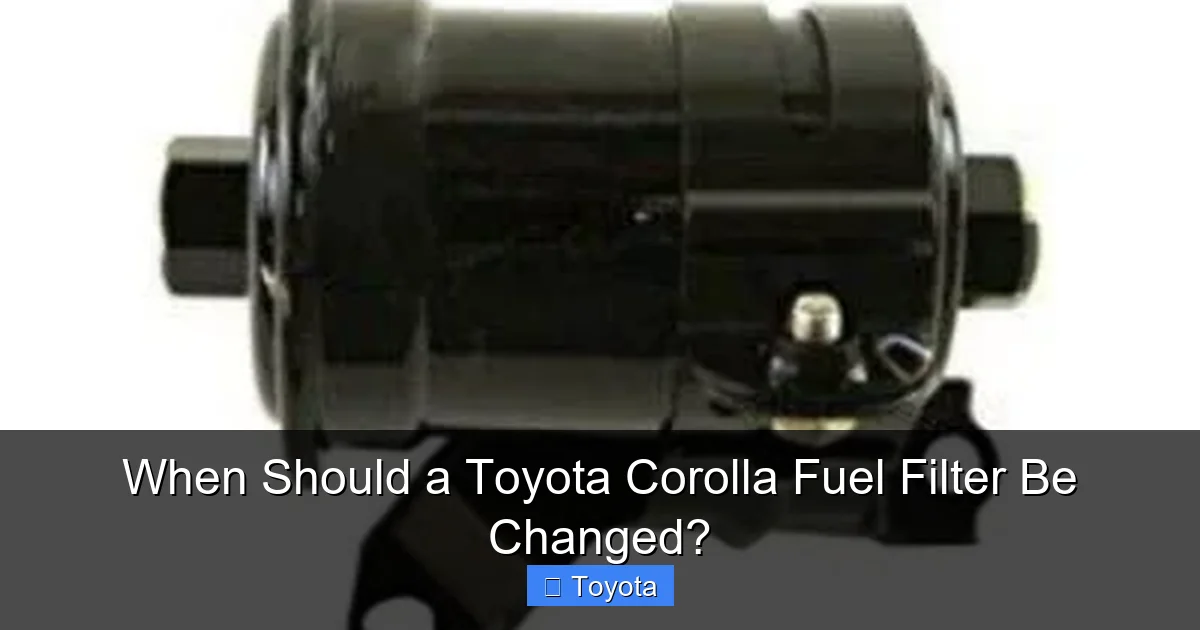
Visual guide about When Should a Toyota Corolla Fuel Filter Be Changed?
Image source: toyotapartsdeal.com
Pre-2000 Models (E90, E100 Generations)
For Corollas from the 1990s and earlier (like the iconic AE110 or earlier), the rule of thumb was a fuel filter change every 30,000 miles. These vehicles typically have an external, easily accessible filter mounted along the frame rail. The fuel tanks were simple steel, and the fuel standards of the era contained fewer detergents, leading to faster contamination. Sticking to this interval was crucial for preventing fuel pump wear.
2000-2013 Models (E110, E120, E140 Generations)
This is the most common range for DIYers. Toyota extended the recommended interval to every 40,000 to 60,000 miles for most of these models. The filter remained external in many cases (often located under the car near the rear axle or along the driver’s side frame), but some began moving it closer to the tank or integrating it with the pump assembly. For example, a 2005-2010 Corolla typically has an external canister-style filter. Always check your specific owner’s manual, as the exact mileage can vary by engine type (1ZZ-FE vs. 2ZR-FE).
2014-Present Models (E210 Generation and Later)
Here’s where things get tricky. Starting around the 2014 model year for the E210 platform, Toyota began integrating a “lifetime” fuel filter directly into the fuel pump module inside the gas tank. The official stance from Toyota is that this filter is designed to last the life of the vehicle under normal conditions and is not a regular maintenance item. It is only replaced if the entire fuel pump assembly fails or is removed for another reason. For a 2022 Corolla, you will not find a scheduled fuel filter service in the maintenance booklet. This design improves reliability and reduces emissions from potential fuel leaks at external connections, but it means you can’t simply pop in a new filter as a precaution.
8 Telltale Signs Your Fuel Filter is Clogged
Even if you’re not sure about the last replacement date, your Corolla will give you warning signs. Pay attention to these symptoms, especially if they appear gradually or under load:
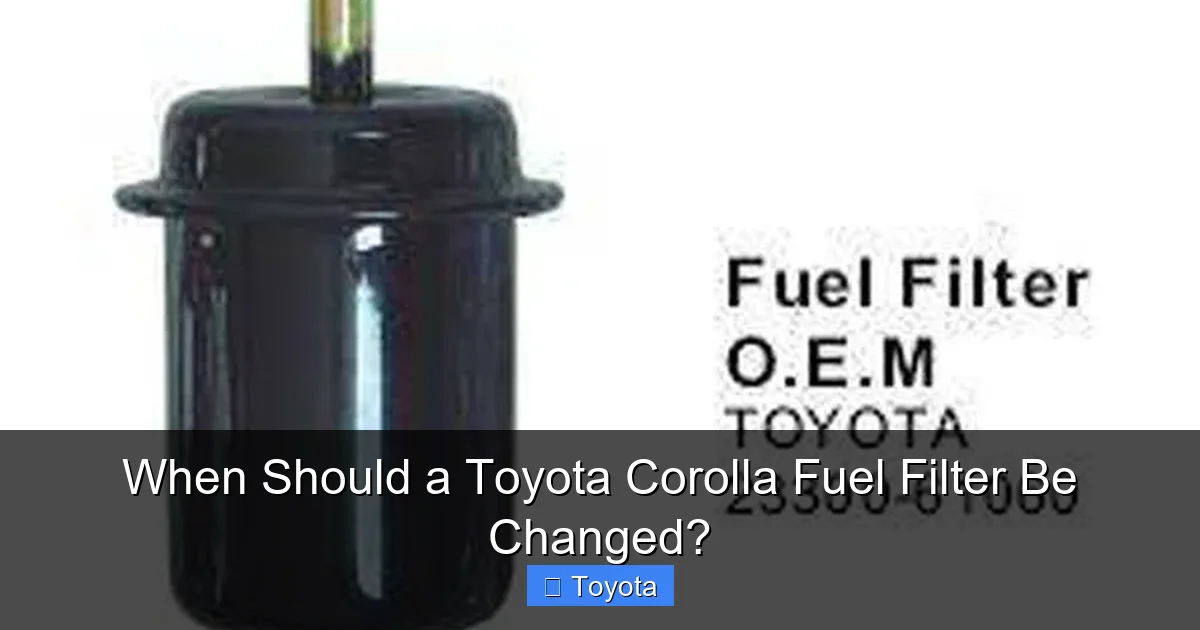
Visual guide about When Should a Toyota Corolla Fuel Filter Be Changed?
Image source: jonyautoparts.com
- Engine Hesitation or Sputtering Under Acceleration: The most common symptom. When you press the gas pedal to pass or merge, the engine feels like it’s stumbling or “falling on its face” before catching. This is a classic sign of insufficient fuel pressure during high demand.
- Hard Starting (Particularly When Hot): A clogged filter makes it harder for the fuel pump to build initial pressure. A “hot soak” condition—where the engine is warm after a drive, then sits for 20-30 minutes—exacerbates this. The fuel near the pump vaporizes, and a weak pump with a clogged filter struggles to re-prime the system, leading to extended cranking.
- Random Engine Misfires: You might feel a slight shudder or hear a popping sound from the engine. The computer (ECU) detects a cylinder not firing properly, often due to a lean condition (too much air, not enough fuel) caused by low fuel pressure.
- General Lack of Power and Poor Performance: The car feels sluggish overall, as if it’s “losing a cylinder.” It may struggle on inclines and have reduced throttle response.
- Engine Stalling: In severe cases, the restriction is so bad that fuel flow is insufficient at idle, causing the engine to stall unexpectedly, especially when coming to a stop.
- Fuel Pump Noise: A whining or buzzing sound from the rear of the vehicle (where the fuel tank is) can indicate the fuel pump is laboring against a restriction. A healthy pump is usually inaudible over road noise.
- Check Engine Light (CEL): The ECU may trigger codes like P0171 (System Too Lean) or P0087 (Fuel Rail/System Pressure – Too Low). While these codes can have other causes, a clogged filter is a prime suspect, especially if paired with the performance symptoms above.
- Difficulty Refueling: Believe it or not, a severely clogged filter can cause fuel to back up in the tank, making the pump nozzle constantly click off as it thinks the tank is full.
DIY vs. Professional Replacement: Know Your Limits
The decision largely hinges on your Corolla’s model year and your mechanical comfort level.
Visual guide about When Should a Toyota Corolla Fuel Filter Be Changed?
Image source: i5.walmartimages.com
The DIY Scenario: External Filters (Most Pre-2014 Models)
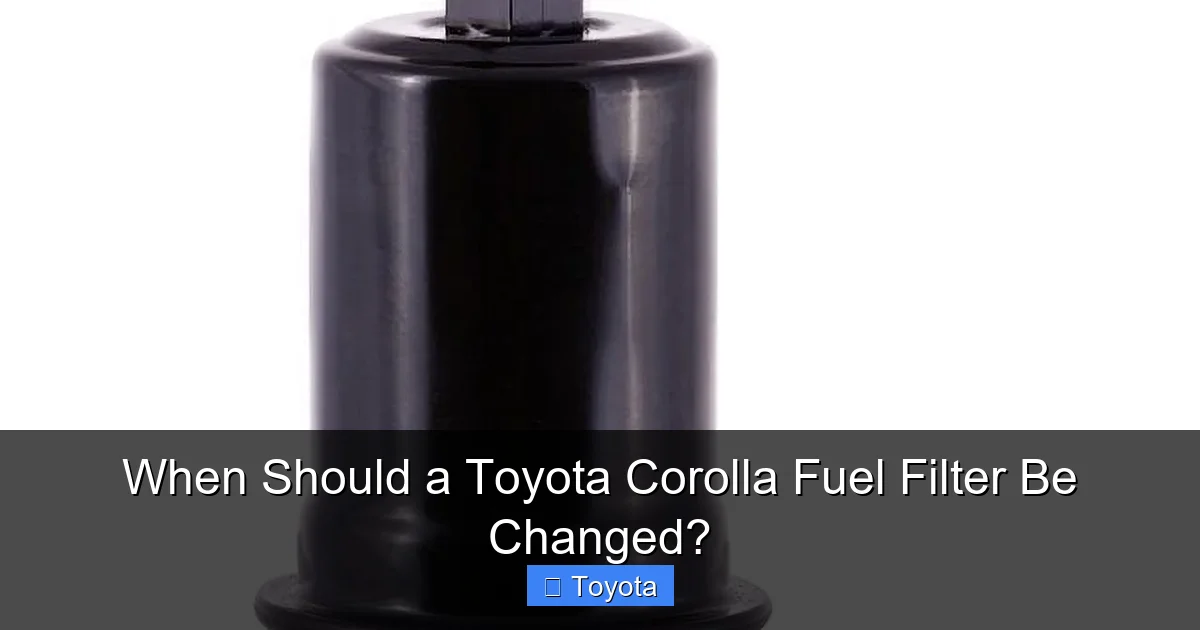
If your Corolla has an external filter mounted on the frame or underbody, this is a very doable weekend project for a competent DIYer with basic tools. You’ll need a socket set, screwdrivers, a drip pan, and new filter (ensure it’s the exact OEM or high-quality aftermarket part). The process involves:
- Relieving Fuel System Pressure: This is the most important safety step. You must locate the fuel pump fuse in the engine bay, start the car, and let it stall to depressurize the lines. Never skip this.
- Accessing the Filter: You may need to raise and support the vehicle safely with jack stands. The filter is often held in with clamps or bolts. Have rags ready for any residual fuel spray.
- Replacement: Note the flow direction arrow on the old filter. Install the new one in the same orientation. Tighten clamps securely but don’t over-tighten.
- Check for Leaks: Re-pressurize the system by turning the key to “ON” (without starting) to run the pump. Check all connections for leaks before starting the engine.
Pro-Tip: While you’re under there, it’s a great time to inspect other under-carriage components. Knowing how to properly open your Corolla’s hood is essential for the initial depressurization step and any future engine bay work.
The Professional Scenario: In-Tank “Lifetime” Filters (Most 2014+ Models)
For newer Corollas with the internal filter, DIY is not advisable unless you are an experienced technician. The process requires:
- Dropping the fuel tank or removing the rear seat/cargo floor to access the pump module.
- Handling highly flammable gasoline vapors with extreme caution.
- Specialized tools to disconnect high-pressure fuel lines and electrical connectors.
- Potential need to replace the entire pump assembly, which can cost $400-$800+ in parts alone.
Attempting this without proper training and facilities is a serious fire hazard and can lead to damage to the pump, tank, or EVAP system. For these models, a clogged filter usually means diagnosing and replacing the entire fuel pump module at a dealership or reputable shop.
Step-by-Step: Replacing an External Fuel Filter on an Older Corolla
Let’s walk through the process for a typical mid-2000s Corolla with an external filter. Always consult a model-specific repair manual (like Haynes or Chilton) for your exact vehicle.
Tools and Parts You’ll Need
- New OEM or quality aftermarket fuel filter (e.g., Toyota Genuine, WIX, Fram, K&N)
- Basic hand tools: socket wrench set, screwdrivers, pliers
- Safety gear: safety glasses, nitrile gloves
- Fire extinguisher (Class B)
- Jack and jack stands (or ramps)
- Drip pan, rags, and a container for any spilled fuel
- Fuel line disconnect tools (optional, but helpful for newer-style quick-disconnects)
The Procedure
Step 1: Safety First & Depressurize. Park on a level surface, engage the parking brake, and disconnect the negative battery terminal. Locate the fuel pump fuse in the engine bay fuse box (your owner’s manual diagram will show it). Start the engine and let it run until it stalls. Crank it a few more times to ensure all pressure is bled off. This prevents a geyser of fuel when you disconnect the lines.
Step 2: Access the Filter. Raise the rear of the car safely. The filter is usually a silver or black canister, about the size of a soup can, mounted on the frame rail or underside of the car near the rear axle. It will have two fuel lines attached and a clamp holding it.
Step 3: Remove the Old Filter. Place your drip pan under the filter. Use a screwdriver or appropriate socket to loosen the clamp. Gently twist and pull the fuel lines off the filter nipples. Have rags ready—there might be a small amount of residual fuel. Note which line came from the tank (inlet) and which goes to the engine (outlet). The filter will have an arrow indicating flow direction. Remove the old filter completely.
Step 4: Install the New Filter. Compare the old and new filters to ensure they are identical. Install the new filter in the same orientation, respecting the flow arrow. Push the fuel lines on firmly until they click or seat fully. Re-tighten the clamp securely. Double-check that there are no fuel drips.
Step 5: Re-pressurize and Test. Reconnect the negative battery. Turn the ignition to the “ON” position (do not start). You should hear the fuel pump hum from the rear of the car for 2-3 seconds. This pressurizes the system. Turn the key off, wait a few seconds, and repeat this “key cycle” 2-3 times. Look for any leaks at the new filter connections. If all is dry, start the engine. It may crank a bit longer on the first start as the new filter fills. Let it run and check for leaks again. Lower the car and you’re done!
Proactive Maintenance: Extending Filter and System Life
Changing the filter on schedule is reactive maintenance. Here’s how to be proactive and potentially extend intervals (for applicable models):
- Use Quality Fuel: Always choose gas from top-tier retailers (like Shell, Chevron, Exxon). These fuels contain higher levels of detergent additives that help keep fuel injectors and, indirectly, the tank itself cleaner. This is a simple habit that pays dividends. You might also wonder what type of gasoline is best for your specific Corolla—regular unleaded (87 octane) is almost always sufficient unless you have a high-performance variant.
- Don’t Run the Tank Empty: The bottom of your fuel tank is where sediment and water accumulate. Constantly driving with a low fuel level (below 1/4 tank) increases the chance of sucking up this debris into the filter. Try to refuel when you reach the 1/4 mark.
- Consider Fuel System Cleaners: Periodically (every 5,000-10,000 miles) using a quality fuel system cleaner can help dissolve light deposits on injectors and in the tank. This is a supporting actor, not a replacement for a physical filter change.
- Full Service History: When buying a used Corolla, a documented history of regular fuel filter changes (along with other services like timely oil changes) is a strong indicator of a well-cared-for vehicle and can affect its resale value.
Frequently Asked Questions
Can I drive with a clogged fuel filter?
You can, but it’s not advisable. It will cause poor performance and put excessive strain on the fuel pump, leading to a more expensive failure. If symptoms are severe, have it towed to a repair shop.
How much does a Toyota Corolla fuel filter cost to replace?
The part itself is relatively inexpensive, typically $15-$40 for an external filter. If you DIY, that’s the total cost. Professional labor for an external filter adds $50-$120. For in-tank filters on newer models, the total (parts + labor) can range from $400 to over $1,000.
Is the fuel filter hard to change on a Corolla?
For models with an external filter (pre-2014), it’s a moderate DIY job requiring basic mechanical skill and strict adherence to fuel safety protocols. For models with an internal, “lifetime” filter, it is a difficult and hazardous job best left to professionals.
What happens if I never change my fuel filter?
It will eventually clog completely, causing the engine to stall and not restart. The prolonged strain on the fuel pump will almost certainly cause it to fail prematurely. You’ll be looking at a tow bill and a costly fuel pump replacement instead of a cheap filter change.
Where is the fuel filter located on a Toyota Corolla?
Location varies by year. On older models (1990s-early 2000s), it’s an external canister on the frame rail under the driver or passenger side. On some mid-2000s models, it may be near the fuel tank. On nearly all models from 2014 onward, it is inside the fuel tank as part of the pump assembly.
Does a 2020 Toyota Corolla have a replaceable fuel filter?
No. The 2020 Corolla uses an integrated, “lifetime” fuel filter that is part of the in-tank fuel pump module. It is not scheduled for regular replacement and is only serviced if the entire pump assembly fails.
