What Years of Subaru Outback to Avoid

Contents
- 1 Key Takeaways
- 2 📑 Table of Contents
- 3 Introduction: Why Knowing Which Subaru Outback Years to Avoid Matters
- 4 The Early Years: 2000–2004 Subaru Outback – Proceed with Caution
- 5 The Mid-2000s: 2005–2009 Models – A Step Forward, But Not Perfect
- 6 The 2010–2014 Models: Improved Reliability with Some Caveats
- 7 The 2015–2019 Models: Peak Reliability with Minor Flaws
- 8 2020–2023 Models: Modern and Capable, But Pricey
- 9 How to Avoid Buying a Lemon: Tips for Any Model Year
- 10 Conclusion: Make an Informed Decision
- 11 Frequently Asked Questions


Not every Subaru Outback model year is created equal—some are plagued by recurring mechanical problems, costly recalls, and poor reliability. This guide highlights the specific years of Subaru Outback to avoid, based on real owner reports, expert reviews, and NHTSA data, so you can steer clear of trouble and find a dependable ride.
Key Takeaways
- Avoid 2000–2004 models: These early 2000s Outbacks suffer from head gasket failures, oil leaks, and premature engine wear due to poor gasket design and cooling system flaws.
- 2005–2009 models have mixed reliability: While improved, many still face head gasket issues, CVT transmission problems, and excessive oil consumption in later years.
- 2010–2014 models show improvement but aren’t flawless: Head gasket issues decline, but some 2013–2014 models experience CVT and electrical glitches.
- 2015–2019 models are generally reliable but watch for CVT concerns: These are among the best years, though a few 2015–2016 models had early CVT hesitation and software bugs.
- 2020–2023 models are strong but pricier: Modern Outbacks offer excellent safety and tech, but high demand and limited used inventory can drive up costs.
- Always check maintenance history and get a pre-purchase inspection: Even good model years can be problematic if poorly maintained.
- Use NHTSA and Consumer Reports data to verify recalls and complaints: These resources help confirm whether a specific VIN has unresolved safety issues.
📑 Table of Contents
- Introduction: Why Knowing Which Subaru Outback Years to Avoid Matters
- The Early Years: 2000–2004 Subaru Outback – Proceed with Caution
- The Mid-2000s: 2005–2009 Models – A Step Forward, But Not Perfect
- The 2010–2014 Models: Improved Reliability with Some Caveats
- The 2015–2019 Models: Peak Reliability with Minor Flaws
- 2020–2023 Models: Modern and Capable, But Pricey
- How to Avoid Buying a Lemon: Tips for Any Model Year
- Conclusion: Make an Informed Decision
Introduction: Why Knowing Which Subaru Outback Years to Avoid Matters
If you’re in the market for a used Subaru Outback, you’re likely drawn to its legendary all-wheel drive, rugged capability, and reputation for longevity. And for good reason—many Outbacks last well over 200,000 miles with proper care. But here’s the catch: not every model year is equally reliable. Some years of Subaru Outback to avoid due to recurring mechanical flaws, expensive repairs, and widespread owner complaints.
Subaru has made significant improvements over the decades, especially in engine design, transmission technology, and safety features. However, certain generations were rushed to market or used problematic components that led to headaches for owners. Whether you’re buying from a dealership, private seller, or certified pre-owned program, knowing which years to skip can save you thousands in repair bills and months of frustration.
This guide dives deep into the specific model years that have earned a reputation for trouble. We’ll examine common issues like head gasket failures, transmission problems, oil consumption, and electrical glitches—backed by real-world data from the National Highway Traffic Safety Administration (NHTSA), Consumer Reports, and thousands of owner reviews. By the end, you’ll have a clear roadmap to help you choose a dependable Outback and avoid the ones that could leave you stranded.
The Early Years: 2000–2004 Subaru Outback – Proceed with Caution
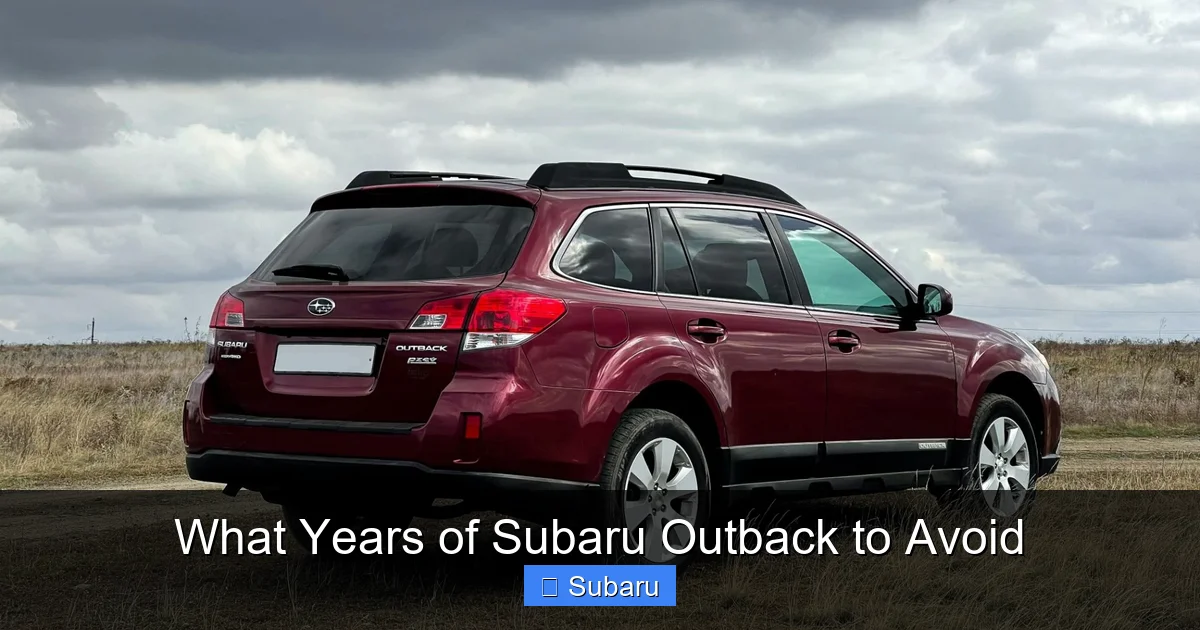
Visual guide about What Years of Subaru Outback to Avoid
Image source: rerev.com
The early 2000s were a transitional period for Subaru, and the 2000–2004 Outback models reflect that. These vehicles, based on the Legacy platform, introduced the Outback as a more rugged, off-road-capable wagon. While they offered great ground clearance and standard AWD, they also came with a host of mechanical weaknesses that make them some of the worst years of Subaru Outback to avoid.
Head Gasket Failures: The Achilles’ Heel
The most infamous problem with these early models is the head gasket failure. Subaru used a non-asbestos composite head gasket in the 2.5-liter EJ25 engine that simply couldn’t handle the heat and stress over time. The engine block, made of aluminum, expands at a different rate than the iron cylinder heads, causing the gasket to fail prematurely—often between 80,000 and 120,000 miles.
When the head gasket fails, coolant leaks into the combustion chamber or oil passages. Symptoms include white smoke from the exhaust, overheating, milky oil on the dipstick, and a sweet smell from the engine bay. Repairing a head gasket on a Subaru is not a weekend DIY job—it requires removing the engine or at least the cylinder heads, costing $1,500 to $2,500 at a shop.
Many owners report having to replace the head gasket more than once, especially if the root cause—poor cooling system maintenance—isn’t addressed. Subaru eventually acknowledged the issue and extended the warranty on some models, but that doesn’t help used buyers today.
Oil Leaks and Consumption Issues
Beyond the head gasket, these early Outbacks are notorious for oil leaks. The valve cover gaskets, camshaft seals, and timing belt cover gaskets all tend to degrade over time, leading to messy engine bays and frequent top-offs. Some owners report losing a quart of oil every 1,000 miles, which can lead to engine damage if not monitored closely.
The 2.5-liter engine also has a reputation for high oil consumption, even when everything is sealed properly. This isn’t necessarily a sign of failure, but it does mean you’ll need to check the oil level regularly and keep extra quarts on hand.
Transmission and Drivetrain Concerns
The 2000–2004 Outbacks came with either a 5-speed manual or a 4-speed automatic transmission. While the manual is generally robust, the automatic units—especially the 4EAT—are prone to harsh shifting, slipping, and premature failure. Many owners report transmission issues around 100,000 miles, often requiring a rebuild or replacement.
Additionally, the rear differential in these models can develop whining noises or fail due to poor lubrication. Replacing a rear diff can cost over $1,000, adding to the overall cost of ownership.
Should You Buy a 2000–2004 Outback?
In short: only if you’re prepared for potential major repairs. If you find a well-maintained example with a documented service history—especially one that’s already had the head gasket replaced with updated parts—it could be a decent buy under $3,000. But for most buyers, the risk outweighs the reward. These are prime examples of years of Subaru Outback to avoid unless you’re a skilled mechanic or willing to invest in preventative repairs.
The Mid-2000s: 2005–2009 Models – A Step Forward, But Not Perfect
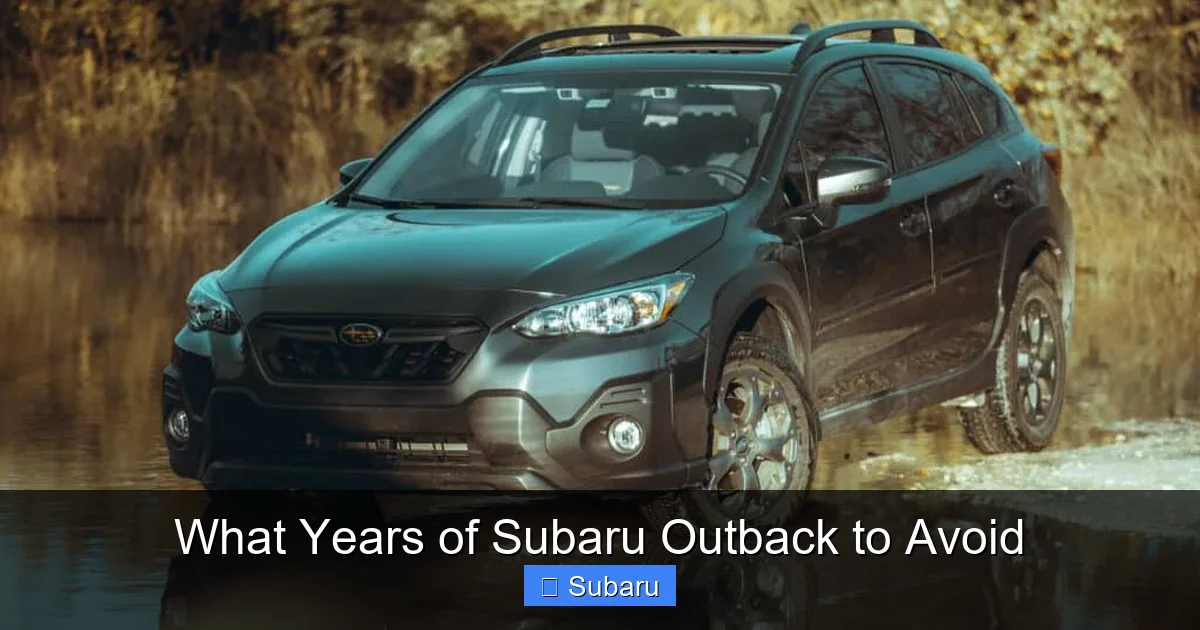
Visual guide about What Years of Subaru Outback to Avoid
Image source: 4wdlife.com
Subaru made significant updates to the Outback in 2005, introducing a new body style, improved suspension, and a more refined interior. The 2005–2009 models represent a major leap in design and comfort, but they’re not without their flaws. While these years are generally more reliable than the early 2000s, several issues keep them on the “caution” list.
Head Gasket Problems Persist (But Improve)
Subaru addressed the head gasket issue in 2005 by switching to a multi-layer steel (MLS) head gasket, which is far more durable than the old composite design. As a result, head gasket failures became less common—but they didn’t disappear entirely.
Some 2005–2007 models still experienced failures, especially if the cooling system wasn’t properly maintained. Overheating, coolant loss, and oil contamination can still occur, particularly in vehicles that have seen heavy towing or off-road use. The problem is less widespread than in the 2000–2004 models, but it’s still a risk.
CVT Transmission Woes in Later Models
Starting in 2008, Subaru began introducing the Lineartronic CVT (Continuously Variable Transmission) in the Outback. While CVTs offer better fuel economy and smoother acceleration, early versions were problematic. The 2008–2009 CVTs suffered from hesitation, jerking, and premature wear. Some owners reported transmission failure before 100,000 miles.
The CVT also requires specific Subaru-approved fluid and regular changes every 30,000 to 60,000 miles. Neglecting this maintenance can lead to costly repairs. If you’re considering a 2008 or 2009 Outback with a CVT, ask for service records and consider a transmission inspection.
Oil Consumption in 2.5-Liter Engines
Another issue that carried over from earlier models is excessive oil consumption. The 2.5-liter EJ25 engine in 2005–2009 Outbacks can burn oil at a rate of one quart per 1,000 miles or more. Subaru issued a technical service bulletin (TSB) acknowledging the issue, and in some cases, extended the warranty for engine repairs.
However, this doesn’t mean all affected vehicles were fixed. If you’re looking at one of these models, check the oil level frequently during a test drive and ask the seller about oil consumption history.
Suspension and Rust Concerns
These models are also prone to suspension wear, especially in colder climates where road salt is used. Ball joints, control arms, and struts can deteriorate quickly, leading to poor handling and alignment issues. Rust on the undercarriage, wheel wells, and rocker panels is also common, particularly in northern states.
Verdict on 2005–2009 Outbacks
These years are a mixed bag. The 2005–2007 models with the 4-speed automatic are more reliable than their predecessors but still carry some risk. The 2008–2009 models with CVTs offer better fuel economy but come with transmission concerns. If you’re set on this generation, aim for a 2006 or 2007 model with a manual transmission and a solid maintenance record. Otherwise, consider skipping these years of Subaru Outback to avoid unnecessary headaches.
The 2010–2014 Models: Improved Reliability with Some Caveats
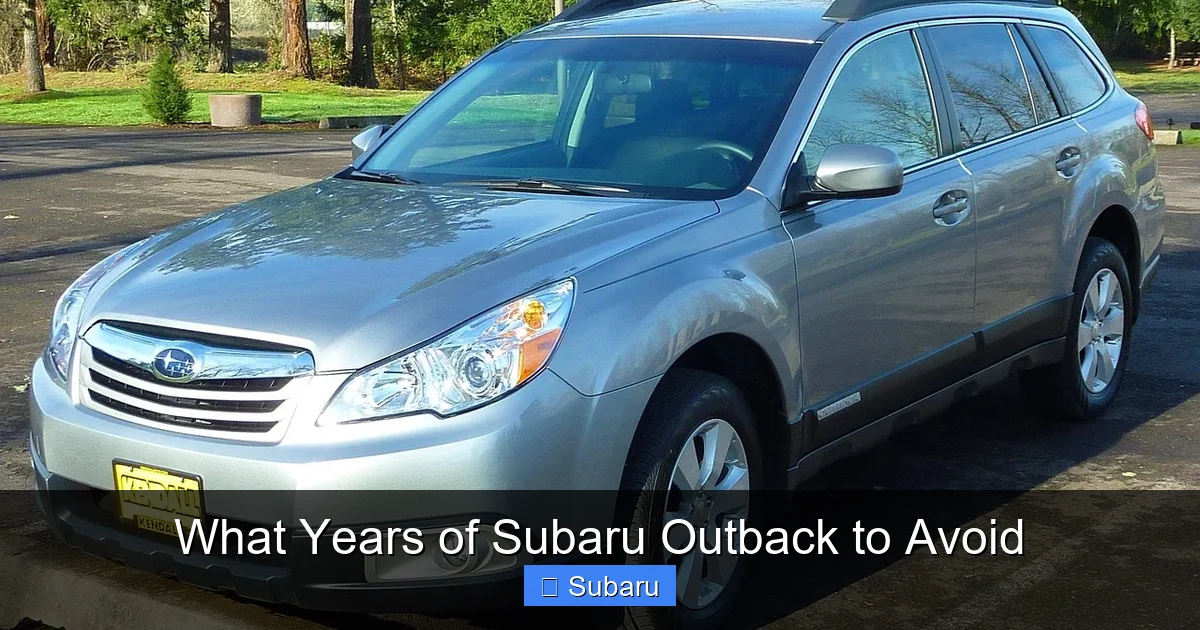
Visual guide about What Years of Subaru Outback to Avoid
Image source: cdn.pixabay.com
The 2010 redesign brought a more modern look, better fuel economy, and improved safety features to the Outback. These models are widely regarded as a major improvement over earlier generations, but they’re not without their issues. While they’re generally reliable, certain problems make some years less desirable.
Head Gasket Issues Become Rare
By 2010, Subaru had largely resolved the head gasket problem. The MLS gaskets and improved cooling systems made failures uncommon. That said, isolated cases still occur, especially in high-mileage vehicles or those with overheating history. It’s still worth checking for signs of leakage or coolant loss.
CVT Transmission Concerns in 2013–2014
The CVT became standard in most 2010–2014 Outbacks, and while it’s more refined than the 2008–2009 versions, problems still arise. The 2013–2014 models, in particular, have reported issues with CVT hesitation, jerking during acceleration, and software glitches. Some owners describe a “rubber band” feeling when merging or climbing hills.
Subaru released several software updates to address these issues, but not all vehicles received them. If you’re considering a 2013 or 2014 model, ask if the latest TCM (Transmission Control Module) update has been applied.
Electrical and Infotainment Glitches
The 2010–2014 Outbacks introduced more electronics, including touchscreen infotainment systems, backup cameras, and advanced driver aids. While convenient, these systems can be buggy. Common complaints include unresponsive touchscreens, Bluetooth pairing failures, and dashboard warning lights that come on for no reason.
Some owners report that the multi-function display (MFD) fails, requiring expensive replacements. These issues are more annoying than dangerous, but they can be costly to fix.
Timing Chain Stretch in 3.6-Liter Models
The 3.6-liter H6 engine, available in the 2010–2014 Outback, is powerful and smooth, but it’s not immune to problems. Some owners report timing chain stretch, which can cause rattling noises at startup and, if ignored, lead to engine damage. Regular oil changes with the correct viscosity are critical to preventing this issue.
Are 2010–2014 Outbacks Worth Considering?
Yes—with caveats. The 2010–2012 models are among the most reliable in this generation, with fewer CVT and electrical issues. The 2013–2014 models offer more tech but come with higher risk. If you find a well-maintained example with service records and no major repairs needed, these can be excellent used buys. Just be sure to test the CVT thoroughly and check for software updates.
The 2015–2019 Models: Peak Reliability with Minor Flaws
The 2015 redesign marked a new era for the Outback, with a stronger platform, improved fuel economy, and standard EyeSight safety technology. These models are widely considered the sweet spot for used Outback buyers—offering modern features, strong reliability, and good resale value.
CVT Hesitation in Early 2015–2016 Models
While the CVT in these models is more advanced, some 2015–2016 Outbacks experience hesitation or lag when accelerating from a stop. This is often due to software calibration issues. Subaru released updates to improve responsiveness, but not all vehicles were updated. A test drive is essential to assess transmission behavior.
Oil Consumption in 2.5-Liter Engines
The 2.5-liter engine in 2015–2019 models still consumes oil, though less severely than earlier versions. Most owners report needing to add a quart every 3,000 to 5,000 miles. It’s not a dealbreaker, but it’s something to monitor.
Excellent Safety and Reliability Ratings
These models earn top marks from IIHS and NHTSA for crash safety, and Consumer Reports consistently ranks them among the most reliable midsize SUVs. The EyeSight system—featuring adaptive cruise control, lane departure warning, and pre-collision braking—works well and adds significant value.
Verdict: A Great Choice for Most Buyers
The 2015–2019 Outbacks are among the best years of Subaru Outback to buy used. They offer a great balance of reliability, features, and affordability. Just be sure to check for CVT updates and monitor oil levels.
2020–2023 Models: Modern and Capable, But Pricey
The latest Outbacks feature a more rugged design, standard turbocharged engine options, and upgraded tech. They’re highly reliable and packed with features, but high demand and low used inventory make them expensive.
Strong Performance and Safety
The 2020–2023 models come with a 2.5-liter base engine or an optional 2.4-liter turbo. Both are reliable, and the turbo offers impressive power for towing and mountain driving. Safety ratings remain top-tier, and the updated EyeSight system is even more effective.
Higher Purchase Price
Because these models are so new and in high demand, used prices remain close to MSRP. You’ll pay a premium for the latest tech and warranty coverage.
Verdict: Worth It If Budget Allows
These are excellent vehicles, but they’re not the best value for used buyers. Consider them if you want the latest features and can afford the higher price tag.
How to Avoid Buying a Lemon: Tips for Any Model Year
No matter which year you choose, follow these tips:
- Get a pre-purchase inspection by a Subaru specialist.
- Check the vehicle history report for accidents and recalls.
- Review maintenance records, especially for timing belts, CVT fluid, and head gaskets.
- Test drive on highways and hills to assess transmission and engine performance.
- Use NHTSA.gov to check for open recalls on the VIN.
Conclusion: Make an Informed Decision
Knowing which years of Subaru Outback to avoid can save you time, money, and stress. While the brand has a strong reputation, certain model years have earned their bad rap. Focus on well-maintained 2015–2019 models for the best blend of reliability and value, and always do your homework before buying.
Frequently Asked Questions
What is the most common problem with Subaru Outbacks?
The most common issue across many model years is head gasket failure, especially in 2000–2004 and some 2005–2009 models. This can lead to overheating, coolant loss, and expensive engine repairs if not addressed early.
Are Subaru Outbacks reliable long-term?
Yes, many Outbacks last over 200,000 miles with proper maintenance. Models from 2015 onward are particularly reliable, but even older years can be durable if well cared for and free of major mechanical issues.
Should I avoid all CVT transmissions in Subaru Outbacks?
Not necessarily. Early CVTs (2008–2014) had more problems, but newer models (2015+) are much improved. Always check for software updates and ensure the transmission fluid has been changed regularly.
How often should I change the oil in a Subaru Outback?
Subaru recommends oil changes every 6,000 miles or 6 months for most models. However, if your Outback consumes oil, check the level every 1,000 miles and top off as needed to prevent engine damage.
Can I fix a head gasket issue myself?
While possible for experienced mechanics, head gasket replacement on a Subaru is complex and time-consuming. Most owners opt for professional repair, which can cost $1,500–$2,500.
Where can I check for Subaru Outback recalls?
Visit the National Highway Traffic Safety Administration (NHTSA) website and enter the vehicle’s VIN to see if there are any open recalls or safety investigations for your specific model.