What Year Toyota Tundra Has a Timing Chain?

Contents
- 1 Key Takeaways
- 2 📑 Table of Contents
- 3 What Year Toyota Tundra Has a Timing Chain?
- 4 Understanding Timing Chains vs. Timing Belts
- 5 Generations of the Toyota Tundra and Timing Chain Use
- 6 Maintenance Tips for Tundra Timing Chains
- 7 Common Myths About Timing Chains
- 8 Why the Timing Chain Matters for Tundra Owners
- 9 Conclusion
- 10 Frequently Asked Questions

Multipurpose Lubricant Spray

Car Hydraulic Jack

Phone Mount for Bike

Car Cleaning Brush Set
All Toyota Tundra models from 2000 to the present use a timing chain, not a timing belt. This durable design reduces maintenance needs and increases engine reliability over time.
Key Takeaways
- All Tundra models use timing chains: From the first generation (2000–2006) to the latest third-gen models (2022–present), every Toyota Tundra comes equipped with a timing chain.
- No scheduled replacement needed: Unlike timing belts, timing chains are built to last the life of the engine under normal conditions and don’t require routine replacement.
- Better durability and reliability: Timing chains are stronger and more resistant to wear, making them ideal for heavy-duty trucks like the Tundra.
- Proper maintenance still matters: While timing chains last longer, poor oil quality or infrequent changes can lead to premature wear or failure.
- Signs of timing chain issues: Rattling noises, check engine light, or poor performance may indicate a problem—address them early to avoid engine damage.
- Great for towing and hauling: The timing chain’s strength supports the Tundra’s high-torque V8 engines, especially under heavy loads.
- Peace of mind for owners: Knowing your Tundra has a timing chain means fewer worries about costly belt replacements every 60,000–100,000 miles.
📑 Table of Contents
What Year Toyota Tundra Has a Timing Chain?
If you’re shopping for a Toyota Tundra or already own one, you’ve probably wondered about the engine’s internal components—especially the timing system. One of the most common questions Tundra owners and buyers ask is: “What year Toyota Tundra has a timing chain?” The good news? Every single Toyota Tundra ever made comes with a timing chain, not a timing belt. That means whether you’re driving a 2000 model or a brand-new 2024 Tundra, your engine uses a robust, long-lasting timing chain.
This is a huge advantage. Timing belts, found in many other trucks and cars, need to be replaced every 60,000 to 100,000 miles. If you forget or delay that service, the belt can snap, causing catastrophic engine damage. But with a timing chain, you avoid that risk entirely. Toyota designed the Tundra with durability in mind, and the timing chain is a big part of that philosophy. It’s built to handle the rigors of towing, hauling, and long-distance driving—exactly what full-size truck owners need.
In this guide, we’ll dive deep into why the Tundra uses a timing chain, how it works, what to watch for in terms of maintenance, and how it compares to timing belts in other vehicles. Whether you’re a first-time truck buyer or a seasoned Tundra enthusiast, this information will help you understand one of the key reasons the Tundra is known for its legendary reliability.
Understanding Timing Chains vs. Timing Belts

Visual guide about What Year Toyota Tundra Has a Timing Chain?
Image source: m.media-amazon.com
Before we get into the specifics of the Tundra, let’s clear up a common confusion: what’s the difference between a timing chain and a timing belt?
A timing chain and a timing belt serve the same purpose—they synchronize the rotation of the crankshaft and camshaft(s) so that the engine’s valves open and close at the right time during each cylinder’s intake and exhaust strokes. This precise timing is critical for engine performance, fuel efficiency, and emissions control.
But the similarities end there.
Timing belts are made of reinforced rubber with fiber cords for strength. They’re lightweight and quiet, which is why they’re common in smaller engines and economy cars. However, rubber degrades over time. Exposure to heat, oil, and moisture causes belts to crack, fray, or stretch. That’s why manufacturers recommend replacing them every 60,000 to 100,000 miles—sometimes even sooner in harsh driving conditions.
Timing chains, on the other hand, are made of metal—usually steel—and resemble a bicycle chain. They’re much stronger and more durable. Because they’re metal, they don’t wear out as quickly and can last the entire life of the engine if properly maintained. They’re commonly used in trucks, SUVs, and performance vehicles where reliability under stress is a priority.
So why does this matter for the Toyota Tundra? Because the Tundra is a full-size pickup built for heavy-duty use. It’s designed to tow trailers, haul loads, and drive thousands of miles a year. A timing belt wouldn’t hold up under those conditions. A timing chain, however, thrives in that environment.
Why Toyota Chose a Timing Chain for the Tundra
Toyota didn’t choose a timing chain for the Tundra by accident. It was a deliberate engineering decision based on the truck’s intended use. The Tundra was built to compete with American heavyweights like the Ford F-150 and Chevrolet Silverado—trucks known for their power and durability. To do that, Toyota needed an engine that could handle high torque, frequent towing, and long service life.
The Tundra’s original 4.7L V8 engine, introduced in 2000, was a beast. It produced over 240 horsepower and 315 lb-ft of torque—impressive numbers for the early 2000s. That kind of power puts stress on internal components, including the timing system. A timing belt would have been a weak link. A timing chain, however, could handle the load without frequent replacements.
Even as Toyota updated the Tundra with newer engines—like the 5.7L V8 in 2007 and the twin-turbo 3.4L V6 in 2022—the timing chain remained. Why? Because it works. It’s reliable, durable, and requires minimal maintenance. Toyota’s reputation for building long-lasting vehicles depends on components like this.
Real-World Example: A Tundra Owner’s Experience
Let’s look at a real-world example. Mike, a Tundra owner from Texas, bought a used 2005 Tundra with 180,000 miles on it. He was nervous about potential engine issues, especially since the previous owner hadn’t kept detailed service records. But after researching, he learned that the Tundra uses a timing chain—and that it’s designed to last well beyond 200,000 miles with proper care.
Mike changed the oil every 5,000 miles using high-quality synthetic oil, kept up with routine maintenance, and drove the truck for another 70,000 miles without any timing-related problems. At 250,000 miles, the engine still runs smoothly. “I never worried about the timing belt,” Mike says. “That peace of mind is worth a lot.”
Stories like Mike’s are common among Tundra owners. The timing chain is one reason the Tundra has such a strong reputation for longevity.
Generations of the Toyota Tundra and Timing Chain Use

Visual guide about What Year Toyota Tundra Has a Timing Chain?
Image source: cdn11.bigcommerce.com
Now that we know all Tundras use timing chains, let’s break it down by generation. This will help you understand how the timing chain has evolved—and why it’s remained a constant feature.
First Generation (2000–2006)
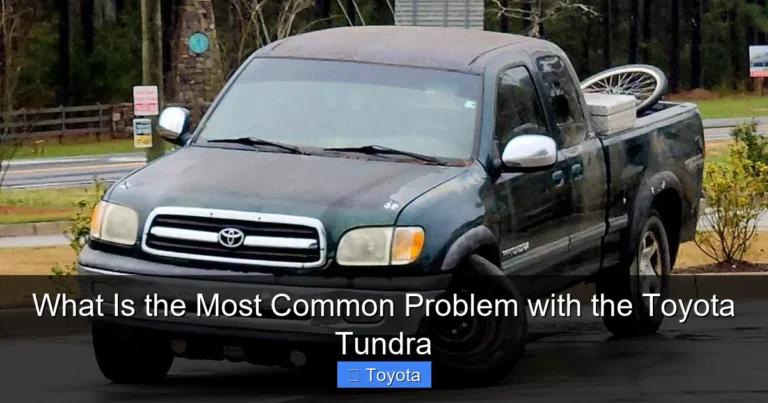
The original Toyota Tundra, launched in 2000, was a game-changer. It was Toyota’s first full-size pickup, designed to take on American trucks. The base engine was a 3.4L V6, but the real star was the optional 4.7L V8. Both engines used timing chains.
The 4.7L V8, in particular, was known for its smooth power delivery and durability. It used a single overhead cam (SOHC) design with a timing chain driving the camshaft. This setup was simple, reliable, and well-suited for towing and hauling.
Owners of first-gen Tundras often report driving well over 200,000 miles without timing chain issues—as long as they kept up with oil changes. The key was using the right oil and changing it on schedule. Old, dirty oil can cause sludge buildup, which may affect the timing chain tensioner and guides.
Second Generation (2007–2021)
In 2007, Toyota introduced the second-generation Tundra with a complete redesign. The most notable change was the new 5.7L V8 engine, which produced 381 horsepower and 401 lb-ft of torque. This engine was a powerhouse, capable of towing up to 10,000 pounds.
Like its predecessor, the 5.7L V8 used a timing chain. But this time, it was a dual overhead cam (DOHC) design, meaning it had two camshafts per cylinder bank. Each camshaft was driven by its own timing chain, synchronized with the crankshaft via a series of gears and chains.
This more complex system required precise engineering, but Toyota executed it well. The timing chains in the 5.7L engine are known for their durability. Many second-gen Tundras have surpassed 300,000 miles with original timing chains still in place.
One thing to note: some owners reported timing chain rattle on cold starts, especially in colder climates. This is often due to a worn tensioner or low oil pressure when the engine is cold. It’s usually not a sign of imminent failure, but it’s worth having a mechanic check it out.
Third Generation (2022–Present)
The latest Tundra, introduced in 2022, marks a major shift. Toyota dropped the V8 in favor of a twin-turbocharged 3.4L V6 engine, known as the i-FORCE. There’s also a hybrid version, the i-FORCE MAX, which adds an electric motor for even more power.
Despite the engine change, the timing chain remains. The new V6 uses a DOHC design with timing chains driving both camshafts. The system is more advanced, with hydraulic tensioners and improved guides to reduce wear and noise.
Toyota designed this engine for efficiency without sacrificing power. The twin turbos provide instant torque, making the new Tundra feel just as strong—if not stronger—than the old V8. And because it still uses a timing chain, owners don’t have to worry about belt replacements.
Maintenance Tips for Tundra Timing Chains

Visual guide about What Year Toyota Tundra Has a Timing Chain?
Image source: i.ytimg.com
Even though timing chains are built to last, they’re not maintenance-free. Proper care can extend their life and prevent unexpected issues. Here’s what you need to know.
Use High-Quality Oil
Oil is the lifeblood of your engine—and that includes the timing chain. The chain runs in an oil bath, and the tensioner uses oil pressure to keep it tight. If the oil is dirty, low, or the wrong viscosity, it can cause problems.
Toyota recommends using 0W-20 or 5W-30 synthetic oil, depending on the model year and climate. Always follow the owner’s manual for the correct specification. Avoid cheap, conventional oils—they break down faster and can lead to sludge.
Change Oil Regularly
Stick to the recommended oil change interval. For most Tundras, that’s every 5,000 to 7,500 miles, or once a year—whichever comes first. If you drive in severe conditions (towing, off-roading, extreme temperatures), change it more often.
Fresh oil keeps the timing chain lubricated and helps the tensioner work properly. Old oil loses its viscosity and can’t protect metal components as effectively.
Listen for Unusual Noises
A healthy timing chain should run quietly. If you hear a rattling or clattering noise from the front of the engine—especially on startup—it could be a sign of a loose chain or worn tensioner.
Cold starts are the most common time for this noise. If it goes away after the engine warms up, it might just be the tensioner taking a moment to build pressure. But if the noise persists or gets worse, have it checked immediately.
Don’t Ignore the Check Engine Light
Modern Tundras have sensors that monitor camshaft and crankshaft position. If the timing chain stretches or skips a tooth, it can cause a misfire or timing error. The check engine light will come on, and you’ll likely see a code like P0016 or P0017.
These codes indicate a correlation problem between the camshaft and crankshaft. While they can be caused by other issues (like a bad sensor), a stretched timing chain is a possibility—especially in high-mileage trucks.
Consider a Timing Chain Inspection at High Mileage
If your Tundra has over 150,000 miles, consider having a mechanic inspect the timing chain during a major service. This usually involves removing the timing cover and checking for wear, stretch, or damaged guides.
It’s not a routine service, but it can give you peace of mind—especially if you plan to keep the truck for many more miles.
Common Myths About Timing Chains
Despite their reliability, there are still some myths about timing chains. Let’s clear them up.
Myth 1: Timing Chains Never Need Replacement
While timing chains are designed to last the life of the engine, they’re not immortal. In rare cases—usually due to poor maintenance or extreme wear—they can stretch or fail. But this is uncommon, especially in well-maintained Tundras.
Myth 2: Timing Chains Are Noisy
Modern timing chains are engineered to be quiet. Any significant noise is a red flag. Older chains or worn components might rattle, but a properly functioning chain should be silent.
Myth 3: You Can’t Drive with a Bad Timing Chain
If the chain is severely damaged, driving can cause catastrophic engine damage. But if it’s just slightly loose or noisy, you might be able to drive short distances to get it serviced. Still, don’t take the risk—get it checked ASAP.
Why the Timing Chain Matters for Tundra Owners
So why does this matter? Because the timing chain is a key part of what makes the Tundra such a reliable truck.
For one, it reduces maintenance costs. You don’t have to budget for a $500–$1,000 timing belt replacement every 80,000 miles. That savings adds up over time.
It also increases resale value. A Tundra with a timing chain is more attractive to buyers because they know they won’t face a major engine service soon after purchase.
And most importantly, it gives you confidence. Whether you’re towing a boat across the country or driving through rough terrain, you can trust that your engine’s timing system won’t let you down.
Conclusion
To answer the question directly: Every Toyota Tundra, from 2000 to the present, has a timing chain. There is no model year that uses a timing belt. This design choice reflects Toyota’s commitment to durability, reliability, and long-term performance.
The timing chain is one of the reasons the Tundra has earned its reputation as one of the most dependable full-size trucks on the market. It handles the demands of heavy-duty use, requires minimal maintenance, and gives owners peace of mind.
Whether you’re buying a used first-gen Tundra or a brand-new hybrid model, you can rest easy knowing your engine is built to last. Just remember to keep up with oil changes, listen for unusual noises, and address any issues early.
With proper care, your Tundra’s timing chain—and your truck—can easily surpass 300,000 miles. That’s the Toyota way.
Frequently Asked Questions
Do all Toyota Tundras have timing chains?
Yes, every Toyota Tundra model from 2000 to the present uses a timing chain. There are no Tundra models that use a timing belt.
How long does a Tundra timing chain last?
A timing chain in a Toyota Tundra is designed to last the life of the engine, often exceeding 200,000 to 300,000 miles with proper maintenance.
Can a timing chain fail on a Tundra?
While rare, timing chains can fail due to poor maintenance, lack of oil changes, or extreme wear. Signs include rattling noises or a check engine light.
Do I need to replace the timing chain on my Tundra?
No, timing chains do not require scheduled replacement. Only replace it if there’s a problem confirmed by a mechanic.
What happens if a timing chain breaks?
If a timing chain breaks, the engine will stop running and may suffer severe internal damage, especially in interference engines like the Tundra’s.
Is it expensive to replace a timing chain?
Yes, replacing a timing chain is labor-intensive and can cost $1,500 to $3,000 or more. That’s why prevention through maintenance is key.