What Year Subaru Impreza Should You Avoid?

Contents
- 1 Key Takeaways
- 2 📑 Table of Contents
- 3 What Year Subaru Impreza Should You Avoid?
- 4 The Most Problematic Subaru Impreza Model Years
- 5 Why These Problems Happened
- 6 How to Avoid Buying a Lemon
- 7 Better Alternatives: Reliable Impreza Model Years
- 8 Final Thoughts: Should You Avoid Certain Impreza Years?
- 9 Frequently Asked Questions


Not every Subaru Impreza is created equal. Some model years have recurring mechanical issues that can lead to expensive repairs. This guide reveals the worst years to avoid, highlights common problems, and helps you choose a dependable Impreza with confidence.
Key Takeaways
- 2002–2005 Subaru Impreza WRX models suffer from head gasket failures: These engines are prone to coolant leaks and overheating, often requiring costly repairs.
- 2006–2007 Impreza 2.5L engines face rod bearing issues: Premature engine wear can lead to knocking sounds and engine failure if not addressed early.
- 2008–2011 models may have CVT transmission problems: Early Continuously Variable Transmissions were unreliable, leading to jerky shifting and costly replacements.
- 2012–2014 Imprezas report excessive oil consumption: Many owners report burning through a quart of oil every 1,000 miles, signaling potential piston ring or valve seal defects.
- Rust and corrosion plague 2000–2007 models: Especially in snowy or salty climates, underbody rust can compromise structural integrity.
- Always check maintenance history and get a pre-purchase inspection: Even problematic years can be good buys if well-maintained and repaired.
- Later models (2015+) are generally more reliable: Subaru improved engineering and quality control, making recent Imprezas safer long-term investments.
📑 Table of Contents
What Year Subaru Impreza Should You Avoid?
If you’re shopping for a used Subaru Impreza, you’re likely drawn to its reputation for all-wheel drive capability, practicality, and rally-inspired performance—especially in the WRX trim. But here’s the truth: not every Impreza model year is a winner. Some years are plagued by mechanical flaws, expensive repairs, and reliability headaches that can turn a great deal into a money pit.
Subaru has built the Impreza since 1993, and while the brand has improved significantly over the decades, certain model years stand out as trouble spots. Whether you’re after a fuel-efficient commuter, a sporty WRX, or a family-friendly hatchback, knowing which year Subaru Impreza should you avoid can save you thousands in repairs and endless frustration. In this guide, we’ll break down the worst years, explain the common issues, and help you make a smart, informed decision.
This isn’t about trashing Subaru—far from it. The Impreza remains one of the most beloved compact cars for its balance of performance, safety, and all-weather capability. But like any long-running model, it has had its ups and downs. By focusing on the problematic years and understanding why they’re risky, you can steer clear of trouble and find a reliable Impreza that will serve you well for years to come.
The Most Problematic Subaru Impreza Model Years
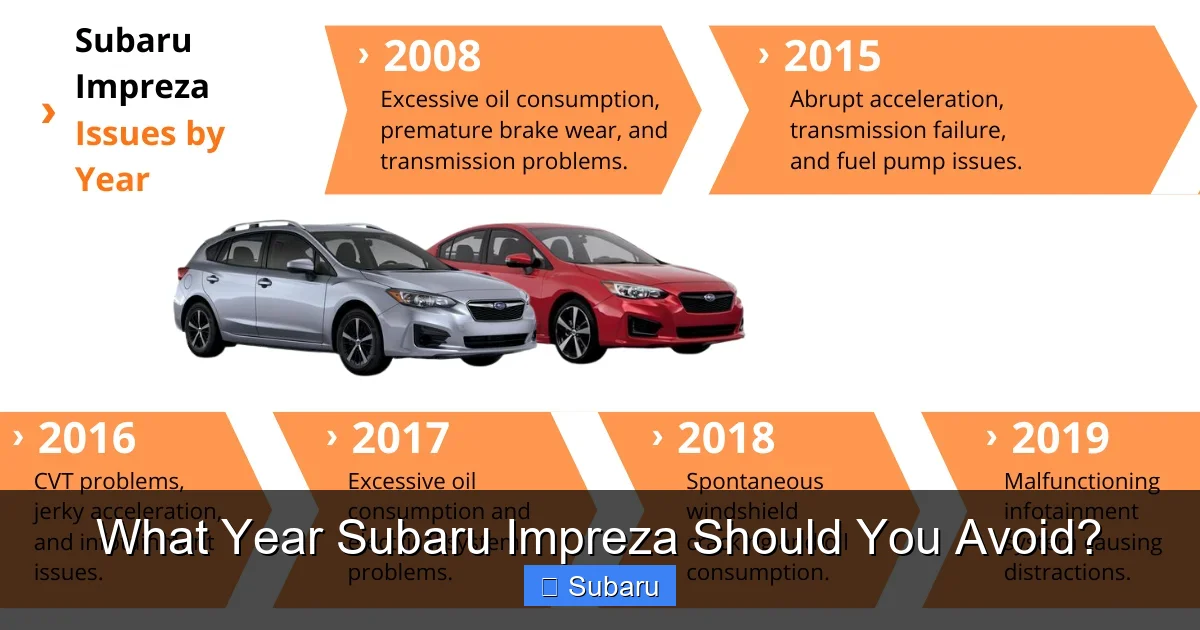
Visual guide about What Year Subaru Impreza Should You Avoid?
Image source: gmundcars.com
When it comes to reliability, some Subaru Impreza years are best avoided. Based on consumer complaints, repair frequency, and expert analysis, here are the model years you should approach with caution—or skip entirely.
2002–2005: The Head Gasket Nightmare
The early 2000s were a rough patch for Subaru’s EJ20 and EJ25 engines, especially in the 2002–2005 Impreza WRX and naturally aspirated models. The most infamous issue? Head gasket failure.
These engines used a non-interference design, which means a blown head gasket won’t necessarily destroy the engine—but it will cause coolant leaks, overheating, white smoke from the exhaust, and a sweet smell under the hood. Left unchecked, it can lead to warped cylinder heads or even engine seizure.
Why did this happen? Subaru used a multi-layer steel (MLS) head gasket design that was prone to failure under high heat and pressure, especially in turbocharged WRX models. The problem was so widespread that Subaru extended the warranty on head gaskets to 8 years or 100,000 miles for affected vehicles.
Even if a 2002–2005 Impreza has had the head gasket replaced, it’s a red flag. The repair is expensive—often $1,500 to $2,500—and if it wasn’t done correctly, it could fail again. Plus, these models are now over 18 years old, meaning other components like timing belts, water pumps, and suspension parts are likely due for replacement.
If you’re set on an early 2000s WRX, look for one that’s already had the head gasket replaced with an updated MLS or composite gasket. But be prepared for ongoing maintenance costs.
2006–2007: Rod Bearing Failures in the 2.5L Engine
The 2006 and 2007 Subaru Impreza models introduced the 2.5-liter EJ253 engine, which seemed like an improvement—until owners started reporting rod bearing failures.
Rod bearings connect the pistons to the crankshaft, and when they wear out or fail, you’ll hear a loud knocking noise from the engine, especially under acceleration. In severe cases, the engine can seize completely.
Subaru acknowledged the issue and issued Technical Service Bulletins (TSBs) about premature bearing wear. The problem was linked to inadequate oil clearance and poor lubrication, especially in vehicles that weren’t regularly serviced or driven in extreme conditions.
The repair? A full engine rebuild or replacement—costing $3,000 to $5,000 or more. That’s more than many used Imprezas are worth.
If you’re looking at a 2006 or 2007 Impreza, ask for maintenance records. Regular oil changes with the correct 5W-30 synthetic oil are critical. Listen for engine knock during a test drive, and consider having a mechanic perform a compression test or inspect the oil pan for metal shavings.
2008–2011: CVT Transmission Woes
In 2008, Subaru began introducing the Lineartronic Continuously Variable Transmission (CVT) in the Impreza. While CVTs offer smoother acceleration and better fuel economy, the early versions were far from reliable.
Owners of 2008–2011 Imprezas with CVTs reported jerky shifting, hesitation, delayed response, and outright transmission failure. Some drivers experienced sudden loss of power or the car going into “limp mode” while driving.
The root cause? Software glitches, overheating, and inadequate cooling for the transmission. Subaru issued several software updates and extended the CVT warranty to 10 years or 100,000 miles in some cases, but many owners still faced expensive repairs.
If you’re considering a CVT-equipped Impreza from this era, make sure the transmission has been serviced regularly—every 30,000 miles with Subaru’s specific CVT fluid. Avoid models with a history of towing or aggressive driving, as these stress the transmission.
Alternatively, look for a 2008–2011 Impreza with a 5-speed manual transmission. They’re more reliable and often more fun to drive.
2012–2014: Excessive Oil Consumption
The 2012–2014 Subaru Impreza models, particularly those with the 2.0-liter FB20 engine, are known for burning oil—a lot of it.
Many owners report needing to add a quart of oil every 1,000 to 1,500 miles. Subaru officially acknowledged the issue and extended the powertrain warranty to 8 years or 100,000 miles for oil consumption problems.
The cause? Defective piston rings and valve seals that allow oil to seep into the combustion chamber and burn off. While not an immediate engine killer, excessive oil consumption can lead to carbon buildup, reduced performance, and increased emissions.
If you’re looking at a 2012–2014 Impreza, check the oil level before and after a test drive. Ask the owner how often they top off the oil. A well-maintained example with regular oil changes and no major leaks might be okay, but be prepared to monitor oil levels closely.
2000–2007: Rust and Corrosion Issues
While not a mechanical failure per se, rust is a major concern for Imprezas from 2000 to 2007—especially in regions with harsh winters and road salt.
The underbody, wheel wells, and rear quarter panels are particularly vulnerable. Over time, rust can compromise structural integrity, lead to brake line failure, and make repairs difficult and expensive.
Subaru used galvanized steel, but the coating wasn’t always applied evenly, and rust could start around welds, seams, and suspension mounts. Once it takes hold, it spreads quickly.
If you live in a snowy or coastal area, inspect the undercarriage carefully. Look for bubbling paint, flaking metal, or soft spots. A vehicle history report can also reveal if the car was previously registered in a high-rust state.
Why These Problems Happened

Visual guide about What Year Subaru Impreza Should You Avoid?
Image source: miramarspeedcircuit.com
Understanding why these issues occurred can help you avoid similar pitfalls in the future.
Engineering and Design Flaws
Many of the problems with early Impreza models stem from design choices that didn’t hold up over time. The EJ-series engines, while powerful and tuner-friendly, were prone to head gasket and bearing issues due to thermal stress and inadequate sealing.
Similarly, the early CVTs were rushed to market to meet fuel economy standards, but Subaru hadn’t fully refined the technology. The result? Transmissions that overheated and failed prematurely.
Manufacturing and Quality Control
Subaru ramped up production in the 2000s to meet growing demand, especially for the WRX. In some cases, quality control suffered. Components like piston rings and valve seals weren’t held to tight enough tolerances, leading to oil consumption and premature wear.
Additionally, some parts suppliers provided substandard materials, contributing to early failures.
Lack of Maintenance Awareness
Subaru engines are robust, but they demand regular maintenance. Many early Impreza owners didn’t realize the importance of frequent oil changes, especially in turbocharged models.
Using the wrong oil, skipping services, or driving in extreme conditions without proper care accelerated wear and led to avoidable failures.
How to Avoid Buying a Lemon
Visual guide about What Year Subaru Impreza Should You Avoid?
Image source: miramarspeedcircuit.com
Just because a model year has a bad reputation doesn’t mean every car from that year is a disaster. With the right approach, you can still find a reliable Impreza—even from a problematic year.
Get a Pre-Purchase Inspection (PPI)
This is non-negotiable. A qualified mechanic—preferably one familiar with Subarus—can spot red flags like oil leaks, engine noise, transmission issues, and rust.
Ask the mechanic to check:
– Head gasket condition (coolant level, white smoke, overheating)
– Engine oil for metal particles
– Transmission fluid color and smell
– Suspension and underbody for rust
– Brake and fuel lines
A PPI typically costs $100–$200 but can save you thousands.
Review Maintenance Records
A well-documented service history is a strong indicator of a cared-for vehicle. Look for:
– Regular oil changes (every 3,000–5,000 miles for older models)
– Timing belt replacements (every 60,000–100,000 miles)
– Transmission fluid changes (especially for CVTs)
– Head gasket or engine repairs
If the owner can’t provide records, walk away.
Check Vehicle History Reports
Use services like Carfax or AutoCheck to uncover:
– Accident history
– Title issues (salvage, flood damage)
– Odometer rollback
– Previous owners and usage (e.g., rental, taxi)
A clean report doesn’t guarantee reliability, but a problematic one is a major red flag.
Test Drive Thoroughly
During the test drive, pay attention to:
– Engine noise (knocking, ticking, whining)
– Transmission behavior (jerking, slipping, hesitation)
– Steering and suspension (clunks, vibrations)
– Warning lights on the dashboard
Take the car on highways, hills, and stop-and-go traffic to stress-test the systems.
Consider a Certified Pre-Owned (CPO) Subaru
If you want peace of mind, look for a CPO Impreza from a Subaru dealership. These vehicles undergo a 152-point inspection, come with an extended warranty, and often include roadside assistance.
While CPO cars cost more, the added protection can be worth it—especially if you’re considering a model year with known issues.
Better Alternatives: Reliable Impreza Model Years
If you’re skittish about the problematic years, you’re in luck. Subaru made significant improvements in the mid-2010s.
2015–2017: The Sweet Spot
The 2015 redesign brought a new platform, improved safety features, and a more refined driving experience. The FB20 engine was updated to reduce oil consumption, and the CVT became more reliable.
These models also come with standard all-wheel drive, excellent crash test ratings, and available EyeSight driver assistance (on higher trims).
Common issues are minimal, and many owners report 150,000+ miles with only routine maintenance.
2018–2023: Modern and Dependable
Recent Imprezas benefit from Subaru’s focus on quality and technology. The 2.0-liter and 2.5-liter engines are proven, the CVT is well-sorted, and safety features like automatic emergency braking are standard.
Fuel economy is excellent (up to 30 mpg combined), and the interior is more upscale than earlier models.
While not immune to wear and tear, these years are among the most reliable in Impreza history.
Final Thoughts: Should You Avoid Certain Impreza Years?
So, what year Subaru Impreza should you avoid? The short answer: 2002–2005 (head gaskets), 2006–2007 (rod bearings), 2008–2011 (CVT issues), and 2012–2014 (oil consumption). These years have well-documented problems that can lead to expensive repairs.
But that doesn’t mean you can’t find a good one. With careful inspection, maintenance records, and a trusted mechanic, you might still score a solid deal—especially if the previous owner already addressed the known issues.
For most buyers, though, it’s smarter to focus on 2015 and newer models. They offer better reliability, modern features, and lower long-term costs.
Remember: a used car is only as good as its maintenance history. Don’t let a low price lure you into a money pit. Take your time, do your homework, and when in doubt, walk away.
The Subaru Impreza is a fantastic car—when you pick the right year.
Frequently Asked Questions
What is the most reliable year for a Subaru Impreza?
The 2015–2017 models are widely considered the most reliable. They feature updated engines, improved transmissions, and fewer reported issues. Many owners report trouble-free driving well beyond 150,000 miles with regular maintenance.
Are all Subaru Impreza WRX models unreliable?
Not all, but early WRX models (2002–2005) are known for head gasket and turbo-related issues. Later WRX models (2015+) are much more reliable, thanks to better engineering and stronger components.
Can I fix a head gasket issue myself?
It’s not recommended unless you’re an experienced mechanic. Head gasket replacement requires disassembling the engine, resurfacing the head, and precise torque specs. Mistakes can lead to further damage. Professional repair is safer and more reliable.
How often should I change the oil in an older Impreza?
For 2000–2014 models, change the oil every 3,000 to 5,000 miles using full synthetic 5W-30 oil. Frequent changes help prevent sludge, wear, and oil consumption issues common in these engines.
Is the CVT transmission in newer Imprezas reliable?
Yes, Subaru improved the CVT design after 2012. Models from 2015 onward have fewer issues, especially with regular fluid changes every 30,000–60,000 miles. Avoid early CVTs (2008–2011) if possible.
Should I avoid Imprezas from snowy states?
Not necessarily, but inspect for rust carefully. Cars from snowy or salty regions may have underbody corrosion. Look for rust on suspension components, frame rails, and wheel wells. A clean undercarriage is a good sign.