What Year Hyundai Tucson to Avoid?

Contents
- 1 Key Takeaways
- 2 📑 Table of Contents
- 3 Understanding the Hyundai Tucson Generations
- 4 The Critical Red Flags: The Worst Years to Avoid (2015-2016)
- 5 The Pre-Redesign Problem Child: 2010-2014 Transmission Failures
- 6 The Turning Point: Why 2017-2021 Models Are Generally Safe
- 7 How to Vet Any Used Hyundai Tucson: A Practical Checklist
- 8 Final Verdict: Your Buying Strategy
- 9 Frequently Asked Questions


When shopping for a used Hyundai Tucson, the years to be most cautious of are 2015-2016 due to widespread, serious engine defects, and 2010-2015 due to chronic transmission failures. The 2017 redesign marked a significant reliability turning point. Always get a pre-purchase inspection and a full vehicle history report before buying any used Tucson.
So, you’re in the market for a used Hyundai Tucson. It’s a fantastic choice in many ways—practical, feature-packed, and often a great value. But like any popular used car, not all model years are created equal. Some years carry the baggage of major design flaws, costly recalls, and a reputation for poor reliability that can turn your sensible purchase into a garage-bound headache. The big question is: what year Hyundai Tucson to avoid?
We’ve dug through consumer complaints, technical service bulletins, recall databases, and owner forums to give you a clear, no-nonsense answer. Forget vague advice; we’re naming specific model years and the exact problems that make them risky. Think of this as your essential decoder ring for navigating the used Tucson market. Our goal is simple: help you find a reliable, enjoyable SUV and steer you clear of the trouble years that could drain your wallet and your patience.
Key Takeaways
- Avoid 2015-2016 Tucson models: These have the highest risk due to the defective Theta II engine, leading to catastrophic failure and costly recalls.
- Be wary of 2010-2015 models: Pre-redesign models commonly suffer from automatic transmission failures, a known and expensive issue.
- 2017 and newer are generally reliable: The complete redesign introduced improved powertrains and build quality, making these the safest used bets.
- Engine knock is a major red flag: A loud knocking sound from the engine, especially on cold starts, is a classic symptom of the Theta II engine defect.
- Transmission shuddering and harsh shifts: Feel for violent vibrations or jerky gear changes in older models, a sign of imminent transmission failure.
- Always verify recall and warranty work: Use the Hyundai recall lookup tool with the VIN to confirm if critical recall repairs (like the engine) were performed.
- A pre-purchase inspection is non-negotiable: Spend $150-$250 on a thorough inspection by a trusted, independent mechanic before purchasing any used vehicle.
📑 Table of Contents
- Understanding the Hyundai Tucson Generations
- The Critical Red Flags: The Worst Years to Avoid (2015-2016)
- The Pre-Redesign Problem Child: 2010-2014 Transmission Failures
- The Turning Point: Why 2017-2021 Models Are Generally Safe
- How to Vet Any Used Hyundai Tucson: A Practical Checklist
- Final Verdict: Your Buying Strategy
Understanding the Hyundai Tucson Generations
To understand which years to avoid, you first need to know the Tucson’s generational timeline. Hyundai has produced four distinct generations of the Tucson, each with its own engineering philosophy and, consequently, its own set of potential issues.
First Generation (2004–2009)
The original Tucson was a compact, no-frills SUV that helped establish Hyundai in the crossover market. It’s now quite old and generally only considered by budget buyers. While some basic engine and suspension issues exist, its main drawback today is simply age and wear, not widespread catastrophic design flaws.
Second Generation (2010–2015)
This generation grew in size and ambition, becoming a direct competitor to the Ford Escape and Honda CR-V. It introduced Hyundai’s “Fluidic Sculpture” design language. However, this era is critically important for our “years to avoid” discussion because it houses one of the Tucson’s most infamous problems: transmission failures. We’ll break this down in detail later.
Third Generation (2016–2021)
The 2016 model year was a partial refresh, but the 2017 model year was the true, ground-up redesign that kicked off the third generation. This brought a new platform, radically improved interior quality, and most importantly, a new family of “Smartstream” engines and a much more robust 6-speed (and later 8-speed) automatic transmission. This generation is where Hyundai really turned a corner on reliability for the Tucson.
Fourth Generation (2022–Present)
The current Tucson is a technological and design tour de force, available with hybrid and plug-in hybrid powertrains. It represents the pinnacle of Hyundai’s current engineering. While any first-year model (2022) can have minor teething issues, this generation has received excellent reliability reviews so far and is not considered a “year to avoid.”
The Critical Red Flags: The Worst Years to Avoid (2015-2016)
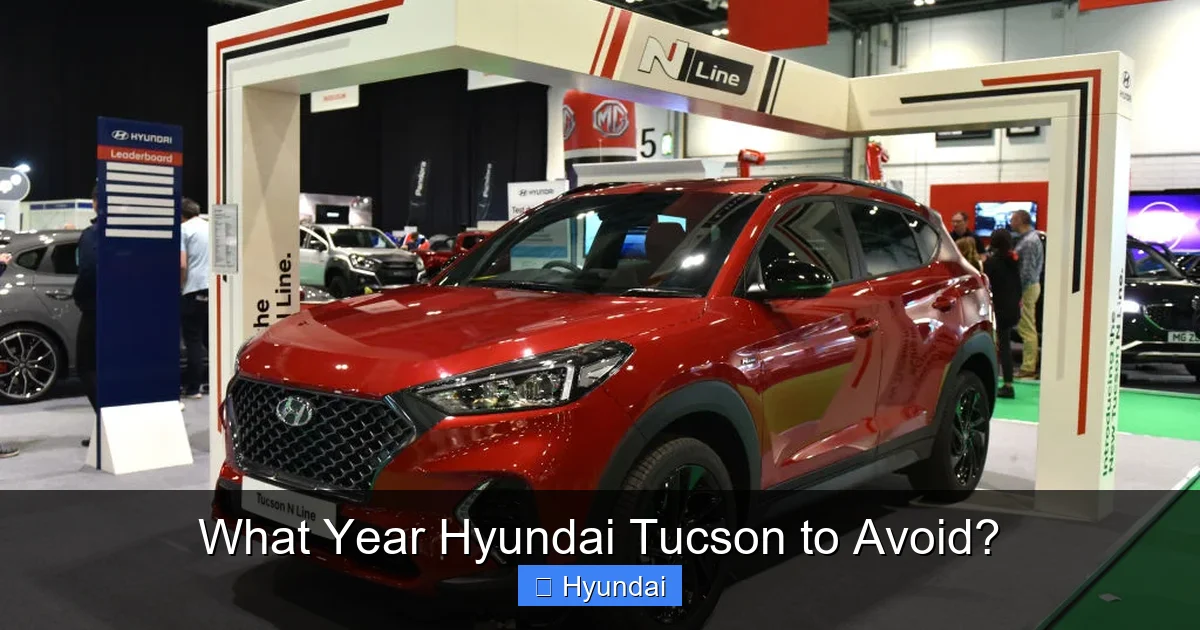
If you only remember one thing from this guide, make it this: the single riskiest model years for the Hyundai Tucson are 2015 and 2016. These two years sit at the end of the second generation but, more importantly, they are the only Tucson models powered by Hyundai’s infamous “Theta II” 2.4L GDI (Gasoline Direct Injection) engine. This engine is not just a minor annoyance; it is a known, widespread, and potentially catastrophic defect that has led to one of the largest and most costly recall and warranty extension programs in Hyundai’s history.
Visual guide about What Year Hyundai Tucson to Avoid?
Image source: motorbiscuit.com
The Theta II Engine Catastrophe
The core problem is a manufacturing flaw in the engine’s connecting rod bearings. Due to improper machining and debris left in the engine from the production process, these bearings wear out prematurely. This leads to low oil pressure, a loud metallic knocking sound (often described as “rod knock”), and ultimately, complete engine seizure. When this happens at highway speed, it can cause a loss of power steering and braking assist, creating a serious safety risk.
In 2019, Hyundai and the U.S. Department of Justice agreed to a $210 million settlement over these engines, which were also used in Kia models. The settlement included an extended warranty to 10 years/100,000 miles for original owners. However, for a used car buyer, this warranty extension is often transferable only to subsequent owners under specific conditions, and many of these high-mileage examples are now failing.
How to Identify a Potentially Bad Theta II Engine
- Listen for Cold Start Knock: A distinct metallic rap or knock that is loudest on cold starts and may quiet slightly as the engine warms up is the classic, tell-tale sign. This is not normal engine noise.
- Check for Oil Consumption: These engines are notorious for burning oil between changes. If the dipstick shows significantly low oil after 1,000 miles, it’s a major red flag.
- Scan for Diagnostic Trouble Codes: A professional scan should reveal codes related to knock sensors (P0325, P0326) and low oil pressure.
- Verify Recall and Warranty Work: Use the official Hyundai recall lookup tool (hyundai.com/recall) with the vehicle’s VIN. You must see evidence that the engine was inspected, and if it showed signs of wear, it was replaced under the warranty extension. If no record exists, the engine is a ticking time bomb.
Given the sheer scale of this problem and its potential to leave you with a $6,000-$8,000 engine replacement bill, our advice is unequivocal: do not buy a 2015 or 2016 Hyundai Tucson without a full, documented engine replacement history from a Hyundai dealership. The risk is simply too high. This advice also applies to the 2014 model year, which used the same engine in some trims, though the 2015-2016 model years had the highest production volume with this defect.
The Pre-Redesign Problem Child: 2010-2014 Transmission Failures
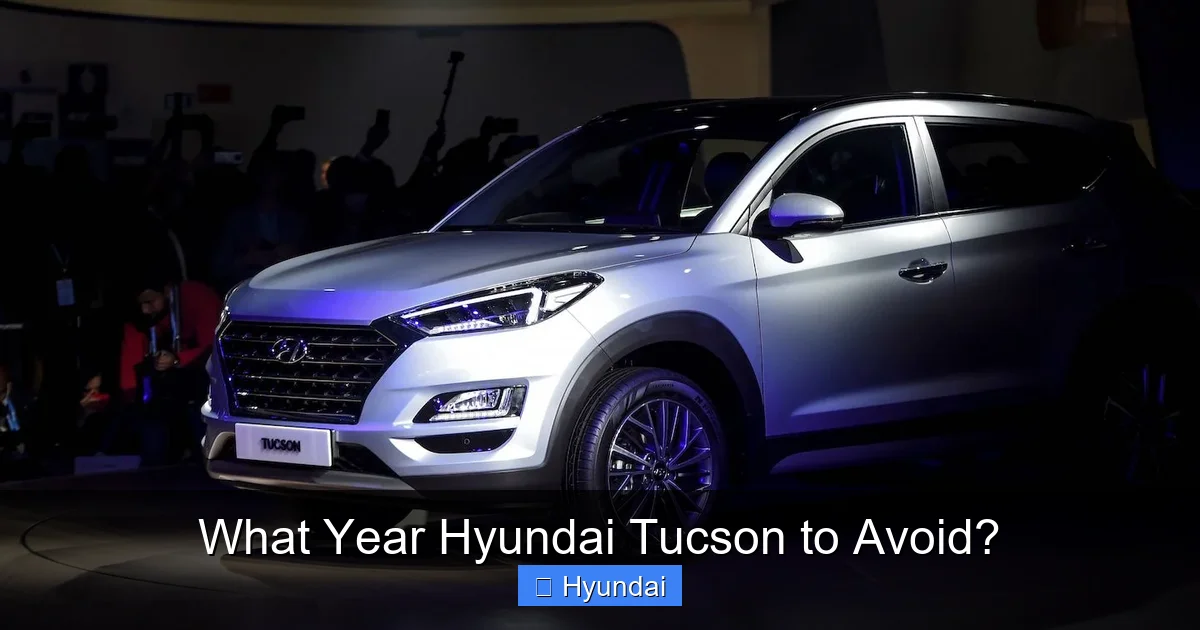
Before the engine issue dominated headlines, the Hyundai Tucson (2010-2015 models) had already earned a reputation for another costly failure: its automatic transmission. This issue is so prevalent that it defines the entire second generation for many mechanics and owners.
Visual guide about What Year Hyundai Tucson to Avoid?
Image source: motorbiscuit.com
What’s Failing and Why
The culprit is the 6-speed automatic transmission (often the A6MF2 unit). The failure mode is typically not a slow degradation but a sudden, catastrophic breakdown. Owners report symptoms like violent shuddering or shaking during acceleration (between 30-50 mph), harsh or delayed gear shifts, the transmission slipping out of gear, or complete failure where the vehicle will not move.
The root cause is widely believed to be a combination of inadequate internal clutch pack material and software shift logic that was too aggressive, causing excessive wear and heat. Once the clutches are damaged, the transmission’s valve body can also become clogged with debris, compounding the problem.
The Cost of Ignoring This Issue
There is no “quick fix.” A repair means either a rebuilt transmission or a used/salvage unit replacement. Costs typically range from $3,500 to $5,000. For a vehicle that might be worth $8,000-$12,000 on the private market, this can easily total the car.
Hyundai did issue a technical service bulletin (TSB) and, for some model years, extended the transmission warranty to 10 years/100,000 miles. However, like the engine warranty, this is often tied to the original owner and first registered owner, and many of these vehicles are now well beyond that coverage. When shopping for a 2010-2014 Tucson, the transmission’s health must be your top priority.
The Turning Point: Why 2017-2021 Models Are Generally Safe
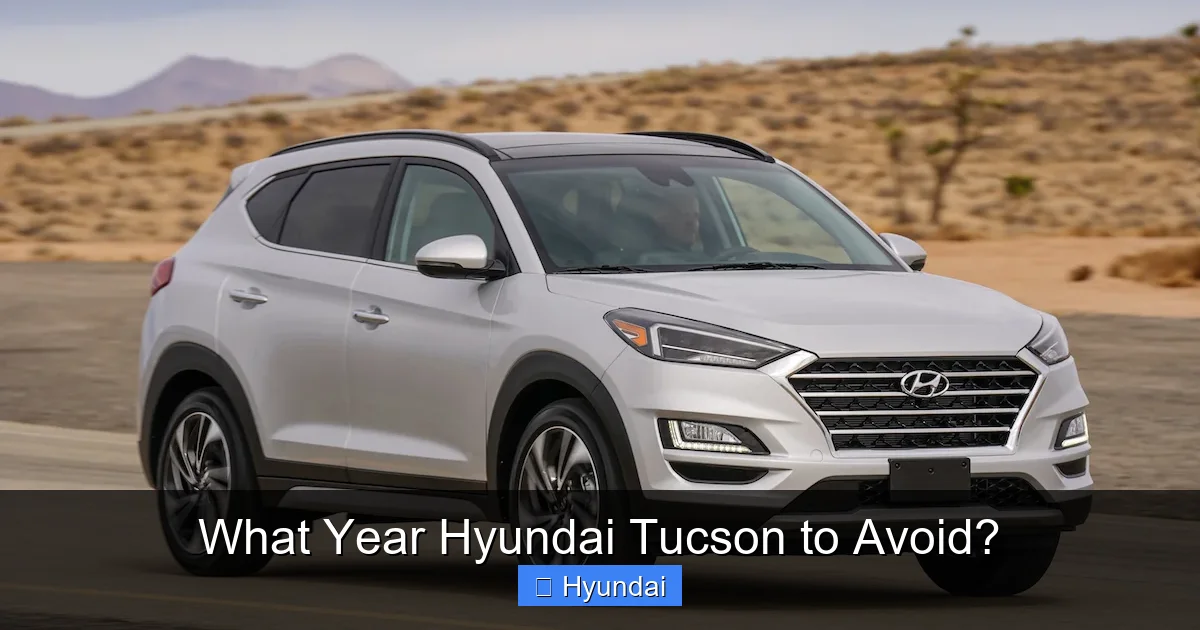
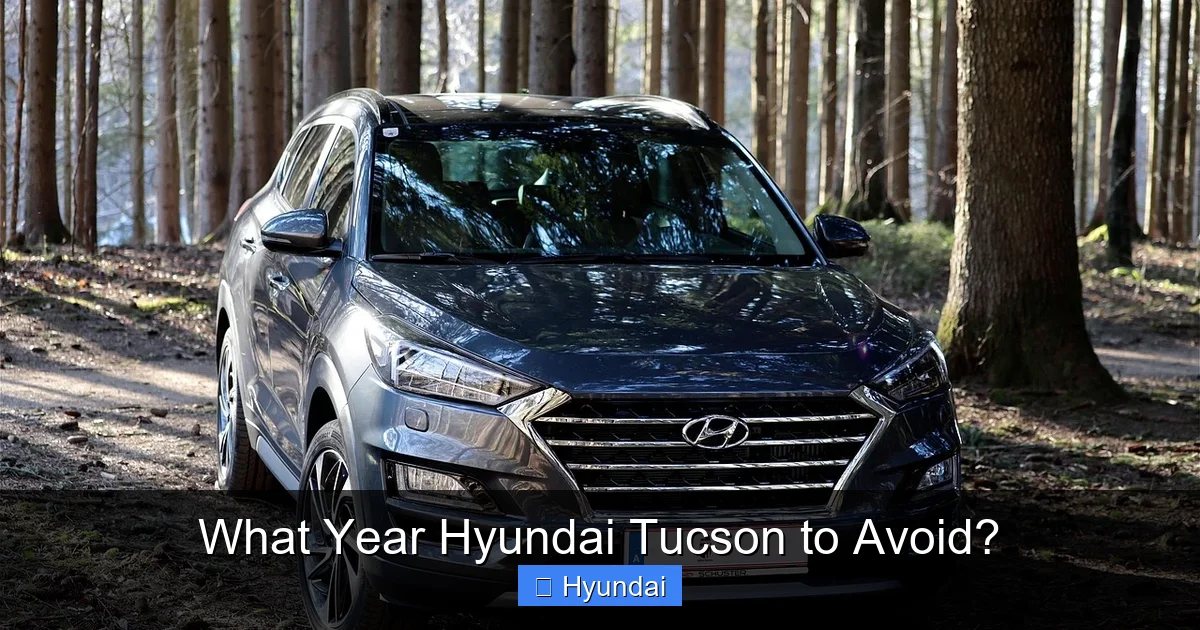
If the years before 2017 are the problem children, the 2017 Hyundai Tucson is the comeback kid. The complete redesign for the 2017 model year wasn’t just cosmetic; it was a fundamental engineering overhaul that addressed the core weaknesses of the previous generation.
Visual guide about What Year Hyundai Tucson to Avoid?
Image source: cdn.pixabay.com
New Powertrains, New Promise
Hyundai retired the problematic Theta II 2.4L GDI engine for the standard gas model in the U.S. market. Instead, it introduced the “Smartstream” G2.0 MPI (Multi-Point Injection) and G1.6 T-GDI (Turbocharged Gasoline Direct Injection) engines. These engines use different, more reliable bearing designs and fuel delivery systems. While no engine is 100% flawless, the failure rate and severity of issues for these newer units are dramatically lower and not comparable to the Theta II crisis.
A More Robust Transmission
The new 6-speed automatic transmission (for the 2.0L) and the 8-speed wet-clutch automatic (for the 1.6T) are entirely different units from the problematic second-gen transmission. They have shown to be durable and reliable in real-world use, with no widespread failure patterns reported. The shift logic is also smoother and more predictable.
Improved Build Quality & Features
Beyond the powertrain, the 2017+ Tucson features a vastly superior interior, quieter cabin, advanced safety tech (like standard Hyundai SmartSense on most trims), and better overall fit and finish. Consumer Reports and J.D. Power have given these model years significantly higher predicted reliability scores. While you should still get a pre-purchase inspection, the 2017-2021 Tucson represents a safe and smart choice for a used buyer.
How to Vet Any Used Hyundai Tucson: A Practical Checklist
Even if you’re looking at a “good” model year like a 2019 or 2020, a used car’s history is everything. A poorly maintained Tucson of any year can be a nightmare. Follow this checklist religiously.
The Non-Negotiable Pre-Purchase Inspection (PPI)
Do not buy a used Tucson without one. Period. Take the car to a trusted, independent mechanic (not a dealer affiliated with the seller). The PPI should be a comprehensive, multi-point inspection that includes:
- Engine & Transmission: Checking for leaks, abnormal noises, and reading computer codes. For a 2010-2016, they must specifically check for transmission solenoid issues and engine bearing wear.
- Suspension & Steering: Looking for worn ball joints, control arms, and struts. Some early Tucson models had issues with front-end components.
- Electrical Systems: Testing all infotainment, driver-assist features, and warning lights.
- Body & Frame: Checking for signs of major accident damage or rust, especially in the frame and undercarriage.
The Essential Vehicle History Report
Run a report from Carfax or AutoCheck. Look for:
- Regular Maintenance: Consistent oil change and service records are a huge positive sign.
- Accident History: Major collisions can lead to long-term issues.
- Number of Owners: Fewer owners is generally better, but a well-documented single-owner car is ideal.
- Title Issues: Avoid salvage, rebuilt, or flood-damaged titles at all costs.
- Open Recalls: The report should list them. You must then verify with Hyundai if they were completed.
Specific Questions to Ask the Seller
Be direct. “Has the engine or transmission ever been repaired or replaced?” “Do you have all service records?” “Why are you selling the car?” “Is the extended warranty (if applicable) still active and transferable?” Their answers (and hesitation) will tell you a lot.
Targeting the Best Value: The Sweet Spot
For the best blend of reliability, modern features, and value, we recommend focusing on the 2018-2020 Hyundai Tucson models. These are post-redesign, well within the modern engineering era, and have had time to depreciate from their new MSRP but are not yet at the very high-mileage stage. You get a fantastic warranty (if still transferable), excellent fuel economy, and a quiet, comfortable ride without the major known defects of earlier generations.
Final Verdict: Your Buying Strategy
So, what year Hyundai Tucson to avoid? The answer is clear and firm: prioritize avoiding the 2015 and 2016 models due to the Theta II engine, and be extremely cautious with any 2010-2014 model due to transmission risks. The 2017 model year and newer are in a completely different reliability class.
Your strategy should be this: set your search parameters to 2017 or newer. If, for budget reasons, you *must* consider a 2010-2016 model, you are entering a high-risk zone. You must:
- Only consider vehicles with a full, transparent service history.
- Insist on a thorough PPI by a specialist who knows these specific Tucson issues.
- Verify all recall and warranty work via the VIN with Hyundai.
- Be financially prepared for a major repair. Factor a potential $4,000-$8,000 engine or transmission repair into your purchase decision and budget.
For the vast majority of used car buyers, the path of least resistance and lowest risk is the 2017+ Tucson. You’ll get a more refined, safer, and vastly more reliable vehicle that will cost you less in the long run, even if the initial purchase price is slightly higher. Remember, the cheapest car to buy is not always the cheapest car to own. Protect your investment by knowing the history and avoiding the known problem years.
Frequently Asked Questions
Why is the 2016 Hyundai Tucson considered so unreliable?
The 2016 Tucson is considered one of the worst years due to its use of the defective Theta II 2.4L engine. This engine has a high failure rate from worn connecting rod bearings, which can cause complete engine seizure. Hyundai issued a massive recall and warranty extension for this engine, but many used examples may not have had the necessary repairs.
How much does it cost to replace the engine in a 2015 Hyundai Tucson?
A full engine replacement for the Theta II engine in a 2015 Tucson typically costs between $6,000 and $8,500 at a dealership or independent shop. This is often more than the value of the vehicle itself, which is why these cars are considered high-risk purchases unless the engine has already been replaced under warranty.
What are the signs of a failing transmission in a 2012 Hyundai Tucson?
>The key signs are violent shuddering or vibration during acceleration (especially between 30-50 mph), harsh or delayed gear shifts, the transmission slipping out of gear, or a complete failure where the car will not move forward or reverse. These symptoms indicate the transmission’s internal clutch packs are worn out.
Is the 2018 Hyundai Tucson a good year to buy used?
Yes, the 2018 Tucson is an excellent year to buy used. It’s from the second year of the complete redesign that fixed the major engine and transmission problems of previous years. It features the reliable Smartstream engines, a robust new transmission, and modern safety tech. Always get a pre-purchase inspection, but the 2018 model is a top recommendation.
Does Hyundai have a transmission recall for older Tucson models?
Hyundai did issue a warranty extension for the automatic transmission in certain 2009-2012 Tucson and Santa Fe models with the 3.8L engine, and there were TSBs for the 6-speed in other years. However, this was not a full recall mandating repair. The extended warranty coverage has long expired for most vehicles, so any transmission issue now is the owner’s financial responsibility.
What is the best Hyundai Tucson model year overall for reliability?
Based on extensive data from Consumer Reports, J.D. Power, and owner forums, the 2020 and 2021 model years are currently considered the most reliable. They benefit from the refined post-2017 platform, have minimal reported issues, and are still relatively new on the used market with lower average mileage. The 2017 model is also very good but may have minor early-adoption quirks.