What to Look for When Buying a Used Car

Contents
- 1 Key Takeaways
- 2 📑 Table of Contents
- 3 1. Do Your Homework Before You Shop
- 4 2. Check the Vehicle History Report
- 5 3. Inspect the Car Thoroughly
- 6 4. Take a Comprehensive Test Drive
- 7 5. Get a Pre-Purchase Inspection
- 8 6. Verify Ownership and Paperwork
- 9 7. Consider Certified Pre-Owned (CPO) Options
- 10 Conclusion
- 11 Frequently Asked Questions

Car Roof Rack Cross Bars

Car USB Charger

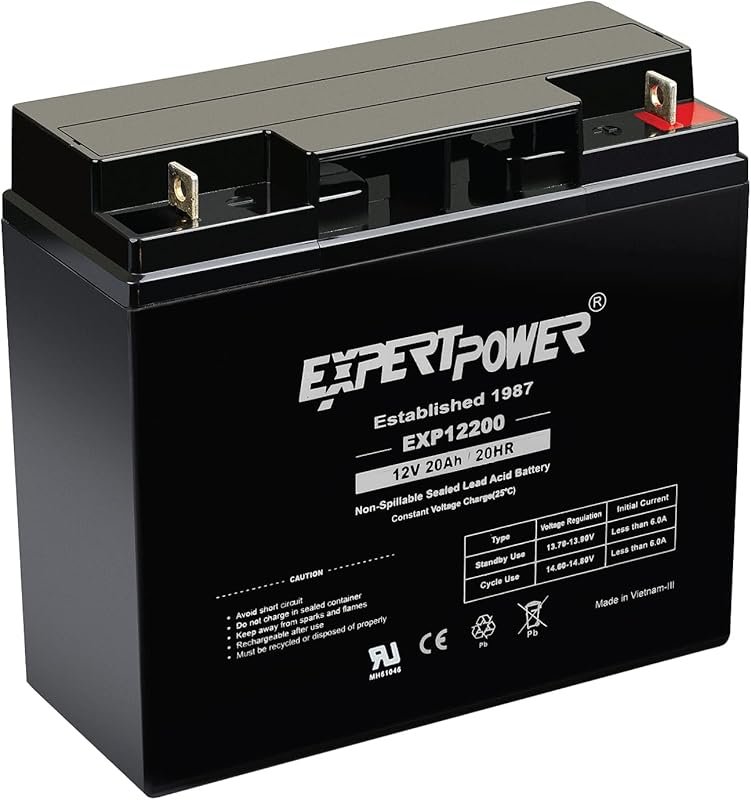
Solar Car Battery Maintainer

Car Sunshade for Windshield
Buying a used car can save you thousands—if you know what to look for. This guide walks you through essential checks, from vehicle history reports to mechanical inspections, so you can drive away with confidence and avoid costly mistakes.
Buying a used car can feel like navigating a maze—especially if it’s your first time. You’re excited about the idea of saving money compared to a brand-new vehicle, but you’re also worried about ending up with a lemon. The good news? With the right knowledge and a bit of patience, you can find a reliable used car that fits your budget and meets your needs.
The used car market is huge, with millions of vehicles changing hands every year. From family sedans to rugged SUVs and fuel-efficient hatchbacks, there’s something for everyone. But not every used car is created equal. Some have been gently driven and well-maintained, while others may have hidden mechanical issues or a sketchy past. That’s why knowing what to look for when buying a used car is absolutely essential.
In this guide, we’ll walk you through every step of the process—from researching your options to finalizing the deal. Whether you’re buying from a dealership, a private seller, or even online, these tips will help you make a smart, informed decision. Let’s get started.
Key Takeaways
- Check the vehicle history report: Use services like Carfax or AutoCheck to uncover accidents, title issues, and odometer discrepancies.
- Get a pre-purchase inspection: Have a trusted mechanic inspect the car before buying to catch hidden problems.
- Test drive in real-world conditions: Drive on highways, hills, and rough roads to assess performance and comfort.
- Verify ownership and paperwork: Ensure the seller has a clear title, matching VIN, and proper registration.
- Research fair market value: Use tools like Kelley Blue Book or Edmunds to avoid overpaying.
- Watch for red flags: Be cautious of deals that seem too good to be true or sellers who pressure you to buy quickly.
- Consider certified pre-owned (CPO) options: CPO vehicles often come with warranties and thorough inspections for added peace of mind.
📑 Table of Contents
1. Do Your Homework Before You Shop
Before you even step foot on a used car lot or message a private seller, take time to research. This step is often overlooked, but it’s one of the most important. Knowing what you want—and what’s realistic—will save you time, stress, and money.
Set a Realistic Budget
Start by figuring out how much you can afford. This isn’t just about the purchase price. You’ll also need to consider taxes, registration fees, insurance, and potential repairs. A good rule of thumb is to keep your total car expenses—including loan payments, fuel, and maintenance—under 15% of your monthly take-home pay.
For example, if you earn $4,000 a month after taxes, aim to spend no more than $600 on all car-related costs. If you’re financing, use an online auto loan calculator to estimate monthly payments based on different loan terms and interest rates. Don’t forget to factor in a down payment—ideally 10–20% of the car’s value—to reduce your loan amount and interest costs.
Choose the Right Make and Model
Not all used cars are equally reliable. Some brands and models have a reputation for lasting 200,000 miles or more with proper care, while others may start having major issues after just 100,000 miles. Do some digging on consumer review sites like Edmunds, Consumer Reports, or J.D. Power to find models known for durability, low repair costs, and good resale value.
For instance, Toyota and Honda are often praised for their long-term reliability. Models like the Toyota Camry, Honda Accord, and Subaru Outback consistently rank high in dependability surveys. On the other hand, some luxury brands may have higher maintenance costs, even if they’re only a few years old.
Use Online Tools to Compare Prices
Once you’ve narrowed down your options, use pricing tools like Kelley Blue Book (KBB), Edmunds, or TrueCar to find the fair market value of the cars you’re considering. These sites let you input the car’s year, make, model, mileage, condition, and location to get an estimated price range.
For example, a 2018 Honda Civic with 60,000 miles in good condition might be worth $16,000–$18,000 in your area. If a seller is asking $20,000, that’s a red flag. Use this data to negotiate confidently.
2. Check the Vehicle History Report
A vehicle history report is like a car’s medical record. It tells you everything that’s happened to the vehicle since it left the factory. Skipping this step is one of the biggest mistakes used car buyers make.
Why the History Report Matters
Even a car that looks perfect on the outside could have a troubled past. A history report can reveal if the car was in a major accident, flooded, salvaged, or had its odometer rolled back. These issues can affect safety, performance, and resale value.

Visual guide about What to Look for When Buying a Used Car
Image source: vroom.zone
For example, a car that was declared a total loss by an insurance company might have structural damage that’s not visible during a quick inspection. Or a car with a salvage title may be harder to insure or resell later.
Where to Get a Report
The two most popular services are Carfax and AutoCheck. Both provide detailed reports using data from DMVs, insurance companies, repair shops, and auctions. Most dealerships offer free Carfax reports, but it’s smart to get your own—just in case.
When reviewing the report, look for:
- Accident history (even minor fender benders can cause long-term issues)
- Number of previous owners (fewer is usually better)
- Service and maintenance records
- Odometer readings over time (to spot rollback fraud)
- Title status (clean, salvage, rebuilt, etc.)
- Recall information
Red Flags to Watch For
Be extra cautious if the report shows:
- Multiple owners in a short time
- Gaps in registration or mileage
- Flood or fire damage
- Salvage or rebuilt title
- Outstanding recalls that haven’t been addressed
For example, if a 2019 Ford F-150 has had four owners in three years, that’s suspicious. It could mean the truck had recurring problems that each owner tried to fix—or worse, hide.
3. Inspect the Car Thoroughly
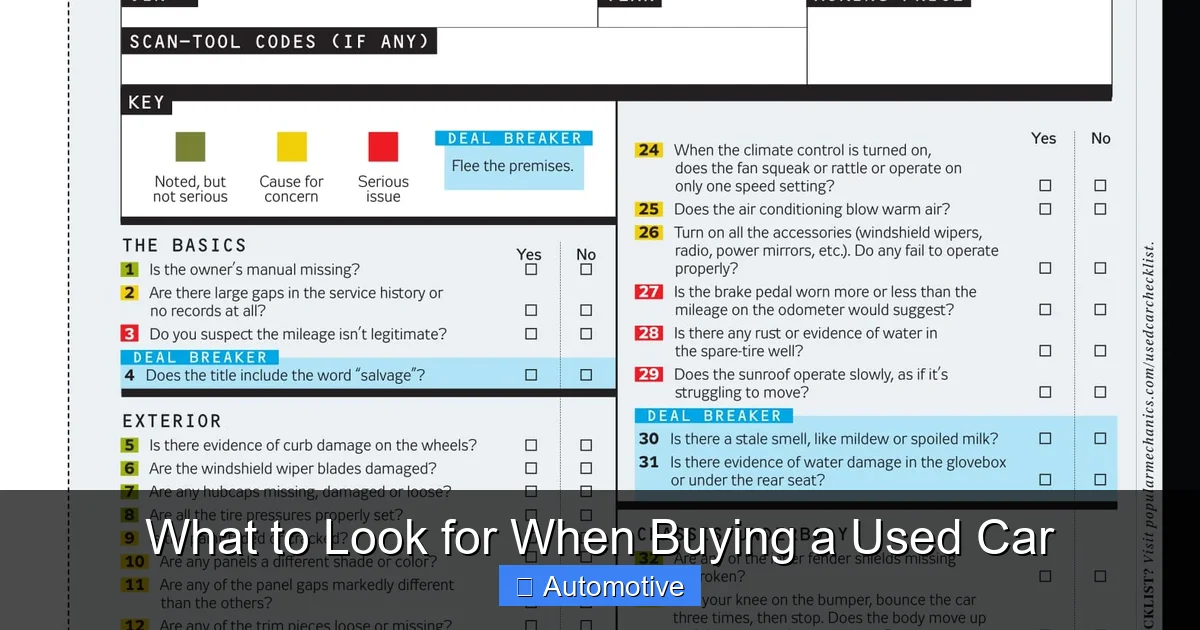
Even if the history report looks clean, you still need to inspect the car in person. A visual and mechanical check can uncover problems that don’t show up on paper.
Exterior Inspection
Start by walking around the car in good lighting. Look for:
Visual guide about What to Look for When Buying a Used Car
Image source: images.sampleforms.com
- Dents, scratches, or rust: Minor cosmetic damage is normal, but large dents or rust spots (especially near wheel wells or under the doors) could indicate past accidents or poor maintenance.
- Paint inconsistencies: If one panel looks shinier or a different shade, it may have been repainted—possibly due to damage.
- Tire condition: Check for even tread wear. Uneven wear could mean alignment issues or suspension problems.
- Panel gaps: Open the doors, hood, and trunk. The gaps between body panels should be even. Wide or uneven gaps may suggest the car was in a collision.
For example, if the front bumper on a 2017 Nissan Altima is slightly misaligned, it could be a sign of a minor front-end collision.
Interior Inspection
Inside the car, pay attention to:
- Seat and upholstery condition: Look for tears, stains, or excessive wear. Smell for mildew or smoke—odors can be hard to remove.
- Dashboard warning lights: Turn the key to the “on” position (without starting the engine) and check if all warning lights illuminate and then turn off. If any stay on, there may be an issue.
- Electronics: Test the radio, air conditioning, power windows, locks, and mirrors. Make sure everything works.
- Odometer reading: Compare it to the history report. If it doesn’t match, walk away.
A well-kept interior often reflects how the previous owner treated the car overall. A clean, odor-free cabin is a good sign.
Under the Hood
Pop the hood and look for:
- Fluid levels and condition: Check the oil, coolant, brake fluid, and transmission fluid. Oil should be clean and at the proper level. Dark, gritty oil suggests poor maintenance.
- Leaks: Look for stains or puddles under the engine. A little seepage is normal, but wet spots or dripping fluids are not.
- Belt and hose condition: Belts should be tight and free of cracks. Hoses should be firm, not brittle or soft.
- Battery: Check for corrosion on the terminals and ensure the battery is securely mounted.
If you’re not confident inspecting these items yourself, bring a friend who knows cars—or better yet, hire a mechanic.
4. Take a Comprehensive Test Drive
The test drive is your chance to see how the car feels on the road. Don’t rush it. Take your time and drive in different conditions.
What to Listen and Feel For
During the drive, pay attention to:

Visual guide about What to Look for When Buying a Used Car
Image source: images.sample.net
- Engine performance: It should start smoothly and idle quietly. Listen for knocking, ticking, or rough idling.
- Transmission shifts: Automatic transmissions should shift smoothly without jerking or hesitation. Manuals should engage gears easily.
- Braking: The car should stop straight and firmly. Squealing, grinding, or pulling to one side could indicate brake issues.
- Steering and suspension: The steering should be responsive and not pull to one side. Over bumps, the car should absorb shocks without bouncing excessively.
- Noises: Rattles, squeaks, or clunks could point to loose parts or worn components.
For example, if a 2016 Hyundai Elantra makes a clunking noise when going over speed bumps, it might have worn suspension bushings or shocks.
Drive in Real-World Conditions
Don’t just drive around the block. Take the car on a highway, up a hill, and over potholes if possible. This will give you a better sense of how it performs under stress.
Also, test the air conditioning and heating. In hot weather, the A/C should cool the cabin quickly. In cold weather, the heater should warm up within a few minutes.
Use the Test Drive to Ask Questions
While driving, ask the seller about:
- Recent repairs or maintenance
- Any known issues or quirks
- Why they’re selling the car
- How many miles they drive per year
Their answers can give you insight into how honest and transparent they are.
5. Get a Pre-Purchase Inspection
Even if the car passes your visual and test drive checks, a professional inspection is a must. A qualified mechanic can spot problems you’d never notice.
Why It’s Worth the Cost
A pre-purchase inspection typically costs $100–$200, but it could save you thousands in future repairs. Mechanics have the tools and expertise to check critical systems like the engine, transmission, brakes, suspension, and exhaust.
For example, a mechanic might discover a leaking head gasket or worn timing belt—issues that could leave you stranded or require expensive repairs.
How to Find a Good Mechanic
Ask friends or family for recommendations, or look for independent shops with good reviews on Google or Yelp. Avoid mechanics affiliated with the seller, as they may not be impartial.
When you call, explain that you’re buying a used car and need a thorough inspection. Most shops will schedule you within a day or two.
What the Inspection Covers
A comprehensive inspection usually includes:
- Engine and transmission health
- Brake pad and rotor condition
- Suspension and steering components
- Exhaust system
- Electrical systems
- Tire tread and alignment
- Frame and undercarriage (for rust or damage)
The mechanic will provide a written report with their findings and recommendations. If major issues are found, you can use this to negotiate a lower price—or walk away.
6. Verify Ownership and Paperwork
Before you hand over any money, make sure the seller has the legal right to sell the car and that all paperwork is in order.
Check the Title
The title should be in the seller’s name and show a “clean” status (not salvage or rebuilt). Make sure the VIN on the title matches the one on the car’s dashboard and door jamb.
If the title is missing or has errors, don’t proceed. It could indicate fraud or ownership disputes.
Review the Registration
The registration should be current and match the seller’s name and address. If the car isn’t registered, ask why. It could be a red flag.
Get a Bill of Sale
Even if it’s not required in your state, a bill of sale protects both you and the seller. It should include:
- Vehicle details (year, make, model, VIN)
- Sale price
- Date of sale
- Signatures of both parties
This document can help resolve disputes and is often needed for registration.
Be Wary of Scams
Watch out for sellers who:
- Ask for payment upfront before you see the car
- Pressure you to buy quickly
- Refuse to meet in person
- Have a story about needing to sell fast due to an emergency
Always meet in a public place, preferably during daylight hours, and consider bringing a friend.
7. Consider Certified Pre-Owned (CPO) Options
If you want extra peace of mind, consider a certified pre-owned (CPO) vehicle. These are used cars that have been inspected, refurbished, and backed by a manufacturer or dealer warranty.
What Makes a Car CPO?
To qualify, a car usually must:
- Be under a certain age and mileage (often 5 years old and under 80,000 miles)
- Pass a multi-point inspection
- Have a clean title and history
- Be reconditioned to like-new condition
For example, a CPO 2020 Toyota RAV4 might come with a 12-month/12,000-mile comprehensive warranty and a 7-year/100,000-mile powertrain warranty.
Pros and Cons of CPO
Pros:
- Thorough inspections and reconditioning
- Extended warranties
- Often include roadside assistance and loaner cars
- Higher resale value
Cons:
- Higher price than non-CPO used cars
- May have higher interest rates on financing
- Not all models are available as CPO
If your budget allows, a CPO car can be a great middle ground between new and used.
Conclusion
Buying a used car doesn’t have to be stressful or risky. By following these steps—researching your options, checking the history, inspecting the vehicle, test driving, getting a professional inspection, and verifying paperwork—you can make a confident, informed decision.
Remember, the goal isn’t just to get the cheapest car possible. It’s to find a reliable vehicle that fits your lifestyle and budget, and that you’ll feel good about driving for years to come.
Take your time, ask questions, and don’t be afraid to walk away if something feels off. With the right approach, you’ll find a used car that’s a great value—and a great fit for you.
Frequently Asked Questions
How much should I spend on a used car?
It depends on your budget, but aim to keep total car expenses under 15% of your monthly take-home pay. Use pricing tools like Kelley Blue Book to find fair market values and avoid overpaying.
Is it safe to buy a used car from a private seller?
Yes, but take extra precautions. Always meet in a public place, get a vehicle history report, and have the car inspected by a mechanic before buying.
What’s the difference between a clean title and a salvage title?
A clean title means the car hasn’t been declared a total loss by an insurance company. A salvage title indicates it was severely damaged and rebuilt, which can affect safety, insurance, and resale value.
Can I negotiate the price of a used car?
Absolutely. Use your research on market value, any issues found during inspection, and the car’s condition to negotiate a fair price. Most sellers expect some haggling.
How often should I get a pre-purchase inspection?
Always get one before buying any used car—whether from a dealer or private seller. It’s a small cost that can prevent major expenses down the road.
Are certified pre-owned cars worth the extra cost?
They can be, especially if you want added peace of mind. CPO cars come with warranties and thorough inspections, but they’re usually more expensive than non-certified used vehicles.