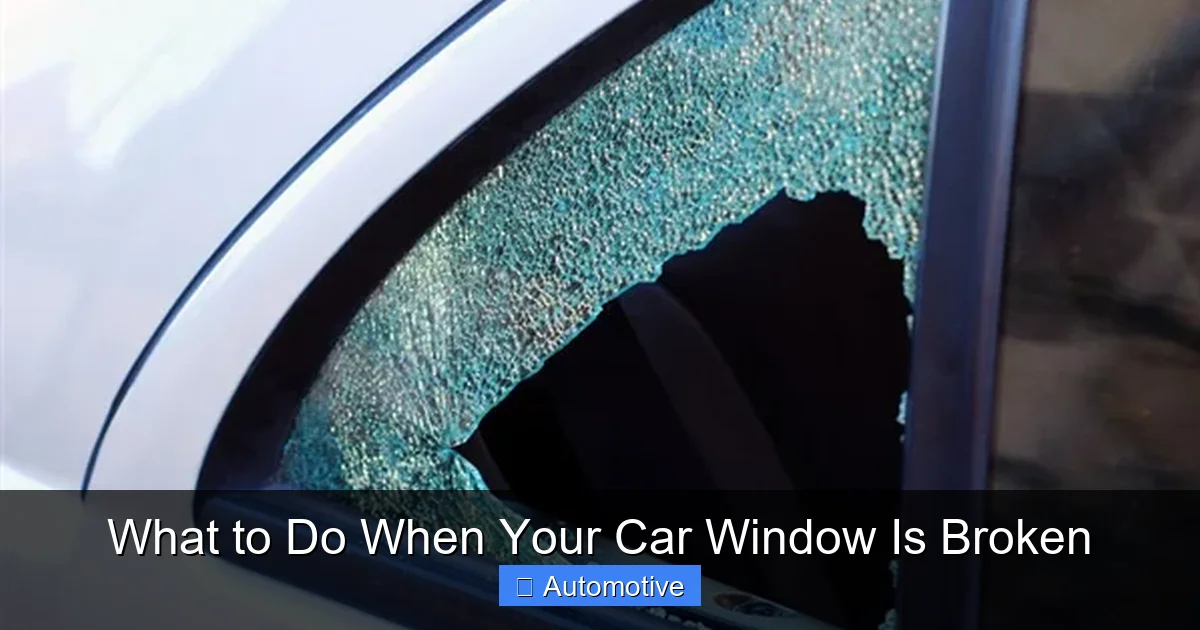
What to Do When Your Car Window Is Broken

Contents
- 1 Key Takeaways
- 2 📑 Table of Contents
- 3 Introduction: When Your Car Window Breaks, Don’t Panic—Act
- 4 Step 1: Ensure Safety and Assess the Situation
- 5 Step 2: Secure the Vehicle Temporarily
- 6 Step 3: Contact Your Insurance Company
- 7 Step 4: Decide Between Repair and Replacement
- 8 Step 5: Choose a Reputable Auto Glass Repair Service
- 9 Step 6: Prevent Future Window Damage
- 10 Conclusion: Stay Calm, Act Fast, and Drive Safe
- 11 Frequently Asked Questions
Car Phone Holder

Chain Lubricant Spray
Power Steering Fluid

Jumper Cables
A broken car window is more than an inconvenience—it’s a security risk and safety hazard. Acting quickly to secure the vehicle, assess the damage, and choose the right repair solution can save you time, money, and stress. This guide walks you through every step, from emergency response to long-term prevention.
Key Takeaways
- Ensure immediate safety first: Move your car to a secure location, check for injuries, and call emergency services if needed.
- Document the damage: Take photos and file a police report, especially if the breakage is due to vandalism or theft.
- Temporarily cover the window: Use heavy-duty plastic sheeting and tape to prevent weather damage and deter theft.
- Contact your insurance company: Comprehensive coverage often covers broken windows, and filing a claim may cost little or nothing out of pocket.
- Choose professional repair over DIY: Auto glass specialists use high-quality materials and ensure proper sealing and structural integrity.
- Prevent future incidents: Park in well-lit, secure areas and avoid leaving valuables visible to reduce the risk of break-ins.
- Know the difference between repair and replacement: Small chips may be repairable, but cracks or shattered glass usually require full replacement.
📑 Table of Contents
- Introduction: When Your Car Window Breaks, Don’t Panic—Act
- Step 1: Ensure Safety and Assess the Situation
- Step 2: Secure the Vehicle Temporarily
- Step 3: Contact Your Insurance Company
- Step 4: Decide Between Repair and Replacement
- Step 5: Choose a Reputable Auto Glass Repair Service
- Step 6: Prevent Future Window Damage
- Conclusion: Stay Calm, Act Fast, and Drive Safe
Introduction: When Your Car Window Breaks, Don’t Panic—Act
Imagine this: You return to your car after a quick errand, only to find the side window shattered, glass scattered across the seat, and your laptop missing. Or maybe you’re driving down the highway when a rock kicked up by a truck cracks your windshield. In either case, your first reaction might be shock, frustration, or even fear. But here’s the good news: a broken car window, while stressful, is a common issue with clear steps you can take to resolve it safely and efficiently.
Car windows are more than just panes of glass—they’re essential for visibility, structural support, and passenger safety. A compromised window can expose you to weather, theft, and even legal issues if it obstructs your view while driving. Whether it’s a small chip from a flying pebble or a completely shattered side window from a break-in, knowing what to do next can make all the difference. This guide is designed to help you navigate the situation calmly and confidently, from the moment you discover the damage to the final repair or replacement.
We’ll cover everything from immediate safety measures and temporary fixes to insurance claims and choosing the right professional help. You’ll also learn how to prevent future incidents and understand when a simple repair will do versus when a full replacement is necessary. By the end, you’ll be equipped with practical knowledge to handle a broken car window like a pro—no matter how it happened.
Step 1: Ensure Safety and Assess the Situation

Visual guide about What to Do When Your Car Window Is Broken
Image source: glasshopperautoglass.com
The first few minutes after discovering a broken car window are critical. Your immediate priority should be safety—for yourself, your passengers, and others around you.
Move to a Safe Location
If you’re driving when the window breaks—say, from a rock hitting your windshield—pull over as soon as it’s safe to do so. Turn on your hazard lights and choose a secure spot away from traffic, such as a parking lot or shoulder with good visibility. If you’re already parked and discover the damage, assess whether it’s safe to stay near the vehicle. If the area feels unsafe—especially if there’s evidence of a break-in—move to a public, well-lit location and call for help.
Check for Injuries
Glass can shatter into sharp fragments, so inspect yourself and any passengers for cuts or injuries. Even small shards can cause infection if not properly cleaned. If anyone is hurt, seek medical attention immediately. Don’t try to clean up glass with bare hands—use gloves and avoid touching your face until you’ve washed thoroughly.
Look for Signs of Theft or Vandalism
If the window is broken and items are missing or disturbed, it’s likely a break-in. Do not touch anything inside the car—this preserves evidence for law enforcement. Note any suspicious activity in the area, such as unfamiliar vehicles or people lingering nearby. If you suspect theft, call the police right away. Filing a report not only helps with recovery but is often required for insurance claims.
Document the Damage
Use your smartphone to take clear photos of the broken window from multiple angles. Include shots of the surrounding area, any missing items, and the overall condition of the vehicle. This documentation will be invaluable when filing an insurance claim or working with a repair shop. If the damage occurred due to another driver (e.g., a rock thrown from their vehicle), try to get their contact and insurance information.
Step 2: Secure the Vehicle Temporarily

Visual guide about What to Do When Your Car Window Is Broken
Image source: smileysglass.com
Once you’ve ensured safety and documented the damage, the next step is to protect your car from further harm. A broken window leaves your vehicle exposed to rain, wind, dust, and potential theft.
Cover the Opening with Plastic Sheeting
The most effective temporary fix is to cover the broken window with heavy-duty plastic sheeting and strong tape. You can find this at most hardware or auto parts stores. Cut the plastic slightly larger than the window opening and tape it securely on the outside of the car. Use duct tape or weatherproof tape to ensure it stays in place, especially if you’re driving the car to a repair shop.
For side windows, you can also use a clear plastic drop cloth or even a large trash bag in a pinch—just make sure it’s tightly secured. Avoid using cardboard, as it can absorb moisture and weaken quickly.
Protect the Interior
If rain is expected, place a towel or tarp inside the car to catch water and prevent damage to the seats, electronics, or upholstery. If the window is on the driver’s side, be extra cautious—water can seep into the door panel and affect wiring or the window mechanism.
Remove Loose Glass Carefully
If there are large pieces of glass still in the frame, carefully remove them using thick gloves and place them in a sturdy container. Never sweep glass onto the ground—it can cause tire damage or injury to others. Dispose of it according to local regulations, often in a sealed bag labeled “sharp objects.”
Consider a Temporary Window Insert
Some auto glass companies offer temporary acrylic inserts that fit into the window frame. These are more durable than plastic sheeting and provide better visibility and security. While not a long-term solution, they can be a smart stopgap if you need to drive the car before a full repair.
Step 3: Contact Your Insurance Company

Visual guide about What to Do When Your Car Window Is Broken
Image source: thumbs.dreamstime.com
One of the most important steps after a broken car window is reaching out to your auto insurance provider. Many people don’t realize that comprehensive coverage—often included in full-coverage policies—typically covers broken windows, regardless of fault.
Check Your Policy
Review your insurance policy to confirm you have comprehensive coverage. This type of coverage protects against non-collision incidents like theft, vandalism, weather damage, and falling objects. Most insurers consider windshield and window damage under this category. If you’re unsure, call your agent or check your policy documents online.
File a Claim Promptly
Contact your insurance company as soon as possible to report the damage. Have your policy number, vehicle information, and photos of the damage ready. Many insurers now allow you to file claims online or through a mobile app, making the process faster and more convenient.
Understand Deductibles and Coverage Limits
Most comprehensive claims require you to pay a deductible—typically $250 to $1,000—before the insurance covers the rest. However, some insurers waive the deductible for windshield repairs, especially if you use their approved repair network. Ask your agent about this benefit. Also, confirm whether your policy covers full replacement or only repair, and whether OEM (original equipment manufacturer) glass is included.
Use Approved Repair Shops
Many insurance companies have partnerships with auto glass repair shops. Using an approved provider can streamline the claims process and often means no out-of-pocket cost beyond the deductible. These shops are pre-vetted for quality and reliability, so you can trust the work will be done right.
Keep Records
Save all communication with your insurer, including claim numbers, emails, and receipts. This documentation will help if there are any disputes or delays in processing your claim.
Step 4: Decide Between Repair and Replacement
Not all broken car windows require a full replacement. The extent of the damage determines whether a repair is possible or if you need a new window installed.
When Repair Is an Option
Small chips or cracks—typically less than the size of a quarter—can often be repaired, especially if they’re in the driver’s line of sight. Modern resin-based repairs can restore strength and clarity, often making the damage nearly invisible. Repairs are usually quick (30–60 minutes), cost-effective, and can be done on-site by a mobile technician.
For example, a chip caused by a small rock on the highway might only need a $50–$100 repair. This is much cheaper than a full windshield replacement, which can cost $200–$500 or more depending on the vehicle.
When Replacement Is Necessary
Replacement is required if:
– The crack is longer than 6 inches.
– The damage is in the driver’s direct line of sight.
– The glass is shattered or has multiple cracks.
– The damage is on a side or rear window (these are usually not repairable).
– The window has delaminated (layers separating) or has structural damage.
Side and rear windows are typically made of tempered glass, which shatters into small cubes when broken. Unlike laminated windshields, these cannot be repaired and must be replaced entirely.
Consider OEM vs. Aftermarket Glass
When replacing a window, you’ll have a choice between OEM (original equipment manufacturer) glass and aftermarket alternatives. OEM glass is made by the same manufacturer as your car’s original windows and meets the same safety standards. It’s usually more expensive but offers the best fit and clarity.
Aftermarket glass is made by third-party companies and is often cheaper. While many aftermarket options are high quality, some may not fit as precisely or may have slight tint or thickness differences. Ask your repair shop about the pros and cons and whether your insurance covers OEM glass.
Ask About ADAS Calibration
Modern vehicles often have Advanced Driver Assistance Systems (ADAS) like lane departure warnings, automatic emergency braking, and adaptive cruise control. These systems rely on cameras and sensors mounted near the windshield. If your windshield is replaced, the ADAS may need to be recalibrated to function correctly. This is a critical step that not all shops perform—so ask specifically if calibration is included in the service.
Step 5: Choose a Reputable Auto Glass Repair Service
Not all repair shops are created equal. Choosing the right professional ensures your window is fixed safely, securely, and to manufacturer standards.
Look for Certification and Experience
Choose a shop certified by the Auto Glass Safety Council (AGSC) or similar industry organizations. These certifications indicate the shop follows best practices for installation, adhesive use, and safety. Ask how long the company has been in business and whether their technicians are trained and certified.
Read Reviews and Get Recommendations
Check online reviews on Google, Yelp, or the Better Business Bureau. Look for consistent praise about quality, customer service, and timeliness. Ask friends or family for recommendations—personal referrals are often the most reliable.
Compare Quotes
Get estimates from at least two or three shops. Be wary of prices that seem too good to be true—they may indicate low-quality materials or rushed work. A detailed quote should include the cost of glass, labor, adhesive, and any additional services like ADAS calibration.
Ask About Warranties
A reputable shop will offer a warranty on both parts and labor—typically one year or more. This protects you if the glass fails, leaks, or the adhesive fails. Make sure the warranty is in writing and understand what it covers.
Consider Mobile Services
Many auto glass companies offer mobile repair or replacement, where a technician comes to your home or workplace. This is especially convenient if your car isn’t safe to drive or if you have a busy schedule. Mobile services are often just as reliable as in-shop repairs and can save you time and hassle.
Step 6: Prevent Future Window Damage
While you can’t always avoid a broken car window, there are steps you can take to reduce the risk.
Park Smart
Whenever possible, park in well-lit, secure areas like garages, monitored lots, or busy streets. Avoid parking near construction zones, where flying debris is common, or in isolated areas where vandalism is more likely.
Don’t Leave Valuables in Sight
Thieves are more likely to break a window if they see laptops, bags, or electronics inside. Use a trunk or hide items under seats. Consider using a steering wheel lock or alarm system as a deterrent.
Maintain Your Vehicle
Regular maintenance can prevent issues that lead to window damage. For example, worn suspension or alignment can cause vibrations that stress the windshield. Keep your tires properly inflated to reduce the chance of rocks being kicked up.
Use a Windshield Sunshade
Extreme temperature changes can weaken glass over time. Using a sunshade in hot weather reduces heat buildup inside the car, which can help prevent stress cracks.
Be Cautious on the Road
When driving behind large trucks or on gravel roads, increase your following distance to reduce the chance of rocks hitting your windshield. If you see debris on the road, slow down and avoid it when safe to do so.
Conclusion: Stay Calm, Act Fast, and Drive Safe
A broken car window is never fun, but it doesn’t have to be a disaster. By staying calm, prioritizing safety, and taking the right steps, you can protect yourself, your vehicle, and your wallet. From securing the car with plastic sheeting to filing an insurance claim and choosing a certified repair shop, each action brings you closer to a safe, functional vehicle.
Remember, your car’s windows are vital for safety and visibility. Don’t delay repairs or settle for subpar service. Whether it’s a small chip or a shattered side window, treat the issue seriously and act promptly. With the right knowledge and resources, you’ll be back on the road with a clear view and peace of mind.
And while you can’t always prevent a broken window, smart habits like parking securely and avoiding valuables in sight can go a long way. Stay informed, stay prepared, and drive with confidence—knowing you’re ready for whatever the road throws your way.
Frequently Asked Questions
Can I drive with a broken car window?
It depends on the severity and location. A small chip may be safe to drive with temporarily, but a shattered side window or large crack can obstruct visibility and compromise safety. If you must drive, cover the opening securely and avoid highways or bad weather.
Will my insurance cover a broken car window?
Most likely, yes—if you have comprehensive coverage. This type of insurance typically covers broken windows from vandalism, theft, weather, or flying debris. Check your policy and contact your insurer to confirm coverage and deductibles.
How much does it cost to replace a car window?
Costs vary by vehicle and window type. Windshield replacement usually ranges from $200 to $500, while side or rear windows can cost $100 to $400. Insurance often covers most or all of the cost, especially if you use an approved repair shop.
Can a cracked windshield be repaired?
Small chips and cracks under 6 inches may be repairable, especially if they’re not in the driver’s line of sight. However, larger cracks, shattered glass, or damage near the edge usually require full replacement.
How long does it take to replace a car window?
Most replacements take 1–2 hours, but you should avoid driving the car for at least one hour after installation to allow the adhesive to cure. Some shops offer same-day service, especially for mobile repairs.
Is it safe to use aftermarket glass?
Yes, if it’s from a reputable manufacturer and installed correctly. Many aftermarket windows meet or exceed OEM standards. However, OEM glass offers the best fit and is often preferred for luxury or newer vehicles with ADAS features.