What Subaru Can Tow the Most?

Contents


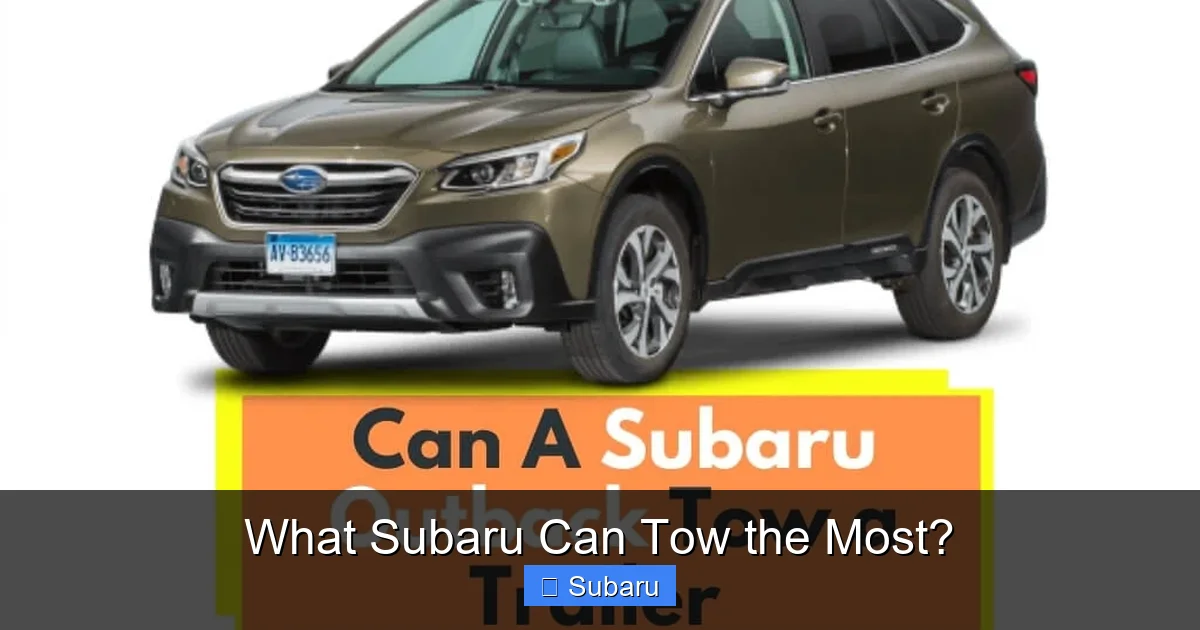
When it comes to towing power among Subaru vehicles, the 2024 Subaru Ascent stands out as the clear champion. With a maximum towing capacity of 5,000 pounds when properly equipped, it outperforms all other models in the lineup. Whether you’re hauling a camper, boat, or trailer, the Ascent delivers the strength and reliability Subaru is known for.
This is a comprehensive guide about What Subaru Can Tow the Most?.
Key Takeaways
- The Subaru Ascent has the highest towing capacity in the lineup at 5,000 lbs. It’s the only Subaru model that can handle heavy-duty towing needs like large travel trailers or mid-sized boats.
- All-wheel drive comes standard on every Subaru, enhancing towing stability. This feature improves traction and control, especially in wet or snowy conditions.
- Towing capacity depends on engine, transmission, and factory-installed towing packages. Always check your vehicle’s specific configuration before towing.
- The Outback and Forester offer moderate towing up to 2,700–3,500 lbs. These models are great for smaller trailers, pop-up campers, or jet skis.
- Proper equipment like a hitch, brake controller, and wiring harness is essential. Subaru recommends using OEM or certified aftermarket towing accessories.
- Regular maintenance improves towing performance and safety. Check fluids, brakes, and tire pressure before every tow.
- Know your vehicle’s Gross Combined Weight Rating (GCWR). Exceeding this limit can damage your Subaru and void your warranty.
[FEATURED_IMAGE_PLACEHOLDER]
What Subaru Can Tow the Most?
If you’re a Subaru fan with a need to haul, you’re not alone. Many Subaru owners love the brand’s rugged design, standard all-wheel drive, and reputation for reliability. But when it comes to towing, not all Subarus are created equal. So, what Subaru can tow the most? The answer is clear: the 2024 Subaru Ascent takes the crown with a maximum towing capacity of 5,000 pounds when properly equipped.
That’s enough power to pull a small travel trailer, a pontoon boat, or even a compact utility trailer loaded with gear. Whether you’re planning a weekend camping trip or moving equipment for a home project, the Ascent gives you the confidence to tow heavy loads safely. But it’s not just about raw power—Subaru’s engineering ensures that towing doesn’t compromise the driving experience. With features like Trailer Stability Assist and available towing packages, the Ascent is built to handle the extra weight without sacrificing control.
Of course, the Ascent isn’t the only Subaru capable of towing. Models like the Outback, Forester, and even the Crosstrek can handle lighter loads, making them great options for smaller adventures. But if you’re serious about towing, the Ascent is the only Subaru that truly steps into the heavy-duty category. In this guide, we’ll break down each model’s towing capabilities, explain what affects towing performance, and share practical tips to help you tow safely and confidently.
Subaru Towing Capacity by Model
Let’s take a closer look at how each Subaru model stacks up when it comes to towing. While the Ascent leads the pack, other models offer respectable capabilities for lighter loads. Here’s a breakdown of the current lineup and what each can handle.
Subaru Ascent: The Towing Titan
The 2024 Subaru Ascent is the largest and most powerful SUV in Subaru’s lineup. With three rows of seating and room for up to eight passengers, it’s designed for families and adventurers alike. But what really sets it apart is its towing capacity.
When equipped with the available Trailer Tow Package, the Ascent can tow up to 5,000 pounds. That’s the highest of any Subaru currently on the market. This package includes a Class III trailer hitch, upgraded cooling systems, and a pre-wired harness for trailer brakes. The Ascent’s 2.4-liter turbocharged four-cylinder engine delivers 260 horsepower and 277 lb-ft of torque, providing plenty of low-end grunt for pulling heavy loads.
This makes the Ascent ideal for towing:
– Small to mid-sized travel trailers (up to 25 feet)
– Pontoon boats or deck boats
– Utility trailers loaded with ATVs or landscaping materials
– Small horse trailers (with proper weight distribution)
Even without the towing package, the Ascent can still handle up to 2,000 pounds—enough for a lightweight pop-up camper or a couple of jet skis. But for maximum capability, the factory-installed package is a must.
Subaru Outback: The Adventure Wagon
The Subaru Outback has long been a favorite among outdoor enthusiasts. It blends car-like comfort with SUV versatility, and it’s no slouch when it comes to towing.
The Outback’s towing capacity depends on the engine. Models with the standard 2.5-liter four-cylinder engine can tow up to 2,700 pounds. But if you opt for the more powerful 2.4-liter turbocharged engine (available on the XT trim), that number jumps to 3,500 pounds.
That’s enough to handle:
– Pop-up campers
– Small fishing boats
– Canoes or kayaks on a trailer
– ATVs or dirt bikes
The Outback also comes with standard all-wheel drive and available features like X-Mode for improved off-road traction. While it can’t match the Ascent’s 5,000-pound capacity, it’s a solid choice for weekend warriors who don’t need to tow heavy loads.
Subaru Forester: Compact but Capable
The Subaru Forester is a compact SUV that punches above its weight. With standard all-wheel drive and a spacious interior, it’s a practical choice for families and city dwellers alike.
When properly equipped, the Forester can tow up to 3,500 pounds. This applies to models with the 2.5-liter engine and the optional towing package. Without the package, towing capacity drops to 1,500 pounds.
With 3,500 pounds of towing power, the Forester can handle:
– Small travel trailers (under 20 feet)
– Jet skis or small boats
– Utility trailers for yard work
– Camping gear on a lightweight trailer
It’s a great option if you want SUV versatility without the size of the Ascent. Just remember that towing near the limit will affect fuel economy and braking performance.
Subaru Crosstrek: Light-Duty Hauler
The Subaru Crosstrek is the smallest SUV in the lineup, but it’s still capable of light towing. With its compact size and efficient engine, it’s perfect for urban driving and weekend getaways.
The Crosstrek can tow up to 1,500 pounds when equipped with the optional towing package. That’s enough for:
– Small utility trailers
– Canoe or kayak trailers
– A single ATV or motorcycle
– Light camping gear
Keep in mind that the Crosstrek’s small size and lower ground clearance mean it’s not ideal for heavy or off-road towing. But for light loads and short trips, it’s a reliable and fuel-efficient option.
Subaru Legacy: The Sedan That Can Tow
You might not expect a sedan to tow anything, but the Subaru Legacy surprises with a towing capacity of up to 2,700 pounds when equipped with the 2.4-liter turbo engine and towing package.
That’s enough for:
– Small pop-up campers
– Canoes or kayaks
– A couple of jet skis
– Light utility trailers
The Legacy offers a smooth ride and excellent fuel economy, making it a great choice for long-distance towing. Just like the Outback, it benefits from standard all-wheel drive and available towing accessories.
What Affects Subaru Towing Capacity?
Towing capacity isn’t just about the vehicle—it’s about how it’s configured. Several factors determine how much your Subaru can safely tow.
Engine and Transmission
The engine is the heart of towing power. Subaru offers two main engine options across its lineup: the 2.5-liter naturally aspirated four-cylinder and the 2.4-liter turbocharged four-cylinder.
Turbocharged engines, like the one in the Ascent and Outback XT, produce more torque at lower RPMs. This is crucial for towing, as it helps the vehicle get moving with a heavy load. The Ascent’s turbo engine, for example, delivers 277 lb-ft of torque at just 1,600 RPM—perfect for pulling a trailer up a hill.
Transmission also plays a role. Subaru’s Lineartronic CVT (continuously variable transmission) is designed to handle towing, but it’s important to follow the manufacturer’s guidelines. Overheating can occur if you tow heavy loads for long periods without proper cooling.
Towing Package and Equipment
A factory-installed towing package can significantly increase your Subaru’s towing capacity. These packages typically include:
– Class II or Class III trailer hitch
– Upgraded radiator and transmission cooler
– Pre-wired harness for trailer lights and brakes
– Heavy-duty suspension components
For example, the Ascent’s towing package adds a Class III hitch and enhanced cooling, boosting capacity from 2,000 to 5,000 pounds. Without it, you’re limited to lighter loads.
Always use OEM (original equipment manufacturer) or certified aftermarket parts. Cheap or incompatible hitches can fail under stress, leading to dangerous situations.
Vehicle Configuration and Options
Trim level, drivetrain, and optional features can affect towing. For instance, the Outback’s base model with the 2.5-liter engine tows 2,700 pounds, while the turbocharged XT model tows 3,500 pounds.
Similarly, the Forester’s towing capacity increases from 1,500 to 3,500 pounds with the towing package. Always check your owner’s manual or Subaru’s official towing guide for your specific model and configuration.
Weight Distribution and Trailer Type
Not all trailers are created equal. A 3,000-pound travel trailer with poor weight distribution can be harder to tow than a 4,000-pound utility trailer with balanced cargo.
Subaru recommends keeping trailer tongue weight between 10% and 15% of the total trailer weight. Too much tongue weight can cause the rear of the vehicle to sag, affecting steering and braking. Too little can lead to trailer sway.
Use a weight distribution hitch for heavier loads. This device spreads the weight more evenly across the vehicle and trailer, improving stability.
Tips for Safe Towing with Your Subaru
Towing safely is just as important as towing power. Here are some practical tips to help you get the most out of your Subaru while staying safe on the road.
Check Your Owner’s Manual
Before you hook up a trailer, read your owner’s manual. It contains critical information about your vehicle’s towing capacity, GCWR (Gross Combined Weight Rating), and recommended equipment.
The GCWR is the maximum allowable weight of the vehicle, passengers, cargo, and trailer combined. Exceeding this limit can damage your transmission, brakes, and suspension—and may void your warranty.
Use the Right Hitch and Accessories
A proper hitch is essential. Subaru offers OEM hitches designed specifically for each model. These are engineered to handle the vehicle’s towing capacity and integrate with safety systems like Trailer Stability Assist.
You’ll also need:
– A 4-pin or 7-pin wiring harness for trailer lights
– A brake controller (for trailers with electric brakes)
– Safety chains (always cross them under the hitch)
Never use a bumper hitch or makeshift setup. These can fail under load and cause accidents.
Inspect Your Vehicle Before Each Tow
Before hitting the road, do a quick inspection:
– Check tire pressure and tread depth
– Ensure all lights (headlights, brake lights, turn signals) are working
– Top off fluids (engine oil, coolant, transmission fluid)
– Test the trailer brake controller (if equipped)
Also, make sure your trailer is properly loaded. Heavier items should be placed low and centered over the axles.
Practice Driving with a Trailer
Towing changes how your Subaru handles. It takes longer to accelerate, brake, and turn. Practice in an empty parking lot before heading out on the highway.
Remember:
– Allow extra following distance
– Use lower gears when going downhill
– Avoid sudden steering movements
– Use your mirrors and check blind spots frequently
If your Subaru has Trailer Stability Assist, it can help reduce sway by applying brakes and reducing engine power. But it’s not a substitute for careful driving.
Monitor Temperature Gauges
Towing puts extra strain on your engine and transmission. Keep an eye on the temperature gauges, especially in hot weather or on long climbs.
If the engine or transmission starts to overheat, pull over safely and let the vehicle cool down. Consider installing an aftermarket transmission cooler if you plan to tow frequently.
Respect Speed Limits and Road Conditions
Drive slower when towing. Most states recommend a maximum speed of 55–65 mph when pulling a trailer. High speeds increase the risk of sway and reduce braking efficiency.
Avoid winding roads, steep grades, and rough terrain unless your Subaru is equipped for it. The Ascent and Outback handle off-road towing better than smaller models like the Crosstrek.
Real-World Towing Examples
Let’s look at some real-world scenarios to see how Subaru models perform in the field.
Family Camping Trip with the Ascent
The Johnson family from Colorado uses their 2023 Subaru Ascent to tow a 22-foot travel trailer to national parks. With the towing package installed, they confidently pull the 4,200-pound trailer through mountain passes and desert highways.
“We’ve towed over 10,000 miles with no issues,” says Sarah Johnson. “The Ascent handles it like it’s not even there. The turbo engine gives us plenty of power, and the stability assist keeps us safe on windy roads.”
Weekend Fishing with the Outback
Mike from Oregon uses his 2022 Outback XT to tow a 2,800-pound fishing boat to the coast. “I love that I can load up the boat, hit the road, and still get 25 mpg on the highway,” he says. “The Outback’s ground clearance helps when launching from rough ramps.”
ATV Adventures with the Forester
Jenna from Utah tows her ATVs in a 1,200-pound utility trailer using her 2021 Forester. “It’s perfect for weekend trail rides,” she says. “I don’t need a big truck, and the Forester gets me there with room for gear and friends.”
Conclusion
So, what Subaru can tow the most? The answer is the 2024 Subaru Ascent, with a maximum towing capacity of 5,000 pounds. It’s the only Subaru built for serious towing, making it ideal for families, campers, and outdoor enthusiasts who need to haul heavy loads.
But that doesn’t mean other Subarus aren’t capable. The Outback, Forester, Legacy, and even the Crosstrek can handle lighter towing tasks with the right equipment. The key is understanding your vehicle’s limits and using proper towing practices.
Always equip your Subaru with the right hitch, wiring, and safety gear. Check your owner’s manual, monitor your gauges, and drive cautiously. With the right preparation, your Subaru can be a reliable towing partner for years to come.
Whether you’re pulling a camper across the country or hauling a boat to the lake, Subaru offers a model that fits your needs. And with standard all-wheel drive, advanced safety features, and a reputation for durability, you can tow with confidence—no matter where the road takes you.
Frequently Asked Questions
Which Subaru has the highest towing capacity?
The 2024 Subaru Ascent has the highest towing capacity in the lineup at 5,000 pounds when properly equipped with the Trailer Tow Package. It’s the only Subaru capable of handling heavy-duty towing like large travel trailers or boats.
Can a Subaru Outback tow a travel trailer?
Yes, the Subaru Outback can tow a small to mid-sized travel trailer. Models with the 2.4-liter turbo engine can tow up to 3,500 pounds, which is enough for pop-up campers or lightweight travel trailers under 20 feet.
Do all Subarus come with all-wheel drive?
Yes, all-wheel drive is standard on every Subaru model. This enhances traction and stability, especially when towing in wet, snowy, or uneven conditions.
What is the GCWR, and why does it matter?
GCWR stands for Gross Combined Weight Rating. It’s the maximum total weight your vehicle, passengers, cargo, and trailer can safely handle. Exceeding this limit can damage your Subaru and void your warranty.
Can I install a towing package on my Subaru after purchase?
Yes, you can install an OEM or certified aftermarket towing package after purchase. However, factory-installed packages are often more reliable and may be required to achieve maximum towing capacity.
Is it safe to tow with a CVT transmission?
Yes, Subaru’s Lineartronic CVT is designed to handle towing. Just follow the manufacturer’s guidelines, use proper cooling, and avoid overloading the vehicle to prevent overheating and wear.