What Size Toolbox Fits a Ford F-150?

Contents
- 1 Key Takeaways
- 2 📑 Table of Contents
- 3 Introduction: Why the Right Toolbox Size is Crucial for Your F-150
- 4 Understanding Your Ford F-150’s Bed Dimensions
- 5 How Cab Configurations Impact Toolbox Choice
- 6 Common Toolbox Sizes and Their Ideal F-150 Applications
- 7 Material and Security Features: What to Look For
- 8 Installation: DIY or Professional?
- 9 Top Toolbox Recommendations for the Ford F-150 (2024 Outlook)
- 10 Conclusion: Your Perfect Fit Awaits
- 11 Frequently Asked Questions


Choosing the right toolbox for your Ford F-150 hinges on your truck’s specific bed length and cab configuration. Accurate measurement is the critical first step, followed by matching your storage needs to a toolbox size that fits without interfering with other components. This guide simplifies the process, covering everything from standard bed sizes to material choices and installation tips, so you can confidently select a toolbox that perfectly complements your workhorse.
Key Takeaways
- Measure Your Bed Precisely: Always measure the inside length of your truck bed from the front wall to the inside of the tailgate, accounting for wheel wells and any protrusions.
- Cab Style Dictates Bed Options: Your F-150’s cab configuration (Regular, SuperCab, SuperCrew) directly determines which bed lengths (5.5′, 6.5′, 8′) are available for your specific model year.
- Standard Toolbox Sizes Align with Bed Lengths: Common toolbox lengths are 48″, 60″, and 72″, each designed to fit the corresponding F-150 bed size while leaving necessary clearance.
- Material Matters for Durability and Weight: Aluminum offers lightweight rust resistance, steel provides maximum strength and security, while polymer is cost-effective but less robust.
- Security and Weatherproofing Are Non-Negotiable: Prioritize toolboxes with robust locking systems (padlockable, keyed alike) and sealed lids or gaskets to protect tools from theft and the elements.
- Professional Installation Ensures a Perfect Fit: While many toolboxes are DIY-friendly, professional installation guarantees correct alignment, secure mounting, and avoids damaging your truck’s bed or paint.
- Payload Capacity Must Be Considered: Factor in the weight of the empty toolbox plus your heaviest tools to ensure you don’t exceed your F-150’s published payload rating.
📑 Table of Contents
- Introduction: Why the Right Toolbox Size is Crucial for Your F-150
- Understanding Your Ford F-150’s Bed Dimensions
- How Cab Configurations Impact Toolbox Choice
- Common Toolbox Sizes and Their Ideal F-150 Applications
- Material and Security Features: What to Look For
- Installation: DIY or Professional?
- Top Toolbox Recommendations for the Ford F-150 (2024 Outlook)
- Conclusion: Your Perfect Fit Awaits
Introduction: Why the Right Toolbox Size is Crucial for Your F-150
You drive a Ford F-150. It’s your partner for work, for adventure, for getting things done. That bed is your mobile workshop, your cargo hold, your ticket to freedom. But a truck bed without organized storage is just empty space—and empty space gets messy fast. Tools roll around, get damaged, or worst of all, get stolen. That’s where a good toolbox comes in. But here’s the thing: not just any toolbox will do. A toolbox that’s too big will hang over your tailgate or, worse, interfere with your tailgate’s operation. One that’s too small leaves valuable space unused and might not secure larger equipment. The core question every F-150 owner faces is simple but critical: what size toolbox fits a Ford F-150? The answer isn’t a single number. It’s a combination of your truck’s exact specifications and your personal needs. This guide will walk you through every step, from measuring your bed to understanding cab and bed combinations, so you can make a confident, perfect-fit purchase.
Understanding Your Ford F-150’s Bed Dimensions
Before you even browse toolboxes, you must become an expert on one thing: your own truck’s bed. Ford has offered the F-150 with multiple bed lengths for decades, and the options have evolved. The foundation of choosing a toolbox is knowing your bed’s exact, usable length.
Visual guide about What Size Toolbox Fits a Ford F-150?
Image source: m.media-amazon.com
How to Measure Your Truck Bed Correctly
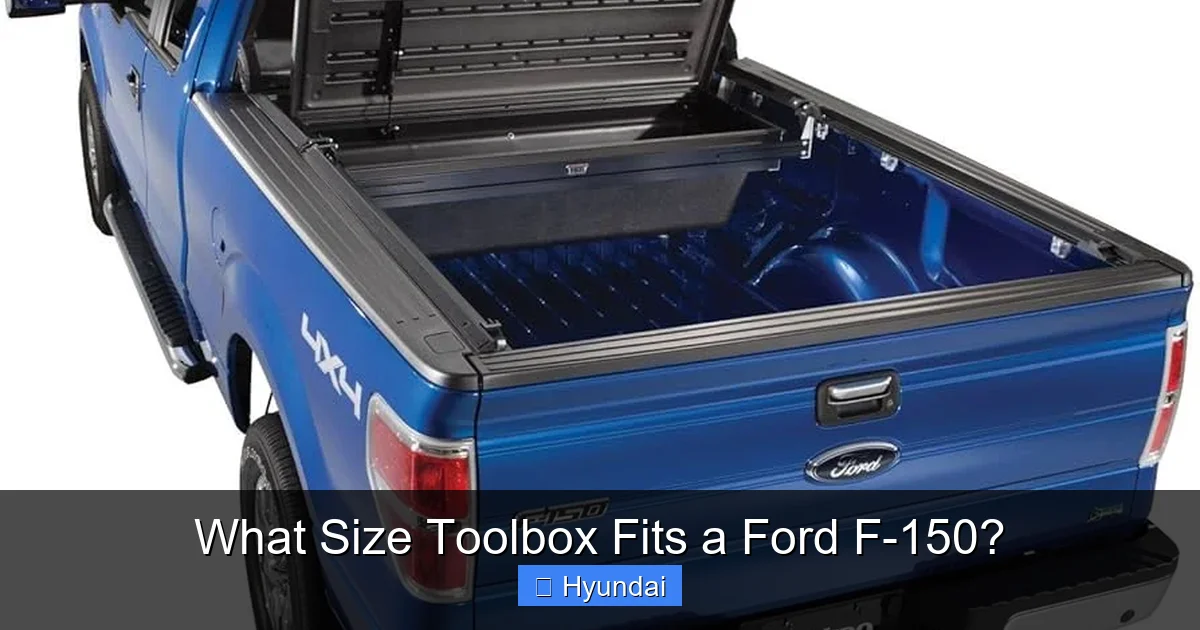
This is not a guesswork situation. You need a tape measure and a few minutes. The standard measurement is the inside bed length. Start at the very front of the bed wall (the part you see when you open the tailgate) and measure straight down to the inside edge of the closed tailgate. This is your maximum available length. But don’t stop there. You must also measure the width at the tailgate and the width at the front. Toolboxes are often widest at the front, and you need to ensure it clears the wheel wells. Measure from the inside of one bed wall to the other at both ends. Finally, measure the height from the bed floor to the top of the bed rails. A toolbox that’s too tall might not fit under a tonneau cover or camper shell you might want later. For a visual guide on proper measuring techniques, many owners find it helpful to look at guides for other trucks, like this one on what size toolbox fits a Toyota Tacoma, as the principles of measurement are identical across platforms.
Ford F-150 Bed Lengths by Generation and Cab Style
This is where it gets specific. Your F-150’s bed length is locked to its cab style for a given model year. You cannot have a SuperCrew (four-door) cab with an 8-foot bed on most recent models—the wheelbase simply won’t allow it. Here is a breakdown of the standard configurations for the 13th generation (2015–2020) and 14th generation (2021–present), which cover the vast majority of trucks on the road today.
- Regular Cab (2-door): Typically paired with the 8-foot (96″) bed. This is the longest bed option, ideal for maximum cargo and full-length ladders.
- SuperCab (2+2 door, rear-opening doors): Offered with either the 6.5-foot (78″) bed or the 8-foot bed. The 6.5-foot is a very popular compromise between cab space and bed utility.
- SuperCrew (4-door): The most common cab. It comes exclusively with the 5.5-foot (66″) bed on newer generations. This is the shortest bed, making toolbox selection more precise.
Pro Tip: Your truck’s bed length is often encoded in its VIN or listed on the tire information sticker on the driver’s door jamb. You can also simply look at your truck: a 5.5-foot bed will have a very short distance between the cab and the tailgate, while an 8-foot bed will have a pronounced “hump” over the rear axle and a long, flat section behind the cab.
How Cab Configurations Impact Toolbox Choice
Now that you know your bed length, we must talk about the cab’s influence. The cab style doesn’t just determine bed length; it also affects how you access your tools and what other accessories you might want.
Visual guide about What Size Toolbox Fits a Ford F-150?
Image source: roadmomentum.com
The Space Reality: Cab vs. Bed
A SuperCrew owner with a 5.5-foot bed has a huge, comfortable cab for passengers but a relatively short bed. Their toolbox priority might be a compact, secure box for essential hand tools that doesn’t eat up the entire bed. In contrast, a Regular Cab owner with an 8-foot bed has a tiny cab but a massive bed. They can opt for a longer toolbox or even a dual-box setup (a large chest and a smaller side box) without sacrificing bed length for long cargo. The key is to visualize your typical load. Do you often carry 10-foot lumber or ladders? You need a shorter toolbox or a side-mount design to leave the bed’s centerline clear. Do you only carry socket sets and wrenches? A smaller, centralized box is perfect.
Clearance and Access Considerations
Your toolbox must coexist with other truck features. For all models, you must check clearance for:
- The Tailgate: The toolbox must stop well short of the tailgate’s inner surface when closed. A 72-inch box in a 78-inch bed leaves only 6 inches of clearance—often not enough for the tailgate mechanism and wiring. You typically want at least 12-18 inches of open bed length behind the toolbox.
- Wheel Wells: The toolbox’s front corners must clear the prominent rear wheel wells. This is the most common fitment issue. A 60-inch box might fit a 6.5-foot bed length-wise, but if its front corners are squared off and wide, they could hit the wheel well. Look for toolboxes with “wheel well cutouts” or tapered fronts.
- Bump Stop and Taillights: Ensure the toolbox does not interfere with the rear bumper’s bump stops or block the taillights. This is a safety and legal issue.
If you plan to add a ladder rack or a camper shell, you must factor that in now. A ladder rack will raise the effective height limit for your toolbox. A camper shell will cover the entire bed, so your toolbox must fit perfectly inside the shell’s interior dimensions. Researching the best camper shell for Ford F-150 early in your planning can help you choose a compatible toolbox size.
Common Toolbox Sizes and Their Ideal F-150 Applications
Toolboxes are generally sold by their nominal length. Here’s how those standard sizes map to your F-150’s bed, with practical application advice.
Visual guide about What Size Toolbox Fits a Ford F-150?
Image source: upgradedvehicle.com
48-Inch (4-Foot) Toolboxes
These are compact and versatile. They fit comfortably in any F-150 bed length (5.5′, 6.5′, 8′) with ample clearance behind them. They are ideal for:
- SuperCrew owners who want to keep most of their short bed free for other cargo.
- Storing essential hand tools, fasteners, and small power tools.
- Daily drivers who need secure storage but rarely carry large items.
- They are often the best choice if you also want to carry long items like lumber or PVC pipe alongside the box.
Look for models with a low profile to maximize visibility out the back window.
60-Inch (5-Foot) Toolboxes
This is the “sweet spot” for many F-150 owners, especially those with the 6.5-foot bed. It uses a significant portion of the bed but leaves a usable 18+ inches behind it for longer items.
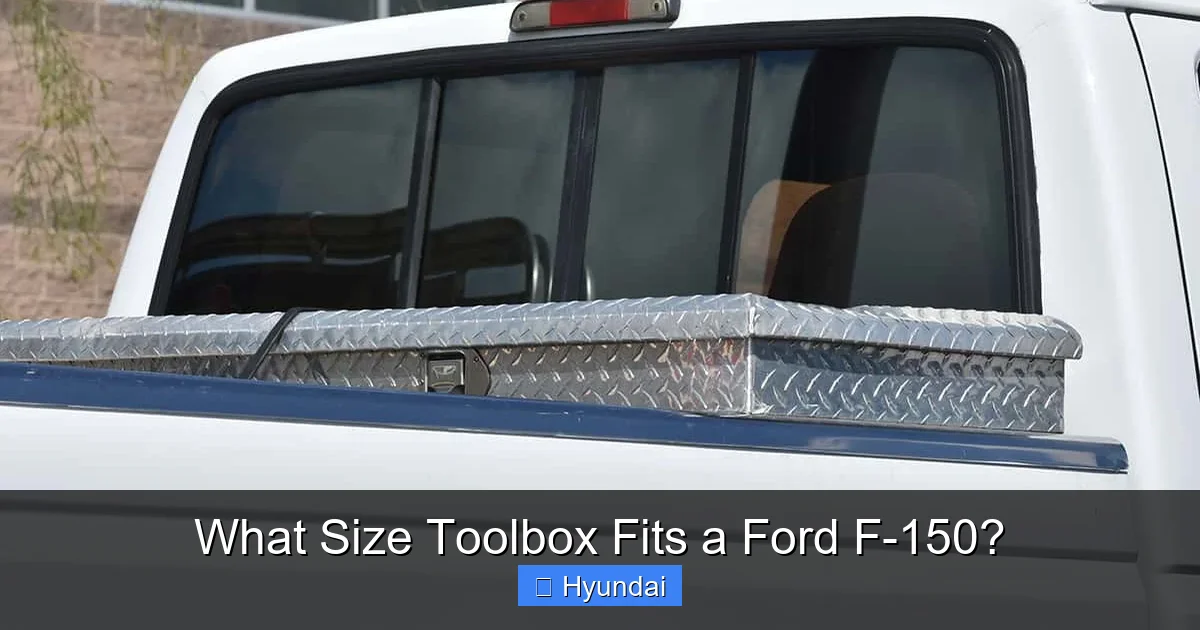
- For a 6.5-foot (78″) bed: A 60″ box is a perfect match, leaving about 18 inches of open bed length. It’s the most common and recommended size for this bed.
- For a 5.5-foot (66″) bed: It fits, but it’s a very tight squeeze. You’ll have minimal clearance (only ~6 inches) behind it, essentially dedicating your entire bed to the toolbox. Only choose this if your primary need is tool storage and you rarely carry long, loose cargo.
- For an 8-foot (96″) bed: It leaves a huge 36 inches of bed space behind it, which is great for mixed cargo.
60-inch boxes often come with two or three compartments, offering good organization for a wide range of tools.
72-Inch (6-Foot) and Longer Toolboxes
These are for the dedicated work truck with a long bed.
- For an 8-foot (96″) bed: A 72-inch box fits well, leaving a full 24 inches of bed length. This is an excellent setup for contractors who need massive tool storage but still want room for materials.
- For a 6.5-foot (78″) bed: A 72-inch box is generally not recommended. It would leave only 6 inches of clearance, making the tailgate almost impossible to use and creating a hazard. Some manufacturers make “shorty” 72-inch boxes with a more tapered rear, but measure with extreme caution.
- For a 5.5-foot (66″) bed: Do not attempt. It will not fit.
Toolboxes over 72 inches (like 84″ or 96″) are essentially bed-spanning chests and are only for the longest beds, often requiring custom mounting.
Material and Security Features: What to Look For
You’ve nailed down the size. Now, what is it made of, and how does it keep your $10,000 in tools safe?
Aluminum: The Popular All-Rounder
Most mid-range to high-end truck toolboxes are made from aluminum. It’s the best balance of properties for the job.
- Pros: Lightweight (won’t eat into your payload), naturally rust and corrosion-resistant, easy to clean, good dent resistance for its weight. Often comes with a durable powder-coated finish in black, white, or gray.
- Cons: Not as inherently strong as steel. Can be dented by heavy impacts. High-quality aluminum boxes use thick, ribbed sheets to mitigate this.
For the vast majority of F-150 owners who use their trucks for general contracting, landscaping, or automotive work, an aluminum toolbox is the ideal choice.
Steel: The Heavy-Duty Fort Knox
Steel toolboxes are the undisputed kings of strength and security.
- Pros: Extremely strong and dent-resistant. Very difficult to break into. Often has a higher weight capacity for internal shelving. Provides excellent sound deadening for rattling tools.
- Cons: Heavy. A large steel box can weigh 80-100+ lbs empty, severely impacting your usable payload. Prone to rust if the paint or powder coat is chipped. Requires more robust mounting hardware.
Choose steel if you carry extremely heavy, bulky items (e.g., large engine parts, heavy machinery) or if theft is a major concern in your area. Be prepared for the weight penalty.
Polymer/Plastic: The Budget Option
These are injection-molded plastic boxes, often in bright colors.
- Pros: Very lightweight, inexpensive, completely rust-proof. Good for light-duty use and storing items that won’t be damaged by minor impacts.
- Cons: Poor security—easy to break into with a pry bar. Can become brittle in extreme cold or warp in heat. Limited weight capacity. Not suitable for professional tool storage.
Consider polymer only for casual, low-value storage (e.g., gardening supplies, beach gear) in the back of a work truck.
Essential Security and Weatherproofing Features
Never compromise on these. Look for:
- Lockable Lid: A integrated lock hasp that accepts a padlock is standard. Better are boxes with a keyed-alike lock that matches your other locks. Some have multiple lock points.
- Gas Struts: These hold the lid open hands-free. A must-have for any box over 48 inches.
- Sealed Gasket: A thick, continuous rubber gasket around the lid perimeter is essential to keep out dust, water, and snow. Test the seal by closing it on a piece of paper—it should be difficult to pull out.
- Padded or Carpeted Liner: Protects your tools from scratches and dings. Removable liners are a plus for cleaning.
- Internal Organization: Removable trays,dividers, and full-length drawers add immense functionality. Consider if you need this.
Installation: DIY or Professional?
Most aftermarket truck toolboxes are designed for user installation. But “user-friendly” doesn’t mean foolproof.
The DIY Approach: What It Involves
You’ll typically need a drill, socket set, and possibly a wrench. The box comes with mounting brackets and hardware. The process involves:
- Positioning the box in the bed and marking hole locations.
- Drilling holes through the bed floor (this is permanent).
- Bolting the box down through the brackets and these holes, using large fender washers and rubber grommets to prevent water leaks and paint damage.
Critical DIY Tip: Before drilling, absolutely confirm there are no wiring harnesses, fuel lines, or structural members under your bed floor in the marked spots. Consult a service manual for your specific year F-150. A misplaced drill bit can cause catastrophic damage. If you have any doubt, stop and consult a professional.
Why Professional Installation is Often Worth It
A professional installer at a truck accessory shop does this every day. They:
- Know the exact, safe mounting points for your specific F-150 generation.
- Have the heavy-duty tools (step bits, clutch drills) to do it cleanly.
- Will use the correct sealants and hardware to prevent leaks and rattles.
- Can often install it in under an hour.
- Will ensure the box is perfectly square and aligned, which is crucial for the lid to seal properly.
- Their work is usually warrantied.
The cost of professional installation ($100-$200) is cheap insurance against a ruined bed or a poorly secured toolbox that becomes a projectile in a sudden stop. For something as fundamental as your tool storage, professional installation provides tremendous peace of mind.
Top Toolbox Recommendations for the Ford F-150 (2024 Outlook)
While specific models change, the top brands in the full-size truck toolbox market remain consistent. Here’s what to look for in 2024, categorized by primary need.
Best Overall for Most Owners: Mid-Size Aluminum with Gas Struts
For the F-150 owner with a 6.5-foot bed, a 60-inch aluminum toolbox from a reputable brand like Dee Zee, UWS, or WeatherGuard is the gold standard. Look for a model with a 0.050″ thick aluminum construction, a full perimeter gasket, a pair of robust gas struts, and a padded interior. These boxes offer the best blend of weight, durability, security, and weather resistance. They typically come in a matte black powder coat that matches the truck’s factory accessories. Price ranges from $400-$700 for a quality unit.
Best Value / Budget-Friendly
If your needs are light or your budget is tight, brands like Adventure Kings or Extreme Max offer capable 48-inch and 60-inch aluminum boxes at a lower price point ($250-$450). You may sacrifice some thickness, a second gas strut, or a premium finish, but the core functionality—secure, dry storage—remains. Read recent reviews carefully to check for issues with lid alignment or weak locks.
Best Heavy-Duty / Maximum Security
For contractors carrying high-value tools or those in high-theft areas, consider a steel toolbox from brands like Jacobsen or Knapheide. These are substantially heavier and more expensive ($600-$1,200+), but they are in a different league for brute strength and intrusion resistance. Some even offer optional alarm systems. Ensure your F-150’s payload can handle the box’s weight plus your tools. You might also want to pair it with a set of wheel locks to secure the truck itself when the tools are inside.
A Final Note on Style: Side-Mount vs. Top-Mount
Most toolboxes are top-mount, sitting on the bed floor. However, side-mount or “chest” style toolboxes attach to the bed wall, leaving the entire bed floor clear. This is excellent for carrying long items but reduces overall storage width and can be more complex to install. They are less common but a great solution for some users.
Conclusion: Your Perfect Fit Awaits
Figuring out what size toolbox fits a Ford F-150 is a process of elimination and precision. Start with the non-negotiable: your truck’s exact bed length, determined by its cab style. Measure twice. Then, honestly assess your cargo—what are the largest, heaviest items you regularly need to secure? Match that to a standard toolbox size (48″, 60″, 72″) that leaves the recommended clearance behind it and clears your wheel wells. From there, choose the material that fits your durability needs and payload budget, and never skimp on locking mechanisms and weather seals. Whether you DIY with caution or hand it to a pro, a properly sized, high-quality toolbox transforms your F-150’s bed from a chaotic dump into an organized, efficient command center. It’s an investment in your productivity, your peace of mind, and the protection of your valuable tools. Take the time to get it right, and your truck—and your tools—will thank you for every mile down the road.
Frequently Asked Questions
Will a 72-inch toolbox fit in my F-150’s 6.5-foot bed?
Generally, no. A 72-inch box in a 78-inch bed leaves only about 6 inches of clearance behind it, which is insufficient for tailgate operation and safe loading. It’s not recommended. A 60-inch box is the proper fit for a 6.5-foot bed.
What is the most secure material for a truck toolbox?
Steel is the most secure and tamper-resistant material due to its thickness and strength. High-quality aluminum toolboxes with robust locking mechanisms are also very secure for most applications, but determined thieves can potentially breach thin aluminum more easily than thick steel.
Do I need a ladder rack if I install a full-size toolbox?
Not necessarily. If you need to carry ladders or long lumber regularly, a full-size toolbox (60″+ in a 6.5′ bed) will consume most of your bed length, leaving little room for long items. In that case, a smaller 48-inch toolbox or a side-mount design would be better, allowing you to use the bed floor for long cargo without a ladder rack.
Can I install a toolbox myself without drilling into my truck’s bed?
Yes, some manufacturers offer “no-drill” or “clamp-on” systems that use the bed’s existing stake pockets or rail system to secure the box. However, these are less common for full-size, heavy-duty boxes and may not be as secure as a through-floor bolt installation, especially for heavy loads.
How do I prevent my aluminum toolbox from denting?
Choose a model with a thicker gauge aluminum (0.050″ or more) and pronounced ribbing on the sides and lid. Avoid placing extremely heavy, pointy objects directly on the lid. Use internal organization to keep tools from shifting and banging against the walls during transit.
Does adding a large toolbox affect my F-150’s payload or fuel economy?
Yes, to both. The empty weight of a large steel or aluminum toolbox (50-100 lbs) counts against your truck’s maximum payload rating. You must subtract the box’s weight from your available payload before loading tools. The added weight and potential increased aerodynamic drag (from a larger, boxier shape) can also slightly reduce fuel economy, though the effect is usually minimal compared to driving habits and cargo weight.