
What Size Screws for Toyota License Plate

Knowing what size screws for Toyota license plate is essential for a secure, rattle-free installation. Most Toyota models use M6 x 1.0 x 16mm or 20mm screws, but exact specs vary by year and model. This guide covers everything you need to choose, install, and maintain the perfect hardware.
If you’ve ever tried to replace your Toyota’s license plate screws only to find they’re stripped, rusted, or missing, you’re not alone. It’s a surprisingly common issue—one that seems simple but can quickly turn into a frustrating chore. Whether you’re installing a new plate, upgrading to a custom frame, or just doing routine maintenance, knowing what size screws for Toyota license plate is the first step to getting it right.
Toyota has used consistent hardware across many of its models over the years, but there are enough variations to make guessing a risky move. From the compact Corolla to the rugged Tacoma, each vehicle may have slight differences in bracket design, plate thickness, and screw requirements. That’s why it’s important to understand not just the standard size, but also the factors that influence your choice—like climate, frame type, and installation tools.
This guide will walk you through everything you need to know about Toyota license plate screws. We’ll cover the exact sizes used across popular models, how to identify the right hardware for your car, and tips for installation and maintenance. Whether you’re a DIY enthusiast or just want to avoid a trip to the dealership, this information will save you time, money, and headaches down the road.
Key Takeaways
- Understanding What Size Screws for Toyota License Plate: Provides essential knowledge
📑 Table of Contents
- Understanding Toyota License Plate Screw Standards
- Exact Screw Sizes by Toyota Model and Year
- How to Identify the Right Screws for Your Toyota
- Best Materials and Types of Screws for Toyota License Plates
- Installation Tips and Common Mistakes to Avoid
- Where to Buy Toyota License Plate Screws
- Conclusion
Understanding Toyota License Plate Screw Standards
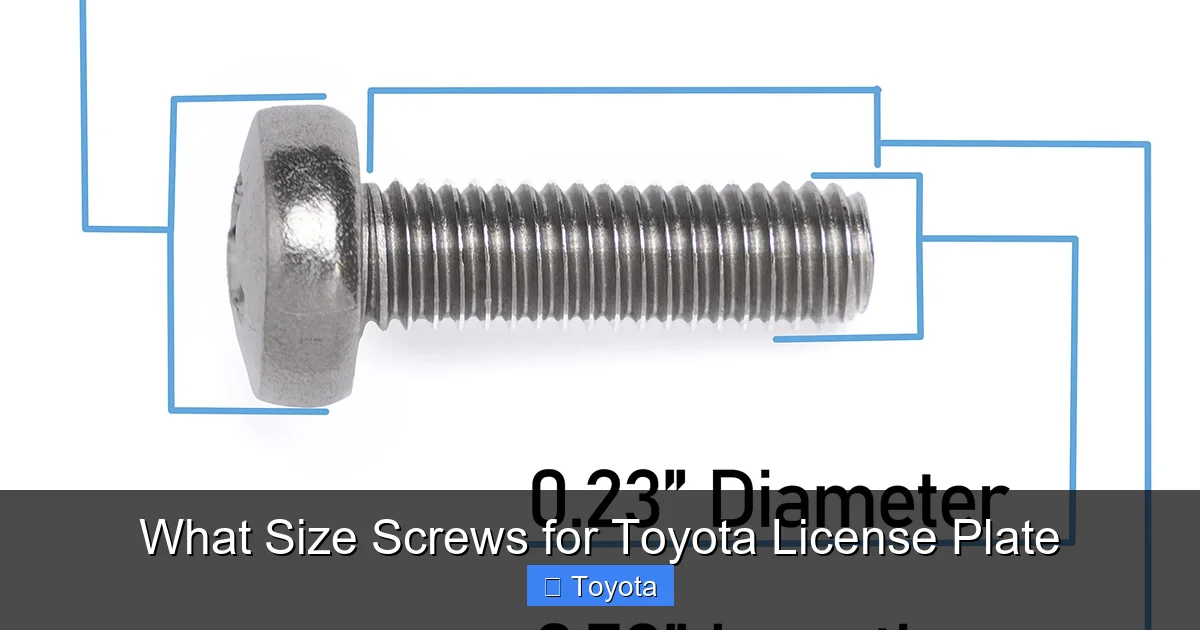
When it comes to license plate hardware, Toyota follows a fairly standardized approach—but that doesn’t mean all screws are interchangeable. Most Toyota vehicles use metric screws with specific thread pitch and length. The most common specification is M6 x 1.0 x 16mm or 20mm. Let’s break that down.
The “M6” refers to the screw diameter—6 millimeters. This is the standard size for most passenger vehicles, not just Toyotas. The “1.0” is the thread pitch, meaning there’s 1 millimeter between each thread. This ensures a tight, secure fit without cross-threading. Finally, the length—either 16mm or 20mm—determines how deep the screw goes into the mounting bracket.
Why does length matter? Because Toyota’s license plate brackets vary slightly between models and years. Some have deeper threaded holes, while others use spacers or rubber grommets. A 16mm screw might be perfect for a 2015 Camry, but too short for a 2020 RAV4 with a thicker frame. That’s why it’s crucial to measure or consult your owner’s manual before buying.
Another factor is the head type. Most Toyota license plate screws use a hex head (also called a socket head or Allen head), which requires a 5mm or 6mm Allen wrench. However, some older models or aftermarket kits may use Phillips head screws. While Phillips screws are easier to find, they’re more prone to stripping—especially if you’re using a power drill.
Why Metric Screws?
You might wonder why Toyota uses metric screws instead of the imperial sizes common in the U.S. The answer lies in Toyota’s Japanese engineering roots. As a global automaker, Toyota designs vehicles using the metric system to maintain consistency across markets. This means even if your car is assembled in the U.S., the hardware follows metric standards.
This can be confusing for DIYers used to inches and fractions. But once you get the hang of it, metric screws are just as easy to work with. The key is using the right tools—like a metric socket set or Allen wrench—and double-checking the size before installation.
Common Misconceptions
One common mistake is assuming all license plate screws are the same. While many vehicles use M6 screws, the length and thread pitch can vary. For example, some Honda or Ford models might use M6 x 1.0 x 14mm screws, which are too short for most Toyotas. Using the wrong size can lead to a loose plate, rattling, or even damage to the bracket.
Another misconception is that any screw labeled “M6” will work. But thread pitch matters just as much as diameter. A screw with a 1.25mm pitch won’t fit a 1.0mm threaded hole, even if the diameter matches. Always confirm both diameter and pitch when selecting screws.
Exact Screw Sizes by Toyota Model and Year
Visual guide about What Size Screws for Toyota License Plate
Image source: m.media-amazon.com
Now that you understand the basics, let’s look at specific models. While Toyota tends to stick to M6 x 1.0 x 16mm or 20mm screws, there are exceptions. Here’s a breakdown of common models and their recommended screw sizes.
Camry (1997–Present)
The Toyota Camry is one of the brand’s most popular sedans, and its license plate hardware has remained fairly consistent. For models from 1997 to 2023, the standard screw size is M6 x 1.0 x 16mm. These fit both the front and rear plates on most trims, including LE, SE, XLE, and Hybrid versions.
However, some newer Camrys (2021 and later) come with plastic license plate brackets that use integrated clips or rivets. In these cases, you may not need screws at all—just snap the plate into place. Always check your specific model before assuming screws are required.
Corolla (2000–Present)
The Corolla follows a similar pattern. From the early 2000s to the current generation, most models use M6 x 1.0 x 16mm screws. The compact size of the Corolla means the license plate bracket is relatively shallow, so longer screws aren’t necessary.
One exception is the Corolla Hatchback (2019 and later), which may use slightly longer screws (20mm) due to a thicker rear bumper design. If you’re unsure, measure the depth of the threaded hole or consult a parts diagram.
RAV4 (2001–Present)
The RAV4 is a bit different. Early models (2001–2005) used M6 x 1.0 x 16mm screws, but the third-generation RAV4 (2006–2012) introduced a deeper bracket that often requires 20mm screws. This is especially true for the rear plate, which sits flush with a thicker bumper.
Starting in 2013, Toyota redesigned the RAV4 with a more aerodynamic profile. The 2013–2018 models typically use 20mm screws, while the 2019–2023 RAV4 may use either 16mm or 20mm, depending on the trim and whether you have a tow hitch or spare tire mount.
Tacoma (1995–Present)
The Tacoma pickup truck has a more rugged design, and its license plate hardware reflects that. Most Tacomas from 1995 to 2023 use M6 x 1.0 x 20mm screws, especially for the rear plate. The front plate may use 16mm screws, but it’s common to use 20mm for both to ensure a secure fit.
One thing to note: Tacomas often have license plate frames that double as tow hooks or recovery points. These frames can be thicker than standard, so you might need 25mm screws if you’re installing a heavy-duty aftermarket frame.
Highlander (2001–Present)
The Highlander SUV uses M6 x 1.0 x 16mm screws for most models. However, the third-generation Highlander (2014–2023) introduced a redesigned rear bumper that sometimes requires 20mm screws. Again, it depends on the trim and whether you have a trailer hitch or spare tire.
Prius (2001–Present)
The Prius is known for its eco-friendly design, but its license plate hardware is pretty standard. Most Prius models from 2001 to 2023 use M6 x 1.0 x 16mm screws. The exception is the Prius Prime plug-in hybrid, which may use plastic clips on the rear plate due to its unique bumper design.
4Runner (1990–Present)
The 4Runner is a rugged SUV, and its license plate setup reflects that. Most models use M6 x 1.0 x 20mm screws, especially for the rear plate. The front plate may use 16mm screws, but many owners prefer 20mm for added security.
One tip: 4Runners often have license plates mounted on swing-away tire carriers. If you have this setup, you may need longer screws (up to 25mm) or specialized hardware to accommodate the extra thickness.
How to Identify the Right Screws for Your Toyota
Visual guide about What Size Screws for Toyota License Plate
Image source: m.media-amazon.com
Even with this information, you might still be unsure which screws to buy. Here’s a step-by-step guide to help you identify the right size for your Toyota.
Step 1: Check Your Owner’s Manual
Your owner’s manual is the best place to start. While it may not list screw sizes directly, it often includes diagrams of the license plate area and recommended hardware. Look for sections on “exterior maintenance” or “license plate installation.”
Step 2: Measure the Existing Screws
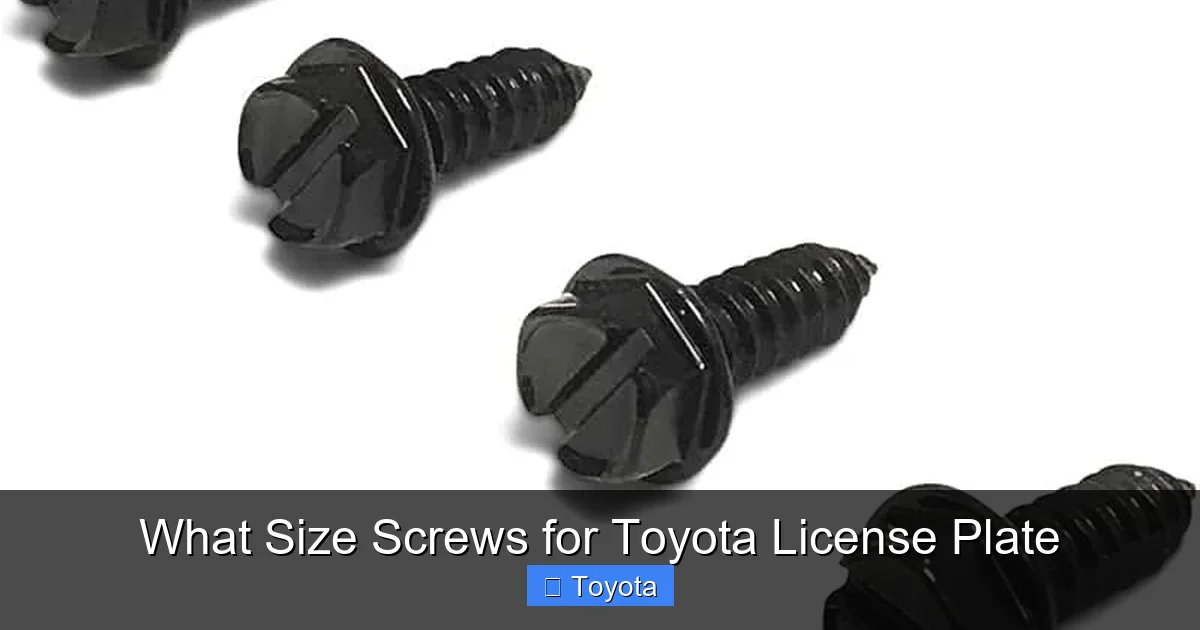
If you still have the original screws, measure them with a caliper or ruler. Check the diameter (should be 6mm), thread pitch (1.0mm), and length (16mm or 20mm). If the screws are rusted or damaged, compare them to a known M6 screw from a hardware store.
Step 3: Inspect the Mounting Bracket
Look at the license plate bracket on your bumper or trunk. Is it metal or plastic? How deep are the threaded holes? If the holes are shallow, you likely need 16mm screws. If they’re deep or have spacers, 20mm may be better.
Step 4: Consider the License Plate Frame
Are you using the OEM frame, or did you install an aftermarket one? Thick frames—like those made of aluminum or carbon fiber—may require longer screws. Measure the total thickness of the plate and frame, then add a few millimeters for clearance.
Step 5: Test Fit Before Tightening
Once you have the screws, test fit them before fully tightening. The screw should go in smoothly without forcing. If it’s too tight, you might have the wrong thread pitch. If it’s too loose, the length or diameter may be off.
Best Materials and Types of Screws for Toyota License Plates
Visual guide about What Size Screws for Toyota License Plate
Image source: m.media-amazon.com
Not all screws are created equal. The material and coating can make a big difference in durability, especially if you live in a rainy or snowy climate.
Stainless Steel Screws
Stainless steel is the gold standard for license plate screws. They resist rust and corrosion, even in harsh conditions. Look for 18-8 or 304 stainless steel, which are common grades used in automotive applications.
Coated or Zinc-Plated Screws
Zinc-plated screws are cheaper but less durable. The coating can wear off over time, leading to rust. If you choose zinc-plated, make sure they’re labeled “rust-resistant” or “weatherproof.”
Black Oxide Screws
Black oxide screws have a sleek, matte finish that looks great on dark-colored cars. They offer moderate corrosion resistance and are a popular choice for custom builds.
Plastic or Nylon Screws
Some modern Toyotas use plastic screws or clips, especially on the rear plate. These are lightweight and won’t rust, but they’re not as strong as metal. Avoid using plastic screws on the front plate, where they’re more exposed to debris.
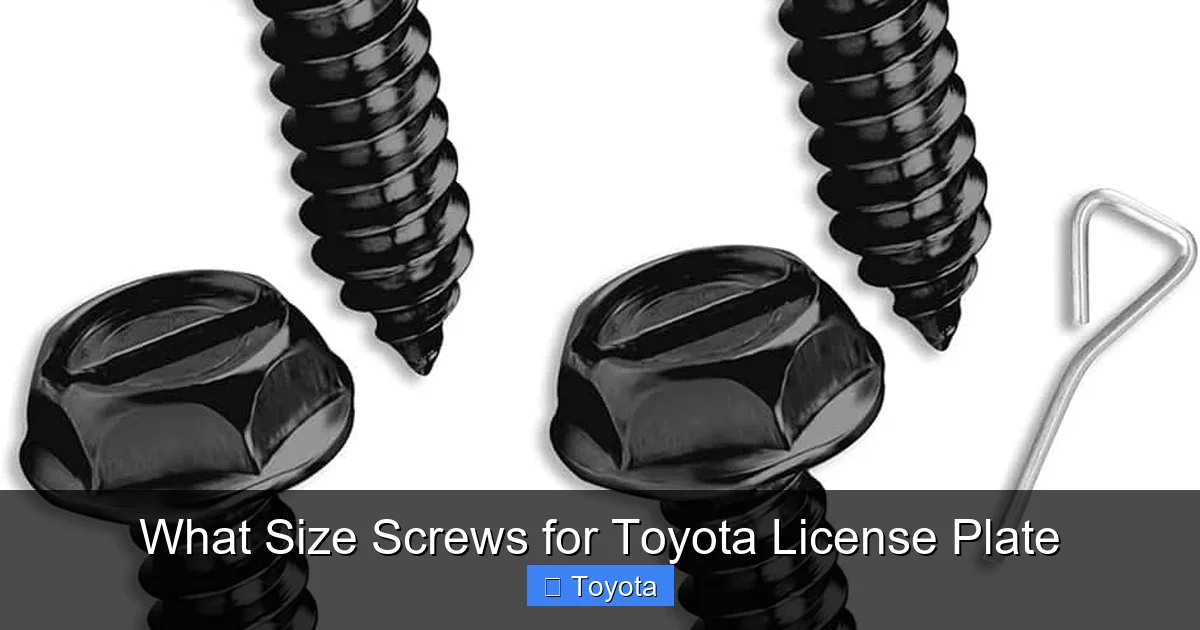
Anti-Theft Screws
If you’re concerned about license plate theft, consider anti-theft screws. These require a special key or bit to remove, making it harder for thieves to steal your plate. Many kits include both standard and anti-theft screws, so you can choose based on your needs.
Installation Tips and Common Mistakes to Avoid
Installing license plate screws seems simple, but there are a few pitfalls to watch out for.
Use the Right Tools
A 5mm or 6mm Allen wrench is ideal for hex head screws. If you’re using a socket wrench, a 10mm socket often fits M6 screws with a hex head. Avoid using pliers or adjustable wrenches, which can strip the head.
Don’t Over-Tighten
Over-tightening can strip the threads in the bracket or crack the license plate. Tighten just enough to hold the plate securely—usually a quarter-turn past snug is enough.
Use Washers for Extra Security
Adding a small washer between the screw head and the plate can distribute pressure and prevent loosening over time. Flat washers work best for most applications.
Check for Rattling
After installation, tap the plate gently to check for rattling. If it moves, the screws may be too short or the plate may not be seated properly. Add a rubber gasket or longer screws if needed.
Keep Spares Handy
Losing a screw is easy—especially if you’re driving on rough roads. Keep a few extras in your glove box or trunk, along with a small Allen wrench.
Where to Buy Toyota License Plate Screws
You don’t need to go to a dealership to get the right screws. Here are some reliable options.
Toyota Dealership Parts Department
The safest bet is your local Toyota dealer. They can provide OEM screws that match your vehicle exactly. Prices may be higher, but you’ll get a perfect fit.
Auto Parts Stores
Stores like AutoZone, O’Reilly, and Advance Auto Parts carry license plate screw kits. Look for “Toyota-specific” or “M6 x 1.0” kits. Many include washers and anti-theft options.
Online Retailers
Amazon, eBay, and RockAuto offer a wide selection of Toyota license plate screws. Read reviews and check seller ratings to ensure quality. Search for “Toyota license plate screws M6 x 1.0 x 16mm” for the best results.
Hardware Stores
Home Depot, Lowe’s, and Ace Hardware sell metric screws in bulk. You can buy individual screws or small packs. Just make sure to get the right size and material.
Conclusion
Knowing what size screws for Toyota license plate is more important than you might think. The right screws keep your plate secure, prevent rattling, and protect your vehicle from damage. Most Toyotas use M6 x 1.0 x 16mm or 20mm screws, but always verify based on your model and year.
Invest in quality materials like stainless steel, use the right tools, and don’t skip the test fit. Whether you’re replacing old hardware or installing a new plate, taking the time to get it right will save you trouble down the road.
With this guide, you’re equipped to handle any license plate screw situation—no dealership visit required. Keep a few spares in your car, and you’ll never be caught off guard again.
Frequently Asked Questions
What size screws do I need for a 2020 Toyota Camry license plate?
Most 2020 Toyota Camry models use M6 x 1.0 x 16mm screws for both front and rear license plates. However, some trims may have plastic brackets that use clips instead of screws—check your specific model before buying.
Can I use regular hardware store screws for my Toyota license plate?
Yes, as long as they match the M6 x 1.0 x 16mm or 20mm specification. Avoid imperial-sized screws, as they won’t fit properly. Stainless steel or coated screws are recommended for durability.
Why are my license plate screws rusting?
Rusting is usually caused by low-quality materials like zinc-plated steel. Switch to stainless steel or black oxide screws, and consider using anti-corrosion spray for added protection.
Do I need different screws for the front and rear license plates?
Not usually. Most Toyotas use the same size screws for both plates. However, some models with deeper rear bumpers may require 20mm screws instead of 16mm.
How tight should I tighten license plate screws?
Tighten just enough to hold the plate securely—usually a quarter-turn past snug. Over-tightening can strip the threads or crack the plate.
Where can I find anti-theft license plate screws for my Toyota?
Anti-theft screws are available at auto parts stores, online retailers like Amazon, and Toyota dealerships. Look for kits that include a special removal key for easy access when needed.