What Size Crossbars for Subaru Crosstrek?

Contents
- 1 Key Takeaways
- 2 📑 Table of Contents
- 3 What Size Crossbars for Subaru Crosstrek? A Complete Guide
- 4 Understanding Your Subaru Crosstrek’s Roof System
- 5 OEM Subaru Crossbars: The Factory-Recommended Option
- 6 Aftermarket Crossbars: Flexibility and Value
- 7 Choosing the Right Crossbars for Your Needs
- 8 Installation, Maintenance, and Safety Tips
- 9 Conclusion
- 10 Frequently Asked Questions


Choosing the right size crossbars for your Subaru Crosstrek ensures safe, secure, and quiet roof cargo transport. This guide covers OEM recommendations, aftermarket fits, weight limits, and installation tips to help you pick the best crossbars for your model year and adventure needs.
Key Takeaways
- OEM crossbars are 48 inches long and designed specifically for the Crosstrek’s roof rails. They offer a perfect fit, quiet performance, and full compatibility with Subaru accessories.
- Aftermarket crossbars vary in length (typically 46–52 inches) and must match your Crosstrek’s roof rail spacing. Always verify compatibility with your model year before purchasing.
- The Crosstrek’s dynamic weight limit is 150 lbs, and the static limit is 600 lbs. Never exceed these limits, even with high-capacity crossbars.
- Proper installation and regular checks prevent damage and ensure safety. Tighten bolts to spec and inspect for wear every few months.
- Aerodynamic crossbars reduce wind noise and improve fuel efficiency. Consider models with noise-reducing features for highway driving.
- Crossbar spacing affects load stability and accessory compatibility. Most Crosstreks have 31–33 inches between factory roof rails—match this when installing aftermarket bars.
- Always check your owner’s manual and crossbar manufacturer guidelines. This ensures compliance with Subaru’s safety standards and warranty terms.
📑 Table of Contents
- What Size Crossbars for Subaru Crosstrek? A Complete Guide
- Understanding Your Subaru Crosstrek’s Roof System
- OEM Subaru Crossbars: The Factory-Recommended Option
- Aftermarket Crossbars: Flexibility and Value
- Choosing the Right Crossbars for Your Needs
- Installation, Maintenance, and Safety Tips
- Conclusion
What Size Crossbars for Subaru Crosstrek? A Complete Guide
If you’re a Subaru Crosstrek owner looking to haul gear—whether it’s a rooftop cargo box, bike rack, or kayak—you’ve probably asked: *What size crossbars do I need?* It’s a great question, and one that deserves a detailed answer. The right crossbars don’t just make loading easier; they ensure safety, reduce wind noise, and protect your vehicle’s roof from damage.
The Subaru Crosstrek, known for its rugged capability and compact design, comes equipped with roof rails from the factory. But those rails alone aren’t enough to carry heavy or bulky items. That’s where crossbars come in. They bridge the gap between the rails, creating a stable platform for your cargo. However, not all crossbars are created equal. Size, material, weight capacity, and compatibility all play a role in finding the perfect match for your Crosstrek.
In this guide, we’ll walk you through everything you need to know about choosing the right crossbar size for your Subaru Crosstrek. Whether you’re driving a 2013 model or a 2024, we’ll cover OEM specifications, aftermarket options, installation tips, and safety guidelines. By the end, you’ll have the confidence to pick crossbars that fit your lifestyle—and your vehicle—perfectly.
Understanding Your Subaru Crosstrek’s Roof System
Visual guide about What Size Crossbars for Subaru Crosstrek?
Image source: m.media-amazon.com
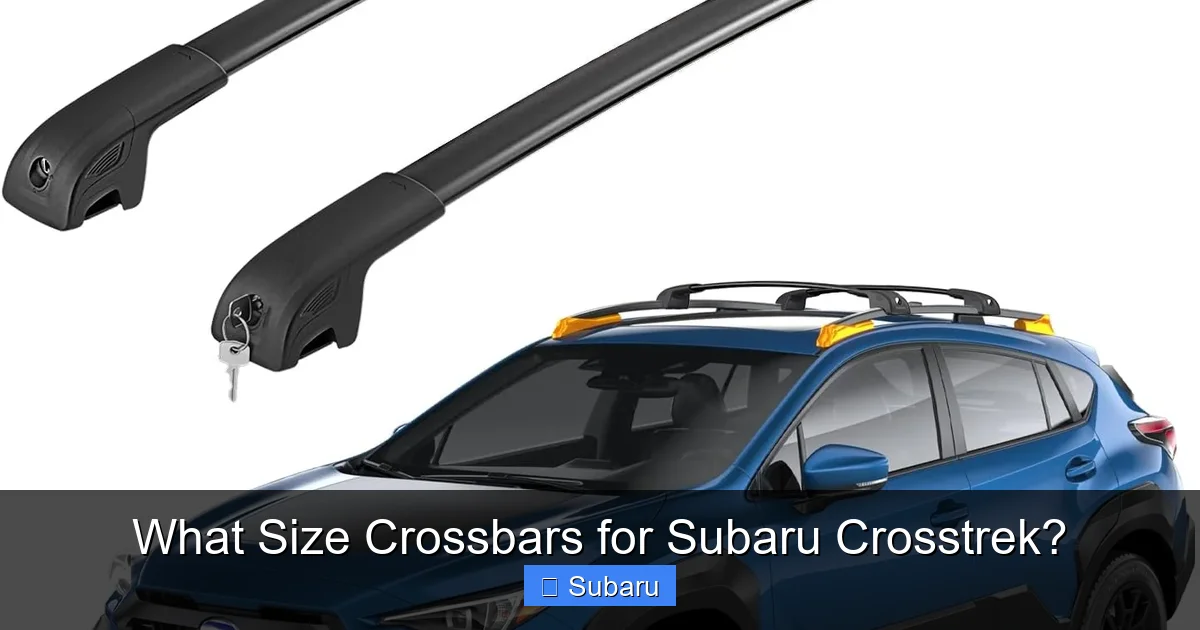
Before diving into crossbar sizes, it’s important to understand how your Crosstrek’s roof system works. The Crosstrek features factory-installed roof rails that run along the length of the roof. These rails are not just decorative—they’re structural components designed to support crossbars and, ultimately, your cargo.
The roof rails are typically made of durable aluminum or steel and are mounted directly to the vehicle’s roof structure. They’re spaced approximately 31 to 33 inches apart, depending on the model year. This spacing is crucial because it determines the minimum and maximum length of crossbars you can safely install.
Most Crosstreks come with two roof rails—one on each side—and the crossbars span between them. The crossbars themselves are usually mounted using clamps or brackets that attach to the rails without drilling. This design allows for easy installation and removal, making it simple to switch between carrying gear and keeping the roof clean.
It’s also worth noting that the Crosstrek’s roof is not flat. It has a slight curvature, which means crossbars must be designed to conform to that shape. Flat or rigid crossbars that don’t match the roof’s contour can create gaps, leading to noise, vibration, and potential damage over time.
Roof Rail Spacing by Model Year
Roof rail spacing can vary slightly between Crosstrek generations. Here’s a quick breakdown:
– **2013–2015 Crosstrek (First Generation):** Roof rails are spaced about 31.5 inches apart.
– **2016–2020 Crosstrek (Second Generation):** Spacing increases slightly to around 32 inches.
– **2021–2024 Crosstrek (Third Generation):** Rails are spaced approximately 33 inches apart.
These measurements are critical when selecting aftermarket crossbars. If the crossbars are too short, they won’t reach both rails. If they’re too long, they may overhang or interfere with side mirrors or roof trim.
Always measure your own vehicle’s rail spacing before buying crossbars. Use a tape measure to check the distance between the inner edges of the front and rear roof rails. This ensures accuracy, especially if your Crosstrek has been modified or repaired.
Dynamic vs. Static Weight Limits
Another key factor in choosing crossbars is understanding your Crosstrek’s weight limits. Subaru specifies two types of weight capacities:
– **Dynamic Weight Limit:** 150 pounds (68 kg) – This is the maximum weight your roof can safely carry while the vehicle is in motion. It includes the weight of the crossbars, cargo, and any accessories.
– **Static Weight Limit:** 600 pounds (272 kg) – This is the maximum weight the roof can support when the vehicle is parked and stationary. It’s useful for loading heavy items like rooftop tents, but never exceed the dynamic limit while driving.
These limits are set by Subaru based on the strength of the roof structure, roof rails, and mounting points. Exceeding the dynamic limit can compromise vehicle handling, increase braking distance, and potentially cause roof damage or failure.
Even if your crossbars are rated for higher weights, you must always follow Subaru’s guidelines. For example, if you install crossbars rated for 200 lbs, you still can’t exceed the Crosstrek’s 150-lb dynamic limit.
OEM Subaru Crossbars: The Factory-Recommended Option

Visual guide about What Size Crossbars for Subaru Crosstrek?
Image source: m.media-amazon.com
If you want the safest, most reliable option, Subaru’s OEM (Original Equipment Manufacturer) crossbars are the way to go. These crossbars are designed specifically for the Crosstrek and are engineered to meet Subaru’s strict safety and performance standards.
Dimensions and Specifications
Subaru OEM crossbars for the Crosstrek are typically **48 inches (122 cm) long**. This length is carefully calculated to span the roof rails with minimal overhang while providing a stable platform for cargo.
They are made from lightweight yet durable aluminum, which resists corrosion and reduces overall weight. The crossbars feature a low-profile, aerodynamic design that helps minimize wind noise and drag—especially important for fuel efficiency on long drives.
The crossbars attach to the roof rails using Subaru’s proprietary mounting system. This usually involves clamps that secure tightly to the rails without requiring tools for installation. Many owners report that OEM crossbars are quiet, even at highway speeds, thanks to their snug fit and vibration-dampening design.
Pros and Cons of OEM Crossbars
Let’s break down the advantages and disadvantages of choosing Subaru’s factory crossbars:
**Pros:**
– Perfect fit for your Crosstrek model year
– Quiet operation with minimal wind noise
– Full compatibility with Subaru roof accessories (e.g., cargo boxes, bike racks)
– Backed by Subaru’s warranty and quality assurance
– Easy installation and removal
**Cons:**
– Higher price point compared to aftermarket options
– Limited availability at dealerships (may require ordering)
– Fewer customization options (color, style, etc.)
Despite the higher cost, many Crosstrek owners find that OEM crossbars are worth the investment. They offer peace of mind, knowing that the product was designed specifically for their vehicle.
Where to Buy OEM Crossbars
You can purchase genuine Subaru crossbars directly from your local Subaru dealership or through Subaru’s official online parts store. Be sure to provide your vehicle’s VIN (Vehicle Identification Number) to ensure compatibility.
Prices typically range from $200 to $300 for a set of two crossbars, depending on your location and any current promotions. While this may seem steep, remember that you’re paying for precision engineering, safety, and long-term reliability.
Aftermarket Crossbars: Flexibility and Value
Visual guide about What Size Crossbars for Subaru Crosstrek?
Image source: m.media-amazon.com
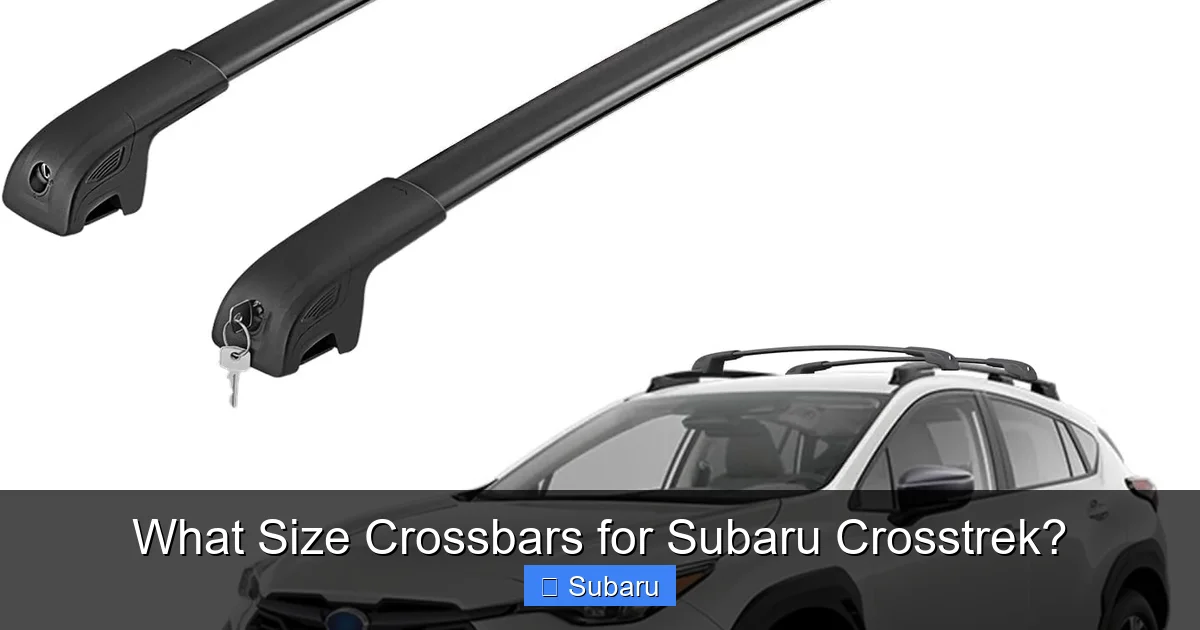
If you’re looking for more affordable or customizable options, aftermarket crossbars are a popular choice. Many reputable brands offer crossbars designed to fit the Subaru Crosstrek, often at a lower price than OEM.
Popular Aftermarket Brands
Some of the most trusted aftermarket crossbar manufacturers include:
– **Yakima:** Known for high-quality, aerodynamic crossbars with a wide range of accessories.
– **Thule:** Offers sleek, durable crossbars with excellent noise reduction features.
– **Rhino-Rack:** Specializes in heavy-duty, off-road-ready roof rack systems.
– **Inno:** Provides budget-friendly options with solid performance and easy installation.
These brands often design crossbars to be compatible with multiple vehicle models, including the Crosstrek. However, compatibility isn’t automatic—you must verify that the crossbars are designed for your specific model year.
Crossbar Length and Fit
Aftermarket crossbars for the Crosstrek typically range from **46 to 52 inches** in length. The ideal size depends on your roof rail spacing and personal preference.
– **46–48 inches:** Best for tighter fits with minimal overhang. Ideal if you want a clean, factory-like appearance.
– **49–52 inches:** Provide more surface area for larger cargo boxes or multiple accessories. May overhang slightly but offer greater versatility.
When choosing aftermarket crossbars, always check the manufacturer’s compatibility chart. Look for models explicitly listed as compatible with your Crosstrek’s year and trim level.
Installation and Compatibility Tips
Installing aftermarket crossbars is usually straightforward, but there are a few things to keep in mind:
1. **Measure your roof rail spacing** before purchasing. This ensures the crossbars will fit properly.
2. **Check the mounting system.** Most aftermarket crossbars use universal clamps, but some require specific adapters for Subaru rails.
3. **Follow torque specifications.** Over-tightening can damage the roof rails or crossbar mounts. Use a torque wrench if possible.
4. **Test for noise and vibration.** After installation, drive at various speeds to ensure the crossbars are secure and quiet.
Many aftermarket brands offer installation videos or guides specific to the Crosstrek. These can be incredibly helpful, especially if you’re doing the installation yourself.
Choosing the Right Crossbars for Your Needs
Now that you understand the options, how do you choose the right crossbars for your lifestyle? The answer depends on how you plan to use your Crosstrek’s roof.
For Daily Commuting and Light Cargo
If you only need to carry lightweight items like a small cargo bag or a single bike, OEM or compact aftermarket crossbars (46–48 inches) are ideal. Look for models with noise-reducing features to keep your drives peaceful.
For Outdoor Adventures and Heavy Gear
If you’re hauling kayaks, rooftop tents, or multiple bikes, consider longer crossbars (49–52 inches) with higher weight ratings. Brands like Yakima and Thule offer crossbars designed for heavy loads and rough conditions.
For Fuel Efficiency and Aerodynamics
Aerodynamic crossbars are shaped to reduce wind resistance, which can improve fuel economy and reduce noise. These are especially beneficial for highway driving. Look for crossbars with a teardrop or oval profile.
For Budget-Conscious Buyers
If cost is a concern, brands like Inno and Rhino-Rack offer reliable crossbars at lower prices. Just be sure to read reviews and verify compatibility before buying.
Installation, Maintenance, and Safety Tips
No matter which crossbars you choose, proper installation and maintenance are essential for safety and performance.
Step-by-Step Installation Guide
1. **Clean the roof rails** to remove dirt and debris.
2. **Position the crossbars** on the rails, ensuring even spacing.
3. **Attach the mounting clamps** according to the manufacturer’s instructions.
4. **Tighten securely**, but avoid over-tightening.
5. **Test the fit** by gently shaking the crossbars—they should not move.
6. **Drive slowly at first** to check for noise or vibration.
Regular Maintenance
– Inspect crossbars and mounts every few months.
– Check for loose bolts, rust, or wear.
– Clean with mild soap and water; avoid harsh chemicals.
– Store crossbars indoors when not in use to prolong lifespan.
Safety Reminders
– Never exceed the 150-lb dynamic weight limit.
– Distribute weight evenly across both crossbars.
– Secure all cargo with high-quality straps or nets.
– Avoid driving with loose or unbalanced loads.
Conclusion
Choosing the right size crossbars for your Subaru Crosstrek doesn’t have to be complicated. Whether you go with OEM or aftermarket, the key is matching the crossbar length to your roof rail spacing, respecting weight limits, and prioritizing safety.
For most owners, 48-inch crossbars offer the best balance of fit, function, and aesthetics. But your ideal choice depends on your cargo needs, budget, and driving habits. Take the time to measure, research, and test your setup.
With the right crossbars, your Crosstrek becomes even more capable—ready for weekend adventures, road trips, or everyday errands with extra cargo space. So go ahead, load up, and hit the road with confidence.
Frequently Asked Questions
What is the standard crossbar size for a Subaru Crosstrek?
The standard OEM crossbar size for a Subaru Crosstrek is 48 inches long. This length is designed to fit perfectly between the factory roof rails on most model years.
Can I use aftermarket crossbars on my Crosstrek?
Yes, you can use aftermarket crossbars as long as they are compatible with your Crosstrek’s model year and roof rail spacing. Always verify fitment before purchasing.
How much weight can Subaru Crosstrek crossbars hold?
The Crosstrek’s dynamic weight limit is 150 pounds, including the crossbars and cargo. Never exceed this limit while driving, even if the crossbars are rated for more.
Do I need tools to install crossbars on my Crosstrek?
Most crossbars, including OEM and aftermarket models, can be installed by hand without tools. Some may require a simple wrench or Allen key for final tightening.
Will crossbars damage my Crosstrek’s roof?
Properly installed crossbars will not damage your roof. However, over-tightening or using incompatible mounts can scratch or weaken the roof rails over time.
How do I reduce wind noise from crossbars?
Choose aerodynamic crossbars, ensure a tight fit, and use fairings or noise-reducing accessories. Driving with empty crossbars can also increase noise—consider removing them when not in use.