What’s the Biggest Tire for a 17 Inch Rim
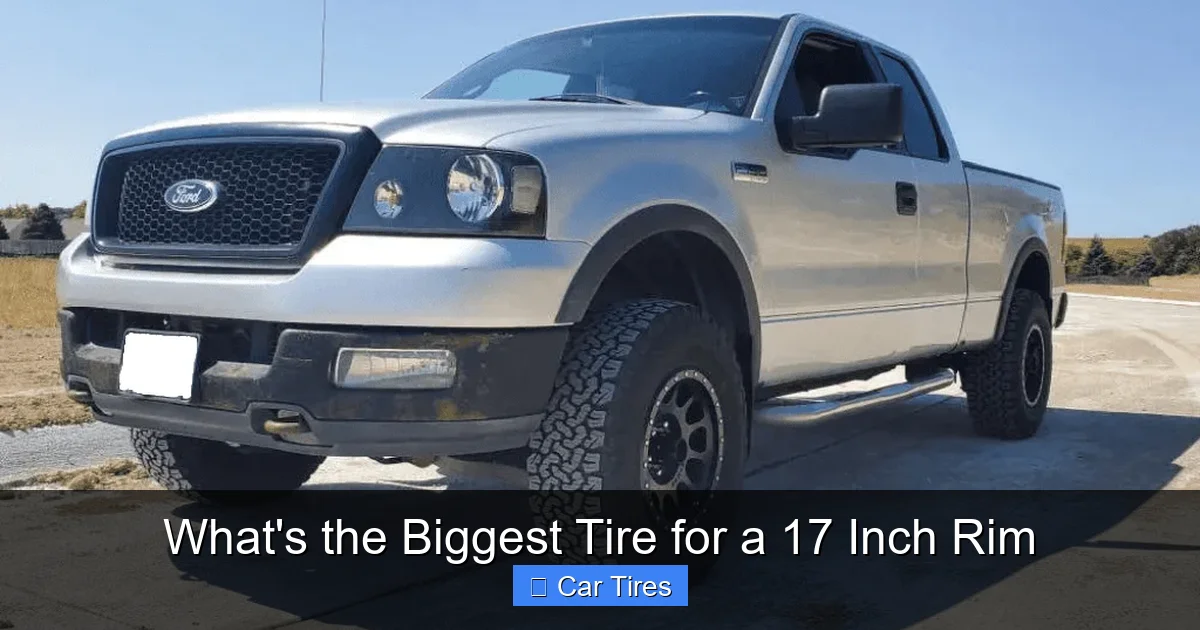
Choosing the biggest tire for a 17 inch rim can improve traction, ride comfort, and off-road capability—but it must fit safely without rubbing or affecting speedometer accuracy. This guide breaks down maximum tire sizes, load ratings, and real-world fitment advice to help you upgrade confidently.
If you’re looking to upgrade your vehicle’s tires, you’ve probably asked yourself: *What’s the biggest tire for a 17 inch rim?* It’s a smart question—bigger tires can mean better grip, a more aggressive look, and improved performance, especially if you drive off-road or want a sportier stance. But going too big can lead to rubbing, poor handling, or even damage to your suspension and drivetrain.
The truth is, there’s no one-size-fits-all answer. The largest tire you can safely mount on a 17-inch rim depends on several factors: your vehicle’s make and model, suspension setup, fender clearance, rim width, and intended use. Whether you drive a lifted Jeep, a sporty sedan, or a daily commuter SUV, understanding tire sizing and fitment is key to making the right choice.
In this guide, we’ll walk you through everything you need to know about maximizing tire size on a 17-inch wheel. From decoding tire measurements to real-world examples and expert tips, you’ll learn how to upgrade safely and effectively—without sacrificing safety or performance.
In This Article
- 1 Key Takeaways
- 2 📑 Table of Contents
- 3 Understanding Tire Sizing Basics
- 4 What’s the Largest Tire You Can Fit on a 17-Inch Rim?
- 5 Real-World Examples and Fitment Tips
- 6 Risks of Going Too Big
- 7 How to Choose the Right Big Tire for Your 17-Inch Rim
- 8 Popular Big Tire Options for 17-Inch Rims
- 9 Final Thoughts: Bigger Isn’t Always Better
- 10 Frequently Asked Questions
- 10.1 Can I put a 35-inch tire on a 17-inch rim?
- 10.2 What’s the widest tire for a 17×9 inch rim?
- 10.3 Will bigger tires hurt my fuel economy?
- 10.4 Do I need to recalibrate my speedometer after upsizing tires?
- 10.5 Can I use different tire sizes front and rear on a 17-inch rim?
- 10.6 What happens if my tire rubs the fender?
Key Takeaways
- Maximum tire width for a 17-inch rim typically ranges from 275mm to 315mm, depending on rim width, suspension clearance, and vehicle type.
- Tire aspect ratio and overall diameter matter more than width alone—a taller sidewall can increase ride comfort but may cause rubbing.
- Always check your vehicle’s owner’s manual and fender clearance before installing larger tires to avoid mechanical interference.
- Upsizing tires affects speedometer accuracy, braking performance, and fuel economy, so recalibration may be necessary.
- Off-road and lifted trucks can safely run larger tires (up to 35 inches) on 17-inch rims with proper modifications.
- Staggered setups (wider rear tires) are common in performance cars but require careful balancing to maintain handling.
- Consult a tire professional or use online fitment tools to ensure compatibility before purchasing.
📑 Table of Contents
Understanding Tire Sizing Basics
Before we dive into the biggest tire for a 17 inch rim, let’s break down how tire sizes work. Tire markings might look like a random string of numbers, but they’re actually a precise code that tells you everything about the tire’s dimensions and capabilities.
A typical tire size looks like this: **265/70R17**. Here’s what each part means:
– **265**: This is the tire’s width in millimeters from sidewall to sidewall. A wider tire generally offers better grip and stability, especially during cornering.
– **70**: This is the aspect ratio—the height of the sidewall as a percentage of the tire’s width. So, a 70 means the sidewall is 70% of 265mm (about 185.5mm tall).
– **R**: Stands for radial construction, which is the standard for modern tires.
– **17**: The diameter of the rim in inches. This must match your wheel size.
So, when you’re looking for the biggest tire for a 17 inch rim, you’re essentially trying to maximize the width and/or overall diameter while keeping the rim diameter at 17 inches.
Why Rim Width Matters
One of the most overlooked factors in tire sizing is rim width. A 17-inch rim isn’t just about diameter—it also has a specific width, usually measured in inches (e.g., 8.0″, 9.5″, 10.0″). The wider the rim, the wider the tire it can safely support.
For example:
– A 17×8 inch rim typically supports tires from 225mm to 265mm wide.
– A 17×9 inch rim can handle 245mm to 285mm.
– A 17×10 inch rim may support up to 315mm wide tires.
Going too wide for your rim can cause the tire to cup or wear unevenly. Conversely, a tire that’s too narrow for a wide rim can bulge outward, reducing contact patch and grip.
Overall Diameter and Clearance
Another critical factor is the tire’s overall diameter—the total height from the ground to the top of the tire. This affects how the tire fits in your wheel well and whether it will rub against suspension components, fenders, or brake lines.
To calculate overall diameter, use this formula:
> (Sidewall height × 2) + Rim diameter
For a 265/70R17 tire:
– Sidewall = 265 × 0.70 = 185.5mm
– Convert to inches: 185.5mm ≈ 7.3 inches
– Total diameter = (7.3 × 2) + 17 = 31.6 inches
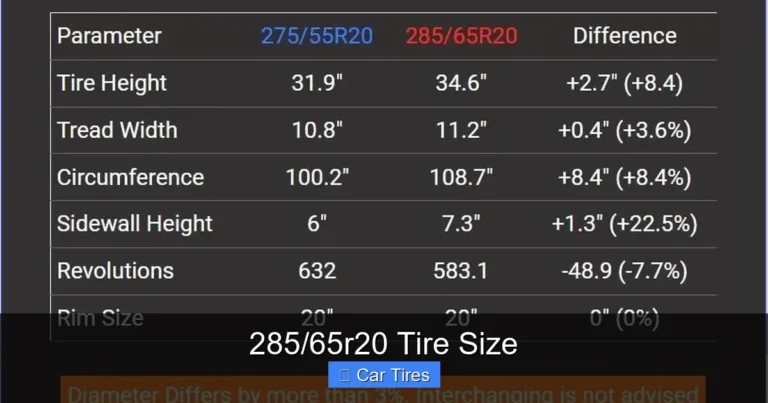
Most vehicles have a recommended diameter range. Going more than 3% larger or smaller than stock can affect speedometer accuracy, ABS, traction control, and transmission shift points.
What’s the Largest Tire You Can Fit on a 17-Inch Rim?
Visual guide about What’s the Biggest Tire for a 17 Inch Rim
Image source: tiresdoc.com
Now for the million-dollar question: *What’s the biggest tire for a 17 inch rim?* The answer varies, but here are some general guidelines based on common vehicle types.
For Stock Passenger Cars and SUVs
On unmodified sedans, crossovers, and light SUVs, the largest safe tire width is usually around **275mm to 285mm** on a 17-inch rim. For example:
– A Honda CR-V with 17×7 inch wheels can typically fit up to 245/65R17 or 255/60R17 without issues.
– A Toyota RAV4 might handle 265/65R17 with minor fender trimming.
The key is staying within 3% of the original tire diameter. Going beyond that can trigger warning lights or cause premature wear.
For Lifted Trucks and Off-Road Vehicles
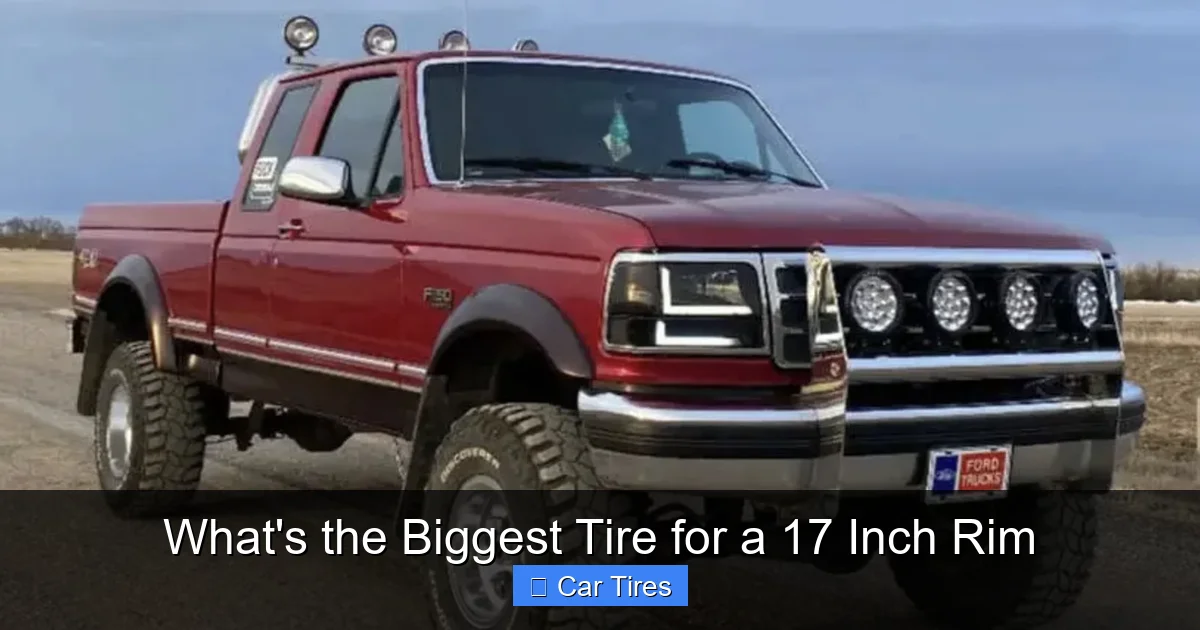
If you’ve lifted your truck or SUV, you have more flexibility. Many lifted Jeeps, Ford F-150s, and Toyota Tacomas can run **33-inch to 35-inch tires** on 17-inch rims—especially if you’ve installed aftermarket suspension, extended bump stops, or trimmed fenders.
For example:
– A 35×12.50R17 tire (35-inch diameter, 12.5 inches wide) is a popular choice for off-road builds.
– This size translates to roughly 315/70R17 in metric, which is about 34.4 inches tall.
These larger tires improve ground clearance, traction, and rock-crawling ability—but they also require stronger axles, upgraded brakes, and possibly a regear of the differentials.
Performance and Sports Cars
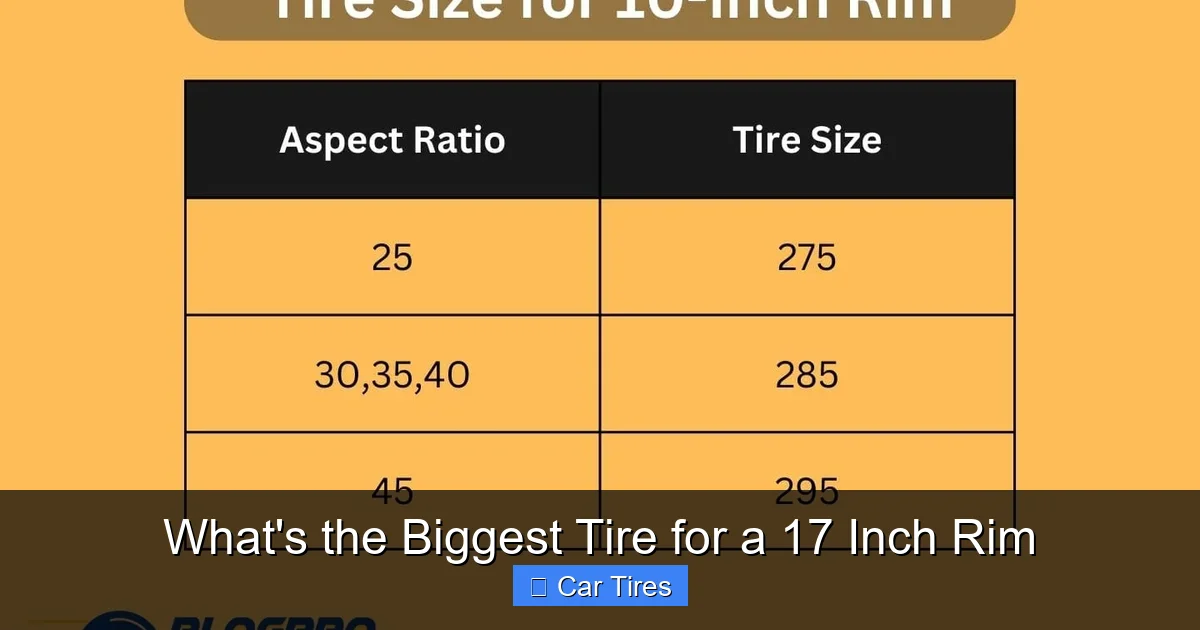
Performance cars often use staggered setups—wider rear tires than front—for better acceleration and cornering. On a 17-inch rim, you might see:
– Front: 245/45R17
– Rear: 275/40R17 or even 285/35R17
Some high-performance models, like the Ford Mustang GT or Chevrolet Camaro, can handle up to **295mm wide tires** on 17-inch rear wheels, especially with aggressive alignment settings.
However, going too wide can reduce steering response and increase unsprung weight, so balance is key.
Real-World Examples and Fitment Tips
Visual guide about What’s the Biggest Tire for a 17 Inch Rim
Image source: tiresdoc.com
Let’s look at some real vehicles and what tire sizes work best.
Jeep Wrangler JK (2007–2018)
Stock: 255/75R17 (32-inch tire)
Upgraded: 33×12.50R17 or 35×12.50R17 with 2–3 inch lift
Tip: Use wheel spacers or wider wheels (17×9) to prevent rubbing on the control arms.
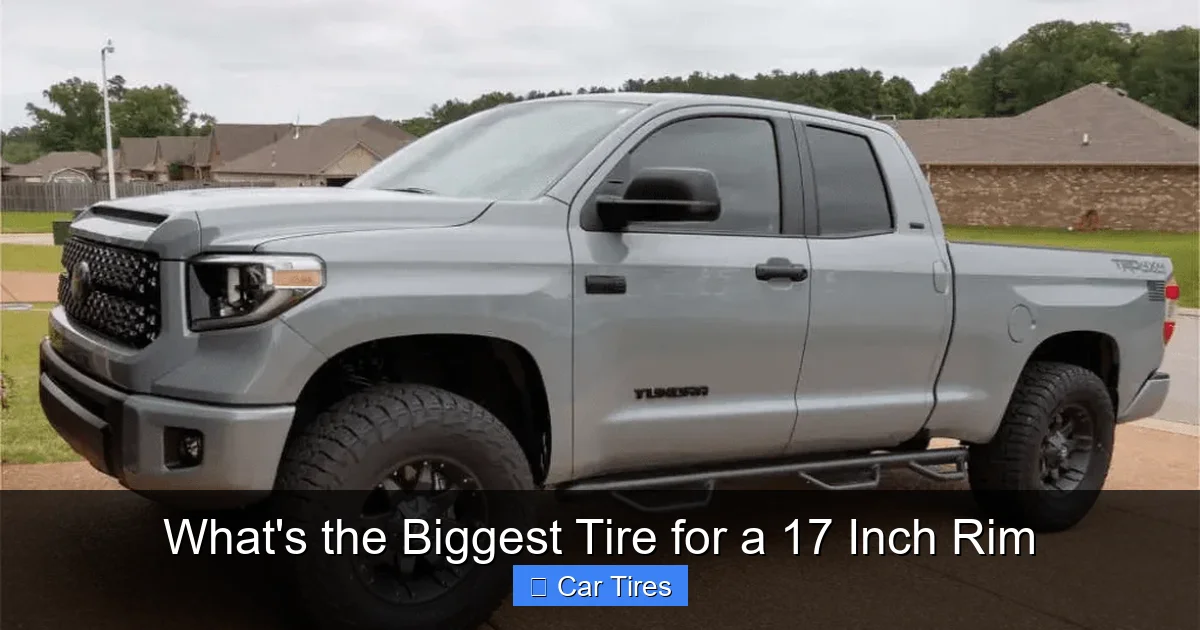
Ford F-150 (2015–2020)
Stock: 275/65R18 (can swap to 17s)
On 17s: 33×12.50R17 or 35×12.50R17 with leveling kit
Tip: Avoid tires wider than 12.5 inches unless you’ve upgraded the suspension.
Toyota Tacoma (2016–2023)
Stock: 265/65R17
Upgraded: 33×12.50R17 with 2.5-inch lift and fender trimming
Tip: Use load range D or E tires for better durability off-road.
Honda Civic Si (2017–2021)
Stock: 235/45R17
Max safe: 255/40R17 or 265/40R17 with minor stretch
Tip: Stick to high-performance summer or all-season tires for best handling.
Subaru Outback (2015–2023)
Stock: 225/65R17
Upgraded: 245/65R17 or 255/60R17
Tip: Avoid going over 265mm wide to prevent inner fender rubbing.
Risks of Going Too Big
Visual guide about What’s the Biggest Tire for a 17 Inch Rim
Image source: blogproautomotive.com
While bigger tires sound great, there are real risks if you go too far.
Rubbing and Clearance Issues
The most common problem is tire rubbing. This happens when the tire contacts the fender, suspension, or brake lines during turns or over bumps. Rubbing can wear through rubber, damage components, and even cause blowouts.
Signs of rubbing:
– Scuff marks on the tire sidewall
– Paint wear inside the wheel well
– Squeaking or grinding noises when turning
Solution: Test fit with a temporary mount, or use a fitment calculator like those from Tire Rack or Custom Offsets.
Speedometer and ABS Errors
Larger tires cover more ground per revolution, so your speedometer will read slower than your actual speed. For example, a 35-inch tire on a vehicle calibrated for 32-inch tires will show 60 mph when you’re actually going 65 mph.
This can also confuse your ABS, traction control, and transmission shift points.
Solution: Reprogram your ECU or use a speedometer calibration device.
Reduced Fuel Economy and Performance
Bigger, heavier tires increase rolling resistance and unsprung weight. This can reduce fuel efficiency by 2–5 mpg and make your vehicle feel sluggish.
Off-road tires with aggressive tread also create more noise and vibration on pavement.
Solution: Choose lighter tires with lower rolling resistance, or accept the trade-off for off-road capability.
Warranty and Insurance Concerns
Modifying your tires beyond manufacturer specs can void parts of your warranty or raise insurance premiums. Some insurers consider oversized tires a modification that increases risk.
Solution: Document all changes and consult your insurer before upgrading.
How to Choose the Right Big Tire for Your 17-Inch Rim
So how do you pick the best large tire for your setup? Follow these steps:
1. Know Your Vehicle’s Limits
Check your owner’s manual for recommended tire sizes. Look up forums or fitment guides specific to your make and model. Sites like Reddit (r/jeep, r/tacoma) and forums like Tacoma World are goldmines of real-world data.
2. Measure Clearance
Jack up your vehicle and measure the space between the tire and fender, suspension, and brake lines. Do this at full droop (wheel hanging) and full compression (wheel pushed up).
A good rule of thumb: You need at least 1 inch of clearance on all sides.
3. Consider Your Driving Needs
– **Daily driving**: Stick close to stock size for comfort and efficiency.
– **Off-roading**: Go bigger for clearance and traction, but upgrade suspension.
– **Performance**: Focus on width and grip, not height.
4. Use a Tire Size Calculator
Tools like the one on TireSize.com let you compare sizes side by side. You can see how a 35×12.50R17 compares to your stock tire in diameter, width, and speedometer error.
5. Consult a Professional
Visit a reputable tire shop or off-road specialist. They can test-fit tires and recommend the best options for your vehicle and driving style.
6. Don’t Forget the Spare
If you’re running a full-size spare, make sure it matches your new tire size. A mismatched spare can damage your differential in 4WD vehicles.
Popular Big Tire Options for 17-Inch Rims
Here are some of the most popular large tires for 17-inch wheels, grouped by use case.
Off-Road and All-Terrain
– **BFGoodrich All-Terrain T/A KO2 (35×12.50R17)**: Durable, great for rocks and mud.
– **Toyo Open Country A/T III (315/70R17)**: Excellent on-road comfort with off-road capability.
– **Nitto Ridge Grappler (35×12.50R17)**: Hybrid tread for mud and street use.
Performance and Street
– **Michelin Pilot Sport 4S (285/35R17)**: Top-tier grip for sports cars.
– **Continental ExtremeContact DWS06 Plus (275/40R17)**: Great all-season performance.
– **Pirelli P Zero (295/35R17)**: Track-focused with excellent dry handling.
Truck and SUV
– **Cooper Discoverer STT Pro (35×12.50R17)**: Aggressive mud tire with strong sidewalls.
– **General Grabber X3 (315/70R17)**: Balanced for mud, snow, and highway.
– **Goodyear Wrangler Duratrac (33×12.50R17)**: Excellent in snow and off-road.
Final Thoughts: Bigger Isn’t Always Better
So, what’s the biggest tire for a 17 inch rim? Technically, you could mount a 37-inch tire on a 17-inch wheel—but unless you’ve built a custom rig with portal axles and hydraulic suspension, it’s not practical or safe.
The real answer lies in balance. The best tire is the one that fits your vehicle, meets your driving needs, and doesn’t compromise safety or performance.
Whether you’re upgrading for looks, off-road capability, or better grip, take the time to research, measure, and consult experts. A well-chosen tire upgrade can transform your driving experience—just don’t let the excitement of a bigger tire lead to costly mistakes.
Remember: It’s not just about how big the tire is. It’s about how well it fits.
Frequently Asked Questions
Can I put a 35-inch tire on a 17-inch rim?
Yes, but only if your vehicle has sufficient lift, fender clearance, and suspension modifications. A 35×12.50R17 tire is common on lifted trucks and Jeeps, but may require trimming or aftermarket parts to fit properly.
What’s the widest tire for a 17×9 inch rim?
A 17×9 inch rim can safely support tires up to 285mm wide, such as 285/70R17 or 285/40R17. Going wider than 285mm may cause sidewall bulging or poor handling.
Will bigger tires hurt my fuel economy?
Yes, larger and heavier tires increase rolling resistance and weight, which can reduce fuel efficiency by 2–5 mpg. Off-road tires with aggressive tread also contribute to lower mileage.
Do I need to recalibrate my speedometer after upsizing tires?
Yes, if your new tire diameter is more than 3% larger or smaller than stock. Failing to recalibrate can lead to inaccurate speed readings and affect ABS and transmission performance.
Can I use different tire sizes front and rear on a 17-inch rim?
Yes, staggered setups are common in performance cars. For example, 245/45R17 front and 275/40R17 rear. However, avoid this on AWD vehicles unless specifically designed for it.
What happens if my tire rubs the fender?
Rubbing can wear down the tire, damage suspension components, and create safety hazards. It may also trigger warning lights or cause premature tire failure. Always ensure proper clearance before driving.