
What Paperwork Do I Need to Sell My Car Privately in Ny

Selling your car privately in New York requires specific documents to ensure a legal and smooth transaction. From the title to a bill of sale and odometer disclosure, having the right paperwork protects both buyer and seller and avoids future complications.
Key Takeaways
- Vehicle Title: You must have a properly signed and notarized title to transfer ownership legally.
- Bill of Sale: A detailed bill of sale is required by the DMV and helps document the sale terms.
- Odometer Disclosure Statement: Federal law requires accurate mileage reporting for vehicles under 10 years old.
- Release of Liability Form: Filing this with the DMV protects you from future tickets or accidents involving the sold vehicle.
- Vehicle Inspection and Registration: The buyer must handle registration and inspection, but you should confirm it’s done.
- Proof of Insurance Cancellation: Notify your insurer after the sale to avoid unnecessary premiums.
- Smog and Safety Inspections: While not always required for private sales, recent inspections can boost buyer confidence.
📑 Table of Contents
- What Paperwork Do I Need to Sell My Car Privately in NY?
- 1. The Vehicle Title: Your Most Important Document
- 2. The Bill of Sale: A Legal Record of the Transaction
- 3. Odometer Disclosure Statement: Reporting Mileage Accurately
- 4. Release of Liability Form: Protecting Yourself After the Sale
- 5. Additional Documents and Best Practices
- 6. Common Mistakes to Avoid When Selling Your Car Privately
- Conclusion: Sell Your Car Confidently in NY
What Paperwork Do I Need to Sell My Car Privately in NY?
Selling your car privately in New York can be a smart financial move. You often get more money than trading it in at a dealership, and you have full control over the price and negotiation. But before you meet with a buyer and hand over the keys, there’s one crucial step you can’t skip: getting your paperwork in order.
Many people underestimate how important proper documentation is when selling a car. Without the right forms, you could face legal trouble, financial liability, or even have the buyer back out at the last minute. The good news? New York has clear rules about what you need to sell your vehicle privately. Once you know what to prepare, the process becomes much smoother.
In this guide, we’ll walk you through every piece of paperwork required to sell your car privately in NY. Whether you’re selling a sedan, SUV, or pickup truck, these steps apply to all vehicles. We’ll cover the title, bill of sale, odometer disclosure, release of liability, and more. By the end, you’ll feel confident that you’ve done everything correctly—protecting yourself and helping the buyer complete their purchase without hassle.
1. The Vehicle Title: Your Most Important Document
The vehicle title is the cornerstone of any private car sale in New York. It’s the legal document that proves you own the car and have the right to sell it. Without a valid title, you cannot transfer ownership—no matter how much the buyer offers.
What Is a Vehicle Title?
The title is a state-issued document that lists the legal owner of the vehicle. In New York, it’s issued by the Department of Motor Vehicles (DMV). The title includes key details like the vehicle identification number (VIN), make, model, year, and the owner’s name and address. If the car is financed, the lienholder (usually a bank or credit union) will also be listed on the title.
Visual guide about What Paperwork Do I Need to Sell My Car Privately in Ny
Image source: images.template.net
How to Check if You Have the Right Title
Before listing your car for sale, locate your title. It should be in your name and free of liens unless you’ve paid off the loan. If you still owe money on the car, you’ll need to pay off the loan before selling. The lienholder will then release the title to you. If you’ve lost your title, you can request a duplicate from the NY DMV by filling out Form MV-902 and paying a small fee.
Signing the Title Correctly
When you’re ready to sell, you must sign the title over to the buyer. In New York, the title must be signed in front of a notary public. This step is mandatory—without notarization, the DMV will not accept the transfer. Make sure you sign in the designated “Seller” section and fill in the buyer’s name and address exactly as they appear on their ID. Any errors can delay the registration process for the buyer.
What If the Title Is in Multiple Names?
If the title lists more than one owner (for example, “John Smith and Jane Doe”), both parties must sign the title unless it says “or” between the names. If it says “and,” both signatures are required. If one owner is unavailable, they may need to sign a power of attorney form, but this can complicate the process. It’s best to have both parties present during the sale.
Example: Selling a Car with a Co-Owner
Let’s say you and your spouse co-own a 2018 Honda Accord. To sell it, both of you must sign the title in front of a notary. If your spouse is out of town, you can’t proceed without their signature or a legal power of attorney. Planning ahead and coordinating schedules can prevent last-minute issues.
2. The Bill of Sale: A Legal Record of the Transaction
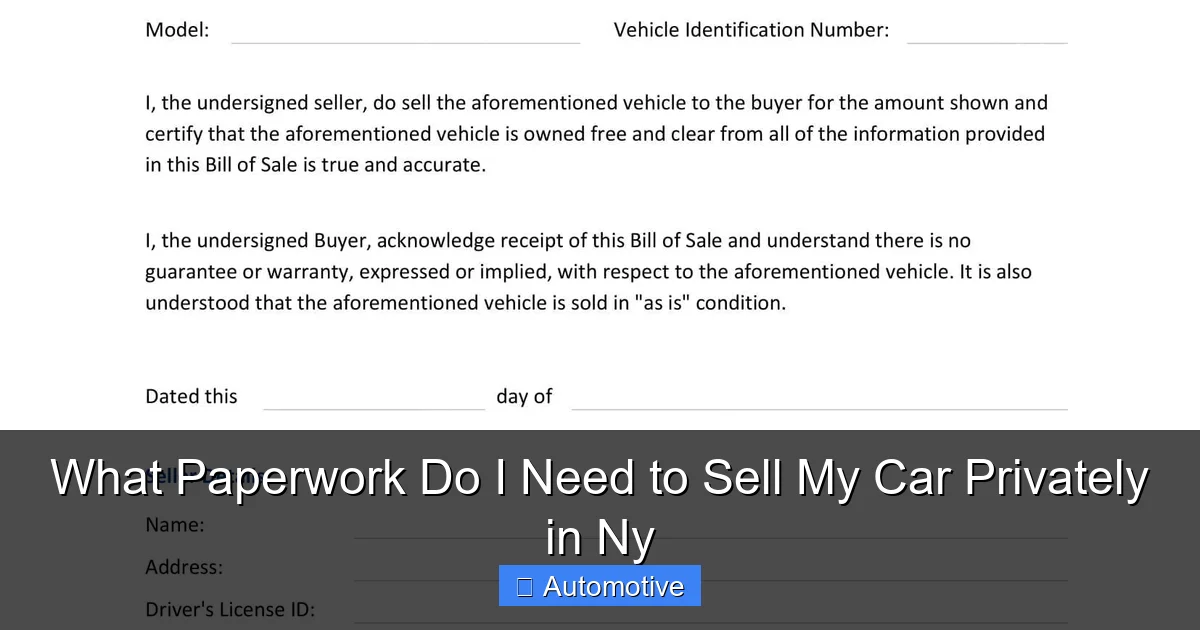
While the title transfers ownership, the bill of sale documents the details of the sale. It’s a written agreement between you and the buyer that confirms the car was sold, for how much, and under what conditions.
Why Is a Bill of Sale Required in NY?
New York law requires a bill of sale for private vehicle transactions. The DMV uses this document to verify the sale price, which helps determine sales tax for the buyer. It also protects both parties by creating a clear record of the transaction. Without a bill of sale, disputes over price, condition, or date of sale can become difficult to resolve.
What Should Be Included in a Bill of Sale?
A complete bill of sale should include:
- Date of sale
- Seller’s name, address, and signature
- Buyer’s name, address, and signature
- Vehicle details: make, model, year, VIN, and color
- Sale price
- Odometer reading at time of sale
- Statement that the vehicle is sold “as-is” (unless otherwise agreed)
- Notarization (recommended but not always required)
Where to Get a Bill of Sale Form
You can download a free bill of sale form from the NY DMV website or use a template from a trusted automotive site. Some buyers and sellers prefer to create their own, but using an official form reduces the risk of missing important details. Make sure both parties sign the form, and keep a copy for your records.
Example: Completing a Bill of Sale
Imagine you’re selling your 2015 Toyota Camry for $8,500. On the bill of sale, you’d write the date, your name and address, the buyer’s information, the VIN (which you can find on the dashboard or driver’s side door), the sale price, and the current odometer reading (say, 92,450 miles). You’d both sign, and you’d keep a copy. This simple form protects you if the buyer later claims they paid less or that the car had undisclosed issues.
Should the Bill of Sale Be Notarized?
While notarization isn’t legally required for a bill of sale in New York, it’s highly recommended. A notarized document carries more weight in case of disputes. It also reassures the buyer that the sale is legitimate. Many banks and notaries offer low-cost or free notarization services.
3. Odometer Disclosure Statement: Reporting Mileage Accurately
Federal law requires sellers to disclose the vehicle’s mileage at the time of sale. This is known as the odometer disclosure statement, and it’s a critical part of the paperwork.
Why Is Odometer Disclosure Required?
The odometer disclosure prevents fraud. Tampering with a car’s mileage to make it seem newer or less used is illegal. By signing an odometer statement, you confirm that the mileage shown is accurate to the best of your knowledge. This protects the buyer and ensures transparency.
When Is Odometer Disclosure Required?
You must provide an odometer disclosure for any vehicle that is less than 10 years old. For example, if you’re selling a 2016 model in 2024, you’re still within the 10-year window and must disclose the mileage. Vehicles 10 years or older are exempt, but it’s still good practice to include the reading.
How to Complete the Odometer Disclosure
The odometer disclosure is usually included on the back of the title or on a separate form. You’ll need to:
- Write the current mileage
- Check a box confirming the reading is accurate, exceeds the mechanical limits, or is not the actual mileage (if the odometer is broken)
- Sign and date the statement
Example: Odometer Disclosure in Action
You’re selling a 2019 Ford F-150 with 68,000 miles. On the odometer disclosure section of the title, you write “68,000” and check the box that says “Actual Mileage.” You sign and date it. If the odometer stopped working at 65,000 miles and you’ve driven 3,000 more, you’d check “Not Actual Mileage” and explain the discrepancy. Honesty here avoids legal trouble.
What Happens If You Don’t Disclose Mileage?
Failing to provide an odometer disclosure can result in fines and legal penalties. The buyer could also sue you for misrepresentation. In extreme cases, odometer fraud can lead to criminal charges. Always complete this section carefully and truthfully.
4. Release of Liability Form: Protecting Yourself After the Sale
Once you sell your car, you’re no longer responsible for it—right? Not quite. Without a release of liability, you could still be held accountable for tickets, accidents, or toll violations that occur after the sale.
What Is a Release of Liability?
A release of liability is a formal notice you file with the NY DMV stating that you’ve sold the vehicle and are no longer responsible for it. This protects you from future liability. It’s one of the most important steps in the selling process.
How to File a Release of Liability in NY
In New York, you can file a release of liability online through the DMV’s website or by mailing Form MV-10. You’ll need:
- Your name and address
- Vehicle details (VIN, make, model, year)
- Date of sale
- Buyer’s name and address
When Should You File It?
You should file the release of liability as soon as possible after the sale—ideally within 10 days. The sooner you file, the better protected you are. If the buyer gets a ticket a week after the sale and you haven’t filed, you could be held responsible.
Example: Filing a Release of Liability
You sell your 2017 Subaru Outback on June 1st. By June 5th, you log into the NY DMV website, enter the vehicle and buyer information, and submit the release of liability. You receive a confirmation email. Now, if the buyer gets a parking ticket on June 10th, you’re not liable—because you’ve already notified the DMV.
What If You Don’t File a Release of Liability?
If you skip this step, you remain legally tied to the vehicle until the buyer registers it. This means you could receive fines, toll violations, or even be sued if the car is involved in an accident. Don’t take the risk—file it immediately.
5. Additional Documents and Best Practices
Beyond the core paperwork, there are several other documents and steps that can make your private car sale smoother and more trustworthy.
Vehicle History Report
While not required, providing a vehicle history report (like one from Carfax or AutoCheck) builds buyer confidence. It shows accidents, service records, and ownership history. You can purchase a report online for around $30–$40. Many buyers appreciate the transparency and may be willing to pay more for a well-documented car.
Recent Inspection Stickers
New York requires annual safety and emissions inspections. If your car has a current inspection sticker, it reassures the buyer that the vehicle is roadworthy. If the inspection is expired, consider getting it done before listing the car. A clean inspection can increase your car’s value and speed up the sale.
Maintenance Records
Keep a folder with receipts for oil changes, brake repairs, tire replacements, and other services. These records show that the car has been well-maintained. Buyers often ask for them, and having them ready can set you apart from other sellers.
Proof of Insurance Cancellation
After the sale, contact your insurance company to cancel or transfer coverage. You don’t want to keep paying for a car you no longer own. Most insurers require proof of sale (like a bill of sale) to process the cancellation. Keep a copy of the cancellation confirmation for your records.
Remove Personal Items and License Plates
Before handing over the keys, clean out the car and remove all personal belongings. Also, take off your license plates. In New York, license plates stay with the owner, not the vehicle. The buyer will need to get new plates when they register the car.
6. Common Mistakes to Avoid When Selling Your Car Privately
Even with the right paperwork, mistakes can happen. Here are some common pitfalls and how to avoid them.
Not Getting the Title Notarized
Forgetting to have the title signed in front of a notary is a frequent error. The DMV will reject the transfer if the signature isn’t notarized. Always schedule a notary visit before meeting the buyer.
Accepting a Bad Check
Some buyers try to pay with personal checks that bounce. To avoid this, insist on cash, a cashier’s check, or a wire transfer. If you accept a check, wait for it to clear before handing over the keys and title.
Skipping the Bill of Sale
Some sellers think the title is enough. But without a bill of sale, the DMV may not process the registration, and you have no proof of the sale terms. Always complete one.
Not Filing the Release of Liability
This is one of the biggest mistakes. Many sellers assume they’re off the hook once the money changes hands. But until you file the release, you’re still liable. Don’t forget this step.
Letting the Buyer Drive Away Without Completing Paperwork
Never let the buyer take the car before all documents are signed and payment is secured. Have everything ready before the test drive, and complete the transaction in a safe, public place.
Conclusion: Sell Your Car Confidently in NY
Selling your car privately in New York doesn’t have to be stressful. With the right paperwork, you can complete the transaction legally, safely, and efficiently. Start by gathering your title, preparing a bill of sale, disclosing the odometer reading, and filing a release of liability. These steps protect you from future liability and ensure a smooth transfer of ownership.
Remember, the key to a successful private sale is preparation. Don’t rush the process. Take the time to fill out each form correctly, get signatures notarized, and keep copies of everything. And always meet buyers in safe, public locations—your safety matters too.
By following this guide, you’ll not only get a fair price for your car but also enjoy peace of mind knowing you’ve done everything by the book. Whether you’re upgrading to a newer model or simply downsizing, selling your car privately in NY can be a rewarding experience when you’re well-prepared.
Frequently Asked Questions
Do I need a notary to sell my car privately in NY?
Yes, the vehicle title must be signed in front of a notary public in New York. This is a legal requirement for the DMV to accept the transfer of ownership.
Can I sell my car if I still owe money on it?
No, you cannot sell a car with an outstanding loan unless the lienholder releases the title. You must pay off the loan first or arrange for the buyer to pay the lender directly.
Is a bill of sale required in New York?
Yes, a bill of sale is required by the NY DMV for private vehicle sales. It documents the sale price and other key details for tax and registration purposes.
What happens if I don’t file a release of liability?
If you don’t file a release of liability, you may remain responsible for tickets, tolls, or accidents involving the vehicle after the sale. Always file it promptly.
Do I need a smog check to sell my car in NY?
New York does not require a smog check for private sales, but the vehicle must pass an emissions inspection within 90 days of registration. A recent inspection can help sell the car faster.
Can I sell my car without the original title?
No, you need the original title to sell your car. If it’s lost, you can request a duplicate from the NY DMV using Form MV-902 and a small fee.