
What Makes a Car a Classic?

What makes a car a classic? It’s more than just age—it’s a blend of design, rarity, historical significance, and emotional appeal. From iconic muscle cars to elegant European roadsters, classic cars capture hearts and turn heads decades after rolling off the assembly line.
Key Takeaways
- Age matters, but isn’t everything: Most classic cars are 20–40 years old, but true classics transcend time with lasting appeal.
- Rarity increases value: Limited production runs or unique features make a car more desirable among collectors.
- Design and engineering innovation: Cars that introduced new technology or styling trends often earn classic status.
- Cultural and historical significance: Vehicles tied to movies, events, or social movements gain legendary status.
- Emotional connection and nostalgia: Many classics evoke powerful memories and represent a bygone era of driving.
- Originality and condition count: Well-preserved or properly restored originals are prized over heavily modified versions.
- Community and club recognition: Enthusiast groups and car shows help validate a vehicle’s classic reputation.
📑 Table of Contents
What Makes a Car a Classic?
Have you ever driven past an old car—maybe a sleek 1967 Ford Mustang or a boxy 1970s Volkswagen Beetle—and felt a sudden wave of nostalgia? Or perhaps you’ve seen a classic car at a show, polished to perfection, drawing crowds like a celebrity? There’s something undeniably magnetic about these vehicles. They’re not just machines; they’re time capsules on wheels, carrying stories, style, and soul from decades past.
But what exactly turns an ordinary car into a classic? Is it just how old it is? Or is there more to the story? The truth is, calling a car “classic” isn’t as simple as checking its birth year. While age plays a role, it’s only one piece of a much larger puzzle. A classic car is defined by a mix of factors—design, rarity, cultural impact, and emotional resonance—that together create a legacy. These vehicles aren’t just relics; they’re icons.
In this article, we’ll dive deep into what makes a car a classic. Whether you’re a seasoned collector, a curious enthusiast, or someone who just loves the look of vintage rides, you’ll discover the key traits that elevate certain cars above the rest. From the roar of a V8 engine to the curves of a hand-built body, we’ll explore the elements that make these automobiles timeless.
Age: The Foundation of Classic Status
Visual guide about What Makes a Car a Classic?
Image source: cdn.suwalls.com
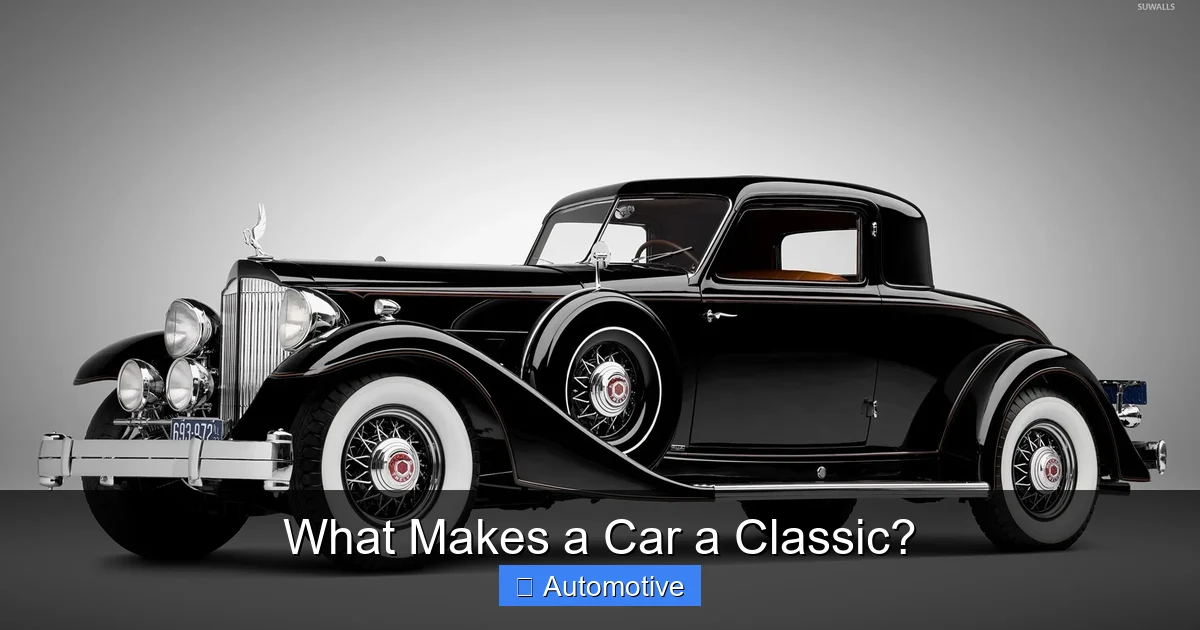
When most people think of a classic car, the first thing that comes to mind is age. And they’re not wrong—age is often the starting point for classic classification. But how old does a car actually need to be?
Generally, a car is considered a classic once it’s at least 20 years old. However, many experts and organizations use a 25- to 40-year range as the sweet spot. For example, the Classic Car Club of America (CCCA) defines a “classic” as a vehicle built between 1915 and 1948—a much narrower window. Meanwhile, the Antique Automobile Club of America (AACA) uses “antique” for cars over 25 years old and “classic” for those between 20 and 40 years.
But here’s the catch: not every 30-year-old car is a classic. A 1994 Honda Civic, while old enough by some standards, isn’t typically considered a classic because it lacks the distinctive design, performance, or cultural impact that defines the category. Age is necessary, but not sufficient.
The 20-Year Rule and Beyond
The “20-year rule” is a common benchmark used by insurers, collectors, and car clubs. Once a vehicle hits two decades, it often qualifies for classic car insurance, special registration, and inclusion in car shows. This rule helps standardize what’s considered vintage, but it’s not set in stone.
Some cars become classics much faster. The 1990s gave us the Nissan Skyline GT-R, the Toyota Supra MKIV, and the Mazda RX-7—vehicles that, despite being only about 30 years old, are already revered as modern classics. Their performance, tuning potential, and pop culture fame (thanks to movies like *The Fast and the Furious*) accelerated their legendary status.
On the flip side, some cars from the 1970s and 1980s—like the AMC Gremlin or the Ford Pinto—are old enough but haven’t earned classic recognition due to poor reputation or lack of innovation. So while age opens the door, it doesn’t guarantee entry.
Why Age Alone Isn’t Enough
Think of age like a passport—it gets you into the country, but it doesn’t make you a celebrity. A car needs more than just years under its belt to be a true classic. It needs character. It needs a story.
For example, the 1965 Ford Mustang wasn’t just old when it became a classic—it was revolutionary. It created an entirely new market segment (the “pony car”) and sold over a million units in its first two years. Its age helped, but its impact made it legendary.
So while age is the foundation, it’s the other factors—design, rarity, and cultural influence—that build the house.
Rarity: The Scarcity Factor
Visual guide about What Makes a Car a Classic?
Image source: eskipaper.com
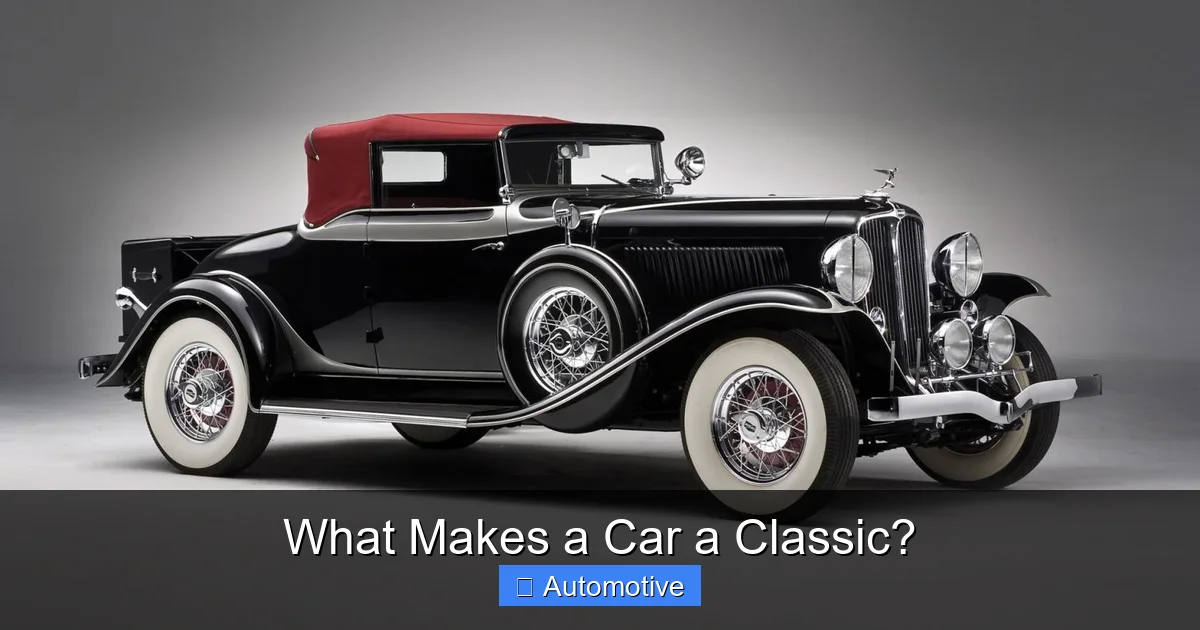
If age is the foundation, rarity is the cornerstone of value. A classic car becomes more desirable when it’s hard to find. Limited production numbers, unique features, or low survival rates can turn an ordinary model into a collector’s dream.
Rarity doesn’t always mean “only 100 were made.” Sometimes, it’s about how many are left. A car that was mass-produced decades ago but has since been scrapped, wrecked, or abandoned can become rare simply because so few remain in good condition.
Low Production Numbers
Some cars are rare by design. Take the 1962 Ferrari 250 GTO—only 36 were ever built. Today, they’re among the most valuable cars in the world, selling for over $70 million at auction. Their rarity, combined with racing pedigree and stunning design, makes them the holy grail for collectors.
But you don’t need a Ferrari to be rare. The 1970 Plymouth Hemi ‘Cuda is another example. While thousands were made, only a few hundred came with the high-performance 426 Hemi engine. Those models are now worth hundreds of thousands of dollars.
Even within popular models, rare options can make a difference. A 1969 Chevrolet Camaro ZL1—equipped with an all-aluminum 427 V8—was only produced in about 69 units. Today, it’s one of the most sought-after American muscle cars.
Survivor Cars and Originality
Rarity also depends on how many cars have survived. Many classics from the 1960s and 1970s were driven hard and scrapped early. Those that remain—especially in original, unrestored condition—are called “survivor cars” and are highly prized.
For example, a 1967 Shelby GT500 that’s never been restored, with matching numbers and original paint, can fetch far more than a beautifully restored clone. Collectors value authenticity, and originality adds to a car’s rarity.
Regional and Market Rarity
Sometimes, a car is rare not because few were made, but because few exist in a certain market. The 1995 Toyota Supra Twin Turbo, for instance, was never officially sold in the U.S. until after production ended. As a result, U.S. collectors prize these imports, driving up demand and value.
Similarly, European cars like the Lancia Stratos or the Alfa Romeo Montreal were rare in North America, making them exotic and desirable among American enthusiasts.
Design and Engineering Innovation

Visual guide about What Makes a Car a Classic?
Image source: eskipaper.com
A classic car isn’t just old or rare—it’s often groundbreaking. Many classics earned their status by pushing the boundaries of design, engineering, or performance. They introduced new ideas that changed the automotive world.
Revolutionary Styling
Design is one of the most visible traits of a classic car. Think of the 1957 Chevrolet Bel Air with its tailfins, chrome accents, and two-tone paint. It captured the optimism and flair of the 1950s. Or the 1961 Jaguar E-Type, praised by Enzo Ferrari as “the most beautiful car ever made.” Its long hood, short deck, and sleek profile set a new standard for sports car design.
These cars weren’t just stylish—they were trendsetters. They influenced future models and became symbols of their era.
Engineering Breakthroughs
Innovation under the hood can also make a car a classic. The 1955 Mercedes-Benz 300SL “Gullwing” was the first production car with fuel injection, giving it incredible performance for its time. Its iconic upward-opening doors weren’t just for show—they were a necessity due to the car’s tubular frame design.
Similarly, the 1963 Corvette Sting Ray introduced independent rear suspension, a major leap in handling. And the 1970 Porsche 917, though a race car, revolutionized aerodynamics and engine placement in motorsports.
Performance and Driving Experience
Some classics are celebrated for how they drive. The 1964 Shelby Cobra 427, for example, combined a lightweight body with a massive V8 engine, creating a raw, thrilling driving experience. It wasn’t refined, but it was exhilarating—a true driver’s car.
Even less powerful cars can earn classic status through driving character. The 1976 Lotus Esprit, with its mid-engine layout and wedge-shaped design, offered a nimble, responsive ride that stood out in its era.
Cultural and Historical Significance
A car becomes a classic not just for what it is, but for what it represents. Many classics are tied to major cultural moments, historical events, or pop culture phenomena.
Pop Culture Icons
Movies, TV shows, and music can elevate a car to legendary status. The 1968 Ford Mustang GT from *Bullitt* is one of the most famous cars in film history. Steve McQueen’s high-speed chase through San Francisco cemented the Mustang’s image as a symbol of cool.
Similarly, the 1963 Volkswagen Beetle became a counterculture icon thanks to its role in *Herbie: The Love Bug*. The DeLorean DMC-12 gained fame from *Back to the Future*, where it was transformed into a time machine.
These cars aren’t just vehicles—they’re characters in their own right.
Historical Milestones
Some classics mark important moments in history. The 1948 Tucker 48, for example, was ahead of its time with features like a padded dashboard and pop-out windshield. Though only 51 were made, it became a symbol of innovation and corporate resistance.
The 1973 oil crisis shifted automotive priorities, making fuel-efficient cars like the Honda Civic and Volkswagen Golf more relevant. While not flashy, these models represent a turning point in automotive history.
Social and Political Symbols
Cars can also reflect societal changes. The 1960s muscle car boom mirrored America’s love for power and freedom. The rise of Japanese imports in the 1980s signaled a shift in global manufacturing and consumer preferences.
Even color and trim can carry meaning. The black 1969 Dodge Charger driven by the Dukes in *The Dukes of Hazzard* became a symbol of Southern rebellion and fun.
Emotional Connection and Nostalgia
Perhaps the most powerful factor in what makes a car a classic is emotion. These vehicles evoke memories, feelings, and a sense of identity.
Generational Bonds
For many, a classic car is tied to family. It might be the car your dad drove, the one your grandparents took on road trips, or the first car you learned to drive in. These personal connections make classics more than just objects—they’re part of our stories.
A 1955 Chevy Bel Air might remind someone of summer vacations in the 1960s. A 1972 VW Bus could bring back memories of music festivals and cross-country adventures.
Nostalgia for a Simpler Time
Classic cars often represent a bygone era—a time when driving was an event, not a chore. There were no touchscreens, no lane-keeping assist, no constant notifications. Just you, the road, and the sound of the engine.
This nostalgia is especially strong for people who grew up in the 1960s, 70s, or 80s. The cars of their youth—whether a Pontiac GTO, a Datsun 240Z, or a Ford LTD—hold a special place in their hearts.
The Joy of Ownership
Owning a classic car isn’t just about status or investment. It’s about passion. It’s about the smell of gasoline, the feel of a manual shifter, the pride of keeping a piece of history alive.
Many classic car owners enjoy the process of restoration, maintenance, and driving. It’s a hobby, a craft, and a connection to the past.
Originality, Condition, and Restoration
Not all old cars are equal. A classic’s value depends heavily on its condition and how faithfully it’s been preserved or restored.
Original vs. Restored
Original cars—those with matching numbers, factory paint, and unrestored interiors—are often more valuable than restored ones. Collectors prize authenticity, and originality can be hard to replicate.
However, a high-quality restoration can also add value, especially if it returns the car to factory specs. The key is documentation: receipts, photos, and provenance help prove the work was done correctly.
Survivor Cars
As mentioned earlier, “survivor” cars—those that have never been restored—are rare and desirable. A 1969 Camaro with original paint and 40,000 miles can be worth more than a fully restored clone.
Modifications and Their Impact
While some modifications can enhance a car’s appeal (like period-correct upgrades), heavily altered classics often lose value. Swapping engines, changing interiors, or adding modern electronics can turn a classic into a “restomod,” which has its own market but isn’t the same as a true classic.
Community and Recognition
Finally, a car’s status as a classic is often validated by the community. Car clubs, shows, and expert organizations help define what’s considered classic.
Car Clubs and Enthusiast Groups
Joining a club—like the Mustang Club of America or the Porsche Club of America—connects you with others who share your passion. These groups often have strict definitions of what qualifies as a classic and host events that celebrate them.
Car Shows and Awards
Events like the Pebble Beach Concours d’Elegance or the Amelia Island Concours showcase the world’s finest classics. Winning an award at one of these shows can significantly boost a car’s reputation and value.
Expert Classification
Organizations like the CCCA and AACA have formal criteria for classic cars. While their definitions vary, they provide a respected framework for collectors and historians.
Conclusion
So, what makes a car a classic? It’s not just one thing—it’s a combination of age, rarity, design, innovation, cultural impact, and emotional resonance. A classic car is more than a machine; it’s a symbol of its time, a work of art, and a source of joy.
Whether it’s the thunderous roar of a 1969 Charger, the elegant curves of a 1957 Mercedes 300SL, or the quirky charm of a 1974 VW Thing, these vehicles capture our imagination. They remind us of where we’ve been and inspire us to keep driving forward.
If you’re thinking about buying, restoring, or simply appreciating a classic car, remember: it’s not about how much it’s worth. It’s about the story it tells and the memories it creates. That’s what makes a car truly classic.
Frequently Asked Questions
How old does a car have to be to be considered a classic?
Most experts consider a car a classic once it’s at least 20 years old, though many use a 25- to 40-year range. Age is important, but it’s not the only factor—design, rarity, and cultural impact also matter.
Is a classic car the same as an antique car?
Not exactly. “Antique” usually refers to cars over 45 years old, while “classic” often describes vehicles between 20 and 40 years old. Some organizations have specific definitions, but the terms are sometimes used interchangeably.
Can a car become a classic even if it wasn’t rare when new?
Yes. Some cars become classics due to cultural impact, design, or nostalgia, even if they were mass-produced. The Volkswagen Beetle and Ford Mustang are examples of popular cars that earned classic status.
Does a classic car have to be in perfect condition?
Not necessarily. While condition affects value, original “survivor” cars with patina can be more valuable than poorly restored ones. High-quality restorations also hold value if done correctly and documented.
Can modern cars become classics?
Absolutely. Cars like the 1990s Nissan Skyline GT-R, Toyota Supra, and Mazda RX-7 are already considered modern classics due to performance, tuning culture, and pop culture fame.
How can I tell if a car is a true classic?
Look at age, rarity, design, historical significance, and community recognition. Check if it’s featured in car shows, clubs, or auctions. If it evokes emotion and tells a story, it’s likely a classic.
