
What Is the Rsca Button on a Toyota Tacoma?

The RSCA button on a Toyota Tacoma stands for Roll Stability Control and Active Traction Control. It’s a safety feature that helps maintain vehicle stability during sharp turns or slippery conditions. While it’s usually on by default, you can turn it off in specific off-road situations—like deep mud or snow—to prevent the system from interfering with wheel spin needed for traction.
If you’ve ever driven a Toyota Tacoma—especially one equipped with off-road packages like the TRD Off-Road or TRD Pro—you’ve probably noticed a small button near the gear shifter or center console labeled “VSC OFF” or showing a skidding car with an arrow. That’s the RSCA button. But what exactly does it do? And why would you ever want to turn it off?
Many Tacoma owners are confused by this button, assuming it’s just another confusing piece of tech that’s better left untouched. But understanding the RSCA system—and knowing when to use or disable it—can make a big difference in your driving experience, whether you’re cruising down the highway, hauling a trailer, or tackling a rocky trail. In this guide, we’ll break down everything you need to know about the RSCA button on your Toyota Tacoma, from how it works to when it’s smart to press it.
So, let’s get into it. Whether you’re a weekend warrior hitting the trails or a daily driver who just wants to understand your truck better, this article will help you master one of the Tacoma’s most important—and misunderstood—safety features.
Key Takeaways
- What RSCA Means: RSCA stands for Roll Stability Control and Active Traction Control, a combined safety system in Toyota Tacomas designed to prevent rollovers and improve grip.
- How It Works: The system uses sensors to monitor wheel speed, steering angle, and lateral G-forces, automatically applying brakes or reducing engine power if it detects instability.
- When to Use It On: Keep RSCA enabled during normal driving, highway travel, wet roads, or towing for maximum safety and stability.
- When to Turn It Off: Disable RSCA temporarily when off-roading in deep mud, sand, or snow where wheel spin is needed to gain traction and avoid getting stuck.
- Location of the Button: The RSCA button is typically found on the center console, near the gear shifter or climate controls, and may be labeled “VSC OFF” or have a skidding car icon.
- Safety First: Always re-enable RSCA after off-roading or challenging terrain to restore full safety protections during regular driving.
- Not Just for Off-Roading: RSCA also enhances safety during emergency maneuvers, sudden lane changes, or driving on icy roads.
📑 Table of Contents
- What Does RSCA Stand For?
- How the RSCA System Works
- Where Is the RSCA Button Located?
- When Should You Turn Off the RSCA Button?
- When Should You Keep RSCA On?
- How to Use the RSCA Button Safely
- Common Misconceptions About the RSCA Button
- RSCA and Other Tacoma Safety Features
- Final Thoughts: Mastering Your Tacoma’s RSCA System
What Does RSCA Stand For?
The acronym RSCA might sound like something from a sci-fi movie, but it’s actually a combination of two key safety systems built into your Toyota Tacoma: Roll Stability Control (RSC) and Active Traction Control (A-TRAC). Together, they form a smart, responsive system designed to keep your truck stable and under control in challenging driving conditions.
Roll Stability Control monitors the vehicle’s roll angle—essentially how much it’s leaning to one side—and works to prevent rollovers, especially during sharp turns or sudden maneuvers. Active Traction Control, on the other hand, helps maintain grip by managing wheel slip. If one or more wheels start spinning faster than the others (a sign of loss of traction), A-TRAC steps in to redistribute power or apply brakes to the slipping wheel.
So when you see “RSCA” referenced in your owner’s manual or on the dashboard, it’s referring to this dual-function system. It’s not a single feature but a coordinated effort between multiple sensors and control units to keep your Tacoma safe. And while it’s always working in the background, the RSCA button gives you manual control over when it’s active.
How the RSCA System Works
Visual guide about What Is the Rsca Button on a Toyota Tacoma?
Image source: tacomaexplorer.com
To truly understand the RSCA button, it helps to know how the system operates under the hood—or rather, under the chassis. The RSCA system relies on a network of sensors spread throughout the vehicle, including wheel speed sensors, a steering angle sensor, a yaw rate sensor, and a lateral G-force sensor. These components constantly feed data to the vehicle’s electronic control unit (ECU), which processes the information in real time.
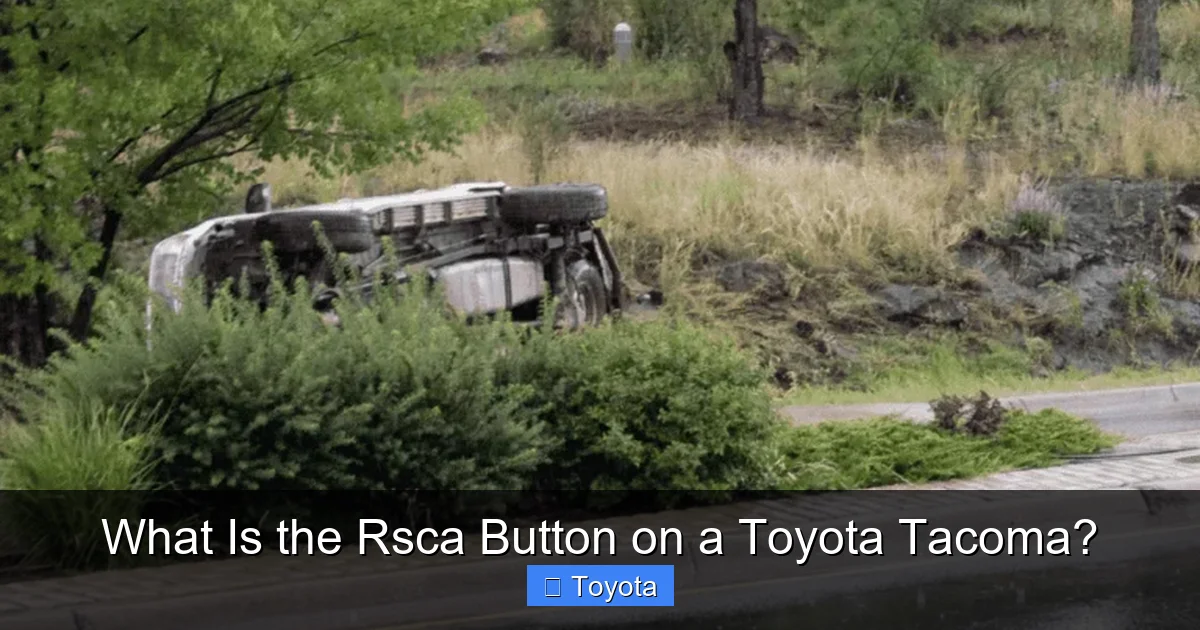
Let’s say you’re driving around a tight corner on a rainy day. As you turn the wheel, the steering angle sensor detects the direction and rate of turn. At the same time, the lateral G-force sensor measures how much the truck is leaning to the side. If the system detects that the vehicle is approaching a rollover threshold—perhaps because you took the turn too fast or the road is slick—it will intervene.
Here’s what happens next: the ECU may reduce engine power to slow the vehicle down, or it might apply the brakes to one or more wheels to counteract the roll motion. This is Roll Stability Control in action. Meanwhile, if one of your wheels starts spinning (like when accelerating on a gravel road), the Active Traction Control system detects the imbalance and applies brake pressure to the spinning wheel, transferring torque to the wheels with better grip.
This all happens in milliseconds—so fast you might not even notice it. But the result is a smoother, safer drive, especially in conditions where stability is compromised. The RSCA system is particularly valuable when towing a trailer, driving on mountain roads, or navigating slippery surfaces like ice or wet leaves.
Where Is the RSCA Button Located?
Visual guide about What Is the Rsca Button on a Toyota Tacoma?
Image source: tacomaexplorer.com
Now that you know what RSCA does, you’re probably wondering: where do I find the button? The location can vary slightly depending on your Tacoma’s model year and trim level, but it’s usually easy to spot once you know what to look for.
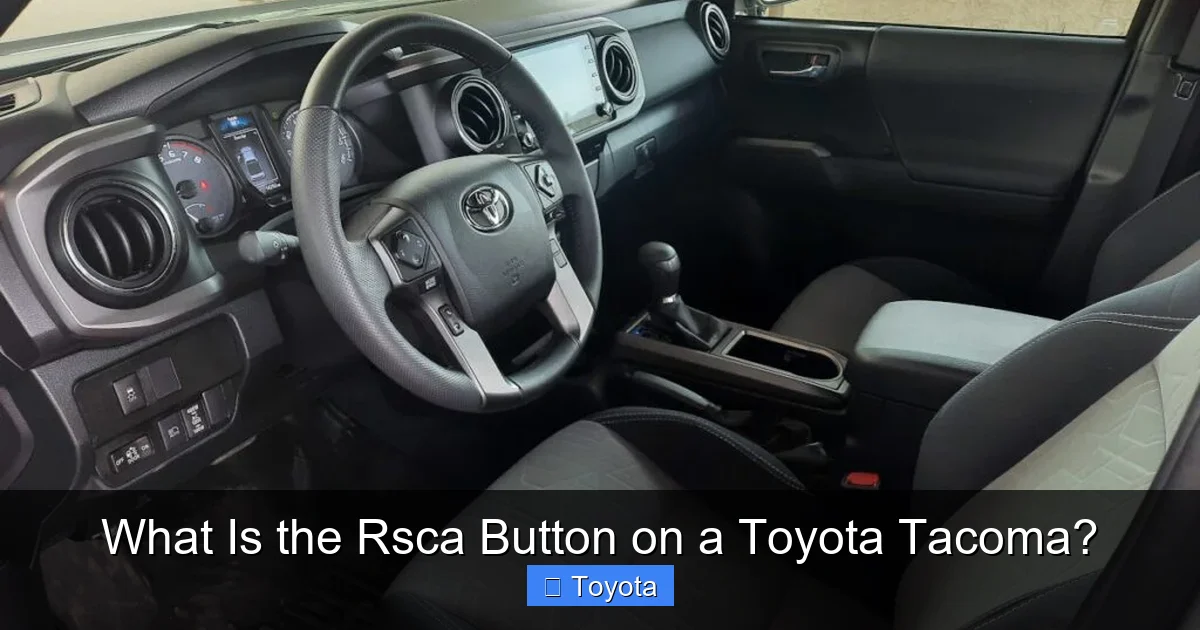
In most Toyota Tacomas—especially those from 2016 onward—the RSCA button is located on the center console, just to the left or right of the gear shifter. It’s often near the climate control knobs or the drive mode selector (like “4H” or “4L” for 4WD). The button is typically black or gray, about the size of a quarter, and may be labeled “VSC OFF” or feature an icon of a car skidding with an arrow circling around it.
Some newer models integrate the button into a cluster of off-road controls, especially on TRD Off-Road and TRD Pro trims. In these cases, you might see it grouped with buttons for crawl control, multi-terrain select, or differential lock. On older models (pre-2016), the button might be less prominent or labeled differently, but the function remains the same.
If you’re having trouble finding it, check your owner’s manual—it will have a diagram showing the exact location for your specific year and trim. And don’t worry if it’s not immediately obvious; many owners don’t discover the button until they’re deep into off-roading or troubleshooting a traction issue.
When Should You Turn Off the RSCA Button?
Visual guide about What Is the Rsca Button on a Toyota Tacoma?
Image source: tacomaexplorer.com
Here’s where things get interesting. While the RSCA system is designed to enhance safety, there are certain situations where turning it off can actually improve performance—especially when you’re off the beaten path.
The key thing to remember is that RSCA is meant to prevent loss of control, but sometimes, a little controlled loss of traction is exactly what you need. For example, when you’re stuck in deep mud, snow, or sand, your wheels need to spin slightly to dig in and gain momentum. If RSCA is active, it will detect the wheel slip and intervene—cutting power or applying brakes—which can leave you spinning your wheels in place without moving forward.
That’s why Toyota gives you the option to disable it. By pressing the RSCA button, you’re telling the system: “I know what I’m doing, and I need the wheels to spin.” This is especially useful in low-traction environments where momentum is your friend.
Let’s say you’re crawling up a muddy hill in 4WD Low. Your front wheels start to slip, and the RSCA system kicks in, reducing engine power to prevent a spin. But in this case, that spin is necessary to maintain forward motion. By turning off RSCA, you allow the wheels to rotate freely, increasing your chances of making it up the hill.
Similarly, if you’re rock crawling or navigating a steep, uneven trail, disabling RSCA can prevent the system from mistakenly interpreting normal off-road movement as a loss of control. This gives you more direct control over throttle and braking, which is crucial for precise maneuvering.
However, it’s important to note that turning off RSCA doesn’t disable all safety systems. Features like ABS (anti-lock braking) and basic traction control may still be active, depending on your model. But the roll stability and active traction functions will be disengaged.
When Should You Keep RSCA On?
While there are times when disabling RSCA makes sense, the vast majority of your driving should be done with it enabled. In fact, Toyota recommends keeping RSCA on at all times during normal operation.
Why? Because the system is designed to protect you in everyday driving scenarios—many of which you might not even realize are risky. For example, if you’re driving on a wet highway and suddenly swerve to avoid a pothole or debris, RSCA can help stabilize the vehicle and prevent a skid or rollover. The same goes for driving on icy roads, gravel shoulders, or during sudden lane changes in traffic.
Towing is another scenario where RSCA is essential. When you’re pulling a trailer, the added weight and length change how your Tacoma handles. The risk of sway or fishtailing increases, especially in windy conditions or when changing lanes. RSCA helps counteract these forces by monitoring the vehicle’s stability and making adjustments to keep everything aligned.
Even in city driving, RSCA can be a lifesaver. Imagine you’re making a quick turn at an intersection and hit a patch of oil or wet leaves. Without RSCA, your truck might slide or lose grip. But with it active, the system can detect the instability and apply corrective measures before you even realize there’s a problem.
So, unless you’re in a specific off-road situation where wheel spin is beneficial, leave RSCA on. It’s one of those features that you hope you never need—but will be glad it’s there if you do.
How to Use the RSCA Button Safely
Using the RSCA button isn’t complicated, but it does require some know-how to do it safely. Here’s a step-by-step guide to help you get it right.
First, locate the button—usually near the gear shifter. Press it once, and you should see a warning light on your dashboard, often labeled “VSC OFF” or showing the skidding car icon. This indicates that Roll Stability Control and Active Traction Control are disabled.
Now, drive carefully. Remember, you’ve turned off a key safety system, so your truck won’t intervene if you start to lose control. This means you need to be extra cautious with speed, steering, and braking—especially on slippery or uneven surfaces.
Use this mode only when necessary—like when you’re stuck in mud, snow, or sand and need wheel spin to get moving. Once you’re back on solid ground or no longer need the extra traction, press the button again to re-enable RSCA. The warning light should go off, and the system will return to full operation.
A good rule of thumb: if you’re not sure whether to turn it off, leave it on. It’s always better to have the safety net than to risk losing control because you disabled a system you didn’t fully understand.
Also, avoid driving long distances with RSCA off. Even on dirt roads or light trails, the system can help prevent accidents. Only disable it for short periods and in controlled environments.
Common Misconceptions About the RSCA Button
Despite its importance, the RSCA button is often misunderstood—even by experienced drivers. Let’s clear up a few common myths.
One misconception is that turning off RSCA gives you more power or speed. While it can allow for more wheel spin, it doesn’t increase engine output. In fact, disabling it can make your truck harder to control, especially at higher speeds.
Another myth is that RSCA is only for off-roading. While it’s useful in those scenarios, it’s actually more critical during everyday driving. Most rollover accidents happen on highways, not trails, and RSCA is designed to prevent those.
Some drivers also think that pressing the button disables all electronics, including ABS. That’s not true. ABS usually remains active even when RSCA is off, so you can still brake safely in emergencies.
Finally, don’t assume that because your truck handles well without RSCA, you don’t need it. The system works subtly, often preventing problems before they become dangerous. You might not notice it working—but that’s exactly how it should be.
RSCA and Other Tacoma Safety Features
The RSCA system doesn’t work in isolation. It’s part of a broader suite of safety technologies in the Toyota Tacoma, including:
– **ABS (Anti-lock Braking System):** Prevents wheel lockup during hard braking.
– **Brake Assist:** Applies maximum brake force in emergency stops.
– **Hill Start Assist:** Keeps the truck from rolling backward on inclines.
– **Trailer Sway Control:** Helps stabilize a wobbly trailer.
These systems often work together. For example, if you’re towing a trailer and start to fishtail, Trailer Sway Control might activate first, with RSCA stepping in if the situation worsens. Understanding how they interact can help you make better decisions about when to use or disable certain features.
Final Thoughts: Mastering Your Tacoma’s RSCA System
The RSCA button on your Toyota Tacoma isn’t just a mysterious switch—it’s a powerful tool that gives you control over your truck’s safety systems. When used correctly, it can help you navigate tough terrain, avoid accidents, and drive with confidence in all conditions.
Remember: keep RSCA on for everyday driving, towing, and highway travel. Turn it off only when you’re off-roading in deep mud, snow, or sand and need wheel spin to gain traction. And always re-enable it when you’re back on solid ground.
By understanding what RSCA does and when to use it, you’re not just driving a truck—you’re driving smarter, safer, and more in tune with your vehicle’s capabilities. So the next time you see that little button, don’t ignore it. Embrace it. Your Tacoma—and your peace of mind—will thank you.
Frequently Asked Questions
What does the RSCA button do on a Toyota Tacoma?
The RSCA button controls the Roll Stability Control and Active Traction Control systems. It allows you to disable these safety features when needed, such as during off-roading in deep mud or snow.
Can I drive with the RSCA button turned off?
Yes, but only in specific situations like off-roading. For normal driving, towing, or highway travel, it’s safer to keep RSCA enabled to maintain stability and prevent rollovers.
Will turning off RSCA improve my truck’s performance?
It can improve traction in low-grip conditions by allowing wheel spin, but it doesn’t increase engine power. Use it only when necessary and re-enable it afterward.
Is the RSCA button the same as the VSC OFF button?
Yes, on most Toyota Tacomas, the “VSC OFF” button controls the RSCA system. VSC stands for Vehicle Stability Control, which includes roll and traction functions.
Does disabling RSCA turn off ABS?
No, ABS usually remains active even when RSCA is off. Only the roll stability and active traction features are disabled.
How do I know if RSCA is turned off?
A warning light on the dashboard—often labeled “VSC OFF” or showing a skidding car icon—will illuminate when the system is disabled.