What Is the Most Common Problem with the Toyota Tundra

Contents
- 1 Key Takeaways
- 2 📑 Table of Contents
- 3 The Anatomy of the Problem: An Internal Water Pump
- 4 Which Tundras Are Most Affected? Model Years and Engines
- 5 Recognizing the Symptoms: What to Look and Listen For
- 6 The Financial Toll: Repair Costs and Options
- 7 Prevention and Proactive Care: Can You Avoid It?
- 8 Why Hasn’t Toyota Fixed This? The Unspoken Reality
- 9 Conclusion: A Trusted Truck with a Critical Flaw
- 10 Frequently Asked Questions




The most common and costly problem with the Toyota Tundra, particularly models from 2007 to 2021 with the 5.7L V8 engine, is a premature internal water pump failure. This isn’t a simple belt-driven external pump; it’s located inside the engine, and when it fails, it sends metal shavings and coolant throughout the entire cooling system and often into the engine oil, leading to catastrophic engine damage. The repair typically requires a complete engine or long-block replacement, costing $5,000 to $10,000+, making it a critical issue for owners to understand and monitor proactively.
When you think of a Toyota Tundra, you likely picture a rugged, reliable, full-size truck built to last. And for the most part, that reputation is well-earned. The Tundra has a solid record for durability and owner satisfaction. However, no vehicle is perfect, and the Tundra has one glaring, well-documented Achilles’ heel that has haunted owners and mechanics alike for over a decade. This isn’t a minor annoyance or a simple recall; it’s a design flaw in a critical component that can lead to a total engine failure. So, what is the most common problem with the Toyota Tundra? The unequivocal answer is the catastrophic failure of the internal water pump in the 5.7-liter V8 engine.
This issue transforms a trusted workhorse into a potential financial nightmare. Unlike traditional water pumps that are external and relatively easy to replace, the pump in the 3UR-FE V8 is nestled deep inside the engine, driven by the timing chain. Its failure is not a matter of “if” for many high-mileage or even mid-mileage trucks, but “when.” When it goes, it doesn’t just stop pumping coolant. It disintegrates, shredding plastic or composite impellers and scattering metal shavings into the coolant that circulates through the radiator, heater core, and—most critically—the engine block itself. This contamination can quickly ruin the entire engine. Understanding this problem is not just for current owners; it’s essential knowledge for anyone considering a used Tundra from the model years this engine was produced.
Key Takeaways
- The Core Problem: An internal water pump, driven by the timing chain, fails prematurely and contaminates the engine with coolant and metal debris.
- Affected Models: Primarily 2007-2021 Tundras with the 5.7L V8 (3UR-FE engine), with 2014-2018 being notoriously problematic.
- Warning Signs: Look for milky sludge under the oil cap, white smoke from the exhaust, overheating, or low coolant with no visible leaks.
- Cost of Neglect: Ignoring the issue leads to ruined engines. Total repair or replacement costs range from $5,000 to over $10,000.
- No Simple Fix: The pump is inside the engine. Replacement requires extensive disassembly, often making a remanufactured long-block the most economical repair.
- Prevention is Key: Regular coolant system inspections, strict adherence to Toyota’s coolant flush intervals, and monitoring oil condition are your best defenses.
- Toyota’s Stance: There is no official recall or extended warranty for this widespread design flaw, placing the financial burden on the owner.
📑 Table of Contents
- The Anatomy of the Problem: An Internal Water Pump
- Which Tundras Are Most Affected? Model Years and Engines
- Recognizing the Symptoms: What to Look and Listen For
- The Financial Toll: Repair Costs and Options
- Prevention and Proactive Care: Can You Avoid It?
- Why Hasn’t Toyota Fixed This? The Unspoken Reality
- Conclusion: A Trusted Truck with a Critical Flaw
The Anatomy of the Problem: An Internal Water Pump
To grasp why this failure is so severe, you need to understand the setup. In a conventional engine, the water pump is usually attached to the front of the engine block, driven by a serpentine belt. If it fails, you might get a leak or the engine will overheat, but the repair is straightforward and doesn’t typically contaminate other systems.
Why an Internal Pump?
Toyota’s design for the 3UR-FE engine places the water pump behind the timing chain cover. The timing chain, which synchronizes the camshafts and crankshaft, also drives this pump via a set of gears. This design was likely chosen for packaging reasons—it saves space on the front of the engine and can be more efficient. However, it creates a massive serviceability issue. The pump is submerged in coolant inside the engine’s cooling passages. Its housing is typically made of plastic or a composite material, which over time and with heat cycling can become brittle and crack. The seals can also fail.
The Domino Effect of Failure
When the pump’s impeller breaks apart or the housing cracks, several bad things happen simultaneously. First, coolant leaks internally into the engine oil. You might not see a puddle under the truck because the leak is inside. Second, the plastic and metal debris from the shattered pump is carried by the coolant flow. This debris can:
- Clog the tiny coolant passages in the radiator and heater core, causing persistent overheating.
- Wear on the timing chain guides and sprockets, potentially leading to a timing chain failure.
- Most destructively, get pulled into the oil pan, mixing with the engine oil. Coolant in the oil turns it into a milky, frothy sludge that cannot lubricate the engine’s bearings, pistons, and camshafts.
This last point is the engine killer. Running an engine with coolant in the oil, even for a short time, causes rapid and irreversible internal wear. The bearings, especially the main and rod bearings, will score and fail. The piston rings will seize. The engine essentially grinds itself to a halt from the inside out.
Which Tundras Are Most Affected? Model Years and Engines
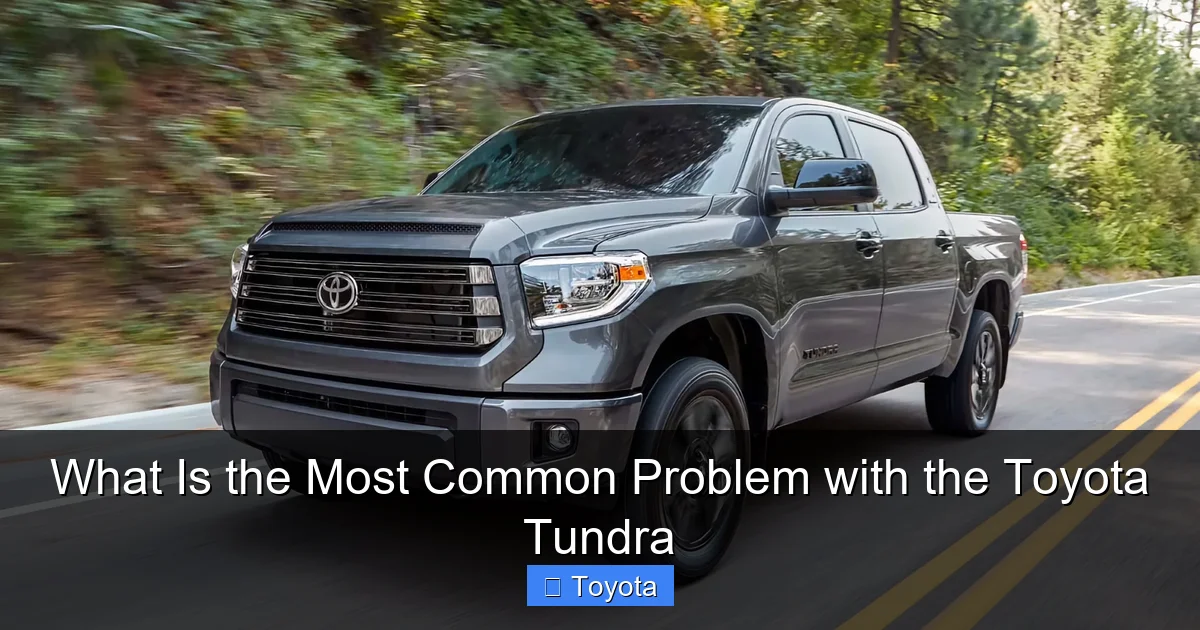
This is not a problem exclusive to a single bad year. It’s a systemic design issue that spans the entire production run of the 5.7L V8 in the Tundra, from its introduction for the 2007 model year all the way through the second-generation truck’s end in 2021. However, like many complex failures, some years and engine blocks are more notorious than others.
Visual guide about What Is the Most Common Problem with the Toyota Tundra
Image source: rerev.com
The 2014-2018 “Sweet Spot” of Failure
While failures occur across the board, a significant spike in reports and repair costs is consistently seen with 2014 through 2018 model year Tundras. Several factors contribute to this:
- Engine Block Material: Toyota switched to a different, slightly lighter aluminum alloy for the engine block in these years. Some speculate this alloy may be more prone to galvanic corrosion or has different thermal properties that stress the pump housing.
- Pump Design Iteration: Toyota made several minor revisions to the internal water pump design over the years. The versions used in the 2014-2018 block seem to have particular vulnerabilities, though the fundamental flaw (a plastic/composite part in a high-stress, hot, wet environment) remains.
- Age and Mileage Wave: These vehicles are now reaching the 8-15 year and 100,000-180,000 mile range, which is the typical window for this failure to manifest as materials fatigue.
If you own or are looking at a Tundra from this period with the 5.7L, this issue should be your number one concern. It’s so prevalent that it’s a major factor in the vehicle’s long-term value and reliability perception.
The 2007-2013 and 2019-2021 Models
Do not think the earlier (2007-2013) and later (2019-2021) models are safe. They use the same basic 3UR-FE engine architecture with an internal water pump. Failures are reported on these as well, though perhaps at a slightly lower statistical rate. The 2019-2021 models received a significant power increase and other updates, but the cooling system design remained fundamentally the same. Any Tundra with this engine is on a clock, and the clock starts ticking from day one.
It’s crucial to note that the smaller 4.6L V8 (1UR-FE) and the V6 models do not have this specific internal water pump design and are not plagued by this issue. The problem is endemic to the 5.7L V8. This is a key distinction when truck shopping. For those interested in the unique higher-trim variants, even a 1794 Edition Toyota Tundra, which is based on the 5.7L V8, is equally susceptible to this mechanical flaw. The special badging and luxury features do nothing to change the engine’s internals.
Recognizing the Symptoms: What to Look and Listen For
Because the failure happens internally, you often won’t see a traditional leak. The symptoms are more subtle at first and then become catastrophic. Catching them early is the only way to potentially avoid a full engine replacement. You must become a detective for these signs.

Visual guide about What Is the Most Common Problem with the Toyota Tundra
Image source: ic.carid.com
The Oil Cap Check: Your First Line of Defense
This is the single most important, free, and easy check you can perform. Once a month, or whenever you check your oil, remove the engine oil filler cap. Look at the underside. If you see a creamy, milky, or frothy substance—think a chocolate milkshake or mayonnaise—that is coolant mixing with your engine oil. This is a definite, immediate red flag. It means the internal water pump has already failed and is leaking coolant into the oil pan. Do not start the engine if you see this. Have the truck towed to a mechanic. Running it will destroy the bearings.
Other Warning Signs
- White, Sweet-Smelling Smoke from the Exhaust: This is coolant burning in the combustion chamber. It’s a sign coolant is making its way past the head gaskets, which can be a secondary effect of the overheating caused by the failing pump or direct contamination.
- Persistent Overheating: If your Tundra’s temperature gauge runs hot, especially after the engine is warmed up, and there are no external leaks, it could be because the internal pump isn’t circulating coolant properly or because debris has clogged the radiator.
- Low Coolant with No Visible Leak: If you’re constantly topping up the coolant reservoir and it keeps dropping, but you can’t find a puddle or drip, the coolant is likely leaking internally into the oil or being burned.
- Grinding or Rubbing Noise from the Timing Cover Area: A failing pump can make a grinding, whirring, or rubbing noise from the front top of the engine (where the timing chain cover is). This is less common but a possible precursor to total failure.
- Heater Not Blowing Hot Air: If the debris clogs the tiny heater core, your cabin heat will become weak or non-functional, even as the engine overheats.
The Financial Toll: Repair Costs and Options
Let’s be blunt: if the internal water pump fails and contaminates the system, this is not a $500 fix. It is a major engine-level repair. The cost is so high because of the labor involved. To access the pump, a mechanic must remove the entire front end of the engine: the timing chain cover, the timing chain itself, the harmonic balancer, and often the cylinder heads. It’s essentially a partial engine rebuild.
The “Best” Repair Path: Long-Block Replacement
Given the extensive disassembly required and the high probability of collateral damage (clogged radiator, ruined heater core, scored cylinder walls from debris), the most common and often most economical repair is to replace the entire engine with a remanufactured or used “long-block.” A long-block includes the engine block, crankshaft, pistons, cylinder heads, and camshafts—essentially everything from the cylinder head down. The technician will then reuse your original oil pan, timing cover, valve covers, and external accessories (like the power steering pump, alternator). This avoids the massive labor of rebuilding your old, contaminated block.
Breaking Down the Costs
Here is a realistic cost breakdown for a 2014-2018 Tundra:
- Remanufactured Long-Block Engine: $3,500 – $6,000+ (core charge applies).
- Labor (15-25 hours): $1,500 – $3,500+ depending on shop rate.
- Additional Parts: New thermostat, gaskets, seals, coolant, oil, filter, and potentially a new radiator and heater core if they are clogged. Add $500 – $1,500.
- Total Estimate: $5,500 to $11,000+.
A used engine from a junkyard might be cheaper upfront ($1,500-$3,000), but it’s a gamble. You have no idea of its internal condition or if it has the same pump design flaw waiting to happen. The labor cost to install it is the same, so you may save little and gain more risk. For a truck that might be worth $15,000-$25,000, this repair can easily exceed its value, leading owners to face a devastating decision.
Prevention and Proactive Care: Can You Avoid It?
Since there’s no recall and Toyota has not redesigned the pump for the existing engine architecture, the responsibility falls on the owner. You cannot eliminate the risk, but you can manage it and potentially extend the pump’s life with aggressive maintenance.
Visual guide about What Is the Most Common Problem with the Toyota Tundra
Image source: lemberglaw.com
Coolant System Maintenance is Non-Negotiable
The factory coolant (Toyota Super Long Life Coolant) is designed for a long interval, but that doesn’t mean you should ignore it. The coolant becomes corrosive over time and can accelerate the degradation of the plastic pump housing and seals.
- Flush the System: Have a complete coolant system flush performed every 60,000 to 75,000 miles, or every 5 years, whichever comes first. Do not just “top up.” A proper flush ensures old, corrosive coolant is fully removed and replaced with fresh, correct-type coolant.
- Use Genuine Toyota Coolant: Always use the specified Toyota Super Long Life Coolant (or its equivalent that meets Toyota’s specifications). Generic coolants can have different chemical compositions that may not be compatible with the seals and metals in your system.
Become a Symptom Detective
Make the oil cap check a monthly ritual. Also, periodically check the condition of the coolant in the reservoir. It should be a vibrant color (usually pink, red, or blue) and clear. If it looks rusty, brown, or has sludge in it, that’s a sign of internal corrosion or contamination. Also, pay attention to your temperature gauge. If it runs hotter than it used to, have the cooling system pressure-tested to check for internal leaks.
Know Your Limits and Plan
If you own a high-mileage Tundra from the risk years (2014-2018), start a “repair fund.” Consider the potential for this failure as a known cost of ownership. When buying a used Tundra, a pre-purchase inspection by a Toyota specialist is critical. They can perform a block test to check for combustion gases in the coolant (a sign of a head gasket issue, which can be related) and inspect for any early signs. A vehicle history report can also show if a major engine repair was already performed under a previous owner’s watch.
For those who prioritize absolute reliability and want to avoid this specific headache, the later Tundra (2022+) with the all-new twin-turbo V6 (i-FORCE MAX) is an entirely different powertrain with no such known widespread issue. However, that’s a different truck with a different character. For the 5.7L Tundra owner, knowledge and vigilance are the primary tools.
Why Hasn’t Toyota Fixed This? The Unspoken Reality
This is the frustrating question on every Tundra owner’s forum. Given the sheer volume of failures and the astronomical repair costs, why hasn’t Toyota issued a recall or a technical service bulletin (TSB) with a definitive fix? The answer lies in a combination of legal, engineering, and business realities.
Engineering Compromise and Cost
Redesigning the entire front half of the engine to move the water pump externally or use a vastly different, more robust internal pump design would be a multi-billion dollar undertaking for an engine family that was nearing the end of its lifecycle (for the second-gen Tundra). From a corporate perspective, the cost of a full redesign and recall for millions of vehicles on the road often outweighs the cost of settling warranty claims and dealing with customer dissatisfaction, especially when the vehicles are out of the original powertrain warranty period. The failure often occurs well beyond the 5-year/60,000-mile powertrain warranty.
Warranty Denials and “Abuse” Arguments
Many owners who have presented their failed trucks to a Toyota dealership under warranty have been denied. The common reason given is that the failure is due to “lack of maintenance” or “improper coolant service.” Since the failure contaminates the oil, the dealer can argue that the owner continued to run the engine after the initial failure, causing the major damage. Proving that the pump failed spontaneously and immediately, without owner negligence, is incredibly difficult. This places the burden of proof on the consumer, a nearly impossible task without pre-failure diagnostic data.
The Class Action Landscape
There have been multiple class-action lawsuits filed against Toyota over this exact issue. Some have been settled, typically providing a very limited extended warranty (e.g., an extra 2 years/20,000 miles on the water pump *only*, not the resulting engine damage) for a specific narrow range of model years and VINs. These settlements are often criticized by owners as being insufficient, as they don’t cover the primary cost—the engine replacement. They do, however, serve as a public acknowledgment of a systemic problem. Potential buyers should search for current or past class actions specific to the 3UR-FE engine before purchasing.
This reality is harsh but important. You are buying a truck with a known, latent, and expensive design defect. The value proposition of a used 5.7L Tundra must be calculated with this potential $7,000+ time bomb in mind. A lower purchase price might be the smart play to self-fund a future repair.
Conclusion: A Trusted Truck with a Critical Flaw
The Toyota Tundra is, in many ways, an excellent truck. Its frame is robust, its transmission (the 6-speed automatic) is generally reliable, and its cabin is comfortable. Its reputation for towing and hauling is justified. But the shadow of the internal water pump failure is long and dark. It stands as one of the most infamous and costly design flaws in an otherwise impeccably reliable brand’s history.
For current owners, the message is clear: be obsessively proactive with your coolant system maintenance and perform that monthly oil cap check. Know the symptoms. At the first sign of trouble, cease operation and seek a specialist’s opinion immediately. For prospective buyers, a pre-purchase inspection by a mechanic who knows to check for this specific issue is non-negotiable. Factor the potential repair cost into your offer. A Tundra with a documented history of meticulous coolant service and a clean bill of health on the oil cap check is a far better bet than one with no records.
Ultimately, the “most common problem” isn’t just a mechanical failure; it’s a lesson in the limits of even the best automotive engineering and the importance of being an informed consumer. The Toyota Tundra can be a fantastic, long-lived companion, but only if you respect the ticking clock in its 5.7-liter heart and plan accordingly.
Frequently Asked Questions
Is the water pump problem covered under any Toyota warranty or recall?
There is no current, broad recall for this issue. Some past class-action settlements provided limited extended warranties on the water pump component itself for specific model years, but these often do not cover the consequential engine damage. Always check with a Toyota dealer with your specific VIN to see if any extended coverage applies, but be prepared for it to be denied as an “out-of-warranty” or “maintenance” issue.
Can I prevent the water pump from failing?
You cannot guarantee prevention, but you can significantly delay failure and potentially catch it before it destroys the engine. The single best practice is adhering to a strict coolant flush schedule (every 60,000-75,000 miles or 5 years) using genuine Toyota coolant. Monthly checks of the oil filler cap for milky sludge are your earliest possible warning system.
If my Tundra’s water pump fails, is the engine always ruined?
Not always, but often. If the failure is caught *immediately*—for example, at the very first sign of coolant in the oil or a minor overheat—and the vehicle is towed without running the engine, the damage might be limited to replacing the pump, coolant system flush, and an oil change. However, in 95% of real-world cases, owners drive the truck for a short time after the initial failure, allowing coolant to mix with oil and debris to circulate. This almost invariably scores bearings and cylinder walls, requiring a full engine replacement.
Is this problem unique to the Toyota Tundra?
This specific design—an internal, timing-chain-driven water pump in a V8—is a known issue primarily with Toyota’s 5.7L V8 (3UR-FE) engine, which is found in the Tundra, Sequoia, and some Land Cruiser and LX 570 models. It is not a widespread problem across all full-size trucks from other manufacturers, who typically use external water pumps.
Should I buy a used Toyota Tundra with the 5.7L V8?
You can, but you must do so with your eyes wide open and a lower offer price to account for the risk. Prioritize models with full, verifiable service records showing religious coolant system maintenance. Have a trusted Toyota specialist perform a pre-purchase inspection, specifically requesting a check for coolant in the oil and a block test. Be prepared to walk away if any hint of contamination exists or if records are missing.
Does the 2022+ Toyota Tundra have this same water pump problem?
No. The completely redesigned 2022+ Tundra no longer uses the old 5.7L V8 engine. It now comes with either a twin-turbocharged 3.5L V6 (i-FORCE) or a hybrid version of that engine (i-FORCE MAX). These new powerplants have a conventional, external water pump design and have not shown any similar widespread failure patterns. The problem is isolated to the previous generation 5.7L V8.