
What Is the Most Common Problem with the Toyota Corolla

The most common and significant problem with the Toyota Corolla, particularly models from 2014 to 2019 equipped with the 2ZR-FE engine, is excessive oil consumption. This issue, often called “oil burning,” forces owners to add oil between regular changes and can lead to severe engine damage if ignored. While the Corolla remains a famously reliable car, this specific flaw affects a large number of vehicles and requires proactive monitoring and potentially costly repairs under warranty or out-of-pocket.
Key Takeaways
- Excessive oil consumption is the #1 widespread issue: Affects primarily 2014-2019 Corollas with the 2ZR-FE 1.8L engine, where the car burns oil at an abnormal rate.
- Symptoms are clear and alarming: Frequent low oil warnings, needing to add a quart every 1,000 miles or less, and blueish smoke from the exhaust are major red flags.
- The root cause is often piston rings: Faulty or stuck piston rings fail to scrape oil from the cylinder walls, allowing it to enter the combustion chamber and burn.
- Neglecting the problem destroys engines: Running low on oil causes catastrophic wear, leading to expensive engine replacement or rebuild—far costlier than the repair.
- Toyota has acknowledged the issue: Extended warranties and goodwill repairs were offered for many model years, but coverage varies; owners must check their VIN with a dealer.
- Prevention and monitoring are critical: religious oil level checks (every 1,000 miles), using the correct oil, and addressing the issue early can save your engine.
- Not all Corollas are affected: Models before 2014 and after the 2019 redesign (using a different engine) have far fewer reports of this specific problem.
📑 Table of Contents
- The Unshakable Reputation and Its One Famous Flaw
- Identifying the Affected Models: The 2ZR-FE Engine Era
- The Mechanical “Why”: How Engines Burn Oil
- Symptoms You Should Never Ignore
- Diagnosis and Confirmation: Is It Really the Rings?
- Repair Options: From Warranty to Major Surgery
- Prevention and Ownership Strategies for Current Owners
- The Bigger Picture: Is the Corolla Still a Good Buy?
- Conclusion: Knowledge is the Best Defense
The Unshakable Reputation and Its One Famous Flaw
For decades, the Toyota Corolla has been the gold standard for sensible, worry-free transportation. Its name is practically synonymous with reliability, low running costs, and bulletproof engineering. If you wanted a car to get you from point A to point B with minimal drama, the Corolla was the undisputed champion. But even legends have their Achilles’ heel. For a significant generation of Corolla owners, that heel is a problem so pervasive it has become the single most common and costly issue associated with this otherwise stellar sedan: excessive oil consumption.
We’re not talking about the normal, gradual oil use all engines exhibit. This is a severe, abnormal burning of oil that forces owners to become amateur mechanics, constantly checking dipsticks and adding quarts between scheduled oil changes. Left unchecked, it transforms the Corolla’s famed reliability into a liability, leading to engines that seize up and fail completely. This article is the definitive owner’s guide to this infamous problem. We’ll dive deep into which models are affected, why it happens, how to spot it, what your repair options are, and how to protect your investment.
Identifying the Affected Models: The 2ZR-FE Engine Era
You cannot discuss the Corolla’s oil consumption issue without first pinpointing the exact vehicles involved. This is not a problem that plagues every Corolla ever made. It is concentrated on a specific powertrain package during a specific timeframe.
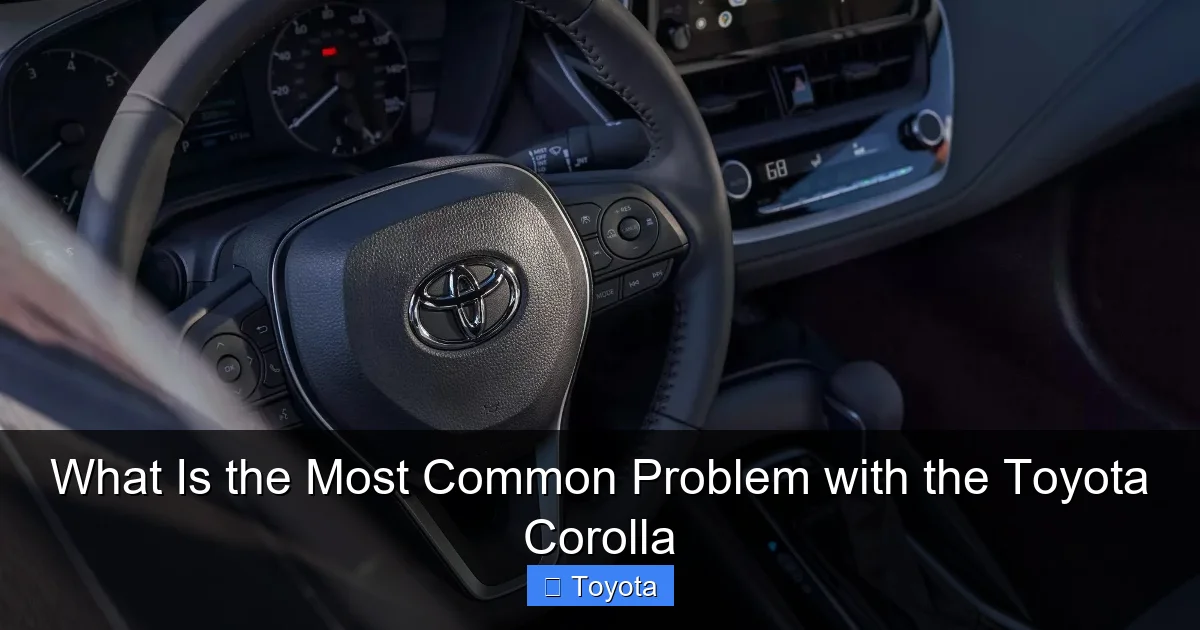
Visual guide about What Is the Most Common Problem with the Toyota Corolla
Image source: motorbiscuit.com
The Culprit: The 2ZR-FE 1.8-Liter Four-Cylinder
The heart of the matter is the 2ZR-FE engine. This 1.8-liter, 4-cylinder unit was the mainstay for the Corolla from the 2009 model year through the 2019 model year. However, the severity and frequency of the oil consumption defect are not uniform across this entire span. The highest concentration of failures comes from the 2014, 2015, 2016, 2017, 2018, and 2019 model years. These are the vehicles you will hear about most often in owner forums, complaint databases, and class-action lawsuit documents.
Models prior to 2014 (like the 2009-2013) certainly have reports, but they are statistically less common and often less severe. The critical change appears to be in manufacturing tolerances and piston ring design during this mid-2010s production run. The good news is that for the 2020 model year and beyond, Toyota introduced a complete redesign for the Corolla, including a new 2.0-liter M20A-FKS engine and a new 1.8-liter hybrid system. These newer engines have not exhibited the same widespread oil consumption crisis, making a used 2020+ Corolla a much safer bet from this specific perspective.
Practical Tip: If you own or are looking at a used Corolla, the very first thing to do is pop the hood and check the engine code. If it’s a 2ZR-FE and the model year is between 2014 and 2019, you must proceed with extreme caution and a disciplined oil monitoring routine.
The Mechanical “Why”: How Engines Burn Oil
To understand the fix, you must understand the failure. In a healthy engine, a precise system manages oil. Oil is pumped to lubricate the moving parts—the crankshaft, camshafts, pistons, and valves. The key component in preventing oil from entering the combustion chamber (where fuel and air burn) is the piston ring pack.
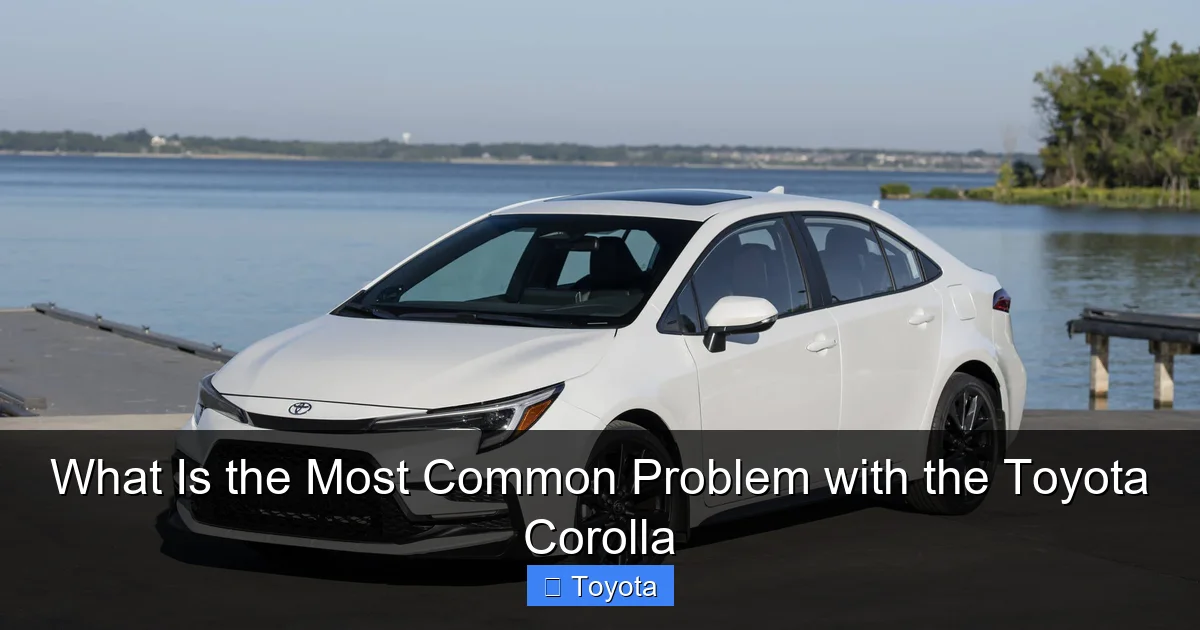
Visual guide about What Is the Most Common Problem with the Toyota Corolla
Image source: i.gaw.to
The Role of Piston Rings
Piston rings are thin, spring-loaded metal bands that sit in grooves on the piston. They have two primary jobs: 1) To create a seal between the piston and the cylinder wall, keeping combustion pressure in and ensuring power. 2) To scrape excess oil off the cylinder wall as the piston moves downward, preventing it from being sucked into the combustion chamber. The oil that is scraped off is returned to the oil pan via ring grooves.
How the 2ZR-FE Rings Fail
In the problematic 2ZR-FE engines, the piston rings—specifically the oil control rings—are believed to be the primary failure point. There are a few theories supported by technical service bulletins (TSBs) and mechanic anecdotes:
- Stuck or Improperly Seating Rings: The rings can become stuck in their grooves due to carbon buildup, manufacturing debris, or improper heat treatment. If they can’t move freely, they fail to maintain proper tension against the cylinder wall.
- Incorrect Ring Design or Tolerances: Some analyses suggest the ring gap (the small space where the ring ends meet) may be too large on some engines, or the ring tension is insufficient from the factory, allowing oil to pass through.
- Cylinder Wall Honing Issues: The cross-hatch pattern on the cylinder wall, created during manufacturing, is critical for holding a thin film of oil and allowing the rings to seat. If this pattern is too smooth or inconsistent, the rings cannot properly control the oil film.
When these rings fail in their job, a vacuum effect during the piston’s downstroke pulls engine oil from the crankcase up past the rings and into the combustion chamber. That oil then burns with the gasoline. The result is the oil level in your dipstick dropping at an alarming rate.
Symptoms You Should Never Ignore
The oil consumption problem is not a silent, gradual wear issue. It announces itself clearly if you are paying attention. Ignoring these symptoms is the fastest path to a destroyed engine.
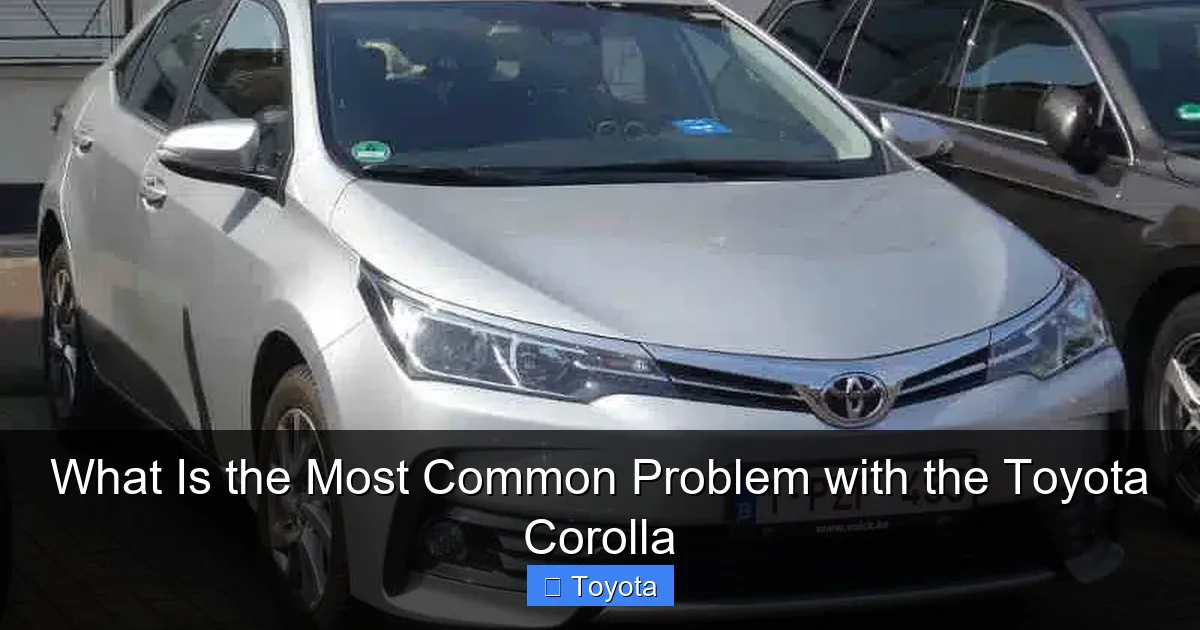
Visual guide about What Is the Most Common Problem with the Toyota Corolla
Image source: yourmotorguide.com
The Low Oil Warning Light
This is your car’s primary cry for help. The “low oil level” or “check oil” warning light should never come on between oil changes in a properly functioning engine. If it illuminates, you must stop the vehicle immediately (if safe), shut off the engine, and check the dipstick. In a severely affected Corolla, this light can come on as soon as 1,000-2,000 miles after an oil change.
Frequent “Add Oil” Between Changes
The most common and quantifiable symptom. A normal, healthy engine might use a quart of oil every 3,000-5,000 miles. A Corolla with this defect can burn a quart every 1,000 miles or even less. Owners report adding oil every month or with every tank of gas. If you find yourself buying oil as often as you buy gasoline, you have a serious problem.
Exhaust Smoke
Look for a persistent, light blueish or grayish smoke coming from the tailpipe, especially during acceleration or after the engine has been running for a while. This is burning oil vapor. A occasional tiny puff on a very cold start can be normal condensation, but continuous smoke is a definitive sign of internal oil consumption. White smoke is coolant (a different, also serious problem), and black smoke is a overly rich fuel mixture.
Spark Plug Fouling
When oil burns, it fouls the spark plugs. A mechanic performing a routine plug change might find plugs that are dark, oily, and saturated—a classic sign of an engine that is burning oil. This can also cause misfires, rough idling, and poor fuel economy.
Practical Example: Jane has a 2017 Corolla. She gets an oil change at 3,000 miles. By 4,200 miles, her low oil light comes on. She checks the dipstick and it’s a full quart low. She adds oil. The light goes off. This cycle repeats every 1,000-1,200 miles. This is not normal. This is the classic presentation of the 2ZR-FE consumption issue.
Diagnosis and Confirmation: Is It Really the Rings?
Before committing to a major repair, a proper diagnosis is essential. While the piston rings are the prime suspect, other issues like leaking valve seals, a faulty PCV (Positive Crankcase Ventilation) system, or even a malfunctioning oil level sensor can mimic the symptoms.
The Oil Consumption Test (The Standard Procedure)
This is the official, manufacturer-approved test to quantify the problem. Any reputable Toyota dealer or independent shop familiar with the issue will perform it. Here’s how it works:
- Full Service: The car is brought in, the oil is completely drained and refilled with the exact correct amount (usually 4.4 quarts for the 2ZR-FE) of the specified oil (0W-20). The dipstick is marked at the full line.
- Controlled Run: The car is driven for a specific distance—typically 1,000 to 1,500 miles—under varying conditions (city and highway). The driver must avoid aggressive acceleration.
- Measurement: After the mileage is accumulated, the oil is drained again and precisely measured. The amount of oil missing is compared to the miles driven.
The Industry Standard: A consumption rate of more than 1 quart per 1,000 miles (or 1 liter per 1,500 km) is generally considered excessive and qualifies for warranty consideration under many of Toyota’s extended policies for this issue. A rate of 1 quart per 3,000 miles is considered within normal limits for most modern engines.
Other Diagnostic Steps
A thorough mechanic will also:
- Perform a compression test and leak-down test. Low compression can indicate worn rings or cylinder walls.
- Inspect the spark plugs for oil fouling.
- Check the PCV valve for proper operation (a stuck-closed PCV can increase crankcase pressure and force oil past seals).
- Inspect for any external oil leaks that could be mistaken for consumption.
Internal Linking Note: For those interested in the broader diagnostic process at a dealership, understanding what is on the Toyota assessment test can provide insight into the computerized checks performed during such an evaluation. This test often includes monitoring engine parameters related to oil pressure and consumption.
Repair Options: From Warranty to Major Surgery
Once a excessive oil consumption diagnosis is confirmed, the repair path depends heavily on your vehicle’s warranty status, its specific VIN, and the severity of the wear. The repair almost always involves the engine’s bottom end.
The “Best Case” Scenario: The Piston Ring Replacement
This is the targeted, correct fix for the root cause. The engine is removed from the car (or sometimes worked on in the bay, though removal is cleaner). The cylinder heads are removed, the pistons are pulled from the connecting rods, and the old, faulty piston rings are replaced with a new, updated set. The cylinder walls are also typically inspected and often deglazed (lightly scoured with a flexible hone) to provide a fresh, proper surface for the new rings to seat against. This is a major, labor-intensive job. It can cost anywhere from $2,500 to $4,000+ at an independent shop, and significantly more at a dealership. However, it effectively rebuilds the core of the engine and, if done correctly, restores it to like-new oil consumption characteristics.
The “Worst Case” Scenario: Engine Replacement or Rebuild
If the oil consumption has been ignored for too long, the damage spreads. Low oil leads to excessive wear on the crankshaft bearings, camshaft bearings, and cylinder walls themselves. At this point, simply replacing the rings is like putting new tires on a car with a bent frame—it won’t solve the core problem. The only options are:
- A Short Block Replacement: The lower half of the engine (block, crankshaft, rods, pistons with new rings) is replaced with a new or remanufactured unit. The cylinder heads are reused if they are in good condition.
- A Long Block/Full Engine Replacement: The entire engine assembly is replaced.
- A Complete Engine Rebuild: The existing engine is completely disassembled, all worn parts are machined or replaced, and it is reassembled to factory specs.
These are catastrophic, expensive repairs, often costing $6,000 to $10,000 or more. They are the direct result of ignoring the early symptoms.
The Warranty and Goodwill Path
Because this is a known, widespread defect, Toyota has historically extended the warranty coverage for the piston rings and related components on affected models. The specific coverage period (e.g., 10 years/150,000 miles from original in-service date) and exact model year/VIN eligibility have changed over time through various campaigns and settlements. It is absolutely critical to contact a Toyota dealer with your VIN to see if your car is still covered under an extended warranty program for this issue. If it is, the repair could be done at little or no cost to you. Even if your specific VIN is outside the formal program, a dealer service manager may still approve a “goodwill” repair based on your service history and loyalty. Always ask politely but firmly.
Prevention and Ownership Strategies for Current Owners
If you own an at-risk Corolla, you are not powerless. Your engine’s fate is largely in your hands based on how you respond to the first signs of trouble.
Become One with Your Dipstick
This is non-negotiable. Check your oil level every 1,000 miles, without fail. Do it on a cold, level surface, after the engine has been off for at least 5-10 minutes. Make it a habit as routine as filling your gas tank. Document the level. If you see it dropping more than 1 quart between 3,000-mile oil changes, you have a developing problem. Catching it at a 1-quart-per-2,000-mile rate is far better than waiting until it’s a quart-per-500-mile rate that destroys the engine in months.
Use the Correct Oil and High-Quality Filters
Strictly use the oil viscosity specified in your owner’s manual—almost certainly 0W-20 synthetic for these models. Modern low-viscosity oils are designed to flow quickly and protect engines, but using the wrong weight can exacerbate consumption issues. Also, don’t cheap out on oil filters. A poor-quality filter can allow debris into the engine or have poor check valve design, affecting oil pressure. Stick with OEM (Toyota) or high-end brands like Mobil 1, Wix, or Bosch.
Driving Habits Matter
While not a cure, gentle driving during the engine’s break-in period (first few thousand miles) and overall can help piston rings seat properly. Conversely, consistent high-RPM driving, especially when the engine is cold, can prevent proper ring seating and accelerate wear. Let your engine warm up for 30-60 seconds before driving, and avoid lugging it (driving at high load in a high gear at low RPM).
The “Hold Button” and Engine Braking
Some owners of automatic Corollas wonder about the function of the “HOLD” button. This feature locks the transmission in a lower gear for engine braking on descents. While using it correctly is fine, be aware that frequent, aggressive use of engine braking (like in mountainous terrain) can increase crankcase pressure and potentially worsen oil consumption issues in an already vulnerable engine. It’s not a primary cause, but a factor to be mindful of. Understanding what is the hold button on a Toyota Corolla helps you use it as intended without unnecessary stress on the engine’s ventilation system.
The Bigger Picture: Is the Corolla Still a Good Buy?
Given this notorious problem, is a used 2014-2019 Toyota Corolla still a recommendable car? The answer is: it depends entirely on the specific vehicle’s history and your due diligence.
The Corolla’s strengths—excellent fuel economy, comfortable ride, low cost of ownership for non-engine items (brakes, tires, suspension), and strong safety ratings—remain intact. For a buyer who is mechanically inclined and willing to monitor oil religiously, a well-maintained, non-consuming example can still be a fantastic, economical vehicle. The key is pre-purchase inspection.
Never buy a used Corolla from this era without having it inspected by a trusted, independent mechanic specifically for oil consumption. This means a full inspection and an oil consumption test if the current level is low. Check for a service history showing consistent oil changes. Ask the seller directly: “How often do you have to add oil?” A truthful answer of “never” or “only at changes” is good. An evasive answer or admission of frequent top-ups is a major red flag. Also, verify the VIN with a dealer for any outstanding recalls or warranty extensions related to the oil consumption issue. A car with a documented repair under the warranty program is a much safer bet than one with an unknown history.
Final Consideration: For a buyer seeking absolute peace of mind with no mechanical monitoring, stretching the budget slightly for a 2020+ model or a certified pre-owned Corolla from a later model year is the wisest choice, as it avoids this entire engine family’s known flaw.
Conclusion: Knowledge is the Best Defense
The Toyota Corolla’s reputation for reliability is not a myth; it is built on decades of engineering excellence. However, for a specific and large cohort of owners, that reputation has been tarnished by the expensive, frustrating reality of excessive oil consumption in the 2ZR-FE engine. This problem is not a minor annoyance; it is a direct threat to the engine’s longevity. The path from a simple “add oil” reminder to a catastrophic engine failure can be surprisingly short.
The message for owners is clear and urgent: monitor your oil level with extreme vigilance. For prospective buyers, the message is one of scrutiny: inspect thoroughly before you buy. Armed with the knowledge of which models are affected, what the symptoms look like, and what the repair entails, you can make an informed decision. You can either protect your existing investment or avoid a financial pitfall in your next used car purchase. The Corolla can still be the dependable friend it has always been, but for a certain era, you must be a more watchful companion than the brand’s reputation might suggest. Ignoring this one common problem is the only mistake that turns a Corolla from a smart choice into a very expensive one.
Frequently Asked Questions
What exactly is “excessive oil consumption” in a Corolla?
It’s when the engine burns oil at a rate far beyond normal—typically more than 1 quart every 1,000 miles. This is usually caused by faulty piston rings that allow oil to enter the combustion chamber and burn with the fuel.
Which Toyota Corolla years have the worst oil consumption problem?
The most affected are model years 2014 through 2019 with the 1.8L 2ZR-FE engine. Earlier (2009-2013) and later (2020+) models have far fewer reports of this specific severe issue.
Can I still drive my Corolla if it’s burning oil?
You can drive it only if you are constantly monitoring and adding oil to keep it between the MIN and MAX marks on the dipstick. Driving with low oil will cause rapid and irreversible engine wear, leading to complete failure. It is a temporary, high-risk measure, not a solution.
How much does it cost to fix the oil consumption problem?
If under warranty, it may be free. Out of warranty, a proper piston ring replacement job costs $2,500-$4,000+. If damage has occurred, a full engine replacement can exceed $6,000. The cost underscores the need for early detection.
Is there a recall or extended warranty for this problem?
Toyota has issued multiple Customer Support Programs and extended warranties for the piston rings on specific 2014-2019 Corollas. Coverage varies by model year and VIN. You must contact a Toyota dealer with your VIN to determine if your vehicle is eligible for a free or covered repair.
What should I do if I think my Corolla has this problem?
First, immediately start checking your oil level every 1,000 miles. Second, schedule an official oil consumption test with a Toyota dealer or a reputable independent mechanic. Get a written diagnosis. Then, check your warranty status with a dealer and get a repair quote. Do not delay, as driving with low oil will make the repair astronomically more expensive.