What Is the Maintenance Schedule for a 2018 Toyota Highlander

Contents
- 1 Key Takeaways
- 2 📑 Table of Contents
- 3 Decoding the Maintenance Intervals: Normal vs. Severe
- 4 Fluid and Filter Maintenance: The Lifeblood of Your Highlander
- 5 Tire and Brake System Care: Your Connection to the Road
- 6 Additional Maintenance Items to Consider
- 7 Professional Maintenance vs. DIY: What’s Best for You?
- 8 Frequently Asked Questions

Car Shampoo Concentrate

Brake Cleaner Spray

Digital Tire Pressure Gauge

Car Vacuum Cleaner (Portable)
Following the maintenance schedule for your 2018 Toyota Highlander is non-negotiable for ensuring its legendary reliability, performance, and resale value. The schedule is split into “Normal” and “Severe” driving intervals, with key services like oil changes, tire rotations, and fluid checks occurring every 5,000 to 30,000 miles. While many tasks are DIY-friendly, critical services should be handled by professionals to protect your investment and maintain warranty coverage.
Hey there, fellow Highlander owner! Welcome. If you’re reading this, you’re likely one of the many smart folks who chose the 2018 Toyota Highlander. You picked a fantastic SUV known for its spacious interior, smooth ride, and, most importantly, its rock-solid reliability. But that reputation isn’t just a happy accident—it’s built on a foundation of consistent, proper maintenance. Think of this guide as your friendly, no-nonsense roadmap to keeping your 2018 Highlander running like it just rolled off the lot. We’re going to decode the factory maintenance schedule, break down what each service really means, and give you the confidence to know exactly what your SUV needs and when. Sticking to this schedule for a 2018 Toyota Highlander is the single best thing you can do to protect your investment, avoid costly repairs, and enjoy worry-free adventures for years to come.
Now, before we dive into the mile-by-mile details, let’s clear up the most common point of confusion: the “Normal” vs. “Severe” driving schedule. Toyota knows not all driving is created equal. Cruising on a highway is easy on a car. But the reality for most of us—school runs, grocery trips, sitting in traffic, or driving in winter’s grit—is what Toyota calls “Severe” conditions. This includes frequent short trips (under 5 miles in cold weather), extensive idling, driving in dusty or sandy areas, towing, or using your Highlander in extremely hot or cold climates. The harsh truth? If your daily drive involves a lot of stop-and-go or you live in a place with harsh winters, you’re almost certainly on the Severe schedule. This schedule shortens the intervals for critical items like engine oil and filters. We’ll point out both schedules, but we strongly recommend using the Severe schedule as your default. It’s the safer, more protective approach for your engine and components.
Key Takeaways
- The schedule is based on mileage and time, not just one or the other. Services are due at specific mileage intervals (e.g., 5k, 10k, 15k) or every 6-12 months, whichever comes first.
- “Normal” vs. “Severe” driving drastically changes your service intervals. Most drivers actually fall into the “Severe” category due to short trips, stop-and-go traffic, or extreme temperatures.
- Oil changes are the cornerstone, required every 5,000-10,000 miles. Using the correct 0W-20 synthetic oil and Toyota-approved filters is critical for your V6 or 4-cylinder engine.
- Tire rotation and pressure checks are your simplest, most impactful DIY tasks. Rotate every 5,000 miles and check pressure monthly to ensure even wear, safety, and fuel efficiency.
- The Maintenance Required light is a helpful reminder, not a warning. It illuminates based on your driving schedule and can be reset after service is completed, a process detailed in our guide.
- Adherence preserves your warranty and resale value. A complete, dealer-verified service history is a major selling point and is often required for warranty claims on powertrain components.
- Not all maintenance is equal. While you can handle wiper blades and air filters, tasks like brake fluid flushes or transmission service should be left to certified technicians.
📑 Table of Contents
Decoding the Maintenance Intervals: Normal vs. Severe
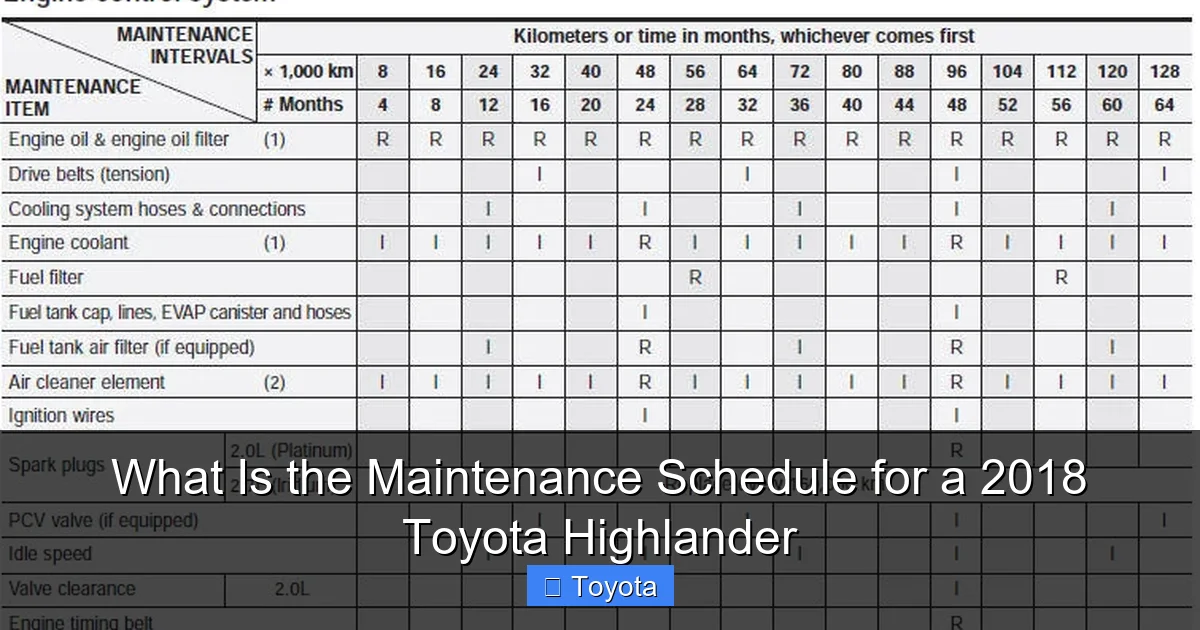
Grab your owner’s manual—it’s your ultimate source of truth. But we’ve done the heavy lifting and pulled out the key intervals for your 2018 Highlander’s 3.5L V6 or 2.0L 4-cylinder engine. Below is a breakdown of the core maintenance items. Remember, services are due at the mileage listed OR every 6/12 months, whichever comes first. A car sitting unused still needs fluid checks and tire inspections.
The 5,000-Mile / 6-Month Mark (Severe Schedule)
This is your first and most frequent major service checkpoint, applicable to almost every driver. At this interval, you’re primarily looking at:
- Engine Oil & Filter Change: This is job one. The 2018 Highlander requires 0W-20 full synthetic oil. Using anything else can harm your engine and void warranty coverage. The Severe schedule calls for this change every 5,000 miles or 6 months. Don’t skip it! Clean oil is the lifeblood of your engine, reducing friction, cooling components, and preventing sludge.
- Tire Rotation: Rotating your tires (moving them to different wheels) promotes even tread wear. On the Highlander, this is crucial because the front tires bear the brunt of steering and braking. Uneven wear leads to poor handling, noise, and premature replacement. Do this every 5,000 miles—often at the same time as your oil change.
- Multi-Point Inspection: A good technician (or you, if you’re DIY-inclined) should check fluid levels (coolant, brake, power steering, washer), belts, hoses, battery terminals, and all exterior lights. Catching a fraying belt or low coolant now prevents a breakdown later.
The 10,000-Mile / 12-Month Mark
At 10k miles (on the Normal schedule; Severe drivers do this at 5k), you repeat the oil change and tire rotation. Additionally, you’ll address:
- Cabin Air Filter Replacement: This filter cleans the air entering your HVAC system. A clogged filter reduces airflow, strains your blower motor, and lets pollen/dust into the cabin. It’s an easy, inexpensive DIY job located behind the glovebox. Check it annually, replace every 15k-30k miles depending on your environment.
- Engine Air Filter Inspection: This filter protects your engine from dust and debris. A dirty filter chokes your engine, reducing power and fuel economy. It’s usually located in the air intake box and is also a simple DIY check/replacement every 15k-30k miles.
The 15,000-Mile / 18-Month and 20,000-Mile / 24-Month Services
These intervals build on the previous ones and introduce more critical, time-sensitive items:
- Brake Fluid Check/Flush: Brake fluid is hygroscopic, meaning it absorbs moisture from the air over time. Water in your brake system lowers boiling points, which can lead to brake failure under hard use. Toyota recommends inspecting it at 15k miles and flushing it every 30k miles. This is a professional service—do not attempt it yourself without proper knowledge and equipment.
- Inspect All Hoses and Belts: Look for cracks, fraying, or leaks. The serpentine belt, in particular, drives multiple engine accessories. A failure can leave you stranded.
- Coolant/Antifreeze Check: Engine coolant does more than prevent freezing; it raises the boiling point and prevents corrosion. Levels should be checked at every oil change. A full system flush is typically recommended every 100,000 miles, but levels must be monitored constantly.
- Spark Plug Inspection/Replacement: Your Highlander’s V6 uses platinum spark plugs rated for 120,000 miles. The 4-cylinder may have different ratings. At the 20k/24-month mark, a visual inspection is prudent, but replacement likely isn’t needed yet.
The 30,000-Mile / 36-Month Major Service
This is a significant milestone. In addition to all the above, you’re looking at:
- Transmission Fluid Inspection: For the 6-speed automatic in most 2018 Highlanders, Toyota states the fluid is “lifetime” under Normal conditions. However, under Severe conditions, many independent shops and experts recommend a fluid and filter change around 60,000-100,000 miles as a preventative measure. At 30k, your dealer will inspect its condition and level. Knowing this debate helps you plan long-term.
- Fuel System Inspection: Includes checking the fuel cap seal, lines, and injectors.
- Steering Linkage & Boots: Inspect for wear, damage, and leaks.
- Differential Fluid (AWD Models):strong> If your Highlander has All-Wheel Drive, the rear differential fluid should be inspected and potentially changed around 60k miles. It’s not on the 30k list but is a key long-term item to note.
The 60,000-Mile / 72-Month and Beyond
As your Highlander ages, services become more comprehensive:
- Repeat All 30k Services.
- Replace Spark Plugs (if not done).
- Inspect/Replace Timing Belt (if applicable). Crucial: The 2018 Highlander’s 3.5L V6 uses a timing chain, which is generally considered “lifetime” but still requires inspection for wear and tension. The 2.0L 4-cylinder also uses a chain. This is a major advantage over older belt-driven engines that require costly replacement every 60k-100k miles.
- Consider Cooling System Service: Replace coolant/antifreeze if it hasn’t been done (often recommended at 100k miles).
- Brake System Overhaul: At this mileage, a full brake inspection is vital. Pads, rotors, calipers, and hardware will likely need attention. Brake fluid should have been flushed at least once by now.
This pattern continues, with major services at 90k and 120k miles, revisiting all these systems. The key is consistency.
Fluid and Filter Maintenance: The Lifeblood of Your Highlander
Let’s zoom in on the fluids and filters that keep your 2018 Highlander’s complex systems clean, cool, and lubricated. Neglecting these is a fast track to expensive repairs.
Engine Oil & Filter: The #1 Priority
We can’t say this enough. Use only Toyota Genuine Motor Oil or a high-quality full synthetic 0W-20 that meets Toyota’s specifications (look for the ILSAC GF-6 badge). The “0W” part means it flows like a thin oil in cold starts (the “W” stands for winter), protecting your engine immediately. The “20” is its viscosity at operating temperature. Using 5W-20 or a non-synthetic oil is a bad idea. Pair it with a genuine Toyota or high-quality aftermarket filter (like Mobil 1, Wix, or K&N). The filter traps metal shavings and contaminants. A cheap filter can restrict flow or allow junk into your engine. When you get your oil changed, ask to see the old filter—it’s a great visual lesson in why this service matters. If you’re a DIYer, investing in a good oil drain pan and a socket for the oil filter is worth it. Always dispose of used oil and filters properly at a designated recycling center.
Engine Air Filter vs. Cabin Air Filter: Don’t Confuse Them!
This is a common mix-up. The Engine Air Filter is your engine’s lung protector. It’s in a black plastic box under the hood. A dirty one strangles your engine, hurting acceleration and fuel economy. Inspect it every 15k miles; replace if it’s clogged with dirt or debris. It’s usually a simple snap-out job. The Cabin Air Filter is your personal lung protector. It filters pollen, dust, and pollutants from the air you breathe inside the car. Located behind the glovebox (you may need to remove a panel), a musty smell from your vents is a classic sign it’s overdue. Replacing it is an easy, inexpensive DIY task that dramatically improves air quality, especially for allergy sufferers. Some Highlanders may also have a rear cabin filter—check your manual. For those interested in maximizing their Highlander’s utility, exploring roof rack options can open up a world of cargo possibilities for family trips and adventures.
Coolant/Antifreeze: More Than Just Anti-Freeze
Your Highlander’s coolant (usually a distinctive pink or red Toyota Super Long Life Coolant) does three jobs: prevents freezing, prevents boiling over, and fights rust/corrosion inside the engine and radiator. Never just add water or a different-colored coolant. Mixing types can create sludge and cause severe overheating issues. Check the level in the translucent overflow reservoir monthly when the engine is cold. It should sit between the “Low” and “Full” lines. If it’s consistently low, you have a leak—get it diagnosed immediately. A full system flush, where old coolant is completely replaced, is typically recommended at 100,000 miles or 10 years, but inspect the condition (it should be clear, not rusty or brown) at every major service.
Brake Fluid: The Silent Safety Item
Brake fluid is hydraulic fluid. When you press the pedal, this fluid transfers force to the brake calipers, squeezing the pads against the rotors. As mentioned, it absorbs moisture. Water in the system lowers the boiling point, meaning under hard braking (like descending a mountain road), the fluid can vaporize, creating bubbles that lead to a spongy or completely failed brake pedal—a terrifying and dangerous situation. This is why a brake fluid flush every 30,000 miles is non-negotiable on the Severe schedule. It’s a two-person job (one to pump the pedal, one to bleed the lines) and best left to professionals to ensure no air enters the system.
Tire and Brake System Care: Your Connection to the Road
Your tires and brakes are your most critical safety systems. Proper maintenance here is not optional.
Tire Rotation, Pressure, and Tread Depth
Rotate your tires every 5,000 miles. On front-wheel-drive based vehicles like the Highlander (FWD models), front tires wear faster on the edges due to steering. A proper rotation (typically a front-to-back “X” pattern) evens out wear. If you have a tire pressure monitoring system (TPMS), the light will illuminate if pressure drops 25% below the recommended level. Check pressures monthly with a handheld gauge when tires are cold. The correct pressure is on a sticker inside the driver’s door jamb—not on the tire sidewall. That number is the max pressure. Under-inflated tires wear unevenly on the edges, hurt fuel economy, and can overheat. Over-inflated tires wear prematurely in the center and provide a harsh ride. While you’re checking, look for tread depth. Use the “penny test”: insert a penny into the tread with Lincoln’s head upside down. If you can see all of Lincoln’s head, it’s time for new tires. Also, inspect for uneven wear patterns, which can indicate alignment issues.
Brake Pads, Rotors, and Fluid
Brakes are a wear item. Your 2018 Highlander will have disc brakes on all four corners. The pads are the friction material that squeezes the rotor (the metal disc). Pads have a wear indicator—a small metal tab that makes a high-pitched squeal when the pad is almost gone. If you hear this, replace the pads immediately to avoid grinding metal-on-metal, which destroys the rotors. Rotors can be resurfaced (“turned”) if they have enough thickness left, but on newer vehicles, replacement is often more cost-effective. Have your pads and rotors inspected at every oil change. As covered, brake fluid must be flushed periodically. Also, be aware of the Snow Button on your Highlander. While it doesn’t directly affect brake wear, engaging it for winter driving changes throttle response and can subtly alter how you use your brakes on slippery surfaces, making their condition even more critical for safety.
Additional Maintenance Items to Consider
Beyond oils and tires, several other systems need attention to keep your Highlander performing optimally.
Spark Plugs and Ignition
The 2018 Highlander’s V6 uses platinum spark plugs with a 120,000-mile service interval. The 4-cylinder may have a different rating. Worn plugs cause misfires, rough idling, poor fuel economy, and failed emissions tests. While they last a long time, have them inspected at 90k-100k miles. Replacement is straightforward for a DIYer with basic tools, but ensure you use the correct heat range and gap (usually pre-gapped).
Transmission Fluid: The Lifetime Debate
This is a big point of discussion. Toyota’s official stance for the 6-speed automatic in most 2018 Highlanders is that the fluid is “lifetime” under Normal driving. “Lifetime” means the life of the vehicle, in their view. However, many transmission experts and mechanics strongly disagree. Transmission fluid degrades—it loses its ability to lubricate and cool under high heat and shear stress. For drivers on the Severe schedule, those who tow, or those who want maximum longevity, a fluid and filter change every 60,000-80,000 miles is highly recommended preventative maintenance. It’s far cheaper than a transmission rebuild. Discuss this with your trusted mechanic and make an informed decision. If you’re considering using your Highlander for towing, understanding its towing capacity and the demands it places on the transmission is essential.
Power Steering Fluid (If Applicable)
Most 2018 Highlanders have electric power steering (EPS), which means no traditional power steering fluid to check or change. However, if you have a specific model that uses hydraulic steering (less common for this year), the fluid level should be checked at every service. A whining noise when turning can indicate low fluid or a failing pump.
Professional Maintenance vs. DIY: What’s Best for You?
This is a personal decision based on your skill, tools, time, and comfort. Let’s break it down.
DIY-Friendly Tasks (Save Money & Learn)
These are excellent starting points for the home mechanic:
- Oil & Filter Change: Requires basic wrenches, a drain pan, jack stands (or ramps), and disposal plan. Saves significant money over time.
- Tire Rotation: Requires a lug wrench and jack. Simple, but safety is paramount—use jack stands!
- Cabin Air Filter Replacement: Often a 10-minute job with a screwdriver. One of the easiest wins.
- Engine Air Filter Replacement: Usually just clamps or clips on the airbox.
- Wiper Blades: Simple clip-on replacements.
- Light Bulbs: Some are easy, others (like headlights) can be tricky. Check forums for your specific model.
Professional-Only Tasks (Protect Your Investment)
These require specialized knowledge, tools, or involve critical safety systems. Paying for professional service here is money well spent:
- Brake Fluid Flush: Requires a specific procedure and bleeding tools to remove all air.
- Coolant System Flush: Needs a machine to fully exchange old fluid.
- Transmission Fluid Service: Requires precise procedures and often a scan tool to monitor temperatures. Incorrect filling can destroy the transmission.
- Major Timing Chain/Belt Service: If ever needed, this is an engine-out job for many vehicles. Not a weekend project.
- Suspension/Steering Component Replacement: Requires alignment after work.
- Any Check Engine Light Diagnosis: A professional scan tool is needed to read codes and monitor live data.
The Dealer vs. Independent Shop Decision
Dealers have the latest Toyota technical bulletins, factory-trained technicians, and genuine Toyota parts. They are the safest bet for warranty-related work and complex electronic issues. Independent shops are often more affordable for routine services like oil changes and brake jobs and can offer a more personal relationship. For a 2018 Highlander, both can be excellent choices. Just ensure any shop is certified (ASE technicians) and uses quality parts (OEM or reputable aftermarket like Denso, NGK, etc.). Keep all receipts! A complete, dated service history is your best proof of maintenance when you sell the Highlander. It directly impacts your vehicle’s value, much like knowing the invoice price helps when buying new.
Frequently Asked Questions
How often should I change the oil in my 2018 Toyota Highlander?
Under Toyota’s “Severe” driving schedule—which applies to most drivers—change the engine oil and filter every 5,000 miles or 6 months. If your driving is exclusively highway miles in mild climates, you may follow the “Normal” 10,000-mile/12-month interval, but the 5,000-mile rule is the safest practice for engine longevity.
When should I rotate the tires on my 2018 Highlander?
Rotate your tires every 5,000 miles to promote even tread wear. This is especially important for the Highlander’s front-wheel-drive-based layout, where the front tires wear faster due to steering and braking forces. It’s best done at the same time as your oil change.
How do I reset the Maintenance Required light on my 2018 Toyota Highlander?
The light illuminates based on your driving schedule to remind you of service. After completing the required maintenance (like an oil change), you can reset it. The procedure typically involves turning the ignition on, using the odometer/trip meter button to navigate to the settings menu, and holding the button to confirm the reset. For the exact, step-by-step process, please see our dedicated guide on how to reset the maintenance light on a Toyota Highlander.
What is the difference between “Normal” and “Severe” driving for my Highlander’s maintenance schedule?
“Normal” driving is defined as mostly highway driving at consistent speeds in moderate temperatures. “Severe” driving includes frequent short trips, stop-and-go traffic, extreme temperatures (hot or cold), dusty/sandy roads, towing, or extensive idling. The vast majority of drivers fall into the Severe category, which requires more frequent oil changes and inspections (e.g., every 5,000 miles vs. 10,000). When in doubt, use the Severe schedule.
Do I really need to change the brake fluid on my 2018 Highlander?
Yes, absolutely. Brake fluid absorbs moisture over time, which lowers its boiling point. This can cause brake fade or failure under hard braking. Toyota recommends inspecting it at 15,000 miles and performing a full flush every 30,000 miles under the Severe driving schedule. This is a critical safety item that should be handled by a professional.
How often should the cabin air filter be replaced in my 2018 Highlander?
Inspect the cabin air filter annually and replace it every 15,000 to 30,000 miles, depending on your environment. If you drive in areas with high pollen, dust, or pollution, or if you notice reduced airflow from your vents or a musty smell, replace it sooner. This is one of the easiest and most impactful DIY maintenance tasks you can perform.