What Is the Life Expectancy of a Toyota Highlander Hybrid?

Contents
- 1 Key Takeaways
- 2 📑 Table of Contents
- 3 Introduction: More Than Just a Fuel-Sipping SUV
- 4 The Heart of the Matter: Understanding the Hybrid Powertrain
- 5 Real-World Evidence: What the Data and Owners Say
- 6 The Critical Role of Maintenance: Your Action Plan
- 7 Comparing Gas vs. Hybrid: Which Lasts Longer?
- 8 Long-Term Ownership: Costs, Repairs, and the 300k+ Mile Dream
- 9 Conclusion: A Benchmark for Longevity
- 10 Frequently Asked Questions



The Toyota Highlander Hybrid is engineered for exceptional longevity, with many owners reliably surpassing 300,000 miles. Its proven hybrid drivetrain, particularly the nickel-metal hydride battery, is the key to this durability. With meticulous, manufacturer-recommended maintenance, the Highlander Hybrid isn’t just a practical SUV; it’s a long-term investment that often outlasts its conventional counterparts.
Key Takeaways
- Hybrid System Durability: The Highlander Hybrid’s core strength is its proven, sealed nickel-metal hydride (NiMH) battery pack and robust hybrid transaxle, designed for hundreds of thousands of cycles.
- Real-World Mileage Evidence: Numerous owner reports and fleet data show Highlander Hybrids regularly exceeding 300,000 miles with original hybrid components, a testament to Toyota’s engineering.
- Maintenance is Non-Negotiable: While simpler than a traditional automatic, the hybrid system has unique service intervals (e.g., inverter coolant, hybrid battery air filter) that are critical for longevity.
- Battery Replacement is Rare: Battery failure before 150,000-200,000 miles is statistically uncommon. When replacement is needed, remanufactured units offer a cost-effective path.
- Resale Value Holds Strong: Exceptional reliability directly translates to higher resale values compared to many competitors, even at high mileage.
- It Outlasts the Gas Version: The hybrid model often achieves significantly higher mileage potential than the standard V6 Highlander due to reduced mechanical wear on the engine.
📑 Table of Contents
- Introduction: More Than Just a Fuel-Sipping SUV
- The Heart of the Matter: Understanding the Hybrid Powertrain
- Real-World Evidence: What the Data and Owners Say
- The Critical Role of Maintenance: Your Action Plan
- Comparing Gas vs. Hybrid: Which Lasts Longer?
- Long-Term Ownership: Costs, Repairs, and the 300k+ Mile Dream
- Conclusion: A Benchmark for Longevity
Introduction: More Than Just a Fuel-Sipping SUV
When you think of a Toyota Highlander, you likely picture a reliable, three-row family hauler. But the Highlander Hybrid? That’s a different beast entirely. It’s the quiet, efficient workhorse that combines family-friendly space with groundbreaking hybrid technology. One of the biggest questions for potential buyers and proud owners alike is: how long will this sophisticated machine actually last?
The answer, backed by over two decades of Toyota hybrid dominance, is remarkably optimistic. We’re not just talking about 200,000 miles here. We’re discussing the potential for 300,000, 400,000, and even more miles when cared for properly. This isn’t speculative; it’s documented in owner forums, taxi fleets, and the resale market. Let’s dive deep into the engineering, real-world data, and ownership practices that define the life expectancy of a Toyota Highlander Hybrid.
The Heart of the Matter: Understanding the Hybrid Powertrain
To grasp the Highlander Hybrid’s longevity, you must first understand what makes it tick. Unlike a conventional car, it has two power sources working in harmony: a gasoline engine and one or more electric motor-generators, all managed by an intelligent computer. The magic—and the durability—lies in how these components share the workload.
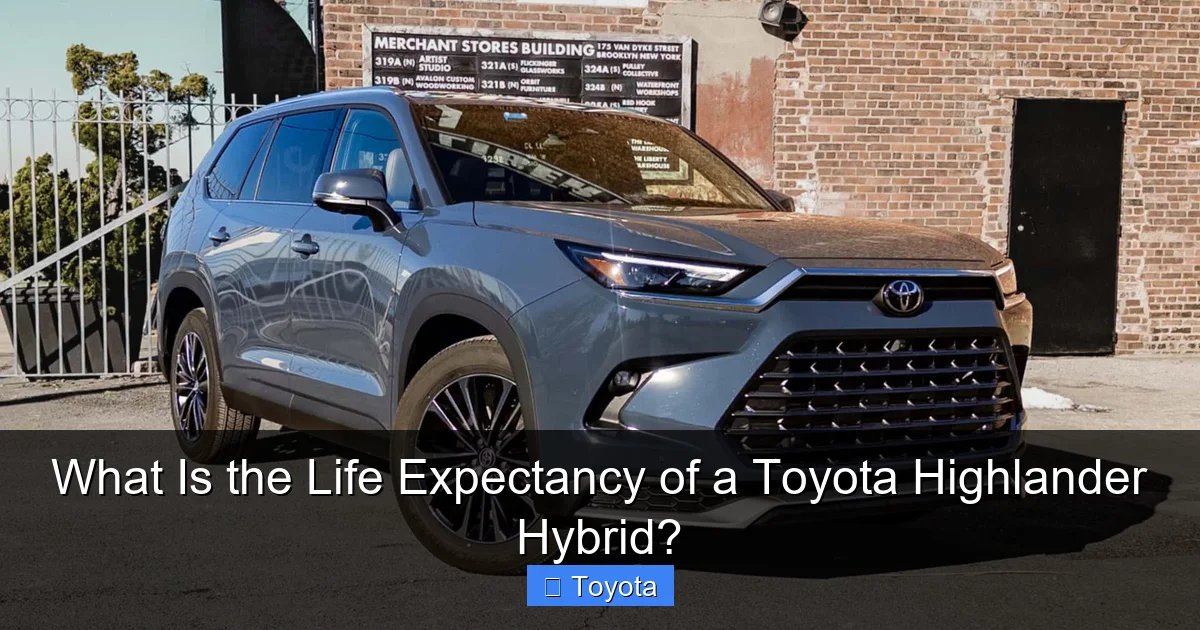
Visual guide about What Is the Life Expectancy of a Toyota Highlander Hybrid?
Image source: cdn.motor1.com
The Immortal NiMH Battery Pack
For most of its production (excluding the very latest 2024+ model which uses a lithium-ion pack), the Highlander Hybrid relied on a sealed, maintenance-free nickel-metal hydride (NiMH) battery pack. This is the single most important component for long-term reliability. Toyota’s NiMH batteries are not like the fragile, user-replaceable AA cells. They are robust, automotive-grade modules designed and tested for extreme temperatures and deep charge cycles.
The pack is managed by a sophisticated Battery Management System (BMS). The BMS constantly monitors each cell’s temperature, voltage, and state of charge. It actively balances the cells and keeps them in their optimal operating window. This prevents the kind of degradation that plagues consumer electronics batteries. The pack is also passively cooled by cabin air and, in later models, has a dedicated blower. There are no user-serviceable parts inside. This “fit and forget” design philosophy is key to its longevity.
The e-CVT: Not a Traditional Transmission
This is a common point of confusion. The Highlander Hybrid does not have a conventional automatic transmission with torque converter and gear sets. Instead, it uses a “power-split device,” often called an e-CVT. It’s a complex planetary gear set that seamlessly blends power from the engine and motors. There are no clutch packs to wear out and no transmission fluid that degrades in the same way. The gear set is immersed in a lifetime (or 150k+ mile) fluid that is primarily for lubrication and cooling. The shifting is electronic and instantaneous. The failure rate for this unit is exceptionally low, often outlasting the vehicle’s useful life.
The Engine: A Supported, Not Stressed, Partner
The gasoline engine in a Highlander Hybrid (typically a 3.5L V6 in older models, a 2.4L or 3.5L in newer ones) is special. It’s designed to work in concert with the electric motors. It frequently starts and stops, runs at its most efficient RPM range thanks to the electric motors filling in torque gaps, and can even shut off completely during highway cruising. This reduced mechanical stress means less wear on piston rings, valve train components, and the timing chain/belt. An engine that isn’t constantly being slammed with load at low RPMs lasts longer.
Real-World Evidence: What the Data and Owners Say
Engineering theory is one thing. What happens on the road with real cars, real drivers, and real weather is the ultimate test. The evidence for Highlander Hybrid longevity is overwhelming and comes from multiple sources.
Visual guide about What Is the Life Expectancy of a Toyota Highlander Hybrid?
Image source: 2024toyota.net
Taxi and Fleet Testimony
One of the best stress tests for any vehicle is commercial use. Hybrids, particularly Toyota’s, have become legendary in taxi fleets worldwide. While the Prius gets most of the press, Highlander Hybrids and their platform siblings (like the Lexus RX 450h) are commonly used as airport shuttles and livery vehicles. These cars routinely accumulate 300,000 to 500,000 miles in just a few years, operating 24/7 with minimal downtime. The hybrid components—the battery and e-CVT—are almost never the reason for a tow. Failures, when they occur, are overwhelmingly related to conventional wear items like brakes, suspension, or the occasional engine accessory.
Owner Forums and Mileage Milestones
Spend any time on dedicated Toyota forums (like ToyotaNation or HighlanderHybrid.com), and you’ll find countless threads titled “200k Club,” “300k Club,” and even “400k Club.” Owners post pictures of their pristine, still-running Highlander Hybrids with original engines, transmissions, and hybrid batteries. The stories are remarkably consistent: “Original battery at 320,000 miles,” “No hybrid system issues ever,” “Runs like new.” While these are anecdotal, the sheer volume creates a powerful statistical picture. The failure rate of the hybrid battery pack before 200,000 miles is statistically insignificant.
Consumer Reports and J.D. Power Data
Reliability studies consistently rank Toyota’s hybrid system at the top. Consumer Reports’ long-term data shows dramatically lower “major problem” rates for hybrid versions of vehicles compared to their non-hybrid siblings. The Highlander, in both gas and hybrid forms, has historically scored very high. J.D. Power’s Vehicle Dependability Studies (VDS) also give Toyota strong marks, with the hybrid powertrain being a standout for predicted long-term reliability. This isn’t just about avoiding expensive repairs; it’s about the vehicle remaining functional and safe over an extended period.
The Critical Role of Maintenance: Your Action Plan
No vehicle, no matter how well-built, will reach its full potential without proper care. The Highlander Hybrid has a slightly different maintenance schedule than a conventional SUV. Following it precisely is the single most important thing you can do to ensure it reaches 300,000+ miles.

Visual guide about What Is the Life Expectancy of a Toyota Highlander Hybrid?
Image source: platform.cstatic-images.com
The Hybrid-Specific Service Items
Your owner’s manual is your bible. Here are the key hybrid-related items you cannot ignore:
- Hybrid Battery Air Filter: This is not the cabin air filter. It’s a specific filter that cools the hybrid battery pack. It’s usually located under a rear seat or in the cargo area. A clogged filter can cause the battery to overheat, leading to premature degradation. Replace it as specified (often every 15k-30k miles).
- Inverter Coolant: The power electronics (inverter) that convert DC battery power to AC for the motor run very hot and have their own dedicated cooling circuit with coolant. This coolant degrades over time. Toyota typically recommends replacement every 60k-100k miles. Ignoring this can lead to inverter failure, which is a major repair.
- Engine Coolant: While the engine runs less, it still needs proper cooling. Follow the long-life coolant intervals (often 100k+ miles).
- Transmission Fluid (e-CVT): While “lifetime” in some manuals, many independent mechanics and high-mileage owners recommend a fluid change around 100,000-150,000 miles as a preventative measure. It’s a relatively inexpensive service for immense peace of mind.
Conventional Maintenance Still Applies
Don’t forget the basics! The hybrid system doesn’t change the need for:
- Regular oil changes (use the specified 0W-20 oil). The engine may run less, but oil still degrades with time and heat cycles.
- Brake pad and rotor inspections/replacement. The regenerative braking system recaptures energy and dramatically reduces brake wear, but the traditional friction brakes are still there and must be maintained.
- Suspension and steering component inspections. These wear out from road use, not the powertrain.
- Tire rotations and alignments. Proper tire wear is crucial for the AWD system’s efficiency and safety.
Using genuine Toyota parts or high-quality equivalents and finding a technician familiar with hybrids (not just any mechanic) is a smart strategy. You might also want to look into specific features like the snow button functionality; understanding how your Highlander’s systems work together contributes to better ownership. For more on that, you can read this detailed guide on the Highlander’s snow button.
Comparing Gas vs. Hybrid: Which Lasts Longer?
This is a fascinating comparison. The non-hybrid Highlander with its 3.5L V6 and 8-speed automatic is a very reliable powertrain in its own right. It’s capable of 250,000+ miles with great maintenance. However, the hybrid has a fundamental mechanical advantage for extreme longevity.
The gas V6 has a traditional torque converter automatic transmission. While Toyota’s 8-speed is robust, it has many more wear items: clutch packs, solenoids, a torque converter lockup clutch, and fluid that degrades. The hybrid’s e-CVT has far fewer wear points and no torque converter. Furthermore, the gas engine in the hybrid is mechanically assisted by the electric motors from a near standstill, eliminating the violent shock of a conventional transmission’s first gear. This reduces stress on the engine and transmission mounts.
The biggest difference is the engine’s workload. In city driving, a gas Highlander’s engine is constantly starting, stopping, and working hard. In a hybrid, the engine often stays off, or runs at a steady, efficient RPM. Over hundreds of thousands of miles, this dramatically reduced cyclic stress translates to less overall wear. For sheer, unadulterated mileage potential, the hybrid architecture has a proven edge.
Long-Term Ownership: Costs, Repairs, and the 300k+ Mile Dream
What to Expect at High Mileage
If you’re aiming for 300,000 miles, you need to budget for the inevitable wear items that affect all cars, hybrid or not. These are not hybrid-specific failures but the natural progression of a vehicle’s life:
- Suspension: Control arm bushings, struts/shocks, ball joints, and tie rod ends will wear out. Plan for a major suspension refresh around 200k-250k miles.
- Interior: Seats, dashboards, door panels, and carpets will show age. Sunlight and use take their toll.
- Exhaust: Mufflers and pipes can rust through, especially in snowy climates.
- Water Pump & Timing Chain: The engine’s water pump (if externally mounted) and timing chain components may need attention. The chain itself is designed to last the engine’s life, but tensioners and guides can wear.
- Electronics: Window regulators, door lock actuators, and infotainment system components can fail.
The beauty is that the core, most expensive components—the hybrid battery, the e-CVT, the engine block—are statistically likely to still be functional. Your high-mileage budget goes to comfort and convenience items, not the powertrain.
The Battery Replacement Myth
The specter of a $5,000-$10,000 battery replacement scares many people. Let’s demystify this. First, the statistical likelihood of needing a full pack replacement before 150,000 miles is extremely low. Second, if you do need one, the market has matured. You have options:
- Dealer/New: The most expensive, but comes with a full warranty.
- Remanufactured: This is the most common and cost-effective route. Companies take used packs, test all modules, replace any weak ones, and rebuild the pack to like-new specs, often with a solid warranty (e.g., 3 years/36k miles). Costs have dropped to the $2,500-$4,000 range for many models.
- Used: Risky, as you don’t know the state of the pack. A “salvage” battery from a wrecked car could fail soon after installation.
- Cell-Level Repair: Some specialists can diagnose and replace only the failed modules within the pack, which can be cheaper than a full remanufactured unit.
By the time a 2010s-era Highlander Hybrid needs a battery, the car’s value is still often higher than the cost of a remanufactured pack, making the repair economically sensible.
Conclusion: A Benchmark for Longevity
The Toyota Highlander Hybrid’s life expectancy isn’t a guessing game; it’s a documented reality. It stands as one of the most durable and reliable SUVs ever produced, not by chance, but by deliberate engineering. The hybrid system’s genius is in its simplicity of moving parts and its intelligent management of stress. The gasoline engine is spared the brunt of the work, and the battery is built to be a permanent, not consumable, part.
To achieve those staggering 300,000+ mile figures, you must be a proactive owner. Adhere to the hybrid-specific maintenance intervals with religious fervor. Find a trusted mechanic who understands these vehicles. Treat it well, and it will reward you with years of dependable, low-stress service. It’s more than a vehicle; it’s a testament to Toyota’s hybrid philosophy: build it once, build it right, and it will last a lifetime. When you consider its fuel efficiency, space, and this unparalleled longevity, the Highlander Hybrid’s value proposition becomes almost unbeatable in the SUV segment.
Frequently Asked Questions
What is the most common problem with a Highlander Hybrid at high mileage?
The most common issues are usually not hybrid-related. They include worn suspension components (bushings, struts), oil consumption on some early V6 models, and failing interior electronics like window regulators. The hybrid battery and e-CVT are statistically very reliable.
Does the hybrid battery need any regular maintenance?
Yes, but it’s minimal. The hybrid battery air filter must be replaced per the maintenance schedule (typically every 15k-30k miles) to ensure proper cooling. The inverter coolant also needs periodic replacement (often every 60k-100k miles). The battery pack itself is sealed and requires no user service.
How much does it cost to replace a Highlander Hybrid battery?
A new dealer battery can cost $5,000-$8,000+. However, a remanufactured battery from a reputable specialist typically costs between $2,500 and $4,500 and often includes a multi-year warranty. This is the most common and economical replacement route.
Is the Highlander Hybrid more reliable than the gas version?
Yes, for extreme longevity. The hybrid system’s reduced mechanical stress on the engine and the simpler, more robust e-CVT give it a measurable reliability advantage over the long term, particularly for city-driven vehicles. Both are very reliable, but the hybrid has a higher potential mileage ceiling.
What is the expected lifespan of the hybrid battery?
Toyota designs its NiMH batteries to last the life of the vehicle. Real-world data shows a failure rate of less than 1% before 150,000 miles. Many original batteries are still functioning perfectly at 200,000+ miles. The latest lithium-ion batteries are expected to have similar or better longevity.
Should I buy a used Highlander Hybrid with over 200,000 miles?
It can be an excellent purchase if it has a complete service history, especially for hybrid-specific items. Have the hybrid battery health checked via a dealer scan tool. Inspect for typical high-mileage wear (suspension, oil leaks). A well-maintained example can easily provide another 100,000 miles of service at a fraction of the cost of a newer model. You can also check the towing capacity of a Toyota RAV4 if you need a smaller, still-capable hybrid for comparison.